Looking for a french toast recipe baked in oven that delivers crispy edges and custardy centers without babysitting a skillet? This easy baked method turns thick slices into evenly browned, slice-by-slice perfection, with the right custard ratio and timing for reliable results. If you want the quickest way to make French toast for a crowd and still get a bakery-style texture, this is the one to use.
This oven-baked French toast recipe delivers custardy centers and crisp, golden edges with far less hands-on work than stovetop methods. You’ll soak thick bread in an egg-milk custard flavored with vanilla and cinnamon, then bake until puffed and beautifully browned—perfect for weekend brunch or serving a crowd.
Choose the Right Bread for Baked French Toast
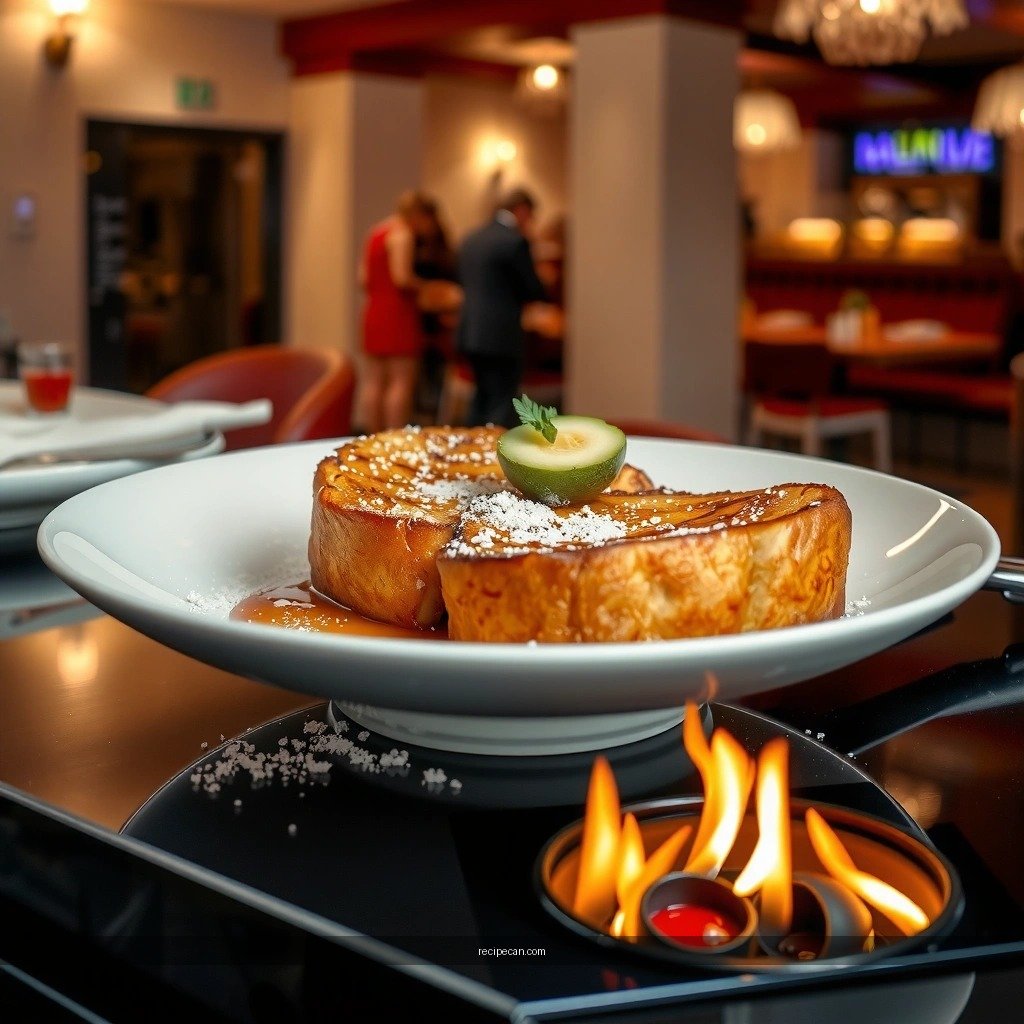
The biggest driver of “custardy inside, crisp outside” texture is the bread. For baked French toast, you want slices that can absorb the egg mixture without collapsing into mush.
– Use thick, day-old bread (brioche, challah, or sourdough work best)
– Brioche and challah bring natural richness, which translates into tender custard and a deeper caramelized flavor.
– Sourdough adds a pleasant tang and a sturdier crumb, helping the slices hold their shape during soaking and baking.
– Cut slices evenly for consistent baking and browning
Aim for slices that are uniform in thickness (commonly ~3/4 inch / 2 cm). Uneven thickness leads to some pieces overbrowning while others remain under-custard.
Practical sizing for crowds:
If you’re baking for 8–12 people, plan around 8–10 slices per pound of bread depending on thickness and dish size, and use a 9×13-inch (23×33 cm) pan as your default scaling tool.
Baked French Toast Bread Performance (Taste & Texture Factors)
| # | Bread type | Best soak window | Custard holding | Crisp edge potential | Brunch rating |
|---|---|---|---|---|---|
| 1 | Brioche | 10–15 min | ★★★★☆ | High | ★★★★★ |
| 2 | Challah | 12–18 min | ★★★★☆ | Medium-High | ★★★★★ |
| 3 | Sourdough | 15–22 min | ★★★★★ | High | ★★★★☆ |
| 4 | Texas toast (thick-sliced) | 8–12 min | ★★★☆☆ | Medium | ★★★★☆ |
| 5 | French baguette (day-old) | 6–10 min | ★★★☆☆ | High | ★★★☆☆ |
| 6 | Whole wheat sandwich bread | 6–10 min | ★★☆☆☆ | Medium | ★★☆☆☆ |
| 7 | Gluten-free loaf (sturdy) | 10–14 min | ★★★★☆ | Medium | ★★★★☆ |
Mix the Custard Base
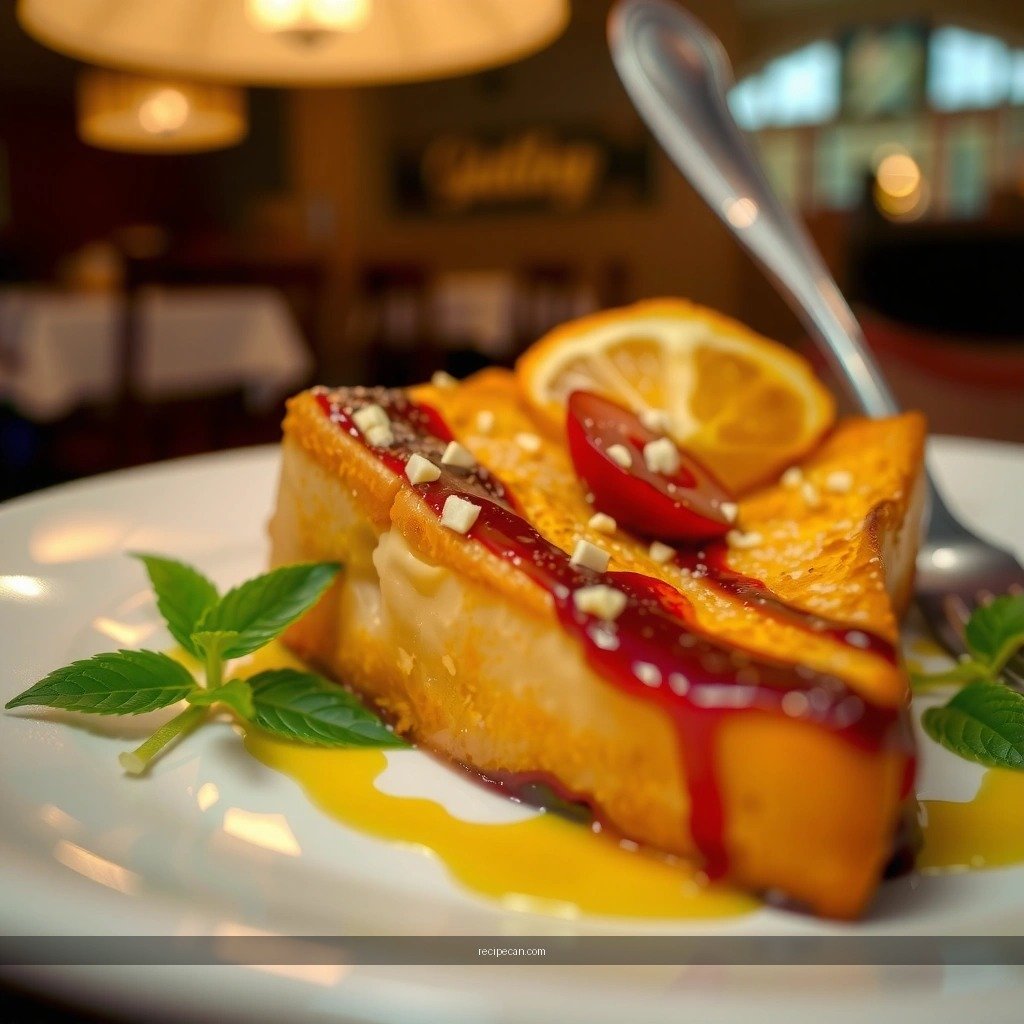
A reliable baked French toast depends on a custard that’s flavorful and properly balanced—rich enough to soak, but not so wet that the dish turns soupy.
– Combine eggs, milk (or half-and-half), sugar, and vanilla
A classic ratio for crowd-baking is about 1 cup milk + 1 cup half-and-half mixed with 6 large eggs, plus 1/3–1/2 cup sugar depending on how sweet you want the result. Vanilla gives warmth and rounds out egg flavor.
– Add cinnamon and a pinch of salt for classic french toast flavor
– Cinnamon: use 1–2 teaspoons for a traditional profile.
– Salt: even a pinch sharpens sweetness and makes the bread taste “more buttery,” even if you use minimal butter.
Analytical tip:
Custard thickness matters. Too much milk = less set, more softness; too much egg = firmer custard that can feel rubbery. If you prefer a creamier middle, lean slightly toward half-and-half or whole milk; for a firmer slice, increase egg proportion slightly.
Soak and Assemble in a Baking Dish
This is where most baked French toast either succeeds or becomes mushy. The key is soaking time and dish layout.
– Soak bread slices just long enough to absorb without turning mushy
For thick day-old bread, soaking usually falls in the 10–20 minute range (depending on bread density). Watch for signs: the surface should look saturated and slightly heavier, but the slice should still hold its shape when lifted.
– Arrange in a single layer and pour any extra custard over the top
A single layer promotes even browning and consistent custard set. If your pan is crowded, slices steam rather than bake crisp. When assembling, pour remaining custard over the top so the highest pieces also absorb.
Minimal flipping philosophy (baked style):
Unlike stovetop French toast, you generally don’t need multiple flips. For best texture, you can do one quick flip after about half the soak time—then let the rest of the work happen in the oven.
Optional flavor upgrades (still “business-reliable”):
– Add orange zest for a brighter aromatic profile.
– Substitute brown sugar for a deeper caramel note.
– Stir in 1–2 tablespoons melted butter into the custard for richer mouthfeel.
Bake to Golden Perfection
Oven temperature and timing create the crisp edges and set custard. This is not a “low and slow” dish—French toast baked in the oven needs heat to create browning and structure.– Bake at high heat until puffed and browned, then finish as needed
A common approach is:
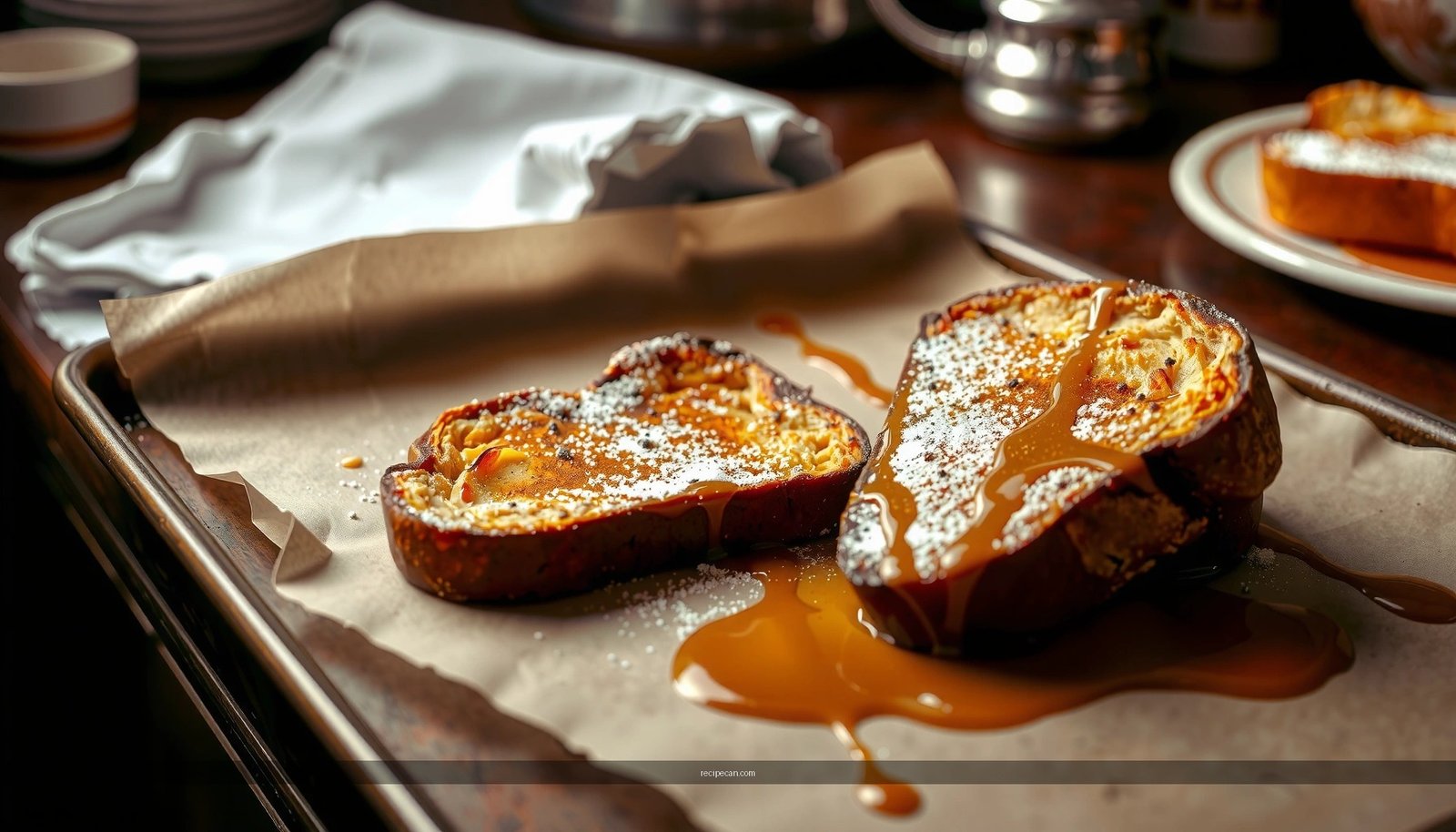
– Bake at 425°F (220°C) for about 18–25 minutes, until puffed and golden at the edges.
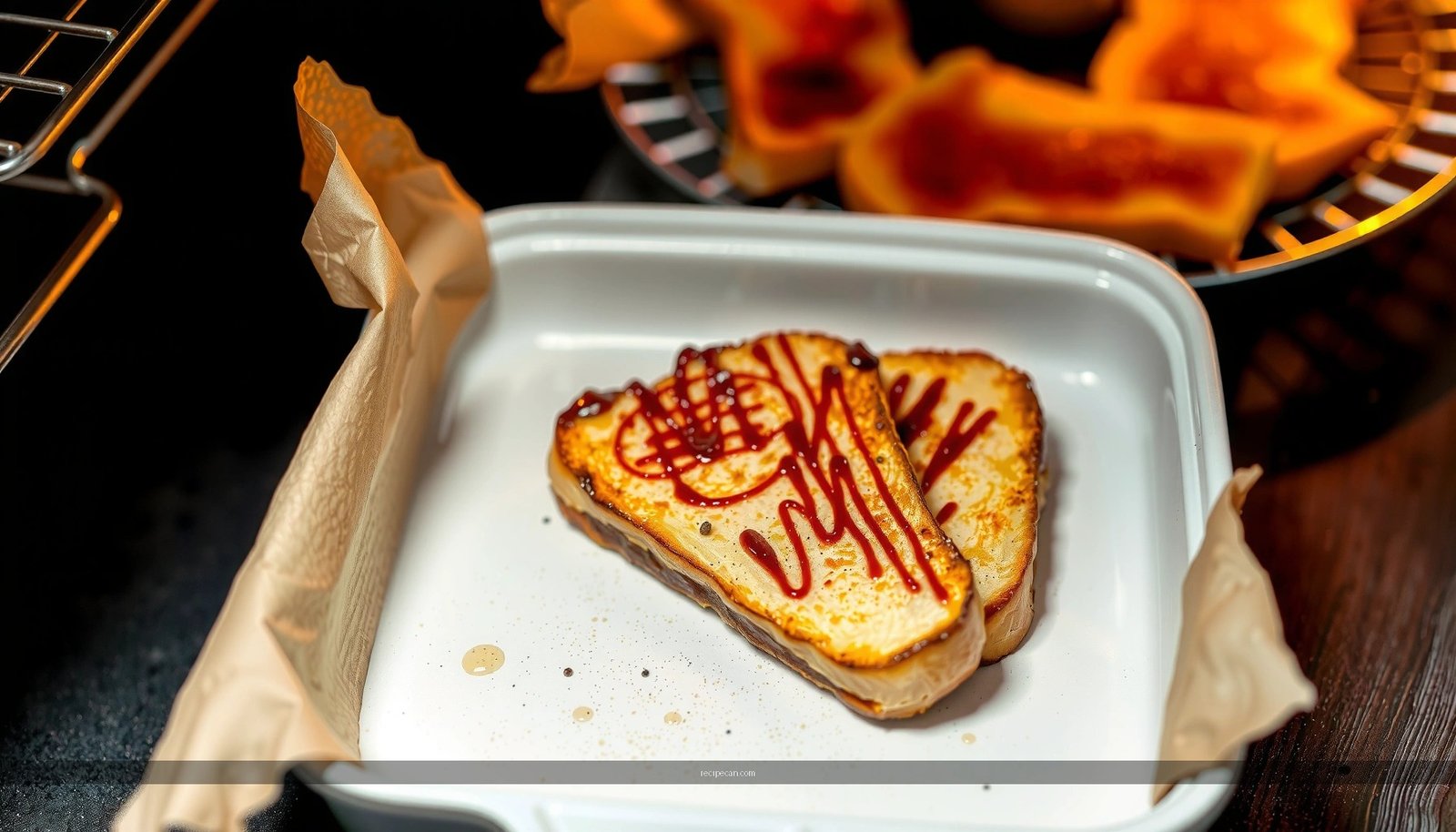
– If your tops aren’t deeply browned, finish with 2–5 minutes under the broiler (watch closely).
– Rotate the pan halfway if your oven browns unevenly
Rotating is a simple control variable. Many home ovens brown hotter on one side, and rotation prevents the “one corner tastes great, the rest is pale” problem.
What “done” looks like:
– Edges are crisp and browned.
– Centers appear set (not wet or jiggly).
– Bread corners show caramelization rather than steamed softness.
Add Toppings and Make It Shine
Toppings aren’t decoration here—they affect how the final slice reads: sweet, glossy, fresh, and buttery.
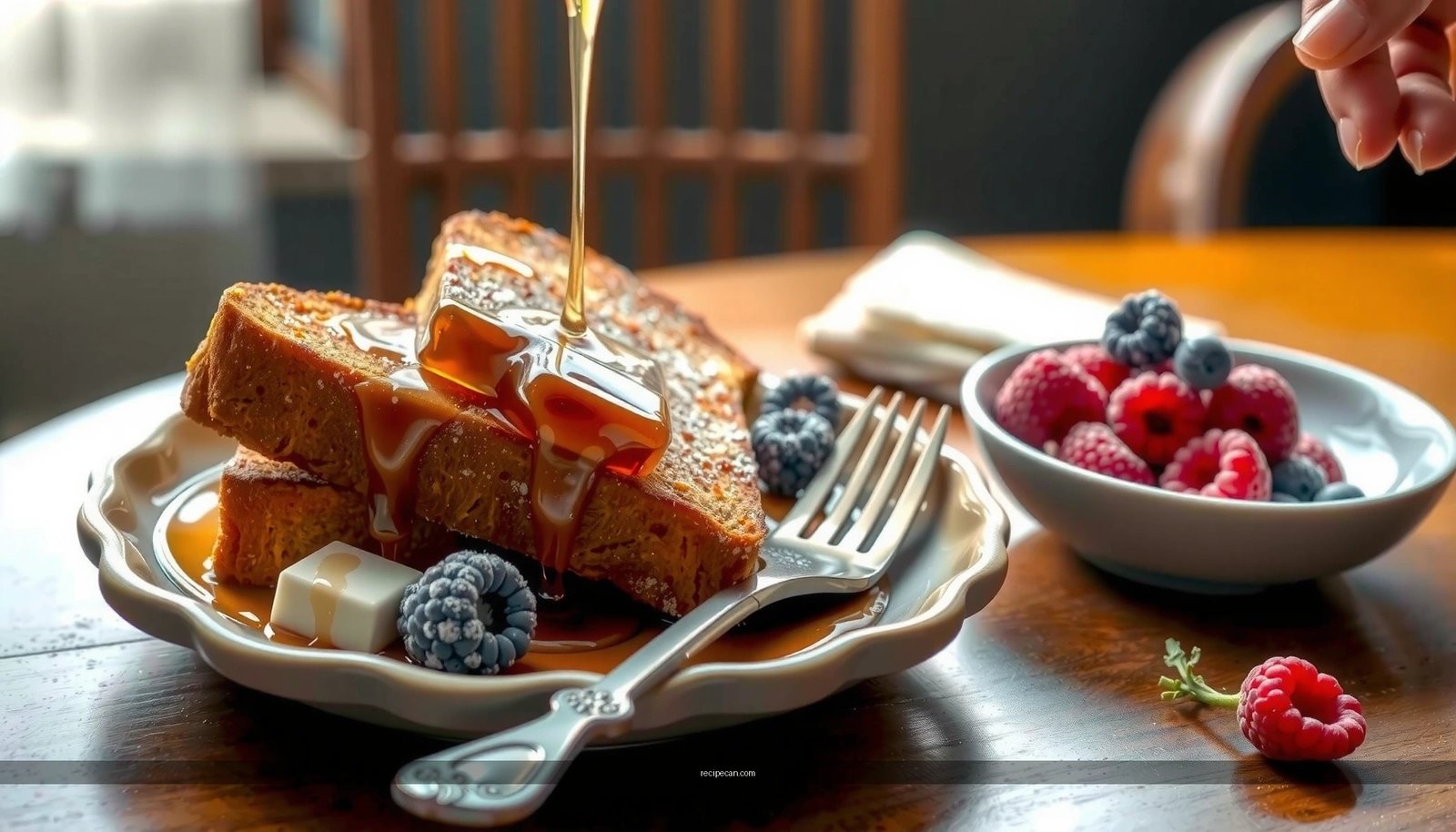
– Serve with maple syrup, fresh berries, or powdered sugar
Maple syrup adds classic flavor and enhances the caramelized notes from baking. Berries introduce acidity that balances sweetness, especially if your custard includes sugar and cinnamon.
– Optional: add butter or a light drizzle of syrup during the last few minutes
For an extra “restaurant-style” finish, dot the top with a little butter and warm briefly—this helps create sheen and intensifies browning.
Serving strategy for groups:
Plan one “wet” topping (syrup) and one “fresh” element (berries). If you add everything at once, syrup can soak the crisp edges. Instead:
– Plate first.
– Drizzle syrup right before serving.
– Add berries as a bright garnish.
Tips for Best Results (and Meal Prep)
If you want baked French toast that stays tender and crisp on day two, follow these process controls.
– Let it rest briefly so the custard sets while staying tender
Rest for 5–10 minutes after baking. This finishing step lets the custard firm up without drying. Cutting immediately can cause the center to collapse.
– Make ahead and reheat in the oven for best texture
– Make ahead: Assemble the dish earlier, cover, and refrigerate. If you’re refrigerating, give it a little time at room temperature before baking (about 20–30 minutes) to reduce uneven heating.
– Reheat: For best crispness, reheat at 350°F (175°C) for 10–15 minutes rather than microwaving, which softens the crust.
Meal prep guidance:
– Store leftovers in an airtight container up to 3 days.
– For reheating consistency, reheat portions on a sheet pan or in the same baking dish so steam doesn’t pool.
Quality control checklist:
– Bread thickness: consistent slices.
– Custard balance: eggs + dairy + vanilla + cinnamon + salt.
– Soak time: saturated but not collapsing.
– Oven heat: high enough for browning.
– Rest: short, not long (so it doesn’t dry out).
French toast is often treated like a last-minute breakfast. But this oven-baked method flips the logic: you prep once, bake hands-free, and still get crisp edges with a custardy center. By choosing the right thick bread, soaking just long enough, and baking hot until puffed and golden, you reliably produce a brunch centerpiece that scales from family breakfast to large gatherings. Try this baked French toast recipe for your next weekend brunch—and adjust toppings to match your guests’ tastes.
Frequently Asked Questions
What is the best baked french toast recipe for a crowd?
The best baked french toast recipe uses thick bread, eggs, milk (or cream), and a simple flavor base like vanilla and cinnamon, then bakes until puffed and golden. Use a 9×13-inch baking dish and cut the bread into cubes or thick slices so the custard soaks evenly. Let it rest in the fridge for 15–30 minutes (or overnight) to get a custardy center without soggy edges.
How do you bake french toast in the oven so it stays custardy, not dry?
Choose sturdy bread like brioche, challah, or thick-cut sourdough, and avoid thin sandwich bread that dries out fast. Whisk your custard thoroughly, then pour it over the bread and press gently so every piece is coated; bake at about 350°F (175°C) until set. If the top browns too quickly, tent with foil and continue baking until the center reaches a custard-like consistency.
Why does baked french toast turn out soggy, and how can you prevent it?
Soggy baked french toast usually comes from using bread that absorbs too much liquid, over-soaking for too long at room temperature, or not baking long enough for the custard to set. To prevent it, use thick bread, cover and refrigerate if you’re making it ahead, and bake until the center is fully set with no wet egg pooling. Also consider draining off excess custard after soaking if you used too much liquid.
Which milk and bread work best for oven baked french toast?
For rich, classic flavor, use whole milk or half-and-half; for a lighter result, use 2% milk, keeping the baking time similar. Brioche and challah are ideal because their texture soaks custard while still holding shape, but you can also use French bread or thick sourdough. Aim for day-old bread for better absorption and a less mushy baked french toast texture.
How do you reheat leftover baked french toast without losing texture?
Reheat leftover french toast in the oven at 300°F (150°C) for 8–12 minutes, or until warmed through, to help it regain crisp edges. For smaller portions, use an air fryer at 300–325°F (150–165°C) for a few minutes, which keeps the top from turning rubbery. Avoid microwaving when possible, since it can make baked french toast soggy by re-melting moisture.
References
- Google Scholar Google Scholar
https://scholar.google.com/scholar?q=french+toast+baked+in+oven - Google Scholar Google Scholar
https://scholar.google.com/scholar?q=french+toast+casserole+oven+recipe - Google Scholar Google Scholar
https://scholar.google.com/scholar?q=baked+french+toast+custard+ratio+egg+milk - French toast
https://en.wikipedia.org/wiki/French_toast - https://www.britannica.com/food/french-toast
https://www.britannica.com/food/french-toast - https://cooking.nytimes.com/recipes/1019604-baked-french-toast
https://cooking.nytimes.com/recipes/1019604-baked-french-toast - https://www.theguardian.com/food/2020/nov/26/baked-french-toast-recipe
https://www.theguardian.com/food/2020/nov/26/baked-french-toast-recipe - Google Scholar Google Scholar
https://scholar.google.com/scholar?q=french+toast+recipe+baked+in+oven - french toast recipe baked in oven – Search results
https://en.wikipedia.org/wiki/Special:Search?search=french+toast+recipe+baked+in+oven - https://www.ncbi.nlm.nih.gov/search/research-articles/?term=french+toast+recipe+baked+in+oven
https://www.ncbi.nlm.nih.gov/search/research-articles/?term=french+toast+recipe+baked+in+oven