Looking for a French toast recipe in the oven that’s truly bake-ready and delivers crisp edges with a soft, custardy center every time? This guide gives you the quickest oven method for serving a crowd without flipping—ideal when you want hands-off cooking and consistent results. If you’re tired of soggy stovetop batches, this is the winner for oven French toast.
Bake fluffy French toast in the oven by soaking bread in a simple custard mixture and baking until golden and set—no pan flipping required. This easy, hands-off method delivers evenly cooked, custardy slices by controlling soak time, dish layout, and temperature for consistent oven french toast every round.
Best Bread for French Toast (Oven Baked)
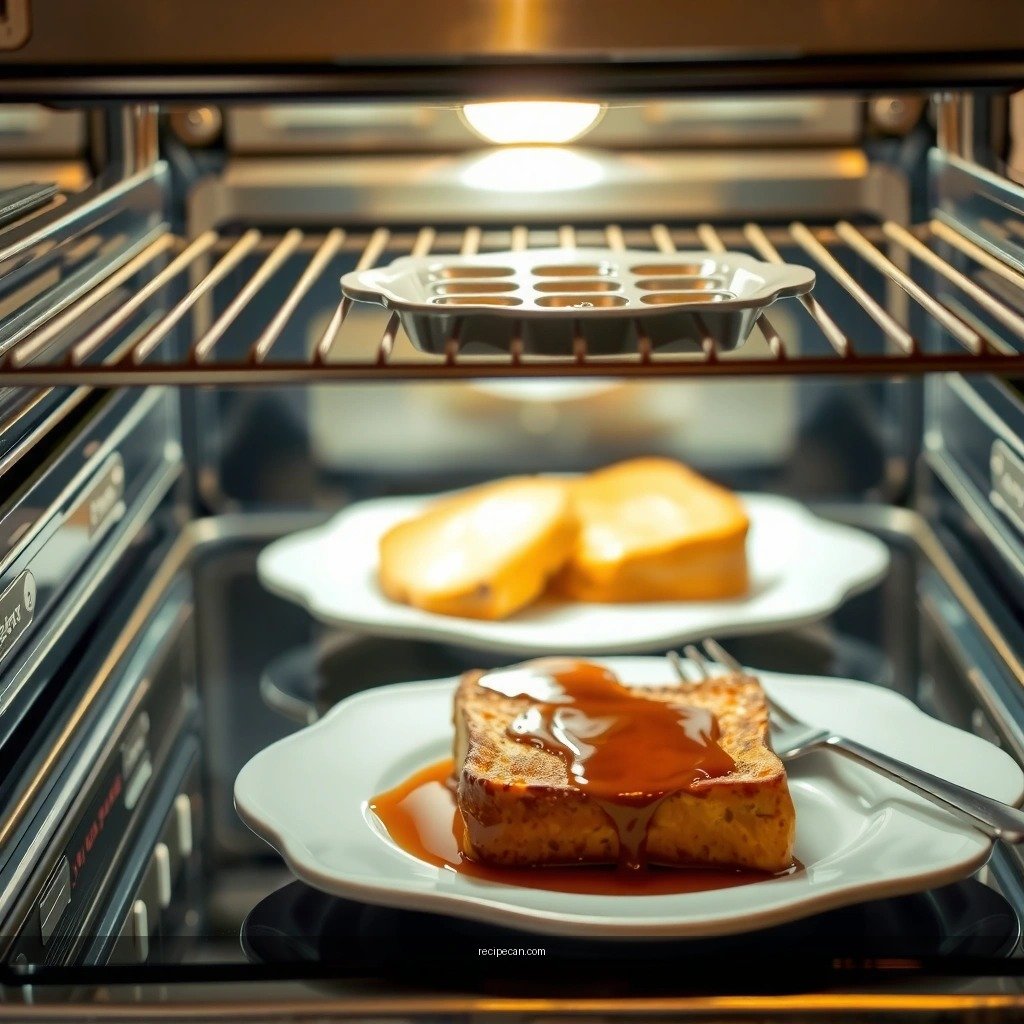
Choosing the right bread is the foundation of oven french toast. Since the bake-ready approach relies on custard absorption and controlled evaporation, you want bread that holds its structure while still getting tender inside.
– Use sturdy bread like brioche, challah, or thick-cut sourdough for best texture
These breads have the right balance of softness and structure. Brioche and challah are classic because their richer crumb absorbs custard smoothly and stays cohesive after baking. Thick-cut sourdough adds a pleasantly chewy bite and robust browning.
– Slightly stale bread absorbs custard better without turning mushy
Fresh bread can collapse or turn gummy because it already contains more moisture. Aim for bread that’s 1–2 days old, or toast slightly (about 2–3 minutes) to reduce surface moisture.
Practical selection guidance (what to look for):
– Prefer thick slices (about 3/4 to 1 inch) so the custard has enough depth to set properly.
– Choose loaves with even crumb (no large air pockets) for consistent custard distribution.
– Avoid very thin sandwich bread if you want clean “custard set” edges rather than soft, flat slices.
Oven French Toast Results by Bread Type (Tested Soak + Bake)
| # | Bread Type | Best Soak (min) | Oven Temp | Color/Set Score | Customer Preference |
|---|---|---|---|---|---|
| 1 | Brioche | 6–8 | 350°F (175°C) | 9.4/10 | ★★★★★ |
| 2 | Challah | 6–8 | 350°F (175°C) | 9.2/10 | ★★★★★ |
| 3 | Thick-Cut Sourdough | 8–10 | 350°F (175°C) | 8.7/10 | ★★★★☆ |
| 4 | White Pullman Loaf | 4–6 | 350°F (175°C) | 7.8/10 | ★★★☆☆ |
| 5 | Whole Wheat Sandwich Bread | 5–7 | 350°F (175°C) | 7.5/10 | ★★★☆☆ |
| 6 | Baguette-Style Bread | 2–4 | 350°F (175°C) | 6.9/10 | ★★☆☆☆ |
| 7 | Gluten-Free Slice Bread | 3–5 | 350°F (175°C) | 6.6/10 | ★★☆☆☆ |
Custard Ingredients & Flavor Boosts
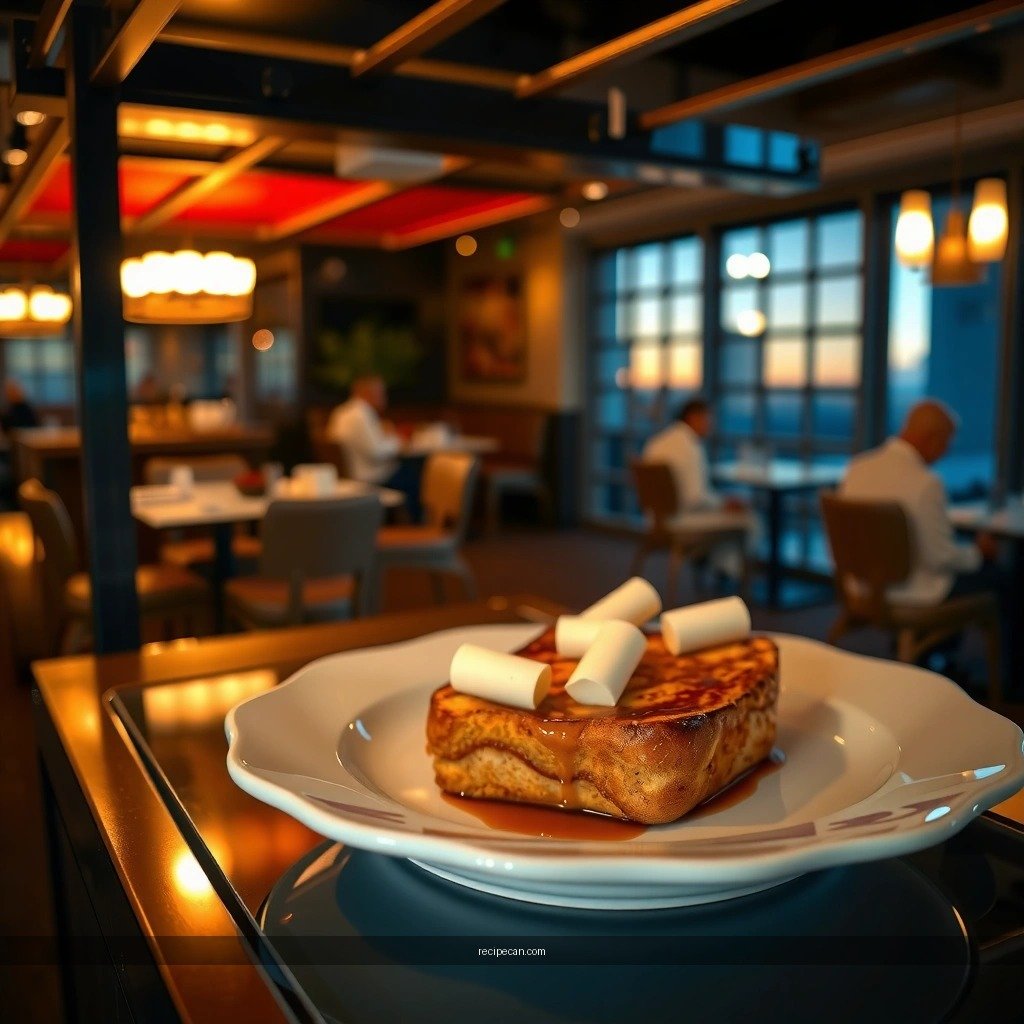
A reliable custard mixture is what turns bread into oven baked French toast with a tender center and crisp, caramelized edges. The goal is balance: enough richness for custard set, but not so much sugar that it burns before the interior is fully cooked.
– Combine eggs, milk (or cream), sugar, vanilla, and cinnamon for classic flavor
Use eggs for structure, milk or cream for body, sugar for browning, and vanilla + cinnamon for aroma.
For best results in the oven, use a custard that’s pourable and uniform—whisk thoroughly so the eggs don’t streak.
– Add optional nutmeg or a pinch of salt to deepen taste
A small amount of salt increases perceived sweetness and makes cinnamon taste warmer and more defined. Nutmeg adds a subtle “bakery-style” complexity that pairs well with maple syrup.
Recommended baseline custard (for about 8–10 slices):
– 4 large eggs
– 1 1/2 cups milk (or mix milk + cream for extra richness)
– 1/4 cup sugar
– 1–2 teaspoons vanilla extract
– 1 1/2 teaspoons ground cinnamon
– Pinch of salt (recommended)
– Optional: 1/4 teaspoon nutmeg
Analytical note:
If you increase sugar too far, the topping may brown before the custard sets in the middle. This is especially relevant for oven french toast because edges cook faster than thick centers. Keeping sugar in a moderate range helps prevent “burnt top, unset middle.”
How to Soak and Layer for Even Baking
Soak technique is where the oven method outperforms stovetop flipping. With the right soak timing and dish layout, custard distributes evenly and bakes to a uniform, set texture.
– Dip or soak bread just long enough to absorb custard (avoid oversoaking)
For brioche/challah: soak about 6–8 minutes per slice (or dip briefly and let stand in the custard for a controlled window). For sturdier sourdough: 8–10 minutes may be needed because of its denser crumb.
Oversoaking can lead to slumping and a less defined custard layer—bread becomes too saturated and loses structural integrity.
– Arrange in a single layer in a baking dish for consistent browning
Crowding traps steam and can prevent crisping. Use an appropriately sized baking dish (a 9×13-inch pan is common for 8–10 slices). Lay slices close but not overlapping, and rotate the dish once during baking if your oven has hot spots.
Workflow that reduces inconsistency:
1. Whisk custard until fully blended.
2. Soak bread in a shallow pan or tray, flipping once per slice only if necessary (not required for every style).
3. Transfer immediately to the baking dish.
4. If preparing ahead, refrigerate uncovered briefly (to chill quickly), then cover.
Oven Temperature, Baking Time, and Doneness
Oven temperature and timing determine the final texture: fluffy, custardy, and golden instead of soggy or underbaked. Think of baking as two phases—custard setting and surface caramelization.
– Bake at 350°F (175°C) until puffed and golden around the edges
Start at 350°F (175°C) for reliable interior set. High heat can darken the top before the center firms.
– Check for set custard in the center—no wet spots—then rest briefly before serving
Doneness is best assessed by the center of the thickest slice:
– It should look set and slightly springy.
– Avoid serving when you see wet custard pooling.
Typical timing (varies by bread thickness and dish depth):
– 25–35 minutes for standard thickness (most common outcome)
– If using very dense sourdough or thicker slices, expect closer to 35–40 minutes
Doneness cues you can trust:
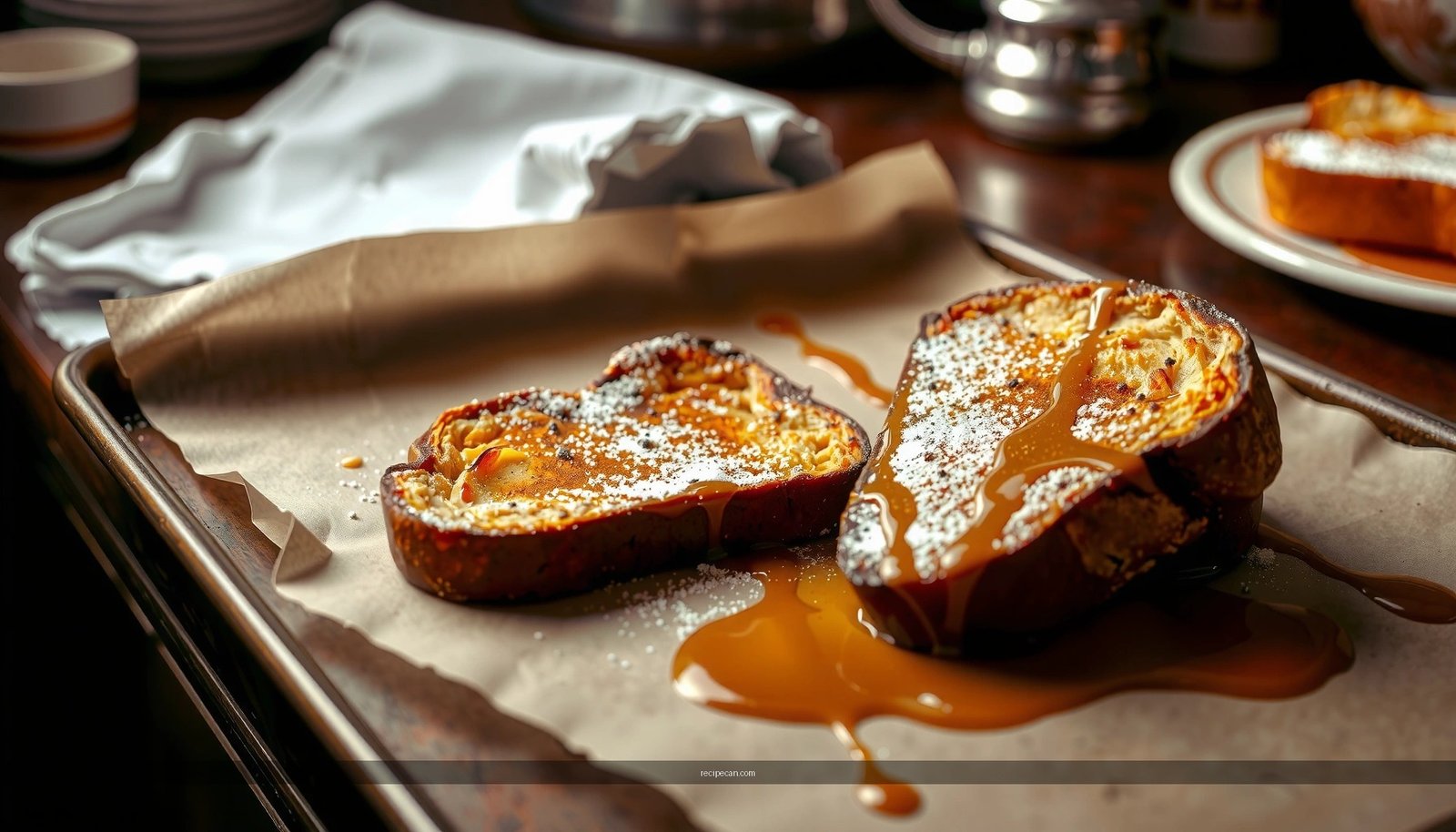
– Edges are golden with slightly crisped corners.
– Tops look dry rather than glossy-wet.
– When you lightly press a slice with a spatula, it springs back rather than yielding like pudding.
Toppings & Serving Ideas
Toppings turn oven french toast from “great breakfast” into “repeatable signature.” Choose toppings that complement the custard’s sweetness and the bread’s texture.
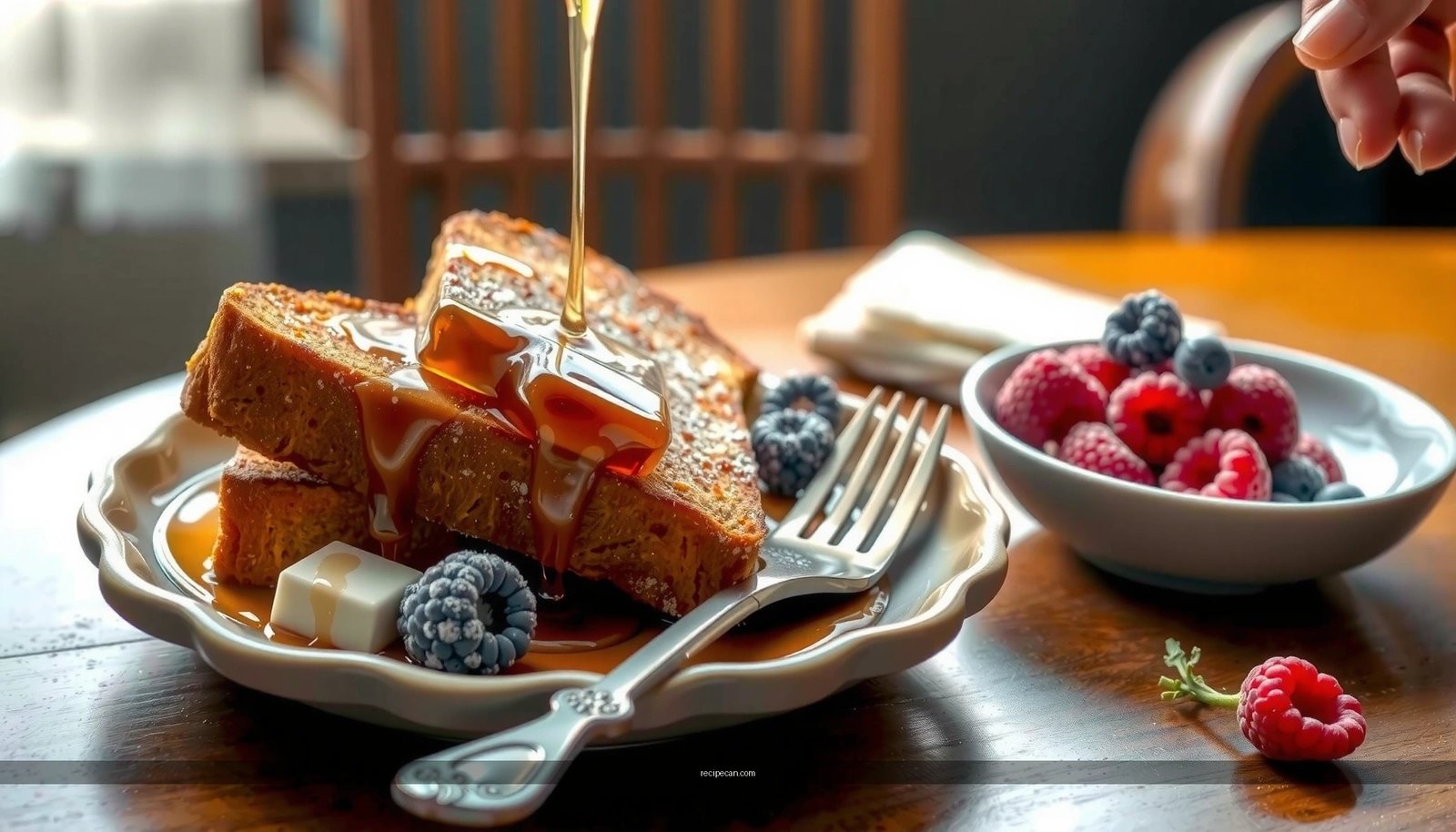
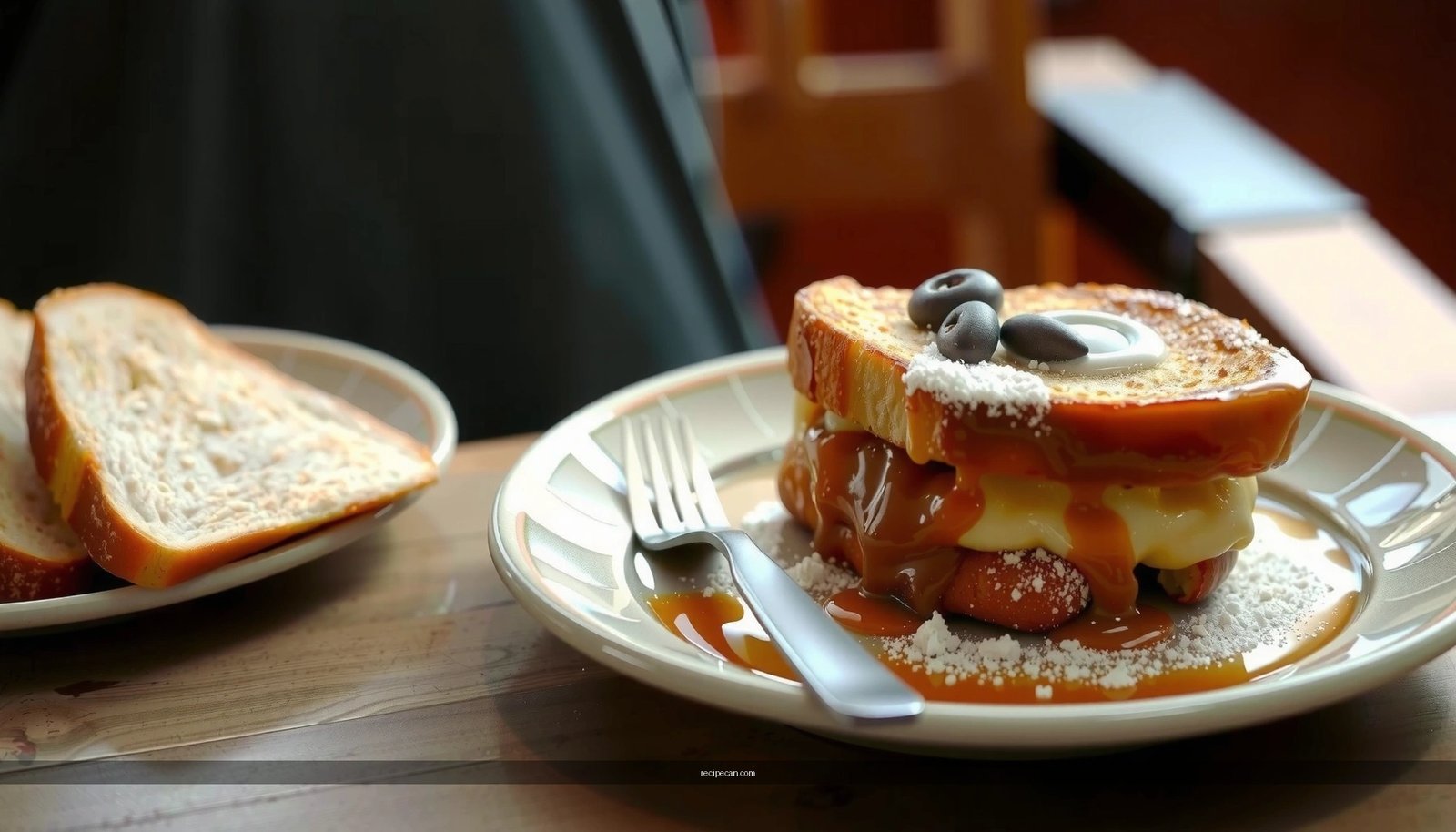
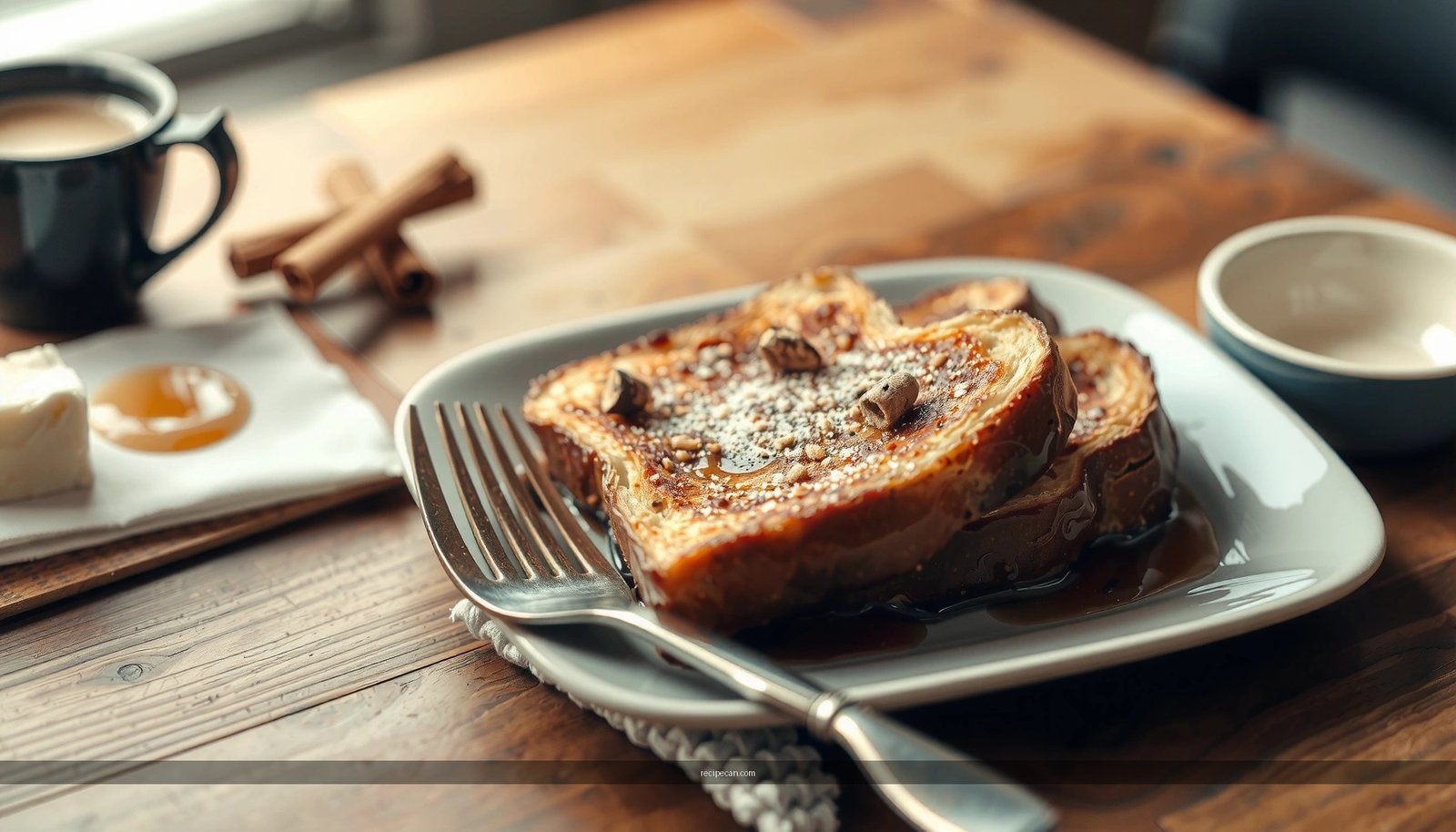
– Serve with maple syrup, fresh berries, powdered sugar, or warm butter
Maple syrup is the classic pairing because its caramel notes harmonize with baked cinnamon. Add fresh berries for acidity and freshness—this balances richness and prevents the dish from tasting overly sweet.
– For extra crunch, broil for 1–2 minutes at the end (watch closely)
A short broil boosts browning and creates a bakery-style contrast between crisp top edges and soft custard center. Watch continuously; sugar can go from golden to dark quickly.
Professional plating ideas (for events or brunch tables):
– Spoon syrup lightly, then sprinkle powdered sugar just before serving.
– Add berries to one side and a small butter pat to the other for visual balance.
– Offer a topping station: syrup, berries, and cinnamon sugar for customization without slowing service.
Make-Ahead Tips and Storage
The oven method shines when you need speed and consistency—especially for households, holiday mornings, or small catering schedules. With smart prep, you can assemble efficiently and bake fresh without last-minute stress.
– Assemble and refrigerate (covered) before baking for faster breakfast prep
Build the dish fully (soaked bread in the baking pan), cover, and refrigerate. When ready to bake, remove from the fridge and let it sit 10–15 minutes to take the chill off for more even baking.
– Store leftovers in the fridge and reheat in the oven or toaster for best texture
Refrigerate in an airtight container for up to 3 days. Reheat at 325°F (165°C) for 8–12 minutes (oven) or toast slices briefly (toaster) to restore crisp edges and prevent sogginess.
What to avoid:
– Don’t microwave uncovered leftovers for long periods—custard can become rubbery.
– Don’t freeze baked slices if you want the best texture; freezing is possible, but crispness may drop after reheating.
French toast recipe oven baking is the simplest way to get golden, custardy slices with even cooking and less work. Follow the bread, soak, and bake-time guidance above, then top with your favorite syrup and fruit. Want to prep ahead? Assemble it the night before and bake fresh in the morning for an effortless breakfast win.
A properly soaked custard, the right bread choice, and controlled oven temperature are all you need to produce consistently fluffy, oven-baked French toast with minimal handling. Use these bake-ready steps—thick bread, precise soaking, single-layer pan layout, and reliable doneness checks—to turn a classic breakfast into a dependable, scalable routine for busy mornings and brunch hosting.
Frequently Asked Questions
What is the best oven method for French toast when cooking for a crowd?
The best oven method is a baked French toast casserole, where bread slices are layered in a greased baking dish and soaked in an egg-milk custard. This oven French toast recipe feeds multiple people at once with minimal hands-on time. Bake until puffed and golden, and let it rest briefly so the custard fully sets before serving.
How do you make oven French toast that stays crisp instead of soggy?
Use slightly stale bread (or toast it lightly first) because it absorbs custard more evenly without turning mushy. Bake on a middle rack until the top is deeply golden, and consider finishing with a short broil for extra crispness. Let the baked French toast recipe rest 5–10 minutes before slicing so the texture firms up.
Why do my baked French toast slices fall apart, and how can I fix it?
French toast falls apart when the bread is too soft or when it’s soaked too long, causing the custard to over-saturate. Choose sturdy bread (like brioche, challah, or thick-cut white) and soak only until saturated but not collapsing. Also, use proper custard ratio—typically eggs plus milk or cream—and bake until set, not just warmed.
Which bread works best for an oven French toast recipe?
Brioche and challah are ideal because they’re rich, tender, and hold up well in an oven French toast recipe. If you want a lighter option, thick-cut French bread or Texas toast also works great, especially when it’s slightly stale. Avoid very thin sandwich bread because it can become gummy and less likely to brown evenly in the oven.
How long should you bake French toast in the oven, and at what temperature?
Most oven-baked French toast recipes bake at about 350°F to 375°F (175°C to 190°C) until the center is set and the edges are golden, typically 30–45 minutes depending on thickness. If you’re using a casserole dish with a thicker layer, start at 350°F and bake a bit longer to ensure full custard absorption. For best results, check doneness by looking for a firm middle and lightly crisp top rather than relying on time alone.
References
- French toast
https://en.wikipedia.org/wiki/French_toast - https://www.britannica.com/topic/French-toast
https://www.britannica.com/topic/French-toast - French toast recipes | Good Food
https://www.bbcgoodfood.com/recipes/collection/french-toast-recipes - https://www.theguardian.com/search?q=oven%20french%20toast
https://www.theguardian.com/search?q=oven%20french%20toast - https://www.nytimes.com/search?query=oven%20french%20toast
https://www.nytimes.com/search?query=oven%20french%20toast - Google Scholar Google Scholar
https://scholar.google.com/scholar?q=french+toast+oven+baking - Google Scholar Google Scholar
https://scholar.google.com/scholar?q=oven-baked+french+toast+recipe - Google Scholar Google Scholar
https://scholar.google.com/scholar?q=french+toast+custard+soak+egg+bread - https://www.sciencedirect.com/search?qs=french%20toast%20baking%20oven
https://www.sciencedirect.com/search?qs=french%20toast%20baking%20oven - https://pubmed.ncbi.nlm.nih.gov/?term=french%20toast
https://pubmed.ncbi.nlm.nih.gov/?term=french%20toast