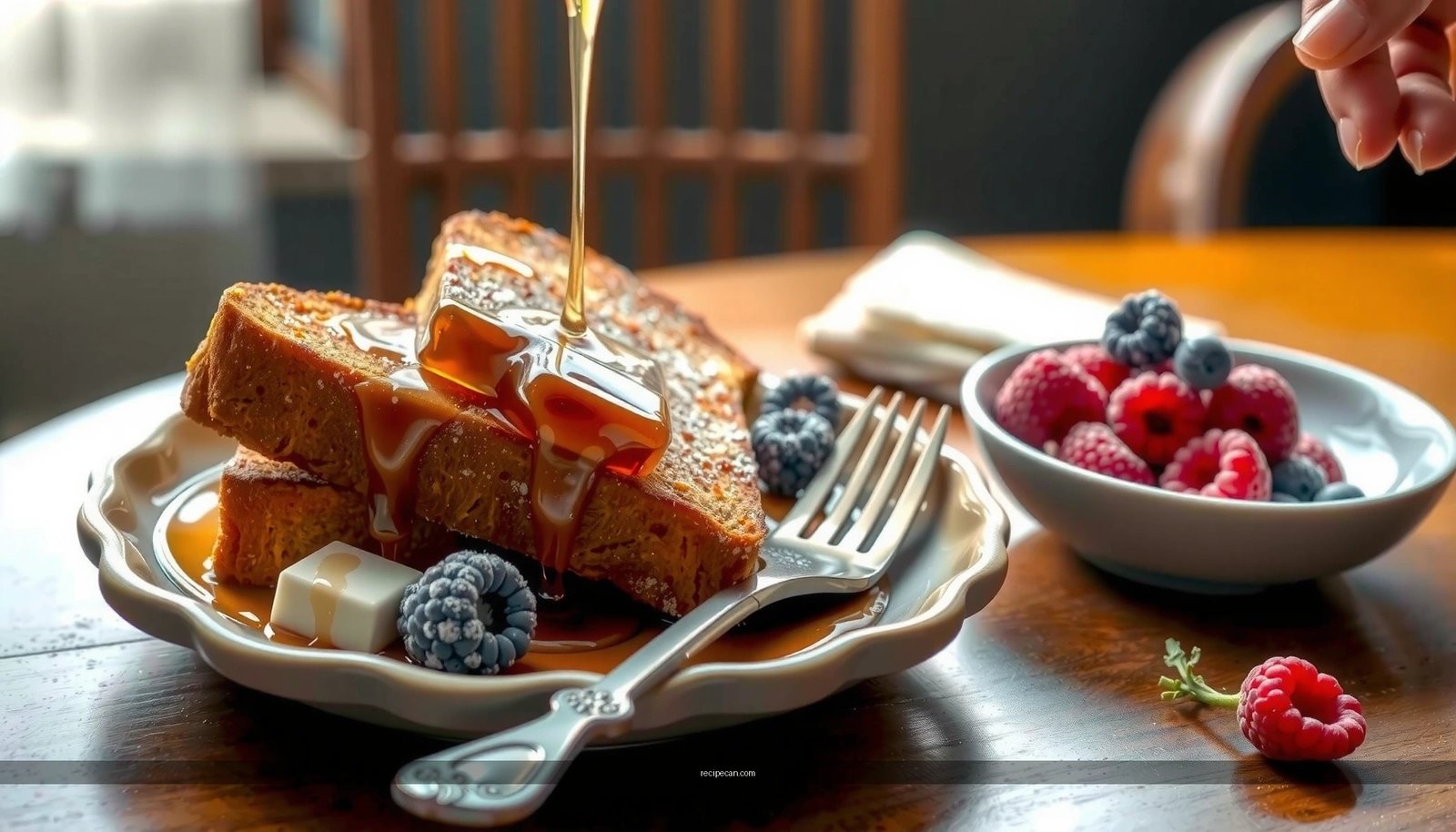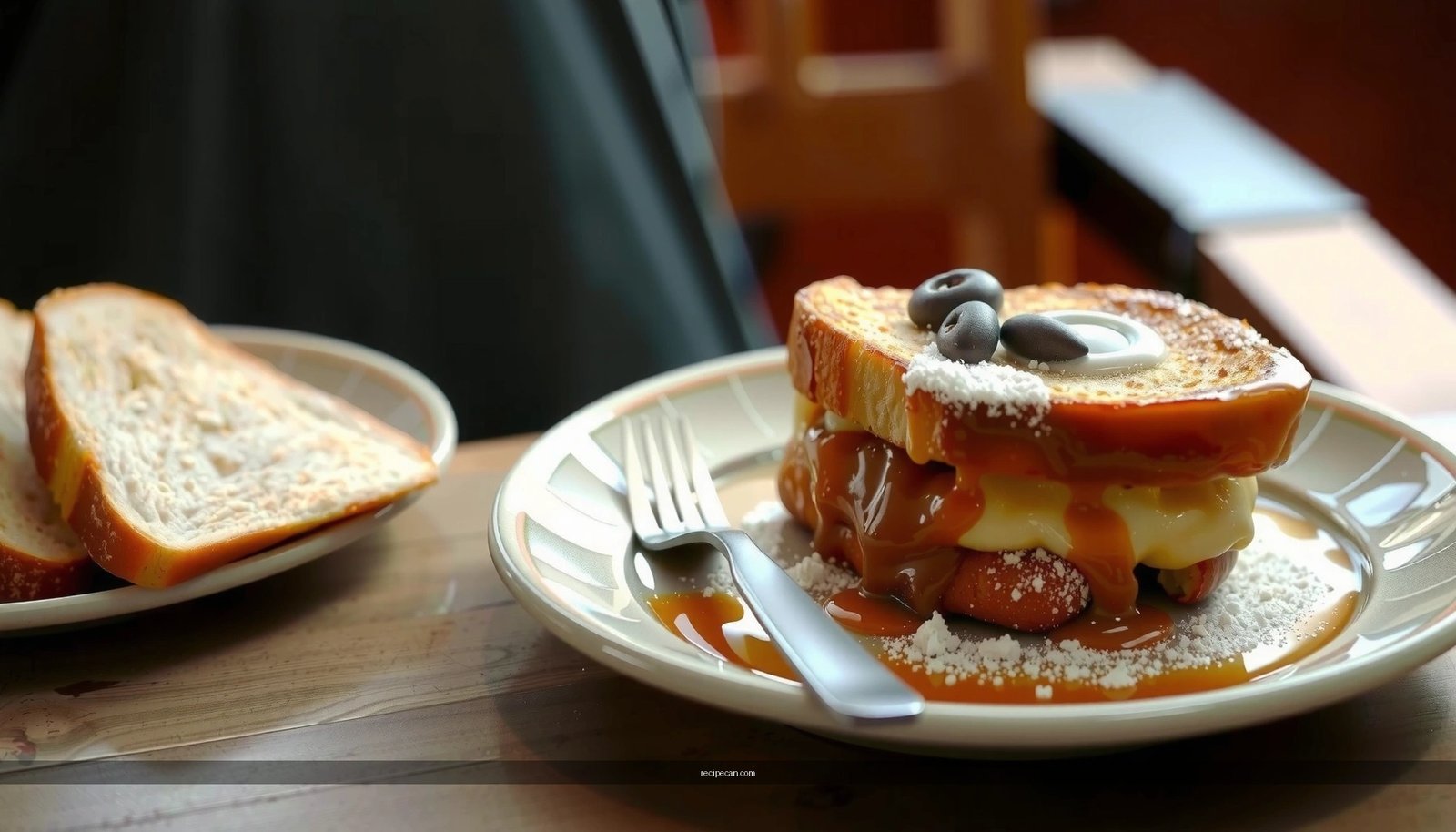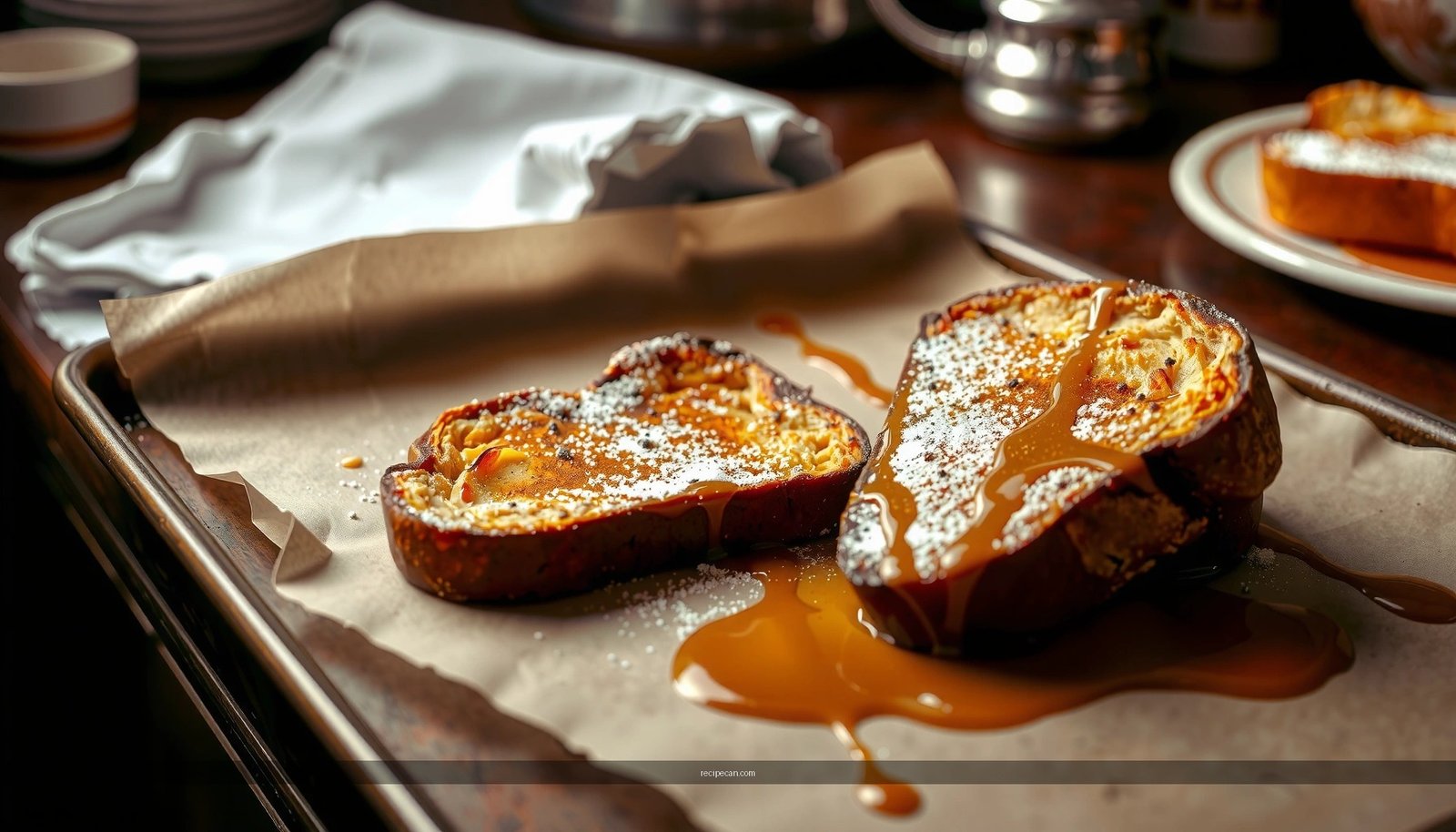
This sourdough French toast recipe delivers perfect, custardy centers and deep golden edges every time. You’ll learn the exact soaking time, egg-milk ratio, and pan heat to avoid soggy bread or burnt surfaces. Follow it once and you’ll get the same crowd-pleasing result whether you’re making a quick weekday breakfast or impressing guests.
Make sourdough French toast with thick slices and a cinnamon-egg soak that’s brief enough to keep the bread crisp outside while staying custardy inside. This recipe gives you the exact ratios and timing—plus practical fixes for the two most common problems (sogginess and uneven browning).
Choose the Right Sourdough
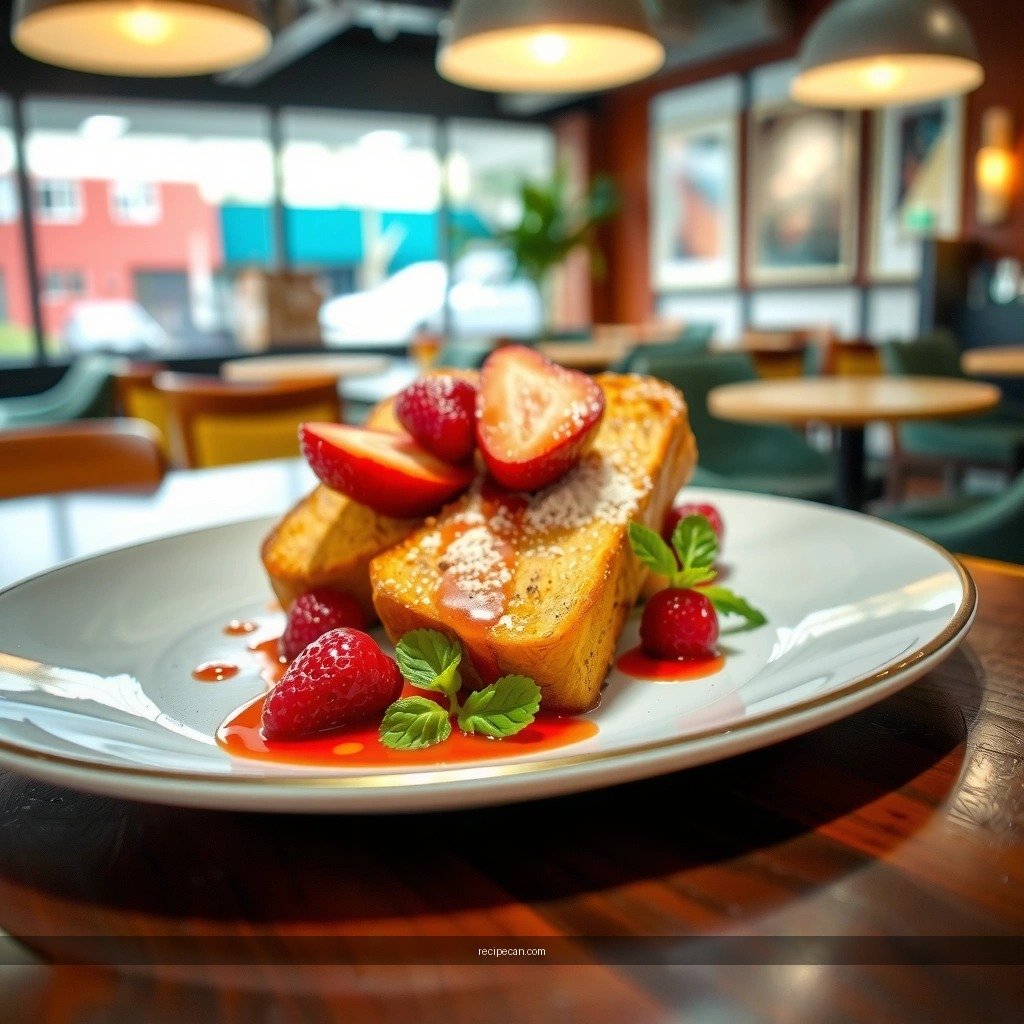
The bread choice determines everything: absorption, steam release, and how quickly the surface turns golden. Sourdough is especially forgiving because its structure is usually a bit more open than standard white bread, so it can hold onto the custard without collapsing into mush.
– Use day-old sourdough for best texture and absorption
Day-old (or even two-day-old) sourdough is drier, which creates better “custard bounce-back.” Fresh bread tends to be too moist; it can over-saturate before the exterior browns.
– Cut slices thick (about 3/4 to 1 inch) for a custy center
Thick slices create a custard-to-bread ratio that feels luxurious rather than wet. If you go thinner than ~1/2 inch, you’re more likely to get a fully custarded center that also softens the crusty edge—especially if you soak too long.
For consistency, also consider using a relatively uniform loaf (not overly airy with huge holes). That helps the custard distribute evenly and reduces “dry pockets.”
French Toast Bread Performance vs. Soak Time (Practical Benchmarks)
| # | Sourdough / Bread Type | Recommended Thickness | Ideal Soak (per side) | Expected Crust Crispness |
|---|---|---|---|---|
| 1 | Day-old sourdough (standard loaf) | 3/4–1 in | 12–20 sec | ★★★★☆ |
| 2 | Two-day sourdough (drier crumb) | 3/4–1 in | 15–25 sec | ★★★★☆ |
| 3 | Fresh sourdough (high moisture) | 1–1 1/4 in | 8–14 sec | ★★★☆☆ |
| 4 | Brioche (very rich) | 1/2–3/4 in | 10–18 sec | ★★★☆☆ |
| 5 | Sandwich bread (dense) | 3/4–1 in | 10–14 sec | ★★☆☆☆ |
| 6 | Ciabatta (very open crumb) | 3/4–1 in | 8–12 sec | ★★★☆☆ |
| 7 | Whole wheat sourdough (denser) | 3/4–1 in | 15–22 sec | ★★★☆☆ |
Mix the Custardy Batter
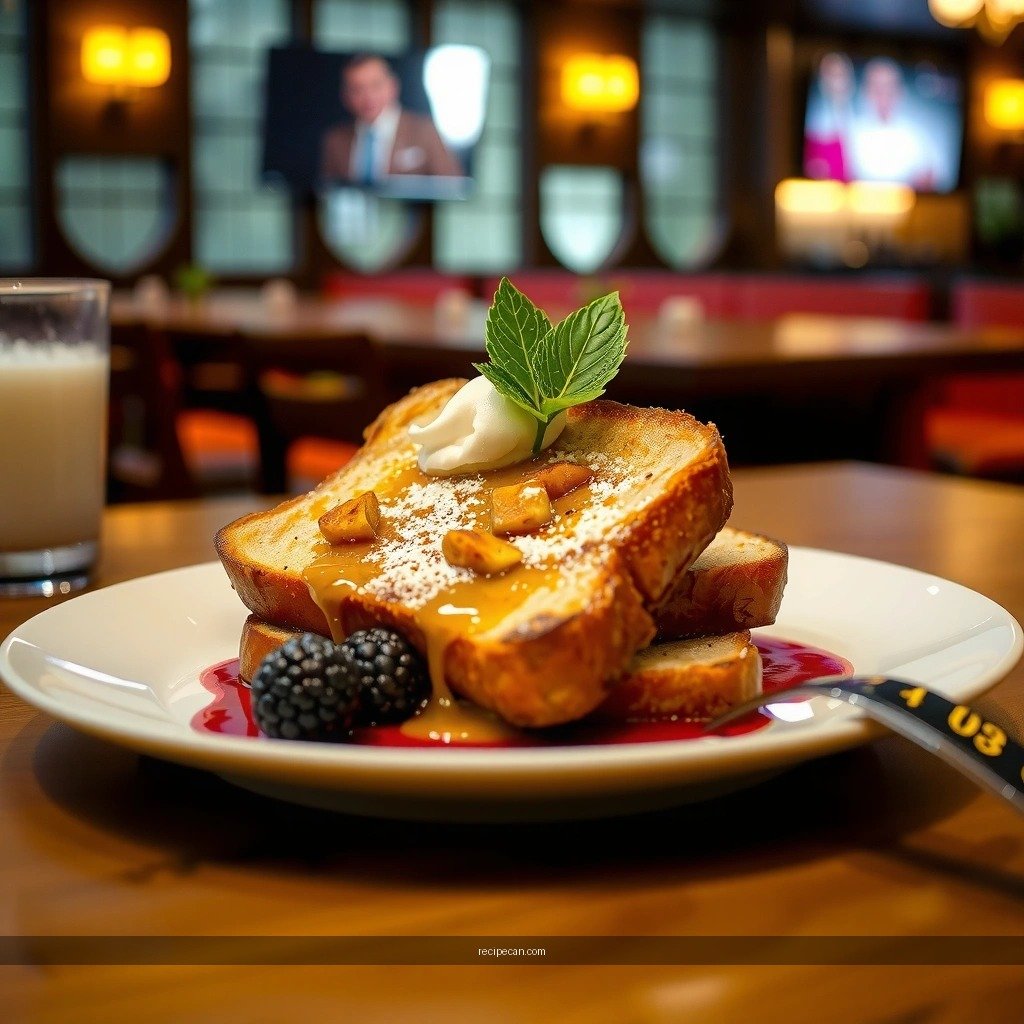
A great custard should coat the bread and set into a tender interior—not create a pudding that leaks out. The key is balancing eggs (structure), milk (creaminess), and flavor aromatics (vanilla and cinnamon).
– Whisk eggs, milk (or cream), vanilla, cinnamon, and a pinch of salt
Use a pinch of salt to sharpen sweetness and bring out sourdough’s tang. Vanilla rounds the spice notes.
– Add optional sugar and nutmeg for extra warmth and sweetness
Sugar helps browning and taste, but too much can cause faster caramelization on the outside while the center is still setting. Nutmeg adds a “bakery” warmth—use it lightly so it doesn’t overpower.
Practical ratio (for ~4–6 thick slices):
– 2 large eggs
– 1/2 to 3/4 cup milk (or half milk/half cream for richer texture)
– 1/2 tsp vanilla extract
– 1–2 tsp ground cinnamon
– Pinch of salt
– Optional: 1–2 tbsp sugar and 1/8 tsp nutmeg
If you’re aiming for classic bakery-style results, slightly thicker custard (a bit less milk) helps prevent sogginess—especially for denser whole wheat sourdough.
Soak for Flavor (Without Sogginess)
This is where most attempts go wrong. Soaking isn’t “submerging until saturated”—it’s controlled contact time so the bread absorbs enough custard to set as it cooks.
– Dip each side briefly, letting it soak just enough to saturate
Think of it as coating the interior crumb, not soaking the crust into dissolution. For most day-old sourdough, about 12–20 seconds per side is a strong starting point.
– Let the slices rest 1–2 minutes after soaking for even absorption
This rest period lets the liquid redistribute through the crumb. You’ll often see the surface look slightly drier after resting—an indicator you’ve achieved “absorb, then cook,” not “soak, then steam.”
Operational tip:
Work with one batch at a time. If you soak all slices and then cook later, the bread continues absorbing and can become waterlogged—especially when your kitchen is cool.
Cook to Golden Perfection
Sourdough French toast depends on a steady heat profile: enough to brown the custard and caramelize the surface, but not so hot that the outside burns before the center sets.
– Cook on medium heat with butter or a neutral oil-butter blend
Butter provides aroma and color, but it can brown quickly. If you consistently notice burning, use a neutral oil-butter blend (for example, a teaspoon of oil plus a tablespoon of butter) to stabilize the pan.
– Flip once when browned; avoid high heat to prevent burning
Frequent flipping disrupts the crust formation. Flip once, then cook until both sides are evenly golden.
Timing guidance:
– First side: about 2–4 minutes, depending on thickness
– Second side: about 2–3 minutes
If your slices are particularly thick (1 inch+), allow a little longer rather than raising the heat.
If you want an extra margin of safety for a custardy center, cover the pan briefly for 30–45 seconds after the first flip—just enough to help set the interior without turning the crust soft.
Serve with Classic Toppings
Toppings should complement sourdough’s tang and the warm spice notes without masking the custard texture. Also, serving strategy matters: hot toast holds crispness longer; lingering on a plate can soften the crust.
– Try maple syrup, fresh berries, powdered sugar, or a pat of butter
Maple syrup is the classic pairing because its sweetness matches cinnamon warmth. Berries add acidity that balances the richness.
– Keep warm on a low oven rack if cooking in batches
If you’re cooking multiple batches, use a low oven (around 200°F / 95°C) and a rack instead of a solid plate. A rack allows steam to escape, protecting the exterior crispness.
Topping combo idea (balanced and professional):
Maple syrup + berries + a light dusting of powdered sugar, finished with a small pat of butter for aroma and gloss.
Troubleshooting Tips
Even with great technique, you may need to adjust based on loaf density, slice thickness, and pan performance. These targeted fixes address the two biggest failure modes.
– If it’s too soggy: shorten soak time and reduce milk slightly
Practical adjustments:
– Reduce soak to ~8–14 seconds per side for fresh or very moist sourdough
– Reduce milk by 1–2 tablespoons next time to make the custard slightly thicker
– Cook on medium (not medium-high) so the custard sets rather than steaming
– If it’s browning too fast: lower heat and cook a bit longer
A too-hot pan can brown the outside before the center reaches the ideal custard set. Lowering heat gives time for even caramelization and consistent interior texture.
– If the center is under-set: increase cook time by 1–2 minutes and consider a short lid-cover (30–45 seconds) after the first flip.
The goal isn’t just color—it’s structural set. When the center is properly cooked, it should feel creamy and tender, not gelatinous or watery.
Batch Timing: A Simple Workflow That Keeps Results Consistent
For reliability—especially when cooking for guests—use a repeatable sequence. The simplest workflow is: slice → preheat pan → whisk custard → soak-rest-cook in one batch → finish topping. That minimizes time between soaking and cooking and reduces soggy variability.
If you’re cooking for a crowd, preheat your oven for holding while you cook. Then line up a station: custard bowl, plate for “soaked but not cooked yet,” pan, and a rack for finished slices. Consistency is a professional-grade advantage.
Ideal Sourdough French Toast Timing (Per Slice)
| Step | What You Do | Time | Why It Works |
|---|---|---|---|
| 1 | Whisk custard and heat pan to medium | 3–5 min | Even starting temperature prevents uneven browning |
| 2 | Dip first side | 12–20 sec | Coats interior crumb without saturating crust |
| 3 | Dip second side | 12–20 sec | Ensures both sides set into custard |
| 4 | Rest after soaking | 1–2 min | Lets custard redistribute for even texture |
| 5 | Cook first side (medium) | 2–4 min | Builds the golden crust and sets the custard |
| 6 | Flip once; cook second side | 2–3 min | Finishes browning while avoiding over-drying |
Sourdough French toast is all about thick slices, the right soak time, and medium heat for that golden, custy bite. Follow the steps above, try one classic topping combo, and make a batch this weekend—then adjust sweetness and spice to match your taste.
When you keep the soak brief, rest the slices briefly, and cook steadily on medium, you’ll reliably get crisp edges and a tender custard center every time—without the soggy middle that undermines most French toast attempts.
Frequently Asked Questions
What is the best sourdough for making French toast?
The best sourdough for French toast is a sturdy loaf with some chew, ideally 1–3 days old so it absorbs the custard without turning mushy. Look for bread with a consistent crumb and enough thickness to hold slices during soaking. If your sourdough is very fresh, you can lightly toast or dry the slices for a few minutes to improve texture.
How do you keep sourdough French toast from getting soggy?
Use thicker slices (about 3/4 to 1 inch) and don’t soak them longer than 20–30 seconds per side, especially if your bread is already soft. Preheat a skillet or griddle on medium to medium-high and cook until the outside is golden before adding more time for the center. For extra insurance, let the custard mixture sit briefly so the bread absorbs flavor evenly, then cook promptly.
How do you make sourdough French toast extra fluffy without losing crisp edges?
Whisk eggs with milk (or half-and-half) and add a small amount of cornstarch or extra yolk for better custard set and fluffiness. Use a combination of gentle soaking and immediate cooking: dip briefly, then transfer to a hot buttered pan to create crisp caramelized edges. Finish by covering for 30–60 seconds at the end if you want the center to steam-tender.
Why does my sourdough French toast taste tangy or overly sour?
Sourdough tang can be stronger if the starter is very active or if you use very sour discard. To balance flavors, increase sweetness slightly (more sugar or maple syrup) and add vanilla, cinnamon, or a pinch of nutmeg to the custard. You can also soak for a shorter time so the bread doesn’t absorb more acidic liquid than necessary.
Which toppings pair best with sourdough French toast?
Classic toppings like maple syrup, fresh berries, powdered sugar, and whipped cream pair perfectly with the caramel notes of sourdough French toast. For a richer option, try browned butter, toasted nuts, or a dollop of Greek yogurt to add tang and contrast. If you want a savory twist, add a fried egg, smoked salmon, or a sprinkle of flaky salt and pepper to complement the sourdough flavor.
References
- Google Scholar Google Scholar
https://scholar.google.com/scholar?q=sourdough+french+toast+recipe - Google Scholar Google Scholar
https://scholar.google.com/scholar?q=sourdough+starter+french+toast - Google Scholar Google Scholar
https://scholar.google.com/scholar?q=french+toast+egg+milk+custard+ratio+maillard+browning - French toast
https://en.wikipedia.org/wiki/French_toast - Sourdough
https://en.wikipedia.org/wiki/Sourdough - https://www.britannica.com/food/french-toast
https://www.britannica.com/food/french-toast - Sourdough | Definition, Types, Nutrition, & INgredients | Britannica
https://www.britannica.com/topic/sourdough - Maillard reaction
https://en.wikipedia.org/wiki/Maillard_reaction - Custard
https://en.wikipedia.org/wiki/Custard - Eggs | Food Safety and Inspection Service
https://www.fsis.usda.gov/food-safety/safe-food-handling-and-preparation/eggs