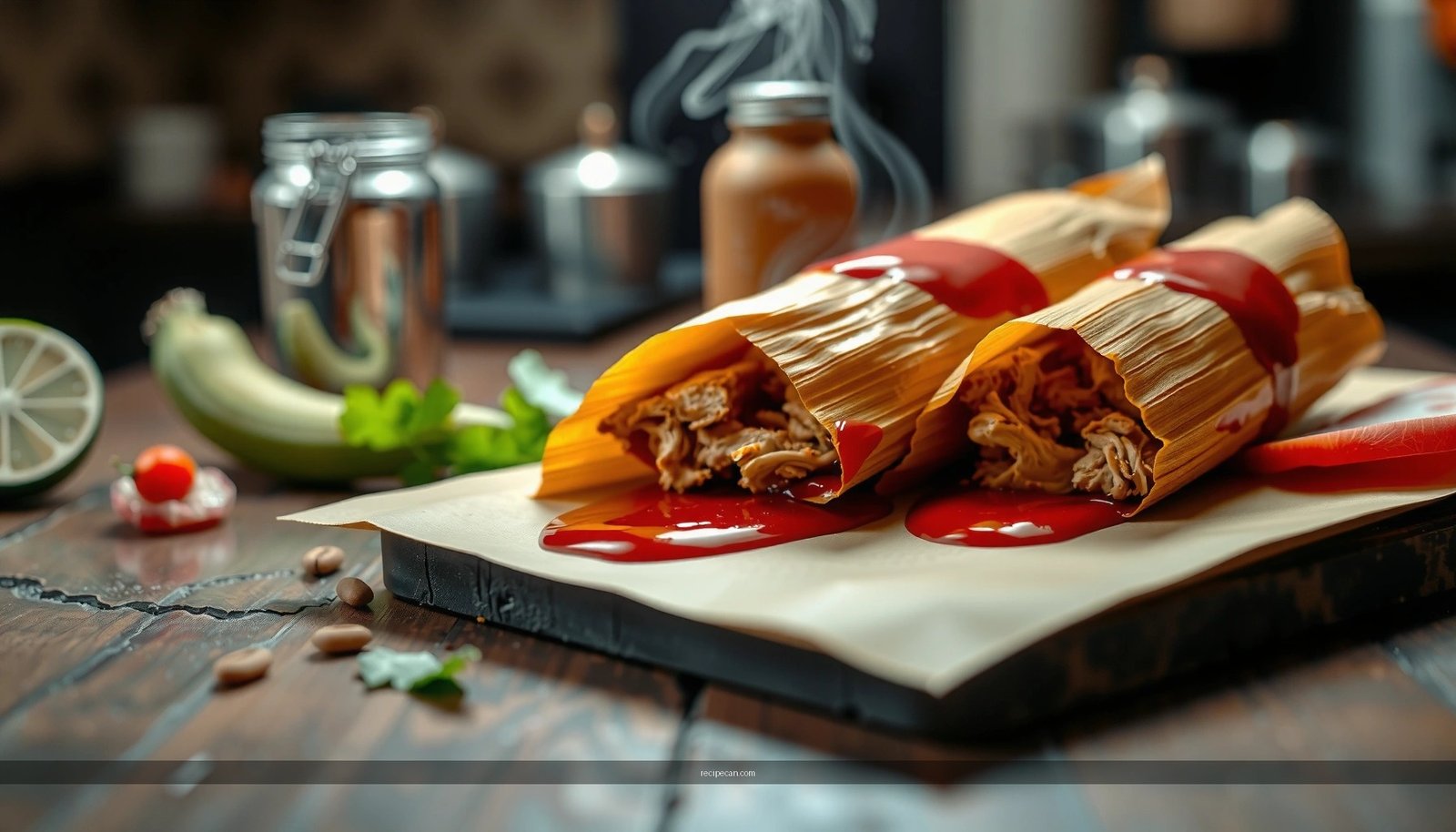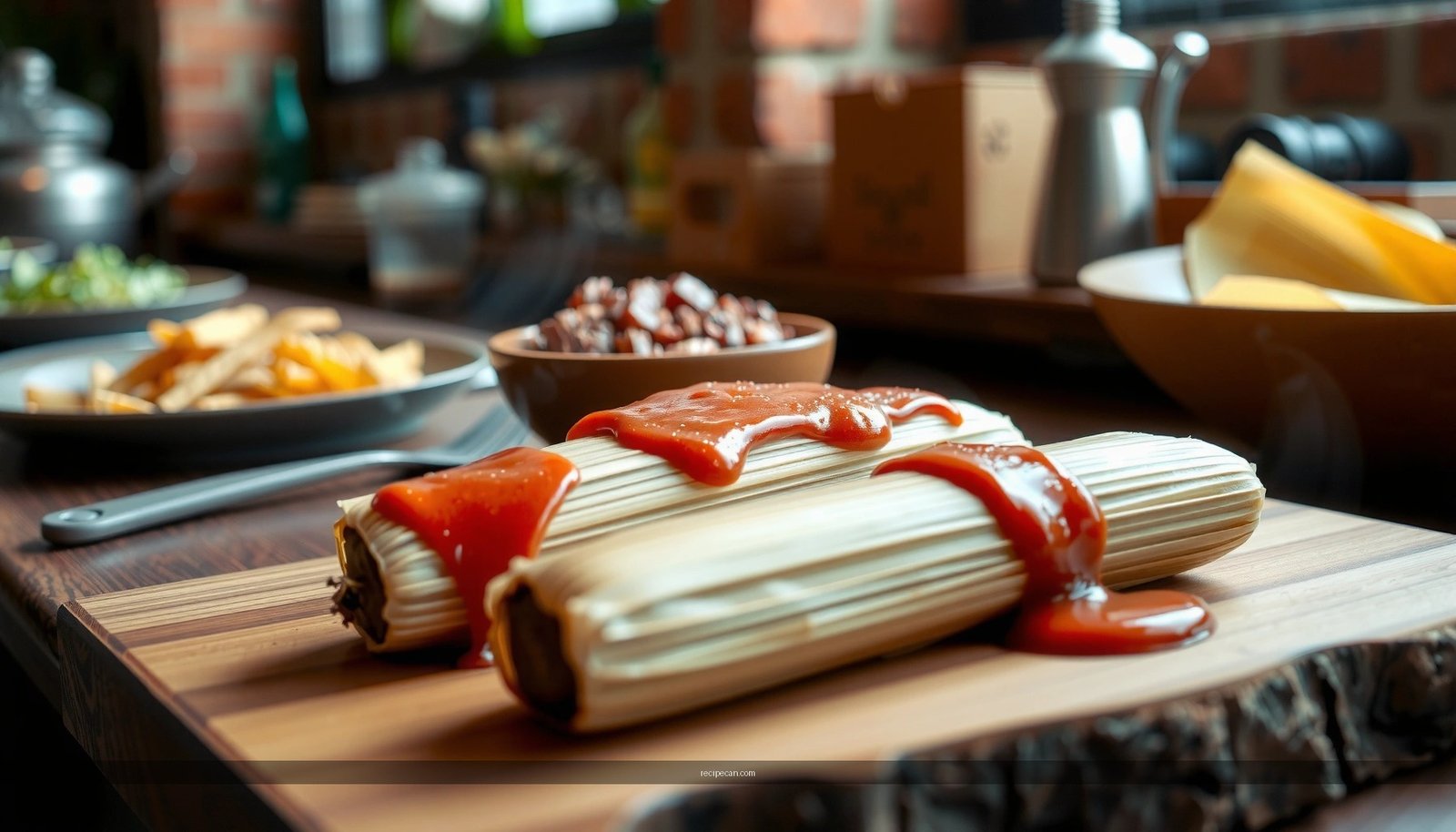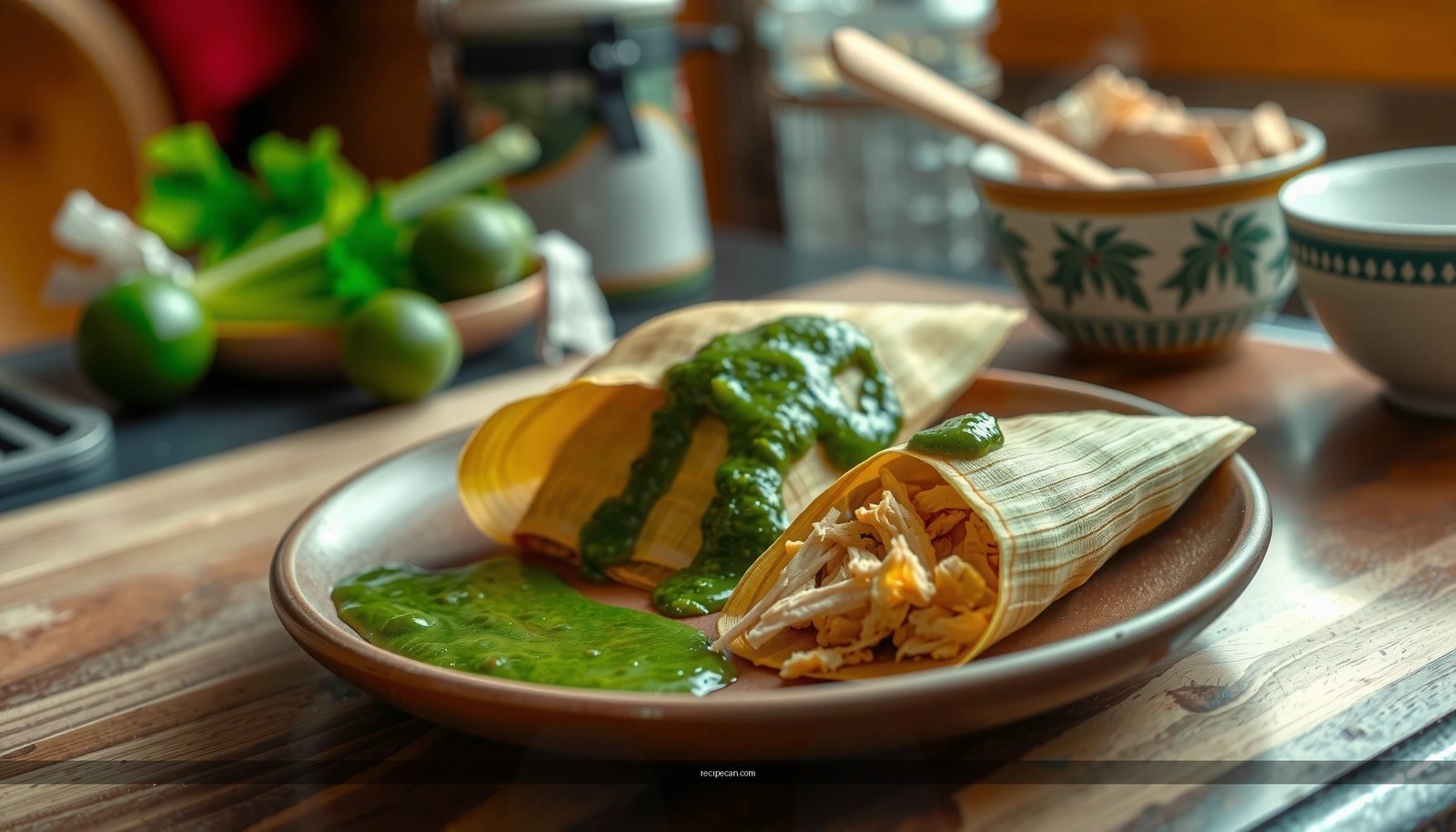
Looking for a chicken green tamales recipe you can make at home without guesswork? This guide walks you through the exact steps for tender chicken, a vibrant green sauce, and foolproof masa so the tamales hold together and steam perfectly. If you follow the process closely, you’ll get the most consistently flavorful homemade tamales—no shortcuts, no second-guessing.
Make tender chicken green tamales at home by simmering chicken with salsa verde, mixing masa to a spreadable consistency, and steaming until the tamales hold firm texture. If you follow the steps below—especially the masa consistency check and the steaming rhythm—you’ll get tamales that are flavorful, sliceable, and consistent batch after batch.
Ingredients for Chicken Green Tamales
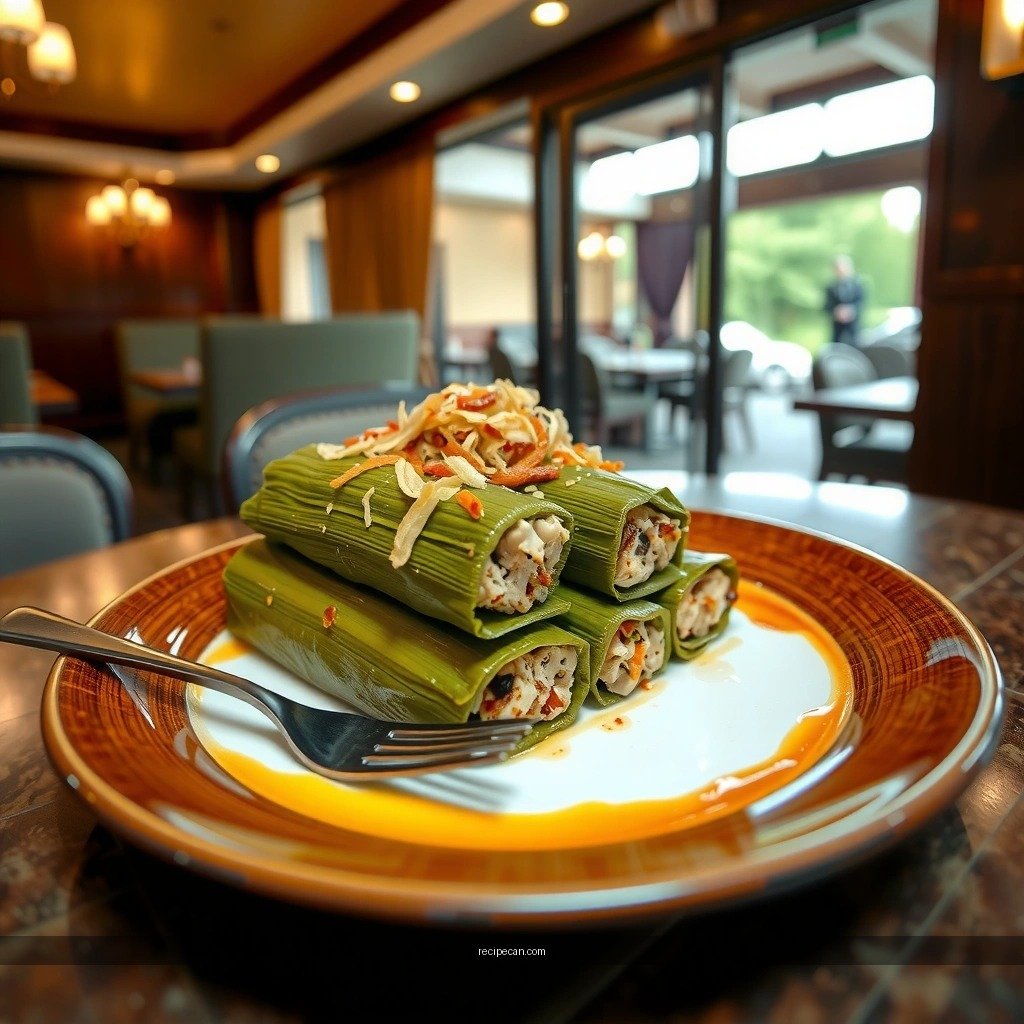
For chicken green tamales, the “quality gap” usually comes down to using the right masa texture, a properly seasoned salsa verde chicken filling, and corn husks that steam cleanly. Below is a complete, practical ingredient list with common options so you can tailor heat and richness without losing authenticity.
Core tamales ingredients
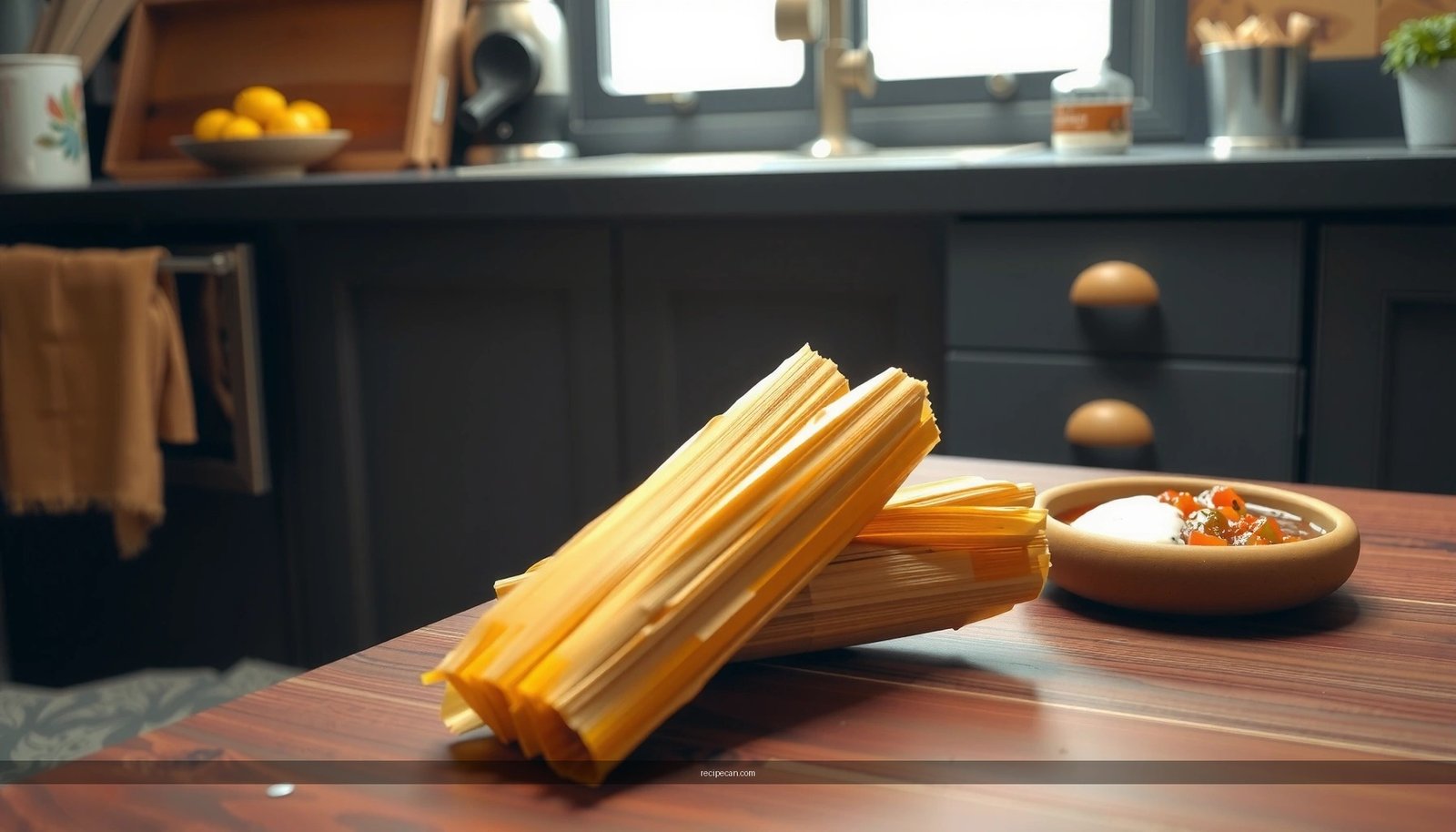
– Corn husks (dried): for wrapping
– Masa harina (corn flour for tamales): the base of the masa
– Fat: typically lard or plant-based shortening
– Broth or warm water: to thin the masa to the correct consistency
– Salt: to season masa and filling
Chicken green filling
– Chicken (boneless skinless chicken thighs or breasts): for shredding
– Salsa verde (tomatillo salsa): for tangy, green chile flavor
– Onion (optional but recommended): for aromatic depth
– Garlic (optional): for savory backbone
– Ground cumin: warmth and complexity
– Dried oregano: classic Mexican herb note
– Bay leaf (optional): subtle aroma during simmering
– Salt and black pepper: to balance flavors
Key optional add-ins (choose what matches your preference)
– Roasted chiles (poblano or hatch): add smokiness and controlled heat
– Shredded cheese (Queso Oaxaca, Chihuahua, or Monterey Jack): for melty richness
– Drained corn or diced roasted peppers: for extra sweetness and texture
– A splash of lime juice: bright finish if your salsa verde is mild
– Chopped cilantro: fresh, herby lift (add after simmering)
Tamale Batch Planning Guide (Yields & Key Ratios)
| # | Target Batch | Masa Harina | Chicken | Approx. Tamales | Best Ratio Tip |
|---|---|---|---|---|---|
| 1 | Small test batch | 500 g | 1 lb (450 g) | ~18–24 | Masa “hold” check |
| 2 | Family cookout | 1 kg | 2 lb (900 g) | ~36–48 | Steam consistency target |
| 3 | Meal prep focus | 1.5 kg | 3 lb (1.36 kg) | ~54–72 | Batch-steam scheduling |
| 4 | High-fill style | 1 kg | 2.25 lb (1.02 kg) | ~34–44 | Don’t overload husk |
| 5 | Lean masa option | 1 kg | 2 lb (900 g) | ~36–48 | Avoid over-thinning |
| 6 | Extra tangy salsa | 1 kg | 2 lb (900 g) | ~36–48 | Simmer to reduce |
| 7 | Cheese-forward | 1 kg | 2 lb (900 g) | ~34–47 | Pat cheese dry |
Prepare the Chicken and Salsa Verde Filling
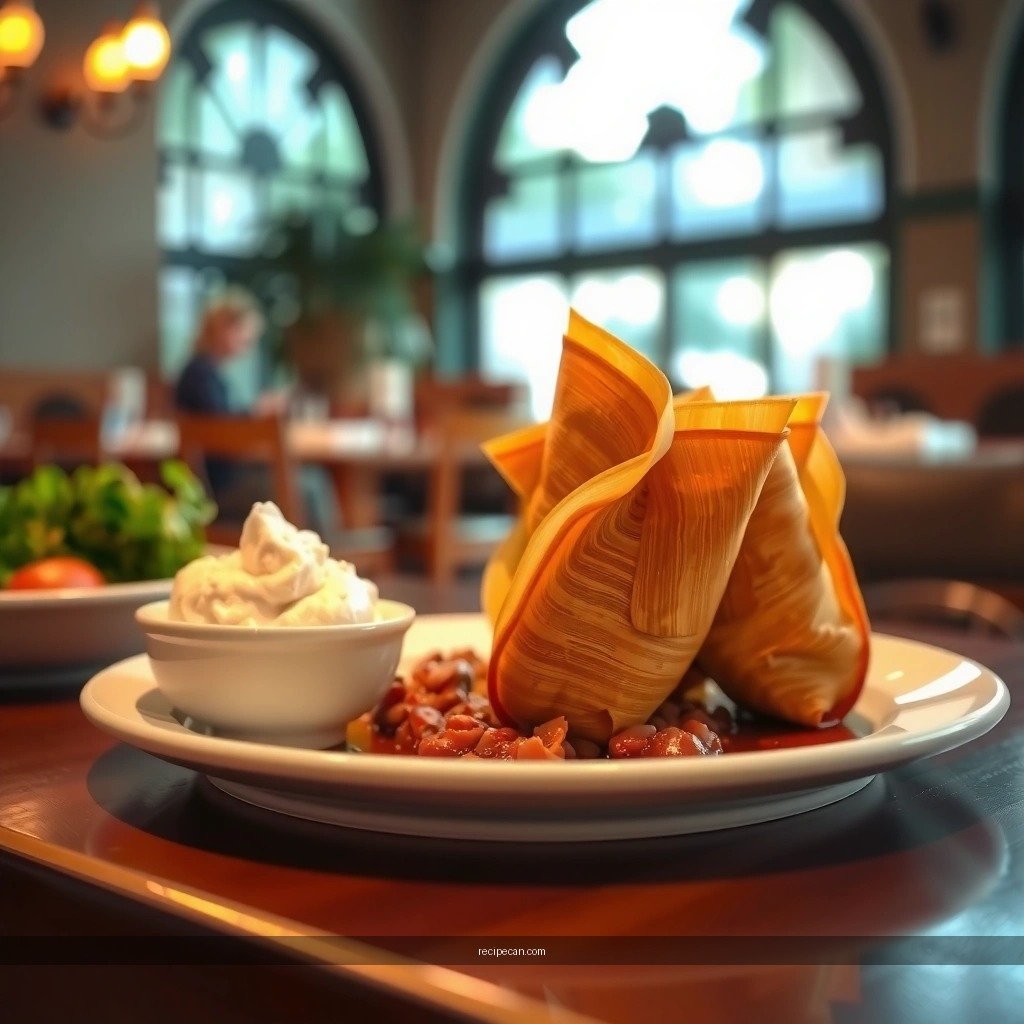
Chicken green tamales rely on a filling that’s moist, seasoned, and not watery—because excess liquid will soften masa and make wrappers harder to slice cleanly.
1. Cook the chicken until tender
– Use boneless thighs for the most tender, shreddable result (they stay juicy through steaming).
– Simmer chicken with enough water to cover, plus a little salt and aromatics (onion/garlic if using) for 20–30 minutes depending on thickness.
– Once cooked, shred with forks and set aside.
2. Season the shredded chicken
– Season immediately while it’s hot: cumin, oregano, salt, and black pepper.
– Let it rest 5 minutes so the spices hydrate and adhere.
3. Simmer with salsa verde for a rich, tangy finish
– Combine shredded chicken with salsa verde in a pot.
– Simmer gently 10–15 minutes to meld flavors and reduce excess liquid.
– If the filling tastes flat, it usually needs salt or a touch of lime (not more salsa).
– Optional: fold in roasted chiles near the end to maintain their smoky character.
Practical filling targets
– The filling should be spoonable but not runny. If it pools like soup, simmer longer and/or shred chicken a bit finer so it distributes evenly.
Make the Masa for Perfect Tamales
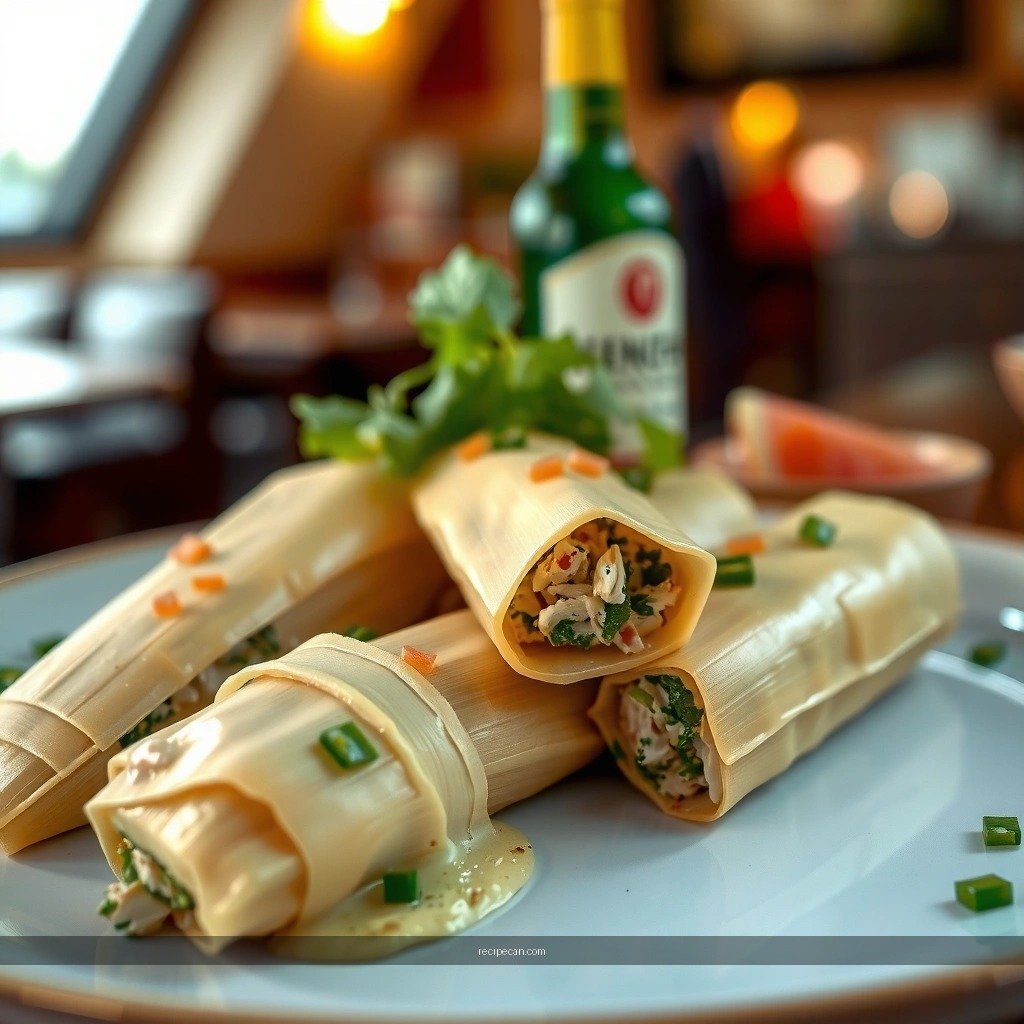
Masa consistency is the make-or-break step. Even great salsa verde chicken can’t compensate for masa that’s too thick (won’t steam evenly) or too loose (won’t hold shape).
1. Mix masa harina with broth and fat
– In a mixing bowl, combine masa harina with warm broth (or water) and fat (lard or shortening).
– Mix until smooth and creamy, adding more broth in small increments.
– Let the masa rest 10–15 minutes. This improves hydration and makes spreading easier.
2. Consistency check (use a quick, reliable test)
– Scoop a portion and press it lightly with a spoon: it should hold shape and feel like thick frosting.
– If you draw a line through it, the line should remain visible briefly before softly relaxing.
– If it cracks or feels dry: add broth 1 tablespoon at a time. If it sags or spreads too easily: add masa harina gradually.
3. Season the masa
– Taste carefully (masa is meant to be seasoned). Add salt if needed.
– The goal is balanced flavor so the tamales taste complete even without extra toppings.
Why this matters analytically:
Tamales steam by transferring heat through moisture and fat. The right masa viscosity traps steam properly, allowing the masa to set without separating from the filling—resulting in a tamale that slices cleanly rather than collapsing.
Assemble and Wrap the Tamales
Assembly is where you control portioning, steam flow, and sliceability. With a consistent method, you reduce variance across the batch.
1. Prep the corn husks
– Soak dried husks in warm water until pliable (typically 30–60 minutes).
– Drain briefly. You want them flexible, not dripping wet.
2. Spread masa evenly
– Lay a husk flat with the thicker side toward you.
– Spread masa in a thin, even layer using the back of a spoon or small spatula. Aim for uniform thickness so each tamale cooks at the same rate.
3. Add a clear filling line
– Place a line of salsa verde chicken filling down the center, leaving a margin around the edges.
– If adding cheese, use a light sprinkle and avoid overfilling—cheese melts and can cause leaks.
4. Fold and secure tightly
– Fold the sides inward, then close the husk as you would a packet (common methods include folding the long edge over the filling and tying with a strip of husk or kitchen string).
– Tight closure prevents filling escape and ensures the masa edges steam properly.
Quality control tip:
After wrapping, check that the seam side is facing downward or secured so it doesn’t open during steaming. Closed tamales rise and set more evenly.
Steam Chicken Green Tamales to Doneness
Steaming is not just “cook until done”—it’s a controlled process that determines texture and structural integrity.
1. Set up the steamer correctly
– Use a tamale steamer or large pot with a rack insert.
– Add water and keep it at a consistent simmer (not a rolling boil).
– Arrange tamales upright or layered so steam reaches all sides. Don’t overcrowd—tight packing slows cooking and increases uneven firmness.
2. Start steaming, then maintain steady steam
– Cover and steam. Most chicken green tamales take about 60–90 minutes depending on tamale size and your steamer setup.
– Check water level periodically to avoid scorching; add hot water as needed.
3. Test for doneness using both masa and firmness
– Masa pull test: When done, the masa should pull away more easily from the husk.
– Firmness test: A properly steamed tamale feels set and doesn’t feel gummy in the center.
– If masa still feels loose, continue steaming in 10–15 minute increments.
Troubleshooting
– Masa separates from husk: often under-steamed or masa was too thin.
– Wrappers leak filling: overfilled or not sealed tightly.
– Undercooked center: tamales too large/stacked tightly; steam longer with a slower, steady simmer.
Serving and Storage Tips
Once steamed, tamales taste best when served soon—masa is fragrant and the salsa verde chicken is at its most cohesive. Still, chicken green tamales are excellent for make-ahead planning.
1. Serve with classic toppings
– Extra salsa verde for brightness
– Crema or sour cream for cooling richness
– Queso fresco for salty, milky contrast
– Optional: chopped cilantro, diced onion, or sliced radishes for crunch
2. Refrigerate properly
– Cool tamales to room temperature before storing.
– Refrigerate in an airtight container up to 3–4 days.
3. Freeze for longer-term meal prep
– Freeze wrapped tamales in freezer bags or containers for up to 2–3 months.
– Reheat directly from frozen if needed (steaming works best for texture).
4. Reheat with texture in mind
– Best method: steam again for 10–20 minutes (small batches require less time).
– Microwave reheating can work, but steam helps preserve the husk-set masa structure.
Batch strategy:
If you’re planning for an event or busy week, steam a full batch, cool, then portion and freeze. This keeps meal prep predictable while still delivering “freshly steamed” results when reheated.
Steamed chicken green tamales are fundamentally about three interacting variables: a flavorful salsa verde chicken filling, masa with the right consistency, and steady steaming until the tamale sets. Use the ratio guidance to plan your batch, follow the assembly method to keep fillings contained, and rely on the doneness tests (masa pull + firmness) rather than guessing by time alone. Make a full batch this week, refrigerate or freeze extra portions, and you’ll have sliceable, tangy, tender chicken green tamales ready whenever you need a satisfying homemade meal.
Frequently Asked Questions
What is the best way to make chicken green tamales from scratch?
Start by simmering shredded chicken with onion, garlic, cumin, and a little salt so it’s flavorful before you assemble the tamales. Blend or chop tomatillos, green chiles, and herbs into a smooth green sauce (or use salsa verde), then mix masa harina with warm broth until it spreads easily. Assemble with the masa, add a strip of chicken and a few tablespoons of the green filling, wrap in soaked corn husks, and steam until firm and cooked through.
How do I prevent my chicken green tamales from turning out dry or dense?
Use the right masa consistency—when mixed with warm stock, the dough should feel like soft Play-Doh and hold together without cracking. Keep the chicken moist by cooking it until tender, then shredding and mixing it with some of the green sauce so every bite stays juicy. During steaming, avoid opening the steamer frequently and ensure there’s steady steam, since under-steaming is a common cause of dense tamales.
Which green sauce ingredients work best for chicken green tamales?
Traditional chicken green tamales often use tomatillos, green chiles (like jalapeño or serrano), cilantro, onion, and garlic blended into salsa verde. If you want more depth, add a small amount of Mexican oregano and a pinch of cumin, and adjust salt after blending. For a smoother filling, blend until creamy; for a rustic texture, pulse the ingredients and simmer the sauce briefly before mixing with the chicken.
Why do my tamales peel away from the husk, and how can I fix it?
Tamales that don’t release cleanly can be undercooked, have masa that’s too thick/dry, or lack enough fat in the dough. Make sure the masa is properly hydrated with warm broth and consider adding lard or neutral vegetable shortening for a tender, easy-to-remove texture. Steam until the masa sets and the tamales feel firm; if you’re unsure, test one by pulling the husk away—fully cooked tamales should separate more cleanly.
How long should I steam chicken green tamales, and what’s the best way to test doneness?
Most chicken green tamales take about 1 to 1.5 hours to steam, depending on tamale size and your steamer’s heat consistency. The best test is the “pull” test: once the masa looks matte and firm, peel back a husk—if the masa doesn’t stick and the center is cooked (not wet or gummy), they’re ready. Let the tamales rest for 10–15 minutes after steaming so the masa sets fully before serving or storing.
References
- Tamale
https://en.wikipedia.org/wiki/Tamale - Chili pepper
https://en.wikipedia.org/wiki/Green_chile - Chili con carne
https://en.wikipedia.org/wiki/Chile_verde - Masa
https://en.wikipedia.org/wiki/Masa_harina - https://www.britannica.com/topic/tamale
https://www.britannica.com/topic/tamale - Google Scholar Google Scholar
https://scholar.google.com/scholar?q=chicken+green+tamales+recipe - Google Scholar Google Scholar
https://scholar.google.com/scholar?q=tamales+masa+harina+steaming+technique - Google Scholar Google Scholar
https://scholar.google.com/scholar?q=green+tomatillo+salsa+tamales - https://pubmed.ncbi.nlm.nih.gov/?term=tamale
https://pubmed.ncbi.nlm.nih.gov/?term=tamale - https://www.cdc.gov/foodsafety/chicken.html
https://www.cdc.gov/foodsafety/chicken.html