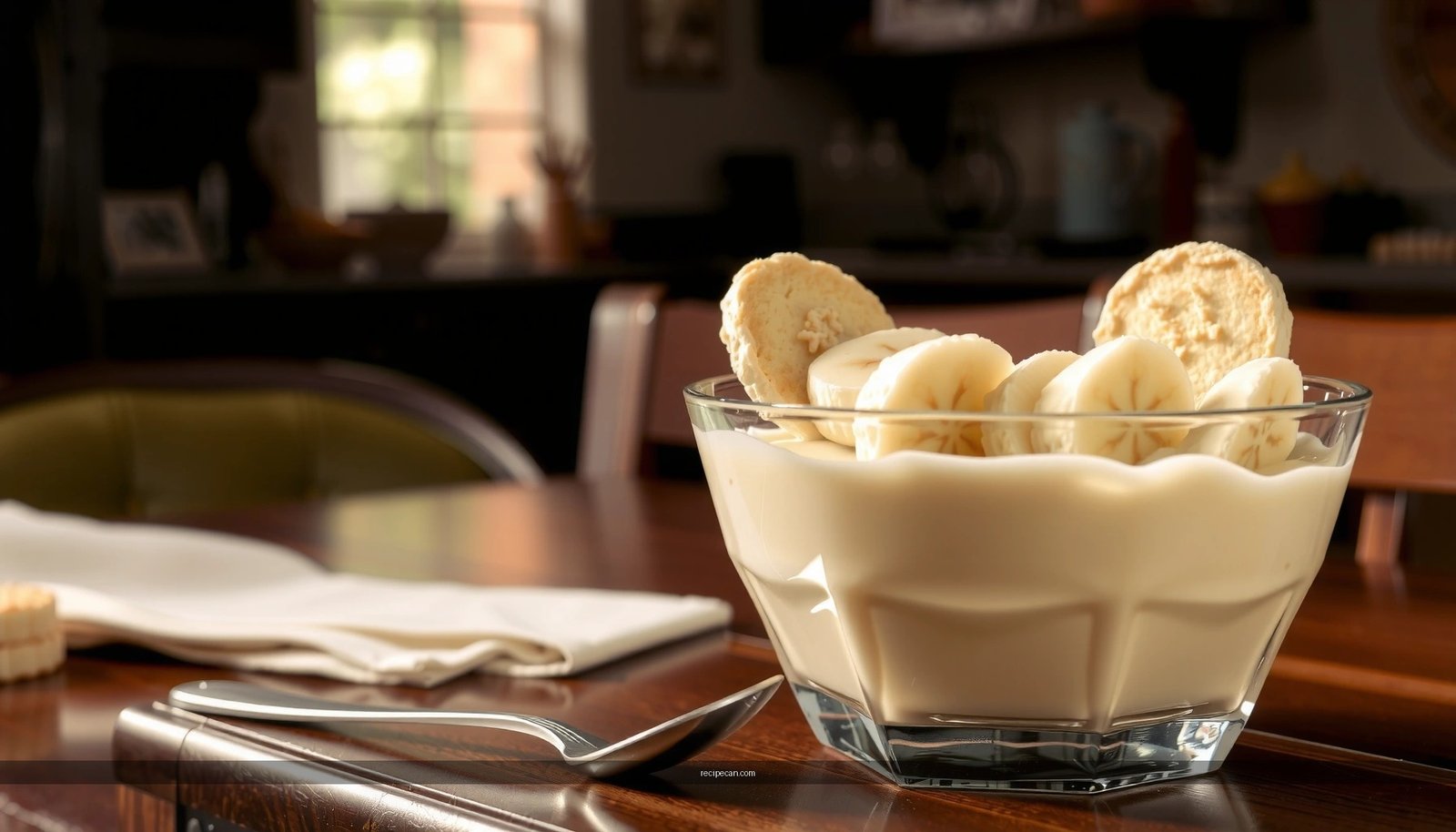
Paula Deen’s Not Yo Mama’s banana pudding recipe is the clear choice when you want a classic, old-school Southern dessert with layers that actually hold up after chilling. This recipe answers whether you should trust Paula Deen’s method for rich custard flavor, tender wafers, and that signature banana-and-meringue finish. If your goal is the best banana pudding for a crowd—make-ahead friendly and crowd-pleasing—this is the winner.
Paula Deen’s “Not Yo Mama’s” banana pudding is a banana pudding built for a thicker, custard-set slice—by cooking the custard to the right consistency and layering promptly so the wafers stay crisp instead of collapsing. If you follow the custard technique (smooth whisking, gentle cooking, proper cooling) and assemble with even, repeatable layers, you’ll get that rich, old-school Southern dessert texture that’s creamy on the spoon and sturdy in the dish.
Paula Deen’s version stands out because it treats banana pudding less like a simple “mix-and-chill” dessert and more like a cooked custard with a deliberate assembly process. That means you’re not just relying on cold refrigeration to thicken—you’re creating structure during cooking, then letting time finish the job. The result is a pudding that holds its shape better than many homemade banana puddings, especially when served a day later.
Gather the Ingredients
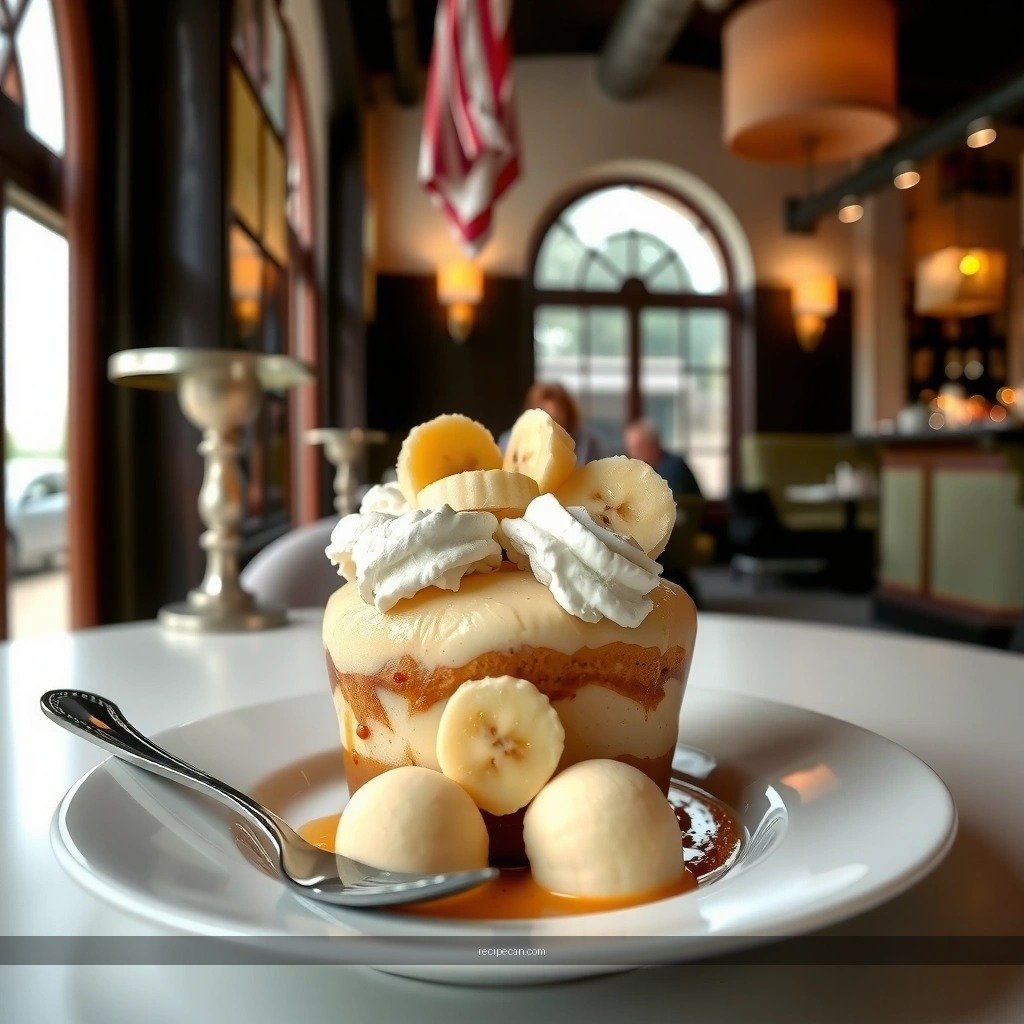
– Use ripe bananas, vanilla wafers, and a creamy custard base
– Have key add-ins on hand like eggs and dairy for proper thickening
Start by thinking like a custard-maker, not just a dessert assembler. The banana pudding experience depends heavily on three components: (1) ripeness of the bananas, (2) the integrity of the vanilla wafers, and (3) the custard thickness created by eggs and dairy.
Bananas (ripeness controls flavor and texture):
– Use ripe bananas with yellow peel and a few brown spots for sweet, fragrant flavor.
– If your bananas are very firm (mostly green/yellow with no spots), they can taste starchy and stay a bit chewy.
– If they’re overly soft with heavy browning, they may turn mushy and slightly bitter—still edible, but the pudding’s texture can get loose.
Vanilla wafers:
– Classic vanilla wafer cookies provide the crunchy layers that soften after chilling, creating that “custard-meets-crumble” effect.
– For the best results, use the wafers called for in your ingredient list (or an equivalent type), and keep them sealed until assembly to prevent stale texture.
Custard base essentials:
– Egg yolks (or a combination of eggs and yolks depending on your specific ingredient list) give emulsification and thickening.
– Milk and/or cream bring richness and a smooth custard mouthfeel.
– Sugar sweetens and also affects how quickly the mixture thickens.
– Cornstarch (optional depending on the recipe variation) can stabilize the custard for a set slice; some cooked Southern banana puddings rely primarily on egg thickening while others use starch as extra insurance.
Flavor enhancers that make it “elevated” without losing classic identity:
– Vanilla extract (or vanilla bean paste) for a rounded aroma.
– A pinch of salt to sharpen banana and custard sweetness.
– Optional: a small amount of banana flavoring is sometimes used in commercial versions, but it’s usually unnecessary if your bananas are truly ripe.
Mix the Custard Base
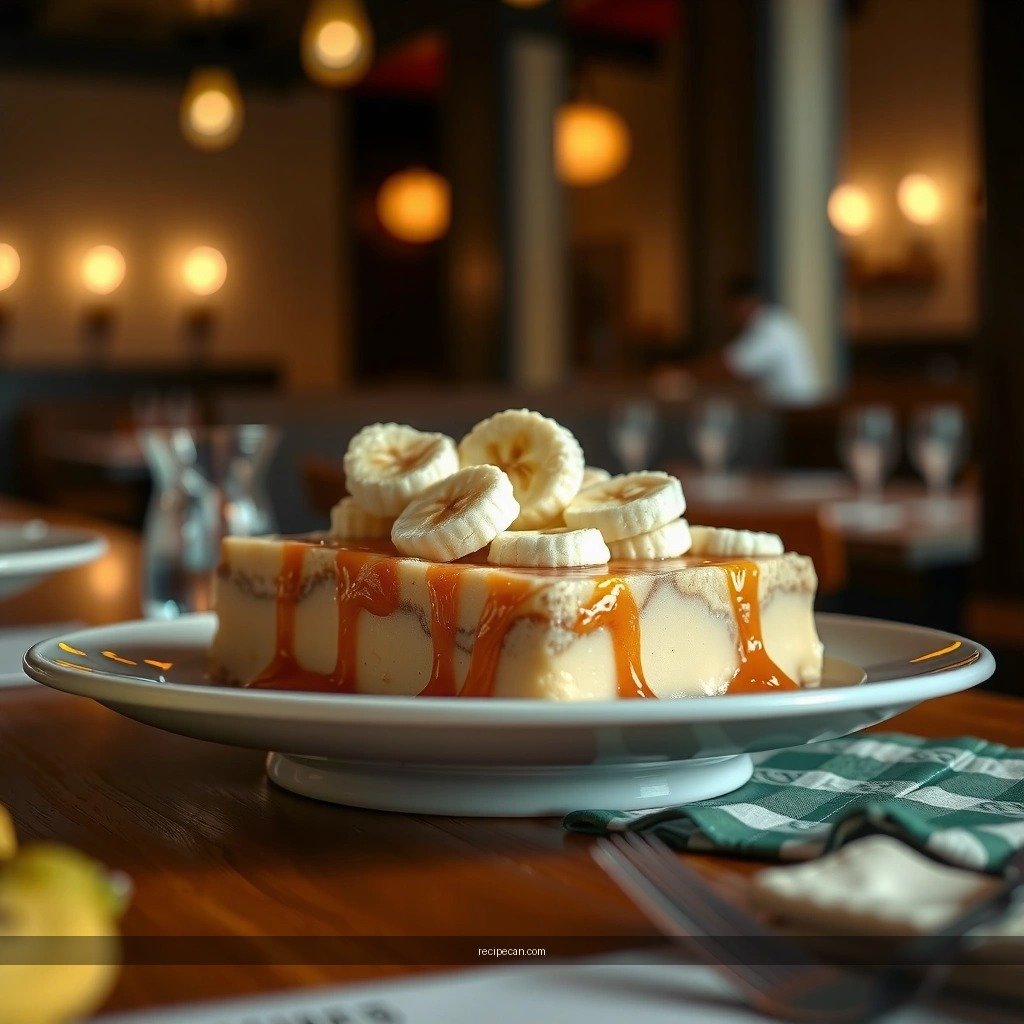
– Whisk the custard until smooth to avoid lumps
– Cook gently until it thickens, then cool slightly before assembling
The custard is where “Not Yo Mama’s” becomes unmistakably Paula Deen. The goal is not just “cook until thick”—it’s cook until thick enough to set when cold, while preventing curdling.
1) Whisk for smoothness before heat
Before turning on the stove, whisk your custard ingredients thoroughly. If you’re using cornstarch, whisk it into the cold dairy (or into a slurry with some dairy) so it dissolves completely. Lumps in custard usually come from:
– Undissolved starch
– Eggs not fully blended
– Or rushing the heat before whisking is complete
2) Cook gently to reach custard consistency
Cook over medium-low to medium heat, stirring constantly. When done, the custard should coat the back of a spoon and hold a visible line when you run your finger through it.
– If it’s too thin, your pudding may taste fine but won’t “set” cleanly after chilling.
– If it’s too thick while hot, it can become stiff or grainy as it cools.
3) Cool slightly before assembly
Let the custard cool just enough that it’s safe to layer (and not too hot for bananas and wafers), but still fluid. Cooling too long can make the custard begin to thicken in the pot, which can create uneven spreading.
Quality check (a practical test):
Dip a spoon, run a line with your finger. If the custard’s ridge stays for a moment before slowly smoothing, you’re in the right zone.
Layer Like Paula Deen
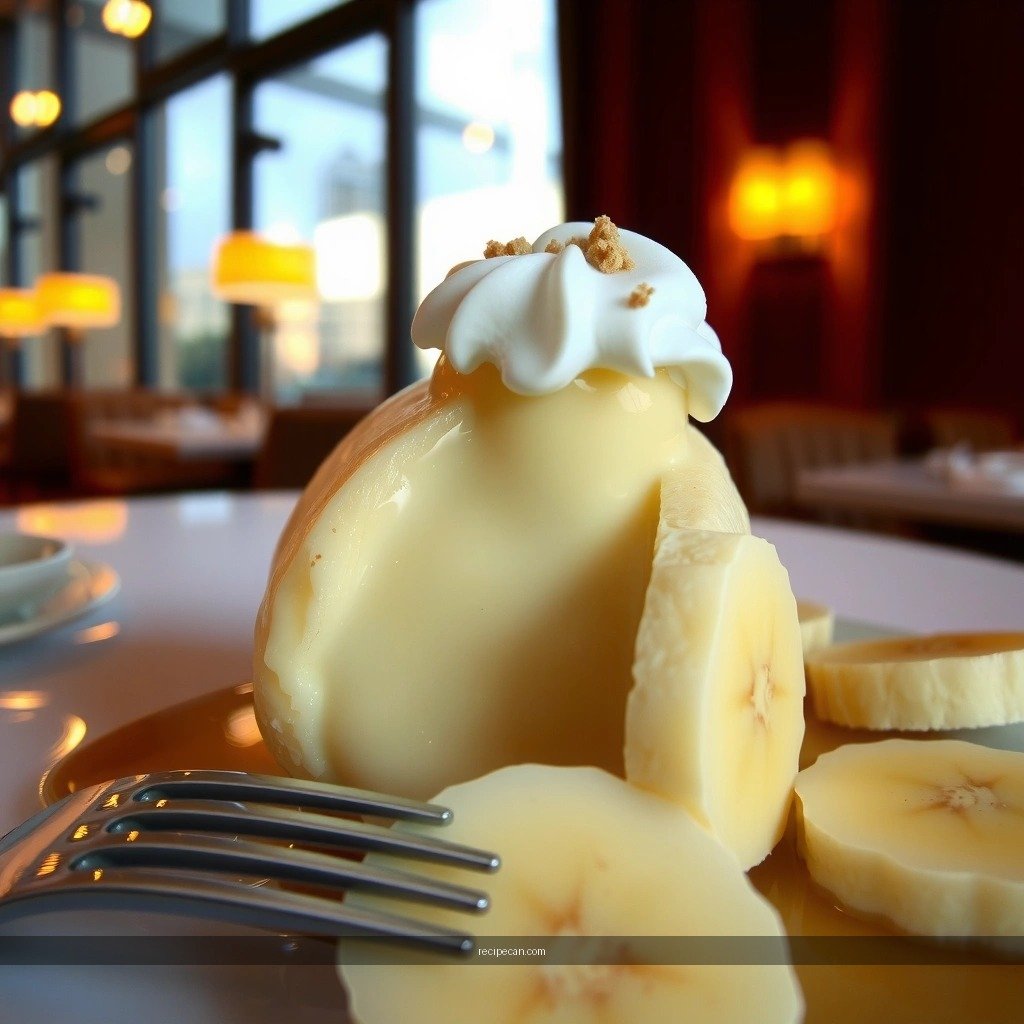
– Alternate wafers, bananas, and custard for even coverage
– Repeat layers to build a tall, consistent pudding structure
Layering is not just presentation—it’s the mechanism behind balancing creamy custard and crunchy wafer texture. The “Not Yo Mama’s” approach depends on consistent distribution: every bite gets banana, custard, and wafer.
Start with a foundation layer
– Place a first layer of vanilla wafers in the bottom of your dish.
– Add a layer of banana slices (use a thin, even distribution so the banana flavor is spread, not concentrated).
Add custard and spread deliberately
Pour custard over the wafers and bananas so they’re covered, but don’t drown the layers. Even coverage is the goal—think of it as sealing the layers rather than floating them.
Repeat for structure
Repeat the pattern:
1) wafers
2) bananas
3) custard
Continue until you reach the top, then finish with wafers and/or a final custard layer depending on your recipe instructions.
Why prompt layering matters
If you delay between custard cooking and assembly, custard can thicken too much to pour smoothly, which can create uneven pockets. Conversely, if the wafers sit uncovered too long, they can soften prematurely. Work in an assembly rhythm so layers form while conditions are right.
A practical storage-and-texture guide (so your pudding sets correctly)
Banana Pudding Storage Window & Expected Texture Set
| # | Storage/Handling Scenario | Food-Safety Time Guidance | Quality Window | Texture Reliability |
|---|---|---|---|---|
| 1 | Assemble and refrigerate within 1 hour | Up to 2 hours at room temp (after baking/holding) | Best at 12–24 hours | ★★★★★ |
| 2 | Refrigerate promptly after cooking custard | Up to 2 hours total at room temp | Peak at 18–36 hours | ★★★★☆ |
| 3 | Serve cold the same day (6–10 hours set) | Up to 2 hours room temp before refrigeration | Good at 6–12 hours | ★★★☆☆ |
| 4 | Refrigerate stored covered (dairy-based) | Typically 3–4 days in the fridge | Best on day 2 | ★★★★☆ |
| 5 | Hold in warmer temps for transport (insulated) | Avoid exceeding 2 hours total at room temp | Quality may dip after 90 minutes | ★★☆☆☆ |
| 6 | Freezer (best for short planning horizons) | Quality varies; consume within ~1–2 months | Banana texture can soften on thaw | ★☆☆☆☆ |
| 7 | Refrigerate but leave uncovered (surface drying) | Still typically 3–4 days, if kept cold | Texture is fine; surface crust forms | ★★★☆☆ |
Chill for the Best Texture
– Refrigerate until fully set to help flavors meld
– Let it rest before serving for cleaner slices and thicker spoonfuls
Banana pudding isn’t “done” the moment it goes in the fridge—it improves as it sets. During chilling, the custard firms and the wafers hydrate in a controlled way, turning into soft crumbs that still feel integrated rather than gummy.
Minimum chill time
– Aim for at least 6–8 hours, but the results typically improve with 12–24 hours.
– If you’re serving for a gathering, prepare the dessert the day before. That aligns perfectly with the custard’s thickening and flavor melding.
Resting before serving
Even after refrigeration, consider letting the dish sit 10–15 minutes before serving. This slightly relaxes the custard so it scoops easily while still holding structure.
Covering matters
– Cover to prevent the surface from drying or absorbing fridge odors.
– If you want a topping with contrast (like extra wafers), you can reserve it until the final hours so it stays crisp.
Serving Tips and Variations
– Top with additional wafers or whipped topping for extra crunch
– Adjust banana ripeness to control sweetness and firmness
“Not Yo Mama’s” is satisfying as written, but a few targeted adjustments can help you tailor it to your audience or occasion.
1) Add a deliberate crunch element
Right before serving, you can top with:
– a few extra whole wafers (for visually clear texture contrast)
– whipped topping (folded or piped), if your version includes it
If you add whipped topping too early, it can soften and blur the dessert’s structure. If you add it late, you preserve a more defined, creamy cap.
2) Control sweetness with banana selection
– For a sweet, dessert-forward profile: use bananas that are very fragrant with pronounced yellow tone and brown speckles.
– For a slightly firmer banana layer: use bananas that are ripe but still a bit more structured.
3) Manage wafer softness
If you want the wafers to remain more noticeable:
– assemble and chill, but don’t keep it overly long beyond the best quality window
– add a topping of fresh wafer crumbs only at the end
4) Portion and presentation
Banana pudding travels well in individual cups. That can also help with consistency in layers—each portion gets a similar ratio of wafer to custard.
Common Mistakes to Avoid
– Don’t rush thickening—under-cooked custard won’t set
– Avoid soggy layers by layering promptly and chilling properly
Even strong recipes can fail due to a handful of predictable issues. Here’s what to watch for when you’re aiming for that rich, set banana pudding texture.
Mistake #1: Undercooked custard
If the custard never reaches a true thickened stage, refrigeration won’t fix it. The result can be:
– runnier texture
– separation over time
– pudding that won’t hold layers when spooned
Fix: Cook until it coats the spoon and holds a line briefly. Then cool slightly before assembling.
Mistake #2: Rapid heat or insufficient stirring
Egg-based custards can curdle if heated aggressively or if they aren’t stirred often enough.
Fix: Use medium-low heat and stir consistently, especially along the bottom edge of the pot.
Mistake #3: Letting wafers sit too long
If wafers sit exposed while you’re waiting on custard cooling (or if assembly drags), they can soften unevenly.
Fix: Build in a steady workflow: custard to slightly warm, then assemble promptly.
Mistake #4: Overchilling the topping
If your toppings are added too early (especially whipped components), they can lose their structural contrast.
Fix: Keep delicate toppings until the final serving window when possible.
Serving-ready takeaway
Paula Deen’s “Not Yo Mama’s” banana pudding stands out because the custard is cooked for thickness and the layering method creates the perfect balance of creamy and crunchy. Make it this week by following the custard steps closely, assembling in even layers, and chilling long enough for the best texture—then share it once it’s set.
Frequently Asked Questions
What makes Paula Deen’s “Not Yo Mama’s Banana Pudding” recipe different from classic banana pudding?
Paula Deen’s not yo mama’s banana pudding recipe stands out because it uses a rich custard-style base made with eggs and milk, giving the filling a thicker, creamier texture than many quick versions. It also includes vanilla wafers for structure and banana slices layered throughout, so every spoonful has a mix of creamy pudding and soft cookie crunch. The overall flavor profile is deeper and more “bakery style,” which is one reason people search for her banana pudding method specifically.
How do you make Paula Deen’s Not Yo Mama’s Banana Pudding step-by-step without curdling the custard?
Start by whisking the eggs with sugar and other custard ingredients, then heat the mixture slowly while stirring constantly to keep it smooth. Use medium-low heat and don’t rush—curdling usually happens when custard is overheated too quickly or not stirred. Once thickened, remove from heat and fold or add your flavoring (like vanilla) so the Paula Deen banana pudding filling stays silky before layering with wafers and bananas.
Why does banana pudding sometimes turn watery, and how can you prevent it in Paula Deen’s recipe?
Banana pudding can become watery when bananas release extra moisture or when the custard layer isn’t thick enough to “hold” the layers. To prevent this in Paula Deen’s not yo mama’s banana pudding, allow the custard to fully thicken before assembling and use ripe-but-firm bananas so they don’t break down too fast. Chilling is also key—let the dessert rest in the refrigerator so the wafers soften in a controlled way and the whole dish sets up.
Which bananas are best for Paula Deen’s Not Yo Mama’s Banana Pudding—ripe or firm?
For Paula Deen’s not yo mama’s banana pudding, bananas that are ripe but still hold their shape work best. Extremely soft bananas can mash and flood the dessert, while very firm ones may taste starchy and not blend well with the creamy pudding. Aim for bananas with yellow peels and just a few brown speckles to get the sweet banana flavor without excess water.
What’s the best way to store and serve Paula Deen’s banana pudding so the wafers stay perfect?
Store the assembled pudding covered in the refrigerator, and plan to serve it after it has chilled long enough for the wafers to soften without turning mushy. Typically, a few hours to overnight resting time gives you the best balance of creamy custard and tender cookie texture. If you’re preparing ahead for an event, keep it well-covered to prevent skin formation on top and maintain that “Paula Deen banana pudding” signature creaminess.
References
- Google Scholar Google Scholar
https://scholar.google.com/scholar?q=banana+pudding+recipe+egg+starch+custard+stability - Google Scholar Google Scholar
https://scholar.google.com/scholar?q=food+science+banana+pudding+custard+thickening+cornstarch+eggs - Google Scholar Google Scholar
https://scholar.google.com/scholar?q=paula+dean+%22not+yo%27+mama%27s+banana+pudding%22+history - Banana pudding
https://en.wikipedia.org/wiki/Banana_pudding - Custard
https://en.wikipedia.org/wiki/Custard - https://www.britannica.com/topic/Custard
https://www.britannica.com/topic/Custard - https://www.britannica.com/topic/pudding
https://www.britannica.com/topic/pudding - https://en.wikipedia.org/wiki/Tempering_(cookery
https://en.wikipedia.org/wiki/Tempering_(cookery - https://en.wikipedia.org/wiki/Egg_(food
https://en.wikipedia.org/wiki/Egg_(food - Paula Deen
https://en.wikipedia.org/wiki/Paula_Deen