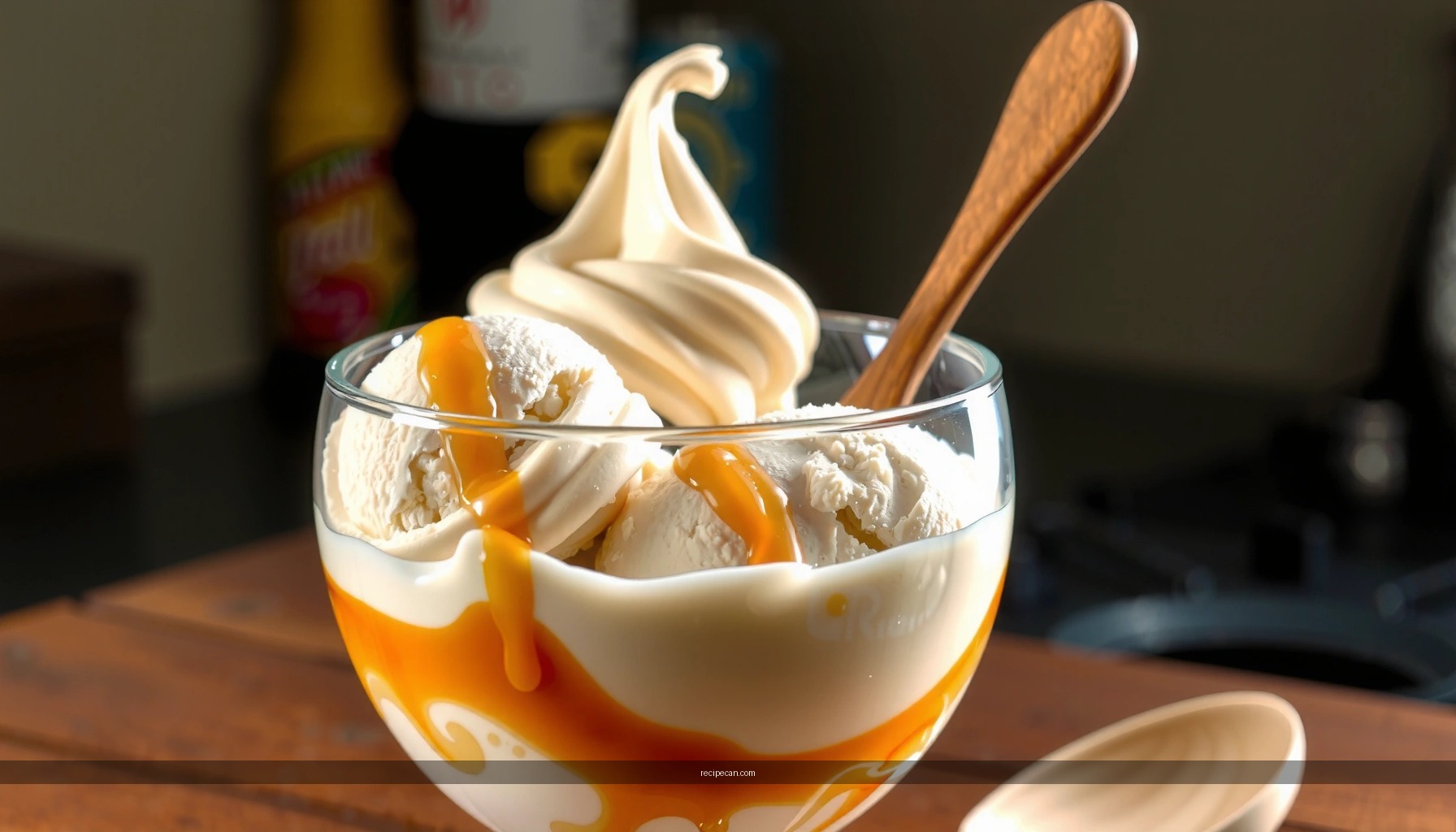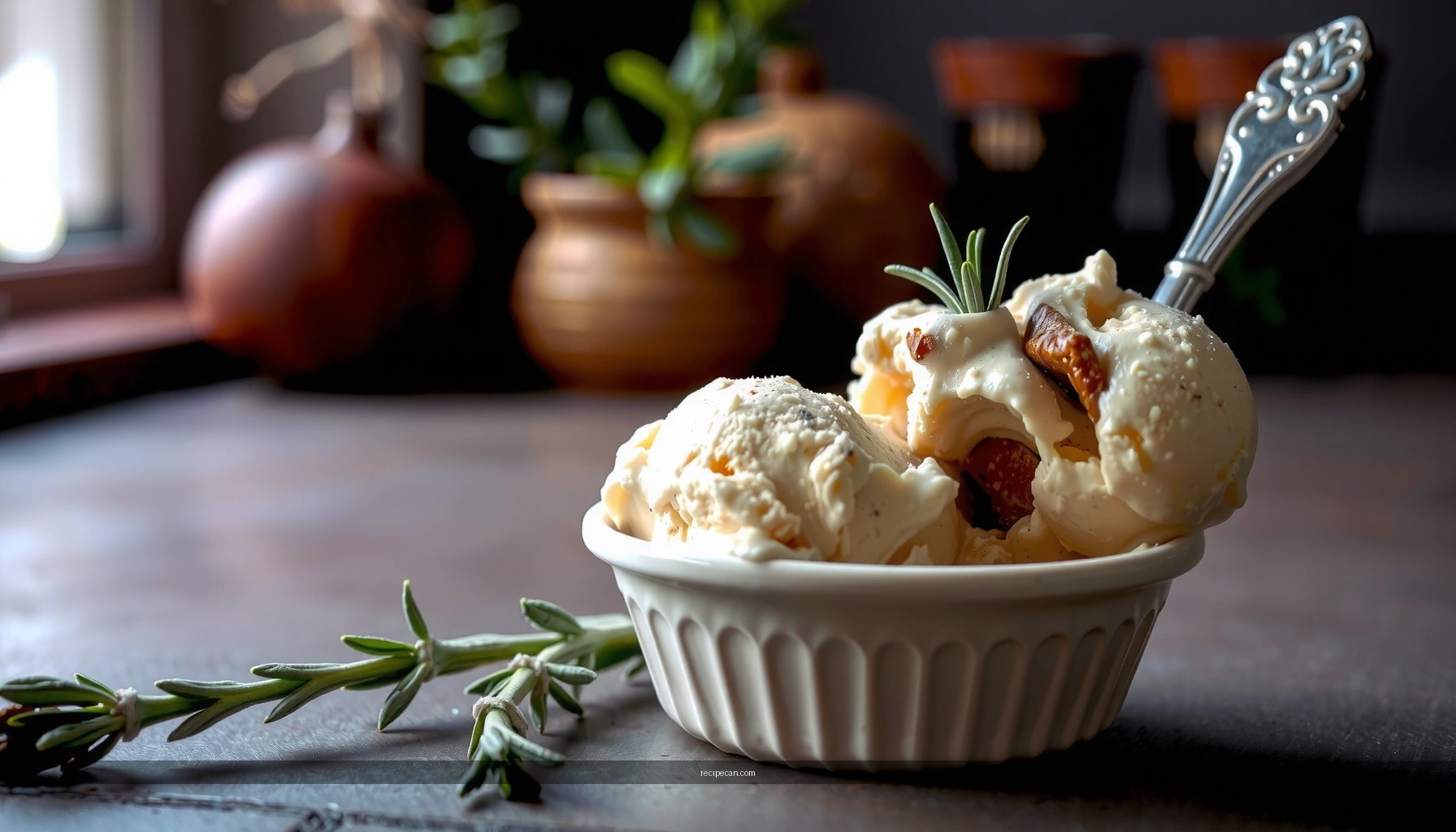
This rosemary ice cream recipe delivers a creamy, herbal scoop without eggy fuss or complicated tempering. You’ll get the exact step-by-step method for infusing fresh rosemary into a rich base, then churning and freezing it into a smooth texture that tastes unmistakably botanical. If you want the best way to make rosemary ice cream at home, this is the one that answers how to do it.
This rosemary ice cream recipe makes a creamy, lightly herbal scoop by steeping fresh rosemary in warm cream and then churning a gently cooked custard base. If you follow the infusion-and-custard steps—especially straining the rosemary and chilling the custard thoroughly—you’ll get smooth texture and a fragrant, balanced flavor without bitterness.
Ingredients for Rosemary Ice Cream

– Fresh rosemary, heavy cream, milk, and sugar form the base flavor and texture
– Eggs help create a rich custard for a smooth, scoopable result
For the best results, treat ingredients as functional components of the flavor and texture—not just “things to combine.” Fresh rosemary provides aromatic oils (the true flavor carriers), while the dairy supplies fat and proteins that stabilize the ice cream during freezing. Sugar doesn’t only sweeten; it also helps prevent the formation of overly hard ice crystals.
A practical, proportion-focused ingredient set for a standard home batch (about 1 quart / ~950 ml) typically looks like this:
– Fresh rosemary: 2–3 tablespoons (about 6–10 grams), bruised slightly to release oils
– Heavy cream: 1 cup (240 ml)
– Whole milk: 1 cup (240 ml)
– Sugar: 1/2 cup (100 grams), plus more to taste if you prefer sweeter ice cream
– Egg yolks: 4 large
– Optional for balance: a pinch of salt (even if your plan includes lemon zest, salt helps the herbal notes read cleanly)
Key quality notes (small choices, big outcomes)
– Use fresh rosemary for the most aromatic profile; dried rosemary is more likely to taste woody or medicinal when steeped too long.
– Use whole dairy rather than lower-fat alternatives if you want “custard-style” richness.
– Don’t crank the heat when building the custard; gentle thickening is what prevents a grainy texture.
To make the “how does each ingredient contribute?” idea concrete, below is a quick reference that maps ingredients to their role in rosemary ice cream.
Ingredient Roles in a Custard-Style Rosemary Ice Cream (Per ~1 Quart Batch)
| # | Ingredient | Typical Amount | Primary Function | Impact on Texture |
|---|---|---|---|---|
| 1 | Fresh rosemary | 2–3 tbsp | Aroma + herbal flavor oils | Supports smooth flavor |
| 2 | Heavy cream | 240 ml | Fat for richness + churn stability | High creaminess |
| 3 | Whole milk | 240 ml | Protein + body; balances sweetness | Improves scoop texture |
| 4 | Sugar | 100 g | Sweetness + lowers freezing point | Less icy texture |
| 5 | Egg yolks | 4 yolks | Custard thickener (emulsification + stability) | Creamy body |
| 6 | Pinch of salt (optional) | 1/16–1/8 tsp | Enhances herbal aroma | Cleaner flavor perception |
| 7 | Lemon zest (optional) | 1–2 tsp | Brightens rosemary notes | Can taste sharp if overused |
How to Infuse Rosemary for Best Flavor
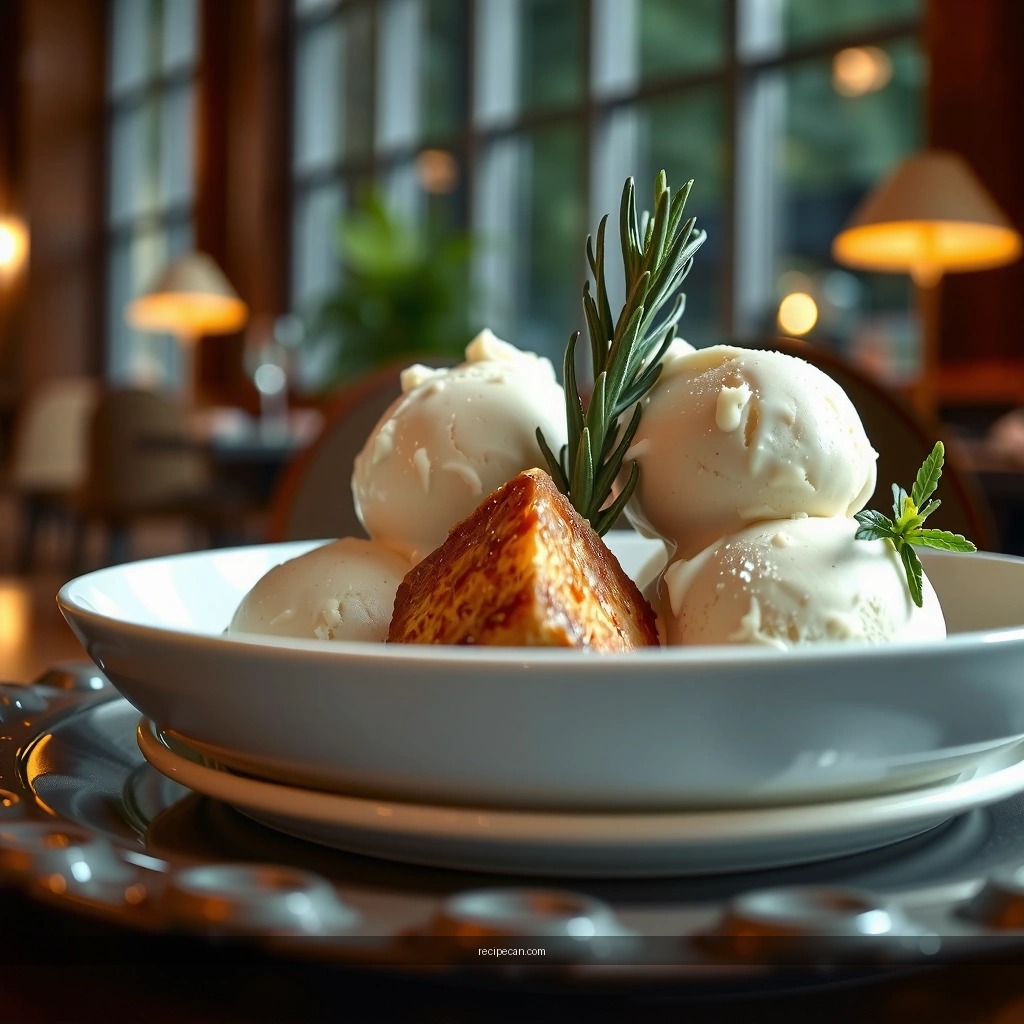
– Steep rosemary in warm dairy until fragrant, then strain to avoid bitterness
– Adjust intensity by steeping longer for stronger flavor or shorter for subtle notes
Rosemary contains both bright, aromatic compounds and more assertive, sometimes bitter elements. The goal is to extract the aromatic portion without pulling harshness into the base.
The infusion approach
1. Warm the dairy gently (cream + milk) until steaming, not boiling.
2. Add bruised rosemary and maintain a low simmer or just-steaming temperature.
3. Steep until fragrant—typically 15–25 minutes for fresh rosemary, depending on how bold you want the profile.
Avoid bitterness with two controls
– Strain promptly. Once the mixture smells distinctly herbal (but not sharp), strain out the leaves.
– Don’t boil the rosemary. Higher heat accelerates extraction of bitter notes.
How to dial in intensity (a reliable method)
– Start with 15 minutes for a subtle finish.
– Increase to 20–25 minutes for a more pronounced “herb-forward” scoop.
– If you’re using particularly mature rosemary (thicker, darker sprigs), keep steeping closer to 15–20 minutes.
Quality check: After straining, taste a spoonful of the warm infused dairy. It should taste pleasant and aromatic, not overly concentrated—ice cream will amplify perceived flavor intensity once chilled and frozen.
Make the Custard Base
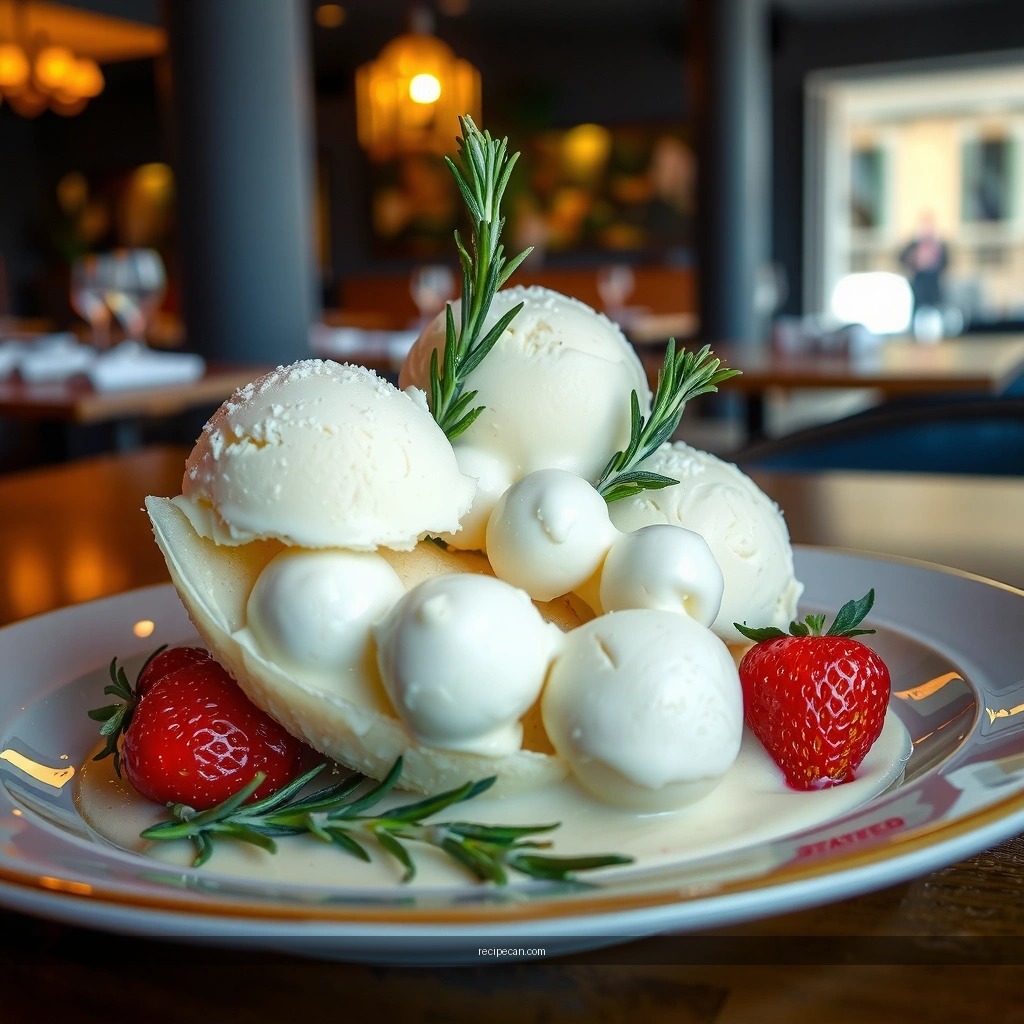
– Warm milk and cream, then whisk egg yolks with sugar before combining
– Cook gently until the mixture thickens enough to coat a spoon
Custard is what gives rosemary ice cream its signature creaminess and smoothness. The egg yolks act as an emulsifier and thickener, helping the final product stay scoopable rather than icy.
Step-by-step custard method
1. Whisk egg yolks and sugar until they look slightly lighter and smoother.
2. Temper the yolks: slowly drizzle some hot infused dairy into the yolks while whisking continuously.
– This prevents scrambled eggs and creates an even texture.
3. Return everything to the pot and cook on low to medium-low heat.
4. Thicken gently until the custard coats the back of a spoon (a common visual test).
– For precision: aim roughly for 170–175°F (77–80°C), but rely on the spoon test if you don’t have a thermometer.
Why gentle cooking matters
– Overheating can cause egg proteins to tighten too far, leading to a grainy mouthfeel.
– Underheating may leave the base too thin, producing weak structure and larger ice crystals.
Strain for maximum smoothness (recommended)
Even with careful tempering, strain the custard through a fine mesh sieve after cooking. This extra step increases the probability of a silky, professional texture.
Churn and Achieve a Smooth Texture
– Chill the custard completely before churning for the best consistency
– Churn until thick, then transfer to a container for freezing
Churning is where the physics happens: the base is aerated and cooled quickly enough to form small ice crystals. The smoother the base when it enters the churn, the smoother the finished ice cream.
Chill requirements
– After cooking and straining, cool the custard quickly (an ice bath works well).
– Refrigerate until fully cold—at least 4 hours, ideally overnight.
– Cold temperature reduces the “shock” during churning and improves the ice crystal size.
Churning targets
– Churn until the mixture looks thick, like soft-serve.
– Work efficiently when transferring to a container so you don’t let it warm up.
Freezing for proper set
– Transfer to an airtight container.
– Press parchment or plastic wrap directly onto the surface to minimize air exposure.
– Freeze 4+ hours for best scoopability.
Flavor Adjustments and Mix-In Ideas
– Add a pinch of salt or lemon zest to brighten the herbal profile
– Optional mix-ins: honey swirl, chopped pistachios, or flaky sea salt on top
Rosemary ice cream is often at its best when you treat it like an herb-forward dessert: give it contrast and brightness rather than more sweetness.
High-impact adjustments
– Pinch of salt: makes the rosemary read cleaner and more aromatic.
– Lemon zest (1–2 teaspoons): adds a citrus lift that complements rosemary’s piney notes.
– Honey swirl: introduces floral sweetness that pairs naturally with herbal flavors.
Mix-ins that enhance texture and flavor
– Honey swirl: Add after churning; freeze briefly to set, then swirl again lightly for visual appeal.
– Chopped pistachios: brings crunch and a nutty counterpart to rosemary’s complexity.
– Flaky sea salt on top: creates sweet-salty contrast and elevates the herbal finish.
Practical serving pairing
– Serve with fresh berries or a simple shortbread cookie.
– For a more “grown-up” profile, pair with espresso or a citrusy beverage.
Storage and Serving Tips
– Store airtight in the freezer to prevent ice crystals and flavor loss
– Let it sit 5–10 minutes before serving for optimal scoopability
Even when churned correctly, ice cream can degrade over time. Freezer temperature swings, air exposure, and moisture loss can all change texture and flavor.
Best storage practices
– Store in an airtight container with minimal headspace.
– Press parchment or plastic wrap directly against the surface before sealing.
– Keep freezer temp consistent (ideally around 0°F / -18°C).
Serving technique for the perfect scoop
– Remove from freezer and let sit 5–10 minutes before serving.
– This short rest softens the surface without turning the entire batch into a melt.
Flavor timing note
If you can, eat within 2–3 weeks for peak flavor and smoothness. Rosemary’s aromatic compounds are best when the ice cream is fresh, and they gradually mellow with time.
This rosemary ice cream recipe is all about proper rosemary steeping and a gently cooked custard for a smooth, herbal finish. Follow the steps, taste for intensity, and try a simple topping like flaky salt or honey—then make a batch and share your favorite twist.
Frequently Asked Questions
How do you make rosemary ice cream without tasting the rosemary too strongly?
Infuse the cream or milk with fresh rosemary gently by heating it on low just until steaming, then steep off the heat for 20–30 minutes. Strain the rosemary well before churning so the flavor stays subtle and sweet. If you’re using dried rosemary, start with a much smaller amount (about 1/4 to 1/2 teaspoon per quart of dairy) because it’s more concentrated.
What’s the best base for a homemade rosemary ice cream recipe—custard or no-churn?
For a creamy, classic texture, a custard base (milk/cream + egg yolks) is usually best because it thickens the base and improves scoopability. No-churn rosemary ice cream can work well too, but the rosemary flavor often comes through differently since the mixture isn’t cooked to mellow the herbs. If you want restaurant-style smoothness, choose custard; if you want quick results, choose no-churn.
Why do you steep rosemary in the cream, and how long should you infuse it?
Steeping lets the rosemary oils dissolve into the dairy, creating a balanced rosemary ice cream flavor that blends with vanilla and sweetness. Typical infusion time is 20–30 minutes off the heat; longer steeping can make the herb taste sharp or piney. Taste the infused cream before churning—if it’s pleasant in the dairy, it will be nicely balanced in the final ice cream.
Which sweeteners work best in rosemary ice cream—honey, sugar, or maple syrup?
White sugar keeps the rosemary flavor clean and lets vanilla and cream dominate, making it ideal for a traditional taste. Honey and maple syrup add depth and mild floral or woody notes that pair beautifully with rosemary, but they can slightly darken the color and alter sweetness. Use the same total sweetness by weight and consider starting with a slightly lower amount if your sweetener is very strong, then adjust to taste.
Best way to churn and store rosemary ice cream so it doesn’t freeze icy?
Churn your rosemary ice cream according to your machine’s instructions and then freeze it promptly in an airtight container to reduce ice crystal formation. For the smoothest texture, let it set at least 4 hours before serving and keep the freezer temperature consistent. If it gets hard, briefly let it sit at room temperature for 5–10 minutes to soften rather than microwaving.
References
- Google Scholar Google Scholar
https://scholar.google.com/scholar?q=rosemary+ice+cream+recipe - Google Scholar Google Scholar
https://scholar.google.com/scholar?q=rosemary+infusion+dairy+ice+cream - Google Scholar Google Scholar
https://scholar.google.com/scholar?q=rosemary+extract+essential+oil+in+ice+cream - https://pubmed.ncbi.nlm.nih.gov/?term=rosemary+extract+ice+cream
https://pubmed.ncbi.nlm.nih.gov/?term=rosemary+extract+ice+cream - https://pubmed.ncbi.nlm.nih.gov/?term=rosemary+essential+oil+food+lipid+oxidation
https://pubmed.ncbi.nlm.nih.gov/?term=rosemary+essential+oil+food+lipid+oxidation - Rosemary
https://en.wikipedia.org/wiki/Rosemary - Ice cream
https://en.wikipedia.org/wiki/Ice_cream - Ice cream | Definition, History, & Production | Britannica
https://www.britannica.com/topic/ice-cream - Rosemary | Description, History, Plant, Herb, Spice, Uses, & Facts | Britannica
https://www.britannica.com/plant/rosemary - rosemary antioxidant | Nature Search Results
https://www.nature.com/search?q=rosemary+antioxidant