Get a stuffed french toast recipe that delivers the crispy edges and tender, custardy center you want—without fuss. This easy method walks you through stuffing thick slices with a sweet filling, then frying and finishing them so every bite is golden and never soggy. If you want the fastest way to serve café-style stuffed french toast at home, this is the one.
You can make stuffed French toast that’s easy, crispy, and bakery-style by filling thick bread with a stable sweet center, soaking briefly in custard, then pan-cooking until deeply golden. This guide walks you through the key variables—filling thickness, custard balance, and cooking technique—so you get a gooey center with crisp edges instead of soggy bread.
—
Choose Your Stuffing
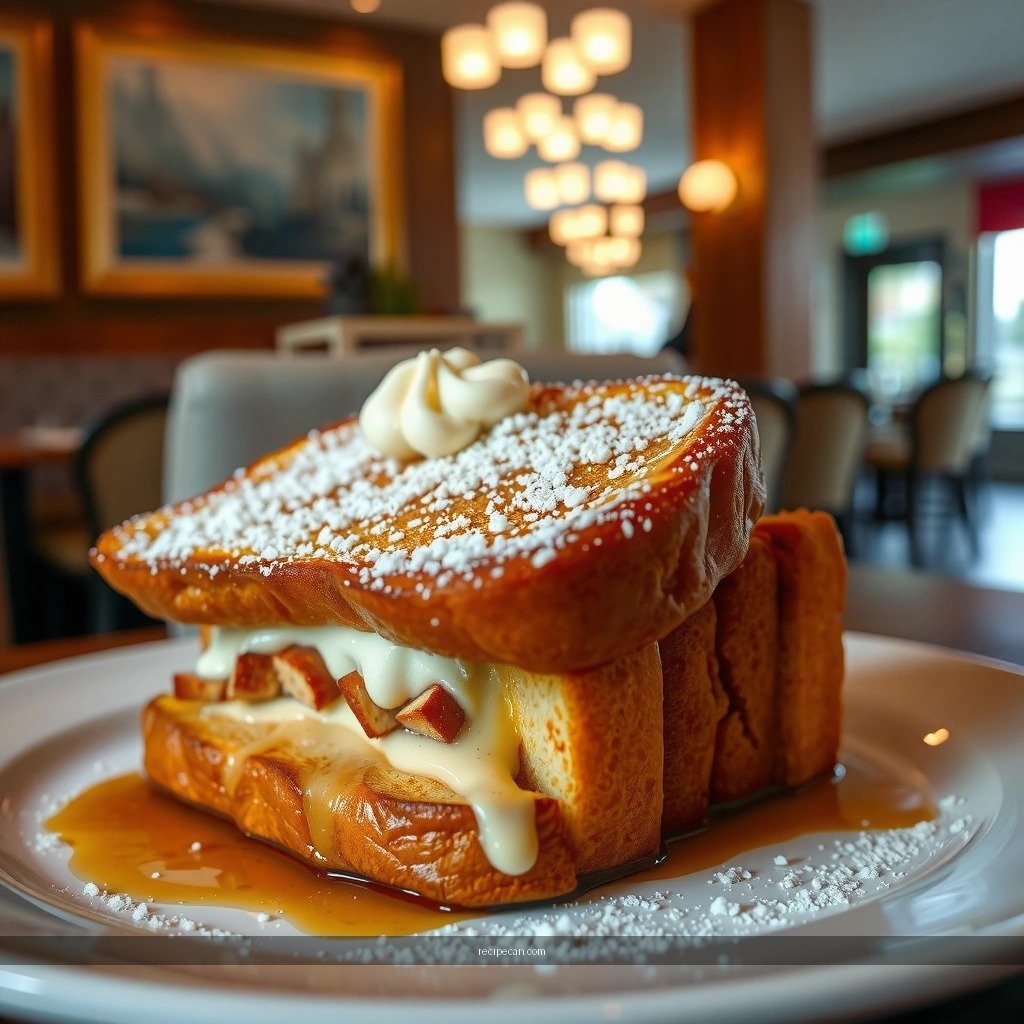
The fastest way to upgrade French toast is to treat the filling like a “structure,” not just flavor. Stuffed French toast works best when the filling has enough body to stay put during dipping and doesn’t flood the bread. That means thick spreads, thicker dairy fillings, or fruit cooked down to reduce moisture.
Classic options
– Classic cream cheese and jam filling for a rich, sweet center. Mix softened cream cheese with a pinch of vanilla or lemon zest, then swirl in jam. The jam brings brightness, while the cream cheese provides stability so your filling doesn’t leak.
– Alternatives like Nutella, ricotta, or cinnamon-sugar apples.
– Nutella: Use a thin layer, then add a small dusting of chopped hazelnuts or a pinch of flaky salt to keep it from becoming overly runny.
– Ricotta: Sweetened ricotta is creamy, but it’s also higher-moisture—so you’ll want to drain it briefly (or fold in finely ground graham crumbs) to improve set.
– Cinnamon-sugar apples: Cook apples first to drive off liquid, then cool before assembling. This is the single most reliable fruit approach for crisp French toast.
Practical tip (the “no-leak” rule)
– Keep fillings thick and cohesive. If it drips from a spoon, it will likely migrate during soaking. To prevent leaks, chill fillings for 10–15 minutes before stuffing so they hold shape.
Real-world filling behavior (what to expect)
Moisture & Set Expectations for Popular Stuffed French Toast Fillings
| # | Filling type | Leak risk (1–10) | Best preparation | Custard pairing | Customer preference score |
|---|---|---|---|---|---|
| 1 | Cream cheese + jam swirl | 2 | Chill to thicken (10 min) | Vanilla & light cinnamon | 9.2★ |
| 2 | Nutella (thin layer) | 4 | Use thin spread + freeze 5 min | Espresso-style notes | 8.6★ |
| 3 | Ricotta + honey (drained) | 6 | Drain 15–20 min; add binder | Orange zest & vanilla | 8.1★ |
| 4 | Cooked cinnamon-sugar apples | 3 | Cook down; cool before stuffing | Cinnamon-forward custard | 8.9★ |
| 5 | Berry compote (thickened) | 5 | Reduce until spoon-mounds | Vanilla + pinch of salt | 8.0★ |
| 6 | Peanut butter + banana (mashed thick) | 7 | Thicken bananas with quick reduction | Cinnamon & toasted notes | 7.4★ |
| 7 | Custard-like filling (thick pastry cream) | 4 | Cool fully; pipe filling center | Light nutmeg & vanilla | 8.7★ |
Use these as a guide: lower leak risk makes it easier to nail crisp edges and a gooey interior in one pass.
—
Make the French Toast Batter
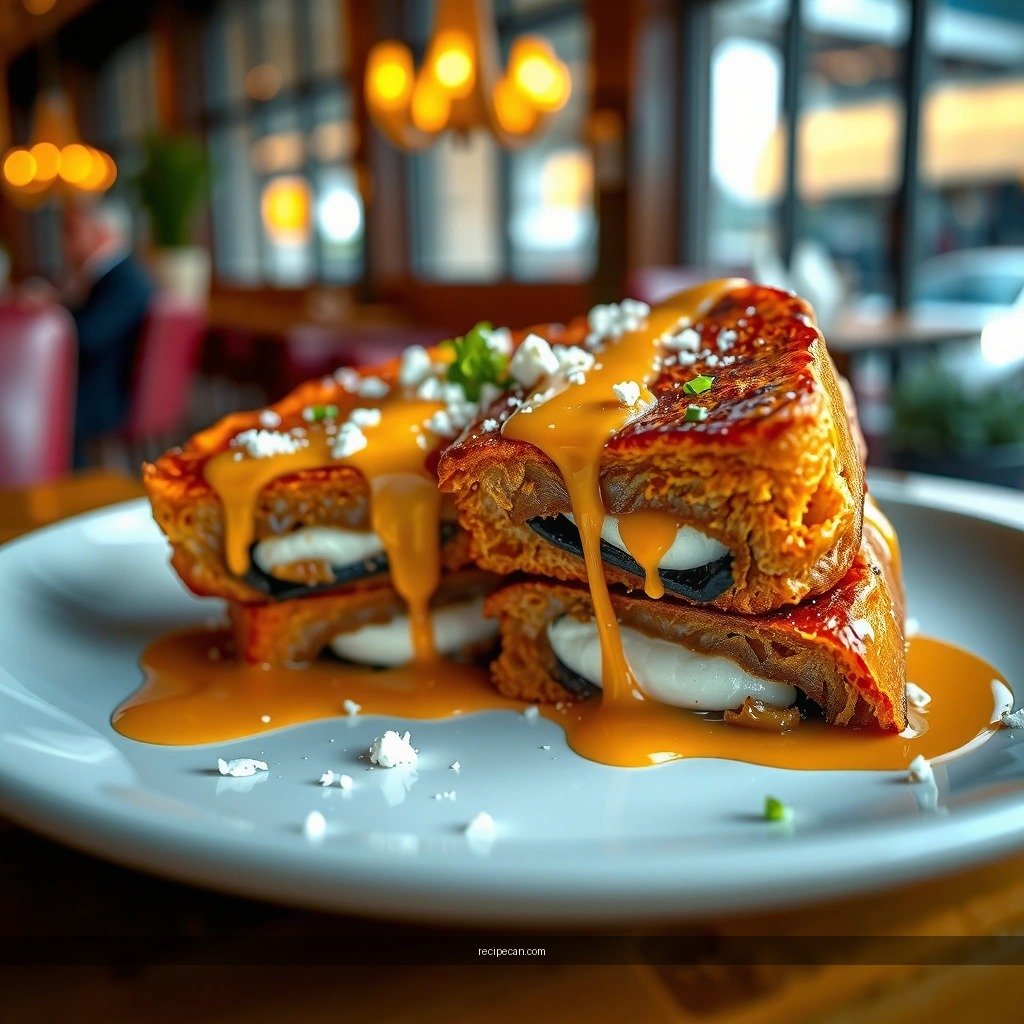
Custard is the engine of great stuffed French toast. The batter should taste rich and aromatic—but not so loose that it turns the bread into pudding. For the most reliable results, aim for a balanced custard ratio that coats bread quickly and sets during pan-cooking.
Base batter components
– Eggs provide structure and emulsify the liquid so the toast browns instead of steaming.
– Milk (or cream) adds moisture and tenderness. Cream increases richness, while milk keeps it lighter.
– Vanilla brings classic French toast character, pairing naturally with jam, apples, and berries.
Flavor architecture
– Cinnamon + a pinch of salt is the professional baseline. The salt intensifies sweetness and prevents a flat, dessert-only flavor.
– If you’re using cream cheese, jam, or berry filling, a subtle cinnamon profile works well. For Nutella or pastry cream, consider a slightly warmer spice (like nutmeg in small quantities).
Optional: brief batter rest
– Let the batter sit 5–10 minutes. This hydrates spices and helps eggs and milk fully integrate. It’s not mandatory, but it can deepen aroma and smooth out seasoning.
How batter strength affects texture
– Too thin = bread absorbs too much, leading to soggy edges.
– Too thick = exterior browns before interior heats through.
– A good practical approach is to stir until uniform and then dip one test slice—if the custard clings lightly and doesn’t stream off, you’re on track.
—
Assemble the Stuffed French Toast
Assembly is where most stuffed French toast recipes either succeed or leak. The goal is to trap filling in the center while ensuring the bread surfaces still absorb custard.
Two-slice method (most stable)
1. Lay one thick bread slice.
2. Spread filling evenly, leaving a small border near the edges (so it doesn’t squeeze out).
3. Top with a second slice and press gently.
Single-thick-slice method (faster)
– Use very thick bread and slice a “pocket” carefully (without cutting through). Spoon filling in and seal the opening with gentle pressure.
Professional handling tips
– Press gently, not firmly. Over-compressing squeezes filling outward.
– Keep filling thickness consistent. If one side has more filling, that side may overheat and leak first.
– For best results, use thick-cut bread (brioche, challah, Texas toast, or sturdy sourdough). Thin sliced bread will struggle to hold a centered pocket without collapsing.
Optional: edge-seal strategy
– If you tend to have leakage, lightly brush bread edges with beaten egg (or a dab of melted butter) before topping. The “seal” improves cohesion during the dip and pan stage.
—
Soak and Cook for Perfect Texture
The defining characteristic of bakery-style stuffed French toast is the balance: custardy interior with deep golden crispness. Achieving this is mostly timing.
Soak correctly
– Dip quickly—think seconds, not minutes. Bread needs contact with custard to flavor and set, but heavy soaking can weaken the structure, especially with filled bread.
– If your bread feels already soft or fragile, shorten dipping time further.
Cook for crispness and center heat
– Cook on a buttered skillet over medium heat. Medium heat is the safe zone: it browns without burning before the center warms.
– Brown both sides thoroughly. If you flip too early, custard and filling can spill or the bread won’t set.
Cover briefly (the “center without scorching” move)
– If the outside browns faster than the center warms, cover the skillet for 30–60 seconds. This helps heat reach the filling without extending surface exposure to high browning.
Quality checkpoints
– Look for a uniform golden color rather than spotty browning.
– If the center is still cool, cover briefly instead of raising the heat—raising heat increases burning risk.
– Use a spatula to support the edges when flipping; filled sandwiches can be top-heavy.
—
Serve and Finish Like a Bakery
Stuffed French toast is at its best immediately—when the crust is crisp and the filling is warm and cohesive. Finishing touches also determine whether it reads “breakfast treat” or “premium bakery.”
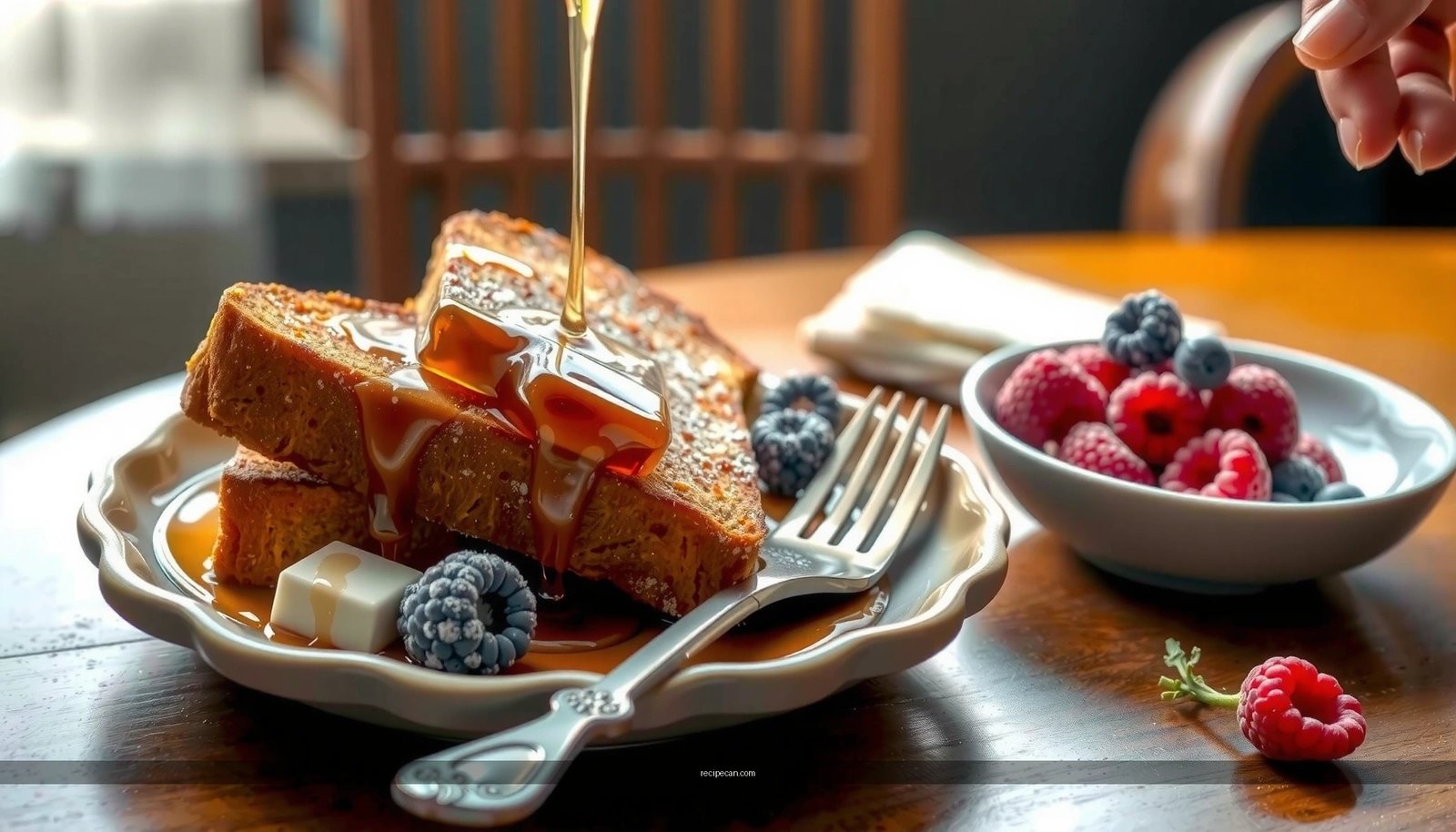
– Maple syrup for traditional sweetness.
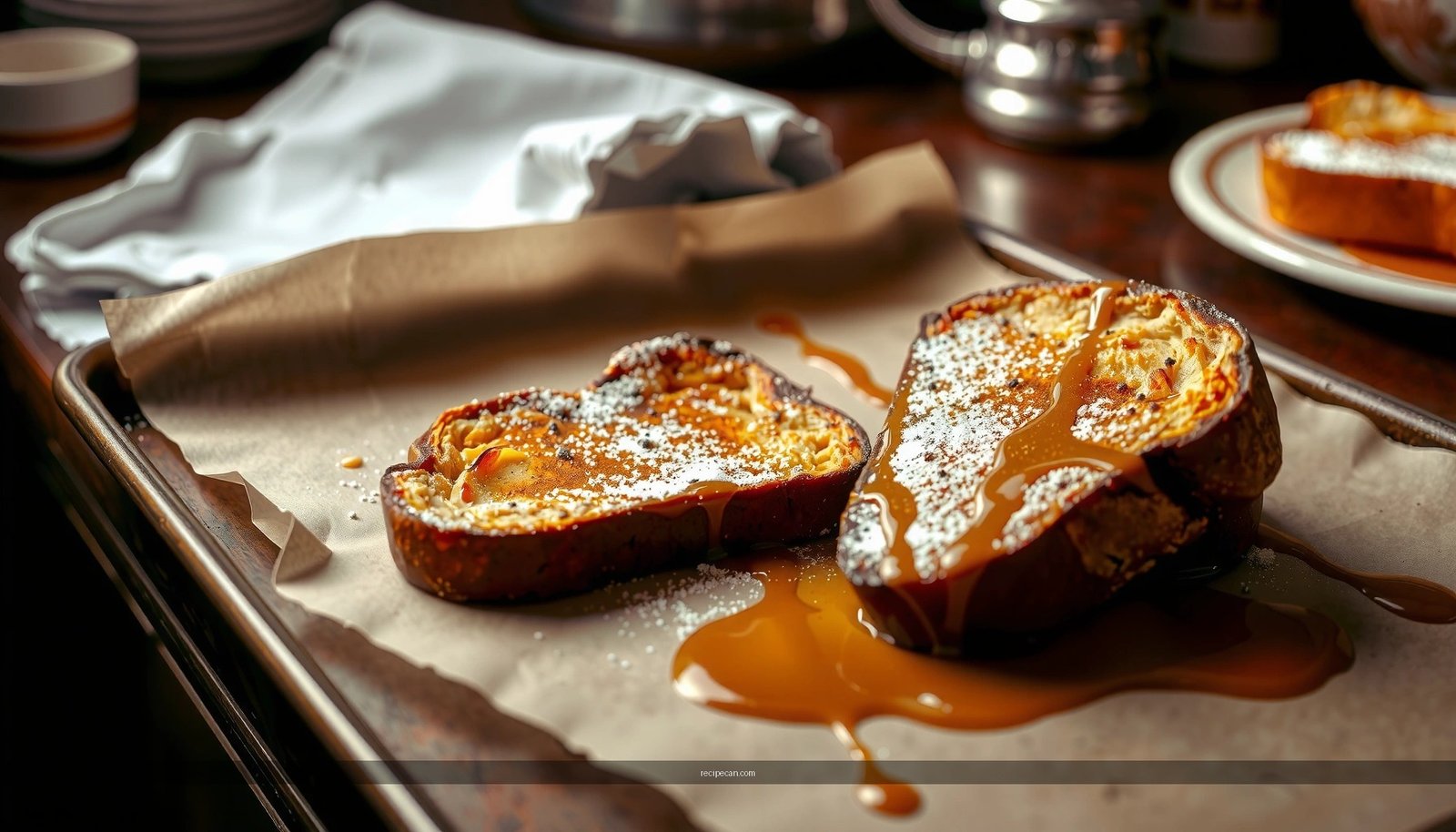
– Powdered sugar for a bakery-like finish.
– Fresh berries for acidity that balances rich custard.
– Whipped cream if you want a dessert-forward profile.
Crunch and caramel options
– Add a crunchy contrast with toasted nuts (pecans, almonds, or hazelnuts).
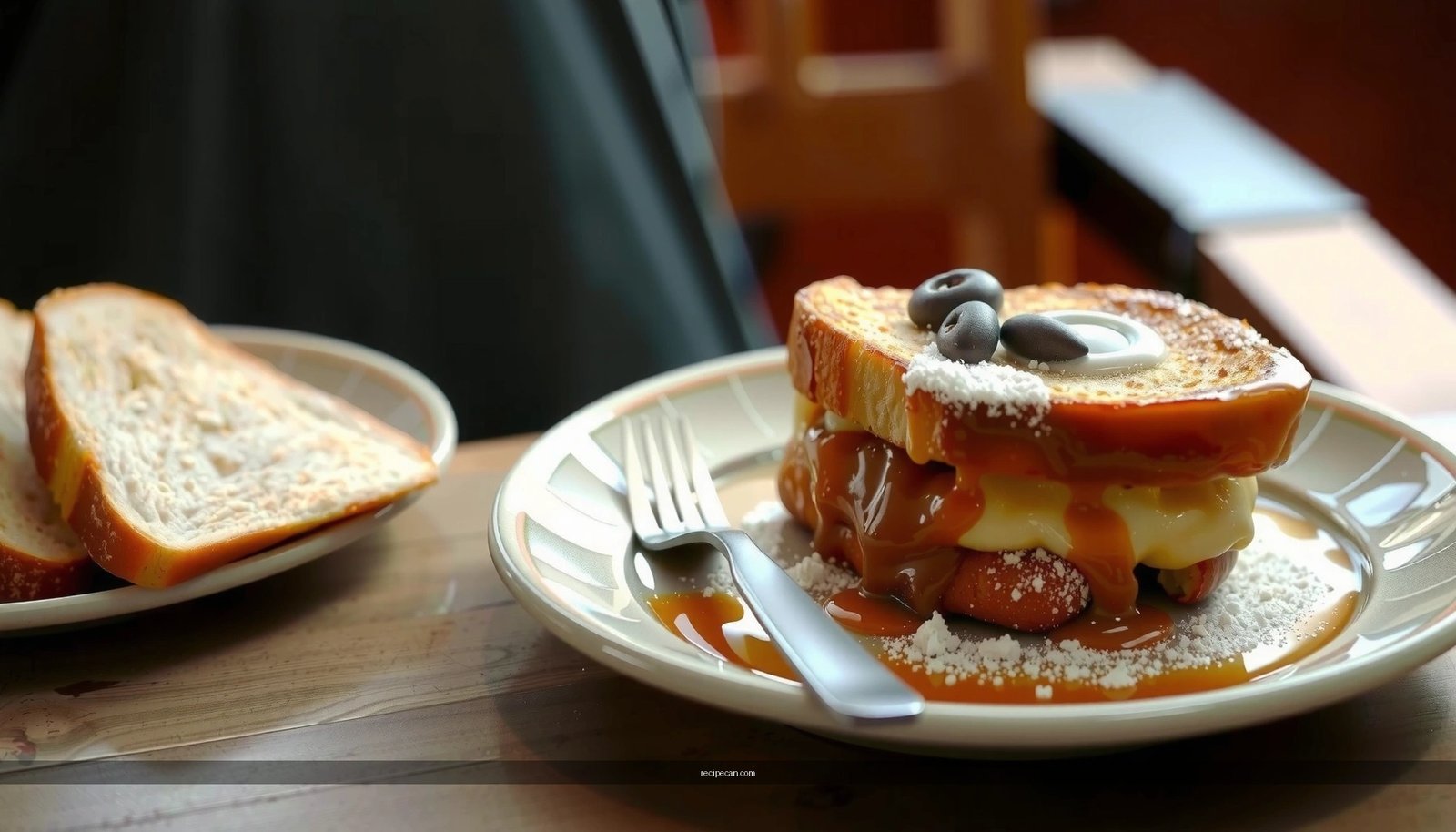
– Drizzle caramel for a richer flavor layer that pairs particularly well with Nutella or apples.
Presentation tip
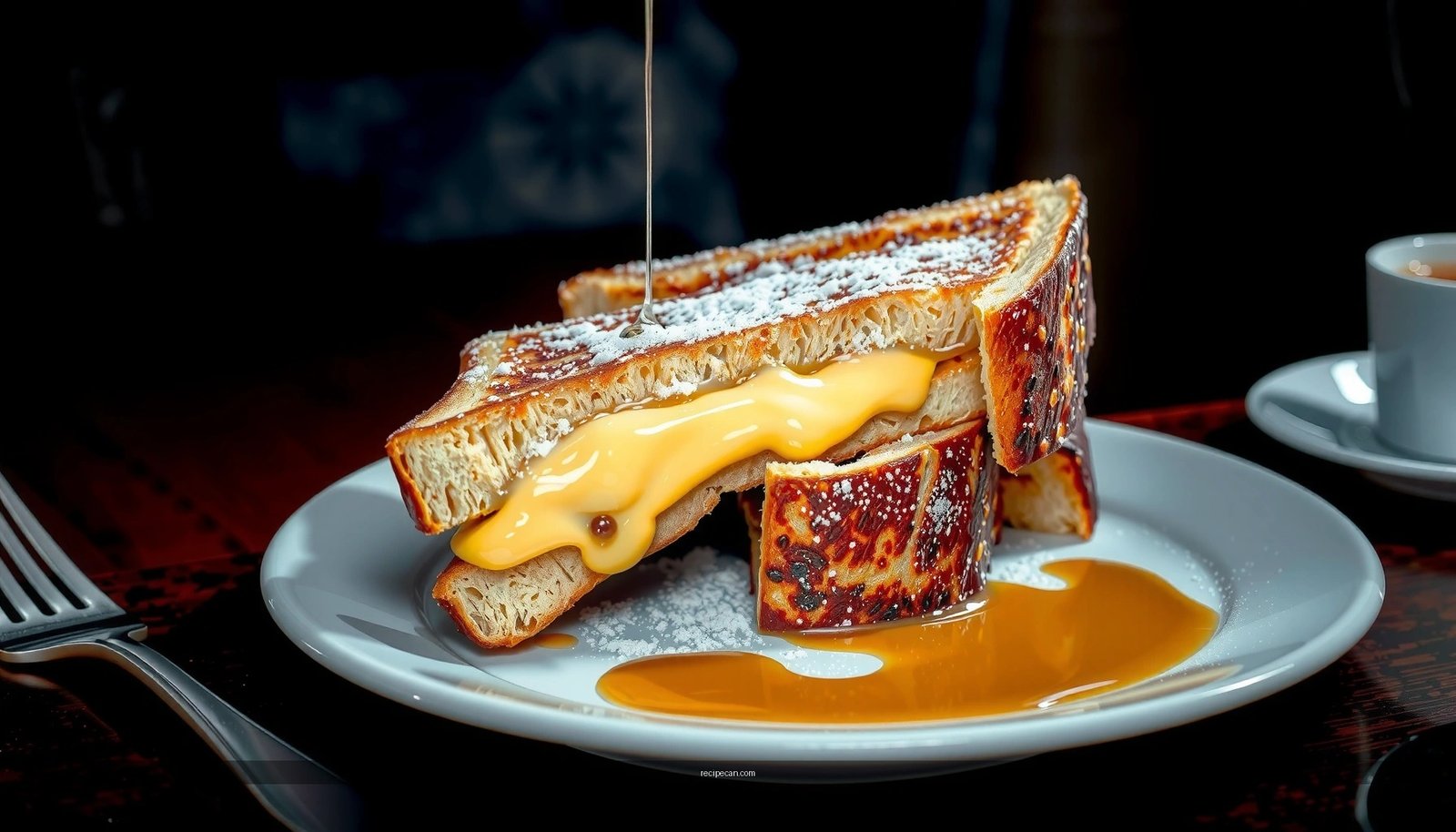
– Slice diagonally to expose the filling. This small move boosts perceived quality and makes the “stuffed” center visible from the first glance.
Portion guidance
– Plan on 1–2 stuffed pieces per person depending on the rest of the meal. If serving with fruit or eggs, one piece is usually plenty; if it’s the main event, two slices feels appropriately filling.
—
Storage and Reheating Tips
Stuffed French toast reheats best when you preserve the crust. While it’s convenient, the structure will naturally soften over time—so reheating method matters.
Storage
– Cool leftovers to room temperature.
– Store in an airtight container in the fridge for up to 2–3 days.
Reheating for crisp edges
– Reheat in an oven or toaster oven (recommended) rather than a microwave.
– Use a moderate temperature (around 350°F / 175°C) and heat until warmed through and the exterior regains some crispness.
Freezing note
– Re-freezing isn’t recommended. Texture (especially crispness) tends to degrade and the filling can separate slightly after thawing.
Best practice
– If you’re cooking ahead, keep components separate (toast and filling warm separately) when possible. But for most home cooks, pan-reheating or toaster-oven reheating offers the closest “freshly made” result.
—
Stuffed French toast is all about disciplined choices: select a filling that holds its shape, season and balance custard so it sets without flooding the bread, and cook on medium heat with quick soaking for custardy interior and crisp edges. Follow the sections above and you’ll consistently land that bakery-style combination—then experiment with your favorite filling and finish with maple syrup, berries, and a crunch for a truly memorable breakfast.
Frequently Asked Questions
What is a stuffed French toast recipe and how is it different from regular French toast?
A stuffed French toast recipe adds a sweet filling—like cream cheese, fruit, or chocolate—inside thick bread slices before dipping them in egg batter. Regular French toast is typically just bread soaked in egg and cooked on a skillet, without an interior filling. Stuffing creates a “warm dessert” center, so it needs gentle cooking to heat the filling without burning the bread.
How do you make stuffed French toast so the filling doesn’t leak or get runny?
Use thick bread (such as brioche, challah, or thick-cut Texas toast) and avoid soaking it too long so the slices stay intact. For fillings, choose a thicker mixture (sweetened cream cheese, Nutella mixed with mascarpone, or jam mixed with a little cornstarch) and seal the edges well if using two slices or a pocket cut. Cook on medium-low heat and let it fully warm through before flipping to reduce leakage and ensure the center sets.
Why does stuffed French toast turn soggy, and what can you do to prevent it?
Stuffed French toast can get soggy when the bread absorbs too much egg batter or the pan temperature is too low. Quick-dip the bread (a few seconds per side) and use a preheated skillet with butter or neutral oil for fast browning. Also, rest the finished pieces briefly so excess moisture evaporates and the filling thickens.
Which fillings work best for a stuffed French toast recipe—cream cheese, fruit, or chocolate?
Cream cheese fillings are popular because they melt slightly and stay creamy without becoming watery, especially if you mix in vanilla and a little powdered sugar. Fruit fillings like berries or sliced apples work well when you cook the fruit first to release excess moisture and thicken it with a small amount of cornstarch. Chocolate options (Nutella or chocolate ganache) are best when you keep portions moderate and cook on medium-low so the center melts evenly without scorching the outside.
What’s the best way to cook stuffed French toast for a crisp outside and fully heated center?
Cook on medium-low heat and use thick bread so the exterior develops a golden crust while the interior warms slowly. After browning one side, flip carefully and consider finishing in a low oven (around 300°F/150°C) for a few minutes to ensure the filling is hot throughout. Serve immediately with powdered sugar, maple syrup, or warm berry compote for the best texture and flavor.
References
- French toast
https://en.wikipedia.org/wiki/French_toast - Brioche
https://en.wikipedia.org/wiki/Brioche - Custard
https://en.wikipedia.org/wiki/Custard - https://en.wikipedia.org/wiki/Egg_(food
https://en.wikipedia.org/wiki/Egg_(food - Bread
https://en.wikipedia.org/wiki/Bread - Bread pudding
https://en.wikipedia.org/wiki/Bread_pudding - Maillard reaction
https://en.wikipedia.org/wiki/Maillard_reaction - Google Scholar Google Scholar
https://scholar.google.com/scholar?q=stuffed+french+toast+recipe - Google Scholar Google Scholar
https://scholar.google.com/scholar?q=french+toast+custard+egg+soaking+recipe - Google Scholar Google Scholar
https://scholar.google.com/scholar?q=stuffed+french+toast+technique+filling+baking+frying