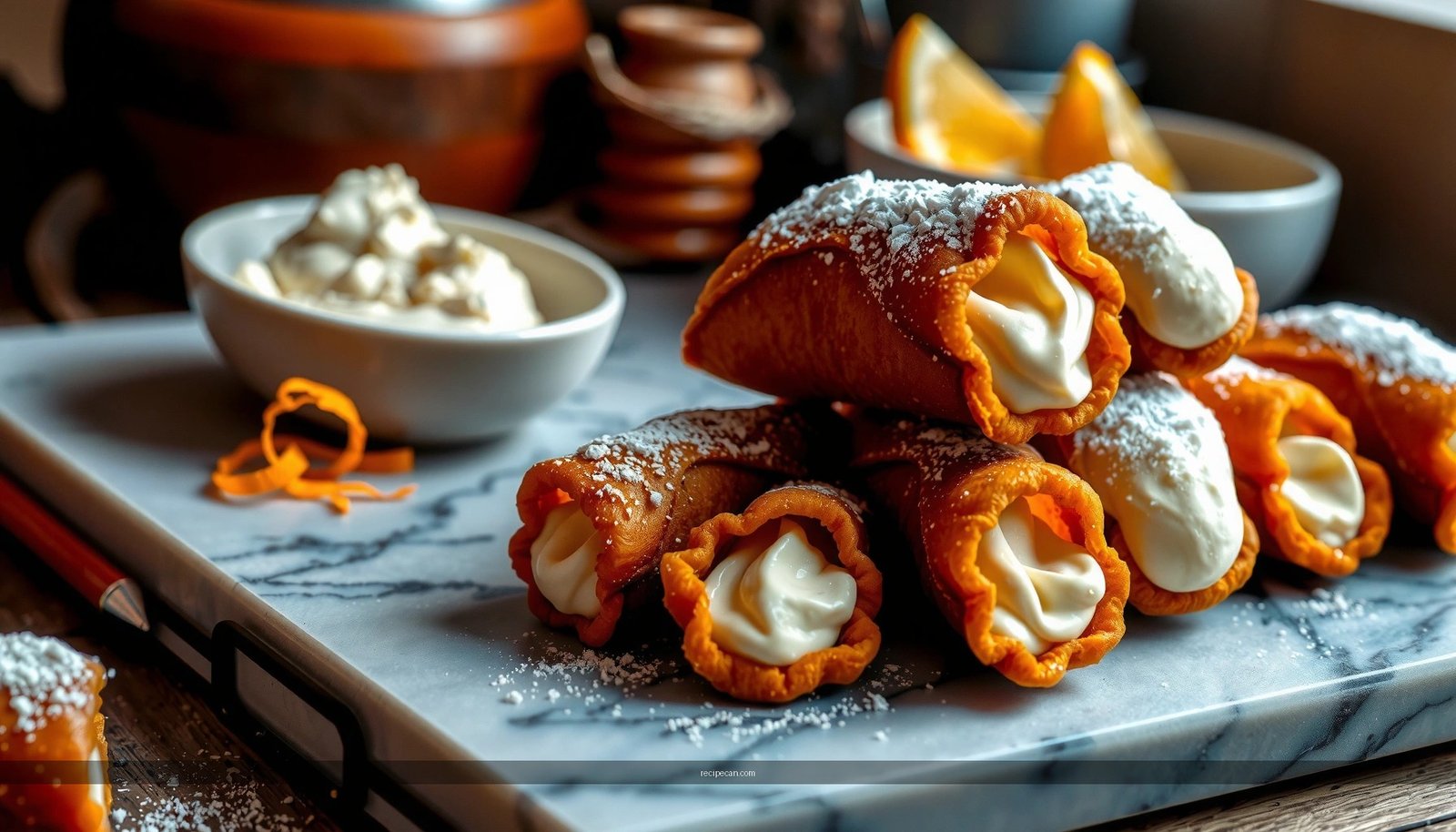
If you want the best recipe for cannoli filling with ricotta cheese, this is the definitive method: smooth, sweet, and ready to pipe into crunchy shells. It answers how to make ricotta taste rich instead of watery, including the right straining and mixing ratios for a silky texture. You’ll get a filling that holds its shape and delivers classic cannoli flavor in every bite.
Make cannoli filling by mixing well-drained ricotta with sweetener, egg (if desired), vanilla, and classic flavorings, then chilling until it becomes spoonable and pipe-ready; the key to “restaurant-style” cannoli is moisture control and proper resting time. In this guide, you’ll follow a clear, ingredient-driven approach to achieve a smooth, rich, classic ricotta filling—and avoid the most common failure mode: watery filling that won’t hold shape in the shells.
Choose the Right Ricotta for Cannoli Filling

– Use whole-milk ricotta for the best creamy texture
– If your ricotta is watery, drain it (or strain through cheesecloth) before mixing
The single biggest variable in a successful cannoli filling is the starting ricotta. Whole-milk ricotta typically has enough fat to emulsify with sugar and flavorings, creating a creamy mouthfeel rather than a loose, grainy paste. Lower-fat ricotta can work, but it often releases more whey, which increases the risk of seepage into the shell and a thinner-than-expected filling.
Moisture management is non-negotiable. If your ricotta looks wet, pools in the container, or spreads too easily on a spoon, drain it before you sweeten and flavor. A practical method is to line a fine-mesh strainer with cheesecloth, place the ricotta inside, and refrigerate it while it drains. For very watery brands, plan for longer draining—think hours, not minutes—so the mixture thickens naturally as you build the filling.
A helpful “professional” workflow is:
1. Drain ricotta first.
2. Mix sweetener and flavorings second.
3. Only then evaluate texture and decide whether you need extra thickening support (usually more chilling, not more ingredients).
4. Chill until pipe-stable.
Essential Ingredients for Traditional Flavor

– Mix ricotta with sugar (or powdered sugar) for sweetness
– Add mini chocolate chips and/or cinnamon for classic cannoli taste
Traditional cannoli filling is all about balanced sweetness and flavor contrast. Sugar doesn’t just sweeten—it also affects texture. Granulated sugar dissolves over time, but it may leave a slightly gritty feel if you don’t rest the filling long enough. Powdered sugar dissolves more readily, producing a smoother mouthfeel sooner.
For classic cannoli taste, many cooks add:
– Mini chocolate chips: provide pockets of bitter-sweet richness that cut through the dairy.
– Cinnamon: adds warm, aromatic depth that complements vanilla and citrus zest.
– A small pinch of salt: wakes up flavors and prevents the filling from tasting one-dimensional.
Why small additions matter: Cannoli is delicate—too much chocolate can overwhelm the ricotta, and too much cinnamon can turn the filling into a dessert spread rather than a classic filling. Start modest, taste after chilling, and adjust gently.
Practical sweetness targets (so you don’t overdo it)
Sweetness should harmonize with the shells, which can be neutral or slightly sweet depending on recipe. The table below shows typical sugar adjustments and expected results for pipe-ability and taste balance when working with drained whole-milk ricotta.
Sugar Level Impact on Ricotta Cannoli Filling (per 16 oz / ~454 g drained ricotta)
| # | Sweetness Approach | Sugar Added | Texture After Chilling | Pipe-ability Rating |
|---|---|---|---|---|
| 1 | Low-sweet (dessert-lite) | 2 tbsp (≈25 g) | Very thick | ★★★★★ |
| 2 | Moderate-low | 1/4 cup (≈50 g) | Thick, spoonable | ★★★★★ |
| 3 | Classic balanced | 1/3 cup (≈65 g) | Creamy, pipe-ready | ★★★★☆ |
| 4 | Slightly sweet | 3/8 cup (≈75 g) | Smooth, holds peaks | ★★★★☆ |
| 5 | Sweet (dessert-forward) | 1/2 cup (≈100 g) | Softens slightly | ★★★☆☆ |
| 6 | Very sweet | 5/8 cup (≈125 g) | Can feel loose | ★★☆☆☆ |
| 7 | Minimal sweetener (savory-leaning) | 1 tbsp (≈12 g) | Dense, less “cannoli” | ★★☆☆☆ |
Use these as tuning guidance: most people land in the “classic balanced” range for cannoli-style flavor while keeping excellent pipe-ability.
Prep and Sweeten Your Ricotta Mixture

– Fold in sugar gently to keep the filling light and smooth
– Add vanilla and a pinch of salt to enhance flavor
Once the ricotta is drained, sweetening becomes a texture operation. Stirring too aggressively can incorporate air and make the filling feel looser than expected later—especially after chilling when fats and proteins re-set.
Recommended mixing approach:
1. Put drained ricotta in a bowl.
2. Add sugar gradually while gently stirring or folding.
3. Mix just until homogeneous.
4. Stir in vanilla and salt.
Vanilla and salt: the “small” inputs that matter most
– Vanilla provides a round, bakery-style aroma that complements dairy and chocolate.
– Salt counterbalances sugar and helps all flavors read clearly, particularly cinnamon and chocolate chips.
If you’re using citrus zest later, keep the vanilla modest at first; then taste after chilling. The cold rest intensifies flavor perception, especially aromatics.
Bind and Flavor (Egg, Vanilla, Citrus Options)
– If using, incorporate beaten egg (for a richer set)
– Include optional citrus zest (like orange or lemon) for a brighter finish
Many cannoli filling recipes include egg to improve body and richness. The egg yolk (or whole egg) contributes emulsifying properties and helps the filling set more firmly once chilled.
How to add egg correctly:
– Beat the egg well in a separate bowl to eliminate streaks.
– Add it slowly to the ricotta mixture while mixing gently.
– Chill long enough for the mixture to tighten.
Citrus zest is optional—but high impact. Orange zest and lemon zest bring a bright, aromatic lift that makes the filling taste “classic” rather than purely sweet. Use only the colored outer peel (the zest), not the bitter white pith.
A practical combination for authenticity:
– Vanilla + cinnamon + orange zest (or lemon zest) + mini chocolate chips
This echoes the common flavor profile found in traditional cannoli filling while still letting the ricotta taste remain dominant.
Achieve the Perfect Texture Before Filling
– Stir until smooth, then fold in chocolate chips last
– Chill at least 1–2 hours so the filling thickens and holds shape
Texture targets are best understood as a pipeline: mix → rest → evaluate → fill. Cannoli filling often becomes thicker during chilling as the dairy proteins firm up and any remaining moisture redistributes.
Step-by-step for the ideal texture:
1. Stir until smooth: stop when you don’t see ricotta curds or sugar streaks.
2. Fold in chocolate chips last: this preserves chip integrity and prevents uneven chocolate distribution.
3. Chill 1–2 hours minimum: for piping, a longer rest (such as overnight) can improve consistency even further.
Avoid watery filling (the most common issue)
Watery cannoli filling usually comes from one of these root causes:
– Ricotta wasn’t drained sufficiently
– Sugar was added without resting (leaving undissolved crystals and a looser feel)
– The filling wasn’t chilled long enough before shelling
– Too much “liquid” flavoring was used (e.g., adding juice or extract without control)
Fixes that work:
– Drain better next time (cheesecloth is often the fastest improvement).
– Chill longer before piping.
– If still loose after proper chilling, consider blending part of the mixture briefly (to unify texture) and folding gently—often you’ll regain structure without changing flavor.
How to Store and Use Cannoli Filling
– Keep covered in the refrigerator for up to 2–3 days
– Fill shells right before serving to keep them crisp
Cannoli shells are designed for crunch, but ricotta filling contains moisture and fat that soften pastry over time. That means timing is your quality lever.
Storage best practices:
– Store the filling in an airtight container, covered to prevent surface drying.
– Refrigerate for up to 2–3 days. The flavor may even meld and improve slightly after resting.
– Stir gently before using if separation occurs.
Serving best practices:
– Pipe or spoon filling into shells right before serving.
– If you must assemble early, do so close to serving time and keep shells at cool room temperature (not warm), since heat accelerates softening.
For events or production-style baking, consider filling in batches: keep shells wrapped and fill only what will be served immediately.
To operationalize this: plan your prep so draining and mixing happen first, chilling happens while you manage shells and topping prep, and the final fill occurs at the last responsible moment.
This ricotta cannoli filling approach delivers a rich, classic flavor profile with excellent pipe-ability because it starts with properly drained ricotta, uses a balanced sweetener strategy, adds aromatic components (vanilla and optional citrus) for depth, and relies on adequate chilling for structure. Remember: moisture control, gentle mixing, and rest time are what separate “good” from truly bakery-level cannoli filling—so follow the steps, avoid watery shortcuts, and assemble your shells right before serving for maximum crunch.
Frequently Asked Questions
What is the best recipe for cannoli filling with ricotta cheese?
A classic cannoli filling uses sweetened ricotta cheese mixed with powdered sugar and often chocolate chips and/or candied orange or citron. To make it taste “authentic,” use well-drained ricotta (preferably whole-milk) and season with vanilla and a pinch of salt. Many recipes also include a small amount of mascarpone for extra richness, but it’s optional.
How do you make ricotta cannoli filling that’s thick and not watery?
The key is to drain your ricotta cheese thoroughly before mixing—wrap it in cheesecloth and refrigerate for several hours (or overnight) to remove excess whey. After draining, break up the ricotta until smooth, then mix with powdered sugar gradually so the filling stays creamy without becoming loose. If your filling still seems runny, chill it for at least 30–60 minutes and fold again gently.
Why do you need to sift the ricotta (or drain it) for cannoli filling?
Cannoli filling can turn gritty or watery if the ricotta isn’t properly processed, because ricotta often contains lumps and residual liquid. Draining improves texture, while breaking up or sifting helps the filling become smooth and pipeable for the cannoli shells. This step makes a big difference in both mouthfeel and how well the filling holds its shape.
Which ingredients pair best with ricotta for traditional cannoli filling?
Traditional ricotta cannoli filling commonly pairs with powdered sugar for sweetness, vanilla for aroma, and a pinch of salt to balance flavors. Chocolate chips are a popular addition, and candied citrus (orange or citron) gives a bright, authentic flavor contrast. Some cooks also use cinnamon or small amounts of lemon zest, but keep it subtle so the ricotta flavor still shines.
What’s the best way to sweeten cannoli filling without overpowering the ricotta?
Use powdered sugar rather than granulated sugar because it dissolves more easily and creates a smoother cannoli filling texture. Start with a modest amount, then taste and adjust—ricotta is mild, so it doesn’t take much to reach the classic sweet profile. If you find it too sweet after mixing, adding a little drained ricotta or a touch more lemon zest can help balance the flavors.
References
- Google Scholar Google Scholar
https://scholar.google.com/scholar?q=cannoli+filling+ricotta+recipe - Google Scholar Google Scholar
https://scholar.google.com/scholar?q=ricotta+cheese+for+cannoli+draining+method - Google Scholar Google Scholar
https://scholar.google.com/scholar?q=sweetened+ricotta+dessert+chocolate+chips+cannoli - Cannoli
https://en.wikipedia.org/wiki/Cannoli - Ricotta
https://en.wikipedia.org/wiki/Ricotta - https://www.britannica.com/topic/cannoli
https://www.britannica.com/topic/cannoli - Ricotta | Cheese, Whey, & Production | Britannica
https://www.britannica.com/topic/ricotta - https://pubmed.ncbi.nlm.nih.gov/?term=ricotta+cheese+composition
https://pubmed.ncbi.nlm.nih.gov/?term=ricotta+cheese+composition - https://pubmed.ncbi.nlm.nih.gov/?term=ricotta+cheese+manufacturing
https://pubmed.ncbi.nlm.nih.gov/?term=ricotta+cheese+manufacturing - https://www.sciencedirect.com/search?qs=ricotta%20cheese%20composition%20manufacturing
https://www.sciencedirect.com/search?qs=ricotta%20cheese%20composition%20manufacturing