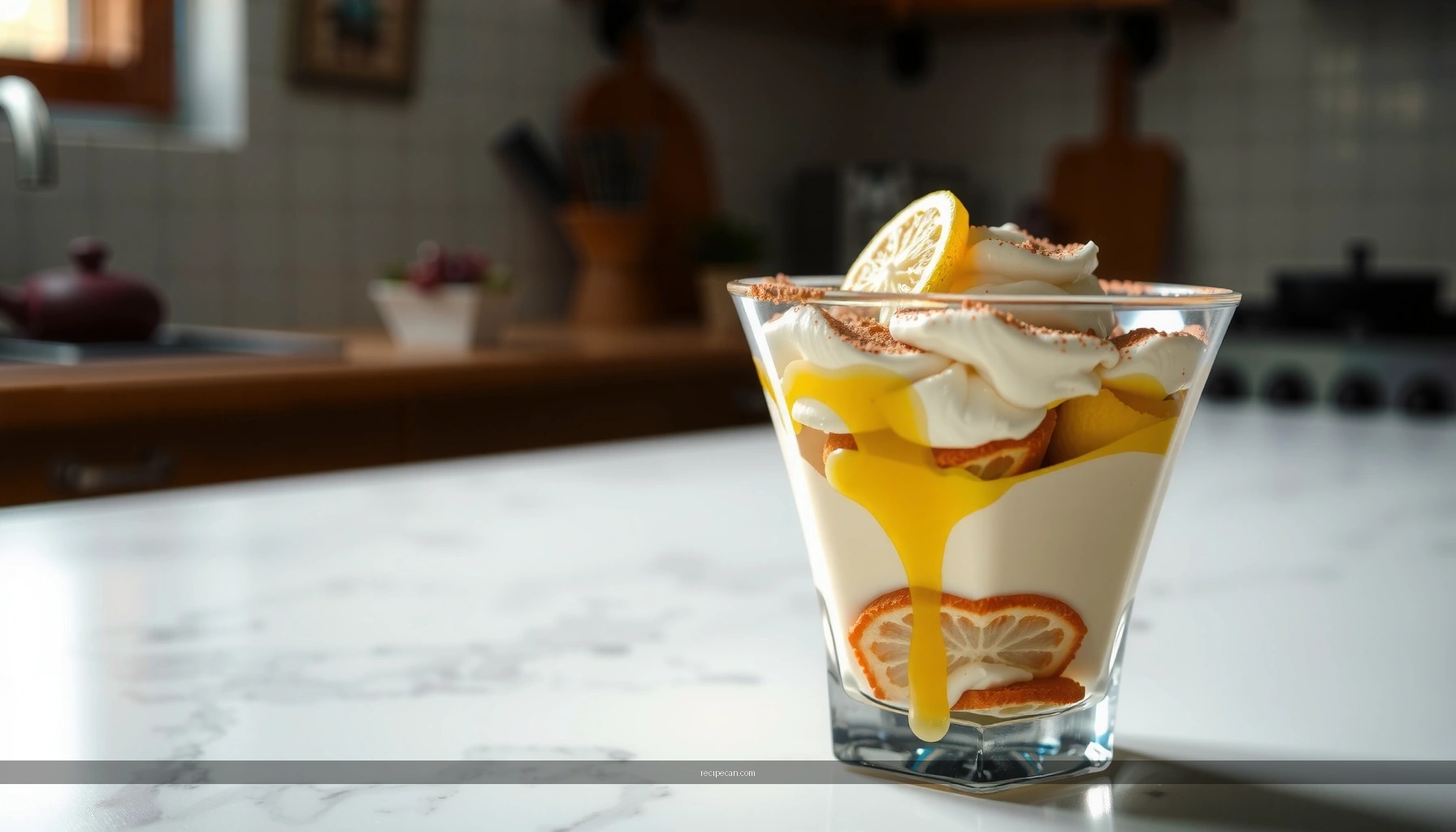
Want a limoncello tiramisu recipe that delivers bright lemon flavor and a truly creamy, restaurant-style finish? This version wins when you want zesty, Italian limoncello notes balanced with silky mascarpone and crisp ladyfingers—no watery texture, no bland sweetness. Follow the exact steps to build, chill, and serve a limoncello tiramisu that holds its shape and tastes like summer in every spoonful.
Make limoncello tiramisu by layering espresso-soaked ladyfingers with a limoncello-infused mascarpone cream, then chilling until the layers set into a clean, sliceable dessert. This recipe gives you precise ratios and timing to achieve bright lemon flavor, a rich custard-like texture, and reliable structure—so every forkful is creamy, fragrant, and balanced.
Ingredients for Limoncello Tiramisu

– Mascarpone, eggs (or alternative), sugar, and fresh lemon zest for the creamy base
– Limoncello and espresso to flavor the layers
– Ladyfingers, optional cream, and dusting cocoa or lemon zest for finishing
To get professional results, think of limoncello tiramisu as a three-part system: (1) the lemon-custard cream, (2) the coffee/limoncello soaking liquid, and (3) the structural ladyfingers that hold the dessert together once chilled.
Core ingredients (with practical notes):
– Mascarpone (16 oz / 450 g): The signature rich dairy base; choose a high-quality, smooth mascarpone for the best mouthfeel.
– Egg yolks (3 large) + sugar (1/2 cup / 100 g): Creates a traditional custard-style sweetness and helps the cream set when refrigerated.
– Whole eggs option: Many recipes use whole eggs for simplicity, but yolks give a thicker, more stable cream.
– Whipping cream (1 cup / 240 ml) optional: Folding in whipped cream lightens the texture to a mousse-like result while keeping the lemon flavor crisp.
– Fresh lemon zest (2–3 lemons): Zest is aroma—avoid zesting too deep into the white pith, which can add bitterness.
– Limoncello (1/3–1/2 cup / 80–120 ml): Adds perfume and a mild sweetness. Use a middle range first, then adjust next time based on how strong you want the “punch.”
– Espresso (1 cup / 240 ml strong, cooled): Use real espresso or very strong coffee. Cooling matters: warm liquid can melt the cream and collapse layers.
– Ladyfingers (about 18–24): Standard “savoiardi” sized for stacking. Stale/firm ladyfingers soak more evenly.
– Cocoa powder (for dusting) or extra lemon zest: Cocoa balances lemon; zest emphasizes brightness.
Optional ingredient swap (for different needs):
– If you prefer no raw eggs, use a pasteurized egg product or substitute a thickened version (e.g., tempered yolk method with careful heat). The rest of the process remains the same—especially chilling time.
Limoncello–Espresso Ratio for Balanced Flavor (1 Batch)
| # | Flavor Profile | Limoncello (ml) | Espresso (ml) | Expected Lemon Intensity |
|---|---|---|---|---|
| 1 | Classic-leaning | 80 | 240 | Balanced (★★★★☆) |
| 2 | Cream-forward | 90 | 240 | Soft citrus (★★★☆☆) |
| 3 | Coffee-forward | 70 | 240 | Mild lemon (★★☆☆☆) |
| 4 | Limoncello-forward | 120 | 240 | Bright citrus (★★★★★) |
| 5 | Balanced + zesty | 100 | 240 | Citrus pop (★★★★☆) |
| 6 | Lighter palate | 60 | 240 | Very mild lemon (★★☆☆☆) |
| 7 | Evenly split (cream + soak) | 90 | 240 | Clean lemon (★★★☆☆) |
Make the Limoncello Mascarpone Cream

– Whisk mascarpone to smooth, then combine with sweetened yolks/egg mixture
– Fold in whipped cream (if using) for a lighter, mousse-like texture
– Add limoncello and lemon zest gradually for balanced lemon brightness
Start with a smooth mascarpone base. Lumpy mascarpone is usually the result of temperature: if it’s too cold, it resists mixing.
Step-by-step cream method (reliable and scalable):
1. Temper and smooth mascarpone: Let mascarpone sit at cool room temperature for 10–15 minutes, then whisk until glossy and lump-free.
2. Whisk yolks with sugar: In a separate bowl, whisk 3 yolks with 100 g sugar until slightly thickened and lighter in color. This improves dispersion so the final cream is uniform.
3. Combine: Fold the yolk-sugar mixture into mascarpone gradually. The goal is to retain thickness, not whip aggressively.
4. Fold in whipped cream (optional but recommended for texture): Whip 240 ml cold heavy cream to soft peaks, then fold in 2–3 additions. Stop when no streaks remain—overmixing can cause graininess.
5. Add lemon zest and limoncello gradually: Mix in lemon zest first, then add limoncello slowly (start with ~2/3 of the amount you plan to use). Taste the cream. Finish with the remainder only if you want a stronger lemon perfume.
Analytical perspective (what changes when you adjust):
– More limoncello in the cream: Boosts aroma but can slightly loosen the texture if overdone, because alcohol affects fat emulsification. That’s why gradual addition and correct chilling matter.
– More zest: Adds brightness without changing the cream’s structure much, but too much can push bitterness from the pith—use zest sparingly and only from the yellow outer layer.
– Whipped cream inclusion: Improves “slice lift” (the dessert feels lighter) but still needs enough chilling for the ladyfingers to hydrate and the cream to firm.
Prepare Espresso Soaking Mixture

– Brew strong espresso and let it cool slightly
– Stir in a small splash of limoncello for extra flavor in every bite
– Keep it brief: soak ladyfingers quickly to prevent sogginess
The soaking liquid controls both flavor distribution and structural integrity. Over-soaking is the most common cause of tiramisu that won’t slice cleanly.
Best practice method:
1. Brew espresso (or very strong coffee): Aim for a concentrated shot.
2. Cool to warm, not hot: Let it sit 10–15 minutes so it won’t melt the cream.
3. Add limoncello to espresso: Use a small splash rather than flooding. Start around 10–20 ml limoncello in the soaking mixture, then adjust. The cream will already deliver much of the lemon flavor.
4. Soak briefly: Dip each ladyfinger for 1–2 seconds per side. They should look slightly moistened but not collapse.
Why “brief soak” is critical: Ladyfingers are porous and will keep absorbing moisture while the tiramisu chills. If you soak too long, the excess liquid turns the layers into a soft pudding texture instead of a set, layered slice.
Assemble the Layers
– Layer soaked ladyfingers and mascarpone cream in a baking dish or springform pan
– Repeat for 2–3 layers, spreading evenly to help the tiramisu set
– Smooth the top layer for the best presentation
Use a pan size that matches the thickness you want. A deeper dish gives dramatic layers, but too much depth can slow firming in the center.
Recommended assembly approach (classic, dependable):
1. Lightly coat the pan: This reduces sticking and improves clean release.
2. Bottom layer: Arrange soaked ladyfingers to fully cover the base (trim as needed).
3. Add cream: Spread a consistent layer—aim for about 1/3 of the cream per layer if doing 3 layers.
4. Repeat: Build 2–3 layers total. Even spreading matters: thicker cream pockets firm differently, which can create uneven slices.
5. Top layer: Finish with cream only (no ladyfingers), then smooth with a spatula for clean edges.
Pro tip for clean structure: If you’re using a springform pan, wrap the outside with foil before adding liquid—this prevents seepage and keeps the edges neat.
Chill and Set Properly
– Refrigerate at least 4–6 hours (overnight is best)
– Cover to prevent absorption of fridge odors
– Slice cleanly after chilling, using a warm knife if needed
Chilling is not optional—it’s the “setting process” that transforms the ingredients into a cohesive dessert.
Timing guidance:
– Minimum: 4–6 hours will usually work, especially for flatter pans.
– Best: Overnight (8–12 hours) for the most stable, custard-like texture.
Storage technique:
– Cover the tiramisu tightly with plastic wrap or a lid so it doesn’t absorb fridge odors (coffee and citrus can mask many flavors, but refrigerator smells can still creep in).
Cutting for clean slices:
– Use a warm, clean knife (run under hot water, wipe dry, then slice).
– Wipe the blade between cuts for sharper edges and less smearing.
What to expect after chilling: The ladyfingers should feel hydrated and tender, while the cream should hold shape—soft in the mouth, structured on the plate.
Serving Tips and Variations
– Dust with cocoa for classic style or use lemon zest for extra zestiness
– Try a lighter version by reducing sugar or using fewer soaking minutes
– Make it festive with lemon zest curls or a drizzle of limoncello syrup
Serving ideas that elevate the presentation:
– Classic finish: Dust with cocoa powder right before serving.
– Lemony finish: Add extra lemon zest for a brighter aroma.
– Festive garnish: Create lemon zest curls using a vegetable peeler for an elegant, restaurant-style touch.
– Optional drizzle: A thin limoncello syrup (quick reduction with sugar and a squeeze of lemon) adds shine and intensifies the citrus top note.
Variation 1: Lighter version (still sliceable)
– Reduce sugar in the cream slightly (e.g., from 100 g to ~85 g) while keeping zest and limoncello in check.
– Soak ladyfingers closer to 1 second per side to prevent the layers from becoming overly wet.
Variation 2: Stronger lemon punch
– Increase lemon zest by 1 additional lemon (without adding pith).
– Add a small additional splash of limoncello into the cream—but keep total changes gradual so the texture remains stable after chilling.
Variation 3: Alternative egg approach (for dietary preference)
– Use pasteurized eggs or tempering methods to avoid raw-egg concerns. The technique remains layering + chilling; the key is still achieving a creamy, stable mascarpone emulsion.
A well-made limoncello tiramisu should taste like a hybrid of Italian custard and airy mousse: coffee grounds the flavor, limoncello lifts the aromatics, and lemon zest provides a clean, refreshing finish. Serve with espresso, limoncello spritzers, or a dessert wine with citrus notes to complement the dessert’s brightness.
After chilling, your limoncello tiramisu should be creamy, fragrant, and perfectly layered—ready for serving with coffee or dessert wine. Gather your ingredients, follow the layering and chilling steps closely, and taste as you go; if you want a stronger lemon punch, add a little more limoncello to the cream next time.
When you follow the soaking discipline, build even layers, and chill long enough for the structure to set, limoncello tiramisu becomes one of the most reliable “impress-with-confidence” desserts you can make. Use this recipe’s ratios as your baseline, then fine-tune lemon intensity with zest and limoncello—your final texture should remain rich, cleanly sliceable, and unmistakably Italian in character.
Frequently Asked Questions
What is a limoncello tiramisu and what makes it different from classic tiramisu?
Limoncello tiramisu is a lemon-flavored twist on the classic Italian dessert, using limoncello to add bright citrus notes to the mascarpone cream and ladyfingers. Instead of relying only on coffee flavors, the recipe blends lemon zest and limoncello to create a refreshing, aromatic finish. It’s typically lighter and more vibrant than traditional tiramisu, making it a popular choice for spring and summer gatherings.
How do I make a limoncello tiramisu recipe without soggy ladyfingers?
Dip the ladyfingers quickly—about 1–2 seconds per side—so they absorb the limoncello mixture without becoming mushy. Use a slightly thickened mascarpone filling so it supports the layers rather than loosening the cookies. For best results, assemble the tiramisu, refrigerate it, then slice after a full chilling period so the cookies set properly.
Which limoncello should I use for the best flavor in tiramisu?
Look for a quality limoncello that’s smooth and not overly harsh, since its flavor will be prominent in a limoncello tiramisu recipe. A traditional, bright lemon profile works well with mascarpone, while overly bitter or very low-quality liqueurs can make the dessert taste unbalanced. If you’re sensitive to sweetness, choose a limoncello that’s moderately sweet and pair it with fresh lemon zest for lift.
Why does my mascarpone cream turn runny, and how can I fix it?
Runny mascarpone cream usually happens when it’s over-mixed, the mascarpone is too warm, or the mixture wasn’t chilled long enough before layering. To fix it, chill the cream base in the refrigerator for 15–30 minutes and then re-whip gently until it thickens again. Using cold ingredients and whipping just until smooth helps your limoncello tiramisu maintain clean, sliceable layers.
What’s the best way to serve and store limoncello tiramisu?
Serve your limoncello tiramisu chilled, ideally after at least 4–6 hours of refrigeration (overnight is even better for flavor melding). Store it covered in the refrigerator for up to 2–3 days, because the ladyfingers will continue to soften over time. For a best-tasting result, add fresh lemon zest or a light drizzle of limoncello topping right before serving if you want maximum citrus aroma.
References
- Google Scholar Google Scholar
https://scholar.google.com/scholar?q=limoncello+tiramisu+recipe - Google Scholar Google Scholar
https://scholar.google.com/scholar?q=limoncello+tiramisu+mascarpone+ladyfingers - Google Scholar Google Scholar
https://scholar.google.com/scholar?q=limoncello+liqueur+dessert+recipe+tiramisu - Limoncello
https://en.wikipedia.org/wiki/Limoncello - Tiramisu
https://en.wikipedia.org/wiki/Tiramisu - Mascarpone
https://en.wikipedia.org/wiki/Mascarpone - Lady finger
https://en.wikipedia.org/wiki/Ladyfinger - Ladyfingers (biscuits)
https://en.wikipedia.org/wiki/Savoiardi - Tiramisu | Meaning, Ingredients, Origin, Desserts, & Taste | Britannica
https://www.britannica.com/topic/tiramisu - Limoncello | Liqueur, Cocktail, Italy, & Description | Britannica
https://www.britannica.com/topic/limoncello