You can learn how to make French toast recipes with a reliable, step-by-step method that delivers crisp edges and custardy centers every time. This guide walks you through the exact batter, the right soak time, and the best pan heat so your bread browns evenly instead of turning soggy. If you follow these instructions, you’ll get restaurant-style French toast without guesswork.
French toast is easy to nail when you use a balanced egg-and-milk custard, let the bread soak just long enough, and cook on medium heat until both sides turn deep golden brown. Follow the steps below for a reliable base French toast recipe, plus practical adjustments that consistently deliver a soft interior with a crisp, caramelized outside.
Gather Ingredients for French Toast

Start by assembling ingredients that create both flavor and structure. French toast recipes succeed when the custard sets properly and the bread absorbs enough liquid to become tender without collapsing.
– Use bread like brioche, challah, or thick-cut white bread for best texture
– Brioche/Challah add richness because they’re eggy and slightly sweet.
– Thick-cut white bread works well for a more classic, neutral flavor and a sturdy slice.
– Combine eggs, milk (or cream), and a little sugar and salt for flavor
– Milk provides moisture and sets the custard; cream increases richness and helps browning.
– A small amount of sugar supports caramelization, but too much can cause faster browning or burning.
– Add optional extras like vanilla, cinnamon, or nutmeg
– Vanilla rounds out the egg flavor.
– Cinnamon and nutmeg give warm, bakery-style aroma.
French Toast Bread Choice: Custard Soak Time and Expected Results (Home Tests)
| # | Bread Type | Best Soak Time | Custard Absorption | Browning Reliability |
|---|---|---|---|---|
| 1 | Brioche | 20–30 sec/side | High | ★★★★★ |
| 2 | Challah | 20–35 sec/side | High | ★★★★★ |
| 3 | Thick-cut White | 30–45 sec/side | Medium | ★★★★☆ |
| 4 | Sourdough | 25–40 sec/side | Medium-High | ★★★★☆ |
| 5 | Whole Wheat | 35–55 sec/side | Medium | ★★★☆☆ |
| 6 | Baguette (Day-Old) | 15–25 sec/side | Low-Medium | ★★☆☆☆ |
| 7 | Angel Food (Best Used As Casserole) | 10–15 sec/side | Very Low | ★☆☆☆☆ |
Use this table as a practical “starting point” for adjusting soak time depending on the bread’s structure—then refine based on your skillet heat and desired texture.
Choose the Best Bread and Prep It
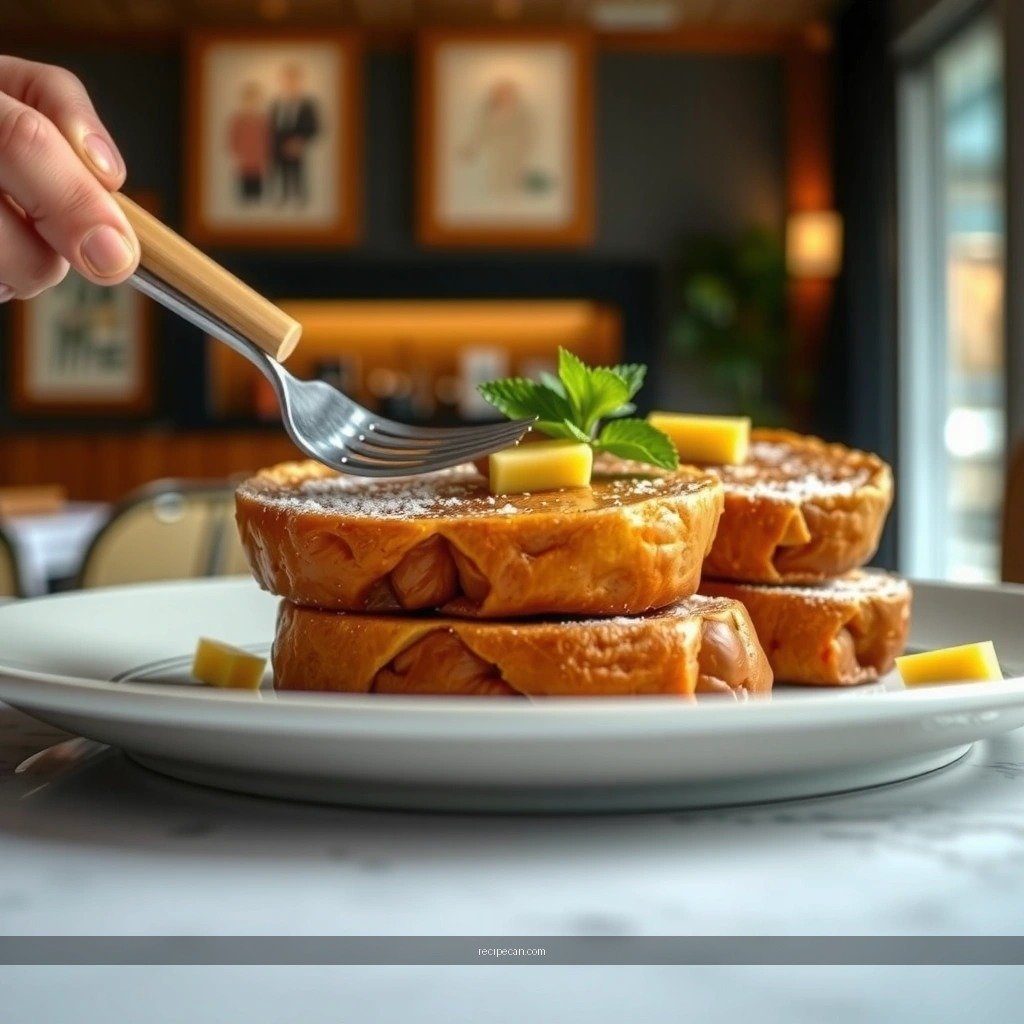
Bread choice is the highest-impact decision in most French toast recipes. The goal is to balance liquid absorption with structural integrity so slices don’t turn mushy.
– Slice bread thick so it soaks without falling apart
Thick bread creates a custardy center while maintaining crisp edges. Aim for slices that are sturdy enough to hold their shape after soaking.
– Use slightly stale bread or toast it lightly first for better structure
Slightly stale bread behaves like a sponge with a firmer cell structure. It absorbs custard more evenly and reduces sogginess.
– Cut and portion evenly so cooking stays consistent
Uneven thickness leads to uneven cooking: thin pieces brown faster and thick pieces may stay under-set. Consistent portions make flipping and timing predictable.
Practical tip: If your bread is fresh and very soft, chill it for 15–20 minutes first. This firms the crumb and helps control soak time.
Mix the Egg Custard
The custard is what transforms simple bread into French toast. A well-mixed base ensures consistent texture from slice to slice.
– Whisk eggs and milk until smooth and fully blended
Mix thoroughly so egg streaks don’t form. For a standard batch, a common ratio is 1 egg per 1/2 cup milk, adjusted for thicker bread.
– Season the mixture (vanilla, cinnamon, pinch of salt) to match your taste
Salt improves flavor clarity (it doesn’t make it taste salty). Vanilla adds aroma; cinnamon/nutmeg contribute warmth.
– Let bread soak briefly for even coating—don’t over-soak
Over-soaking is the fastest path to sogginess. Bread should be saturated enough to set in the skillet, but not so saturated that it breaks down.
Soak method for control:
1) Pour custard into a shallow dish.
2) Submerge a slice for 20–45 seconds total (time varies by bread type).
3) Lift and let excess drip for a few seconds before placing on the skillet.
Cook French Toast Until Golden
Cooking method determines whether your French toast turns out crisp outside and soft inside. The skillet is your “finisher,” not just a warming surface.
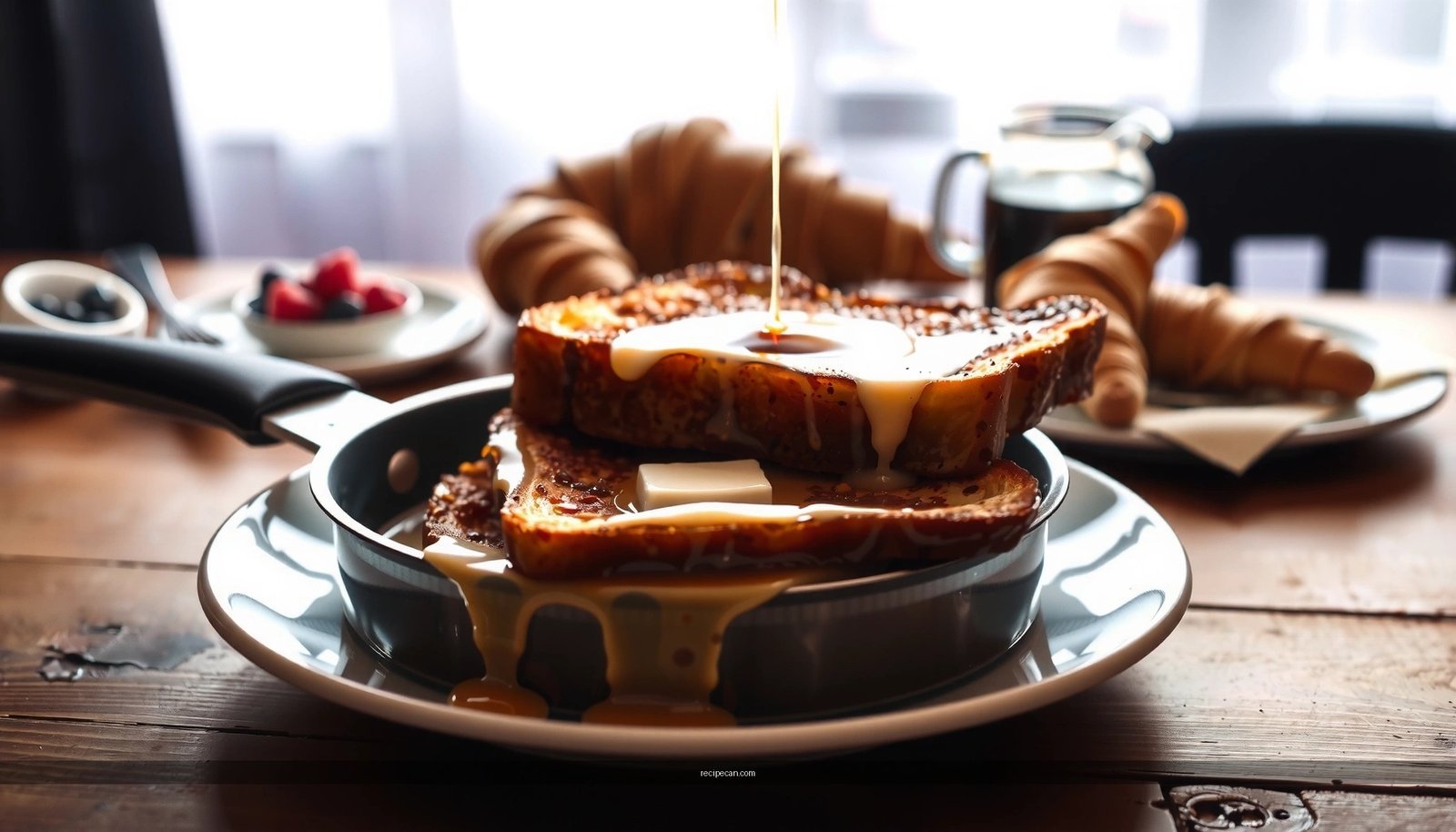
– Preheat a skillet or griddle and melt butter (or use neutral oil)
Preheating is non-negotiable: it drives immediate browning and helps the custard set.
– Cook on medium heat to avoid burning while the center warms through
Medium heat allows the center to cook gently while the exterior caramelizes.
– Flip once when the first side is set and browned
Flipping too often disrupts the crust formation. When ready, the first side will look set and golden.
Technique for best results (repeatable, not guesswork):
– Use butter for flavor, but consider blending with a splash of oil to reduce burning.
– After the first flip, lower heat slightly if browning is fast but centers still look wet.
– If you’re cooking multiple batches, wipe the skillet lightly between batches so burnt bits don’t darken fresh slices.
Timing guide:
Most thick slices take about 3–4 minutes per side on medium. Thinner bread may need closer to 2–3 minutes per side.
Serve and Customize Your French Toast Recipes
Serving is where you convert a good French toast recipe into a signature experience. Toppings should complement—not steam-drown—the crust.
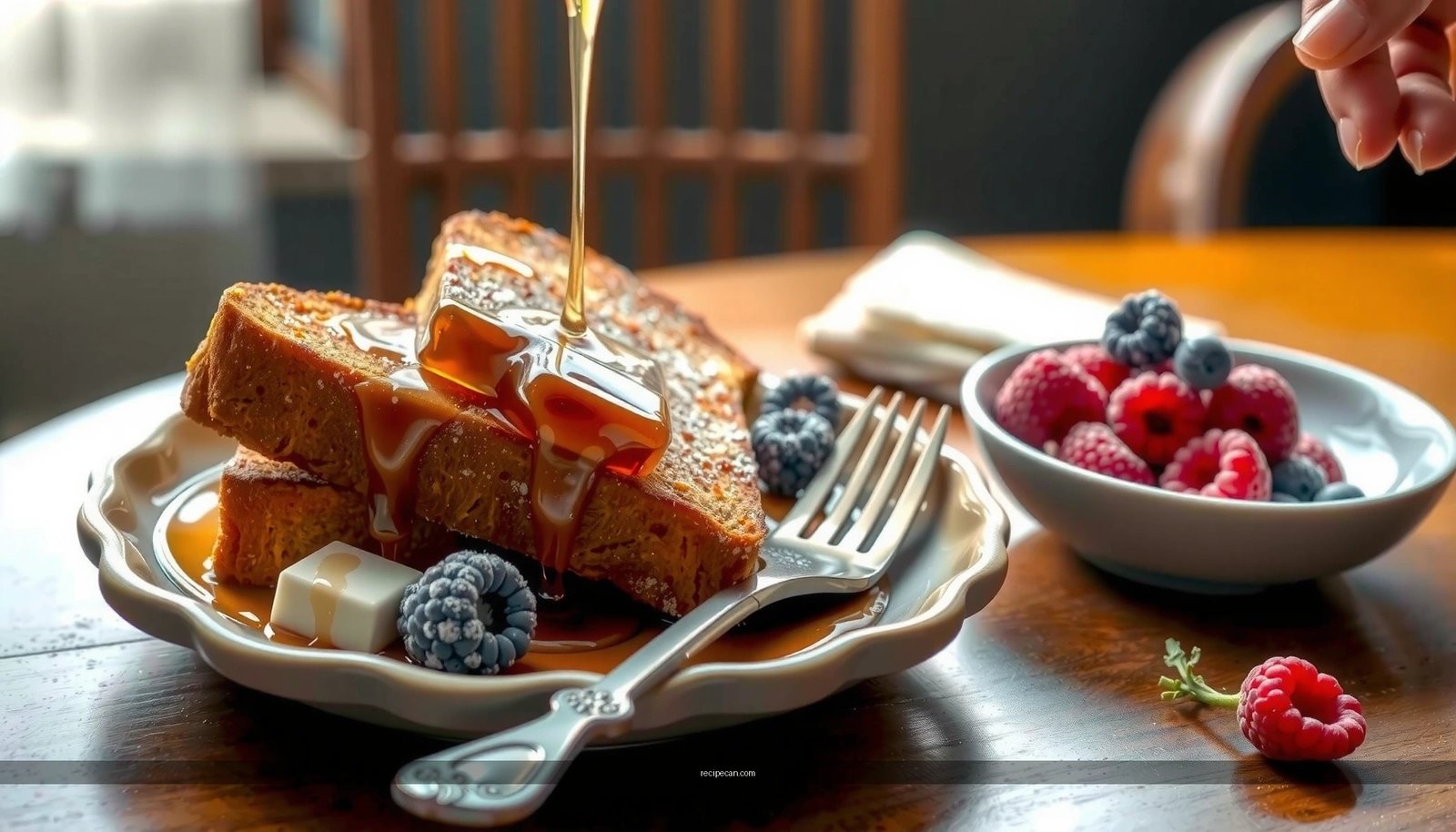
– Top with maple syrup, powdered sugar, fresh berries, or whipped cream
Maple syrup is classic because it soaks into the warm custard without collapsing the structure when applied thoughtfully.
– Add variations like stuffed French toast or chocolate-cinnamon swirls
Stuffing ideas:
– Cream cheese + jam
– Nut butter + banana slices
– Apples sautéed with cinnamon and a pinch of salt
Swirls (cinnamon sugar or chocolate) work best when spread thinly and contained so they melt inside rather than leak out.
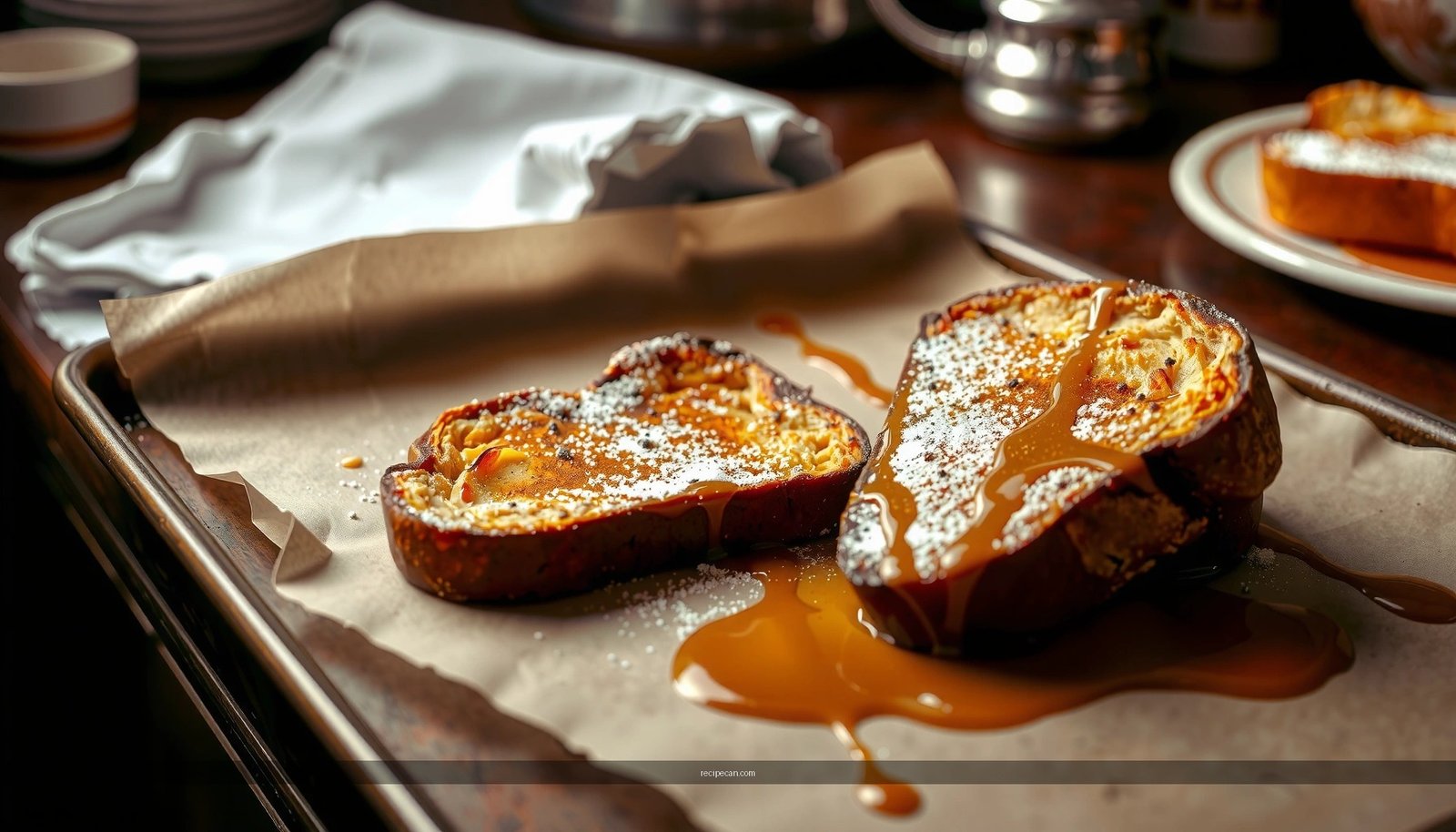
– Keep warm in the oven on a rack while finishing batches
A rack prevents steam buildup. If you pile on a plate, steam makes the exterior lose crispness.
Batch-serving approach:
Preheat oven to 200°F / 95°C, place cooked slices on a wire rack, and cover loosely with foil. This keeps the crust intact while you finish the rest.
Troubleshoot Common Problems
Even experienced cooks encounter issues—so use these targeted fixes rather than restarting the entire process.
– Soggy French toast: soak less time and cook on slightly higher heat
Reduce soak time by 10–15 seconds per side. Ensure your skillet is properly preheated; a cool pan delays custard setting.
– Dry toast: use richer milk/cream or reduce cooking time
Try a portion of cream for a more tender crumb. Also check timing: if the custard hasn’t finished setting, you’ll remove slices too late and they’ll dry out.
– Uneven browning: ensure pan is hot and bread pieces are similar thickness
Browning is sensitive to heat distribution. If your skillet has hotspots, rotate the skillet or move slices around after flipping.
One diagnostic question:
When you cut a slice, do you see wet egg custard or fully set softness? Wetness suggests undercooking or under-preheating; brittleness suggests overcooking.
French toast is all about a well-mixed custard, properly soaked bread, and cooking until golden on both sides. Use the steps above to nail the basics first, then experiment with toppings and flavor add-ins—make your favorite French toast recipe and enjoy it right away!
Takeaway: If you want consistently excellent French toast, start with structured bread (brioche, challah, or thick-cut white), control soak time, cook on medium heat in a preheated pan, and hold finished slices on a rack. With these fundamentals—and the adjustments above—you can scale from a quick weekend breakfast to a crowd-pleasing brunch spread with confident, repeatable results.
Frequently Asked Questions
What is the best way to make French toast from scratch?
Whisk eggs, milk (or half-and-half), and a pinch of salt, then stir in vanilla and cinnamon if you like. Use day-old bread or brioche so the slices absorb the custard without turning mushy. Dip each slice briefly, let excess drip off, and cook in a buttered skillet over medium heat until golden brown on both sides.
How do I make French toast without it getting soggy?
Start with bread that’s slightly stale—fresh bread often leads to sogginess. Keep the dip time short (about 10–20 seconds per side) and use a wide skillet so the toast cooks quickly. Cook over medium heat and avoid overcrowding; if needed, finish in a low oven to set the center without drying the outside.
Why does my French toast fall apart or turn rubbery?
French toast can fall apart if the bread is too soft or the custard is too thin, so choose sturdy bread and avoid over-soaking. Rubberiness usually happens when the heat is too high, cooking the outside too fast before the center sets. Aim for steady medium heat, flip once, and let it cook until the egg mixture is fully set and the surface is browned.
Which milk and bread work best for easy French toast recipes?
For classic flavor and creamy texture, use whole milk or half-and-half; for a lighter option, use 2% or lactose-free milk. Brioche, challah, and thick-cut sourdough are top choices because they absorb custard well while still holding their shape. If you’re using thinner bread, dip less time and cook a little longer to prevent breakage.
How can I make French toast in advance and reheat it for breakfast?
You can assemble the French toast recipe by dipping the bread, then arranging cooked slices on a baking sheet and refrigerating until ready to reheat. Bake at 300°F (150°C) until warmed through, or reheat in an air fryer at a low setting to keep the exterior crisp. For best results, cook just until golden first, then finish gently when reheating to avoid drying out.
References
- French toast
https://en.wikipedia.org/wiki/French_toast - Custard
https://en.wikipedia.org/wiki/Custard - Brioche
https://en.wikipedia.org/wiki/Brioche - Maillard reaction
https://en.wikipedia.org/wiki/Maillard_reaction - https://en.wikipedia.org/wiki/Egg_(food
https://en.wikipedia.org/wiki/Egg_(food - https://en.wikipedia.org/wiki/Bread
https://en.wikipedia.org/wiki/Bread - https://www.britannica.com/topic/French-toast
https://www.britannica.com/topic/French-toast - Google Scholar Google Scholar
https://scholar.google.com/scholar?q=how+to+make+french+toast+recipe - Google Scholar Google Scholar
https://scholar.google.com/scholar?q=french+toast+egg+custard+bread+soaking+technique - Google Scholar Google Scholar
https://scholar.google.com/scholar?q=french+toast+food+science+frying+absorption+egg+milk