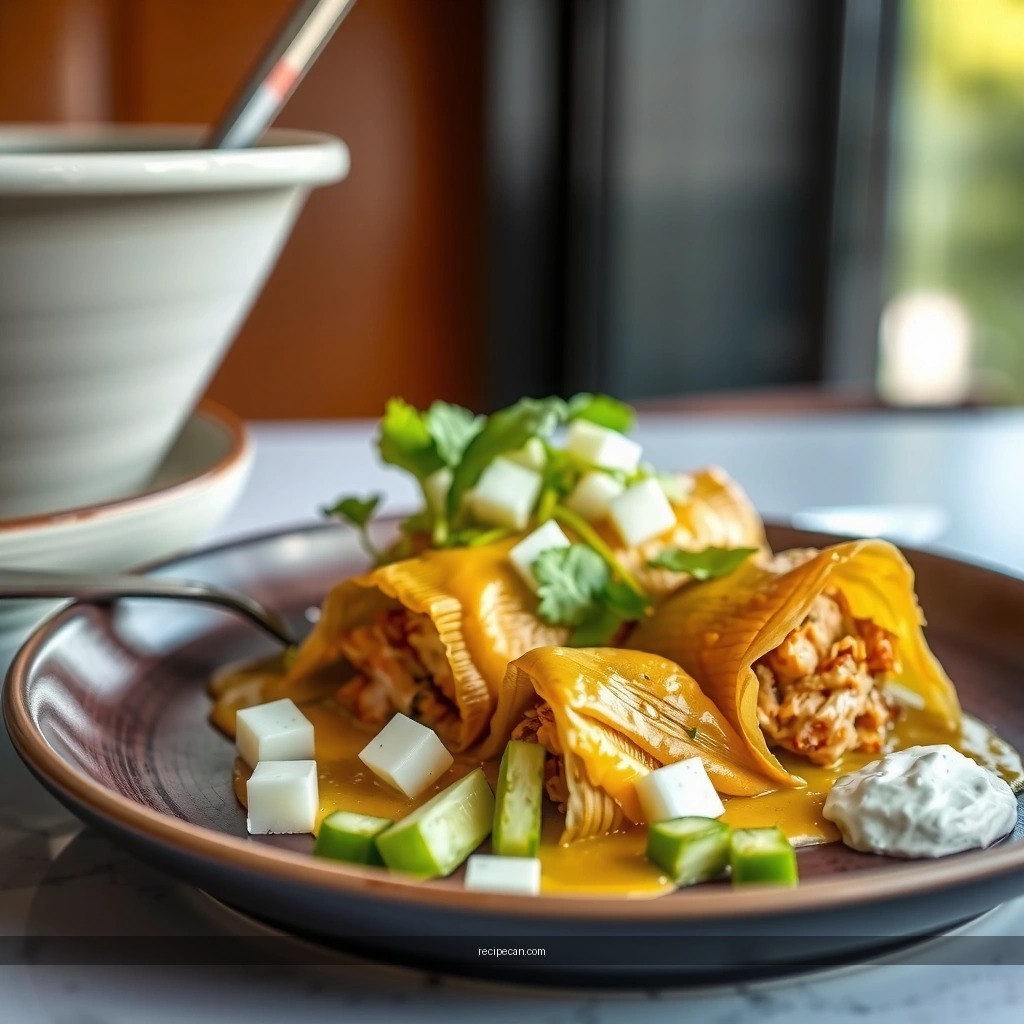
Get the best green chicken tamale recipe with a clear, step-by-step method that actually works—from shredding the chicken and blending the green salsa to assembling and steaming tamales without guesswork. This guide delivers the quickest path to tender masa, flavorful filling, and tamales that hold together. If you want homemade green chicken tamales without shortcuts that compromise texture, this is your winner.
Make green chicken tamales at home by steaming seasoned shredded chicken in a smooth green tomatillo sauce inside tender masa wrapped in corn husks (or banana leaves). Follow this step-by-step guide to build the flavor layer by layer—bright green sauce, well-seasoned filling, correctly textured masa, and steady steaming—so your tamales come out tender and authentic instead of gummy or dry.
Green Sauce Ingredients and Flavor Boosts

A great batch of green chicken tamales starts with a sauce that’s fresh, tangy, and aromatic. In traditional Mexican-style preparations, the base is usually tomatillos cooked briefly and blended with green chiles, garlic, and herbs. The key is balancing acidity (tomatillos), heat (chiles), and lift (cilantro and lime or broth).
What to use
– Tomatillos (husks removed): Provide brightness and natural tang.
– Green chiles: Jalapeños or serranos add heat and green pepper flavor.
– Garlic: Deepens savory character.
– Cilantro: Adds a clean herbal finish.
– Salt + broth/water: Brings everything together and helps you reach the right pourable consistency.
Flavor boost technique (the part many home cooks skip)
1. Roast or lightly char tomatillos and chiles before blending. Even 5–7 minutes under high heat adds a more “authentic kitchen” flavor than fully raw ingredients.
2. Simmer briefly after blending (5–10 minutes). This reduces sharpness and helps the sauce cling to chicken rather than pooling.
Practical targets
– Sauce should be smooth but not watery—think pancake batter thickness or slightly thinner.
– After simmering, taste and adjust: more salt for depth, a little extra broth for thickness control, or a squeeze of lime if you want more tang.
Green Sauce Components & Flavor Function (for Tamales)
| # | Sauce Ingredient | Typical Amount | Flavor Role | Impact Score |
|---|---|---|---|---|
| 1 | Tomatillos | 1 lb (about 10–12) | Tangy acidity & green base | 9.5 |
| 2 | Serrano or jalapeño | 2–4 chiles | Heat & roasted pepper notes | 6.8 |
| 3 | Garlic | 3–5 cloves | Savory depth & aroma | 8.2 |
| 4 | Cilantro | 1 packed cup | Herbal lift & brightness | 7.6 |
| 5 | Broth or water | 1/2–3/4 cup | Blendability & cling control | 5.9 |
| 6 | Salt | 1–1 1/2 tsp (adjust) | Balances acidity and enhances chicken | 8.9 |
| 7 | Oregano (optional) | 1/2 tsp | Warm, savory background | 4.7 |
Cooked Chicken Filling (Green Chicken)

For tender green chicken tamales, the filling should be juicy but not watery. The best texture comes from shredding fully cooked chicken and then cooking it briefly with green sauce so flavors penetrate the meat.
Recommended filling process
1. Cook chicken until tender (or use pre-cooked rotisserie chicken for speed).
– If cooking from raw, simmer with onion, garlic, bay leaf, and a pinch of salt until the chicken shreds easily.
2. Shred finely. Fine shredding helps each tamale get an even filling distribution.
3. Combine with green sauce.
– Sauté chopped onion first if you want a deeper sweetness.
– Add shredded chicken + green sauce and simmer 3–8 minutes until the mixture looks cohesive.
4. Season to taste.
– Many cooks under-salt the filling. When you taste, it should be “slightly more seasoned than you’d expect,” because masa and husk will mute flavor.
Heat control options
– Mild: Use fewer serranos/jalapeños and consider removing seeds.
– Medium: Keep seeds in 1–2 chiles.
– Spicy: Add a small pinch of chili powder or use roasted poblano plus serrano combination.
Filling thickness test
– Spoon a small line onto a plate: it should hold shape and not run like soup.
– If too thick: add 1–2 tablespoons broth.
– If too thin: simmer longer uncovered to reduce.
Make the Masa for Tamales
Masa is where many attempts succeed or fail. For consistent results, you need masa harina hydrated to a spreadable, elastic consistency and a fat component that produces a light, tender crumb.
Core method
– Whisk masa harina with warm broth until smooth and thick.
– Add fat (lard or vegetable shortening) and whip until fluffy.
Why fat matters
Fat helps masa:
– Stay tender after steaming
– Release less liquid
– Form a pleasant, uniform bite
Masa consistency check (non-negotiable)
– The mixture should spread without tearing.
– When you drag a spoon through it, the track should remain for a moment before slowly filling.
Common troubleshooting
– Too dry / cracking during spreading: Add warm broth a tablespoon at a time.
– Too loose / sliding off husks: Let it rest 10 minutes, then whip again; if needed, add a spoonful of masa harina.
Optional improvement
– Let masa rest 15–30 minutes after mixing. Hydration continues, and the texture becomes easier to assemble.
Assemble the Tamales in Corn Husks
Assembling correctly prevents leaks and ensures even steaming. Corn husks provide structure and help masa steam thoroughly while staying wrapped and intact. Banana leaves can work too, but corn husks are the classic.
Husk preparation
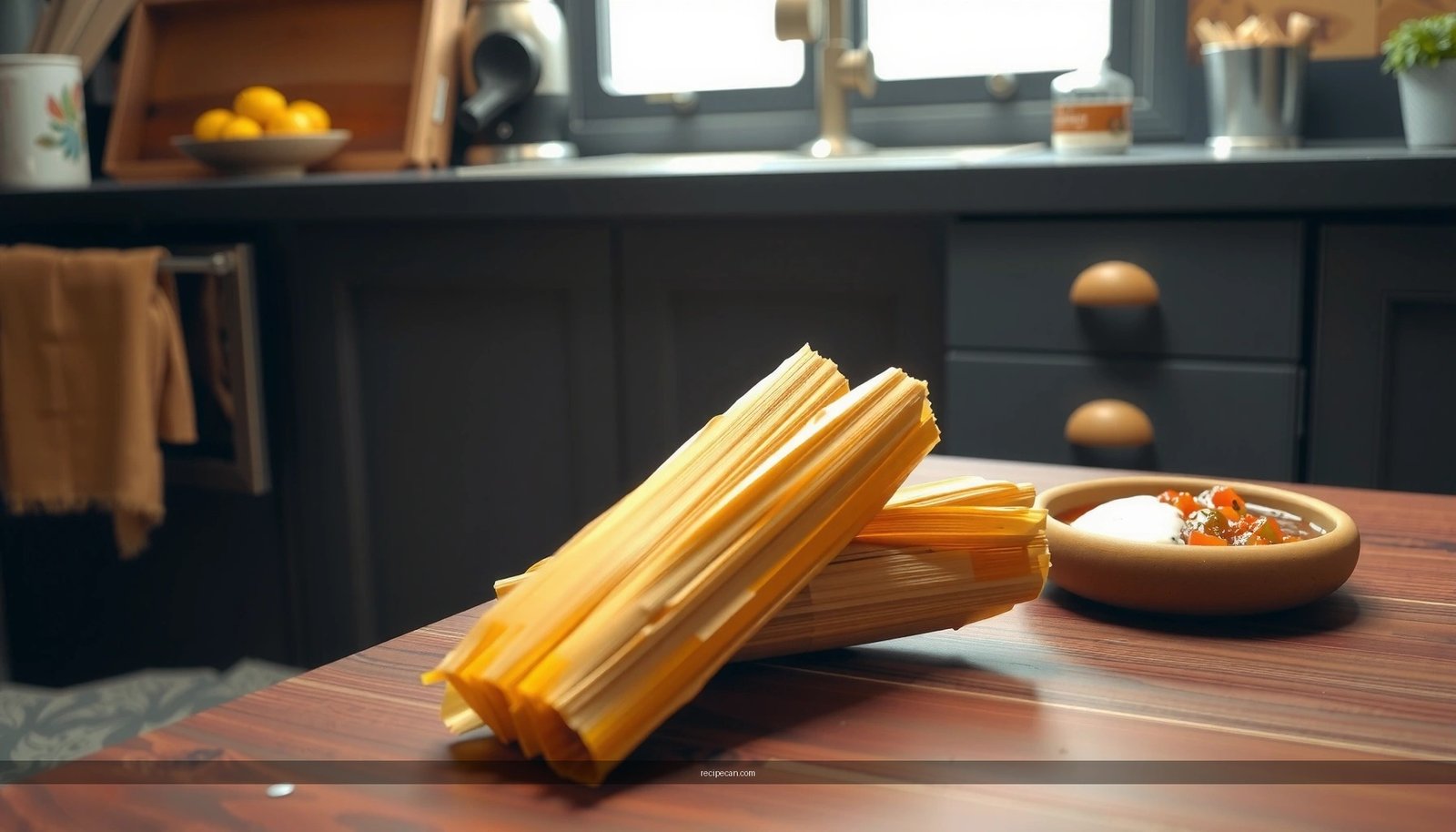
1. Soak husks in warm water 30–60 minutes (or until pliable).
2. Pat dry so they aren’t dripping, which can dilute masa.
Assembly steps
1. Lay a husk flat (vein side up).
2. Spread masa evenly—aim for a thin, consistent layer (about 1/4–1/2 inch depending on husk size).
3. Add a line of green chicken filling down the center (not too much).
4. Fold: bring one side over, then fold the other. Secure tightly with a strip of husk or kitchen twine.
Portion control for best results
– Underfilling can lead to dry masa edges.
– Overfilling creates gaps and bursts during steaming.
A good rule: fill should be snug but not press out when you fold.
Quality assurance
– Every tamale should have a tight seam.
– Masa on the outer edge should be smooth to encourage clean steaming.
Steam and Test for Doneness
Steaming is both a timing and temperature discipline. Tamales need steady steam, not boiling water that knocks them around or dries the surface.
Set up the steamer
– Ensure water level is below the rack where tamales sit.
– Keep a gentle, consistent simmer—steam should be visible and steady.
– Steam in batches if your pot is small to avoid overcrowding.
Estimated steaming time
– Most batches take 60–90 minutes depending on masa thickness and tamale size.
– Start checking around the 60-minute mark.
Doneness test (most reliable method)
Tamales are ready when:
– Masa pulls away from the husk edges easily.
– The surface looks matte and set, not sticky or wet.
– When unwrapped, the center doesn’t appear undercooked.
If they’re not done
– Continue steaming in 10–15 minute intervals.
– Add hot water carefully to maintain steam level.
Storage and Reheating for Best Texture
Tamales are ideal for make-ahead planning. When stored properly and reheated with steam, they taste freshly made even after freezing.
Cooling before storage
– Cool tamales completely after steaming.
– This prevents condensation from forming and affecting masa texture.
Freezing best practices
– Freeze wrapped tamales in a single layer first (to prevent sticking).
– Then move to a bag/container for longer storage.
– Label with date; for best quality, eat within a few months.
Reheating for optimal texture
– Reheat in a steamer, not the microwave (microwaving often makes masa chewy and can dry the filling).
– Steam until hot throughout, usually 15–25 minutes for thawed tamales, and longer if frozen.
Food-safety note
– Ensure tamales reach a steaming-hot internal temperature before serving.
– Reheat once; avoid repeated thaw/reheat cycles.
Quick Reference: Green Chicken Tamale Success Checklist
Steaming time, masa consistency, and proper husk prep are what make your tamales reliably tender. If you want a streamlined workflow, use this operational checklist:
– Sauce: blend smooth, simmer briefly, then taste for salt and tang.
– Chicken: shred fine; simmer with sauce until cohesive (not watery).
– Masa: spreadable and elastic; hydrate with broth as needed.
– Husks: soak until pliable; assemble tightly to prevent leaks.
– Steam: steady steam, check at 60 minutes, finish in increments if needed.
– Serve/reheat: steam for best texture—especially after freezing.
Conclusion
Green chicken tamales are entirely achievable at home when you treat each component as a flavor system: a bright tomatillo-green chile sauce, a well-simmered shredded chicken filling, correctly hydrated and whipped masa, and disciplined steaming until the masa releases cleanly from the husk. Make your batch with tight assembly and steady heat, and you’ll earn consistently tender, authentic tamales you can serve fresh or freeze for later with excellent texture.
Frequently Asked Questions
What ingredients do I need for a green chicken tamale recipe?
For a classic green chicken tamale recipe, you’ll typically use masa harina, warm water or broth, baking powder (optional), salt, shredded cooked chicken, and a flavorful green salsa made from roasted tomatillos, green chilies, garlic, and cilantro. To boost flavor, many cooks add onion, cumin, and Mexican oregano to the chicken filling. You can also include softened lard or vegetable shortening for tender masa.
How do I make green salsa for chicken tamales without it turning out too bitter?
Start by rinsing tomatillos well and removing the sticky husks, which helps reduce bitterness. Roast or boil tomatillos until tender, then blend with garlic, cilantro, and green chilies, tasting as you go and adjusting with salt. If you find the salsa too sharp, balance it with a pinch of sugar or a little broth, and ensure the salsa isn’t overly diluted before mixing into your chicken filling.
How do I assemble and steam green chicken tamales so the masa doesn’t fall apart?
Spread a thin, even layer of masa on the soaked corn husk, add a line of green chicken filling, then fold and tie or secure the husk. Make sure your masa consistency is spreadable (not dry or runny), and let the masa rest briefly so it hydrates fully. Steam tamales in a steamer with boiling water underneath, checking water level often, until the masa pulls away from the husk and feels set.
Why does my green chicken tamale masa come out dry or tough?
Dry, tough masa is usually caused by incorrect hydration—too little water or broth—or overmixing/overcooking. Measure masa harina carefully, add liquid gradually, and aim for a soft, pliable texture that holds shape when spread. Also, use fresh masa techniques: steam long enough for doneness, but avoid excessive time that can dry out the tamales.
Which side dishes pair best with green chicken tamales?
Green chicken tamales pair beautifully with classic Mexican sides like Mexican rice, refried beans, or charro beans for a hearty meal. For freshness, add a simple salad or crema-based toppings like Mexican crema, crumbled queso fresco, and extra green salsa. If you want more crunch, serve with pickled jalapeños or a pico de gallo to complement the savory chicken filling.
References
- Tamale
https://en.wikipedia.org/wiki/Tamale - Salsa verde
https://en.wikipedia.org/wiki/Salsa_verde - https://www.britannica.com/topic/tamale
https://www.britannica.com/topic/tamale - Nixtamalization
https://en.wikipedia.org/wiki/Nixtamalization - Google Scholar Google Scholar
https://scholar.google.com/scholar?q=green+salsa+tamales+chicken+recipe - Google Scholar Google Scholar
https://scholar.google.com/scholar?q=tamale+green+sauce+chicken+masa+process - Google Scholar Google Scholar
https://scholar.google.com/scholar?q=nixtamalization+corn+masa+structure+steaming - https://pubmed.ncbi.nlm.nih.gov/?term=nixtamalization+corn+dough
https://pubmed.ncbi.nlm.nih.gov/?term=nixtamalization+corn+dough - https://pubmed.ncbi.nlm.nih.gov/?term=maize+masa+steaming
https://pubmed.ncbi.nlm.nih.gov/?term=maize+masa+steaming - nixtamalization – Search Results – PMC
https://www.ncbi.nlm.nih.gov/pmc/?term=nixtamalization