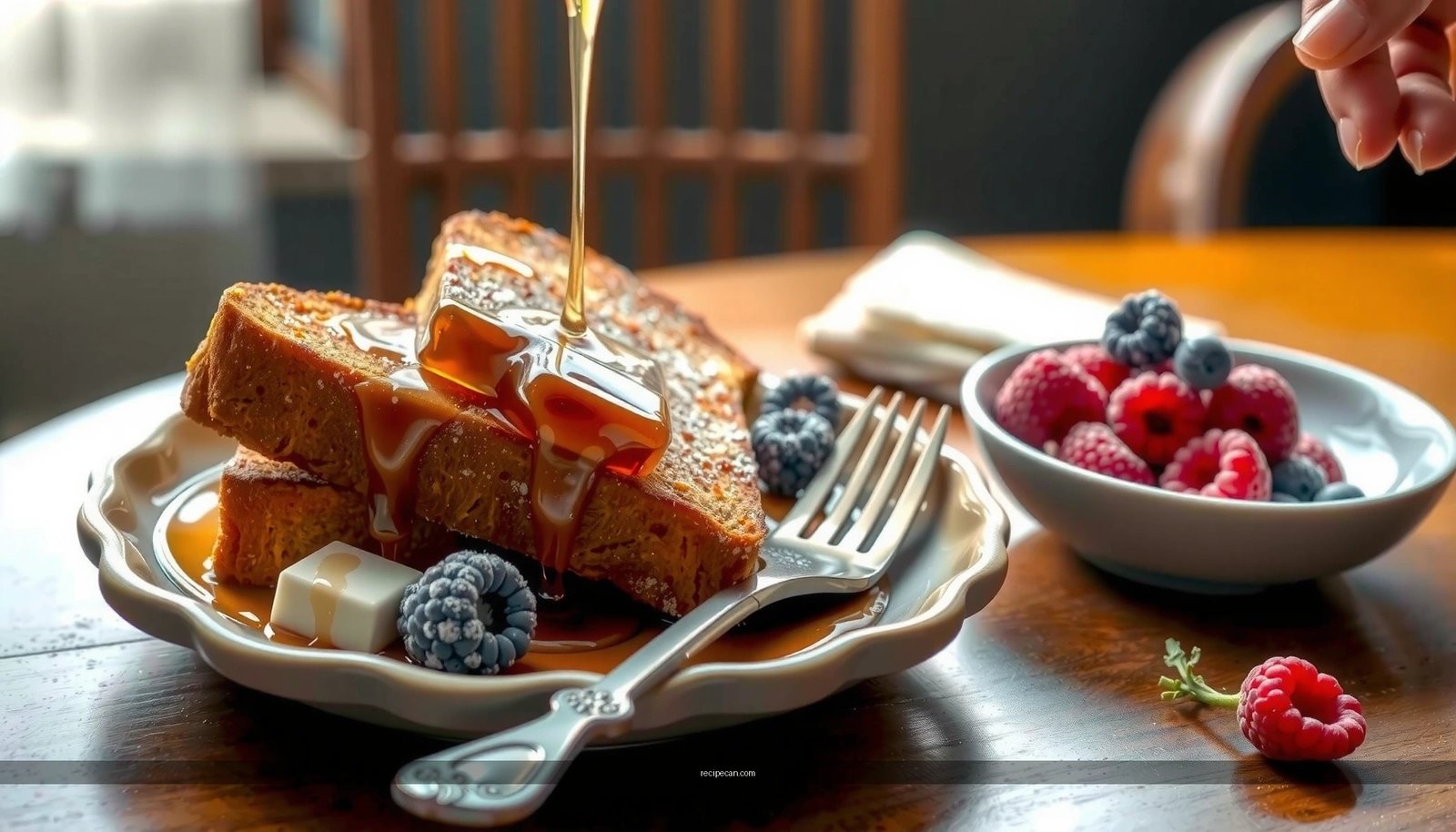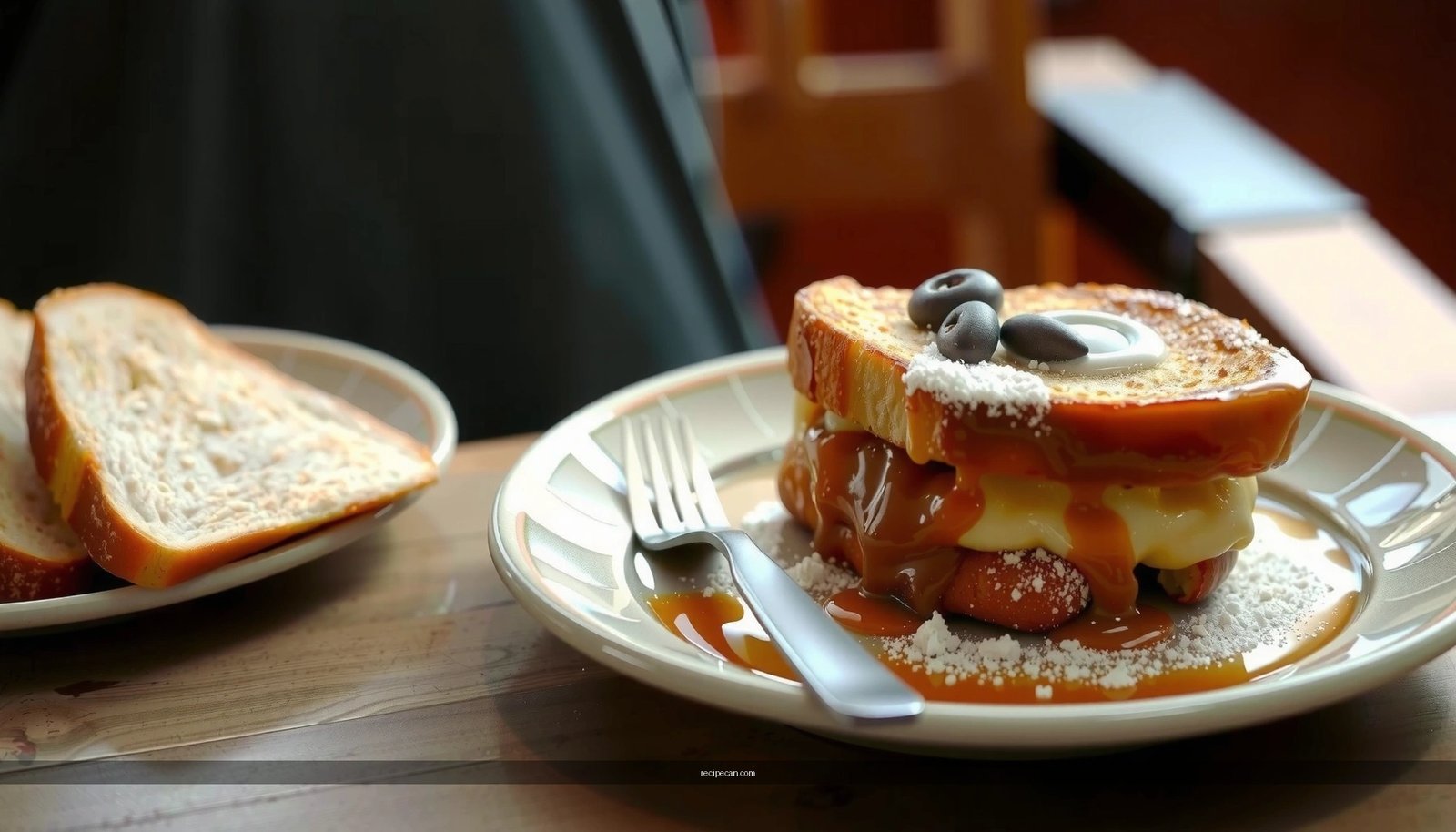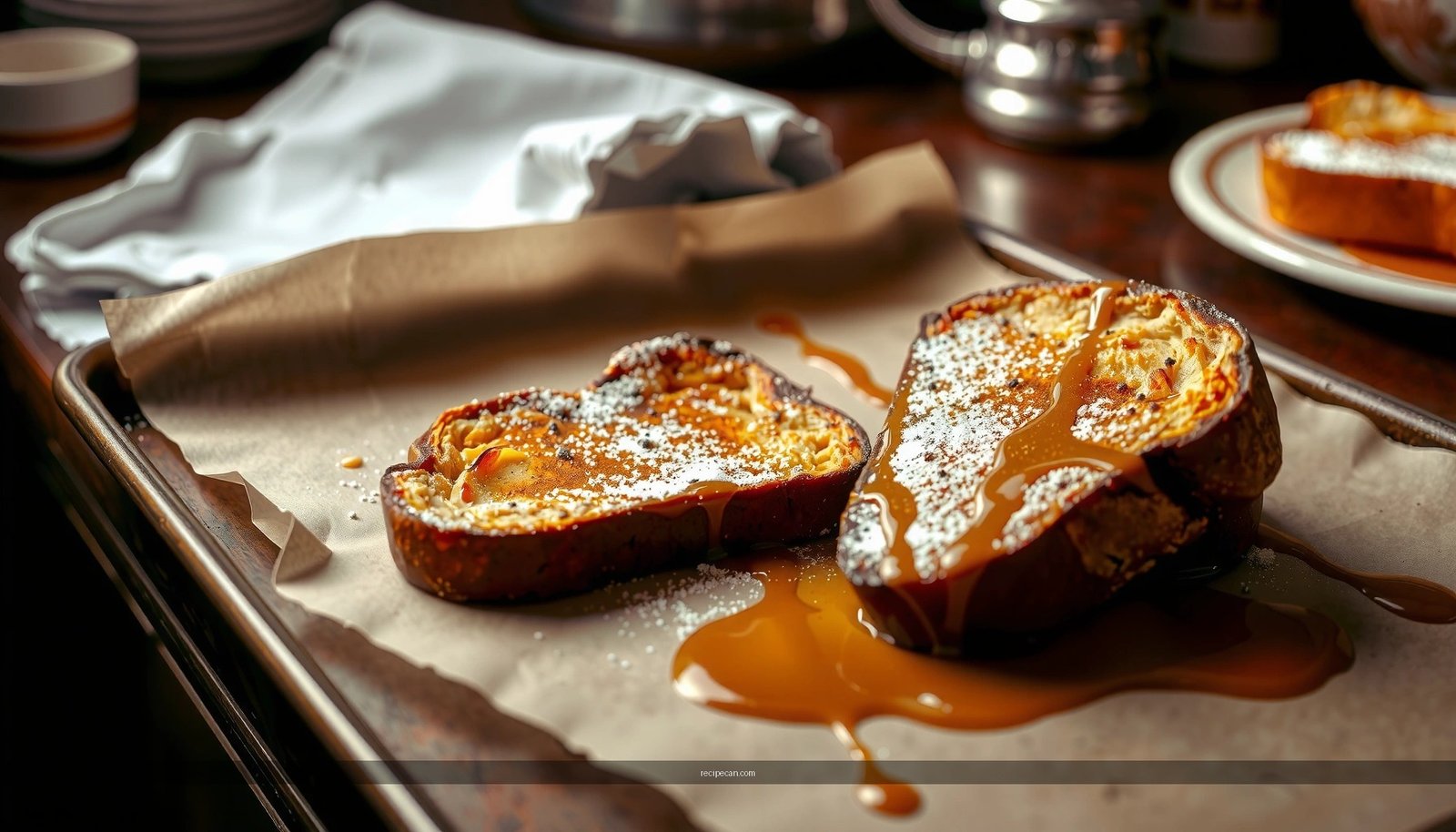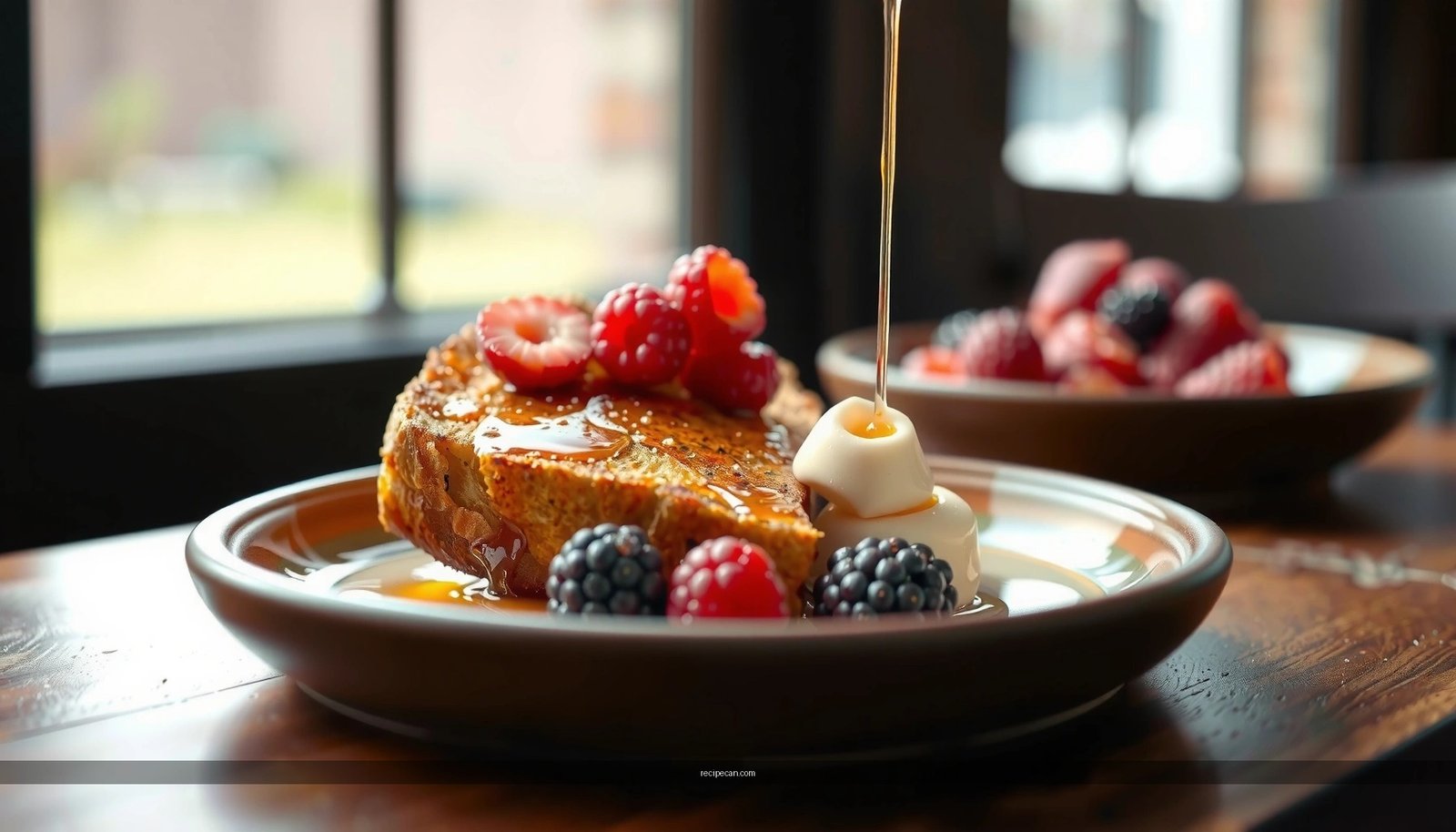
This gluten free French toast recipe delivers crispy, golden toast without wheat—so you get the classic diner texture in a straightforward, no-fuss method. You’ll learn exactly how to prepare the batter, soak the bread, and cook it for even browning that doesn’t turn soggy. If you want an easy, dependable winner every time, this is the one.
Make gluten free French toast by dipping sturdy gluten free bread in a quick egg-and-milk mixture, then pan-frying until both sides turn golden. With the right bread choice, a brief soak (not an oversoak), and medium heat, you’ll get a crisp, golden outside and a soft, custardy interior every time—even with gluten free bread.
Choose the Right Gluten Free Bread
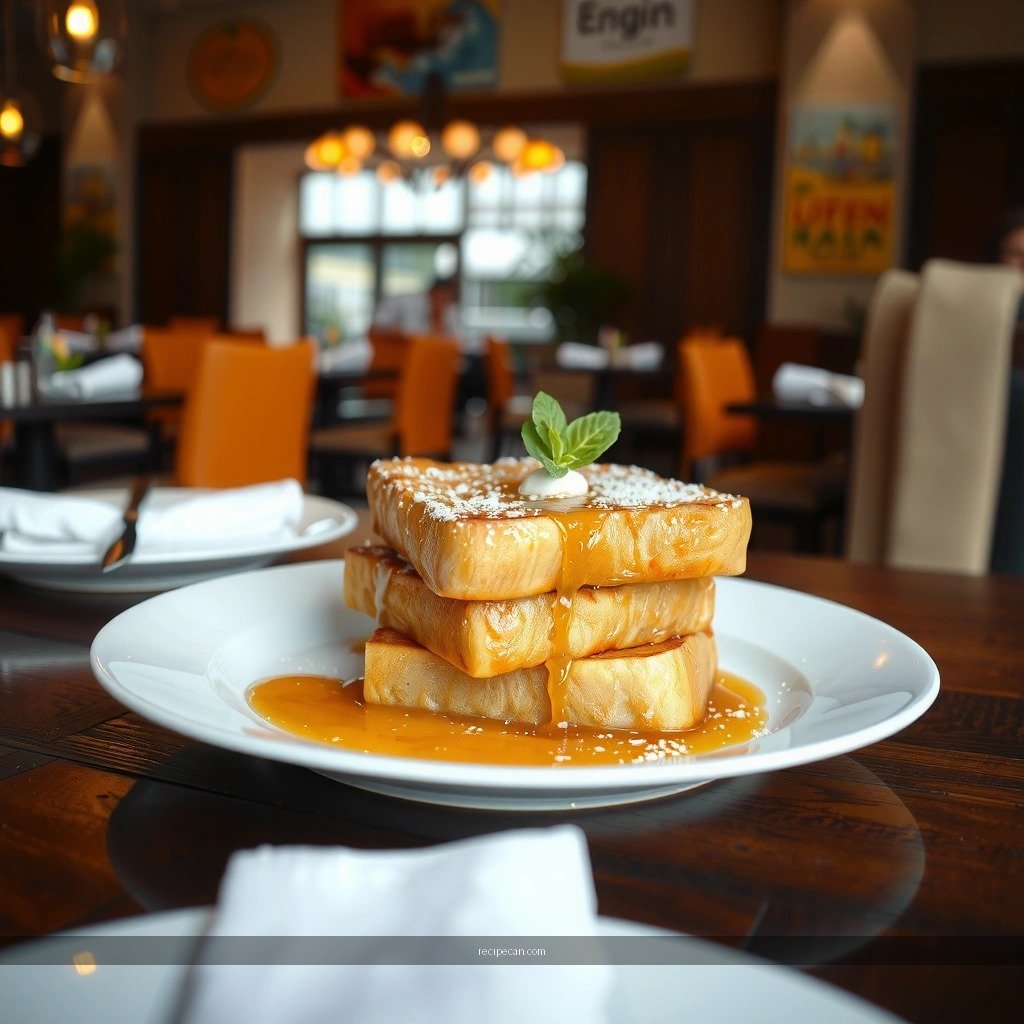
The “secret ingredient” behind great gluten free French toast isn’t the batter—it’s the bread. Gluten free slices vary widely in structure and moisture retention, which is why two people can follow the same recipe and end up with totally different results.
Pick a sturdy gluten free loaf that toasts well and holds up to soaking
– Look for loaves labeled as sandwich bread or toast-ready—these usually have better crumb structure than very delicate, cake-like gluten free breads.
– Toastability matters: if the bread browns evenly in a toaster, it’s more likely to caramelize nicely in the pan and form a golden crust.
– Avoid extremely airy breads that crumble easily; they can break apart during flipping, especially in a rich custard.
Use day-old bread for less mushiness and better texture
– Day-old gluten free bread is firmer and absorbs custard more gradually, which supports a custardy center without collapsing.
– If you only have fresh bread, you can mimic “day-old” texture by lightly toasting the slices for 1–2 minutes, then letting them cool for 5 minutes before dipping.
– For best results, aim for slices that are about 3/4 inch thick (or reasonably similar). Thicker slices help preserve the soft interior while still crisping outside.
Pro tip (quality control): If your bread tends to dry out quickly, lightly brush the surface with a bit of oil or melted butter before dipping. This can reduce tearing and improve browning.
Make the Best Gluten Free French Toast Batter
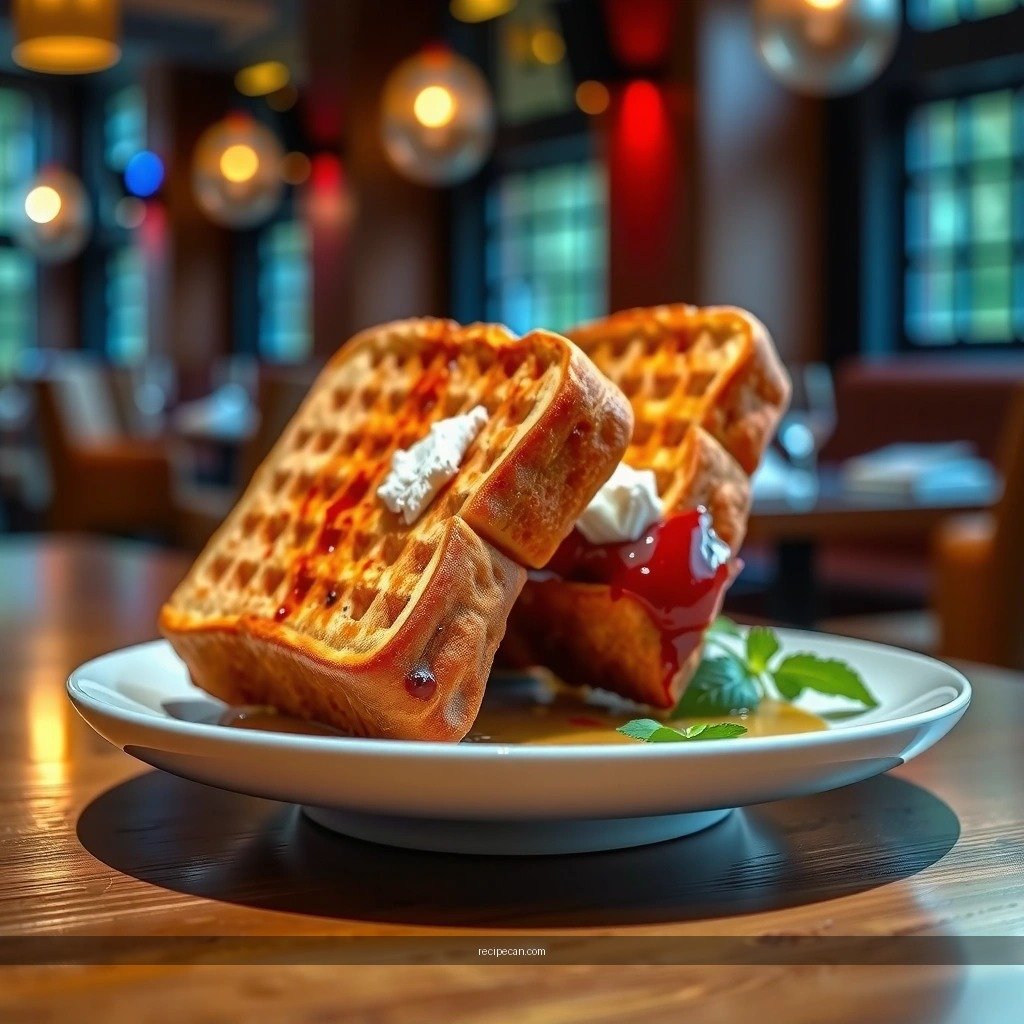
A gluten free French toast batter is essentially a custard base. The goal is to coat the bread evenly so it turns tender inside while still crisping externally.
Whisk eggs, milk (or dairy-free milk), vanilla, and cinnamon for flavor
Start with:
– Eggs: Provide structure and the classic custard texture.
– Milk (or dairy-free milk): Adds moisture and helps browning.
– Vanilla: Rounds out sweetness and improves the “bakery-style” flavor profile.
– Cinnamon: Adds warmth that pairs naturally with maple syrup and fruit.
Add a pinch of salt and optionally a little sugar for balanced sweetness
– Salt is essential in a savory-sweet balance: it sharpens flavor and prevents the custard from tasting flat.
– A small amount of sugar (or none, depending on your preferences) can help with caramelization. If your toppings are already sweet (like syrup and jam), you may prefer to keep the batter less sweet.
Recommended batter ratio (works well for gluten free bread)
Use a straightforward ratio so you get consistent custard absorption:
– 1 large egg
– 1/3 to 1/2 cup milk
– 1/2 tsp vanilla
– 1/4 tsp cinnamon
– Pinch of salt
Then whisk until fully combined and the color is uniform.
Custard consistency check
If the mixture feels too thick, whisk in a tablespoon or two more milk. If it’s too thin, add a small extra splash of egg (or reduce milk slightly). This matters because gluten free bread can absorb differently—too thin and it won’t coat well, too thick and it can leave a dense center.
Visual reference: Bread performance factors (for gluten free French toast)
Gluten Free Bread Types Compared for French Toast (Typical Home Results)
| # | Bread type | Soak tolerance (sec) | Crust browning | Flip integrity | Best overall rating |
|---|---|---|---|---|---|
| 1 | Gluten-free sandwich loaf | 25–40 | High | Excellent | ★★★★☆ |
| 2 | Gluten-free sourdough-style loaf | 20–35 | Medium-High | Good | ★★★☆☆ |
| 3 | Gluten-free artisan boule (dense) | 15–25 | High | Moderate | ★★★☆☆ |
| 4 | Gluten-free grain-free sandwich bread | 15–28 | Medium | Good | ★★★☆☆ |
| 5 | Gluten-free bread slices (very soft) | 8–15 | Low-Medium | Low | ★★☆☆☆ |
| 6 | Gluten-free toast crumpets / batter-breads | 10–18 | Medium | Moderate | ★★☆☆☆ |
| 7 | Gluten-free flatbreads (thin, flexible) | 5–10 | Variable | Low | ★☆☆☆☆ |
Soak and Cook for Crispy Results
The cooking method determines whether your gluten free French toast ends up pleasantly crisp or disappointingly soggy. Use controlled heat and a brief soak so the bread absorbs custard without breaking down.
Dip slices briefly (don’t oversoak) so they stay intact
– Dip each side for 10–20 seconds. Gluten free bread often absorbs quickly, so a short soak is usually enough.
– If you notice the bread looking saturated or bending easily, reduce soak time further.
– For a consistent result, work in small batches so the bread doesn’t sit in the batter while you heat the pan.
Cook on medium heat, flipping once, until both sides are golden
A reliable process:
1. Preheat a nonstick skillet or griddle over medium heat.
2. Add a thin layer of butter or neutral oil.
3. Cook until the first side looks set and browned, typically 2–3 minutes.
4. Flip once and cook the second side 2–3 minutes until golden.
Why medium heat matters
– Too high and the outside browns before the inside warms through.
– Too low and the bread absorbs more oil, stays pale, and can turn soft rather than crisp.
Achieving the soft inside without sogginess
– Let cooked slices rest on a plate for 1–2 minutes. This helps the custard set slightly and prevents steam from making the crust limp.
– If making several slices, keep finished pieces warm in a 300°F (150°C) oven on a wire rack (not a pile on a plate) to preserve crispness.
Toppings That Elevate Every Bite
Toppings aren’t just finishing touches—they can compensate for flavor differences depending on your gluten free bread’s sweetness and texture. The goal is to create contrast: crisp outside, custardy inside, and bright or indulgent toppings.
Serve with maple syrup, fresh berries, and a dusting of powdered sugar
This is the classic pairing for a reason:
– Maple syrup complements the vanilla-cinnamon custard.
– Berries add acidity and freshness, cutting through richness.
– Powdered sugar adds a light sweetness that highlights golden crust.
Add butter, whipped cream, or toasted nuts for extra richness
Choose one “richness booster”:
– Butter: Helps create a glossy, restaurant-style finish when it melts onto hot toast.
– Whipped cream: Adds a creamy texture that contrasts with crisp edges.
– Toasted nuts (pecans, walnuts, or almonds): Provide crunch and a deeper, toasty flavor that works particularly well with cinnamon and nutmeg.
Flavor extension ideas (great for repeat breakfasts)
– Add lemon zest with berries for a brighter profile.
– Swirl in a spoon of Greek yogurt or dairy-free yogurt for tang.
– Try cocoa powder mixed into powdered sugar for a “chocolate French toast” variation.
Portioning tip for business-style consistency
If you’re serving multiple people, pre-portion toppings into bowls so every plate gets the same amount—especially if you’re also scaling for a family breakfast or meal prep.
Storage and Reheating Tips
Gluten free French toast is best fresh, but with proper storage and reheating, leftovers can still deliver a satisfying crunch.
Refrigerate leftovers in an airtight container up to 3 days
– Cool slices completely before refrigerating to prevent condensation (which leads to sogginess).
– Store in a single layer if possible; if stacking, place parchment between slices.
Reheat in a toaster oven or skillet to restore crispness
For best texture:
– Toaster oven: Reheat at 325°F (165°C) for about 6–10 minutes until warmed and re-crisped.
– Skillet: Warm over medium-low heat for 1–2 minutes per side, adding a tiny bit of butter/oil if needed.
Avoid the microwave (when possible)
Microwaving can soften the crust quickly by steaming the custard surface—great for immediate softness, but not for re-crisping.
Optional freshness boost
Once reheated, add toppings right away (especially syrup and berries). If you want to keep syrup from soaking in, serve it on the side.
[CONCLUSION PARAGRAPH – NO HEADING]
You now have a reliable gluten free french toast recipe: the right bread, a quick batter, and cooking tips for that perfect golden crust. Make it for breakfast this week, and try different toppings—then save your favorite version for next time.
Frequently Asked Questions
What is the best gluten free bread for French toast?
The best gluten free bread for French toast is one that’s sturdy, slices well, and isn’t too crumbly—look for a “sandwich” or “whole grain” gluten free loaf. Brioche-style or sourdough-style gluten free bread works especially well because it absorbs egg custard without falling apart. Let the bread sit for a few hours or overnight (or toast lightly) to help it hold its shape during soaking and cooking.
How do I make gluten free French toast crispy without getting soggy?
Use a thicker egg mixture and avoid over-soaking—dip each slice quickly and let excess batter drip off before cooking. Cook on medium heat so the French toast browns before the inside turns mushy, and flip only once for even crisping. For extra crispness, consider using a light coating of cornstarch on the bread before dipping or finishing with a brief bake in a 425°F oven for a few minutes.
Which gluten free flour or starch substitutes work best for French toast batter?
For classic gluten free French toast, you usually don’t need flour in the batter—eggs and milk (or dairy-free milk) are enough to create a custard coating. If you want a thicker, more “custard” texture, whisk in a small amount of cornstarch or arrowroot starch (about 1–2 teaspoons per cup of milk) to help the gluten free batter set. Avoid adding too much starch, since it can make the toast gummy instead of tender and crisp.
Why does gluten free French toast fall apart, and how can I prevent it?
Gluten free bread often lacks the stretchy gluten network, so it can tear when soaked too long or cooked too hot. To prevent breakage, use day-old bread, soak briefly, and keep the pan at a steady medium temperature with enough butter or oil to form a nonstick barrier. If you’re serving immediately, use a wide spatula and transfer slices carefully to a warm plate rather than stacking right away.
How can I customize a gluten free French toast recipe for dairy-free or egg-free needs?
For dairy-free French toast, swap milk for almond, oat, or coconut milk and use a dairy-free butter or neutral oil in the pan. For egg-free, you can try a commercial egg replacer or a “flax- or aquafaba-based” binder, but results vary by brand and bread type. If egg-free is essential, choose a gluten free bread that holds structure well and test one small batch first to dial in the right soak time for your gluten free French toast recipe.
References
- Google Scholar Google Scholar
https://scholar.google.com/scholar?q=gluten+free+french+toast+recipe - Google Scholar Google Scholar
https://scholar.google.com/scholar?q=gluten-free+french+toast+bread+substitutes+egg+milk - Google Scholar Google Scholar
https://scholar.google.com/scholar?q=celiac+disease+gluten-free+diets+gluten-free+french+toast - French toast
https://en.wikipedia.org/wiki/French_toast - Gluten-free diet
https://en.wikipedia.org/wiki/Gluten-free_diet - https://www.fda.gov/food/food-labeling-nutrition/gluten-free-labeling-food
https://www.fda.gov/food/food-labeling-nutrition/gluten-free-labeling-food - https://www.cdc.gov/conditions/celiac-disease/
https://www.cdc.gov/conditions/celiac-disease/ - Celiac Disease – NIDDK
https://www.niddk.nih.gov/health-information/digestive-diseases/celiac-disease - https://www.mayoclinic.org/diseases-conditions/celiac-disease/in-depth/gluten-free-diet/art-20046490
https://www.mayoclinic.org/diseases-conditions/celiac-disease/in-depth/gluten-free-diet/art-20046490 - Gluten-Free 101: What You Need to Know | Celiac Disease Foundation
https://celiac.org/gluten-free-101/