Want the easiest French Toast Casserole Overnight Recipe that produces a perfectly puffed, custardy breakfast while you sleep? This version is the clear winner because it soaks overnight for maximum flavor and sets just right for a golden top at bake time. Follow these steps and you’ll get consistent slices straight from the oven—no last-minute scrambling or soggy center.
Make a French toast casserole overnight by soaking cubed bread in a seasoned custard, refrigerating it until morning, then baking until puffed and golden. This “set it and bake it” method delivers classic French toast flavor with none of the last-minute skillet work—ideal for busy weekdays and stress-free brunch.
Overnight French Toast Casserole Ingredients

A great overnight French toast casserole starts with two things: bread that can absorb custard and a custard mixture that sets cleanly in the oven. While recipes vary, the most reliable results come from using bread with structure (so it doesn’t turn to paste) and a custard balance that’s rich but not watery.
– Use bread like brioche or challah (or thick-cut French bread) for the best texture
Brioche and challah are slightly sweet, tender, and high in egg/butter content, which helps the casserole taste “bakery” rich. Thick-cut French bread works too, especially if it’s sturdy; it forms crispier edges and a firmer custard center.
Pro tip: Use bread that’s 1–2 days old when possible (or lightly toast/dry it). Dry bread soaks more evenly overnight and reduces the chance of a soggy middle.
– Combine eggs, milk (or half-and-half), sugar, cinnamon, and vanilla for the custard
A classic custard base typically uses:
– Eggs for structure (they coagulate as the casserole bakes)
– Milk/half-and-half for creaminess (half-and-half makes a richer, more “custardy” slice)
– Sugar for caramelization and flavor rounding
– Cinnamon and vanilla for the unmistakable French toast profile
– Add optional mix-ins like berries, chocolate chips, or a sprinkle of nutmeg
Mix-ins can turn your overnight casserole from “good” to “wow,” but add them strategically:
– Berries: Use fresh or frozen (if frozen, toss with a little sugar so they don’t bleed too much).
– Chocolate chips: Add sparingly for even melting; too many can make pockets that seem underbaked.
– Nutmeg: A small pinch pairs beautifully with cinnamon and gives a warm, bakery-style aroma.
Custard Adjustment by Bread Choice (9×13 Overnight Casserole)
| # | Bread Type | Custard Needed | Cube Size | Soak Reliability vs Brioche |
|---|---|---|---|---|
| 1 | Brioche | 4.0 cups | 1-inch | Baseline ★★★★★ |
| 2 | Challah | 4.0–4.2 cups | 1-inch | +0.1 cups ★★★★★ |
| 3 | Thick-Cut French Bread | 4.3–4.7 cups | ~1-inch | +0.3 cups ★★★★☆ |
| 4 | Sourdough (Hearty Loaf) | 4.2–4.6 cups | 1-inch | +0.2 cups ★★★★☆ |
| 5 | Milk Bread (Hokkaido-Style) | 3.8–4.2 cups | 0.75–1-inch | -0.1 cups ★★★★☆ |
| 6 | Texas Toast-Style Bread | 4.6–5.0 cups | 1–1.25-inch | +0.5 cups ★★★☆☆ |
| 7 | Whole Wheat Sandwich Bread | 4.2–4.5 cups | 1-inch | +0.2 cups ★★★☆☆ |
Use this table as a practical calibration tool: if you choose a drier, crustier bread (like French bread), you’ll generally need more custard to fully soak the interior. If you choose a softer, enriched bread (like milk bread), you may need slightly less to prevent a dense, overly wet texture.
How to Assemble the French Toast Casserole

Assembly is where overnight French toast casserole becomes effortless—because once the bread is evenly distributed and custard is poured correctly, time does the rest.
– Cube the bread and spread it evenly in a greased baking dish
Cut bread into uniform cubes (about 1 inch). Even sizing matters because it drives even soaking: smaller pieces absorb faster, while larger pieces can remain under-saturated. Grease your dish thoroughly to prevent sticking—especially along edges where bread tends to crisp.
– Pour the custard over the bread and gently press to ensure full soaking
Pour slowly so custard reaches the bottom, not just the surface. Then lightly press bread down with a spatula or the back of a spoon so the densest pieces get contact with the custard.
Key analytical point: Overnight French toast relies on diffusion—custard moves into bread fibers over hours. If bread floats above the liquid, those pieces may brown without becoming properly custardy.
– Cover tightly with foil or plastic wrap for clean overnight prep
A tight cover prevents:
– Custard from absorbing refrigerator odors
– Bread from drying out
– Condensation from dripping unevenly onto the surface
Best Overnight Soak Time and Refrigeration Tips
Timing is not just convenience—it directly impacts texture and bake performance.
– Refrigerate at least 8 hours, ideally overnight, for the custard to fully absorb
For most casseroles, 8–12 hours is the sweet spot. Shorter than 8 hours can leave parts of the bread under-soaked, producing a casserole with a custardy center but dry spots at the top or edges.
– For best results, don’t skip the chilling—warm custard won’t soak the same
If you assemble and leave at room temperature, you may get uneven absorption and inconsistent set. Refrigeration slows custard temperature so absorption occurs steadily without premature egg set.
– Let the dish sit 10–20 minutes at room temperature before baking (optional, helps even heating)
This brief tempering helps the casserole heat more evenly, reducing the risk of an edge that browns faster than the center. It also helps custard finish setting at the same rate throughout.
Troubleshooting lens:
– If your casserole often comes out soupy, you likely used too much liquid for your bread or under-baked.
– If it comes out dry or bready, you likely under-soaked (time/coverage) or your bread pieces were too large.
Baking Instructions for Golden, Custardy French Toast
Baking converts “soaked” into “set.” The goal is a fully cooked custard with a tender interior and a golden top.
– Bake covered at first to prevent dryness, then uncover to brown the top
Covering early protects the surface from drying while the center comes to temperature. Uncovering later allows moisture to evaporate just enough to caramelize.
– Use a center check: it should be set and slightly puffed, with no wet custard
Start checking around the last 10 minutes of bake time. The center should look set (not liquid), and it should show a gentle puff.
Practical check: Insert a knife or toothpick into the center—there should be no thick, wet custard clinging to it.
– Rest 5–10 minutes after baking for easier serving and better texture
Resting is not optional if you want clean slices. During rest, custard continues to set and stabilizes the crumb, so your casserole holds together instead of collapsing into a soft mass.
Food-safety note: Keep the assembled casserole refrigerated until baking. If you’re preparing it the night before, bake within 24 hours for best texture.
Serving Suggestions and Toppings
Overnight French toast casserole is designed to be topped—so plan your “finish” the moment it comes out of the oven.
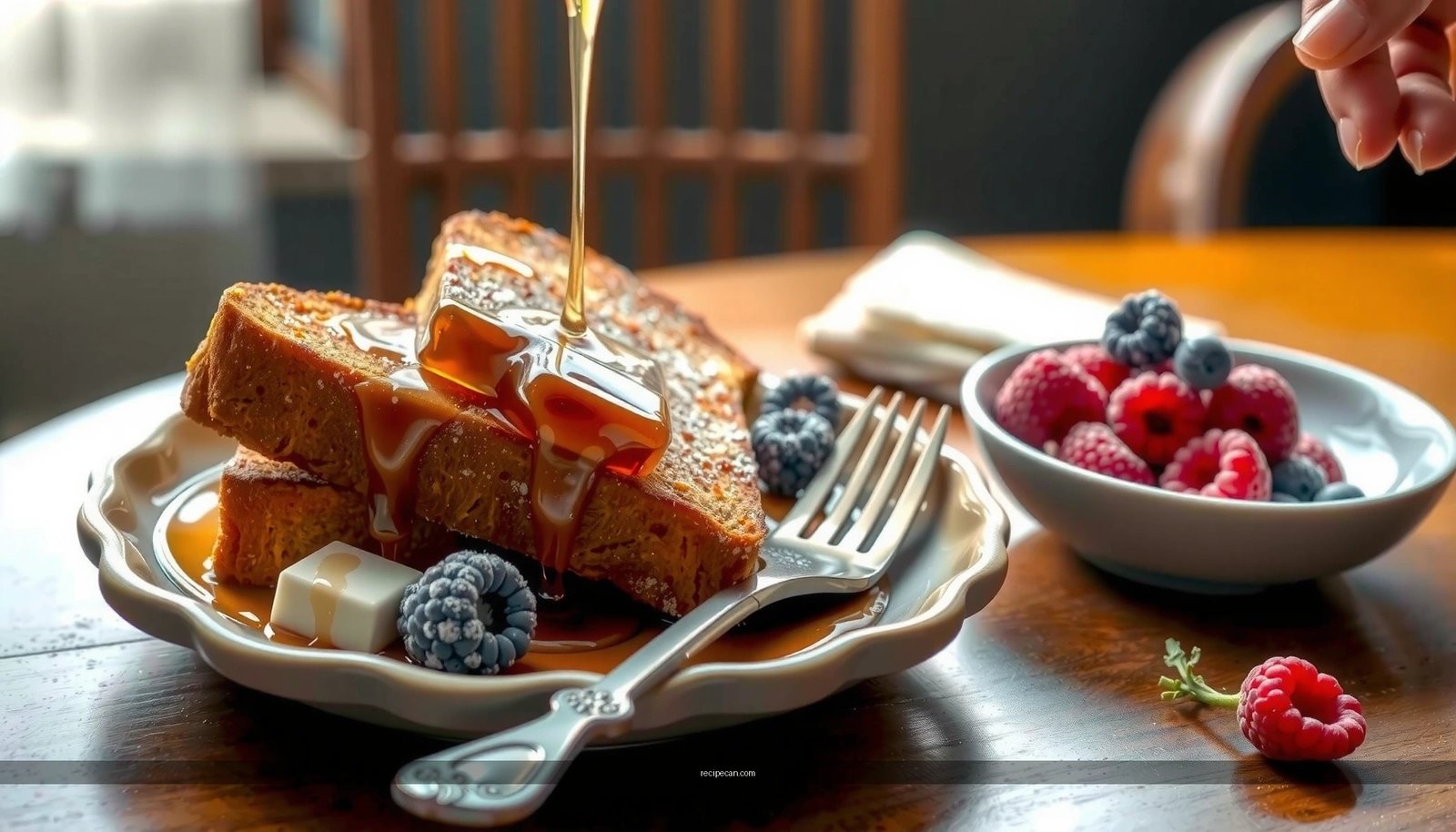
– Serve with maple syrup, powdered sugar, or cinnamon butter
Maple syrup is the classic move because it complements the custard’s warm spices. Powdered sugar adds visual contrast, and cinnamon butter brings a lightly tangy, bakery-style richness.
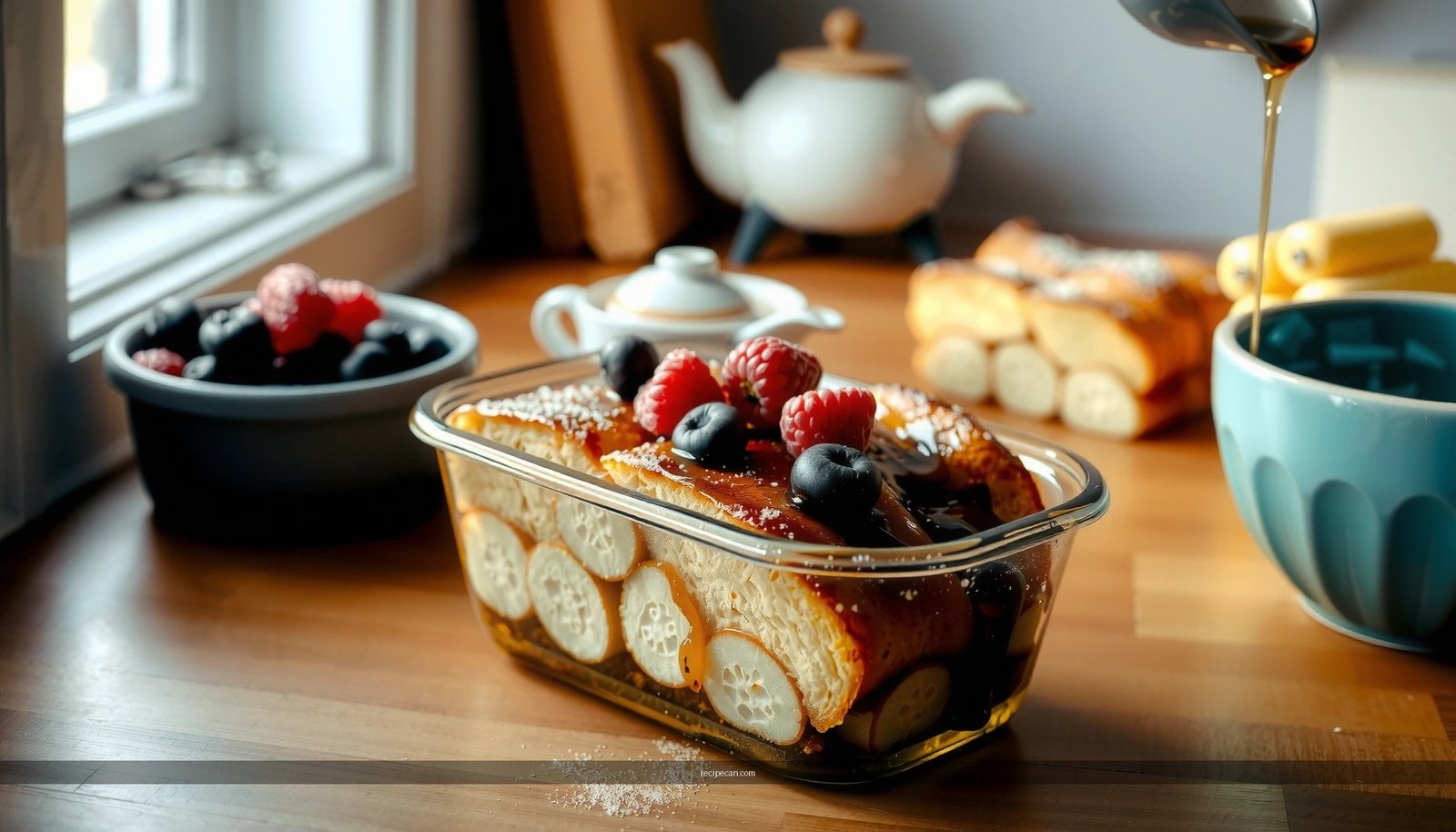
– Pair with fresh fruit like strawberries, bananas, or blueberries
Fruit adds brightness that balances richness. Arrange slices strategically so each serving has fruit, not just syrup.
– For extra flavor, add a warm berry compote or caramel drizzle
A quick compote (berries simmered with a little sugar and lemon) creates a jammy texture that clings beautifully. Caramel drizzle adds sweetness and enhances the golden, browned edges.
Professional plating tip: For brunch service or gatherings, portion the casserole into squares and top individually. This prevents syrup and fruit juices from making the whole tray soggy before everyone arrives.
Make-Ahead and Storage Notes
The overnight method is already a make-ahead win, but smart storage ensures leftovers stay appetizing.
– Assemble the casserole the night before for stress-free breakfasts or brunch
This recipe is built for scheduling. You can prepare in the evening, bake in the morning, and focus on coffee, drinks, or guests.
– Store leftovers covered in the fridge up to 3 days
Cover tightly to prevent drying. Within 3 days, texture remains best—custard can firm further as it chills, which is fine, but moisture loss is real if uncovered.
– Reheat in the oven or microwave until warmed through (oven helps keep it less soggy)
Oven reheating (covered loosely) generally restores warmth without turning the casserole watery. Microwave works for speed, but use shorter intervals and consider a lower power setting.
Reheat approach for best texture:
– Oven: 325°F / 165°C, covered, until warmed through
– Microwave: short bursts, then let stand 1–2 minutes to even out heat
French Toast Casserole Overnight Recipe works because it combines reliable custard chemistry (eggs set in the oven) with diffusion-driven overnight soaking (custard travels into bread fibers while refrigerated). If you choose the right bread, assemble evenly, refrigerate for at least 8 hours, and bake covered then uncovered until the center is set, you’ll consistently get golden edges and a custardy interior. Make it tonight, bake it tomorrow, and enjoy a comforting, classic French toast experience with minimal morning effort—perfect for your next weekday breakfast or weekend brunch.
Frequently Asked Questions
What is the best recipe for French toast casserole overnight?
A classic overnight French toast casserole uses cubed bread, a custard mixture of eggs, milk (or cream), vanilla, and cinnamon, plus optional sugar. You layer bread in a baking dish, pour the custard over it, cover, and refrigerate overnight so the bread soaks up the liquid. In the morning, bake until puffed and golden, then optionally add a drizzle of maple syrup or a dusting of powdered sugar.
How do I make French toast casserole the night before without it getting soggy?
Use slightly stale bread (like brioche, challah, or French bread) and cube it into even pieces so it absorbs custard evenly. Pour the custard slowly and make sure every piece is moistened, then keep it covered in the fridge to prevent drying or soaking too long at room temperature. If your recipe uses very wet bread or lots of custard, reduce the liquid slightly or use thicker bread cubes for a better overnight French toast casserole texture.
Why does my overnight French toast casserole turn out watery, and how can I fix it?
Watery results usually come from too much liquid, bread that’s too fresh (absorbs unevenly), or not allowing enough bake time to set the eggs. Make sure the casserole is baked until the center reaches a set, custardy consistency and the top is golden—if needed, bake a few minutes longer. For next time, measure custard accurately, consider using day-old bread, and let the dish sit at room temperature for 15–30 minutes before baking to help it cook through.
Which bread is best for an overnight French toast casserole—brioche, challah, or French bread?
Brioche and challah are often the best choice because they’re rich, soft, and soak up custard while still holding their shape. French bread works too, but it may require slightly longer soaking or a bit more custard to avoid dry spots. For an easy overnight French toast casserole, choose a sturdy bread with good structure—about 1–2 days old—so it absorbs well without turning mushy.
How long should I bake overnight French toast casserole, and what temperature should I use?
Bake at 350°F (175°C) for about 35–50 minutes, depending on the thickness of your casserole and the depth of the dish. Look for a golden, set top and a center that doesn’t jiggle like liquid custard; if it’s browning too quickly, loosely tent with foil. For food safety and best results, ensure the eggs are fully cooked—use an internal thermometer if you want to be precise (typically around 160°F/71°C).
References
- Google Scholar Google Scholar
https://scholar.google.com/scholar?q=overnight+french+toast+casserole+recipe - Google Scholar Google Scholar
https://scholar.google.com/scholar?q=breakfast+strata+overnight+soak+egg+custard - Google Scholar Google Scholar
https://scholar.google.com/scholar?q=egg+custard+bread+pudding+refrigeration+overnight+food+safety - French toast
https://en.wikipedia.org/wiki/French_toast - Bread pudding
https://en.wikipedia.org/wiki/Bread_pudding - https://en.wikipedia.org/wiki/Breakfast_casserole
https://en.wikipedia.org/wiki/Breakfast_casserole - https://www.britannica.com/topic/French-toast
https://www.britannica.com/topic/French-toast - Eggs | Food Safety and Inspection Service
https://www.fsis.usda.gov/food-safety/safe-food-handling-and-preparation/eggs - Preventing Food Poisoning | Food Safety | CDC
https://www.cdc.gov/foodsafety/keep-food-safe.html - https://nchfp.uga.edu/food_preservation/home.html
https://nchfp.uga.edu/food_preservation/home.html