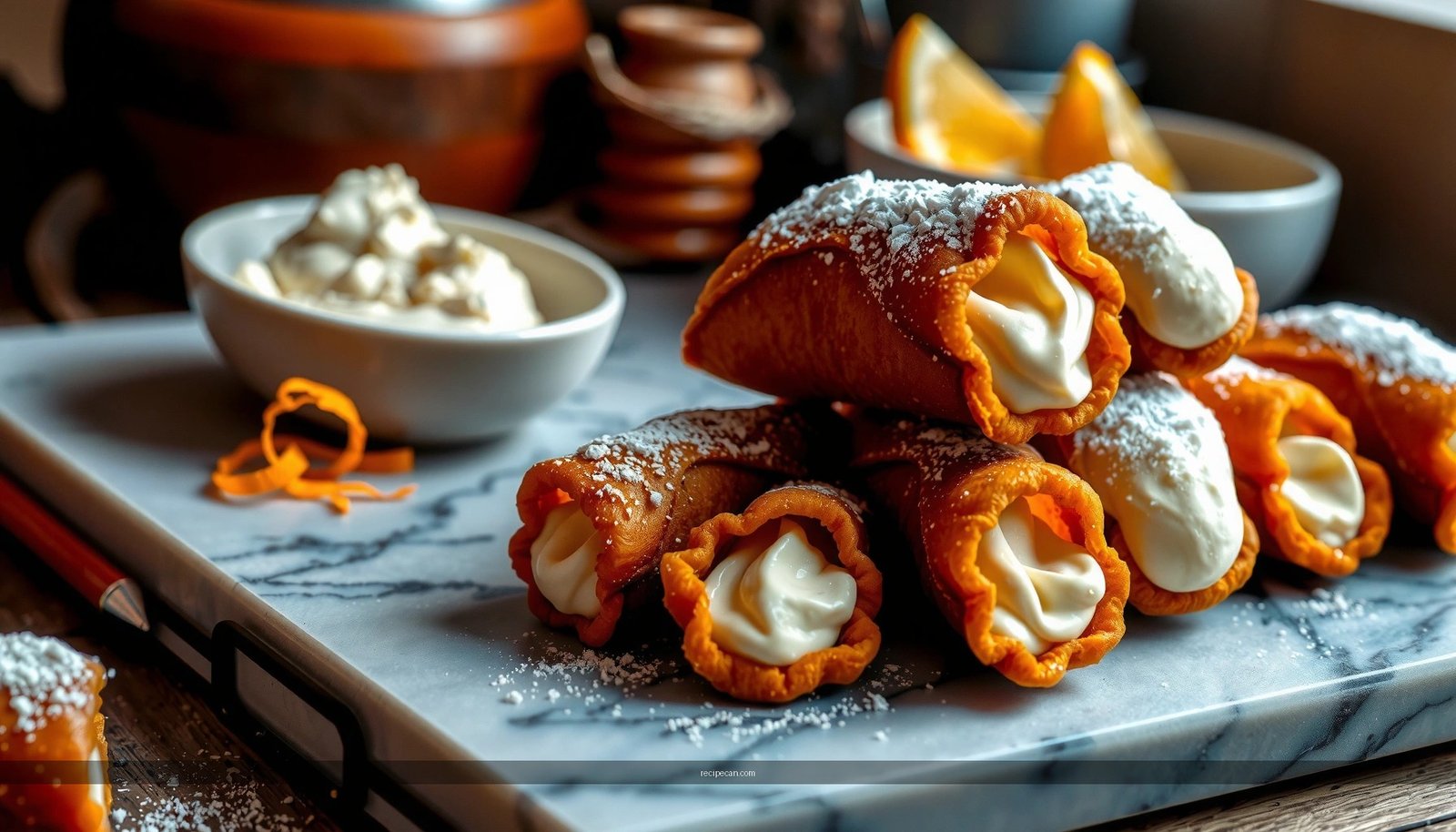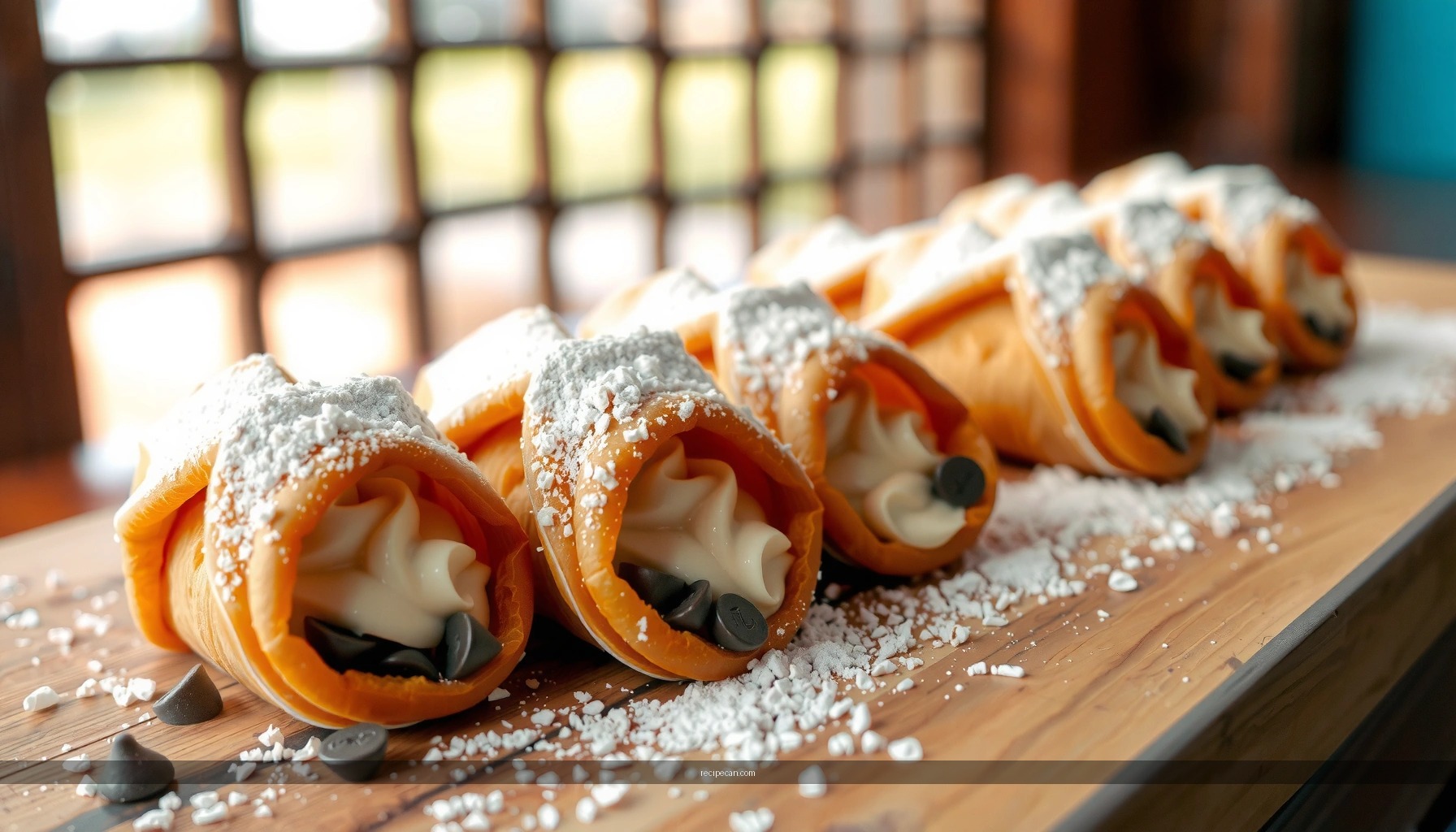
This easy cannoli recipe gives you classic, creamy cannoli in straightforward steps, with a filling that’s smooth, sweet, and reliably thick. If you’re searching for the simplest way to make homemade cannoli without guesswork, you’ll get a clear process from shell prep to filling and final assembly. It’s the best choice when you want traditional flavor and a dependable result—fast enough for weeknights, polished enough for a special occasion.
You can make crisp, golden cannoli shells and a rich, creamy ricotta filling with minimal fuss by focusing on two timing rules: smooth ricotta (well-drained and properly sweetened) and filling the shells just before serving. In the sections below, you’ll learn exactly how to mix, fill, and finish classic cannoli so the texture stays restaurant-quality.
Gather Ingredients for Easy Cannoli
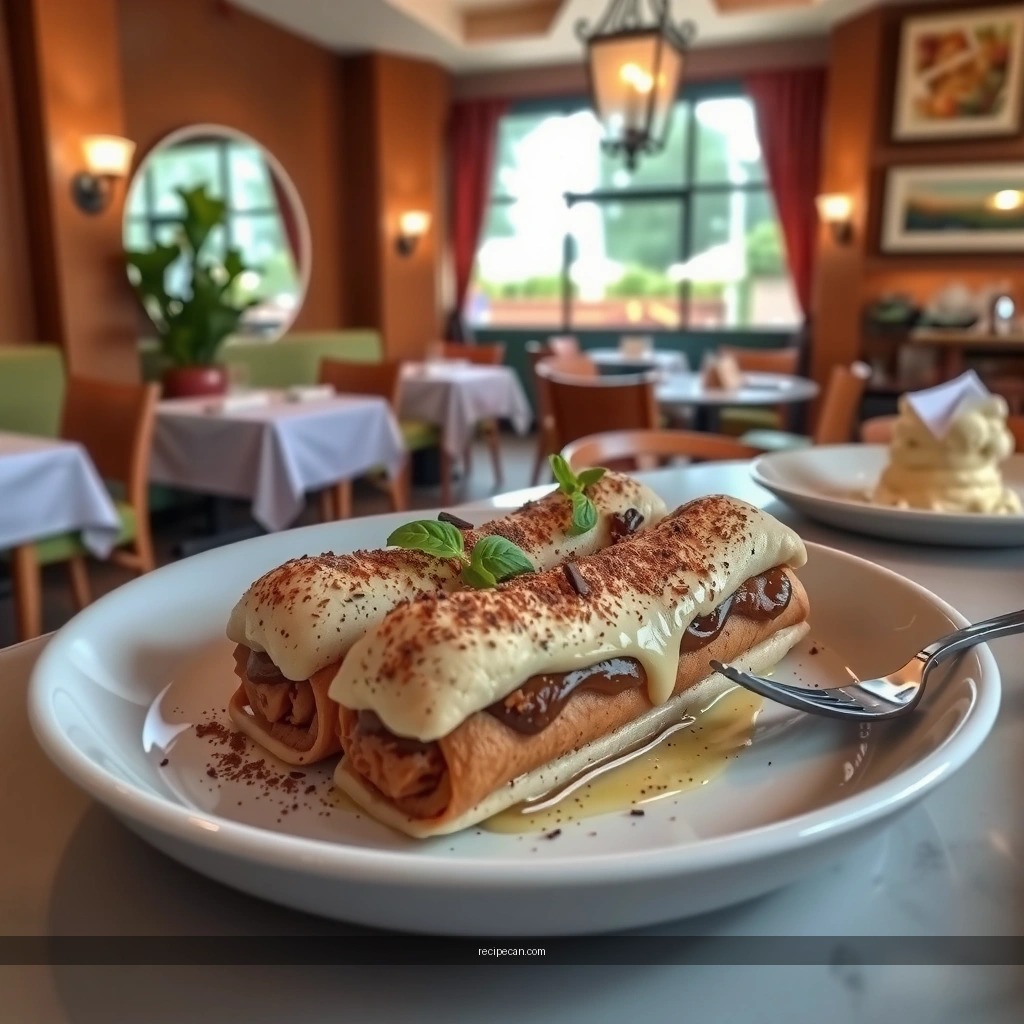
Before you start cooking, treat this step like mise en place for a service line: cannoli come together quickly once frying (or heating) begins, and the filling is best when it’s finished and piped promptly.
– Choose classic fillings like ricotta and sugar for authentic flavor
– Ricotta quality matters most. For classic cannoli cream, use whole-milk ricotta that’s firm enough to hold shape. If your ricotta looks watery, you’ll need to drain it (details in the Troubleshooting section).
– Sugar balances the dairy tang. Many traditional recipes use powdered sugar for a smoother mouthfeel, while some use granulated and beat longer—either can work, but powdered sugar is more forgiving.
– Flavorings: vanilla extract adds roundness; orange zest or lemon zest provides the characteristic Italian brightness. A tiny pinch of salt also sharpens sweetness.
– Have key tools ready (mixing bowl, piping bag, and shells)
– Mixing bowl + spatula/whisk: you want the ricotta silky, not grainy.
– Piping bag or zip-top bag with a corner snipped: cannoli filling should be neat and even—this also prevents shell blowouts.
– Cannoli shells: you can use store-bought shells for maximum simplicity or homemade shells if you prefer full control over flavor and thickness.
– Optional but helpful: fine mesh strainer (to drain ricotta), rimmed sheet pan (for staging filled shells), and parchment paper.
Quick reality check: cannoli are about contrast—crisp shell + creamy filling. If you prep everything hours ahead and fill early, the shells soften. Your ingredient plan should support “fill close to serving.”
Cannoli Timing & Texture Guidelines (Homemade)
| # | Process Step | Best For | Target Time | Impact on Crispness | Complexity |
|---|---|---|---|---|---|
| 1 | Drain ricotta (if needed) | Firm, pipeable filling | 15–60 min | ★★★★★ | Low |
| 2 | Mix ricotta + sugar until smooth | Creamy, non-grainy texture | 5–8 min | ★★★★☆ | Low |
| 3 | Fold in chocolate chips & zest | Balanced flavor + add-ins | 2–3 min | ★★★☆☆ | Low |
| 4 | Fill shells right before serving | Maximum shell crunch | 0–10 min pre-serve | ★★★★★ | Low |
| 5 | Dust with powdered sugar & garnish | Classic presentation | At plating | ★★★★☆ | Low |
| 6 | Holding filled cannoli | If you must delay | ≤ 30 min | ★★☆☆☆ | Medium |
| 7 | Store components separately | Preserve crispness | Up to 24 hours | ★★★★☆ | Low |
Make the Cannoli Filling
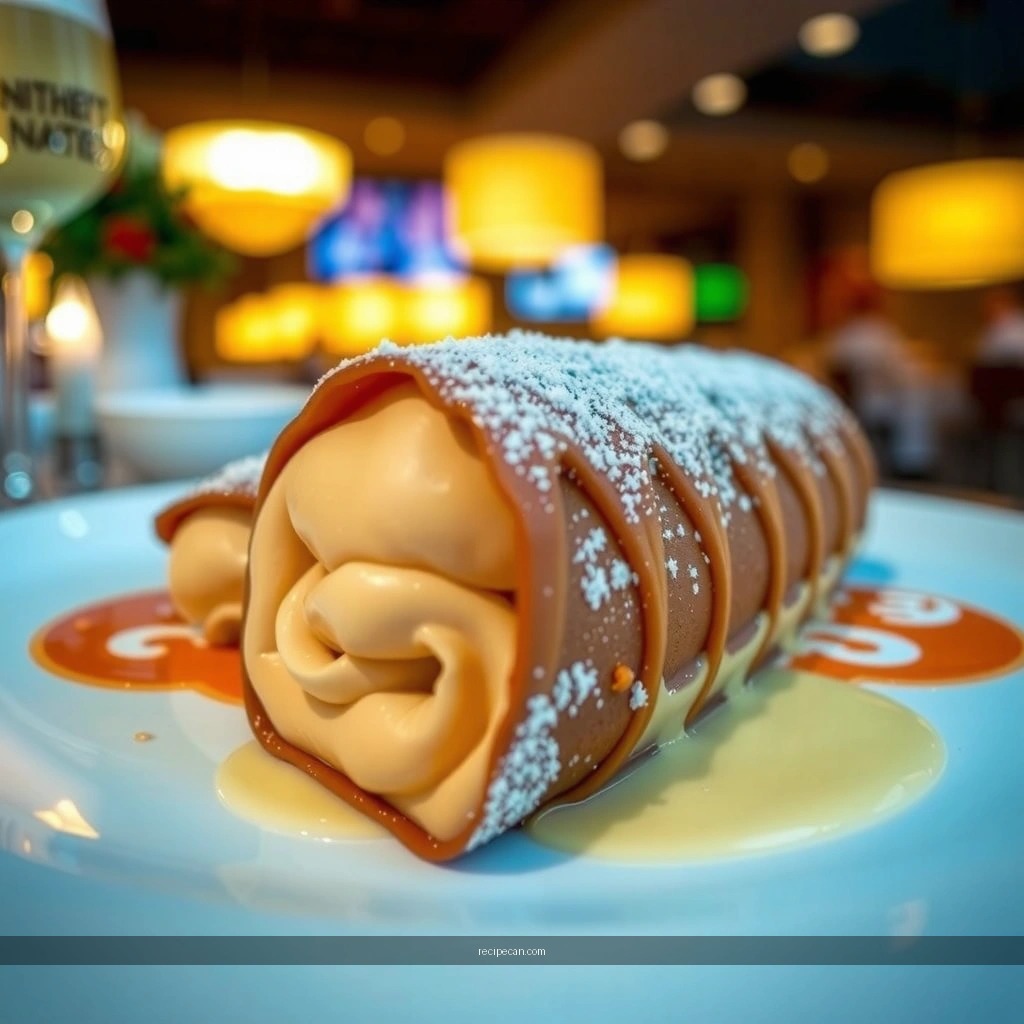
The filling is where “easy cannoli” either becomes restaurant-level or ends up too loose or grainy. Your goal: a smooth, pipeable ricotta base that tastes sweet and bright, with classic add-ins.
– Mix ricotta until smooth, then fold in sugar and flavorings
– Start with ricotta at the right texture. If it’s cold and stiff, let it sit 10 minutes to soften slightly, then mix.
– Break up ricotta first—beat it with a spatula until creamy, then whisk or use a mixer briefly if needed.
– Sweeten gradually. Add sugar (often powdered) little by little and mix until fully incorporated and glossy.
– Add flavor: vanilla extract and citrus zest (orange is classic; lemon is a bright alternative). Keep zest finely grated so you don’t get bitter pieces.
– Stir in chocolate chips and any optional candied fruit
– Chocolate chips: Use mini chips or chopped dark chocolate to ensure every bite has chocolate distribution.
– Candied fruit (optional): Diced candied orange or citron is traditional in many households, but it’s optional. If you add it, keep pieces small so the filling stays uniform.
– Texture adjustment: If the filling feels too thick, mix in a teaspoon of cream; if it’s too loose, chill and drain (see Troubleshooting).
Pro tip for a smoother filling: pass ricotta through a fine mesh strainer if it’s at all grainy. That one step can remove the “cottage cheese” texture that prevents cannoli from tasting truly classic.
Prepare and Fill the Cannoli Shells

Cannoli shells should be crisp, airy, and deeply golden. The biggest operational mistake is filling too early—so build your workflow around last-minute filling.
– Fill shells right before serving to keep them crisp
– Plan your timeline: make filling first (it can chill briefly), then pipe and plate shells close to serving.
– If shells are store-bought: let them sit at room temperature so they don’t absorb moisture from a cold filling and soften faster.
– Use a piping bag for clean, even filling
– Pipe from the center outward (or fill both ends): the goal is to distribute cream without cracking shells.
– Avoid overfilling. Overpressure can split shells or cause the cream to leak out.
– How to manage cleanup: place filled shells on a parchment-lined sheet pan so you can garnish efficiently and transfer easily.
Shell-readiness checklist
– Shells are fully dry and not exposed to steam.
– Your filling holds a slow, thick ribbon (not a runny pour).
– You can pipe without tearing—if your filling feels loose, chill it 20–30 minutes first.
Add Finishing Touches
Finishing isn’t just aesthetic—it affects perceived flavor and crunch. Powdered sugar should sit on the outside and dust lightly, while toppings should be placed immediately so they don’t dissolve into moisture.
– Dust with powdered sugar for a classic look
– Sift lightly for an even coat. Too heavy a layer can melt into a paste once the cannoli are handled.
– Add extra chocolate chips or pistachios on top
– Chocolate chips reinforce the filling’s sweetness and create a “mapped” bite pattern.
– Pistachios add a nutty crunch and are visually appealing. Finely chop them so they adhere without dominating the shell.
Optional professional plating approach: dust only the first batch you’re serving, then garnish the next batch right before it hits the table. This preserves crispness and reduces mess.
Best Add-Ins for Classic Cannoli Flavor
| Add-In | Flavor Note | Pairs With | Texture Impact | Best For |
|---|---|---|---|---|
| Mini chocolate chips | Rich, cocoa-forward sweetness | Vanilla + orange zest | Crunchy pops | Classic chocolate bites |
| Candied orange peel | Bright citrus aroma | Ricotta + orange zest | Chewy bursts | Traditional Italian-style |
| Chopped pistachios | Nutty, lightly salty depth | Orange zest + vanilla | Toasty crunch | A premium “bakery” finish |
| Vanilla extract | Warm, rounded sweetness | All ricotta bases | Smoother flavor | Most universally “safe” |
| Finely grated orange zest | Citrus brightness | Chocolate + ricotta | Aroma lift | Classic cannoli profile |
| Lemon zest (alternative) | Sharper, cleaner citrus | Vanilla + chocolate | Tarter lift | When you want less sweetness |
Serve and Store for Best Texture
If you want “classic, creamy cannoli,” you must manage storage like an operations plan. The filling is fine ahead; the shells are not.
– Serve immediately for the crunchiest shells
– Aim to fill no more than 10 minutes before serving. Cannoli shell crispness declines quickly once the cream introduces moisture.
– If you’re hosting, keep shells in a dry container and pipeline them onto plates as guests arrive.
– If storing, keep shells separate from filling to prevent sogginess
– Best practice: store shells in an airtight dry container at room temperature and keep filling refrigerated in a covered bowl.
– Fill shortly before eating to preserve texture contrast.
– Even with refrigeration, filled shells generally soften—so storage should be component-based, not finished cannoli-based.
Troubleshooting Common Issues
Cannoli are forgiving if you diagnose quickly. Use these targeted fixes to recover quality without starting over.
– If filling is too runny, drain ricotta or chill longer
– Drain: Line a strainer with cheesecloth and drain ricotta 15–30 minutes.
– Chill: Refrigerate the mixed filling for 20–30 minutes so it firms before piping.
– Check proportions: Too much zest juice (especially if overly wet) can slightly loosen filling; pat candied fruit dry if it’s sticky.
– If shells soften, reduce fill time and serve right after filling
– Fill closer to serving. Even 30 minutes can noticeably reduce crunch depending on humidity.
– Avoid moisture exposure: keep shells away from the kitchen steam and don’t cover filled cannoli with a tight lid unless you must.
– Use a dry dusting strategy: powder sugar should be added at plating, not hours in advance.
Additional diagnostic mindset:
If your cannoli taste fine but look wrong, it’s often a piping/portion issue. If your cannoli look fine but taste flat, it’s usually under-seasoned ricotta or zest flavor that needs a slight boost.
Homemade cannoli are easiest when you focus on smooth ricotta, careful filling, and timing for the crunch. Make the filling first, pipe it into shells right before serving, and finish with powdered sugar and mix-ins. Try this easy cannoli recipe today, and make your next dessert night a guaranteed crowd-pleaser.
Frequently Asked Questions
What is the easiest cannoli recipe for beginners?
An easy cannoli recipe for beginners uses store-bought or simple homemade shells and a straightforward ricotta filling. Look for a filling that combines ricotta, powdered sugar, and mini chocolate chips, then sweetens with a little vanilla. To save time, you can chill the filling briefly while you prepare or warm the cannoli shells.
How do you make cannoli filling that isn’t watery?
The key to a non-watery cannoli filling is draining the ricotta well before mixing. Use fresh ricotta and press it through a fine mesh sieve, or wrap it in cheesecloth and refrigerate for a few hours. After draining, mix in powdered sugar and flavorings until smooth, then fold in mix-ins like chocolate chips and optional cinnamon.
Which cannoli shells are best for an easy homemade cannoli?
For an easy cannoli recipe, the best option is pre-made cannoli shells or tube-shaped wrappers available at many grocery stores or Italian markets. If you’re making shells from scratch, choose a reliable fried pastry dough and have your cannoli forms ready for shaping. Pre-made shells save time and help you avoid common issues like uneven frying or shells that crack.
How do you prevent cannoli shells from getting soggy?
To keep cannoli shells crisp, only fill them right before serving, since the filling softens the shell as it sits. If you must prep ahead, keep shells and filling separate and refrigerate the filling in an airtight container. For extra protection, pipe the ricotta filling with a sturdy consistency and avoid adding too much liquid.
Why do my cannoli taste “grainy,” and how can I fix it?
Graininess usually comes from ricotta that wasn’t smooth enough or wasn’t properly drained. Press the ricotta through a sieve and mix until creamy, or use an electric mixer briefly for a smoother texture in your easy cannoli recipe. Also confirm you’re using good-quality ricotta and not over-sweetening with heavy liquid ingredients that can affect the texture.
References
- Cannoli
https://en.wikipedia.org/wiki/Cannoli - https://www.britannica.com/topic/cannoli
https://www.britannica.com/topic/cannoli - Google Scholar Google Scholar
https://scholar.google.com/scholar?q=easy+cannoli+recipe+ricotta+shells - Google Scholar Google Scholar
https://scholar.google.com/scholar?q=cannoli+recipe+fried+dough+shells - Google Scholar Google Scholar
https://scholar.google.com/scholar?q=cannoli+recipe+ricotta+sugar+chocolate+chips - Cannoli recipe | Good Food
https://www.bbcgoodfood.com/recipes/cannoli - https://cooking.nytimes.com/recipes/cannoli
https://cooking.nytimes.com/recipes/cannoli - https://www.theguardian.com/food/cannoli
https://www.theguardian.com/food/cannoli - https://pubmed.ncbi.nlm.nih.gov/?term=cannoli
https://pubmed.ncbi.nlm.nih.gov/?term=cannoli - Google Scholar Google Scholar
https://scholar.google.com/scholar?q=easy+cannoli+recipe