Looking for the best date milkshake recipe that’s creamy, sweet, and genuinely easy to make? This recipe delivers a thick, dessert-worthy shake using dates, milk, and a quick blend—no complicated prep needed. You’ll get clear steps and ingredient amounts so you can nail the flavor and texture on the first try.
You can make a creamy, naturally sweet date milkshake in minutes by blending softened dates with milk and dialing thickness with ice. This guide walks you through getting perfectly smooth blended dates, choosing the right milk for your desired texture, and customizing flavor and sweetness without complicated steps.
Ingredients for Date Milkshake

A great date milkshake starts with ingredient choices that minimize graininess, maximize sweetness, and create a satisfying “milkshake” thickness.
– Choose ripe dates for the best natural sweetness
Ripe dates are softer and blend more completely, which directly reduces graininess. Look for dates that feel pliable and slightly sticky rather than hard and dry. If your dates are on the drier side, soaking becomes even more important (covered below).
– Pick your milk (dairy or plant-based) and optional flavor boosters like vanilla
Milk is the body of the shake. Whole dairy milk delivers classic creaminess, while lower-fat milk still works but can taste thinner unless you compensate with more dates or less ice. Plant-based milks (oat, soy, almond) vary—oat milk generally blends closest to dairy’s mouthfeel, while almond milk can be lighter and may feel less dessert-like unless you add banana or a thickener (like more dates).
– Decide if you want ice for a thicker, colder texture
Ice chills the drink and helps achieve a milkshake-style thickness. However, adding too much ice before the dates fully break down can lead to uneven texture. A practical approach is to start with a small amount of ice (or even no ice) while blending the dates smooth, then adjust consistency.
What Best Predicts Date Milkshake Texture (Quick Benchmarks)
| # | Ingredient Choice | Typical Texture Outcome | Consistency Rating | Blend Smoothness |
|---|---|---|---|---|
| 1 | Medjool dates + soaking | Creamy, spoonable | 9/10 | 9/10 ★ |
| 2 | Dry dates + no soaking | Slight grain, thinner feel | 4/10 | 3/10 ★ |
| 3 | Whole milk | Classic dessert mouthfeel | 8/10 | 8/10 ★ |
| 4 | Oat milk | Thick, smooth, “milkshake-like” | 8/10 | 8/10 ★ |
| 5 | Almond milk | Lighter body unless thickened | 6/10 | 7/10 ★ |
| 6 | Ice added after date paste | Even thickness, stable texture | 9/10 | 8/10 ★ |
| 7 | Too much ice from the start | Incomplete date breakdown | 5/10 | 4/10 ★ |
How to Prepare Dates

This is the step most likely to determine whether your shake is silky or slightly gritty. The goal is to soften dates enough that blending completely dissolves their structure.
– Soak dates in warm water to soften them before blending
Warm water speeds up softening compared with cold water. Soak until the dates become noticeably more flexible—typically 10–20 minutes depending on dryness and date type. This also helps dates blend more evenly, which improves consistency across every sip.
– Remove pits and drain excess water to avoid a watery shake
Even after soaking, excess water can dilute flavor and thin your shake. Drain well, or use a slotted spoon to move dates into the blender. If you reserve a tablespoon or two of soaking liquid, use it only if your blender struggles to move the mixture smoothly.
– Blend dates until smooth to prevent graininess
For a truly creamy date milkshake, blend soaked dates first with a small amount of milk. Once they form a smooth “date base,” add the remaining milk and any ice. This two-stage approach is especially effective if you’re using a smaller blender or blending in small batches.
Blend the Perfect Date Milkshake

Once your dates are prepped, the blending process is where you control sweetness, thickness, and final flavor balance.
– Combine soaked dates with milk and blend until fully creamy
Start with soaked, drained dates and milk, and blend until no visible date pieces remain. If your mixture looks thick at first, that’s normal—dates hydrate further as you blend. Keep the blender running until the texture looks uniform and glossy.
– Adjust sweetness by adding more dates or less if needed
Dates vary in sweetness by variety and ripeness. If the shake tastes slightly mild, add an extra date (or half a date for precise adjustments) and reblend. If it’s too sweet, simply reduce date quantity next time; you can also mellow it by adding more milk.
– Tune thickness with ice cubes or extra milk
Thickness should match the “milkshake” expectation: thick enough to feel indulgent, but still liquid enough to drink easily.
– Thicker: Add 2–4 ice cubes and blend until smooth.
– Thinner: Add 1–3 tablespoons of milk at a time, reblend, and stop when it reaches your preferred consistency.
Practical ratio guide (for one serving):
A common starting point is 4–6 medjool dates per 1 cup (240 ml) of milk, with a small handful of ice if you want it colder and thicker. Use this as a baseline, then iterate based on sweetness and your blender’s power.
Flavor Variations (Optional Upgrades)

A date milkshake is naturally dessert-like, but a few targeted additions can elevate it into a more complex, café-style drink.
– Add cinnamon or cardamom for warm, aromatic flavor
Cinnamon adds familiar sweetness without needing more dates. Cardamom is particularly effective because it pairs with the caramel notes of dates and feels “warm” rather than sugary. Start with a pinch—you can always add more after tasting.
– Use banana or yogurt for extra creaminess and tang
– Banana: boosts body and smoothness, and makes the shake taste more “milkshake” and less like a drink.
– Yogurt: introduces tang and can make the sweetness feel more balanced. Greek yogurt works well if you want a thicker, spoon-ready texture.
– Try nuts (almonds/cashews) for a richer, dessert-like shake
Nuts contribute richness and a subtle buttery flavor. For best results, soak them briefly or blend longer to prevent texture from turning coarse. Cashews, in particular, blend smoothly and can mimic heavy cream’s mouthfeel.
Serving Tips and Best Practices
Serving is where your work pays off—texture can change quickly as the shake warms and ice melts.
– Serve immediately for the thickest texture and best taste
Date milkshakes thicken when chilled and soften as temperature rises. If you want the most “thick and creamy” experience, blend and serve right away.
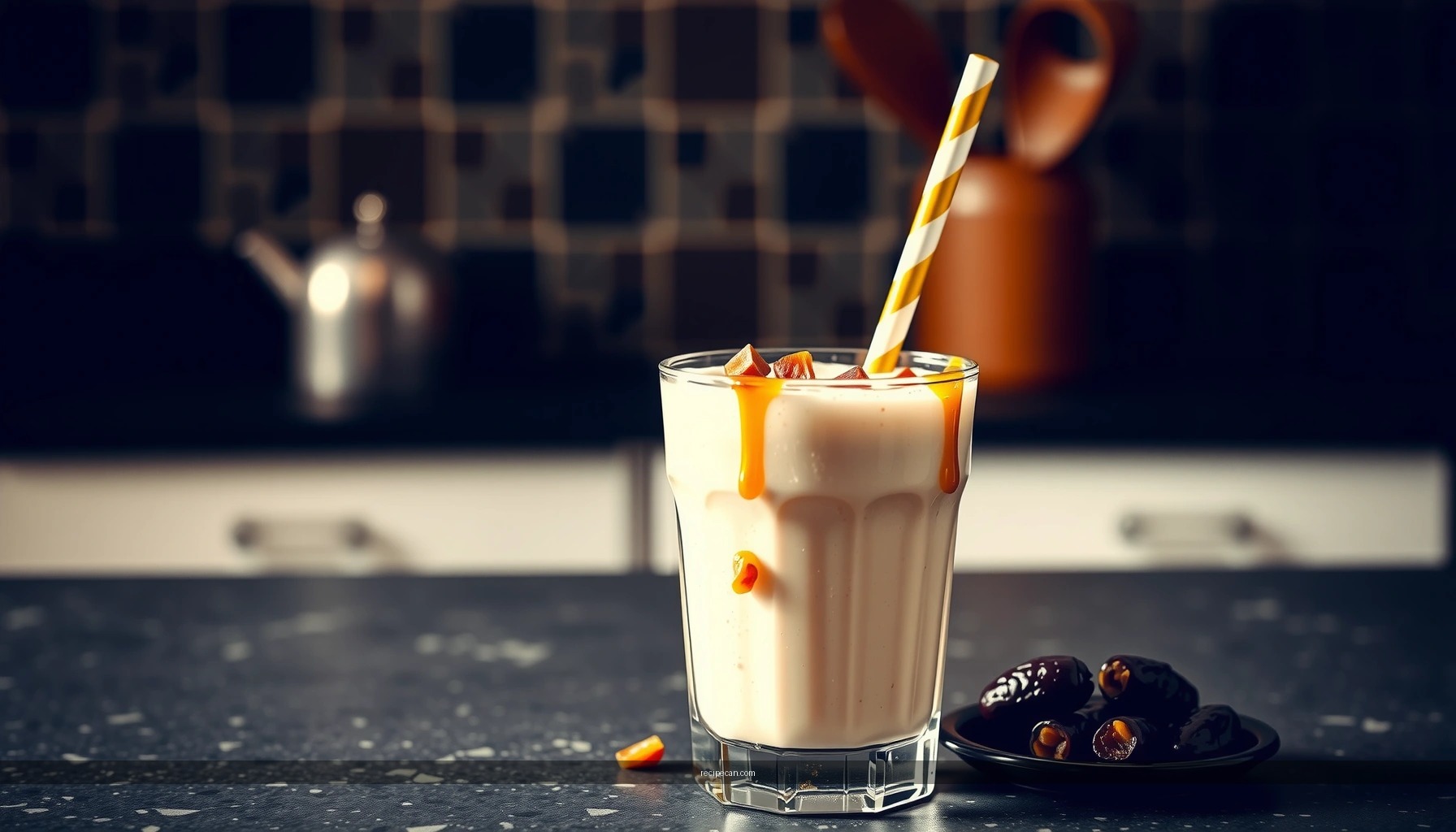
– Garnish with chopped dates, cinnamon, or a pinch of salt to enhance flavor
A small pinch of salt often improves perceived sweetness and makes date flavors taste deeper. Keep garnishes light: chopped dates add sweetness and texture, while cinnamon adds aroma.
– Store blended leftovers briefly and re-blend if needed
If you need to store leftovers, do it briefly (such as a few hours) in a sealed container in the fridge. When you return to it, reblend for 10–20 seconds to restore a smooth, uniform texture.
Health and Nutrition Notes
From a nutrition standpoint, dates give you natural sweetness plus fiber—useful when you want a better alternative to refined sugar. Still, portion control matters because dates are calorie-dense.
– Dates add natural sugar and fiber—great for sustained energy
Fiber supports satiety and can help moderate how quickly sweetness affects you compared with sugar alone. That said, “natural” doesn’t mean “zero impact,” so your body’s response will still depend on portion size and overall dietary goals.
– Choose lower-fat or plant-based milk if you want a lighter option
If you’re aiming for a lighter shake, use lower-fat dairy or a plant-based milk like oat or soy. Note that the lighter the milk, the more you may need to adjust with dates, banana, or fewer ice additions to maintain thickness.
– Control portion size if you’re limiting added sugars
A date milkshake can be a satisfying treat, especially when you view it as fruit-forward rather than “sugar-free.” For reduced sweetness, use the low end of the date range and taste before adding more.
This date milkshake is quick to make, naturally sweet, and easy to customize to your taste. Try the basic blended-dates-first method for maximum smoothness, then experiment with cinnamon, banana, or nuts—save your preferred variation as your consistent go-to creamy drink.
If you’d like, tell me whether you prefer dairy or plant-based, and your ideal thickness (drinkable vs spoonable), and I’ll suggest an exact date-to-milk ratio for your blender.
References
- Milkshake
https://en.wikipedia.org/wiki/Milkshake - https://en.wikipedia.org/wiki/Date_(fruit
https://en.wikipedia.org/wiki/Date_(fruit - Date palm | Description, Uses, & Cultivation | Britannica
https://www.britannica.com/plant/date-palm - Healthy diet
https://www.who.int/news-room/fact-sheets/detail/healthy-diet - https://www.cdc.gov/healthyweight/healthy_eating/index.html
https://www.cdc.gov/healthyweight/healthy_eating/index.html - https://pubmed.ncbi.nlm.nih.gov/?term=date+milkshake+recipe
https://pubmed.ncbi.nlm.nih.gov/?term=date+milkshake+recipe - https://pubmed.ncbi.nlm.nih.gov/?term=dates+nutritional+composition
https://pubmed.ncbi.nlm.nih.gov/?term=dates+nutritional+composition - https://ods.od.nih.gov/factsheets/dietaryfiber-HealthProfessional/
https://ods.od.nih.gov/factsheets/dietaryfiber-HealthProfessional/ - Google Scholar Google Scholar
https://scholar.google.com/scholar?q=date+milkshake+recipe - Google Scholar Google Scholar
https://scholar.google.com/scholar?q=dates+milkshake+nutrition