Want the best recipe for French toast casserole that’s easy, fluffy, and built to feed a crowd? This version delivers tender, custardy slices with crisp edges using simple ingredients and a straightforward bake-and-serve method. It answers which approach actually works when you need a stress-free brunch centerpiece—no last-minute cooking required.
The best French toast casserole is a make-ahead bake that starts with an overnight custard soak and finishes with a two-stage bake for a puffed, golden top. Use sturdy bread, a balanced egg-and-dairy custard, and consistent soaking time to get a sliceable, custardy interior that works for brunch crowds without last-minute stress.
This guide walks you through the ingredients, timing, and technique so your casserole comes out easy, fluffy, and reliably delicious—every single time.
Choose the Right Bread
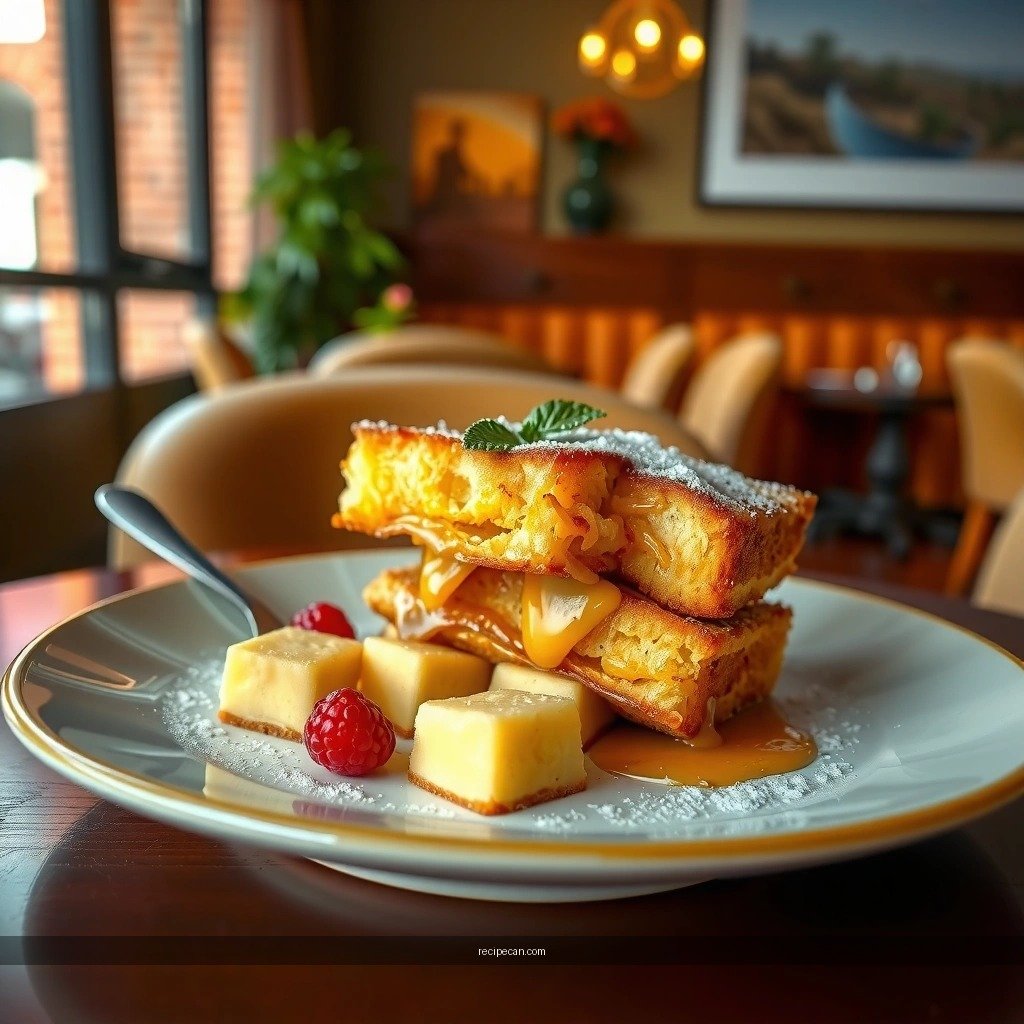
Bread choice is the difference between “custardy and tender” and “mushy or dry.” For French toast casserole, you want bread that can absorb custard without collapsing completely.
– Use sturdy bread like brioche, challah, or thick-cut Texas toast for best texture
– Brioche and challah bring rich flavor and a soft crumb that puffs beautifully.
– Thick-cut Texas toast is a convenient, widely available option; its thickness helps prevent over-soaking.
– Cut into even cubes so every bite soaks up custard evenly
– Aim for 1-inch cubes (roughly). Smaller pieces soak faster; larger pieces can bake unevenly.
– Keep cube size consistent to promote uniform custard absorption and even browning.
Practical bread notes
– Avoid very soft sandwich bread (it can turn gummy).
– Slightly stale bread is ideal. If your bread is fresh, cube it and leave it out uncovered for a few hours to dry the surface—this improves absorption and texture.
How much bread for a crowd?
A typical 9×13-inch casserole uses about 9–12 cups cubed bread depending on cube size and how packed you layer it.
Recommended Custard Ratios for French Toast Casserole (9×13-inch)
| # | Bread Choice | Eggs | Milk / Half-and-Half | Best For | Reliability Rating |
|---|---|---|---|---|---|
| 1 | Brioche | 8 large | 3 cups half-and-half | Most fluffy, rich “brunch style” | ★★★★☆ |
| 2 | Challah | 7 large | 3 cups whole milk | Balanced flavor, slice holds well | ★★★★☆ |
| 3 | Texas toast | 8 large | 3 cups whole milk | More custard coverage per cube | ★★★☆☆ |
| 4 | Sourdough (day-old) | 6 large | 3 cups low-fat milk | Tangy twist, firmer bite | ★★★☆☆ |
| 5 | Croissants (torn) | 8 large | 2.75 cups half-and-half | Flakiest “French bakery” vibe | ★★★★☆ |
| 6 | Whole-wheat brioche | 8 large | 3 cups half-and-half | Nutty sweetness, sturdy structure | ★★★☆☆ |
| 7 | Very soft white bread | 9 large | 3.25 cups whole milk | Works only if dried slightly first | ★★☆☆☆ |
Build the Perfect Custard

A great custard is rich enough to soak deeply, but balanced so the casserole sets cleanly when baked. Think of custard as the “glue” that creates a sliceable French toast casserole.
– Whisk eggs, milk (or half-and-half), vanilla, and cinnamon for a classic flavor base
– Eggs provide structure (they set as they bake).
– Dairy provides moisture and creaminess.
– Vanilla and cinnamon create the familiar French-toast aroma.
– Sweeten with sugar or maple syrup, and salt lightly to enhance richness
– Use sugar for classic sweetness and browning.
– Use maple syrup for deeper flavor; reduce other sugar slightly if substituting.
– Add a pinch of salt—it improves perceived sweetness and rounds out flavors.
Analytical guidance: how to avoid common custard failures
– Too much liquid → casserole becomes watery and won’t hold slices.
– Too little custard → bread dries out in the oven.
– Over-seasoning (especially cinnamon) → can turn bitter at the edges; start conservative.
Recommended basic custard (9×13-inch baseline)
– 8 large eggs
– 3 cups half-and-half (or whole milk)
– 1/2 cup sugar (or 1/3 cup maple syrup + 1–2 tbsp sugar if desired)
– 1 tbsp vanilla extract
– 1–1 1/2 tsp ground cinnamon
– 1/2 tsp salt
Whisk until fully smooth and uniform—no streaks of egg.
Assemble and Soak Overnight
This is where the “best” comes from: overnight soak time gives bread the opportunity to absorb custard throughout, not just on the surface.
– Layer bread in a greased baking dish and pour custard evenly over top
– Grease the dish (butter or nonstick spray) to prevent sticking and support crisp edges.
– Pour custard slowly so it reaches the bottom layer.
– Let it soak at least 30 minutes (overnight is best) for maximum custardy softness
– Minimum: 30 minutes (works in a pinch, but texture can be less uniform).
– Best: 8–12 hours in the refrigerator, covered.
Soak strategy for consistent results
– Press lightly with a spoon or spatula once or twice during the first 10–15 minutes if some cubes float.
– If the custard level looks low after initial pouring, ensure the bread is densely packed; you may need a little extra custard in very shallow layers.
Food safety note
– Refrigerate during soaking; don’t leave custard-soaked bread at room temperature for extended periods.
Bake Until Golden and Set
The bake method determines whether you get that signature puff and golden crust without drying out the interior.
– Bake covered first to prevent over-browning, then uncover to crisp the top
– Cover with foil for the first phase to trap heat and gently set the custard.
– Uncover to drive off surface moisture and brown the top.
– Look for a set center and lightly browned edges (timing varies by dish size)
– Timing depends on your oven and whether the dish is deeper or wider.
– A “set” casserole will jiggle slightly in the center like firm gelatin, not slosh like liquid.
Target bake time (typical 9×13-inch)
1. Covered: 25–35 minutes at 350°F / 175°C
2. Uncovered: 15–25 minutes until golden and puffed
How to confirm doneness
– Use a thermometer if you want certainty: the center should reach about 160°F / 71°C.
– If you don’t have a thermometer, check that the center isn’t wet and the edges are golden.
Add Flavor Variations (Optional)
Classic French toast casserole is hard to beat, but the overnight format makes it easy to customize. Add-ins should be folded in thoughtfully so they don’t sink or burn.
– Stir in chocolate chips, berries, or sliced bananas before baking for easy twists
– Chocolate chips: add sweetness and pockets of melty richness.
– Berries: use frozen berries straight from the freezer to avoid excess juices; increase bake time slightly if needed.
– Bananas: slice thin so they warm evenly and distribute through the custard.
– Top with streusel or a cinnamon-sugar layer for extra crunch and sweetness
– Sprinkle streusel after uncovering for best texture.
– For cinnamon-sugar, mix 2–3 tbsp sugar with 1 tsp cinnamon and lightly dust before the final browning stage.
Two “works every time” combination ideas
– Blueberry + lemon zest (bright, brunch-friendly)
– Chocolate + orange zest (dessert-like, very crowd-pleasing)
Operational tip for crowds
If you’re serving many people, bake one casserole with a classic base and keep “optional toppings” separate (syrup, fresh fruit, whipped cream). This gives everyone variety without splitting batches.
Serve Like a Brunch Pro
A French toast casserole is best when it’s warm, not piping-hot—and when slices hold together.
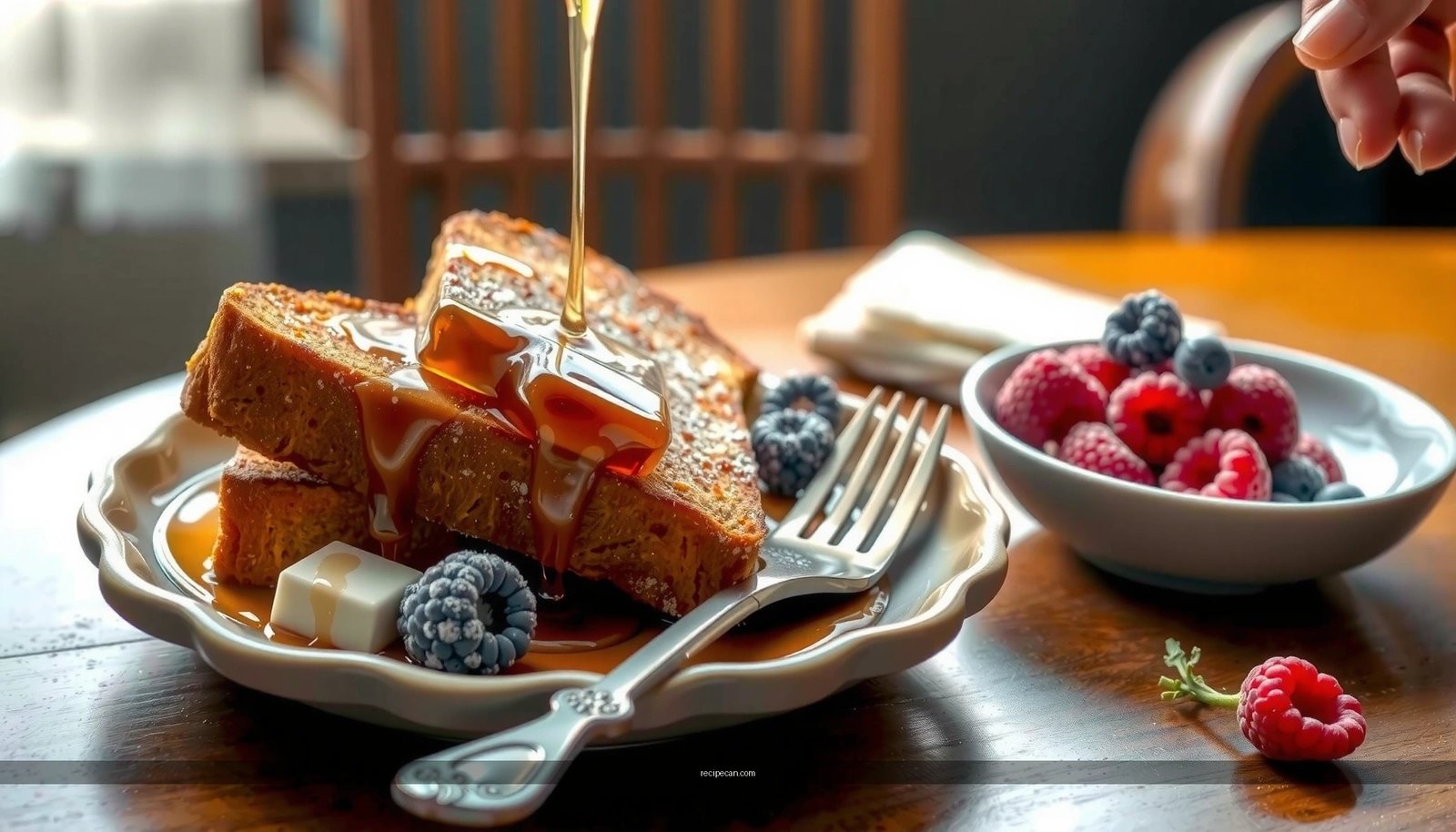
– Serve with maple syrup, powdered sugar, or fresh fruit
– Maple syrup is the natural partner.
– Fresh fruit (berries, sliced peaches, or bananas) balances sweetness.
– Let it rest briefly so slices hold together cleanly
– Rest 5–10 minutes after baking. This allows the custard to finish setting and makes slicing cleaner.
Presentation that scales
– Cut into squares and use a spatula to lift each portion.
– If you’re feeding a crowd, arrange slices on a platter rather than spooning directly from the dish.
Wrap-Up: The Reliable Path to Fluffy, Crowd-Friendly French Toast Casserole
The best recipe for French toast casserole comes down to two dependable principles: well-soaked bread and a balanced custard, then baking until puffed and golden. Choose sturdy bread like brioche or challah, follow the overnight soak for maximum softness, bake covered then uncovered for the perfect top, and customize with simple add-ins. Make it tonight, bake it tomorrow, and you’ll have a brunch centerpiece that’s easy to serve, easy to love, and consistently sliceable.
Frequently Asked Questions
What’s the best recipe for French toast casserole that isn’t soggy?
Use day-old bread (like brioche or challah) and cut it into thick cubes so it holds up in the custard without collapsing. Whisk eggs, milk (or half-and-half), vanilla, cinnamon, and a pinch of salt, then soak just long enough—typically 20–30 minutes, or up to overnight in the fridge if the bread is sturdy. Bake uncovered until the top is golden and the center reaches a gentle set, and let it rest 10–15 minutes so excess moisture absorbs.
How do I make French toast casserole the night before?
Assemble the casserole in your baking dish by layering bread cubes and pouring the egg-milk mixture over the top. Cover tightly and refrigerate overnight so the custard soaks in evenly for a consistent bake. In the morning, bake straight from the fridge (or let it sit 15 minutes for more even browning), and check doneness by ensuring the center is set and the edges are crisp.
Which bread is best for French toast casserole?
Brioche is a go-to for a rich, custardy French toast casserole, while challah is another excellent option for soft, flavorful results. If you want a slightly lighter texture, use thick-cut Texas toast or a sturdy white bread; avoid very thin-sliced sandwich bread because it can turn mushy. For best results, use bread that’s a day or two old or lightly toasted before assembling.
Why does my French toast casserole come out dry or bland?
Dry casserole usually means the custard ratio is too low or the soak time was too short, so the bread didn’t fully absorb the egg mixture. Bland flavor often comes from insufficient vanilla, cinnamon, or salt—don’t skip the pinch of salt, and consider adding a little nutmeg for depth. Measure ingredients carefully, soak longer if needed, and bake until the custard is just set rather than overbaked.
What temperature and baking time make the best French toast casserole?
Bake at 350°F (175°C) for most casseroles, typically 35–55 minutes depending on thickness and your dish size. Start checking around 35 minutes: the top should be golden, and the center should be set with minimal jiggle. If the top browns too quickly, tent with foil for the remaining bake time to ensure the French toast casserole cooks through.
References
- Google Scholar Google Scholar
https://scholar.google.com/scholar?q=best+french+toast+casserole+recipe - Google Scholar Google Scholar
https://scholar.google.com/scholar?q=french+toast+casserole+bread+soak+custard+ratio - Google Scholar Google Scholar
https://scholar.google.com/scholar?q=bread+pudding+custard+egg+milk+soaking+baking - French toast
https://en.wikipedia.org/wiki/French_toast - Casserole
https://en.wikipedia.org/wiki/Casserole - Custard
https://en.wikipedia.org/wiki/Custard - https://www.fda.gov/food/buy-store-serve-safe-food/eggs-and-egg-products
https://www.fda.gov/food/buy-store-serve-safe-food/eggs-and-egg-products - https://www.fsis.usda.gov/food-safety/safe-food-handling-and-preparation/food-safety-basics/eggs
https://www.fsis.usda.gov/food-safety/safe-food-handling-and-preparation/food-safety-basics/eggs - https://www.fsis.usda.gov/food-safety/safe-food-handling-and-preparation/food-safety-basics/safe-minimum-internal-temperature-chart
https://www.fsis.usda.gov/food-safety/safe-food-handling-and-preparation/food-safety-basics/safe-minimum-internal-temperature-chart - https://pubmed.ncbi.nlm.nih.gov/?term=egg+custard+coagulation
https://pubmed.ncbi.nlm.nih.gov/?term=egg+custard+coagulation