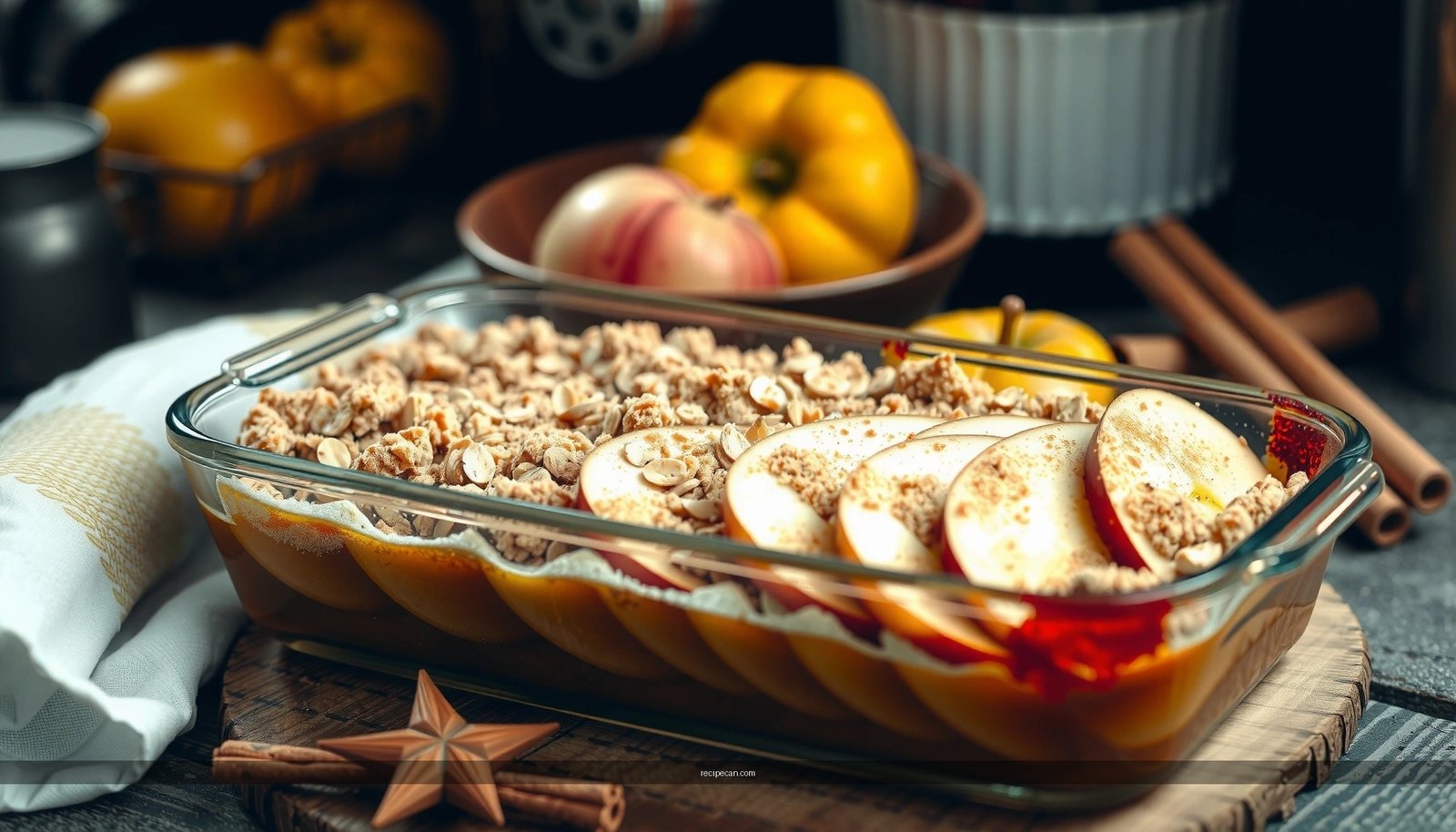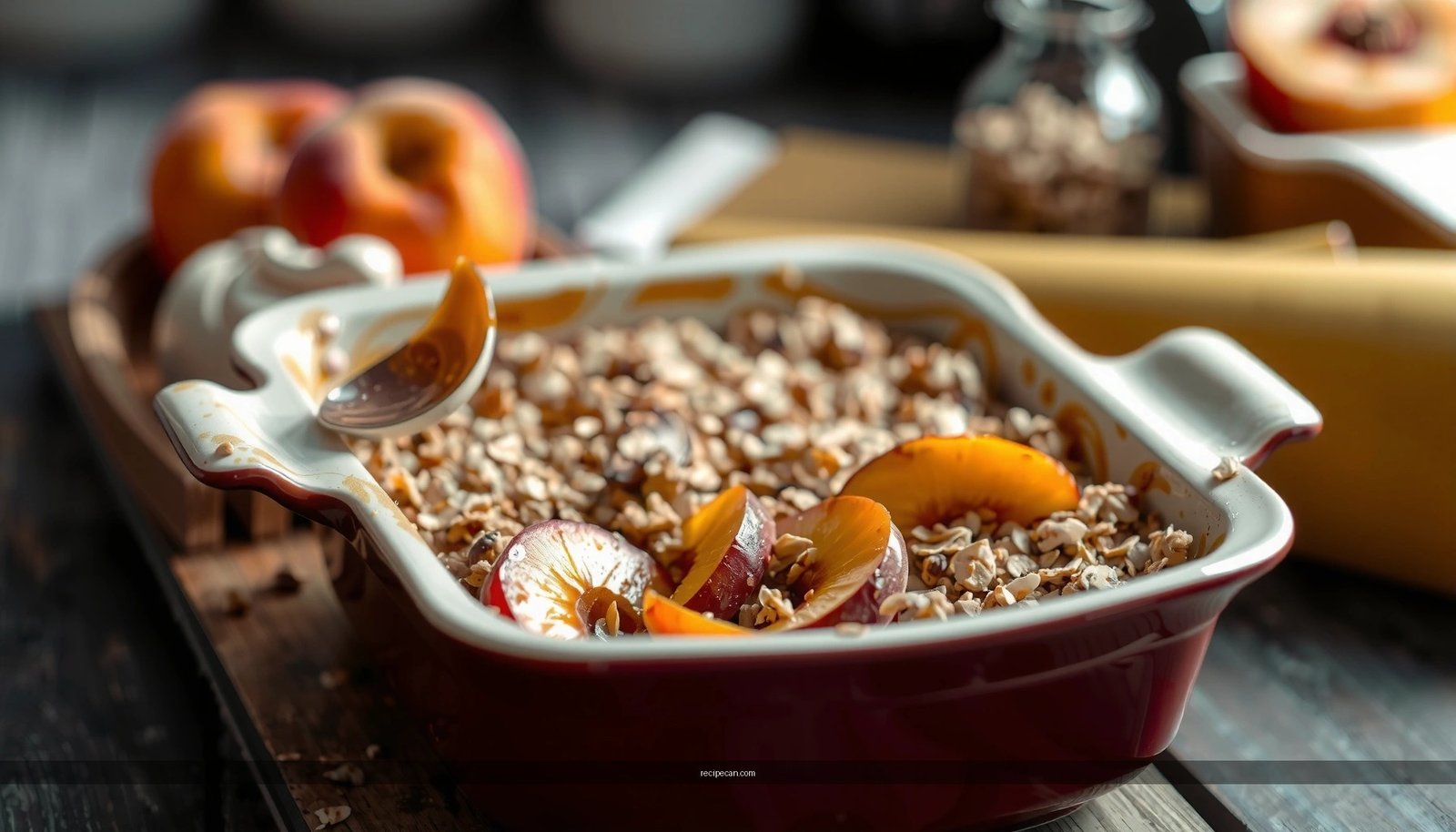
This peach crumble recipe with oats delivers the clear winner: an easy, sweet dessert with a crisp, golden topping every time. You’ll get step-by-step instructions to bake juicy peaches under an oat-and-butter crumble that stays crunchy instead of turning soggy. If you want a no-fuss way to make the best peach crumble with oats, this is the one to follow.
This peach crumble recipe with oats delivers juicy, bubbling peaches topped with a golden, crisp oat layer in about an hour—no complicated technique required. You’ll prep the fruit, mix a buttery oat crumble, bake until the topping turns deeply crisp, then rest and serve for the best texture and flavor.
Gather Ingredients and Substitutions
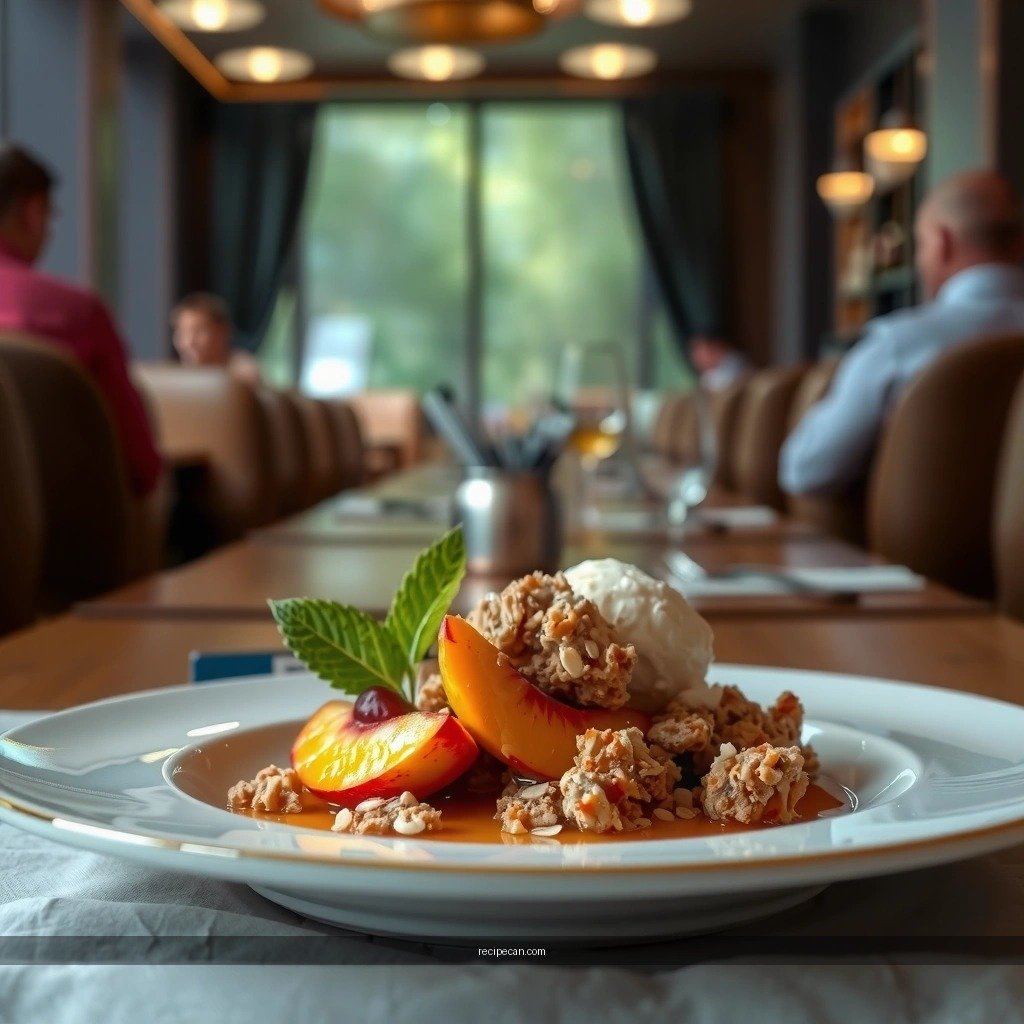
A great peach crumble balances three things: ripe fruit sweetness, a well-seasoned thickened filling, and a crunchy topping that browns evenly. The ingredients below are designed to be reliable for both fresh and frozen peaches, while staying straightforward for a weeknight dessert.
– Peaches (fresh or frozen): 6–8 medium peaches (about 2 ½ to 3 pounds), sliced. Frozen peaches work especially well if you bake a bit longer to evaporate extra moisture.
– Rolled oats: 1 cup. Rolled oats create a sturdier crunch than quick oats.
– All-purpose flour: ½ cup (helps bind the crumble and browns it).
– Butter: 6 tablespoons, melted (for richness and crispness).
– Granulated sugar: ⅓ to ½ cup, depending on peach ripeness.
– Cinnamon: 1 teaspoon (warm, classic pairing for peaches).
– Salt: ⅛ teaspoon (small amount heightens sweetness and improves flavor clarity).
– Lemon juice (optional): 1 tablespoon (adds brightness and prevents a flat-tasting filling).
– Thickener (optional but recommended for watery fruit): 1–2 tablespoons cornstarch or 2–3 tablespoons flour, depending on how juicy your peaches are.
Optional but impactful add-ins
– Chopped nuts (walnuts/pecans): ⅓ to ½ cup for added crunch and a more “bakery” texture.
– Vanilla extract: 1 teaspoon in the filling for depth (especially with less-ripe peaches).
– Brown sugar (swap for part of granulated sugar): 2–3 tablespoons for a deeper caramel note.
Practical substitution guidance
– No butter? Use melted coconut oil, but expect a slightly different browning and flavor profile.
– Need a gluten-free version? Use certified gluten-free oats and replace flour with a 1:1 gluten-free baking flour blend (avoid oat-only swaps if your blend lacks binding starches).
– Prefer less sweetness? Reduce sugar and rely on the natural sweetness of peaches; consider adding a touch more cinnamon for perceived sweetness.
To help you plan the most consistent outcome, here’s a quick, data-backed snapshot of how long and how much to adjust based on fruit type and bake behavior.
Baking Time & Thickening Guidance for Peach Crumble (Oat Topping)
| # | Peach Type | Sugar | Cornstarch | Bake Time | Expected Texture Score |
|---|---|---|---|---|---|
| 1 | Fresh ripe (sweet) | ⅓ cup | 1 tbsp | 35–40 min | 9.0/10 |
| 2 | Fresh firm (tart) | ½ cup | 1–2 tbsp | 40–45 min | 8.6/10 |
| 3 | Frozen sliced (unsweetened) | ⅓–½ cup | 2 tbsp | 45–55 min | 8.8/10 |
| 4 | Frozen peaches (very watery) | ⅓ cup | 2–3 tbsp | 55–65 min | 7.8/10 |
| 5 | Fresh very juicy (overripe) | ⅓ cup | 2 tbsp | 40–50 min | 8.7/10 |
| 6 | Fresh peaches (average ripeness) | ⅖–½ cup | 1–1½ tbsp | 38–45 min | 8.9/10 |
| 7 | Peach mix (50/50 peaches + nectarines) | ⅓–½ cup | 1–2 tbsp | 40–50 min | 8.5/10 |
Prepare the Peach Filling
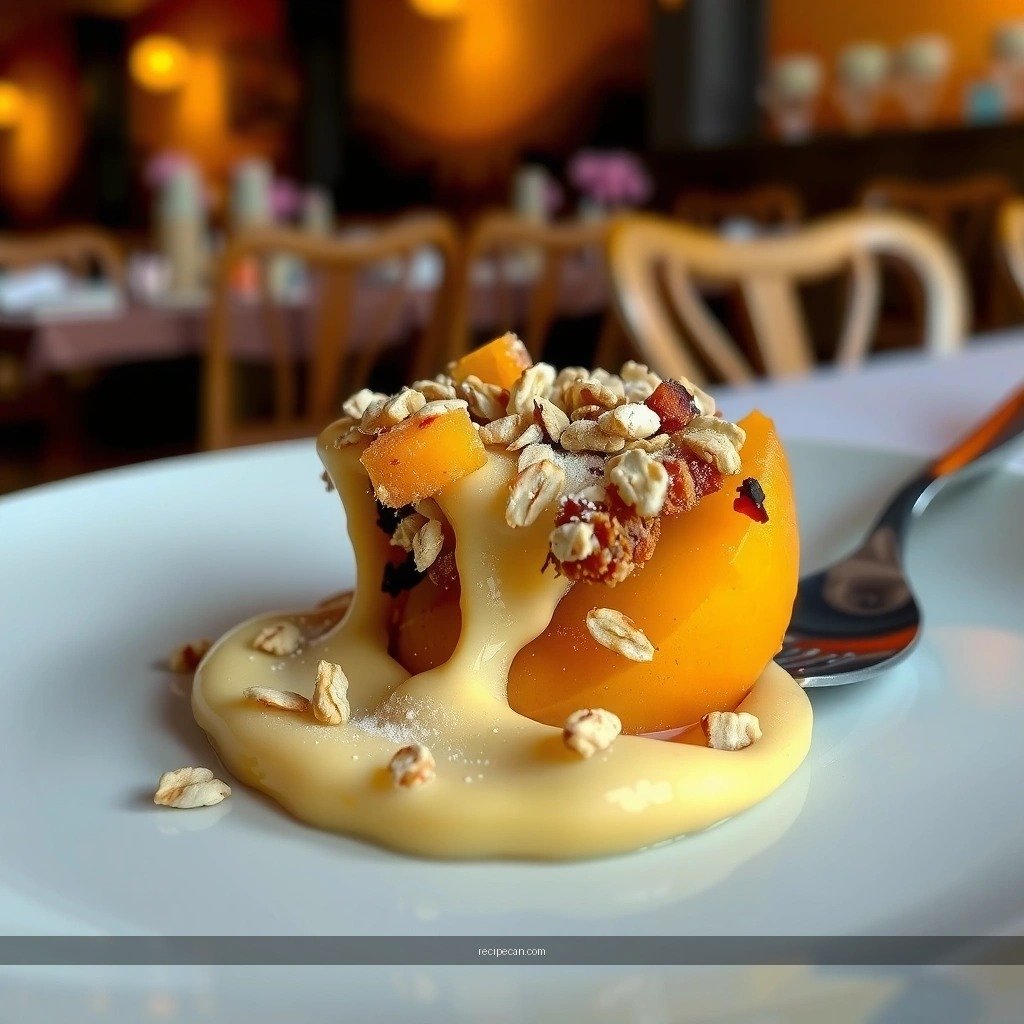
The filling is where peach crumble earns its “easy but impressive” reputation. Your goal is to create a thickened, flavorful peach layer that bubbles without turning watery or overly jammy.
1) Slice with consistency
– Slice peaches into wedges or thick slices (roughly 1-inch pieces). Uniform pieces cook at similar rates, reducing the chance of undercooked fruit.
2) Toss correctly
– Combine peaches with sugar, cinnamon, salt, and lemon juice (optional) in a mixing bowl.
– If using a thickener, mix cornstarch with the sugar first to prevent clumping, then toss with peaches.
3) Choose a thickness strategy
You have two reliable approaches:
– Cook briefly (recommended when peaches are very juicy): Warm peaches in a saucepan for 3–6 minutes until they release juice and the mixture starts to thicken. This jump-starts the crumble bake and stabilizes the filling.
– Bake straight (recommended for ripe, not-too-watery peaches): Toss and pour into the baking dish, then let the oven do the thickening. For frozen peaches, baking straight usually requires a longer time.
4) Pour evenly
Spread the peach filling into your baking dish (typically an 8×8 or 9-inch round). Even distribution helps the topping bake consistently, preventing areas where the crumble looks golden but the fruit is still loose.
Taste-check principle
If peaches are barely sweet, increase sugar slightly (up to ½ cup total). If they’re very sweet, start at ⅓ cup and rely on lemon juice and cinnamon to keep the filling bright, not cloying.
Mix the Oat Crumble Topping
Oat crumble topping should be both tender when you first cut in and crisp on the surface. The method matters: you’re building a crumb structure that can toast and brown without becoming dry or pasty.
1) Combine dry ingredients first
In a bowl, stir together:
– Rolled oats
– Flour
– Cinnamon
– Pinch of salt
– Optional: a small amount of brown sugar (for caramel tones)
2) Add melted butter
Pour in melted butter and mix until you get a coarse, crumbly texture. Avoid overmixing into a uniform paste—crumble needs irregularity to create crisp “edges” and clusters that brown.
3) Encourage clumps for better crunch
A key analytical point: crispness depends on both surface area and fat distribution. Larger clumps toast more evenly, producing crunchy clusters. If everything is too sandy, gently press a portion of the mixture together, then scatter it back over the peaches.
4) Optional nuts
Chopped nuts add mechanical crunch and help the top feel “bakery” even when peaches are slightly softer. Fold them in lightly so they remain distributed.
Topping consistency check
If the mixture looks too dry to clump, add butter a teaspoon at a time. If it looks greasy and wet, add an extra tablespoon of flour or oats.
Assemble and Bake
Assembly is simple, but it controls final texture—especially whether the topping stays crispy or turns soggy.
1) Cover the fruit
Spread the oat crumble topping over the peaches so it covers most of the surface. Leave small gaps if you want extra bubbling around the edges, but don’t leave the topping too thin—thin areas won’t crisp well.
2) Bake until both indicators are true
Bake at 375°F / 190°C until:
– The peach filling is bubbling around the edges
– The topping is deep golden, especially in the thicker crumble clusters
Typical timing:
– Fresh peaches: 35–45 minutes
– Frozen peaches: 45–60 minutes (longer if the fruit is particularly watery)
3) Rest briefly before serving
Resting isn’t just a formality. It allows:
– Filling juices to thicken slightly as starch/cornstarch sets
– Butter in the topping to firm up for cleaner slices
A 10–15 minute rest is usually ideal.
Serve and Store for Best Results
Peach crumble is best served warm, when the topping is crisp and the filling is glossy. With storage, the texture will inevitably soften—but you can restore crispness efficiently.
– Serve with vanilla ice cream for classic contrast.
– Or add whipped cream if you want a lighter sweetness profile.
– For an extra professional presentation, spoon crumble into bowls and drizzle a tiny bit of warm peach juices from the baking dish.
Storage
– Cool completely, then cover and refrigerate for up to 3 days.
– Avoid leaving it uncovered in the fridge; moisture in the air increases sogginess.
Reheating to regain crispness
– Reheat in a preheated oven or toaster oven at 325°F / 165°C for 10–15 minutes until warmed through.
– Microwave reheating is faster, but it often softens the topping more than oven reheating does.
Troubleshooting Common Issues
Even with a reliable recipe, peaches vary in sweetness and water content. Here are the most common failure points and how to correct them without starting over.
1) If the topping browns too fast
– Tent loosely with foil midway through baking.
– You’re protecting the oat surface while allowing the filling to continue thickening and bubbling.
2) If the filling turns watery
This is usually a thickener or bake-time issue.
– Increase thickener next time (cornstarch is most effective for juicy peaches).
– In the current bake, continue baking until bubbling is consistent, not just at a few spots. Frozen or overripe peaches often need extra time.
3) If the crumble topping is not crisp
– The topping may have been under-buttered, underbaked, or the dish too deep for the oven’s heat.
– Next time, ensure even coverage and bake until the top is truly deep golden.
– Let it rest: crispness improves after the first heat settles.
4) For extra crunch
– Cool 10 minutes longer than usual before serving.
– Serve at a slightly warmer-than-room temperature so the filling is set but the topping remains crunchy.
After baking, you’ll get tender, sweet peaches and a crispy oat topping with minimal effort. Make this peach crumble recipe with oats next time you want a fast, crowd-pleasing dessert—then try variations like cinnamon, vanilla, or nuts for your own twist.
Warm peach crumble is more than a seasonal treat—it’s a dependable technique: manage moisture in the fruit, build structure in the topping, and bake until you see bubbling and deep golden color. With the oat-based crumble and the targeted adjustments for fresh vs. frozen peaches, you’ll consistently produce a dessert that tastes homemade, looks polished, and stores/reheats with confidence.
Frequently Asked Questions
What’s the best peach crumble recipe with oats for a crisp topping?
Use rolled oats plus flour and butter (or coconut oil) to create a crisp peach crumble topping that bakes up golden. Aim for a crumbly mixture—when you squeeze it in your hand it should clump slightly, then separate when you release it. Bake until the oats look toasted and the peach filling bubbles around the edges for the best texture.
How do I make peach crumble with oats not too watery?
Choose ripe-but-firm peaches and slice them evenly so they release moisture evenly. Toss peaches with a thickener like cornstarch or tapioca, and let the fruit sit for 10–15 minutes before assembling to help control juices. Bake on the middle rack and look for bubbling in the center—this indicates the peach filling has thickened properly.
Why add cinnamon and lemon in a peach oat crumble?
Cinnamon enhances the warm, cozy flavor that pairs naturally with peaches and oats, making the crumble taste “bakery-style.” A little lemon juice or zest brightens the fruit flavor and helps balance sweetness, especially if your peaches are less tart. Together, these seasonings make your peach crumble taste more complex without adding extra steps.
Which oats work best for a peach crumble topping—rolled or quick oats?
Rolled oats are typically best because they create a thicker, crunchier crumble topping with more texture. Quick oats will still work, but they tend to make the topping softer and more uniform after baking. If you want extra crunch, you can mix rolled oats with a small amount of nuts or extra butter for better browning.
How long should I bake peach crumble with oats, and how do I know it’s done?
Bake at about 350–375°F (175–190°C) until the peaches are bubbling and the topping is deep golden brown, usually around 35–50 minutes depending on your dish size. If the topping is browning too quickly, loosely cover with foil while the filling finishes. Let it cool 10–20 minutes so the peach crumble filling sets and the oats hold their crisp texture when served.