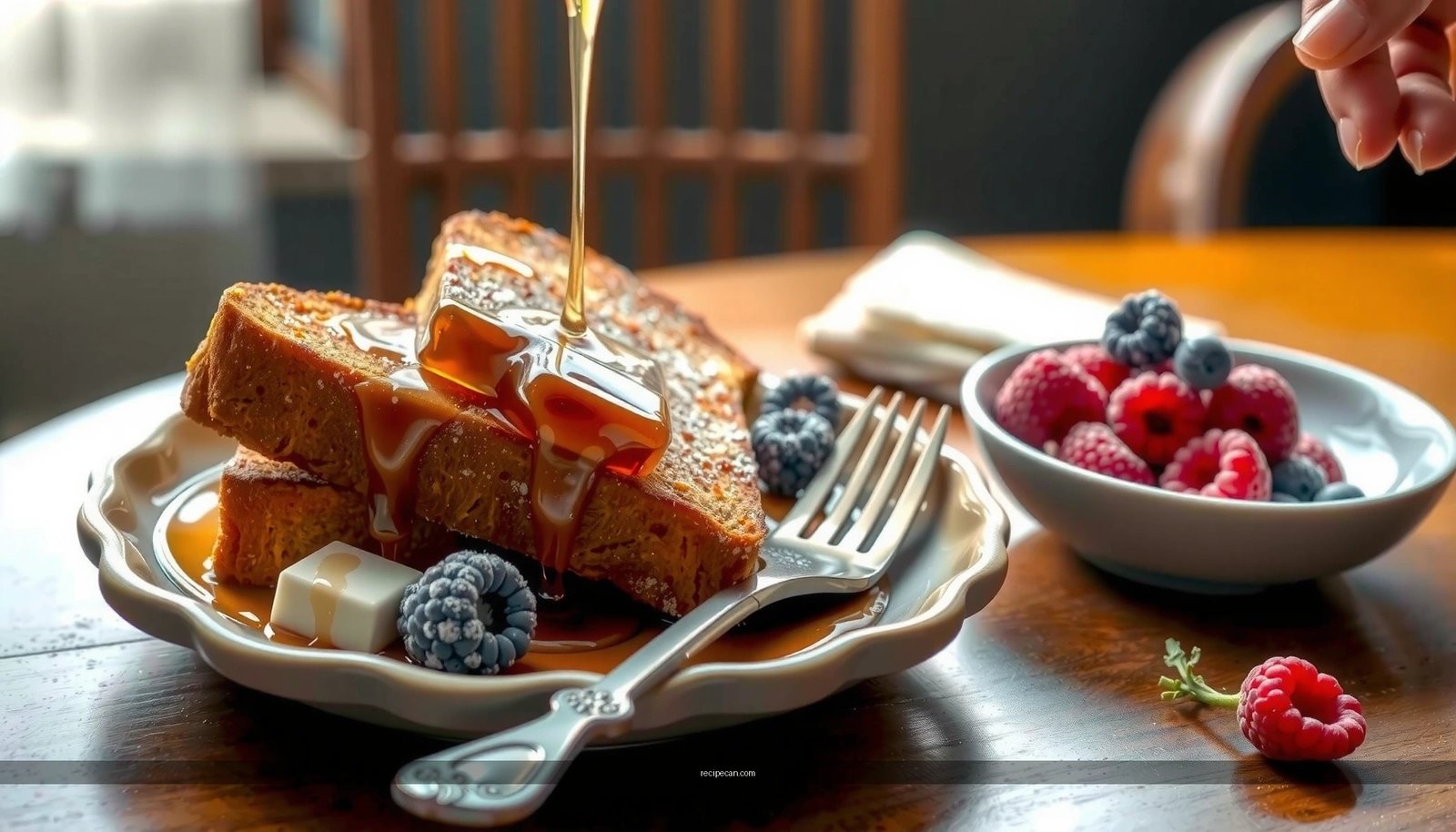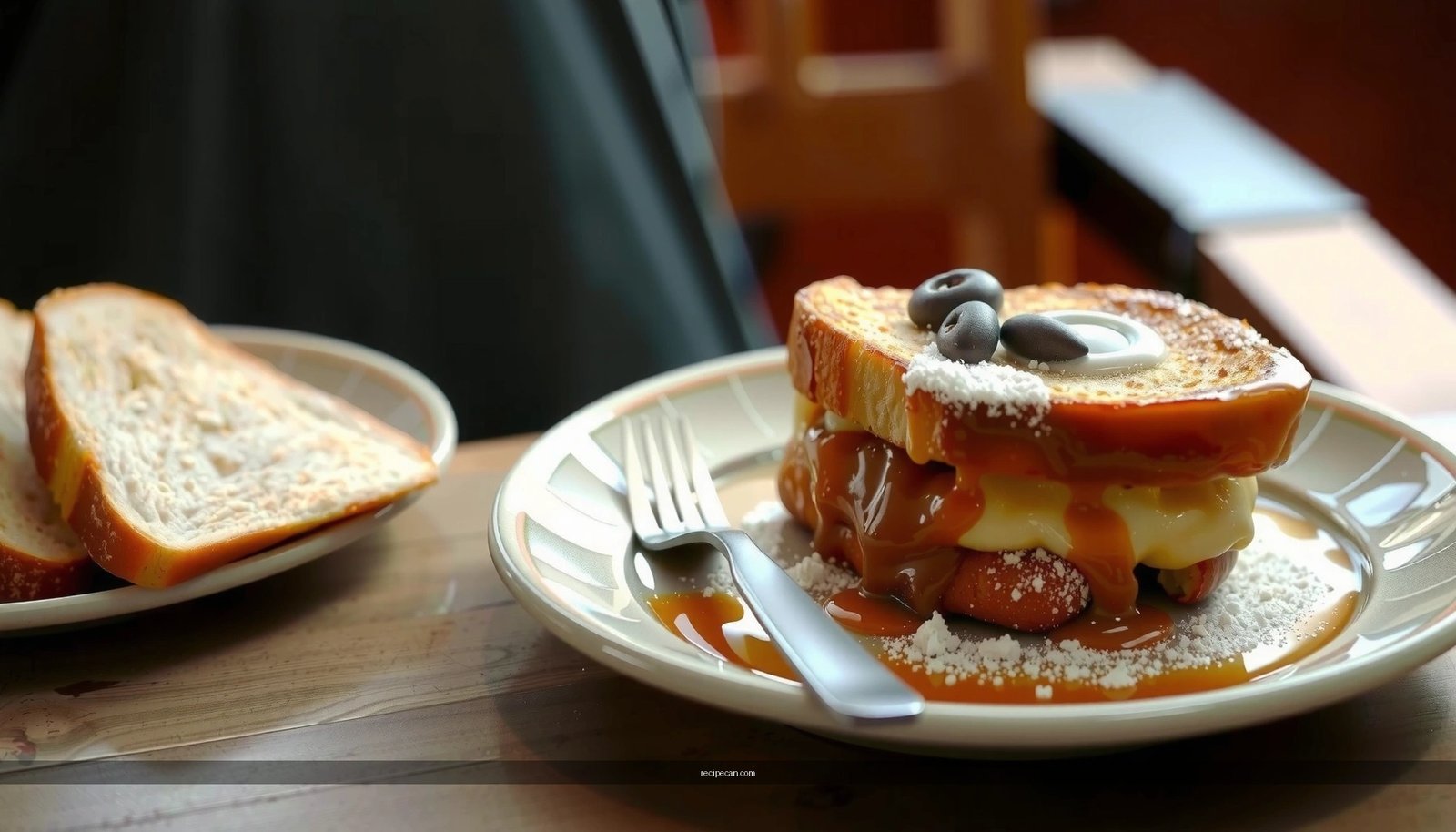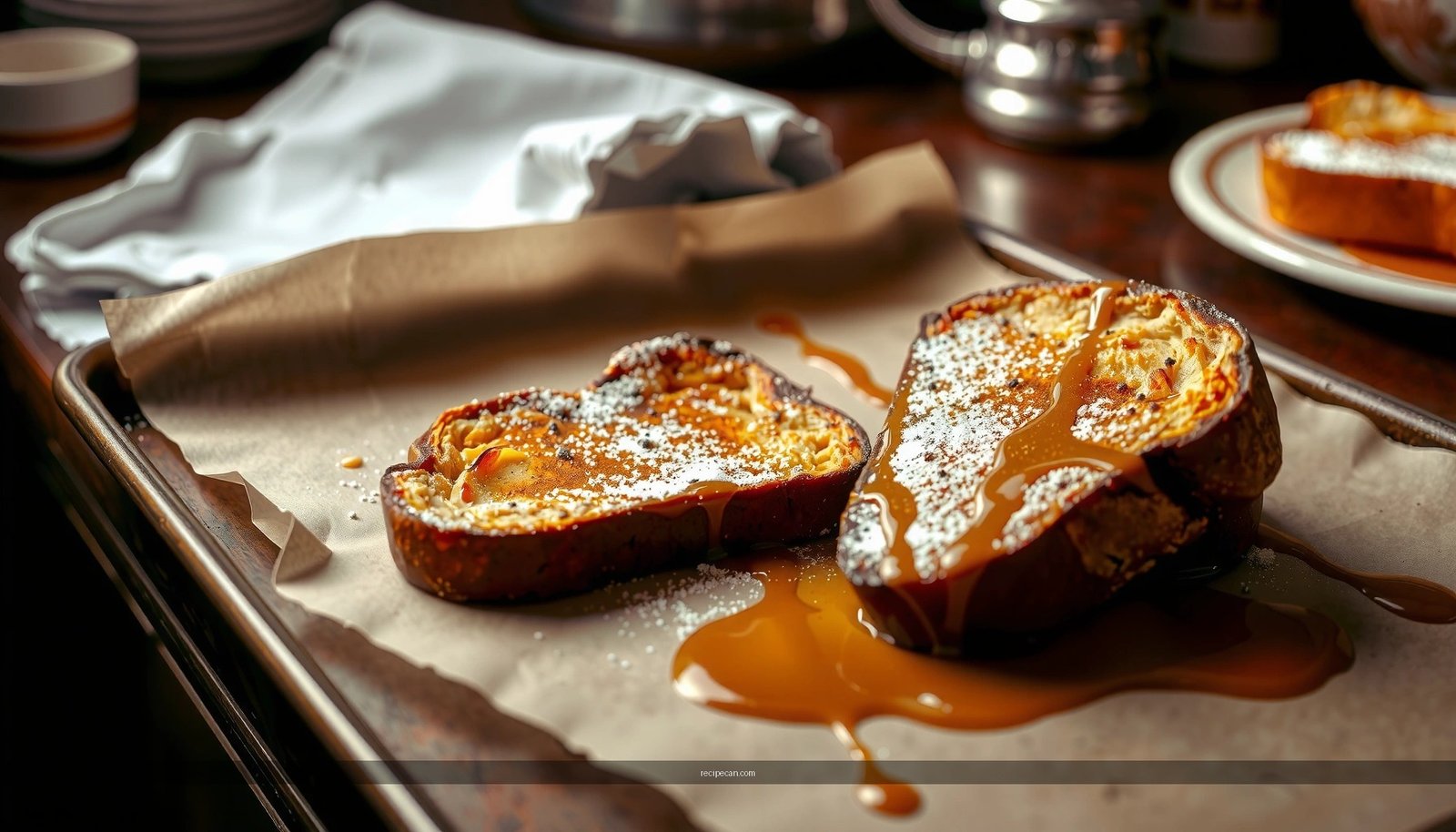
This eggnog French toast recipe delivers the creamy, custardy slices you want—without the fuss. In minutes, you’ll learn how to soak the bread just long enough and cook it to golden-brown perfection, with eggnog that actually tastes like eggnog. If you’re asking for the best method for thick, rich French toast, this is the one to follow.
Serve creamy, custardy eggnog French toast by soaking thick bread briefly in a spiced eggnog custard, then pan-frying it on medium heat until golden. The key is balancing time and temperature: let the bread absorb enough custard for a set center, but cook gently enough to avoid burning the outside before the middle turns silky.
Ingredients for Eggnog French Toast
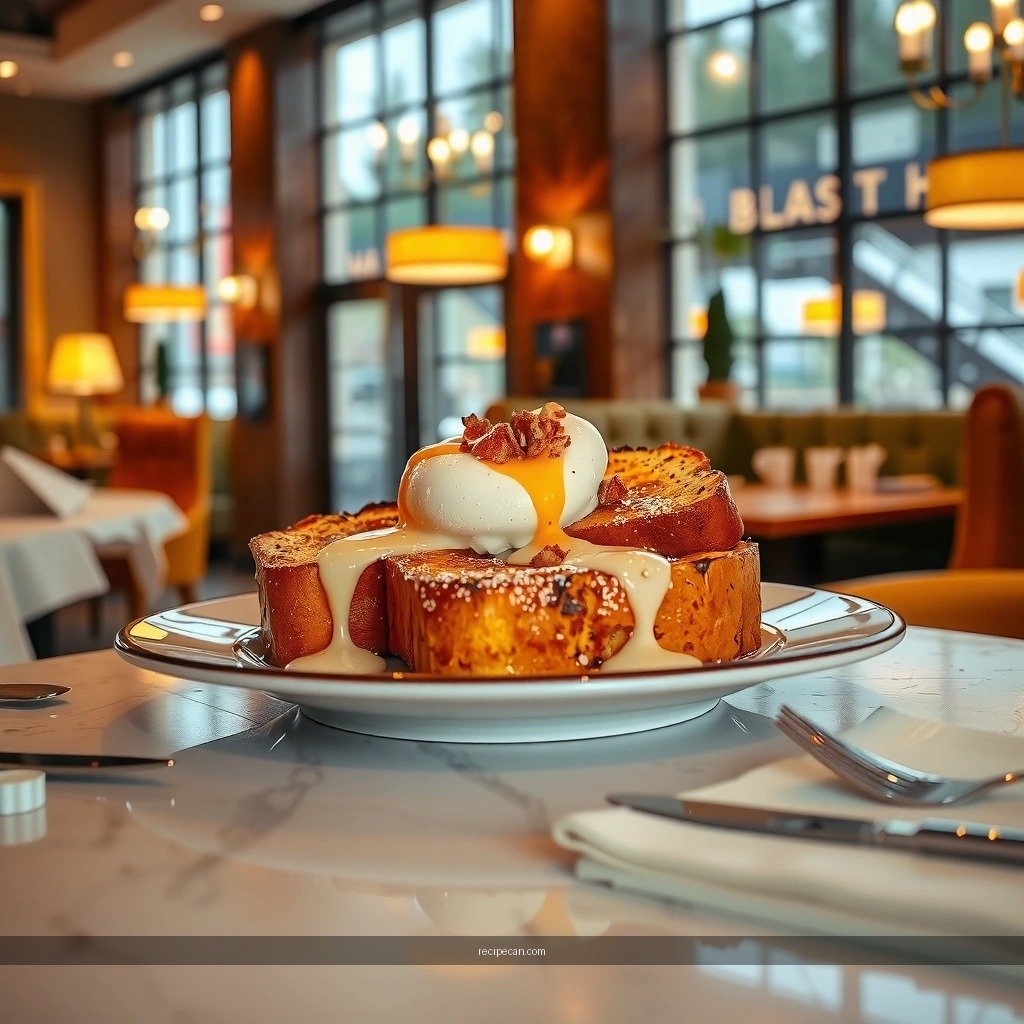
Great eggnog French toast starts with ingredients that behave predictably—custard needs to thicken, spices need to bloom, and bread needs enough structure to hold together after soaking.
– Use thick-sliced bread (brioche or challah works best) for a custardy texture
Brioche and challah are naturally tender and egg-rich, which helps them soak up eggnog without becoming gummy. Aim for slices about 3/4 to 1 inch thick; thinner bread can over-absorb and collapse. If you want extra insurance, choose bread that’s day-old (slightly dry on the surface), so it soaks more evenly and holds its shape on the pan.
– Combine eggnog, eggs, vanilla, cinnamon, and nutmeg for classic flavor
A classic custard profile relies on warm, familiar spices and aromatics. Eggnog provides sweetness and dairy richness, while eggs provide the “custard set” you’re looking for.
Pro ingredient notes (for best results):
– Eggnog choice: Use plain, not ultra-light eggnog for the creamiest mouthfeel. If you use a lower-fat version, reduce soak time slightly because the custard can set more quickly and dry out faster.
– Spice blend: Use ground cinnamon and nutmeg as the baseline. For a more “bakery” flavor, consider adding a pinch of clove or allspice, but keep it restrained so it doesn’t overpower the eggnog.
– Vanilla: A splash of vanilla rounds out the spice and makes the custard taste less “eggy” and more dessert-like.
Best Bread + Heat Pairings for Custardy Eggnog French Toast
| # | Bread Type | Target Soak (sec) | Recommended Pan Heat | Custardy Result |
|---|---|---|---|---|
| 1 | Brioche (1 in) | 45–60 | Medium (325–350°F) | ★★★☆ |
| 2 | Challah (1 in) | 50–65 | Medium (325–350°F) | ★★★★ |
| 3 | Texas toast (1 in) | 35–50 | Medium-low (300–325°F) | ★★★☆ |
| 4 | Sourdough (1 in) | 55–70 | Medium (325–350°F) | ★★★☆ |
| 5 | French bread (1 in) | 30–45 | Medium-low (300–325°F) | ★★☆☆☆ |
| 6 | White sandwich bread | 15–25 | Low (275–300°F) | ★☆☆☆☆ |
| 7 | Brioche (thickest cut) | 60–75 | Medium-low (300–325°F) | ★★★★ |
How to Make the Eggnog Custard Soak
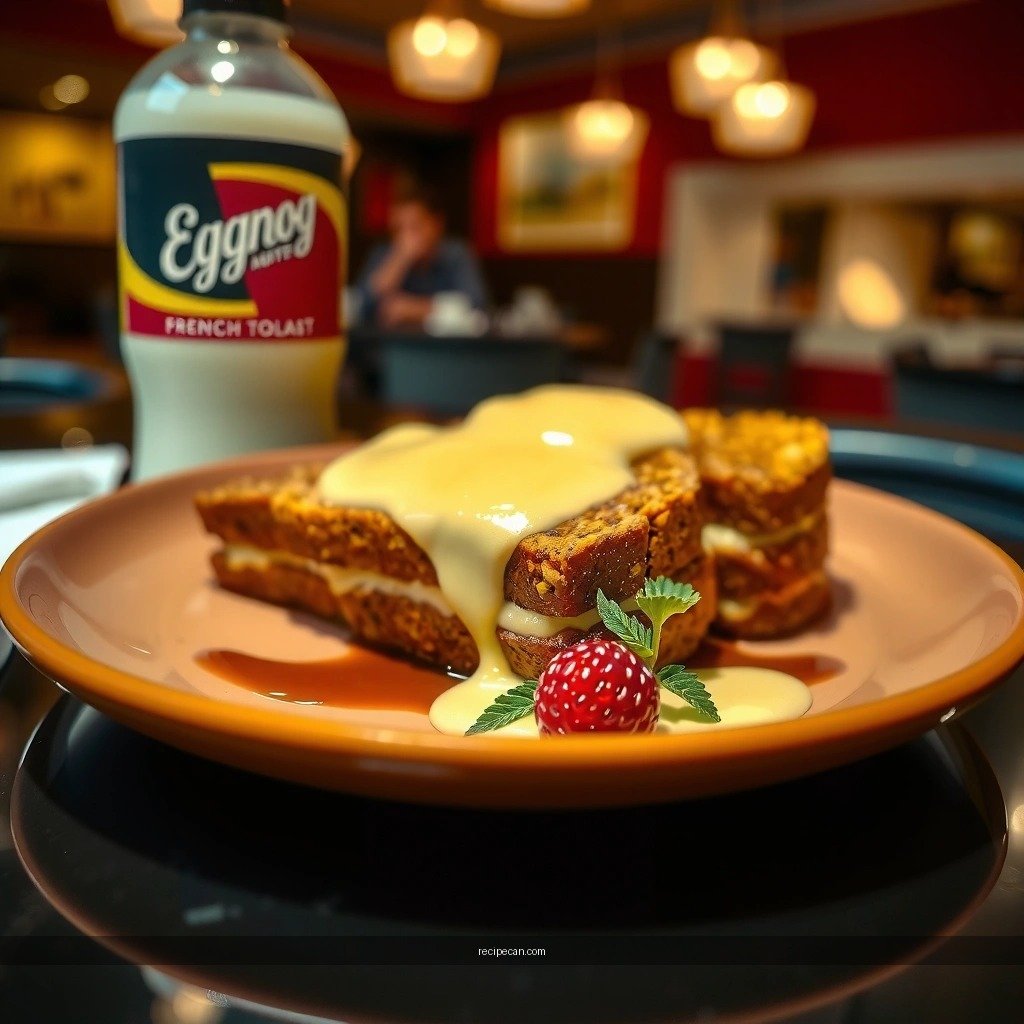
To get a custardy center, your eggnog French toast needs two things: even saturation and controlled absorption. Custard that’s too shallow tastes bread-forward; custard that’s too deep turns gummy or leaks out during cooking.
– Whisk wet ingredients until smooth and evenly blended
Start by whisking:
– eggnog
– eggs
– vanilla
– cinnamon
– nutmeg
Whisk thoroughly until the mixture looks uniform and the spices are suspended—this ensures every bite has consistent warmth. If you add a pinch of salt, it will also sharpen the sweetness and balance the spice.
– Soak bread briefly (or longer for extra custard) without letting it fall apart
The soak time is where most people “miss” custard. For thick bread, a good baseline is:
– 45–60 seconds per side for brioche/challah
– 35–50 seconds for very soft breads or pre-sliced “custard-ready” loaves
– Shorter if your bread is very fresh and squishy
Actionable soak technique (reliable and repeatable):
1. Pour custard into a shallow dish or rimmed baking pan so bread lies flat.
2. Submerge bread, press lightly with tongs to ensure contact, then remove.
3. Let excess custard drip back into the dish for 5–10 seconds before it hits the pan. This prevents pooling and sogginess.
How to judge doneness at the custard stage:
The bread should look visibly heavier and slightly darkened, but still feel structurally intact when lifted.
Cooking Method: Pan-Fry to Golden Perfection
Pan-frying is the fastest way to achieve that crisp-edged, golden-brown exterior while keeping the center creamy. The challenge is heat management: custard sets quickly, but browning can happen even faster.
– Cook on medium heat to brown without burning
Medium heat gives the custard time to cook through before sugars in the eggnog darken too aggressively. If your pan runs hot (many skillets do), start closer to medium-low, especially if you’re using butter.
Fat choice matters:
– Use butter + a small splash of neutral oil if you want flavor without burning. Butter’s milk solids brown sooner; oil helps extend the “golden window.”
– If you notice dark edges forming too quickly, lower the heat rather than pressing harder.
– Flip once when the first side is set and golden
Flipping too early tears the custard surface. A good rule:
– First side: cook until golden and set (usually 3–5 minutes depending on thickness).
– Flip once, then cook until the second side matches and the center feels warm and custardy (often 2–4 minutes).
Best practice for thick slices:
If your bread is very thick, consider finishing in a low oven (e.g., 300°F / 150°C for 5–8 minutes) after pan-frying both sides. This “rest-cooks” the center without further browning.
Best Toppings and Serving Ideas
Toppings should complement—not mask—the custard and spice profile. Think in layers: sweetness, aroma, and a contrasting texture.
– Serve with maple syrup, powdered sugar, or whipped cream
– Maple syrup enhances the eggnog’s caramel notes. Warm syrup melts gently into the custard.
– Powdered sugar adds visual appeal and a light sweetness that doesn’t compete with spice.
– Whipped cream turns the dish into a more dessert-like brunch plate.
– Add fresh berries or toasted pecans for extra crunch and balance
– Fresh berries (especially cranberries, raspberries, or strawberries) add acidity that cuts through richness.
– Toasted pecans provide crunch and a nutty aroma that pairs naturally with nutmeg and cinnamon.
Quick serving suggestion for entertaining:
Hold finished slices on a wire rack in a warm oven (200°F / 95°C) while you cook remaining batches. This keeps the exterior from steaming soft.
Troubleshooting Common Issues
Even well-tested recipes benefit from intelligent adjustments. Here’s how to diagnose the most common eggnog French toast problems and fix them quickly.
– If it’s soggy, shorten soak time and use thicker bread
Sogginess usually comes from one (or more) of these:
– soak time too long
– bread too thin or too soft
– pan heat too low (custard steams instead of sets)
Fix: Reduce soak time by 15–20 seconds per side, choose thicker slices, and keep heat at medium or medium-low (not low). Also let custard drip off before cooking.
– If it’s too dark, lower heat and cook a bit longer more gently
Dark outside with a not-fully-cooked center is a heat imbalance. Eggnog contains sugars and milk solids that brown quickly.
Fix: Lower the heat and extend cook time slightly. If needed, finish thicker slices in a low oven after pan-frying.
Two quick “quality checks” you can use mid-cook:
– Browning rate: If butter is smoking or edges are turning very dark in under a minute, you’re too hot.
– Center set: When pressed gently with a fork, the center should be creamy and set—not wet or liquid.
[CONCLUSION PARAGRAPH – NO HEADING]
This eggnog french toast recipe delivers a creamy, custardy center with warm holiday spice in every bite. Make it tonight by prepping the custard, soaking your bread for the right amount of time, and pan-frying on controlled heat until golden—then top with syrup and your favorite add-ons for a brunch-worthy finish.
Frequently Asked Questions
What is the best way to soak bread for eggnog french toast so it doesn’t get soggy?
Use day-old brioche or thick-cut challah and soak quickly—about 20–30 seconds per side—so the custard absorbs without turning the slices mushy. Let the toast rest on a rack for 2–3 minutes to allow excess eggnog custard to set before cooking. If your bread is very fresh or thin, shorten the soak time to prevent sogginess while still getting creamy eggnog french toast centers.
How do you make eggnog french toast custard taste rich and not too boozy?
Warm the eggnog slightly before mixing with eggs, vanilla, cinnamon, and nutmeg to help it blend smoothly and taste rich. If you’re using store-bought eggnog that’s high in alcohol, reduce the amount and add a splash of milk or cream to mellow the flavor. Cooking the french toast fully—about 3–4 minutes per side—also helps round off any sharp boozy notes.
Which bread works best for eggnog french toast—brioche, challah, or sourdough?
Brioche and challah are top choices because their soft crumb and slight sweetness create a custardy eggnog french toast texture. Sourdough can work if it’s thick and sturdy, but it will be more tangy and less classic in flavor. For the most reliable results, choose bread that’s sturdy enough to soak without falling apart and cut it into 1-inch slices.
Why is my eggnog french toast falling apart or sticking to the pan?
Falling apart usually comes from over-soaking, using very soft bread, or flipping too early—wait until the underside is golden and set. Sticking often means the pan isn’t hot enough or the butter has burned; cook on medium heat and use a thin layer of butter or a neutral oil, then wipe off browned bits between batches. Using a nonstick skillet or well-seasoned pan can also help keep your eggnog french toast intact.
How can I reheat leftover eggnog french toast and keep it crisp?
Reheat slices in an oven or toaster oven at 350°F (175°C) for 8–12 minutes, which helps restore texture better than microwaving. If you microwave, place on a paper towel and heat briefly, but expect a softer result. For best flavor, reheat until just warmed through and finish with a quick dusting of cinnamon or a drizzle of maple syrup.
References
- Google Scholar Google Scholar
https://scholar.google.com/scholar?q=eggnog+french+toast+recipe - Google Scholar Google Scholar
https://scholar.google.com/scholar?q=french+toast+eggnog - Google Scholar Google Scholar
https://scholar.google.com/scholar?q=eggnog+french+toast+custard+bread - Eggnog
https://en.wikipedia.org/wiki/Eggnog - French toast
https://en.wikipedia.org/wiki/French_toast - Custard
https://en.wikipedia.org/wiki/Custard - Eggnog | Origins, Ingredients, Holiday Traditions, & Recipe | Britannica
https://www.britannica.com/topic/Eggnog - https://www.britannica.com/topic/French-toast
https://www.britannica.com/topic/French-toast - https://www.cdc.gov/foodsafety/communication/eggs.html
https://www.cdc.gov/foodsafety/communication/eggs.html - Search recipes – BBC Food
https://www.bbc.co.uk/food/search?q=eggnog%20french%20toast