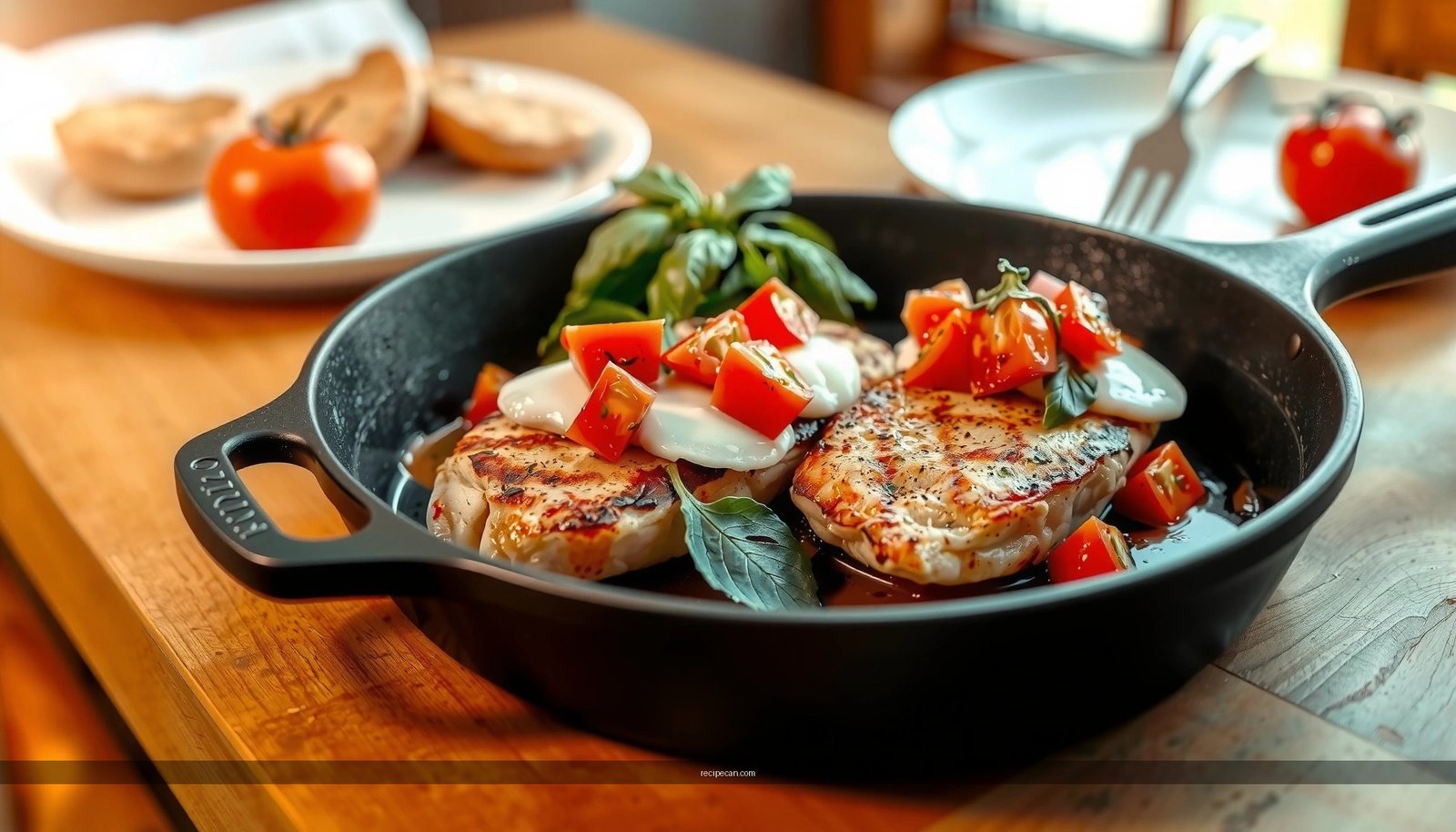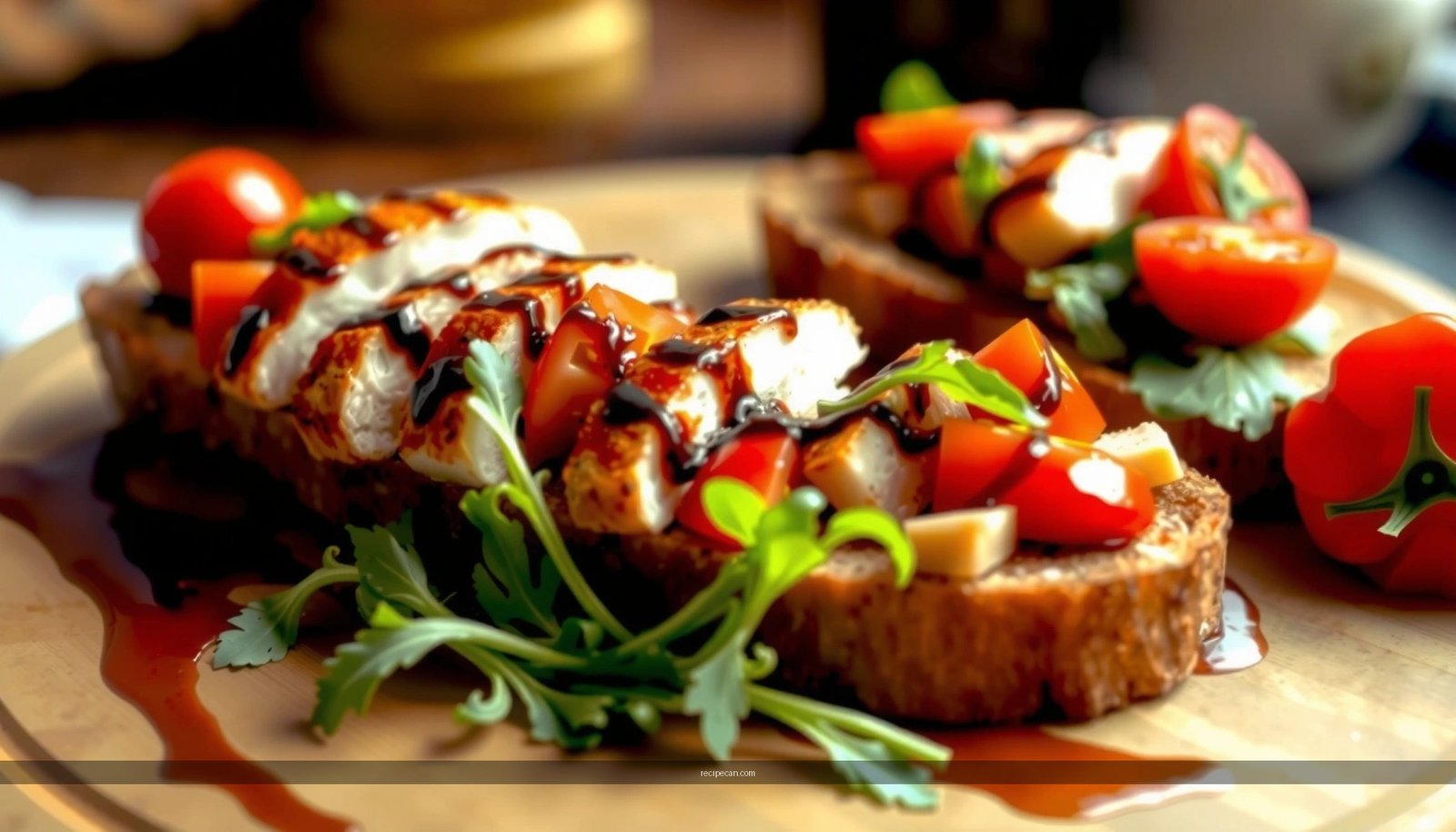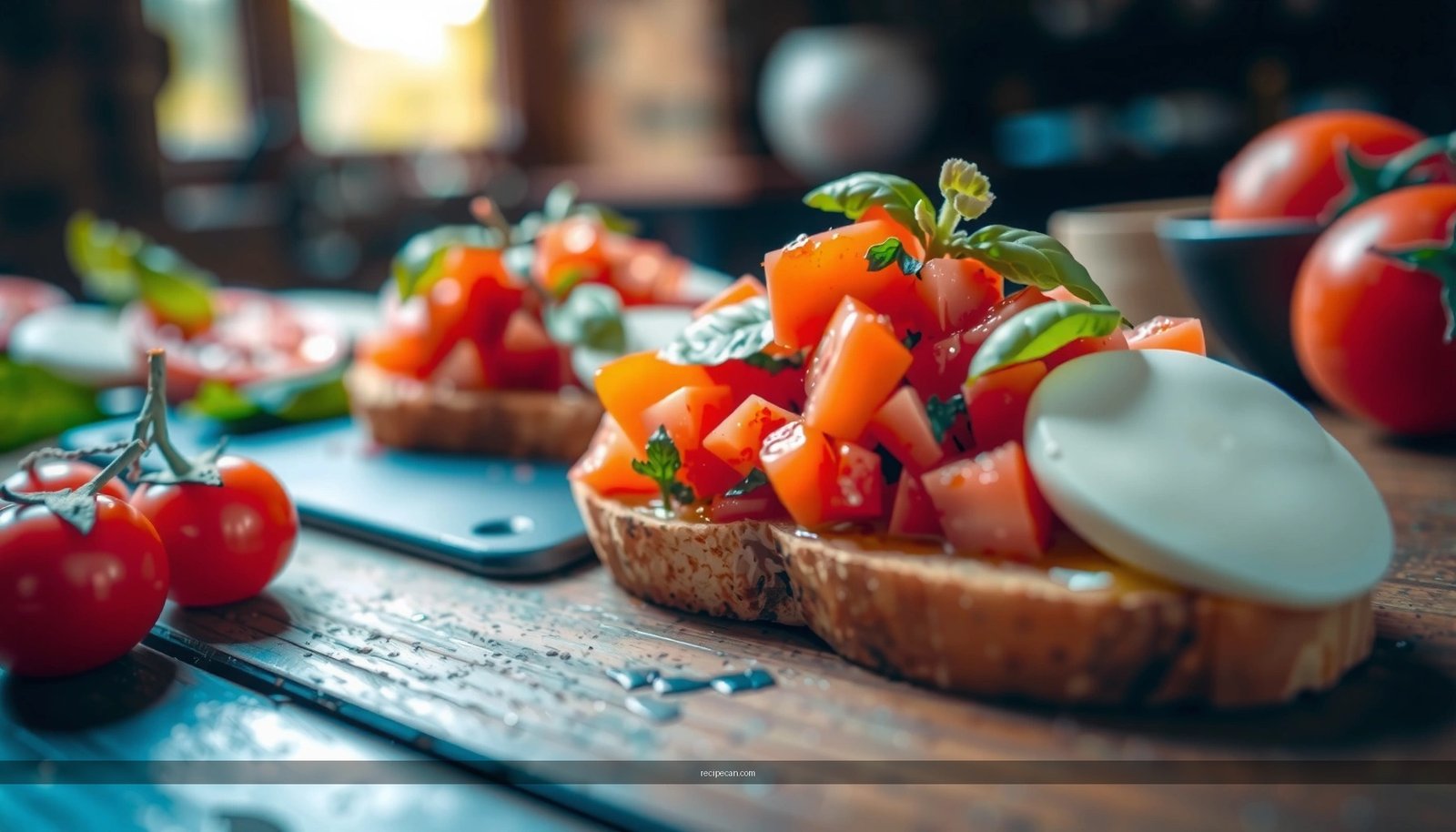
Get a bruschetta and mozzarella recipe that delivers the most flavor with the least effort—crisp toasted bread, bright tomato topping, and melty mozzarella that never turns rubbery. Follow these step-by-step instructions to nail the ideal balance of garlic, olive oil, and fresh herbs in under 30 minutes. The result is a fresh, crowd-ready appetizer that tastes like restaurant quality.
Make bruschetta with toasted bread, a bright tomato-basil topping, and mozzarella that’s either layered or lightly melted—so you get crisp texture plus creamy, savory bite. This guide walks you through ingredient selection, precise prep, assembly, and serving so your bruschetta and mozzarella come out balanced, not soggy, every time.
Choose the Right Ingredients for Bruschetta and Mozzarella

The quality of bruschetta and mozzarella starts with ingredient selection. Because this appetizer is “simple,” every component matters—especially tomatoes, basil, and the mozzarella texture.
1) Tomatoes: aim for ripeness and low excess water
– Best choice: ripe, fragrant tomatoes with firm flesh (often Roma, plum, or vine-ripened varieties).
– Why it matters: overly watery tomatoes can seep into the toasted bread and cause early sogginess.
– Actionable tip: if your tomatoes are very juicy, seed and dice more carefully, then lightly drain the diced tomatoes for 5–10 minutes before mixing.
2) Fresh basil: use it for aroma, not just garnish
– Use: fresh basil leaves, roughly torn rather than chopped finely.
– Why: tearing releases more essential oils and gives a more aromatic topping.
3) Garlic: control intensity
– You’ll use garlic twice in most bruschetta approaches: once in the tomato topping and once to rub the toast.
– Actionable tip: microplane or finely mince garlic for the topping so it disperses evenly. For the toast rub, a quick rubbing pass is enough—avoid soaking the bread.
4) Olive oil: choose flavor over just calories
– Use a good extra-virgin olive oil. It should taste fruity and peppery, not bland.
– For business-style consistency (and repeatability), choose one olive oil you trust and use the same amount each time.
5) Mozzarella: pick the texture you want
You have two excellent routes, both delicious:
– Fresh mozzarella (bocconcini or sliced): layered for creamy bite without full melt.
– Shredded mozzarella: melts more readily for a cohesive, hot appetizer experience.
– Practical approach: for a “classic room-temperature” feel, layer fresh mozzarella; for “served warm,” use shredded mozzarella and briefly melt.
Decision note: If you’re serving multiple guests at once, layered fresh mozzarella often stays better because it won’t instantly turn into a fully melted puddle.
Best Tomato Choice for Bruschetta Texture (Practical Home Ranges)
| # | Tomato Type | Wateriness (Low=Best) | Diced Prep Time | Bread-Soggy Risk |
|---|---|---|---|---|
| 1 | Roma / Plum | Low (★ 4.7) | 12 min | Low |
| 2 | Vine-Ripened | Medium (★ 4.2) | 14 min | Moderate |
| 3 | Heirloom (Firm varieties) | Medium-Low (★ 4.1) | 16 min | Moderate |
| 4 | Cherry / Grape | Low-Medium (★ 3.9) | 10 min | Moderate-Low |
| 5 | Beefsteak | High (★ 3.3) | 18 min | High |
| 6 | Hot-house / Salad | High-Medium (★ 3.5) | 15 min | Moderate |
| 7 | Canned (Whole, drained) | Low (★ 4.0) | 8 min | Low-Medium |
Prepare the Bruschetta Tomato Topping

A great tomato topping is about balance and timing. You’re building a simple emulsion: tomatoes supply sweetness and acidity, garlic adds pungency, basil provides aromatics, and olive oil ties it together.
Core method
1. Dice tomatoes into small, even pieces so the topping spoon-distributes well.
2. Add garlic (finely minced or microplaned).
3. Add basil, torn into irregular pieces.
4. Season with salt (start conservatively, then adjust after resting).
5. Add olive oil and mix gently to avoid crushing tomatoes.
Resting time: the “flavor combine” window
– Let the mixture sit 10–20 minutes at room temperature.
– During this window, salt draws out some juices and helps the garlic and basil perfume the oil.
– If the tomatoes release a lot of liquid, consider draining a small amount—especially if you’re assembling right away.
Texture control for professional-level results
– For a crisp bread experience, avoid soaking the bread with excess juice. Two easy fixes:
– Skim off excess liquid before spooning.
– Use a slotted spoon to transfer topping.
Optional refinement (still easy)
– Add a pinch of crushed red pepper early for gentle heat.
– For deeper flavor, you can include a small amount of balsamic vinegar right after mixing (or save it for finishing, discussed below).
Toast the Bread for the Perfect Crunch
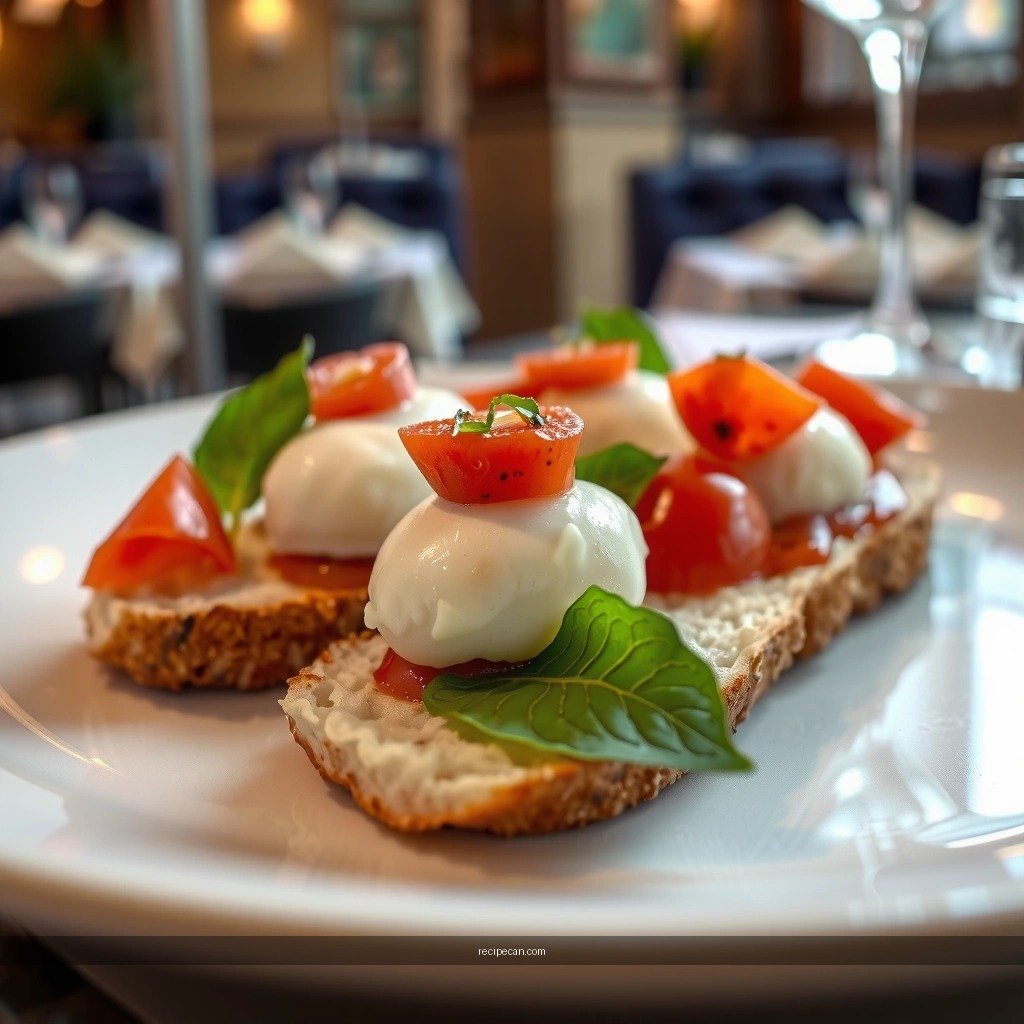
Toasted bread is the structural backbone of bruschetta. If your bread is under-toasted, the topping will soften it quickly; if it’s over-toasted, it can feel hard and dry.
Choose bread that can handle topping
– Use rustic Italian bread, ciabatta, or sourdough with a sturdy crust.
– Slice thickness matters: aim for 3/4 to 1 inch slices (thick enough to stay crisp).
Toast method
– Toast in an oven or toaster oven for even crisping.
– Target a golden surface with a firm bite.
– Remove promptly—carryover heat can dry the bread further.
Garlic rub: aroma without bitterness
– While bread is hot, rub cut garlic on the surface lightly.
– This infuses aroma while keeping harshness low.
– If you’re sensitive to garlic intensity, use one garlic clove per tray rather than per slice.
Operational tip for entertaining
– Toast bread in batches and keep it on a cooling rack (not a plate). A rack lets steam escape and preserves crunch.
Assemble Bruschetta with Mozzarella
Assembly is where you decide whether you want mozzarella to be layered (creamy and cool) or melted (warm and cohesive).
Standard assembly flow (fast and reliable)
1. Spoon the tomato mixture over toasted bread.
2. Add mozzarella on top:
– Layered option: slice fresh mozzarella and place 1–2 slices per bruschetta.
– Melted option: add a small pinch of shredded mozzarella or torn mozzarella and briefly warm.
Best practice for preventing sogginess
– Keep topping portion reasonable—think “cover,” not “flood.”
– If your tomatoes are particularly juicy, you can do a quick step: toast bread → rub garlic → add tomatoes → wait 1–2 minutes → add mozzarella. This short interval lets the bread surface stabilize.
Melt timing (if you prefer warmth)
– Place assembled bruschetta under a hot broiler for 30–90 seconds, just until mozzarella softens.
– Watch closely—mozzarella can brown quickly and tomatoes can warm into extra moisture.
Flavor architecture
– Tomato topping should taste bright and seasoned.
– Mozzarella should taste creamy and mild enough to let basil and garlic lead.
– If your topping feels too sharp or acidic, a slightly heavier olive oil presence often smooths it out.
Add Flavor with Simple Finishing Touches
Finishing touches convert a good bruschetta into a memorable one. These are small interventions that significantly improve aroma, depth, and perceived freshness.
1) Extra olive oil drizzle
– Add a thin ribbon of olive oil after assembly.
– It gives sheen and helps carry basil aroma.
2) Optional balsamic splash
– Balsamic adds sweetness and tang that counterbalances tomato acidity.
– Use lightly; too much can overpower mozzarella’s mild flavor.
– If you’re using balsamic, consider drizzling after you assemble so it doesn’t darken the tomato mixture too early.
3) Pepper and chili flakes
– Finish with cracked black pepper for a fresh bite.
– Add chili flakes for heat and visual contrast.
– Sprinkle lightly so you maintain a balanced, not aggressive, flavor profile.
Professional balancing rule
Taste one bruschetta component at a time:
– If it’s flat: add salt or a bit more olive oil.
– If it’s sharp: add a touch of balsamic or a small drizzle of olive oil.
– If it’s bland: add basil, pepper, or a little more garlic (carefully).
Serve and Store for Best Results
Bruschetta is best fresh—bread crispness and mozzarella texture depend on timing.
Serve immediately
– Serve as soon as bread is topped and mozzarella is added.
– For events, organize a workflow:
– Keep bread toasted and ready.
– Prepare tomato topping ahead.
– Assemble close to serving time.
Storing and make-ahead strategy
If you’re prepping in advance:
– Store tomato topping and mozzarella separately.
– Keep tomato topping covered in the refrigerator.
– Store mozzarella tightly sealed to preserve moisture balance.
Reheat guidance
– Reheating assembled bruschetta can reduce crispness.
– Better approach: re-toast or warm bread briefly, then reassemble with fresh tomatoes and mozzarella.
How long to keep each component
– Tomato topping: typically 1–2 days in the fridge (best flavor day one).
– Mozzarella: follow package guidance; generally keep refrigerated and use within a few days after opening.
[CONCLUSION PARAGRAPH – NO HEADING]
You’ll get the best bruschetta and mozzarella results by using ripe tomatoes, crisp toasted bread, and fresh mozzarella layered on top. Follow the steps above to assemble quickly and serve right away—then tweak with basil, balsamic, or chili to match your taste.
Frequently Asked Questions
What is the best bruschetta and mozzarella recipe for a quick appetizer?
Start with toasted baguette slices rubbed with a garlic clove and drizzled with extra-virgin olive oil. Top with diced tomatoes seasoned with salt, black pepper, basil, and a splash of balsamic vinegar, then add fresh mozzarella in small chunks. Finish with another drizzle of olive oil and optional flaky salt for a restaurant-style bruschetta and mozzarella appetizer in under 20 minutes.
How do you make bruschetta topping without soggy bread?
The key is to prepare the tomato mixture and let it sit lightly salted, but don’t pile it on too early. Drain off excess liquid if your tomatoes are very juicy, then assemble right before serving. Toast the bread until crisp, and use fresh mozzarella rather than watery mozzarella to keep the bruschetta and mozzarella recipe from getting soggy.
Why do you need fresh mozzarella and not shredded mozzarella for bruschetta?
Fresh mozzarella has a better texture and taste—soft, creamy, and melt-friendly without turning rubbery. Shredded mozzarella often includes anti-caking agents and can release more moisture, which may dilute the flavors of the tomato bruschetta. For the best results, use fresh mozzarella (or bocconcini) and add it at assembly.
Which tomatoes work best for bruschetta and mozzarella?
Choose ripe, firm tomatoes like Roma or plum tomatoes because they’re lower in moisture and hold their shape in bruschetta topping. If using heirloom or cherry tomatoes, dice them finely and strain any extra juice to prevent sogginess. No matter the type, season tomatoes with salt, olive oil, basil, and balsamic so your bruschetta and mozzarella recipe tastes bright and balanced.
How can you season and balance the flavors in a bruschetta and mozzarella recipe?
Use a simple ratio: salt and olive oil to enhance tomato sweetness, basil for freshness, and balsamic vinegar for a gentle tang. Add garlic to the toasted bread (or mix a little into the tomato topping) for savory depth, but keep it subtle so it doesn’t overpower the mozzarella. Finish with a drizzle of good extra-virgin olive oil and a pinch of flaky salt to make the flavors pop.
References
- Bruschetta
https://en.wikipedia.org/wiki/Bruschetta - Mozzarella
https://en.wikipedia.org/wiki/Mozzarella - Caprese salad
https://en.wikipedia.org/wiki/Caprese_salad - Olive oil
https://en.wikipedia.org/wiki/Olive_oil - Garlic
https://en.wikipedia.org/wiki/Garlic - https://en.wikipedia.org/wiki/Tomato
https://en.wikipedia.org/wiki/Tomato - Basil
https://en.wikipedia.org/wiki/Basil - Google Scholar Google Scholar
https://scholar.google.com/scholar?q=bruschetta+mozzarella+recipe - Google Scholar Google Scholar
https://scholar.google.com/scholar?q=bruschetta+tomato+basil+mozzarella+recipe - Google Scholar Google Scholar
https://scholar.google.com/scholar?q=italian+bruschetta+recipe+fresh+mozzarella