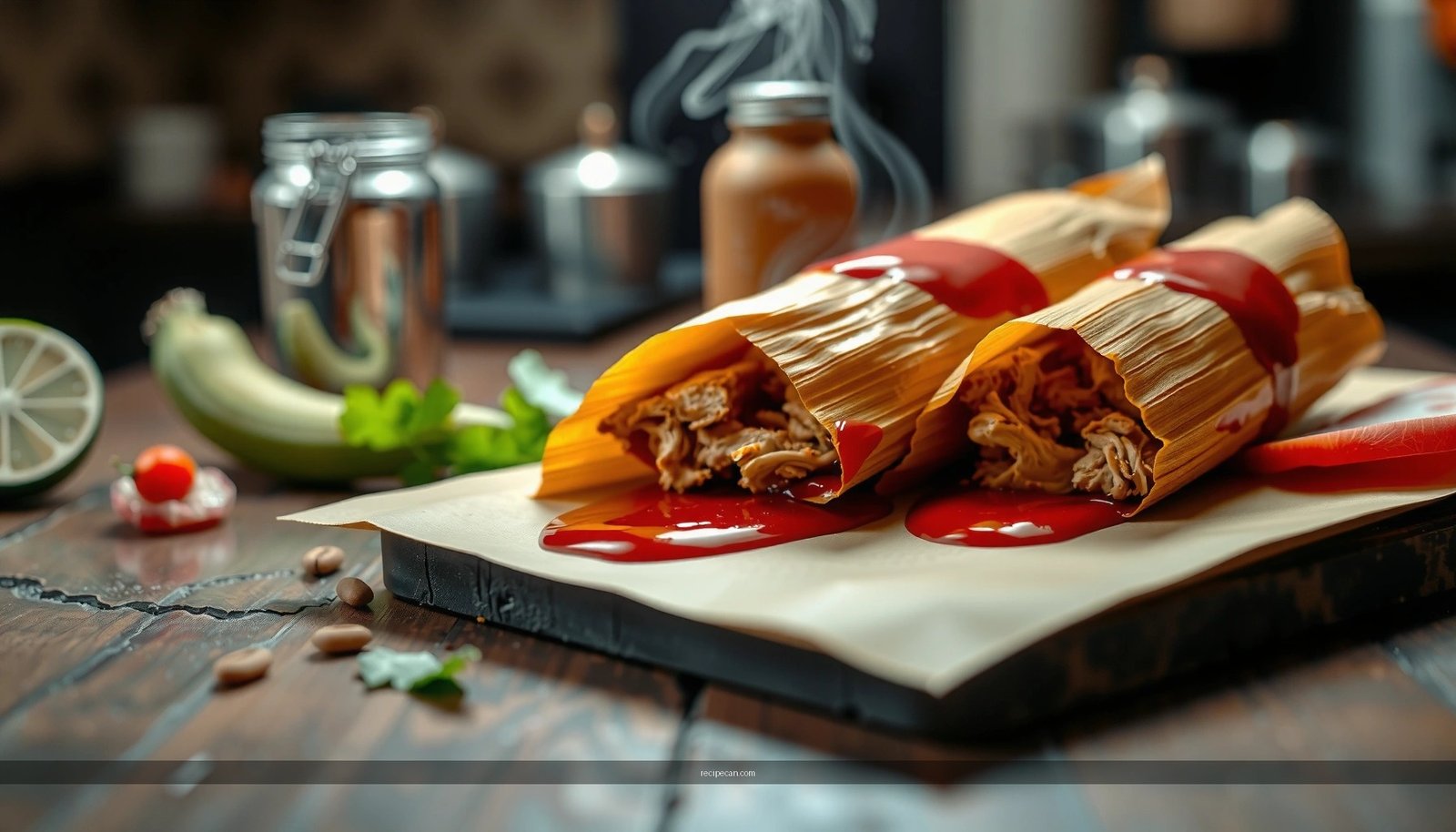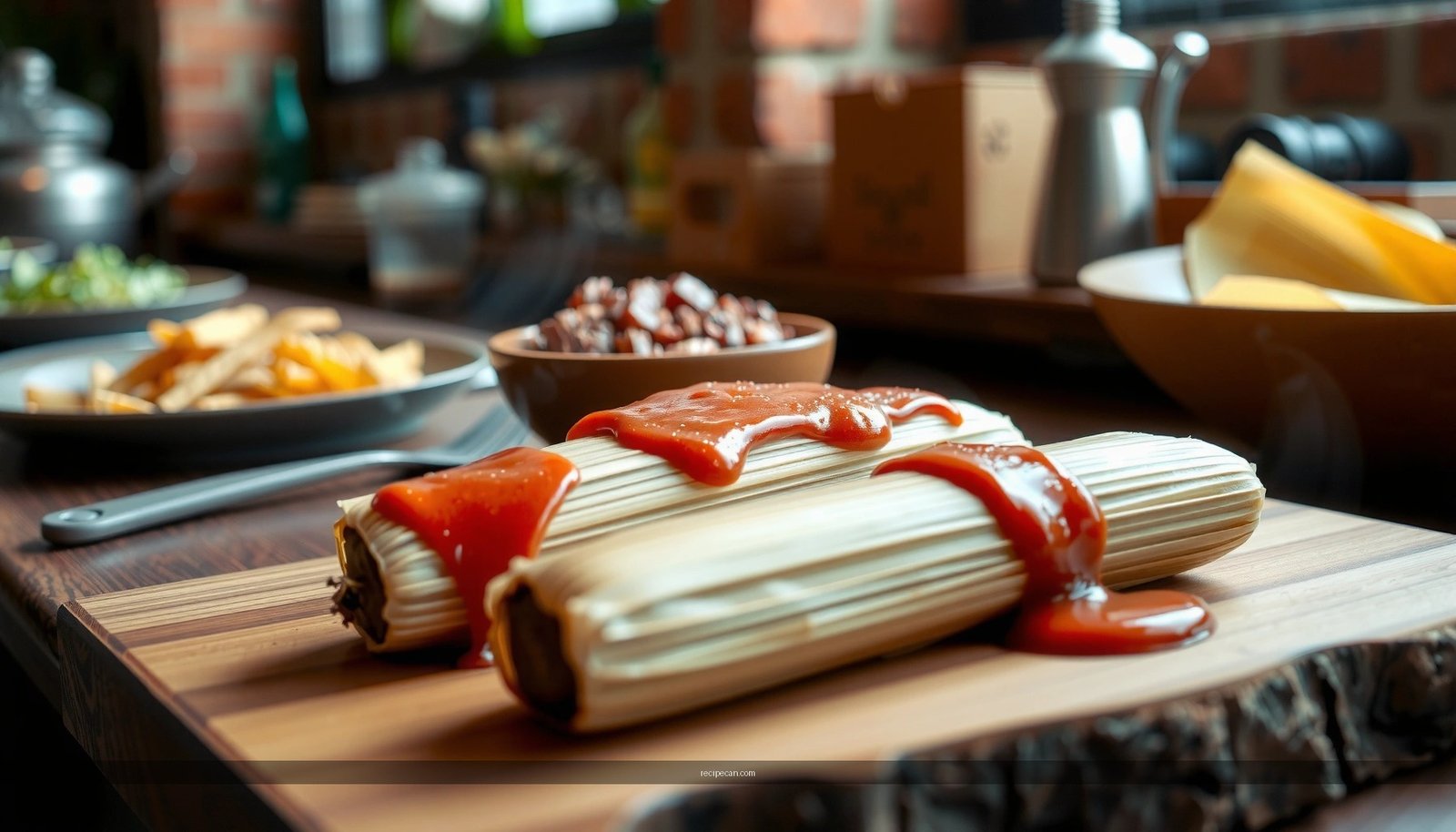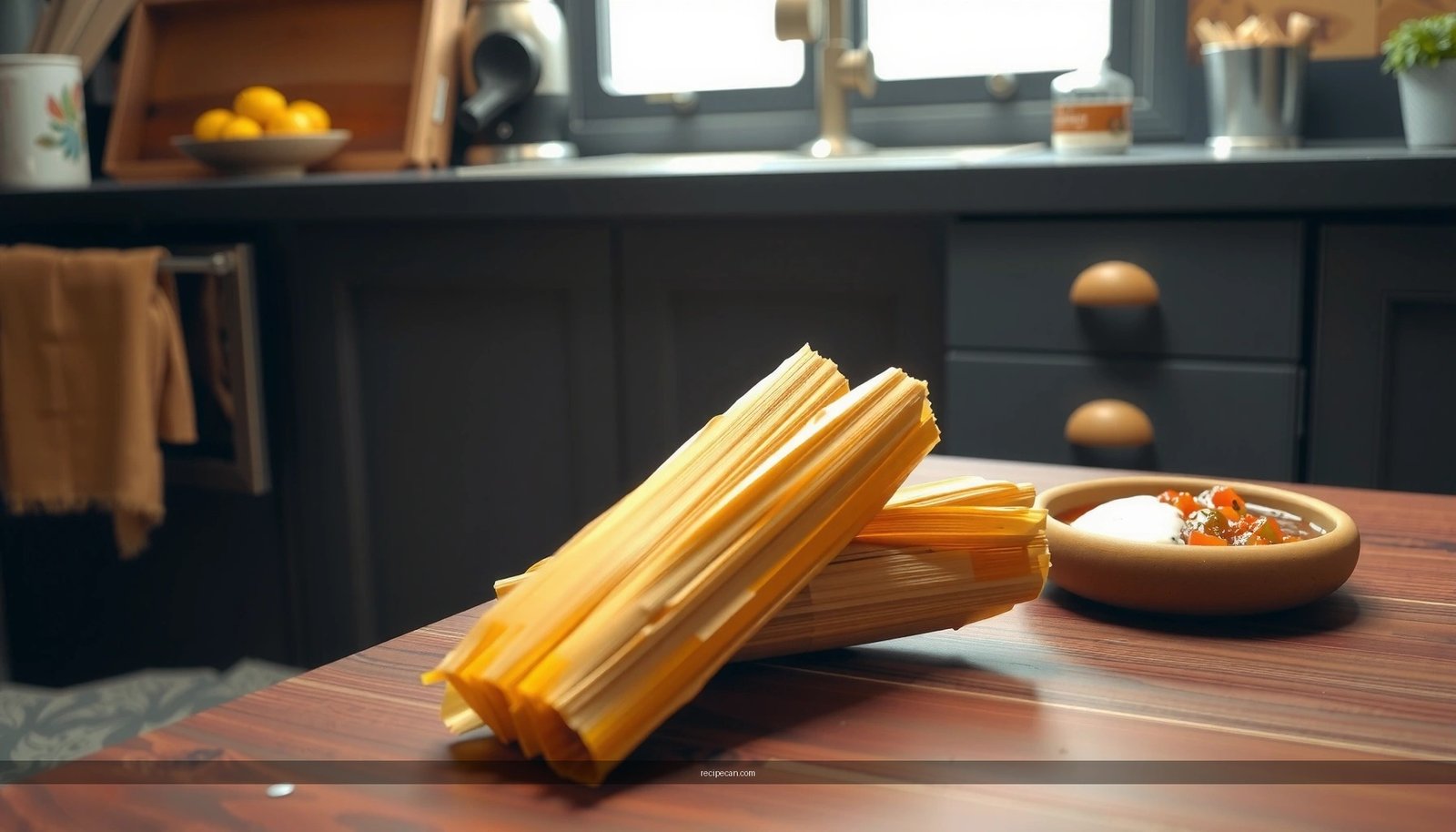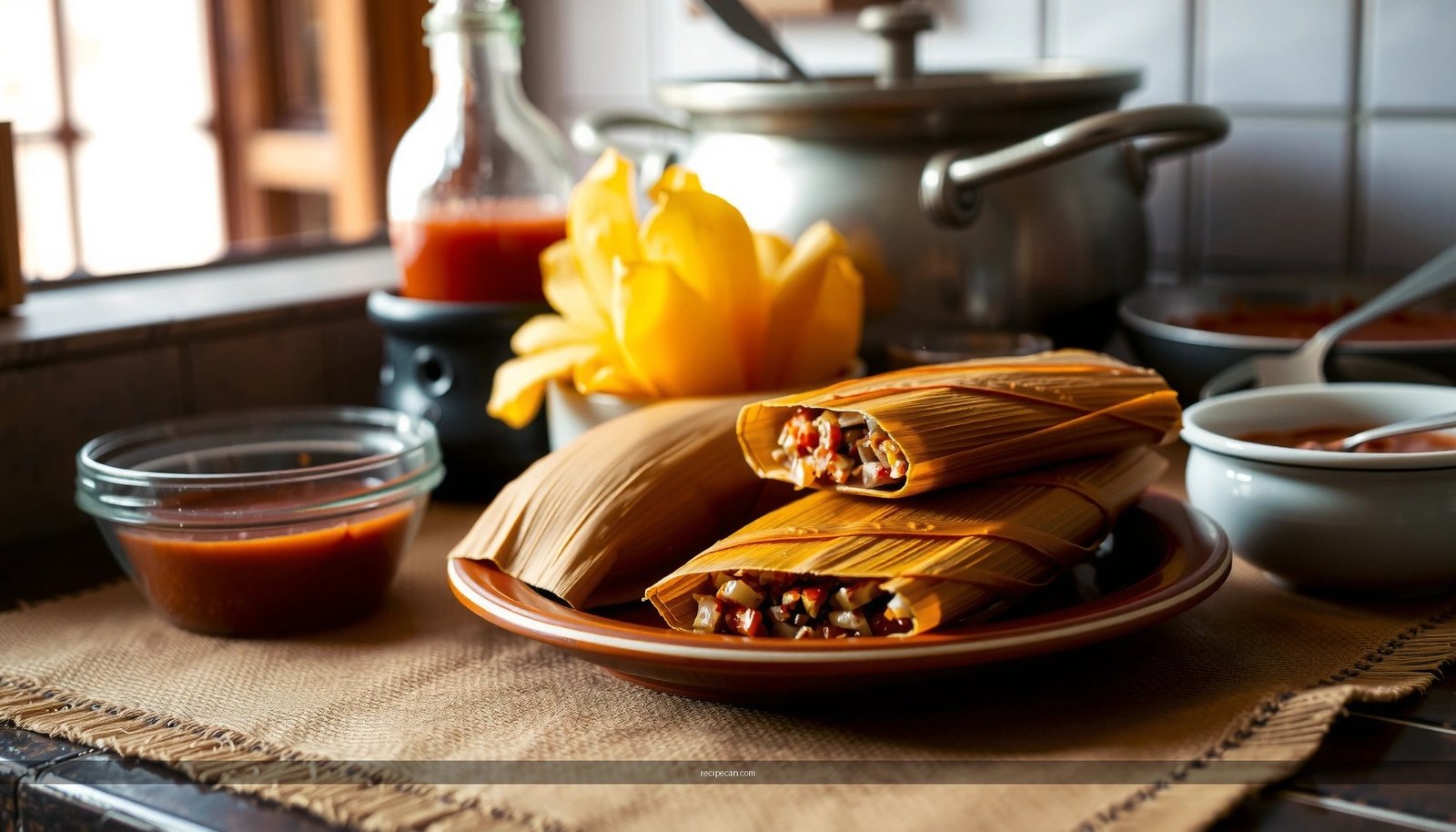
Get a true authentic red pork tamales recipe that delivers great flavor with every batch, not just a “close enough” version. Follow this step-by-step method for rich red chile pork, perfectly seasoned masa, and tamales that steam cleanly and taste right from the first bite. If you want to know exactly how to make red pork tamales the way they’re meant to taste, this is the winning process.
Make authentic red pork tamales by simmering pork shoulder in a deeply flavored red chile sauce, then spreading well-seasoned masa onto corn husks and steaming until the masa sets and peels cleanly. This step-by-step approach focuses on the three variables that most affect outcomes—(1) the chile sauce depth, (2) tender, non-watery pork filling, and (3) masa hydration and doneness—so your tamales come out rich, juicy, and fully cooked.
Ingredients for Authentic Red Pork Tamales
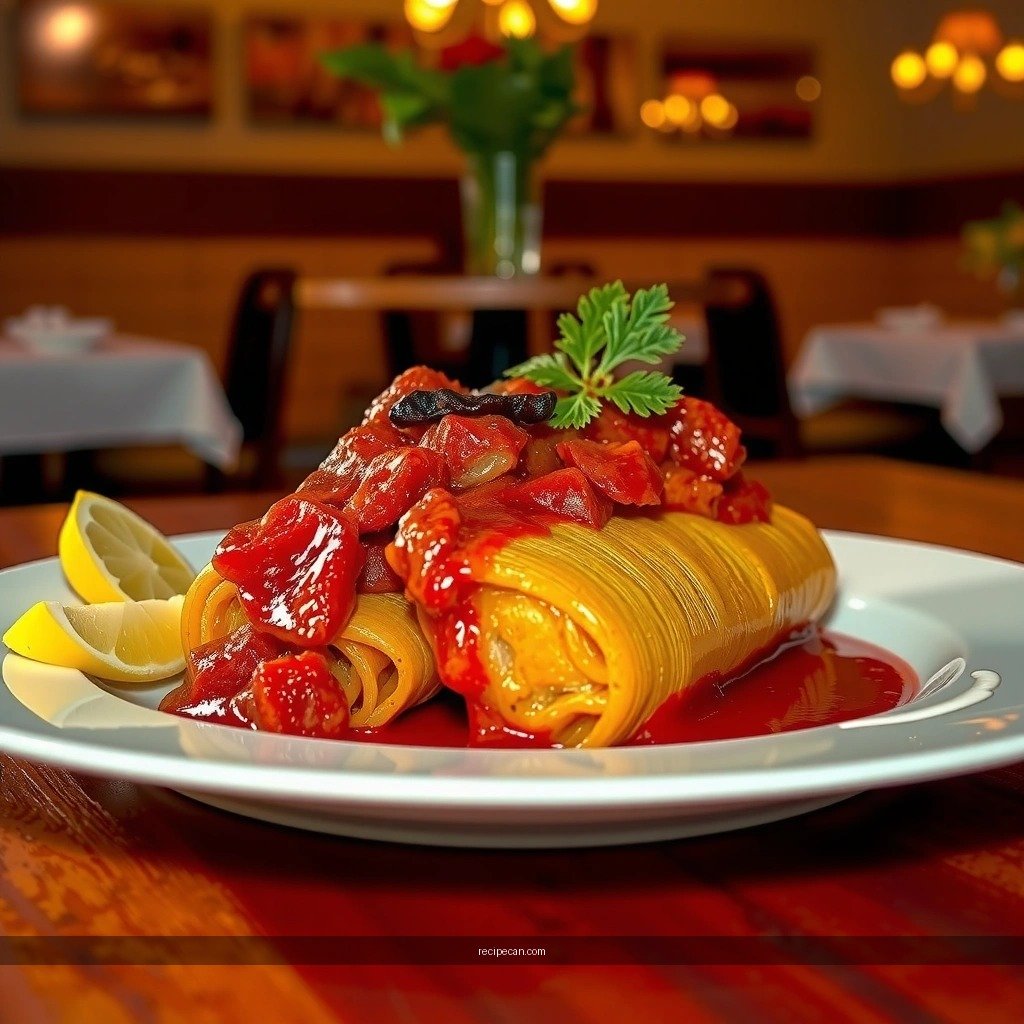
– Gather masa, lard (or oil), salt, corn husks, and red chile components
– Use pork shoulder for the best texture and flavor
– Have stock or water ready for the chile sauce and masa consistency
To make truly “authentic” red pork tamales, treat ingredients as building blocks rather than a checklist. The pork shoulder provides fat and collagen that break down into succulent shreds during the chile simmer. Masa harina forms the structure; its texture depends on proper fat (lard) and hydration (broth/water). Corn husks are your steaming wrapper—sturdy enough to hold shape, yet flexible enough to wrap tightly.
Core pantry and fresh items (recommended quantities for ~24–30 tamales, depending on size):
– Dried corn husks: ~30–40, depending on size and trimming
– Masa harina: ~4–5 cups
– Lard (or neutral cooking oil): ~1 to 1¼ cups (lard gives the most traditional flavor and mouthfeel)
– Fine salt: ~1½–2 tsp total for masa + adjust for filling
– Warm broth or water: ~3½–5 cups (incremental add; masa absorbs differently by brand and humidity)
For the red chile sauce:
– Dried chiles (a mix is often more balanced than one variety):
– Guajillo (most common for “red” sweetness and color)
– Ancho (adds mild, raisin-like depth)
– Optional: cascabel for a little toasted nuttiness and heat
– Garlic: 4–6 cloves
– Onion: 1 medium (or ½ large), chopped
– Broth/water: to thin the sauce
– Seasonings: ground cumin (optional), dried oregano (optional), and salt (critical)
For the pork filling:
– Pork shoulder: ~4–5 lb, cut into chunks
– Salt: to season pork lightly before simmering (and to balance overall filling)
– Optional aromatics: bay leaf or a small sprig of Mexican oregano (if you have it)
Tamale Success Drivers: Sauce, Masa, and Steaming (Guidance for Home Cooks)
| # | Key Factor | Target Range | Why It Matters | Outcome Impact |
|---|---|---|---|---|
| 1 | Chile rehydration (dried chiles) | 10–20 min hot water | Prevents bitterness; improves blend smoothness | ★4.8 |
| 2 | Chile sauce thickness | Coats a spoon; not runny | Controls pork moisture and tamale texture | ★4.7 |
| 3 | Masa consistency (spreadability) | Holds shape; swipes smooth | Too wet = gummy; too dry = cracks | ★4.6 |
| 4 | Salt balance in masa | ~1 tsp per 2 cups masa harina* | Enhances chile flavor; prevents bland tamales | ★4.5 |
| 5 | Pork simmer time | 90–150 min (fork-tender) | Breaks down collagen; yields shreddable texture | ★4.7 |
| 6 | Steaming doneness test | Masa pulls cleanly | Prevents undercooked centers | ★4.9 |
| 7 | Rest time after steaming | 15–30 min covered | Sets masa; improves slice/peel integrity | ★4.1 |
\Salt amounts vary by masa brand and whether your broth is salted; use taste and dough feel as your final calibration.
Prepare the Red Chile Sauce
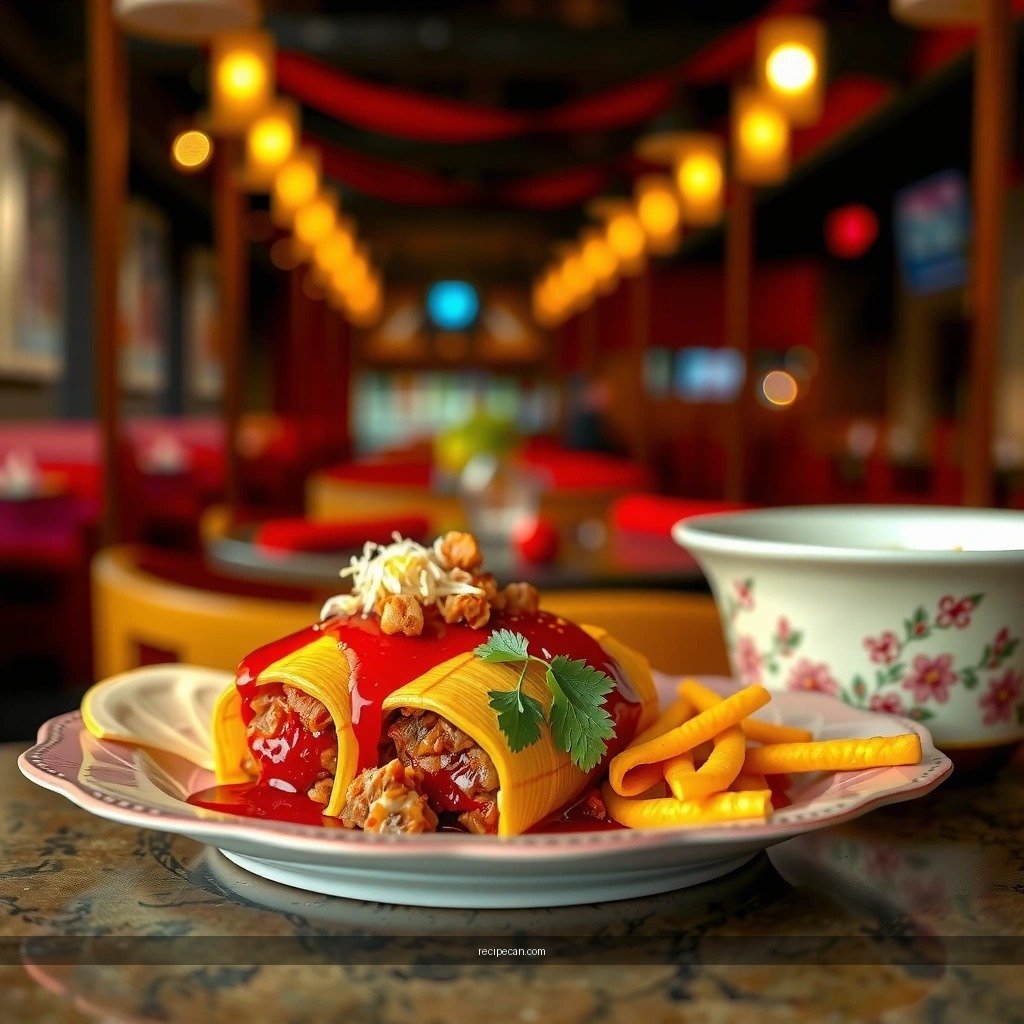
– Toast and rehydrate dried chiles, then blend into a smooth sauce
– Simmer with garlic, onion, and seasonings until deep red and fragrant
– Adjust thickness with broth so it coats the pork well
A good red chile sauce is the flavor engine of authentic red pork tamales. The goal is balance: roasted depth, softened chile heat, and enough fat-and-protein affinity to cling to pork and masa.
1. Toast dried chiles briefly. Warm a dry skillet over medium heat. Toast chiles 10–20 seconds per side—just until fragrant. Over-toasting creates bitterness that even sugar and salt can’t fix.
2. Rehydrate in hot water. Place toasted chiles in a bowl and cover with hot water. Soak 10–20 minutes until pliable.
3. Blend smooth. Blend rehydrated chiles with a portion of soaking liquid, plus garlic and onion. Strain if you want extra silky sauce (optional, but helpful for very fibrous chiles).
4. Simmer for depth. Cook blended sauce in a saucepan, simmering gently 8–15 minutes. This reduces raw edge flavor and develops a deeper red color.
5. Season and thin to “coating” consistency. Add broth a little at a time until the sauce coats the back of a spoon. It should be thick enough to cling, not so thin that it turns watery once combined with shredded pork.
Analytical tip: If your sauce tastes “sharp” or “one-dimensional,” it usually needs more simmer time and/or salt. Taste at the end—your tamales will taste like this sauce, scaled through masa and pork fat.
Cook the Red Pork Filling
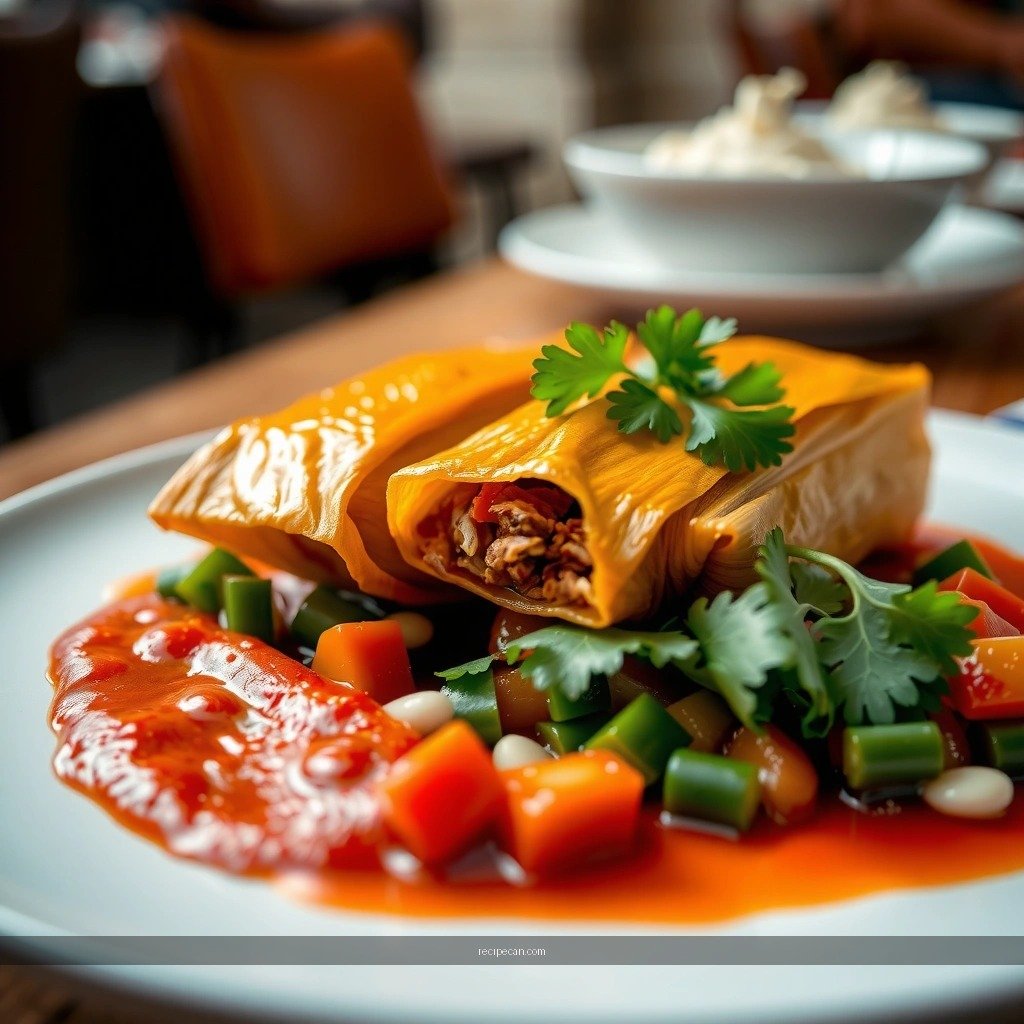
– Brown pork, then simmer in the red chile sauce until fork-tender
– Shred the pork and reduce the sauce slightly for a filling that isn’t watery
– Taste and balance salt, heat, and richness
Cooking the pork is where texture becomes tamale-quality. Pork shoulder has enough fat to keep filling juicy, while collagen converts into gel-like body that helps the tamale hold together.
1. Brown in batches. Pat pork dry, season lightly with salt, and brown in oil in a heavy pot. Browning adds savory notes through Maillard reactions.
2. Simmer with chile sauce. Pour in the red chile sauce and bring to a simmer. Reduce to maintain a gentle bubble.
3. Cook until fork-tender. Plan on 90–150 minutes depending on cut size. The meat should shred easily with a fork.
4. Shred and reduce. Remove pork, shred, then return it to the sauce. Simmer 10–20 minutes to reduce excess liquid so the filling stays spoonable—not watery.
5. Balance flavor. Taste. Adjust:
– Salt for overall savoriness
– Heat if needed (a pinch of cayenne or extra chile puree, but go gradually)
– Richness if the sauce is too thin or sharp (a small amount of pork fat that renders back, or simply more reduction)
Consistency check: Scoop a spoon of filling—if it runs like soup, reduce more. If it holds its shape and clings, you’re ready to assemble.
Make the Masa for Tamales
– Mix masa with lard (or oil) and broth until smooth and spreadable
– Season the masa well for balanced flavor
– Aim for a thick, dough-like texture that holds shape
Masa is not just the wrapper—it’s the “bread” of the tamale. Its texture must be correct for steaming: it should hold a smooth spread, then set firm enough to peel cleanly.
1. Combine masa harina and fat. In a large bowl, mix masa harina with lard (or oil) and salt. Press out lumps with your hands or a sturdy spatula.
2. Add warm broth gradually. Add warm broth in increments while mixing until the dough is smooth and spreadable.
3. Check thickness. The ideal masa:
– Spreads without tearing
– Doesn’t look glossy or wet like batter
– Holds shape when spread thinly on a husk
4. Season for balance. Salt matters here. A common professional approach is to taste a tiny amount of raw dough (carefully) and then adjust in small increments. If you’re unsure, compare your masa salt to the finished chile seasoning—both should taste coherent together.
5. Use the right spread thickness. Too thick = takes longer to steam and can be gummy. Too thin = may dry out or crack.
Practical test: Spread masa on a husk like you’re frosting a small cake layer. If it spreads easily and stays in place without flowing, you’re in the correct zone.
Assemble the Tamales
– Soak corn husks until flexible, then pat them dry slightly
– Spread masa, add a portion of red pork filling, and wrap tightly
– Fold and tie neatly so the tamales steam evenly
Assembly is where careful technique protects your labor. A tight wrap ensures steam circulates evenly and prevents filling from spilling out.
1. Soak husks. Soak corn husks in warm water 30–60 minutes until pliable. Dried husks that don’t flex will tear and leak.
2. Trim and dry lightly. If needed, remove brittle edges and pat husks so they’re damp but not dripping.
3. Spread masa evenly. Place husk flat, thick side up. Spread a thin, even layer—thinner on the edges to reduce bulk.
4. Add filling. Spoon red pork filling in the center. Avoid overfilling; too much filling creates thick spots that steam unevenly.
5. Fold tightly. Bring husk sides together and fold into the traditional shape. Tie with a strip of husk or kitchen twine if your method uses ties.
6. Keep portions consistent. Try to match the amount of masa and filling across tamales. Consistency leads to consistent doneness.
Efficiency strategy: Set up an assembly line (husks → masa → filling → wrap → stack). Tamales are labor-intensive, and workflow reduces fatigue and uneven results.
Steam and Finish Perfect Tamales
– Arrange tamales upright and steam until masa pulls cleanly from husk
– Maintain steady steam (add hot water as needed)
– Rest briefly before serving for best set and flavor
Steaming technique determines whether your tamales are perfectly cooked or frustratingly underdone. The most reliable approach is steady steam, not boiling chaos.
1. Arrange upright if possible. Place tamales standing in a steamer insert so they receive consistent heat.
2. Maintain steady steam. Start with enough water to generate steam and avoid running dry. Add hot water as needed, not cold, to prevent temperature dips.
3. Steam until done. Plan on about 1.5–2.5 hours depending on tamale size and pot setup. Begin testing after the first 1.5 hours.
4. Doneness test (most important). A tamale is ready when:
– Masa pulls cleanly away from the husk
– The center feels set (not tacky)
– When opened, it doesn’t look undercooked or wet
5. Rest before serving. Rest tamales 15–30 minutes covered. This helps the masa firm up and improves peel integrity.
Risk management: If you open a tamale too early, you may lose steam or misjudge doneness. Test one tamale, adjust as needed, and then steam the remaining batch to the same target.
Tamales are all about three things: a bold red chile sauce, tender pork, and well-seasoned masa steamed to the right doneness. Follow these steps closely—toast and simmer the chiles for depth, reduce the pork filling so it isn’t watery, spread masa with the right thickness, and steam until the masa pulls cleanly from the husk. If you taste the chile sauce and pork filling before assembly (and check masa texture), you’ll correct seasoning and consistency early, preventing the most common tamale failures. Make a batch this week, share with family, and save your favorite spice balance for next time.
Frequently Asked Questions
What makes an authentic red pork tamales recipe taste truly authentic?
Authentic red pork tamales rely on masa made from freshly prepared or well-hydrated corn dough and a rich, well-seasoned pork filling. The signature flavor comes from toasted dried chiles (like guajillo and ancho) blended into a smooth, deeply flavored red chile sauce. Slow simmering the pork until tender and letting the filling absorb the sauce helps develop that classic tamal taste.
How do I make red chile sauce for pork tamales without it turning bitter or too spicy?
Start by toasting dried chiles briefly until fragrant, then remove seeds and stems to prevent bitterness. Soak the chiles in hot water until soft, blend with aromatics like garlic and onion, and strain for a silky red pork tamales sauce. Simmer the sauce with spices and salt, then taste and adjust—add a little soaked chile liquid for thickness or more broth for balance.
How do I prepare pork for an authentic red pork tamales filling so it stays tender?
Use pork shoulder or pork butt and cook it low and slow, either braised on the stove or simmered until fork-tender. Once the pork is tender, shred it and return it to the pot with the red chile sauce so it soaks up flavor. Letting the filling cool slightly before assembling red pork tamales helps it stay juicy without making the masa too wet.
Which masa technique works best for authentic red pork tamales—steam or bake?
Authentic red pork tamales are steamed, not baked, because steaming keeps the masa moist and properly sets the texture. For best results, ensure the masa has the right consistency (usually spreadable but not runny) and cook the tamales until the masa pulls cleanly from the husk. This process helps create the traditional tender, sliceable tamal you expect from an authentic red pork tamales recipe.
How long should I cook red pork tamales, and how can I tell they’re done?
Cooking time varies by tamal size and how fresh the masa is, but most red pork tamales take about 60–90 minutes of steaming after the water reaches a steady boil. They’re typically done when the masa is set and firm, and it feels light and springy rather than doughy. If you peel one, the masa should release from the corn husk easily and have a uniform texture throughout.
References
- Google Scholar Google Scholar
https://scholar.google.com/scholar?q=authentic+red+pork+tamales+recipe - Google Scholar Google Scholar
https://scholar.google.com/scholar?q=tamales+rojo+pork+chile+sauce+homemade+recipe - Google Scholar Google Scholar
https://scholar.google.com/scholar?q=nixtamalization+masa+for+tamales+food+science - Tamale
https://en.wikipedia.org/wiki/Tamale - https://www.britannica.com/topic/tamale
https://www.britannica.com/topic/tamale - https://www.fsis.usda.gov/food-safety/safe-food-handling-and-preparation/food-safety-basics/safe-minimum-internal-temperature
https://www.fsis.usda.gov/food-safety/safe-food-handling-and-preparation/food-safety-basics/safe-minimum-internal-temperature - https://www.fda.gov/food/foodborne-pathogens
https://www.fda.gov/food/foodborne-pathogens - Food Safety
https://www.who.int/health-topics/food-safety - https://www.cdc.gov/foodsafety/
https://www.cdc.gov/foodsafety/ - https://pubmed.ncbi.nlm.nih.gov/?term=tamales+nixtamalization+masa+pork
https://pubmed.ncbi.nlm.nih.gov/?term=tamales+nixtamalization+masa+pork