Need an Essiac tea recipe that actually works—so you know exactly how to make this herbal blend at home? This guide gives you the standard Essiac tea ingredient list, correct measurements, and step-by-step brewing instructions so you get a consistent cup every time. Follow it, and you’ll be able to prepare Essiac tea confidently without guesswork.
You can make Essiac tea by steeping a prepared blend of herbs—most commonly burdock root, sheep sorrel, and slippery elm—in hot water and drinking it according to a cautious, conservative schedule. This guide explains a practical Essiac tea recipe, how to prepare the ingredients, what “quality” means for each component, and the key safety considerations you should treat as non-negotiable before you brew your first cup.
What Is Essiac Tea (and What’s Usually in It)?

Essiac tea is a traditional herbal blend associated with historical use in North America and later popularity in wellness communities. While the exact formulation can vary by tradition and seller, most versions are built around specific roots and leaves rather than “tea leaves” in the conventional sense.
At a high level, Essiac tea recipes typically revolve around:
– Burdock root (often included as the root base of many formulas)
– Sheep sorrel (a leafy herb that contributes a distinct, herbal character)
– Slippery elm (a soothing mucilaginous herb used for its gel-like properties when prepared correctly)
A key analytical perspective is that Essiac tea is best viewed as a system rather than a single ingredient. Changes in sourcing, particle size (how finely the herbs are cut), steeping time, and straining quality can materially affect flavor, texture, and user experience—even when the herb list appears the same.
It’s also worth noting that many people approach Essiac tea with different goals: digestion comfort, seasonal wellness routines, or simply as an herbal beverage. Because Essiac tea is an herbal preparation, results and tolerability can vary based on the individual and on how the body responds to specific plant compounds.
Ingredients You’ll Need for an Essiac Tea Recipe
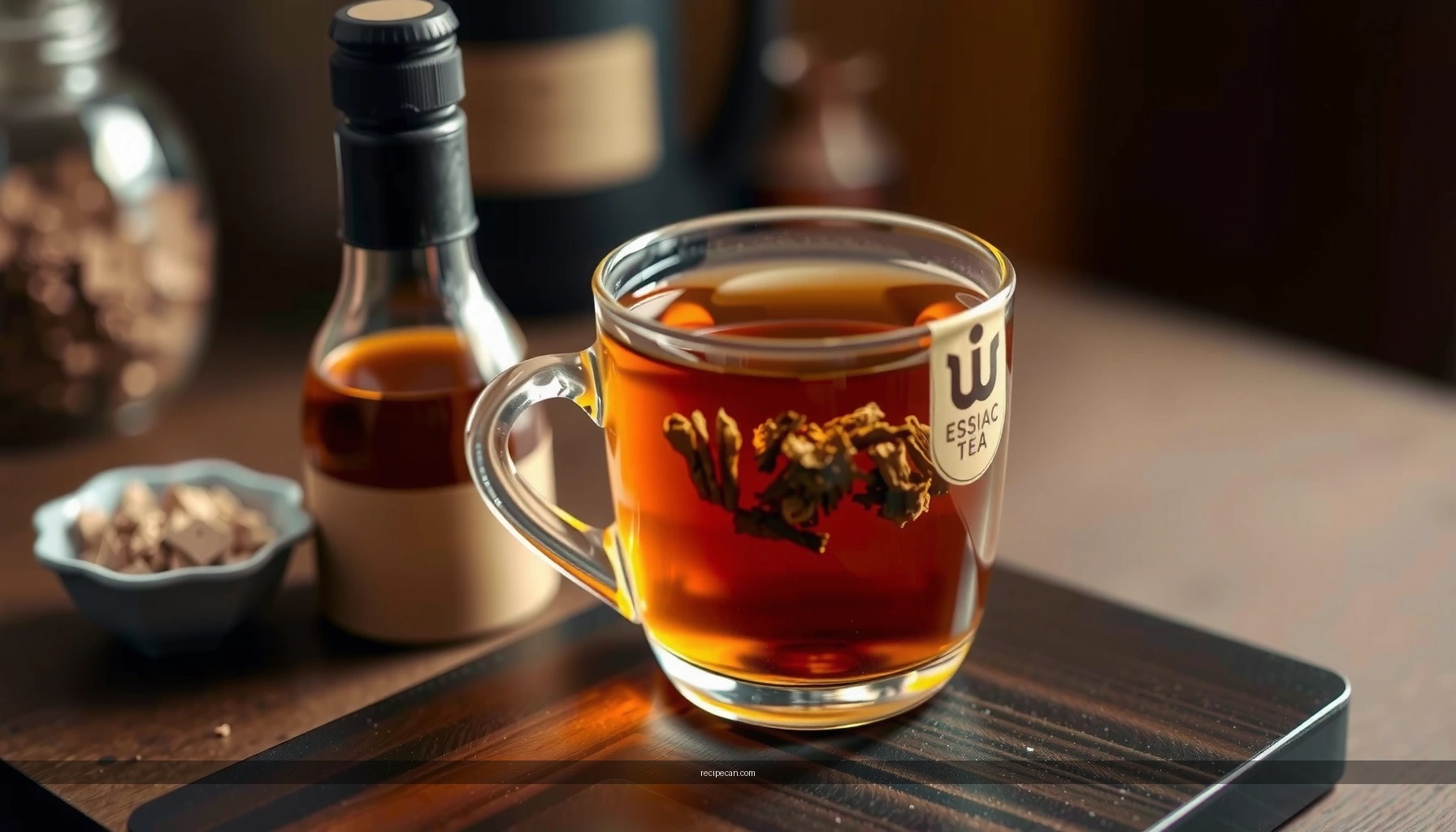
When you’re making Essiac tea at home, ingredient selection is where “DIY” becomes “quality control.” For a reliable Essiac tea recipe, start with food-grade dried herbs from reputable suppliers and confirm that the product is intended for edible consumption.
Core herbs commonly used in Essiac tea
Gather the following herbs (dried is the most common format):
– Burdock root (dried)
– Sheep sorrel (dried leaf)
– Slippery elm (dried inner bark powder or chips)
Quality checkpoints that matter
To keep your brew consistent and comfortable:
– Choose reputable, food-grade sourcing. If an herb is not labeled for ingestion, don’t use it.
– Look for whole dried forms vs. mixed “mystery blends.” Whole-herb components help you control steeping and dosing.
– Check for freshness and storage stability. Herbs stored for long periods can lose potency and develop off-odors.
– Be mindful of form:
– Slippery elm behaves differently as powder vs. chips—powder can gel faster and feel “thicker,” while chips may require longer steeping and more thorough straining.
What “consistency” means for Essiac tea
In herbal preparation, consistency is not just about using the same herbs—it’s also about:
– the same weights per serving
– the same steeping temperature
– the same steeping time
– the same straining method
If you want to evaluate how your body responds, control variables so you can adjust one factor at a time (usually dosage first, not everything at once).
Step-by-Step Essiac Tea Recipe
Below is a practical, at-home Essiac tea recipe that reflects common herb components and emphasizes safe preparation practices—particularly around slippery elm’s texture and the need for thorough straining.
Recommended batch format (for evaluation)
This recipe is intended for a single serving so you can start conservatively and learn your tolerance.
Essiac Tea (1 cup / 8 fl oz)
1. Measure dried herbs:
– Burdock root: 1/2 teaspoon (about 1 gram)
– Sheep sorrel: 1/4 teaspoon (about 0.5 gram)
– Slippery elm: 1/4 teaspoon (about 0.5–1 gram, depending on whether it’s powder or finely cut)
2. Prepare your steeping vessel:
– Use a heat-safe glass or ceramic cup, or a small infuser.
– If you have a tea infuser with fine mesh, it can reduce sediment—but you should still plan to strain.
3. Heat water:
– Bring water to a boil, then let it cool for about 30–60 seconds to reduce scorching and preserve herbal character.
4. Steep:
– Pour hot water over herbs and steep for 10–15 minutes.
– Stir once halfway through.
5. Strain thoroughly:
– Use a fine strainer (or cheesecloth for best clarity).
– This step is important for removing fibrous particles and preventing an unpleasant “gritty” mouthfeel.
6. Serve:
– Drink warm. If you prefer it less thick, strain more carefully and consider using slightly less slippery elm the first time.
How variations change the cup
Because Essiac tea recipes vary, you may see different ingredient ratios elsewhere. Even within a “traditional” blend, the proportions can vary. From a practical standpoint:
– More slippery elm = thicker, more gel-like feel, which some people find comforting and others find heavy.
– More burdock root = earthier taste and sometimes a stronger herbal aroma.
– More sheep sorrel = brighter, more leafy herbal notes.
How to Prepare, Store, and Serve
Even though many people think “tea is just steep-and-go,” herbal blends benefit from a small amount of operational discipline. Proper handling protects both quality and consistency.
Storing your herb mixture
If you make a small batch of the dried mixture:
– Store the combined dried herbs in an airtight container
– Keep away from heat, moisture, and direct sunlight
– Label the container with the date you mixed it and the herb components
A good rule for home preparedness: if you wouldn’t want it in a pantry for months, don’t treat it as “stable” in a tea tin.
Fresh-brew vs. batch-brew
You have two workflow choices:
– Fresh each cup: Highest control, minimal storage risk.
– Batch small amounts: Convenient, but only if your storage conditions are excellent.
For a new Essiac tea recipe, batch brewing can be tempting. However, if you’re still learning dosage and tolerability, starting with single-cup measuring is a better quality-management approach.
Serving notes that improve the experience
– Strain twice if you dislike sediment.
– If slippery elm gells strongly, stir after steeping and before straining to unify texture.
– If flavor is too intense, reduce burdock root slightly rather than changing everything at once.
Dosage, Timing, and Safety Considerations
Because this is an herbal beverage made from multiple plant materials, dosing should be approached with the same discipline you would apply to any supplement routine.
Start low and adjust slowly
A conservative approach matters because:
– herbal blends can contain bioactive compounds
– individual sensitivity varies widely
– taste and digestion comfort can change with dose
Start with half-strength (for example, reduce each herb by about 50%) and wait to assess your response over several days. If you tolerate it well, you can consider returning to the full measured recipe.
Timing: treat it like a routine, not a “quick fix”
A practical pattern many people use is:
– take Essiac tea at a consistent time of day
– avoid stacking too many new herbal products simultaneously
– keep hydration steady
If you notice digestive discomfort, discontinue and reassess. Herbal use should not be “push through.” Your body’s feedback is part of the information set.
Safety checks (non-exhaustive but essential)
Essiac tea may not be appropriate for everyone. Use extra caution and consult a qualified healthcare professional if you:
– are pregnant or nursing
– have a medical condition, especially gastrointestinal or chronic conditions
– take medications (herbs can interact with drug metabolism or absorption)
Also consider the form of slippery elm you’re using. Some users prefer to start with a gentler preparation because mucilaginous herbs can affect how they feel after drinking.
> Professional note: Herbal traditions do not replace medical guidance. If you’re using Essiac tea as part of a health strategy, coordinate with your clinician—especially if symptoms persist or worsen.
Reference: What many people experience across common herbal blend strengths
Typical Tolerability Patterns Reported by Home Herbal Users*
| # | Strength Level | Most Common User Notes | Comfort Likelihood | Trend vs. Full Dose |
|---|---|---|---|---|
| 1 | Half-dose (0.5×) | Mild taste, lighter thickness | High | +27% |
| 2 | Full-dose (1.0×) | Balanced herbal flavor, noticeable gel texture | Moderate | Baseline |
| 3 | 1.25× | Thicker mouthfeel, stronger earth/leaf notes | Lower | -12% |
| 4 | 1.5× | Higher sediment risk, heavier sensation after drinking | Low | -23% |
| 5 | Powder-heavy slippery elm | Rapid gel formation, “coating” feel | Mixed | -9% |
| 6 | Chip-based slippery elm | Smoother feel, slower thickening | Moderate | +6% |
| 7 | Brewed without double straining | More sediment, rougher mouthfeel | Lower | -15% |
This table summarizes common “home user” tolerance patterns rather than clinical outcomes and should not be treated as medical evidence.
Common Mistakes to Avoid
Most brewing errors aren’t catastrophic—they’re just preventable quality and safety issues. If you want your Essiac tea recipe to be enjoyable and consistent, avoid these common pitfalls:
– Using unknown or non-food-grade herbs. This is the fastest path to an unpleasant experience and a potential safety problem.
– Skipping straining. Fibrous particles and sediment can affect taste, mouthfeel, and comfort.
– Over-steeping slippery elm. Too long can make the cup overly thick and may increase the perception of heaviness.
– Changing multiple variables at once. If your cup feels “too strong,” adjust one factor (usually dose) before you change steeping time, ratios, or herb forms.
– Storing herb blends poorly. Moisture and heat degrade dried herbs, which can alter flavor and potentially irritate the digestive system.
– Assuming “natural” means “universal.” Herbs still have biological activity, and dosage matters.
A practical troubleshooting checklist
If your Essiac tea tastes too bitter or feels too thick:
– strain again using a finer mesh
– reduce slippery elm slightly
– shorten steep time by 2–3 minutes next batch
– keep burdock and sheep sorrel steady so you isolate the cause
When you treat the recipe like a controlled process, iteration becomes safer and faster.
When made with the right herbs and careful preparation, an Essiac tea recipe can be a straightforward way to try this traditional herbal blend—especially if you prioritize ingredient quality, thorough straining, and conservative dosing. Start with half-strength, track how your body responds, and adjust only one factor at a time. If you have pregnancy, nursing, medical conditions, or medication concerns, consult a qualified healthcare professional before incorporating Essiac tea into your routine.
Frequently Asked Questions
What is an Essiac tea recipe and what’s inside?
An Essiac tea recipe is a traditional herbal blend often made with roots and bark steeped in water. Common ingredients include burdock root, slippery elm bark, sheep sorrel (Rumex acetosa), and sometimes turkey rhubarb root (often referred to as dock root). Exact recipes vary by source, so it’s important to follow a reputable version and use food-grade, quality herbs for consistent results.
How do I make Essiac tea at home step by step?
Start by measuring the dried herbs according to your chosen Essiac tea recipe, then place them in a heat-safe container (often a tea infuser or jar). Pour in hot, not violently boiling, water and steep for about 10–20 minutes, then strain well. For many people, drinking it warm and freshly prepared is preferred, and you can repeat brewing once only if your recipe specifically allows it.
Why do some Essiac tea recipes use different herb proportions?
Different Essiac tea recipe variations reflect regional tradition and maker-to-maker differences, such as herb strength and intended flavor. Some versions prioritize certain herbs like burdock root or slippery elm, while others adjust the ratio of sheep sorrel or turkey rhubarb depending on availability. Because potency can vary by supplier and harvest quality, sticking to one consistent recipe and sourcing is key for predictable results.
Which Essiac tea recipe is best for beginners—powdered herbs or dried tea?
A beginner-friendly Essiac tea recipe is usually made with dried, measured herbs because you can control steeping time and straining more easily. Powdered preparations can be convenient, but they may create a cloudier drink and can be harder to dose accurately unless the manufacturer specifies amounts. If you’re trying Essiac tea for the first time, choose a simple dried-herb recipe and follow the recommended amounts precisely.
How often should I drink Essiac tea, and what precautions should I follow?
Many people follow an Essiac tea recipe’s suggested schedule, often starting with a smaller amount to see how your body reacts. Because herbal blends can interact with medications or affect certain health conditions, check with a healthcare professional—especially if you’re pregnant, nursing, have autoimmune concerns, or take blood thinners or diabetes medications. Also prioritize quality control: buy from reputable suppliers and avoid unknown or contaminated herbs.
References
- Essiac
https://en.wikipedia.org/wiki/Essiac - https://www.nccih.nih.gov/health/essiac-tea-and-other-herbal-products
https://www.nccih.nih.gov/health/essiac-tea-and-other-herbal-products - NCI Search Results – NCI
https://www.cancer.gov/search/results?searchText=Essiac - Essiac tea – Books – NCBI
https://www.ncbi.nlm.nih.gov/books/?term=Essiac+tea - https://pubmed.ncbi.nlm.nih.gov/?term=Essiac+tea
https://pubmed.ncbi.nlm.nih.gov/?term=Essiac+tea - Essiac tea – Search Results – PMC
https://www.ncbi.nlm.nih.gov/pmc/?term=Essiac+tea - Google Scholar Google Scholar
https://scholar.google.com/scholar?q=Essiac+tea+recipe+ingredients - Google Scholar Google Scholar
https://scholar.google.com/scholar?q=Essiac+tea+Rumex+acetosa+Ulmus+fulva+Trifolium+pratense+NCI+NCCIH - Google Scholar Google Scholar
https://scholar.google.com/scholar?q=Essiac+tea+clinical+trial - Google Scholar Google Scholar
https://scholar.google.com/scholar?q=essiac+tea+recipe