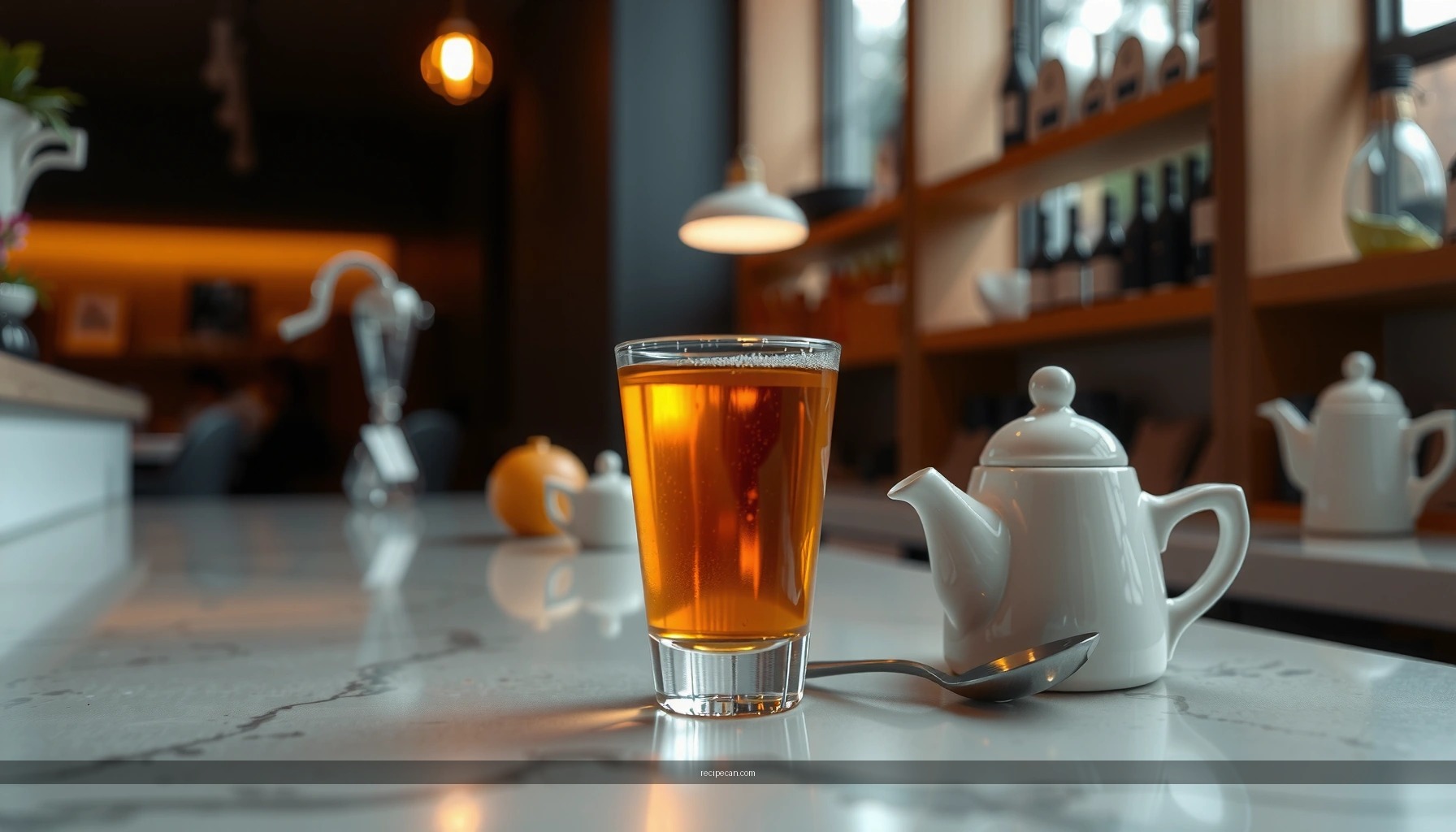
Want the best white tea shot recipe that delivers a smooth, light sip every time? This step-by-step method gives you the right tea strength and quick infusion so your shot tastes clean instead of bitter. If you want a fast, beginner-friendly pour with a gentle flavor, this is the version to follow.
A white tea shot is an easy way to enjoy the delicate, naturally sweet taste of white tea in a concentrated, quick drink—without the bitterness that can come from over-steeping. With the right water temperature, short brew time, and a quick sweeten/strain workflow, you can consistently assemble a smooth, light sip at home.
A white tea shot differs from a regular cup because you’re aiming for clarity and aroma rather than heavy tannin extraction. That means precision matters more than volume: cooler water, brief steeping, and thorough straining create a clean profile that feels bright and refined.
What You Need for a White Tea Shot
To make a white tea shot reliably, keep your setup simple but complete. The goal is to extract flavor quickly, preserve the tea’s subtle floral notes, and avoid cloudiness from leaf dust.
– White tea (loose leaves or tea bags)
Choose high-quality white tea (Silver Needle, Bai Mu Dan, or a reputable blend). Loose leaf usually provides better nuance and consistency.
– Optional add-ins like honey, lemon, or ginger
– Honey adds gentle sweetness and smooth mouthfeel.
– Lemon provides brightness that complements white tea’s mildness.
– Ginger introduces a warm, aromatic edge that works especially well with rooibos-like tea blends (for white tea shots, use lightly so it doesn’t overpower).
– A shot glass, strainer, and small saucepan or kettle
A fine mesh strainer is ideal for a “clean” shot. A small kettle or saucepan helps you control temperature.
> Quick sourcing note: if you’re buying tea, look for packaging that states leaf type (e.g., Silver Needle vs. “white tea blend”) and origin. These details correlate with flavor stability.
Reference: White Tea Types and Brewing Strength Outcomes
(Use this table to select a tea style that matches the “light shot” profile you want.)
White Tea Shot Readiness by Tea Style
| # | Tea style | Leaf character | Best shot steep time* | Typical bitterness risk | Shot score |
|---|---|---|---|---|---|
| 1 | Silver Needle (Bai Hao Yin Zhen) | Very delicate, floral | 2–3 min | Low | 9.6★ |
| 2 | White Peony (Bai Mu Dan) | Balanced, lightly fruity | 3–4 min | Medium-low | 9.1★ |
| 3 | Shou Mei (older leaves) | Earthy, mature aroma | 2.5–3.5 min | Medium | 8.2★ |
| 4 | Aromatic white blend | Fragranced, sometimes perfumey | 2–3.5 min | Medium-low | 8.9★ |
| 5 | White tea bags (dusty blends) | Faster extraction, less nuance | 1.5–2.5 min | Medium | 7.4★ |
| 6 | Organic white tea (various grades) | Often clean taste profile | 2.5–4 min | Low-medium | 8.8★ |
| 7 | Premium loose leaf (needle-heavy mix) | Silky, sweet finish | 2–3.5 min | Low | 9.4★ |
Steep times assume a chilled-to-hotline workflow and a small shot volume (about 30–60 ml).
How to Brew White Tea for Best Flavor
The most important variable in a white tea shot recipe is water temperature and steep duration. White tea is delicate: too much heat or time extracts harsher compounds and overwhelms the subtle flavor.
– Use water just below boiling (around 170–185°F / 77–85°C)
If you boil fully, let it cool for roughly 1–3 minutes depending on your kettle and room temperature. The aim is to avoid scorching the leaf.
– Steep briefly to keep it light and not bitter
For a shot, start with 2–4 minutes, then calibrate based on your tea type. Needle-heavy white teas typically want the shortest times.
– Strain well for a clean, smooth shot
Use a fine strainer (or double-strain if your leaf produces dust). A clear shot isn’t just “prettier”—it typically feels less astringent.
Practical brewing parameters (so you can repeat results)
A simple baseline approach for a single shot:
– Tea amount: 1.5–3 grams loose leaf (or 1 bag, if pre-portioned)
– Water: 30–60 ml (about 1–2 oz)
– Temp: 175–185°F (80–85°C)
– Steep: 2–4 minutes, then remove/strain immediately
If your shot tastes muted, you can increase tea amount slightly before extending steep time. Extending steep time is more likely to introduce bitterness than a small dose increase.
Quick calibration checklist
– Too weak? Increase leaf by ~0.5–1 g or use slightly hotter water within the recommended range.
– Too bitter/astringent? Reduce steep time by 30–60 seconds or cool the water closer to 170–175°F (77–80°C).
– Cloudy/gritty? Strain longer or use a finer filter; avoid leaf dust in the final shot.
Simple White Tea Shot Recipe (Step-by-Step)
This is the straightforward white tea shot recipe that prioritizes clarity, aroma, and consistency. Once you nail the baseline, variations become easy.
– Brew the white tea using the recommended steep time
Heat water to 175–185°F (80–85°C). Add tea (1.5–3 g loose leaf or 1 bag) to a small cup or pot. Start a timer and steep for 2–3 minutes for needle-based teas or 3–4 minutes for peony-style teas.
– Sweeten or flavor to taste (honey, lemon, or ginger)
Add 1–2 teaspoons honey per shot batch (for a single shot, think 1/4–1/2 teaspoon increments). For lemon, squeeze a few drops to 1–2 teaspoons—start small because citrus is strong even in small volumes. For ginger, use a thin slice or a pinch of freshly grated ginger, then strain again if needed.
– Pour into shot glasses and serve immediately
Strain into shot glass(es), taste once, and serve right away. White tea aroma fades as it sits, especially if it’s hot for too long.
Assembly workflow that prevents bitterness
1. Pre-heat kettle to the target temperature range.
2. Measure tea and place in a small infuser or directly in the pot.
3. Start the timer at the moment water contacts the tea.
4. Strain immediately when time is up—don’t “let it finish steeping.”
Flavor Variations to Try
White tea shots are ideal for experimentation because the base flavor is mild. You can add small accents without overpowering the tea’s natural sweetness.
– Honey-lemon white tea shot for a bright, refreshing taste
Honey rounds out the finish; lemon adds a crisp lift. Expect a clean, lightly floral profile with a refreshing edge.
– Ginger-white tea shot for a warm, slightly spicy kick
Use ginger sparingly. Ginger can dominate fast in a shot-sized drink, so start with a thin slice and taste after straining.
– Unsweetened option for a crisp, tea-forward finish
If you want maximum tea character, skip sweeteners and focus on temperature and steep time. Unsweetened shots often feel “lighter” even though caffeine and aromatic compounds are still present.
Variation selection table (which add-in to choose and why)
Best Add-Ins for White Tea Shots
| # | Variation | Primary note | Sweetness level | Steep/time tweak | Best for |
|---|---|---|---|---|---|
| 1 | Honey + lemon | Bright citrus | Low–medium | Steep 2–3.5 min | Morning refresh |
| 2 | Ginger + white tea | Warm spice | Optional | Steep 2.5–3.5 min; add ginger after | Cool-weather sip |
| 3 | Unsweetened, tea-forward | Floral clarity | None | Steep 2–3 min for needles | Clean taste test |
| 4 | Honey-only (no citrus) | Rounded sweetness | Low–medium | Keep steep shortest possible | Dessert-like finish |
| 5 | Lemon-only (dry brightness) | Crisp tang | None | Steep 2–3.5 min; add after steep | Low-sugar option |
Tips for Serving and Getting the Right Balance
A great white tea shot recipe is mostly about balance—aroma vs. strength, sweetness vs. tea character, and heat vs. clarity.
– Keep the shot portion consistent for reliable taste
If your volume changes, extraction perception changes too. Use 30–60 ml per shot and stay within that range for repeatability.
– Adjust sweetness in small increments before serving
White tea can become “duller” when too sweet; start with a minimal honey amount and add only after tasting.
– Serve chilled or at room temperature depending on preference
– Chilled: emphasizes refreshment and can soften herbal notes.
– Room temp/hot: enhances aroma and floral perception.
If you chill, cool quickly after straining and avoid leaving it warm for extended periods.
Avoid the most common operational mistakes
– Over-steeping: the #1 cause of bitterness in concentrated tea drinks.
– Adding citrus while steeping: lemon can alter extraction and make the flavor sharper than intended—add after steep for control.
– Skipping straining: leaf particles can increase perceived dryness and reduce smoothness.
Target experience map (how to “dial in” quickly)
If you want a consistent method for teams or frequent hosts, decide on a goal first:
– Goal: ultra-light & floral → 170–175°F (77–80°C), 2–3 min, minimal sweetener.
– Goal: stronger & more aromatic → 180–185°F (82–85°C), 3–4 min, but remove immediately at the end.
– Goal: spice-forward → add ginger after steep and strain again.
Storage and Safety Notes
White tea shot quality is time-sensitive because aroma compounds degrade and microbial risk increases if brewed tea is stored improperly.
– Best enjoyed fresh for maximum aroma
For best flavor, serve immediately after steeping and assembling.
– If prepping ahead, refrigerate brewed tea and reassemble when ready
Brew, strain, cool, refrigerate, and then combine with honey/lemon/ginger right before serving (especially for citrus).
– Discard any leftover mixture that sits too long at room temperature
As a best practice, don’t leave brewed tea (especially with sweeteners) at room temperature for extended periods. When in doubt, discard.
Practical “make-ahead” plan
– Brew and strain the tea.
– Cool quickly (avoid long warm holding).
– Refrigerate in a covered container.
– Assemble each shot by adding sweetener/acid/spice at the last moment to preserve clarity and taste.
A great white tea shot recipe delivers a light, aromatic sip with a clean finish—achieved through cooler water, short steeping, and immediate straining. Start with Silver Needle or White Peony, keep your portions consistent, then fine-tune sweetness and add-ins (honey-lemon, ginger, or unsweetened) one at a time. With that workflow, you’ll get a smooth, repeatable white tea shot every time. Want help fine-tuning sweetness or choosing the best white tea type?
Frequently Asked Questions
What is a white tea shot, and how is it different from other tea-based shots?
A white tea shot is a concentrated, chilled drink made by steeping white tea leaves lightly and serving the strong tea in a small “shot” portion. It’s typically smoother and more delicate than green tea shots because white tea is less processed. Since it’s often served cold and concentrated, it can feel lighter on the palate than many black or matcha-style energy shots while still delivering a tea caffeine kick.
How do I make a white tea shot at home without it tasting bitter?
Start with high-quality white tea (such as Silver Needle or Bai Mu Dan) and use a lighter steep: steep in hot water around 160–185°F (70–85°C) for 2–4 minutes. Keep the amount of tea-to-water balanced, and avoid over-steeping, which is the most common reason white tea shot recipes turn bitter. For an extra smooth result, strain well, chill the concentrate, and serve immediately.
Why does the caffeine strength vary in white tea shot recipes, and how can I control it?
Caffeine can vary based on the tea grade, leaf type, and how long and hot you steep the tea. To control strength, adjust one variable at a time—typically steep time or tea amount—while keeping temperature consistent. If you want a gentler white tea shot, use shorter steeping and cooler water; for a stronger shot, increase the tea quantity slightly or steep closer to 4 minutes.
Which white tea is best for a refreshing white tea shot recipe?
For a bright, naturally sweet flavor, Silver Needle (Bai Hao Yin Zhen) is a popular choice and works well for a clean, aromatic white tea shot. Bai Mu Dan (White Peony) is also excellent if you prefer a slightly fuller body and more robust taste. Choose loose-leaf white tea for better flavor extraction, and use a fresh batch whenever possible for the best results.
What’s the best way to serve a white tea shot (hot vs. cold), and how long does it last?
Many people prefer a cold white tea shot because the flavors taste smoother and less astringent, especially with a brief steep. If serving hot, use the same concentrate method but consume right away to avoid bitterness from continued heat extraction. Once brewed and cooled, store the strained concentrate in the refrigerator and use within 24–48 hours for best taste and aroma.
References
- Google Scholar Google Scholar
https://scholar.google.com/scholar?q=white+tea+shot+recipe - Google Scholar Google Scholar
https://scholar.google.com/scholar?q=white+tea+infusion+steeping+time+temperature - Google Scholar Google Scholar
https://scholar.google.com/scholar?q=white+tea+polyphenols+health+effects - White tea
https://en.wikipedia.org/wiki/White_tea - Tea
https://en.wikipedia.org/wiki/Tea#Preparation - https://www.britannica.com/topic/white-tea
https://www.britannica.com/topic/white-tea - Tea | NCCIH
https://www.nccih.nih.gov/health/tea - https://pubmed.ncbi.nlm.nih.gov/?term=white+tea+composition
https://pubmed.ncbi.nlm.nih.gov/?term=white+tea+composition - https://pubmed.ncbi.nlm.nih.gov/?term=white+tea+polyphenols
https://pubmed.ncbi.nlm.nih.gov/?term=white+tea+polyphenols - https://www.health.harvard.edu/blog/tea-good-bad-and-ugly-2017090512245
https://www.health.harvard.edu/blog/tea-good-bad-and-ugly-2017090512245