Searching for a Cuisinart ice cream maker recipe that reliably turns milk, cream, and flavorings into smooth homemade churned ice cream? This step-by-step guide gives you the easiest dependable formula—no complicated technique—so you get restaurant-style texture every batch. If your goal is foolproof results from your specific Cuisinart unit, you’ll have your base prepped, churned, and ready to freeze in a straightforward workflow.
You can make consistently creamy homemade churned ice cream in your Cuisinart ice cream maker by using the right custard (or quick base), fully pre-freezing the bowl, and churning to soft-serve thickness before freezing to set. In this guide, you’ll follow clear measurements, timing checkpoints, and practical troubleshooting so your results stay smooth rather than icy.
Make creamy ice cream with your Cuisinart ice cream maker by following a simple custard- or base-style recipe, pre-chilling the bowl, and churning until thick. This layout will walk you through the exact steps, key ingredients, and timing so you get smooth results every batch.
Churn Stability Tips for Common Cuisinart Batch Sizes (Typical Outcomes)
| # | Base Style | Best for Texture | Cooling/Set Time | Repeatability |
|---|---|---|---|---|
| 1 | Custard (egg-yolk) vanilla | ★ ★ ★ ★ ★ | 6–12 hrs | High |
| 2 | Cooked custard + cornstarch | ★ ★ ★ ★ ★ | 4–10 hrs | High |
| 3 | No-cook sweet cream base (chilled) | ★ ★ ★ ★ ☆ | 6–12 hrs | Moderate-High |
| 4 | No-cook base + stabilizing syrup (corn syrup) | ★ ★ ★ ★ ★ | 4–10 hrs | High |
| 5 | Fruit ice cream (milk/cream + fruit puree) | ★ ★ ★ ☆ ☆ | 8–14 hrs | Moderate |
| 6 | Chocolate base (cocoa + dairy) | ★ ★ ★ ★ ☆ | 6–12 hrs | Moderate-High |
| 7 | Lower-fat base (less cream) | ★ ★ ★ ☆ ☆ | 10–18 hrs | Lower |
Choose the Right Cuisinart Ice Cream Maker Recipe Base
Picking the base is what determines whether your Cuisinart ice cream maker produces a spoonable, scoop-ready texture—or something closer to flavored frozen milk. In practice, you’ll choose between two proven approaches: custard-style (egg-yolk) ice cream or a no-cook base (sweetened milk/cream thickened without eggs, often with cornstarch or syrup).
Custard-style base (best for classic, ultra-creamy results).
A custard base is gently cooked to thicken with egg yolks (and sometimes cornstarch), which helps trap air and reduces ice crystal formation. This is why vanilla custard often tastes smoother than no-cook variants even when churn times are identical. If you’re aiming for “premium scoop” consistency, start here.
No-cook base (best for speed and repeatability).
No-cook bases rely on dissolving sugar thoroughly, using a stabilizer (commonly cornstarch cooked briefly, or a syrup like corn syrup), and chilling the mixture until very cold. With the right formulation, no-cook recipes can churn efficiently and freeze with a clean texture—especially for chocolate, coffee, or fruit-adjacent flavors.
Use the recommended milk/cream ratio.
Most smooth churned ice cream recipes use a balance of milk for body and cream for fat. Fat reduces iciness and gives you that rich mouthfeel. As a business-quality rule of thumb:
– If you want scoops that stay creamy, lean toward more cream (within your preferred richness).
– If you reduce cream too far, you’ll often need extra stabilizer or more careful chilling to avoid a stiffer, icier result.
Practical formulation check (what to watch).
Before you start, confirm two things in your chosen recipe:
1. Sugar and solids are designed to freeze properly (too little sugar can freeze too hard; too much can stay soft).
2. Fat-to-liquid balance is intentional (e.g., too much milk without stabilizer increases the chance of icy crystals).
If you’re tailoring flavors, treat the base as the “system” and the additions as “inputs.” For example, you can swap vanilla for espresso, add cocoa to chocolate, or fold in fruit puree—while keeping the base ratios consistent.
Prep Your Cuisinart Ice Cream Maker for Best Results
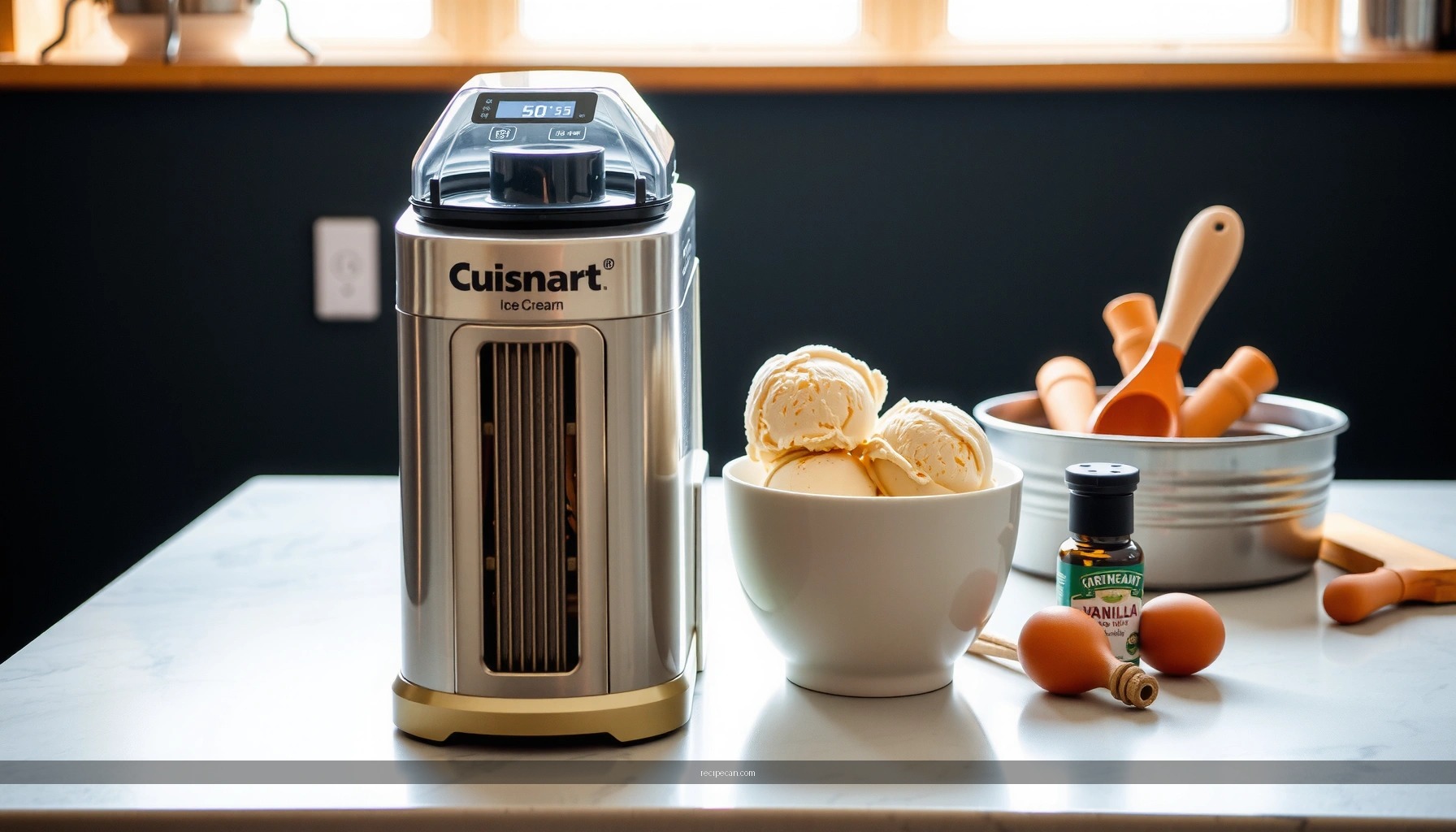
Even an excellent Cuisinart ice cream maker recipe will underperform if your equipment isn’t ready. The machine’s mixing bowl is the heat-exchange engine; it needs to be cold enough that the base begins freezing immediately during churn. That’s why pre-chilling isn’t optional.
Freeze the mixing bowl fully before starting.
For most Cuisinart units with a frozen bowl, you should:
– Place the bowl in the coldest part of your freezer.
– Freeze it long enough to reach full temperature, not just “feels frozen.”
– Avoid removing it early—each minute at room temperature erodes performance.
If your bowl isn’t fully chilled, you’ll commonly see:
– Slower thickening
– A runnier texture
– Smaller-than-expected volume increase
– More ice crystals after freezing
Prep ingredients in advance and chill the base for faster, smoother churn.
Chilling the base (custard or no-cook blend) to refrigerator-cold—ideally near 38–40°F / 3–4°C—helps the machine work at full efficiency. If you pour in a warm or lukewarm base:
– The bowl has to absorb too much heat
– Churning time extends
– The texture can become grainier or less aerated
A workflow that works in real kitchens.
– Make the base (custard cook or no-cook mix).
– Strain if needed (especially for custards) to remove any egg bits.
– Cover and chill until cold.
– Keep mix-ins chilled separately (fruit puree, cocoa paste, chopped chocolate).
– Start churn promptly once the cold bowl and cold base are ready.
This approach is the difference between “good results sometimes” and a repeatable process you can trust.
Follow the Core Ingredients and Measurements
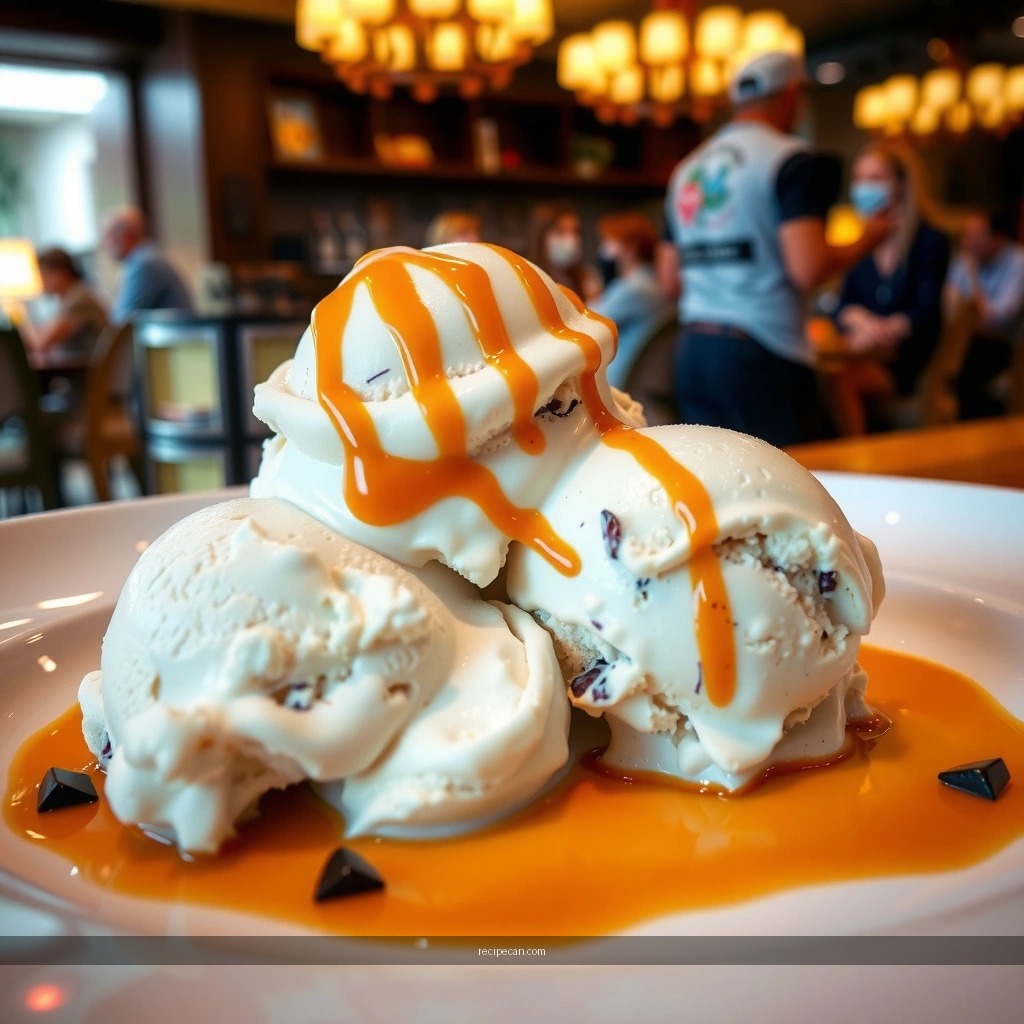
In churned ice cream, the ingredient ratios are not arbitrary—they control freezing point, emulsion stability, and how quickly the mixture thickens. Think of sugar, milk solids, fat, and stabilizers as a coordinated formulation.
Use sugar levels that balance sweetness and proper freezing.
Sugar doesn’t just sweeten; it also prevents water from freezing too solidly. If sugar is too low, the final product can feel hard and resistant to scooping. If it’s too high, it may stay overly soft. Reliable recipes typically target a balance where the ice cream churns well and freezes to a scoopable firmness after a night in the freezer.
Incorporate dairy solids properly.
Whether your base is cooked custard or no-cook sweet cream, make sure:
– Sugar is fully dissolved before churning.
– Cocoa is whisked smoothly (dry cocoa can create lumps and graininess).
– Any cooked stabilizer (like cornstarch) is simmered until thickened.
Add flavorings at the right stage for best taste.
Flavor timing matters because the goal is even distribution without dulling delicate notes.
– Vanilla: add after cooking (or after heating stops) to preserve aroma; then chill.
– Cocoa/chocolate: incorporate during the base step so it hydrates evenly; cool completely before churning.
– Fruit: puree should be strained and chilled. For watery fruits (like strawberries), consider adjusting sweetness and using a small amount of stabilizer or extra sugar to reduce iciness.
Example: how to “route” your flavor in a Cuisinart workflow.
– For vanilla custard, use vanilla once the base is warm but not hot, then chill fully.
– For chocolate, bloom cocoa in a small amount of warm liquid (or whisk into warm dairy) until smooth; then cool.
– For mint chip, steep mint in warm cream briefly, strain, then churn; fold in chocolate pieces at the end of churning or during the “add-ins” window if your model supports it.
A consistent base and controlled additions will yield smoother texture even as you experiment with flavor.
Churn Time, Consistency, and When It’s Done
The most common reason homemade churned ice cream turns out wrong isn’t ingredients—it’s churning too little or too long. Your Cuisinart ice cream maker recipe will specify a time range, but the better metric is the physical consistency of the mix as it churns.
Churn until the mixture thickens to soft-serve consistency.
At the correct stage, the mixture should:
– Look thicker and more aerated
– Hold ridges briefly
– Flow like soft-serve rather than run like a milkshake
If you stop too early, the mixture may not incorporate enough air and may freeze into a denser, icier block. If you continue too long, the mixture can become too thick and start warming internally (or over-freezing on contact), which can reduce smoothness.
Stop promptly to avoid over-churning and icy texture.
Over-churning can lead to:
– Excessively stiff texture during churn
– Larger-than-ideal ice crystals after freezing
– A less creamy mouthfeel even if the flavor is good
Use timing plus observation as your control system.
Typical churn windows vary with bowl temperature, base thickness, and recipe composition. Rather than chasing an exact minute count, use:
– Start time: when you pour the base into the fully frozen bowl
– Checkpoints: mid-churn and near the end
– Final cue: soft-serve thickness and a smoother appearance
If your machine is new or you’re changing base ratios (more milk, less cream, added fruit puree), expect churn time to shift.
Freeze to Set and Improve Texture
Churning creates the emulsion and air structure, but freezing to set is what finalizes scoopability and texture. Even if your ice cream looks right in the bowl, it usually needs additional time to firm up.
Transfer to a container and freeze to firm up.
After churning:
– Transfer to a freezer-safe container with a tight lid.
– Press a piece of parchment or plastic wrap directly onto the surface to minimize ice crystals from air exposure.
– Freeze until firm, commonly 6–12 hours (overnight is ideal).
Stir or re-smooth only if needed after initial freezing.
If your ice cream ends up slightly firmer than expected:
– Let it sit at refrigerator temperature briefly (10–20 minutes).
– Then scoop and serve.
– Only stir if the texture has separated; avoid repeatedly reworking it, as that can introduce additional crystal growth.
Best practice for mix-ins.
For items like chocolate chunks, crushed cookies, or toasted nuts:
– Add them near the end of churn or after churning (follow your model’s guidance).
– Keep mix-ins chilled to avoid melting the ice cream base during incorporation.
This step helps preserve clean chunks and maintains the creamy structure you worked hard to create.
Churn-to-Freeze Timing Checklist (Cuisinart Models with Frozen Bowl)
| # | Step | Target | Why It Matters |
|---|---|---|---|
| 1 | Freeze bowl | Fully frozen | Immediate freezing = finer crystals |
| 2 | Chill base | 3–5°C (37–41°F) | Reduces bowl heat-load |
| 3 | Churn | Soft-serve thickness | Optimal aeration before freezing |
| 4 | Stop churn | When ridges hold briefly | Prevents over-freezing on contact |
| 5 | Transfer immediately | Within 5 minutes | Maintains texture and aeration |
| 6 | Surface coverage | Parchment/plastic pressed on | Cuts freezer-air ice crystal formation |
| 7 | Freeze to firm | 6–12 hours | Improves scoop quality |
Troubleshooting Common Cuisinart Ice Cream Maker Issues
Even with a solid Cuisinart ice cream maker recipe, small process deviations can show up as texture problems. Use the fixes below to diagnose quickly.
Fix grainy texture by chilling longer or using a smoother base.
Graininess usually comes from larger ice crystals or undissolved components.
– Chill the base longer: if the mix isn’t fully cold, churn may not freeze uniformly.
– Strain custard: remove any egg solids to keep texture silky.
– Dissolve sugar thoroughly: especially in no-cook bases.
– Temper cocoa properly: whisk cocoa into warm dairy until smooth before chilling.
Avoid softness by checking bowl temperature and freezing time.
Soft ice cream after overnight freezing often points to formulation or equipment.
– Confirm bowl freeze: a partially frozen bowl reduces churn efficiency.
– Extend freeze time: some bases need a full overnight set for scoop firmness.
– Check sugar/stabilizer balance: overly low sugar or too little fat can keep the product softer than expected.
Quick diagnostic examples.
– The churned mixture looks right but freezes icy: base may be too low in stabilizing solids, or the base wasn’t cold enough before churning.
– The ice cream stays soft even after overnight: sugar level or stabilizer might be off for your preferences and freezer temperature.
– It’s buttery but grainy: often a mixing or cooling step issue—improve chilling and ensure smooth ingredient hydration.
If you want to improve results fastest, change only one variable per batch: bowl temperature timing, base cooling time, or churn stop point. This lets you clearly identify what drives improvement.
With the right Cuisinart ice cream maker recipe base, fully frozen bowl, and proper churn + freeze timing, you’ll consistently get rich, creamy homemade ice cream. Choose your flavor, measure carefully, churn to soft-serve thickness, then freeze to set—then make your next batch with mix-ins or new flavors.
Frequently Asked Questions
How do I use my Cuisinart ice cream maker recipe step-by-step for perfect results?
Start by chilling your Cuisinart ice cream maker base as directed (many models require 18–24 hours in the freezer). Prepare your Cuisinart ice cream maker recipe mixture—stir until fully combined and strain if you want a smoother texture. Churn according to your model’s time, then freeze the churned ice cream briefly if you want a firmer scoop. For best results, keep the bowl running and avoid opening the lid during the churn.
What are the best Cuisinart ice cream maker recipes for custard-style (Philadelphia-style) ice cream?
Custard-style ice creams use egg yolks to create a richer, thicker Cuisinart ice cream recipe with a smoother mouthfeel. A common approach is to warm dairy with sugar, whisk yolks separately, temper them, then cook until the mixture thickens slightly (usually around 170–175°F). Cool the custard completely before churning in your Cuisinart ice cream maker, and consider adding vanilla or salt at the end for balanced sweetness. Chilling the base well improves texture and prevents icy ice cream.
Which Cuisinart ice cream maker recipe ingredients help prevent icy, grainy texture?
Ice crystals often come from mixtures that are too warm, not properly chilled, or lacking enough sugar and fat to lower freezing point. In Cuisinart ice cream maker recipes, use full-fat dairy/cream and include sugar (or honey/light corn syrup) to improve scoopability. Alcohol-free bases churn best without skipping the recommended rest/chill time—at least 4–6 hours, or overnight. Also measure ingredients carefully and avoid adding warm mix-ins until after churning.
Why does my Cuisinart ice cream maker recipe turn out too soft or melts too quickly?
Soft texture can happen if the churn time is short, the base wasn’t cold enough, or the freezer isn’t set low enough. After churning your Cuisinart ice cream recipe, transfer to an airtight container and freeze 2–4 hours to firm up. If it melts quickly, you may need a higher-fat or slightly higher-sugar formula, since fat and sugar improve structure. Make sure you’re using the correct bowl type and that it’s fully frozen before starting.
What troubleshooting steps should I follow if my Cuisinart ice cream maker isn’t churning properly?
If your Cuisinart ice cream maker isn’t churning, first confirm the bowl is fully frozen and the machine is assembled correctly. Check that your ice cream base is thoroughly chilled and within the recommended temperature range before pouring—warm mix reduces freezing and slows the churn. If the mixture looks too thin, re-check your measurements for milk/cream and sweeteners in your Cuisinart ice cream maker recipe. Finally, avoid overfilling the bowl and follow the recommended processing time for your specific model.
References
- Google Scholar Google Scholar
https://scholar.google.com/scholar?q=Cuisinart+ice+cream+maker+recipe - Google Scholar Google Scholar
https://scholar.google.com/scholar?q=ice+cream+maker+churning+process+homemade+ice+cream+recipe - Google Scholar Google Scholar
https://scholar.google.com/scholar?q=homemade+ice+cream+food+safety+pasteurized+eggs+dairy - Ice cream
https://en.wikipedia.org/wiki/Ice_cream - Ice cream | Definition, History, & Production | Britannica
https://www.britannica.com/topic/ice-cream - https://pubmed.ncbi.nlm.nih.gov/?term=ice+cream+composition+microstructure+review
https://pubmed.ncbi.nlm.nih.gov/?term=ice+cream+composition+microstructure+review - https://pubmed.ncbi.nlm.nih.gov/?term=ice+cream+ice+crystal+size+freezing+and+melting
https://pubmed.ncbi.nlm.nih.gov/?term=ice+cream+ice+crystal+size+freezing+and+melting - ice cream microstructure air cell stabilizer – Search Results – PMC
https://www.ncbi.nlm.nih.gov/pmc/?term=ice+cream+microstructure+air+cell+stabilizer - https://www.sciencedirect.com/search?qs=ice%20cream%20making%20churning%20recipe%20microstructure
https://www.sciencedirect.com/search?qs=ice%20cream%20making%20churning%20recipe%20microstructure - Lactose intolerance – Symptoms & causes – Mayo Clinic
https://www.mayoclinic.org/diseases-conditions/lactose-intolerance/symptoms-causes/syc-20374232