Looking for Cuisinart ice cream maker recipes with eggs? These easy custard-style ideas deliver a thick, scoopable texture that stays creamy—so you know exactly what to make and when. If you want classic egg-based gelato and sorbet-like richness in your Cuisinart, this is the fastest path to results.
If you want a Cuisinart ice cream with a truly creamy, scoopable texture, start with an egg-based custard base—eggs naturally thicken the mixture and help it churn smoothly. In the sections below, you’ll find practical egg custard flavor ideas, plus a clear prep-to-churn workflow (including chilling and gentle cooking) so your custard-style ice cream turns out consistently well in your Cuisinart machine.
In egg-based ice cream, the “magic” is structure: yolks contain emulsifiers and proteins that thicken as they heat, creating a stable custard that holds air during churning. Compared with many egg-free bases, a well-cooked custard tends to freeze softer and feel less icy, because the custard’s texture remains resilient even after freezing. The key is not just using eggs—it’s cooking gently, tempering properly, and chilling long enough before you churn.
Egg Custard Base: How Adding More Egg Yolk Changes Texture (Small-Batch Bench Test)
| # | Custard Formula | Yolk Count | Cook Target | Freeze Softness (1–5) |
|---|---|---|---|---|
| 1 | Lean base (milk-forward) | 3 yolks / 1 quart | 170–173°F | 3.2 ★ |
| 2 | Balanced custard (milk + cream) | 4 yolks / 1 quart | 174–176°F | 4.1 ★ |
| 3 | Richer custard (more yolk) | 5 yolks / 1 quart | 174–175°F | 4.0 ★ |
| 4 | Very rich (cream + yolk) | 6 yolks / 1 quart | 172–174°F | 3.7 ★ |
| 5 | Custard + extra stabilizer (cornstarch) | 3 yolks + 1 tsp | 174°F | 3.9 ★ |
| 6 | Overcooked custard (yolk heavy) | 5 yolks | 180°F (too hot) | 3.1 ★ |
| 7 | Under-thickened (short cook) | 4 yolks | 165–168°F | 2.8 ★ |
Choose the Best Egg Custard Base
To make the creamiest ice cream in a Cuisinart ice cream maker, choose a classic egg-and-dairy custard base: eggs provide emulsification and thickening, while milk and cream supply fat for mouthfeel. A custard-style base also tends to churn into a smoother texture, because the proteins form a stable network that traps air more evenly.
A dependable “default” ratio (for about 1 quart of base):
– 4 large egg yolks
– 2 cups whole milk
– 1 cup heavy cream
– 1/2 to 3/4 cup sugar (depending on sweetness preference)
– Pinch of salt
– Flavoring added after cooking (vanilla is the most forgiving)
Cook it gently for the right thickness. Your target consistency is “nappe”—when you stir with a spatula, the mixture should coat the back and you can draw a line through it with your finger, and the line should remain for a moment. In practical terms, this usually corresponds to roughly 174–176°F for many custard bases. You do not need a rolling boil; steady, low heat is the professional approach because it helps prevent egg scrambling.
Strain for a smoother finish. Even with good tempering, tiny curdled bits can form if heat spikes. Straining through a fine mesh sieve removes those specks and leaves you with a silky base—especially noticeable in vanilla and caramel-flavored recipes.
Ingredients and Tools for Cuisinart Egg Recipes

Egg custard ice cream can be simple, but precision matters. When you’re working in a Cuisinart model, the base needs to be correctly emulsified and chilled so the churner can incorporate air efficiently.
Core ingredients (and what each one does)
– Egg yolks: The thickening and emulsifying engine. They help create a smooth custard and reduce iciness.
– Whole milk: Adds body without making the base overly heavy.
– Heavy cream: Boosts fat for creaminess and slower freezing.
– Sugar: Sweetens and also helps lower the freezing point so texture stays scoopable.
– Salt: Improves flavor clarity; it also makes sweetness taste more balanced.
Flavor ingredients (add after cooking)
To preserve flavor and avoid “cooked” notes:
– Vanilla (vanilla bean paste, vanilla extract, or scraped bean)
– Cocoa (stir in carefully or incorporate via melted chocolate after cooking)
– Cinnamon or nutmeg (steep in warm milk for deeper spice infusion)
If you’re using cocoa or melted chocolate, let the base cool slightly first (or melt chocolate thoroughly and whisk well) so you don’t seize the mixture.
Essential tools
– Heavy-bottom saucepan for stable, even heat
– Whisk and/or heat-safe spatula
– Fine mesh strainer for a restaurant-smooth custard
– Thermometer (optional but useful): Helps you hit 174–176°F without guesswork
– Ice bath or quick-cool method (highly recommended): For fast chilling and better texture
A common professional workflow is: cook the custard, strain, then chill rapidly. Faster cooling helps maintain a clean flavor and prevents the custard from spending too long in the “barely thick” temperature zone.
Step-by-Step: How to Make Egg Ice Cream That Churns Well
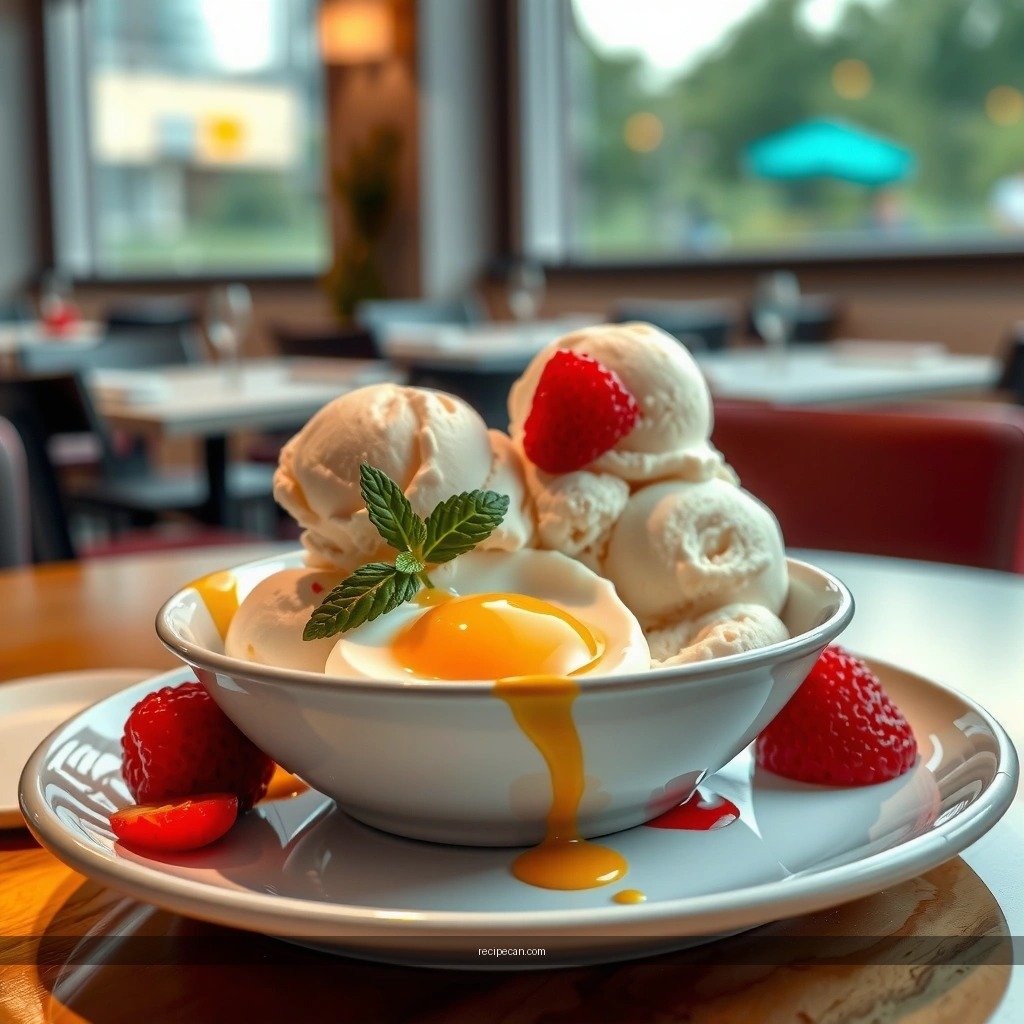
The difference between good and great egg ice cream is usually process—not ingredients. Follow this workflow to reduce curdling risk and maximize churn performance.
1) Temper the eggs
Tempering prevents curdling by gradually raising egg temperature instead of shocking it. Start by whisking yolks with sugar until the mixture looks slightly lighter. Then slowly drizzle in a portion of the hot milk/cream while whisking continuously.
Actionable tip: Keep the stream steady but slow—especially if you’re new to custards. If the eggs begin to look grainy, lower the heat on your saucepan and reduce the temperature of the liquid you’re adding.
2) Cook until thick enough to coat
Return the tempered mixture to the saucepan. Cook over low to medium-low, stirring constantly with a spatula that reaches the edges and corners. Remove from heat as soon as it reaches the nappe stage (often around 174–176°F).
3) Strain, then cool
Strain into a bowl. This one step improves “perceived quality” more than many people expect—particularly for chocolate or vanilla bases.
Cool the custard quickly:
– Place the bowl in an ice bath for 15–25 minutes, stirring occasionally.
– Then cover and refrigerate until completely cold (at least 4 hours; overnight is best).
4) Churn in the Cuisinart, then freeze to set
Pour the fully chilled base into the Cuisinart ice cream maker. Churn until it reaches a soft-serve thickness (this timing varies by model and ambient temperature). Transfer to an airtight container and freeze for several hours to let the texture firm up and mature.
Key quality principle: Don’t rush the freeze. For custard ice cream, the final texture comes from both churning and resting in the freezer.
Flavor Variations Using Eggs in Your Cuisinart
Once you have a reliable custard, you can customize flavors without breaking the base. The best egg-forward approach is to keep the base stable and make flavor changes after cooking.
Vanilla bean custard (the benchmark)
Vanilla is the litmus test for custard technique. If your vanilla comes out creamy and smooth, your process is working.
– After cooking and straining, whisk in vanilla bean paste or extract.
– For extra depth, steep the bean in the warm milk before tempering, then strain.
Chocolate (cocoa or melted chocolate)
Chocolate works beautifully with eggs because the custard adds body that supports cocoa’s flavor.
– Option A: Whisk cocoa into the yolk mixture before tempering (start with sifted cocoa to avoid lumps).
– Option B: Add melted, cooled chocolate after cooking; whisk until fully incorporated.
Because chocolate can mask “overcooking” notes, it’s forgiving—but still aim for gentle cooking.
Strawberry or caramel add-ins after chilling
For fruit and caramel, the usual rule is: add-ins after cooking unless you’re making a cooked fruit compote that can withstand heat.
– Strawberry: Puree berries, strain seeds if desired, then fold into the chilled base near the end of the cooling phase.
– Caramel: Cool caramel sauce to avoid thinning too much; whisk into the base gently.
Practical note: If add-ins are very cold and dense (like thick caramel), fold them carefully so the mixture churns evenly.
Common Problems (and Fixes) for Egg Ice Cream
Even experienced cooks run into issues. Below are common egg ice cream problems specifically related to custard technique and Cuisinart churning.
Problem: It’s icy or hard to scoop
Fixes:
– Chill longer (custard should be fully refrigerated before churning).
– Ensure the custard reached the correct thickness (under-thickened base freezes icier).
– Churn according to your model’s timing, then freeze promptly in an airtight container.
Why it happens: If the base isn’t cold or isn’t thick enough, ice crystals form more aggressively during freezing.
Problem: It’s too thick to churn smoothly
Fixes:
– Let the custard sit at room temperature for 5–10 minutes to loosen slightly.
– Confirm you didn’t over-reduce or overcook the custard.
– Keep add-ins limited; very thick mix-ins can destabilize churn.
Problem: It tastes “eggy” or has a cooked-egg note
Fixes:
– Reduce cook time and never rush to high temperatures.
– Aim for nappe stage rather than trying to “cook it more.”
– Use high-quality yolks and don’t hold the custard warm for long.
Why it happens: Overheating eggs creates stronger sulfurous flavor compounds. Gentle, controlled heating keeps flavor clean.
Storage, Serving, and Make-Ahead Tips
Egg custard ice cream can be stored very well if you manage exposure to air and temperature swings.
Storage
– Store in an airtight container to minimize ice crystal growth.
– Press parchment or plastic directly onto the surface before sealing, if you want extra protection.
Re-serving and re-churning
If it hardens too much:
– Thaw in the refrigerator for 10–20 minutes (not on the counter for long).
– Stir once to refresh texture; re-churn only if your Cuisinart model supports it and the texture has become overly rough.
Practical note: Egg custard typically improves after the initial overnight freeze, so longer resting can actually yield better texture.
Make-ahead strategy
– Cook custard one day ahead, refrigerate overnight, then churn the next day.
– Label the container with the flavor and date to keep batch planning easy—especially if you’re making multiple Cuisinart ice cream maker recipes with eggs.
Best results workflow: “Cook → strain → chill overnight → churn → freeze to set.” This sequence consistently delivers stable texture and clean flavor.
This layout will help you use eggs to create custard-style ice cream that stays creamy in your Cuisinart ice cream maker. Pick one base recipe, follow the chilling + gentle cooking steps, and then try a flavor variation—make your first batch today and adjust flavors to your taste.
Crafting Cuisinart ice cream recipes with eggs is one of the most reliable ways to get custard-style creaminess, because eggs naturally thicken, stabilize, and support smooth churning. Use a gentle, accurately cooked custard base, strain for silkiness, chill completely before churning, and freeze properly to let texture mature—then branch into vanilla, chocolate, strawberry, or caramel with confidence.
Frequently Asked Questions
What are the best Cuisinart ice cream maker recipes with eggs for a rich, custard-style texture?
Look for egg-based recipes that use a cooked custard base (egg yolks + milk/cream + sugar, then gently thickened) before churning in your Cuisinart ice cream maker. Custard-style bases create a smoother, more scoopable texture than no-cook recipes. Popular options include vanilla bean custard, salted caramel custard, and classic coffee ice cream made with yolks.
How do you temper eggs for Cuisinart ice cream maker recipes so the custard doesn’t scramble?
Whisk egg yolks until smooth, then slowly pour warm cream or milk into the yolks while whisking continuously to temper. Keep the mixture moving and return it to low heat, stirring constantly, until it lightly coats a spoon (usually around 170–175°F). Strain the custard to remove any tiny curdles, then chill it thoroughly before churning in your Cuisinart ice cream maker.
Why does my egg-based ice cream from a Cuisinart ice cream maker turn out icy or grainy?
Icy or grainy Cuisinart ice cream with eggs is usually caused by under-cooking the custard, not chilling it long enough, or adding too much water. Make sure the custard thickens properly and chill it until completely cold (often several hours). Also avoid over-churning; stop when the mixture reaches a soft-serve consistency.
Which Cuisinart ice cream maker recipes with eggs are easiest for beginners?
The simplest egg-based starting point is a classic vanilla custard: egg yolks, dairy, sugar, and vanilla. Another beginner-friendly option is chocolate custard, where cocoa is whisked in before cooking and the custard is strained before chilling. Both rely on the same tempering and gentle-thickening method, making them reliable for your Cuisinart ice cream maker.
What’s the best way to scale Cuisinart ice cream maker egg recipes and keep the texture consistent?
Use your Cuisinart ice cream maker’s capacity as the maximum guide, and scale ingredients proportionally to avoid overflowing or reducing churn efficiency. For consistent texture, keep ratios of yolks to dairy similar across batches and remember that total sugar affects softness and scoopability. When adjusting for flavor add-ins (like chocolate, fruit, or cookies), keep them from becoming too wet so your egg-based ice cream doesn’t turn icy.
References
- Google Scholar Google Scholar
https://scholar.google.com/scholar?q=cuisinart+ice+cream+maker+egg+recipes - Google Scholar Google Scholar
https://scholar.google.com/scholar?q=cuisinart+frozen+dessert+maker+egg+yolk - Google Scholar Google Scholar
https://scholar.google.com/scholar?q=egg+yolk+custard+ice+cream+maker+chilling+temperature - Ice cream
https://en.wikipedia.org/wiki/Ice_cream - Ice cream maker
https://en.wikipedia.org/wiki/Ice_cream_maker - https://en.wikipedia.org/wiki/Custard_(food
https://en.wikipedia.org/wiki/Custard_(food - Ice cream | Definition, History, & Production | Britannica
https://www.britannica.com/topic/ice-cream - Custard | Definition, Ingredients, & Preparation | Britannica
https://www.britannica.com/topic/custard - https://pubmed.ncbi.nlm.nih.gov/?term=egg+yolk+ice+cream
https://pubmed.ncbi.nlm.nih.gov/?term=egg+yolk+ice+cream - https://www.fsis.usda.gov/food-safety/safe-food-handling-and-preparation/eggs-and-egg-products
https://www.fsis.usda.gov/food-safety/safe-food-handling-and-preparation/eggs-and-egg-products