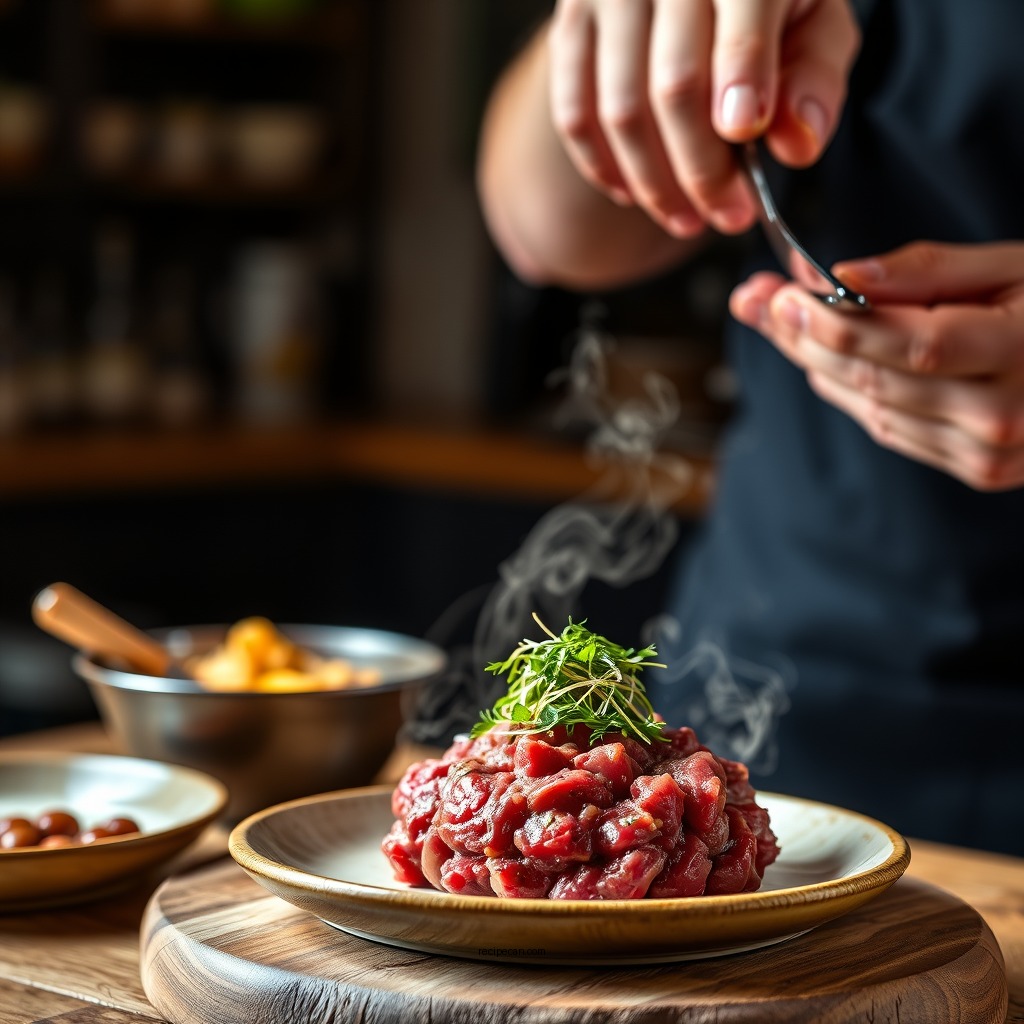
Steak tartare is an exquisite dish that allows the natural flavors of high-quality raw beef to shine. This classic French delicacy is not only a feast for the palate but also a visual delight, often garnished with vibrant accompaniments. In this guide, you will discover the steps to prepare a perfect steak tartare at home. With fresh ingredients and straightforward techniques, you will be able to impress your guests with this sophisticated dish.
Understanding Steak Tartare
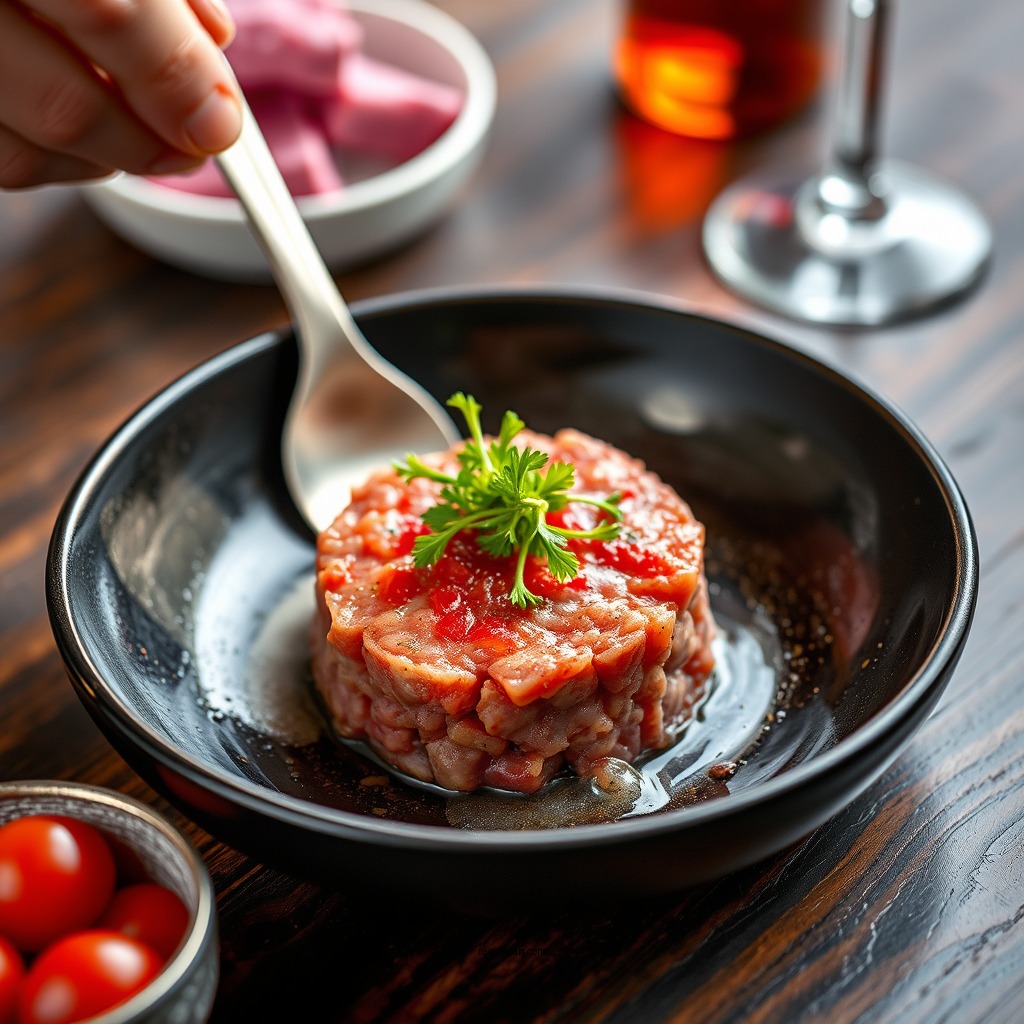
Steak tartare has its roots in French cuisine, where it is revered for its simplicity and elegance. The dish is traditionally made with the finest cuts of raw beef, which are either finely chopped or ground to achieve a tender texture. A hallmark of steak tartare is the inclusion of a raw egg yolk placed atop the mixture, enhancing its rich flavor and luxurious mouthfeel. This dish not only showcases the quality of the ingredients but also reflects the artistry of French culinary traditions. When prepared correctly, steak tartare is a testament to the beauty of raw food, making it a popular choice in upscale restaurants and gourmet gatherings.
Choosing the Right Beef

When it comes to steak tartare, the choice of beef is paramount. Opt for fresh, high-quality cuts such as filet mignon or sirloin, both of which are known for their tenderness and robust flavor. The quality of the beef directly impacts the taste and safety of the dish, so it is advisable to purchase your meat from a trusted butcher who can guarantee freshness. Look for bright red meat with a firm texture and a slight sheen, indicating that it is fresh. Avoid any cuts that appear dull or have a brownish hue, as these may not be suitable for raw consumption.
Essential Ingredients
The beauty of steak tartare lies not only in the beef but also in the variety of accompaniments that enhance its flavor. In addition to the beef, some essential ingredients include:
– Capers: These briny little buds add a delightful tang and crunch.
– Shallots: Finely chopped shallots introduce a mild onion flavor that complements the beef.
– Dijon mustard: This classic French mustard provides a zesty kick and depth of flavor.
– Worcestershire sauce: A few dashes of this sauce lend umami and complexity to the tartare.
– Fresh herbs: Chopped parsley or chives not only enhance flavor but also add a pop of color.
– Salt and pepper: These basic seasonings bring out the natural flavors of the beef.
By selecting high-quality ingredients and balancing flavors, you can create a steak tartare that is truly unforgettable.
Essential Ingredients for Steak Tartare
| # | Ingredient | Purpose | Flavor Profile |
|---|---|---|---|
| 1 | Beef | Main Ingredient | Rich, Savory |
| 2 | Capers | Add Brininess | Tangy, Salty |
| 3 | Shallots | Flavor Base | Mild, Sweet |
| 4 | Dijon Mustard | Tanginess | Zesty, Pungent |
| 5 | Worcestershire Sauce | Umami Depth | Savory, Tangy |
| 6 | Herbs | Garnish | Fresh, Earthy |
Preparing the Beef
Before you dive into mixing your ingredients, it is crucial to prepare the beef properly. Start by trimming any visible fat or silver skin from the cut of beef. This step ensures that the final dish is tender and free from unwanted textures. Once trimmed, finely chop the beef into small pieces using a sharp knife or, if preferred, use a meat grinder for a finer consistency.
Food safety is paramount when dealing with raw meat. Make sure that all utensils, cutting boards, and surfaces are sanitized before and after handling the beef. After preparing the meat, keep it chilled until you are ready to mix with the other ingredients to maintain freshness and prevent bacterial growth.
Mixing the Tartare
Once the beef is prepared, it’s time to bring all the components together. In a mixing bowl, combine the finely chopped beef with your chosen mix-ins such as capers, shallots, and a dollop of Dijon mustard. Add a few dashes of Worcestershire sauce for added depth of flavor. Season generously with salt and freshly cracked black pepper, adjusting the amounts to taste.
For an extra layer of richness, consider drizzling a small amount of high-quality olive oil into the mixture. Combine all ingredients thoroughly but gently, ensuring the beef remains tender and the flavors are evenly distributed. Taste and adjust seasoning as needed, keeping in mind that the final dish should have a balanced flavor profile that highlights the quality of the beef.
Flavor Balance in Steak Tartare
Serving Suggestions
To serve steak tartare, it is essential to maintain its freshness and visual appeal. The dish should be served chilled and can be plated in a variety of ways. A popular method is to mold the tartare into a round shape using a ring mold, allowing for an elegant presentation. Place a raw egg yolk in the center, creating a striking contrast against the vibrant beef mixture. Garnish with freshly chopped herbs for added color and aroma.
To accompany the tartare, consider serving it with toasted bread or crispy crackers. These additions provide a delightful texture contrast and a vehicle for enjoying the rich flavors of the tartare. For extra flair, you can also serve a side of pickled vegetables or a light salad to balance the richness of the dish.
Tips for Enjoying Steak Tartare
When it comes to pairing beverages with steak tartare, consider opting for a light red wine or a crisp white wine. The acidity in white wine can cut through the richness of the beef, while a light red can complement the dish’s flavors without overpowering them.
Additionally, a side salad made with fresh greens and a light vinaigrette can provide a refreshing contrast to the tartare’s richness. This balance of flavors will elevate your dining experience, making the meal even more enjoyable.
Steak tartare is not merely a dish; it is an experience that emphasizes the artistry of raw ingredients. By following the steps outlined in this guide, you can create a restaurant-quality steak tartare in the comfort of your home. Gather your fresh ingredients, embrace the culinary process, and impress your guests with this timeless classic!
Frequently Asked Questions
What ingredients are essential for a classic steak tartare recipe?
A classic steak tartare recipe typically requires high-quality raw beef, such as tenderloin or sirloin, finely chopped or ground. Additional essential ingredients include egg yolk, Dijon mustard, Worcestershire sauce, capers, shallots, and fresh herbs like parsley. Ensuring the freshness and quality of the meat is crucial for the dish’s safety and flavor.
How do you prepare steak tartare safely to avoid foodborne illness?
To prepare steak tartare safely, start by selecting the freshest beef from a reputable butcher, ideally one that specializes in raw meat dishes. Always keep the meat chilled until just before preparation, and ensure all utensils and surfaces are sanitized. It’s also advisable to consume the dish immediately after preparation for maximum safety and flavor.
Why is the choice of meat important in a steak tartare recipe?
The choice of meat is vital in a steak tartare recipe because it directly affects the dish’s flavor, texture, and safety. High-quality cuts like tenderloin or sirloin are preferred for their tenderness and minimal connective tissue. Using fresh, grass-fed or organic beef can enhance the overall taste and ensure a more enjoyable eating experience.
What are the best side dishes to serve with steak tartare?
The best side dishes to serve with steak tartare include crispy French fries, toasted baguette slices, or a light green salad to balance the richness of the dish. Additionally, pickles or a tangy vinaigrette can complement the flavors of the tartare, enhancing the overall dining experience.
Which variations of steak tartare can I try for a unique twist?
For a unique twist on traditional steak tartare, consider variations such as adding Asian flavors with sesame oil, soy sauce, or wasabi. You can also experiment with different meats like tuna or lamb, or incorporate ingredients like avocado or truffle oil for an elevated taste. These creative additions can bring new dimensions to the classic recipe while maintaining its core essence.
References
- Steak tartare
https://en.wikipedia.org/wiki/Steak_tartare - https://www.bbc.co.uk/food/recipes/steak_tartare_45447
https://www.bbc.co.uk/food/recipes/steak_tartare_45447 - https://www.nytimes.com/2021/06/16/magazine/steak-tartare-recipe.html
https://www.nytimes.com/2021/06/16/magazine/steak-tartare-recipe.html - https://www.sciencedirect.com/topics/food-science/steak-tartare
https://www.sciencedirect.com/topics/food-science/steak-tartare - https://www.ncbi.nlm.nih.gov/pmc/articles/PMC4782036/
https://www.ncbi.nlm.nih.gov/pmc/articles/PMC4782036/ - https://www.mayoclinic.org/healthy-lifestyle/nutrition-and-healthy-eating/in-depth/raw-foods/art-20046040
https://www.mayoclinic.org/healthy-lifestyle/nutrition-and-healthy-eating/in-depth/raw-foods/art-20046040 - Steak tartare | Ingredients, Origin, & Sauce | Britannica
https://www.britannica.com/topic/steak-tartare - Google Scholar Google Scholar
https://scholar.google.com/scholar?q=steak+tartare+recipe - Google Scholar Google Scholar
https://scholar.google.com/scholar?q=steak+tartare+history - https://scholar.google.com/scholar?q=raw+meat+dishes+health+risks Google Scholar
https://scholar.google.com/scholar?q=raw+meat+dishes+health+risks