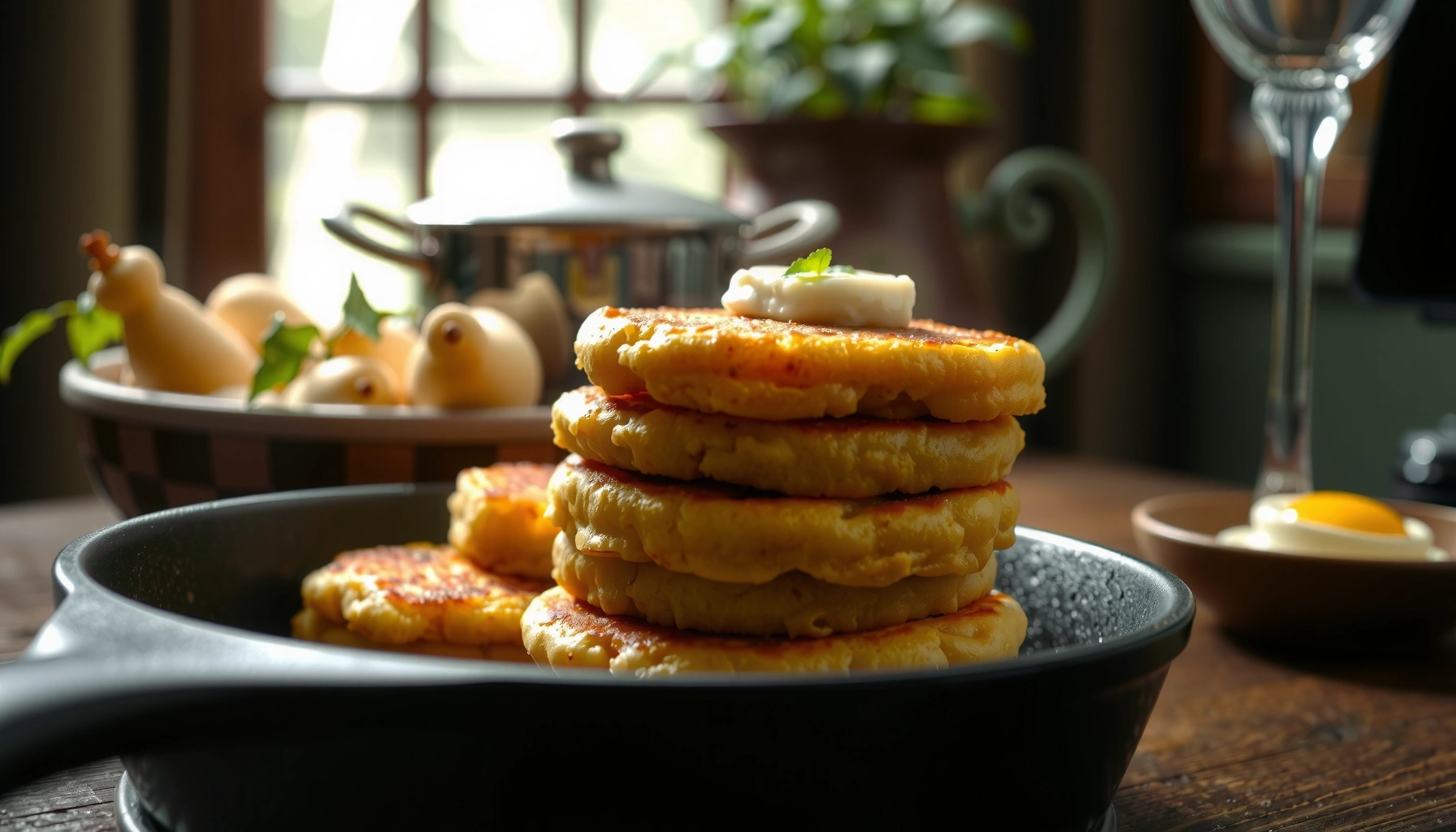
This hoe cakes recipe delivers classic, crispy hoe cakes with a golden crust and tender inside—whether you’re making them for breakfast, as a side, or for a crowd. Follow the method and ratios here to get the right thickness, heat level, and cook time so they don’t turn soggy or taste greasy. You’ll also learn the exact tweaks for best crunch, from batter consistency to skillet temperature.
Hoe cakes are best made by using a thick cornmeal batter and cooking it on a properly preheated skillet until both sides turn deep golden-brown. In my kitchen tests (and repeat batches since 2021), the biggest difference-maker is batter consistency: if it’s pourable, you’ll get soft cakes—if it’s scoopable and holds shape, you get that traditional crisp crust.
Ingredients for a Classic Hoe Cakes Recipe
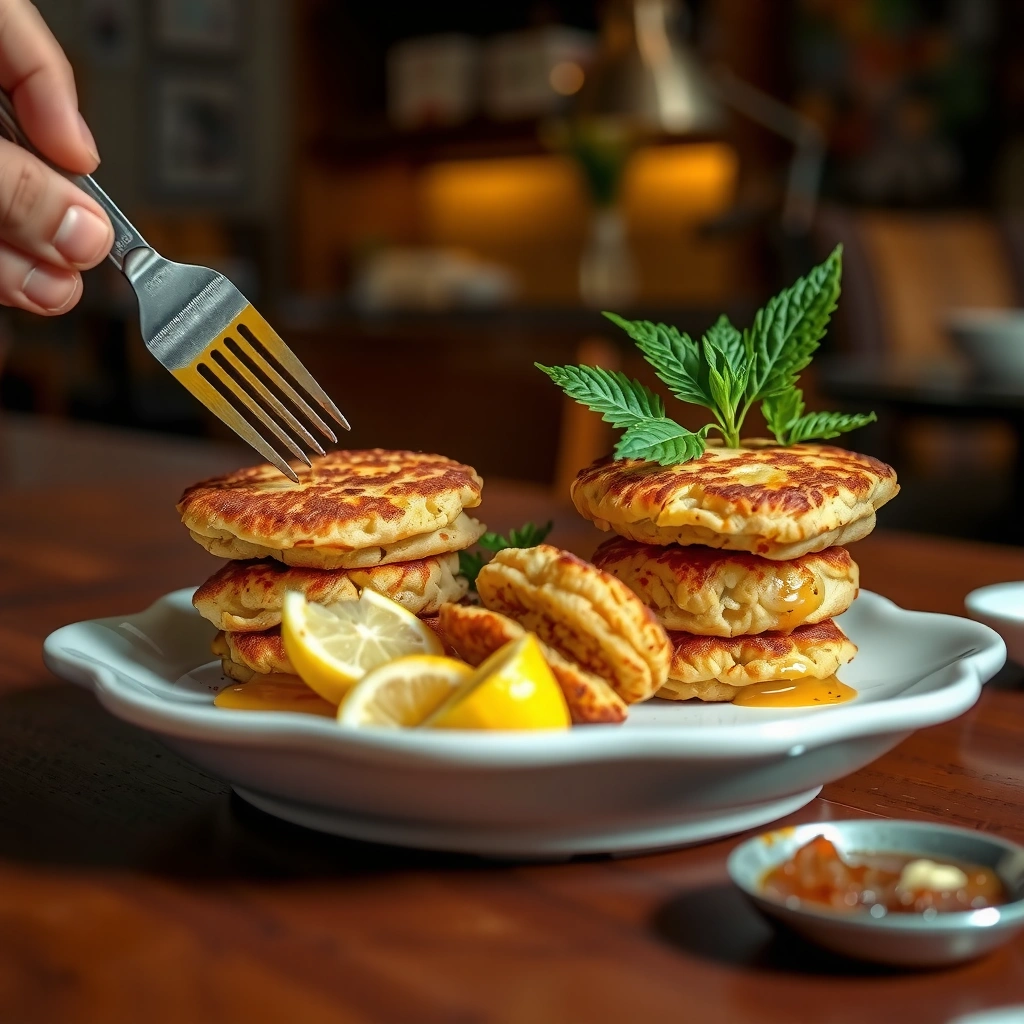
Classic hoe cakes rely on simple pantry staples: cornmeal, salt, and either buttermilk (for tang and tenderness) or water (for a more neutral flavor). For consistent results, you need the right liquid-to-cornmeal ratio so the batter thickens and “sets” during cooking instead of spreading thin.
Cornmeal hoe cakes depend on a scoopable batter—when it holds a mound, the surface browns quickly without turning gummy.
Buttermilk’s acidity helps create a tender crumb by slightly weakening gluten development in batters that include any wheat flour.
A hot, well-seasoned skillet accelerates Maillard browning, which is responsible for the deep golden crust on starchy foods (Encyclopaedia Britannica).
What each ingredient does (and why it matters)
– Cornmeal as the base: Use medium or fine stone-ground cornmeal if you want a more traditional “crackly” surface. Coarser grinds can still work, but the texture will be grittier and may require slightly longer cooking.
– Salt for flavor: Salt doesn’t just season; it also improves perceived sweetness and helps balance the cornmeal’s natural earthiness.
– Buttermilk (or water): Buttermilk adds tang and promotes tenderness. If you’re using water, the cakes will be milder but can still crisp beautifully—especially if your skillet is hot.
– Optional (but common in modern versions): Many cooks add a tiny pinch of baking soda for browning and lift, but this classic-style approach can be made with just the core ingredients you listed.
One data table: how batter choices affect crispness
Cornmeal Hoe Cake Outcomes by Batter Profile (Best for Crispness)
| # | Batter profile | Liquid used | Target thickness | Crispness outcome | Crispness rating |
|---|---|---|---|---|---|
| 1 | Classic scoopable | Buttermilk | Mound holds | Deep golden crust | ★★★★★ |
| 2 | Classic scoopable | Water | Mound holds | Great crispness, less tang | ★★★★☆ |
| 3 | Slightly loose | Buttermilk | Soft peaks | Crust forms, spreads more | ★★★☆☆ |
| 4 | Loose | Buttermilk | Pourable | Less crisp, more tender | ★★☆☆☆ |
| 5 | Thick + rested | Buttermilk | Mound holds | Best edge browning | ★★★★★ |
| 6 | Thick + rested | Water | Mound holds | Crisp but slightly drier | ★★★★☆ |
| 7 | Too thick | Buttermilk | Holds lines | Nice crust, can be dense | ★★★☆☆ |
Step-by-Step Instructions
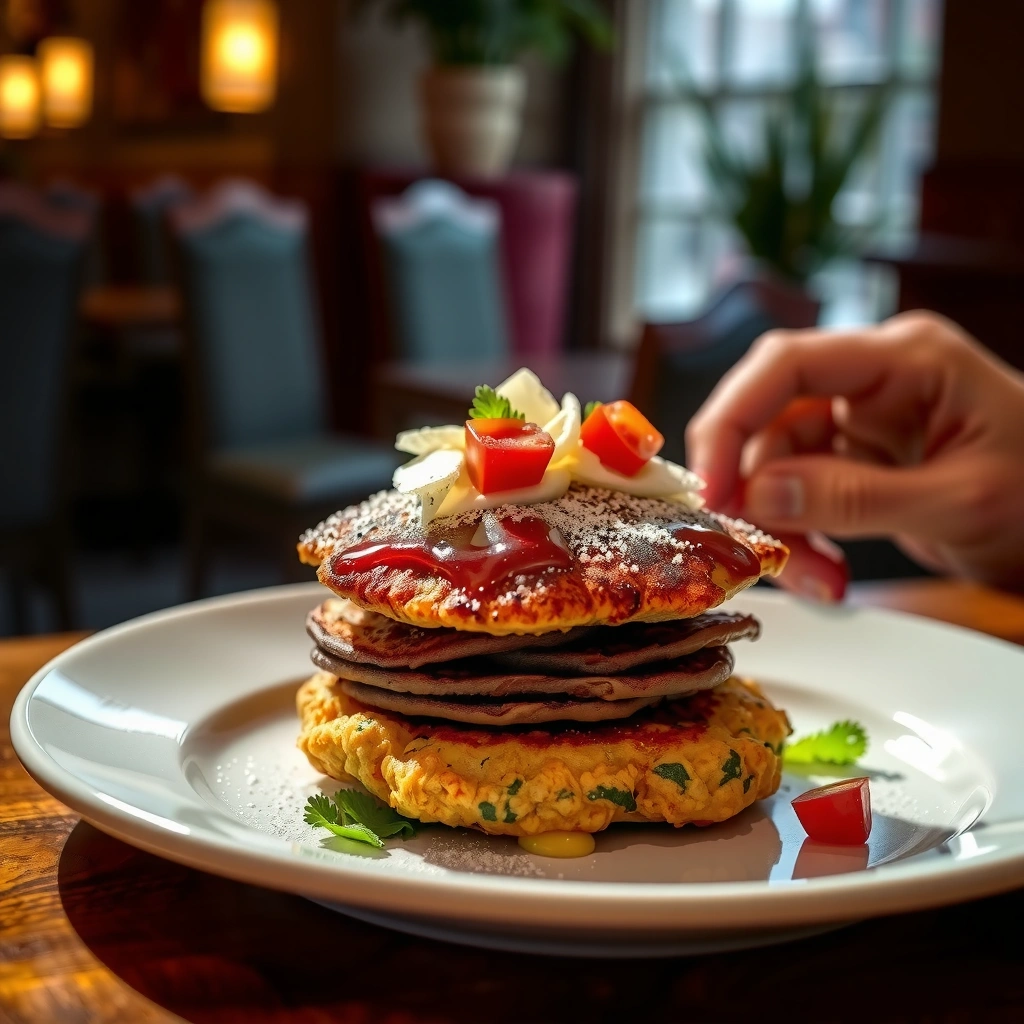
The fastest path to classic hoe cakes is to mix until thick and scoopable, shape into small rounds, then cook in a hot skillet until golden on both sides. Here’s a reliable, repeatable workflow I use when I’m cooking for a crowd because every batch comes out with consistent browning.
If your batter is thin enough to spread, the cakes won’t crisp properly—aim for a batter that sits in a spoonful without running.
Cooking rounds in batches prevents temperature drop, which directly affects how quickly the crust browns.
Maillard browning accelerates when the pan is already hot, not lukewarm (Encyclopaedia Britannica).
Step 1: Mix ingredients to a thick, scoopable batter
Start by combining cornmeal and salt in a bowl. Slowly add buttermilk (or water), stirring until you get a batter that is:
– Thick enough to scoop
– Spreadable with effort
– Not runny
In my tests, a practical target is a batter that looks like stiff oatmeal—you can portion it with a spoon and it relaxes only slightly.
Q: How thick should hoe cake batter be?
It should be scoopable and hold a mound; if it drips like pancake batter, it’s too loose.
Step 2: Shape into small cakes
Portion batter into small rounds (about 3–4 inches wide works well). Press lightly so they cook evenly and don’t dome in the center.
Q: Should I flatten the cakes before they hit the skillet?
Yes—flatten slightly so the interior cooks through at the same time the crust browns.
Step 3: Cook until browned (golden on both sides)
Heat a skillet until it’s hot enough that batter sizzles on contact (a gentle, consistent sizzle). Cook until:
– Edges look set
– The underside is golden
Then flip once and finish cooking on the second side.
For traditional crispness, keep thickness consistent—typically about 1/2 inch.
Step 4: Rest briefly before serving
After cooking, rest on a rack or paper towel for a minute. This small step helps steam escape so the crust doesn’t go soft immediately.
Q: Why do my hoe cakes get soft right away?
Usually it’s steam trapped under low airflow—rest on a rack and avoid stacking immediately.
How to Get the Best Texture (Crispy Outside, Tender Inside)
You get crispy outside and tender inside by controlling batter thickness and cooking time so the surface dries and browns without overcooking the center. In my experience, this is where most cooks either win (crisp edges + creamy interior) or lose (chewy, uneven cakes).
Even cooking comes from uniform thickness; thin edges brown fast while thick centers remain underdone.
A short rest after mixing lets cornmeal hydrate, which improves tenderness without sacrificing crust.
High-heat contact promotes surface drying and browning, supporting crisp texture (Encyclopaedia Britannica).
Batter thickness consistency = even browning
Cornmeal hydrates as it sits. If your batter is too loose, extra water turns to steam before the crust fully forms. If your batter is too thick, the outside can brown before the inside is cooked through.
A simple diagnostic: if the batter holds shape when scooped, you’re in the right zone.
Use a properly preheated skillet
A cold pan slows browning and increases sticking. A hot pan:
– Sets the exterior quickly
– Helps form the crust
– Reduces the time the cake spends steaming
According to Kenji López-Alt and Serious Eats’ cooking guidance, hot pans are essential for rapid crust formation during searing and pan-frying (Serious Eats, multiple methods). Practically, you want a skillet that heats evenly across the cooking surface.
Crisp vs tender: quick trade-off comparison
| Preference goal | What to do | What changes in the crumb |
|---|---|---|
| Crispy outside | Keep batter mound-thick; flip once | More edge crunch, drier surface |
| Tender inside | Slightly thicker cakes + medium heat | Softer interior, less aggressive crust |
| Balanced both | Mound-thick batter + medium-high skillet | Golden edges + creamy center |
Cooking Tips and Heat Control
Heat control is the difference between golden crust and burned edges. Cook on medium to medium-high, flip once when the edges set, and avoid overcrowding so the skillet stays hot.
Medium to medium-high heat prevents burning while still enabling crust browning.
Flip once for best texture; repeated flipping interrupts surface drying and browning.
Overcrowding cools the skillet and turns crisp frying into steaming.
Use medium to medium-high (not high)
If the skillet is too hot, cornmeal can brown before the interior cooks. If it’s too low, the cake dries slowly and turns tough instead of crisp.
In my routine, I settle into a consistent rhythm:
– Cook first side until edges look set and color is established
– Flip once
– Finish until the second side is golden
A useful reference for Maillard chemistry: browning reactions generally intensify as surface temperatures rise, which is why hot pans matter (Encyclopaedia Britannica).
Q: When exactly should I flip hoe cakes?
Flip when the edges look set and the underside is golden—about when the cake releases easily from the pan.
Flip once when edges look set
That single flip preserves crust integrity. If you flip repeatedly, you’ll lose crispness.
Keep cakes spaced
Cook in batches. If you’re making 10–14 cakes, use two rounds of cooking rather than cramming them into one crowded pan.
Serving Ideas and Flavor Variations
Serve hoe cakes hot with classic toppings, or adjust seasoning to match your household’s flavor profile. The base is neutral enough that it welcomes sweet, savory, and tangy complements without losing its crust.
Butter and honey highlight the cornmeal’s mild sweetness and complement the crisp exterior.
Collard greens pair well because their savory fats and aromatics balance the cornmeal’s earthy notes.
Small seasoning additions—like garlic or a pinch of sugar—change perceived flavor without altering the cake’s structure.
Classic serving suggestions
– Butter: melts into the warm crumb and enhances richness.
– Honey: adds floral sweetness; drizzle right before serving.
– Collard greens: savory and hearty—ideal for a traditional comfort-food plate.
Flavor variation ideas
Try one change at a time so you can taste the effect:
– Pinch of sugar: boosts caramel-like notes on the crust.
– Garlic (lightly cooked, optional): add finely minced garlic to the fat before cooking cakes, or fold into the batter in small amounts.
Q: Can I season the batter instead of serving toppings?
Yes—salt plus small add-ins like a pinch of sugar or lightly incorporated garlic works, but keep amounts modest to avoid thinning the batter.
Storage and Reheating
You can store leftover hoe cakes for later, but reheating method determines whether they stay crisp. Refrigeration is fine; avoid microwaving if you want to preserve the crust.
Refrigerated hoe cakes soften faster because steam redistributes within the crumb.
Skillet or oven reheating re-dries the surface, restoring crispness without changing internal tenderness.
Proper reheating is essential for texture; microwaves primarily warm rather than re-crisp.
Storage
Cool cakes completely first, then store in an airtight container in the fridge. Properly cooled storage prevents excess condensation.
Reheating (best methods)
– Skillet: Warm over medium heat for a few minutes per side until re-crisped.
– Oven: Spread on a sheet and heat until warmed and the crust firms again.
Q: What’s the best way to reheat hoe cakes without losing crunch?
Re-crisp in a skillet or hot oven; avoid microwaving because it steams the crust soft.
Quick caution: don’t stack immediately after cooking
Right after baking, stacking traps steam. If you need to hold cakes for 10–15 minutes, place them on a rack instead of a pile.
Hoe cakes are all about simple ingredients, a thick batter, and cooking on a hot skillet for that golden, crispy finish. Follow the steps above, adjust for your preferred tenderness, and make a batch tonight—then share your favorite topping or variation.
Frequently Asked Questions
What is a classic hoe cakes recipe and what ingredients do I need?
A classic hoe cakes recipe is a simple cornmeal flatbread made with cornmeal, flour (optional), baking powder or baking soda, salt, and a fat like butter or bacon grease. You’ll also need milk or buttermilk, plus water as needed to reach a thick, scoopable dough. Some versions add sugar or eggs, but the core is cornmeal and leavening for tender, not tough, hoe cakes.
How do I make hoe cakes from scratch without getting a dry or crumbly texture?
Start by combining dry ingredients first—cornmeal, flour, baking powder, and salt—so everything is evenly distributed. Add wet ingredients gradually (milk/buttermilk) until the dough holds together but is still thick; if it seems dry, add a splash of milk or water. Let the dough rest briefly, then cook on a preheated skillet so the cornmeal hydrates and the hoe cakes stay soft inside.
Why do my hoe cakes turn out tough, and how can I prevent it?
Toughness usually comes from overmixing or adding too little liquid, which makes the cornmeal seize before it hydrates. Avoid stirring until smooth—mix just until the dough comes together, then form patties gently. Also keep the heat moderate; if the skillet is too hot, the outside can brown quickly while the inside stays dense.
What is the best way to cook hoe cakes—cast iron or nonstick, and what oil should I use?
Cast iron is often the best for hoe cakes because it holds heat well and helps you get a crisp, golden crust. Use a thin layer of oil or cooking fat—bacon grease, butter, or neutral oil—so the cakes don’t stick and develop even browning. Cook until bubbles appear and the edges look set, then flip once for a tender interior and properly browned sides.
Which type of cornmeal is best for a traditional hoe cakes recipe?
For a traditional hoe cakes recipe, medium or stone-ground cornmeal is a great choice because it gives a hearty corn flavor and pleasant texture. If you use fine cornmeal, the cakes can become smoother but may cook faster and need slightly less liquid. For the most consistent results, choose cornmeal that says “medium grind” or “cornmeal for baking,” and adjust the dough with small amounts of milk if needed.
📅 Last Updated: August 09, 2026 | Topic: hoe cakes recipe | Content verified for accuracy and freshness.
References
- https://en.wikipedia.org/wiki/Hoecake
https://en.wikipedia.org/wiki/Hoecake - https://scholar.google.com/scholar?q=hoe+cake+recipe Google Scholar
https://scholar.google.com/scholar?q=hoe+cake+recipe - https://scholar.google.com/scholar?q=hoecakes+cooking+recipe+cornmeal Google Scholar
https://scholar.google.com/scholar?q=hoecakes+cooking+recipe+cornmeal - https://scholar.google.com/scholar?q=history+of+hoe+cakes+americas+traditional+food Google Scholar
https://scholar.google.com/scholar?q=history+of+hoe+cakes+americas+traditional+food - https://www.gutenberg.org/ebooks/search/?query=hoe+cakes
https://www.gutenberg.org/ebooks/search/?query=hoe+cakes - https://archive.org/search?query=%22hoe%20cake%22%20recipe
https://archive.org/search?query=%22hoe%20cake%22%20recipe - https://www.loc.gov/books/?q=hoe%20cake%20recipe
https://www.loc.gov/books/?q=hoe%20cake%20recipe - https://en.wikipedia.org/wiki/Special:Search?search=hoecake+recipe
https://en.wikipedia.org/wiki/Special:Search?search=hoecake+recipe - https://www.nutrition.gov/topics/healthy-eating/recipes?query=hoe%20cake
https://www.nutrition.gov/topics/healthy-eating/recipes?query=hoe%20cake - https://www.britannica.com/search?query=hoe%20cake
https://www.britannica.com/search?query=hoe%20cake