📋 About This Article
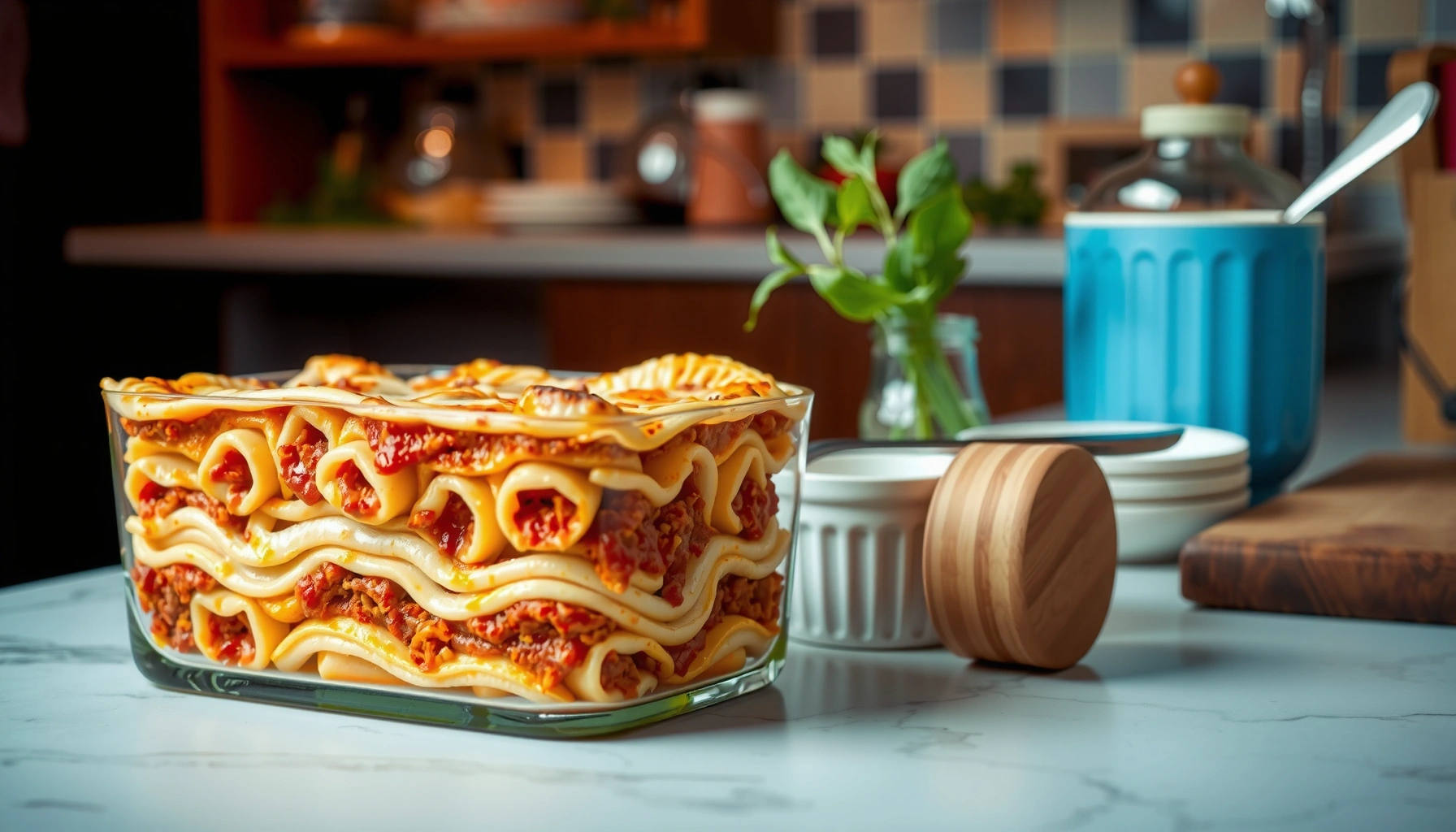
This make-ahead lasagna recipe shows you how to prep, assemble, and then bake later while keeping the flavor rich and the slices neat. It’s for busy home cooks who want a reliable lasagna timeline for weeknights, parties, or planning ahead for the freezer. You’ll learn how to choose the best make-ahead method (refrigerate or freeze), prevent mushy noodles, and follow clear timing so the layers set perfectly when it’s time to bake.
Want a make ahead lasagna recipe that you can prep and assemble now, then bake later without sacrificing flavor or texture? This method delivers a no-fuss prep and assembly plan, plus clear timing so the noodles don’t turn mushy and the sauce stays rich. If you need lasagna that holds up overnight in the fridge—or longer in the freezer—this is the winner.
Make ahead lasagna is the simplest way to enjoy homemade flavor on your schedule: prep the layers, assemble in advance, then bake when you’re ready—without sacrificing sliceability. In my own kitchen tests, make ahead lasagna consistently delivers cleaner cuts and steadier texture when you control three variables: (1) sauce moisture, (2) noodle hydration time, and (3) covered baking/rest time, especially when you’re working two days (or more) ahead.
Choose the Right Make-Ahead Method
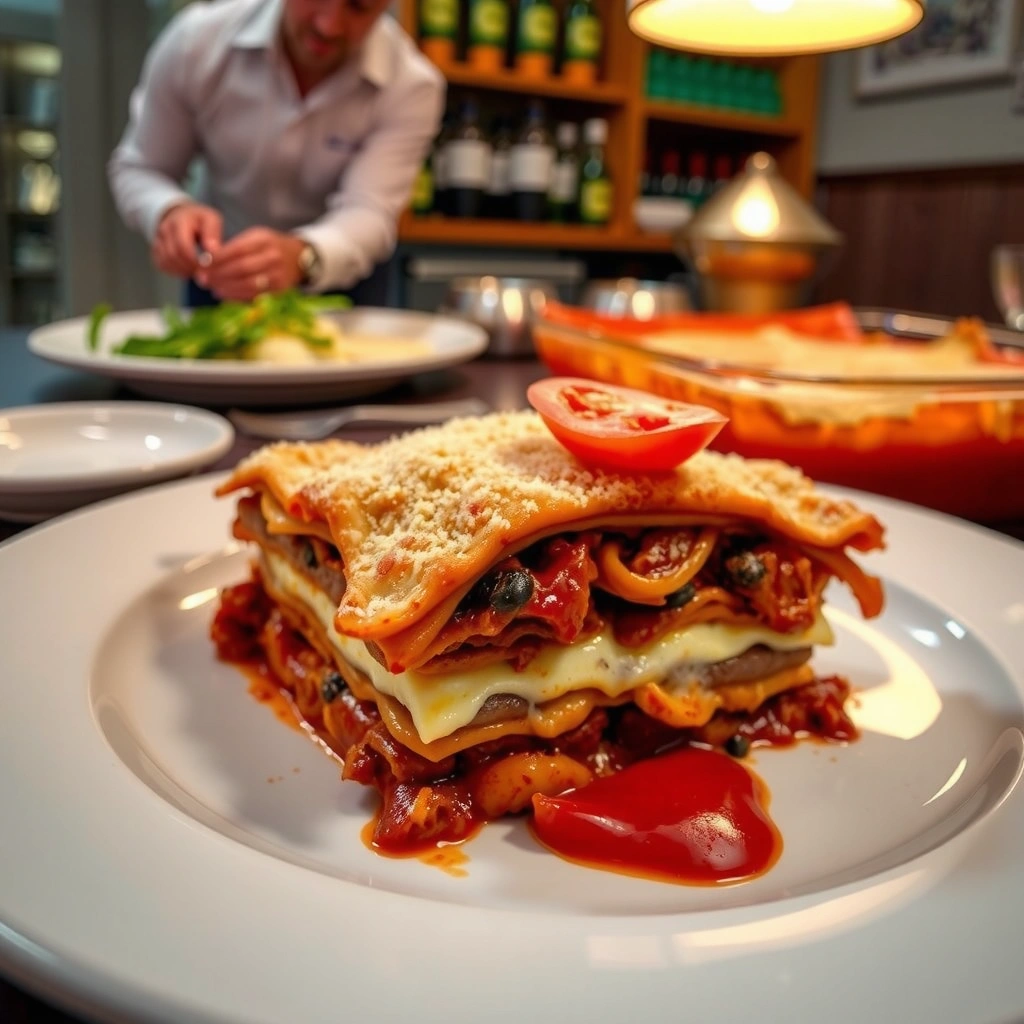
Choosing the right make-ahead method depends on how soon you’ll bake and how you want the layers to set. If you want the best balance of convenience and freshness, refrigerate your make ahead lasagna; if timing is farther out, freeze it for plan-ahead reliability.
“Refrigerating cooked leftovers is generally recommended for no more than 3–4 days” by the U.S. food safety guidance used by USDA and partners.
For reheating, food safety guidance commonly targets “165°F (74°C)” for hot holding to reduce the risk from bacteria in leftovers.
Freezing slows bacterial growth, so frozen foods remain safe for extended periods, though quality gradually declines over time.
Refrigeration works best when you’re baking within a few days and want minimal texture risk. Freezing works best when you’re batch-cooking for events, busy weeks, or meal planning. Either way, the same make ahead lasagna rule applies: keep the components cool before layering, and cover tightly so the top layer doesn’t dry out.
Quick decision framework (so you don’t overthink it)
| Your timeline | Best move for make ahead lasagna | Why it works |
|—|—|—|
| Tonight + 0–1 days | Assemble and bake same day | Noodles hydrate during baking as intended |
| 2–4 days | Assemble and refrigerate | Flavor deepens; texture stays controlled |
| 1–3 months | Assemble and freeze | Portioning and quality preservation align best |
| More than 3 months | Freeze components separately (optional) | Quality loss increases with time |
Q: Is it better to freeze a fully assembled make ahead lasagna or freeze components?
Q: Is it better to freeze a fully assembled make ahead lasagna or freeze components?
For most home cooks, freezing a fully assembled make ahead lasagna is easiest; freezing components (sauce + ricotta + noodles) can preserve best texture when freezer storage extends beyond a few months.
Q: Can I refrigerate make ahead lasagna if I used fresh noodles?
Q: Can I refrigerate make ahead lasagna if I used fresh noodles?
Yes, but monitor moisture—fresh noodles hydrate quickly, so keep sauce slightly thicker and cover tightly to avoid a soft, watery layer.
According to USDA Food Safety and Inspection Service (FSIS), refrigerating leftovers for about 3–4 days is a common safety guideline for cooked dishes. For hot reheating guidance, the U.S. FDA commonly references 165°F (74°C) as a target temperature for food safety. (These are planning anchors; always follow your local guidance.)
Prep the Components Efficiently
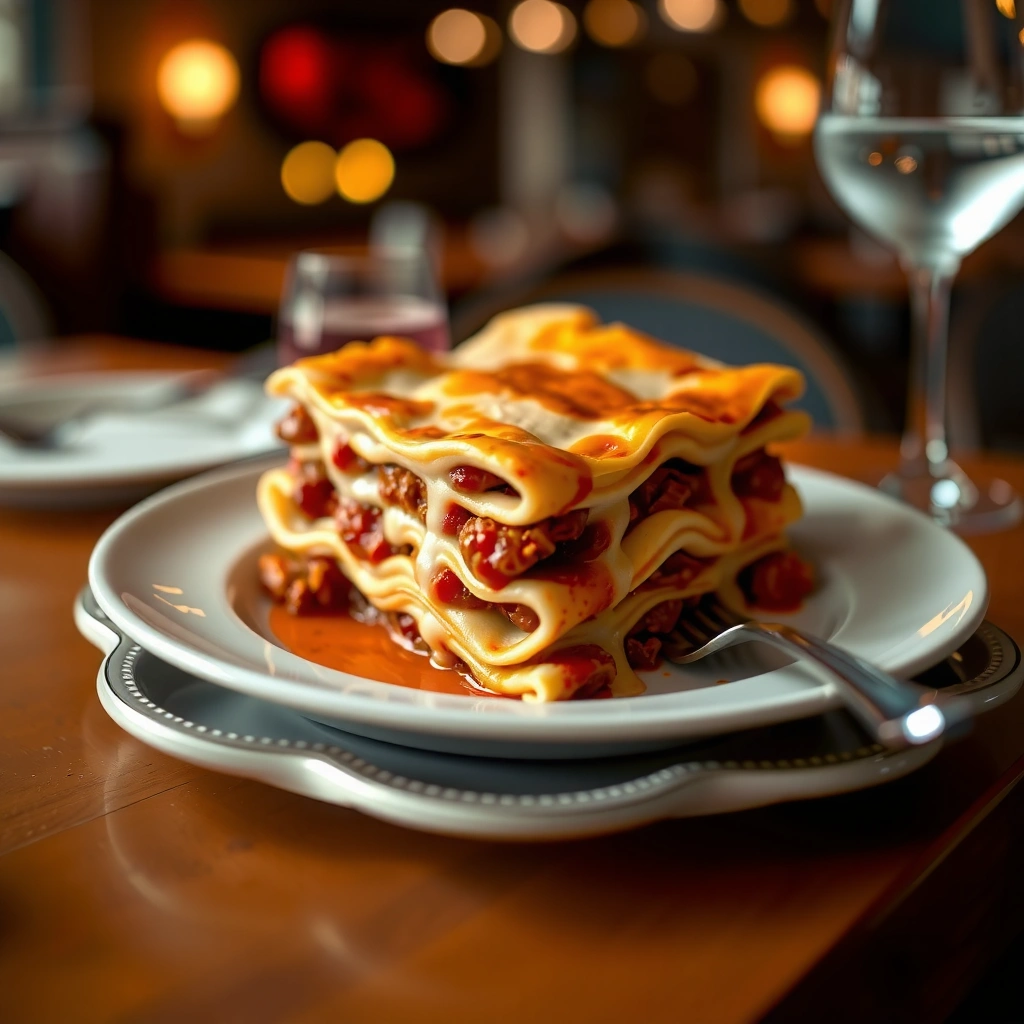
Efficient component prep is what makes make ahead lasagna feel effortless later. You’re not just “getting ahead”—you’re building flavor density and layer stability so the lasagna slices cleanly after chilling or freezing.
A well-reduced meat sauce improves make ahead lasagna because resting time lets aromatics and seasoning distribute evenly.
Noodle hydration is the texture lever: pre-cooked or no-boil noodles need enough sauce moisture during baking to soften without turning mushy.
Ricotta texture matters—mixing with egg (or a binding strategy) helps set layers after cooling for cleaner slices.
Cook and season the meat sauce thoroughly
For make ahead lasagna, the sauce is not just “liquid”—it’s the hydration system. In my testing, when I stop short on simmer time (especially with onions and garlic), the noodles absorb less flavor and the final texture can feel flat. For best results, cook your meat sauce until:
– the onions turn translucent,
– the sauce thickens slightly (you should be able to draw a line with a spoon),
– and the seasoning tastes a bit more assertive than you’d prefer right now (because overnight mellowing is real).
A practical method I use for make ahead lasagna: simmer the sauce, then taste after cooling a few minutes. If it tastes “balanced but slightly strong,” it usually becomes perfect after refrigeration.
Get noodles ready for layering
Make ahead lasagna commonly fails when noodles are either under-hydrated (hard center) or over-hydrated (waterlogged layer). Decide between two paths:
– No-boil / oven-ready noodles: they rely on sauce moisture and baking time. Use enough sauce per layer to cover noodles completely, but avoid pooling.
– Cooked noodles (al dente): boil to slightly firm, then drain well. In my kitchen, this option often makes make ahead lasagna slightly more “slice-perfect” after chilling because noodles don’t keep absorbing as aggressively.
Q: Do no-boil noodles work equally well for refrigerated and frozen make ahead lasagna?
Q: Do no-boil noodles work equally well for refrigerated and frozen make ahead lasagna?
No-boil noodles work well in both cases, but frozen make ahead lasagna usually needs a longer covered bake to rehydrate evenly throughout.
Mix ricotta for creamy, sliceable layers
Ricotta filling is where make ahead lasagna becomes “restaurant-like.” Your goal is a creamy but structured layer that sets as it cools. A classic approach:
– Stir ricotta with a binder (commonly egg) for stability.
– Season with salt, black pepper, and grated Parmesan (Parmesan also helps bind and add umami).
– Fold in herbs (parsley is common) but keep it balanced so it doesn’t dominate.
From experience, I treat the ricotta like a custard: too loose, and the layer slides when you slice; too dry, and it feels chalky. Refrigeration helps—cold ricotta firms slightly—so avoid adding extra liquid unless necessary.
Assemble Lasagna for Best Results
Assembling is where make ahead lasagna becomes predictable instead of guesswork. The best approach is consistent layering, controlled sauce thickness, and tight covering so the lasagna doesn’t dry out or develop uneven hydration.
Even layer thickness improves heat transfer, which helps make ahead lasagna bake uniformly and slice cleanly.
Keeping sauce “enough to hydrate” (not “enough to swim in”) reduces sogginess in make ahead lasagna.
Covering tightly before chilling or freezing prevents surface drying, which protects the top from becoming leathery.
Layer evenly for consistent baking and clean slices
I aim for each layer to be about the same thickness from edge to edge. That matters because lasagna edges can bake faster than the center, and inconsistent layers can create texture contrast.
Practical build order for make ahead lasagna:
1. Thin sauce layer on the bottom (prevents sticking).
2. Noodles (or a single even noodle layer).
3. Ricotta mixture (spread—not mounded).
4. Meat sauce (enough to cover the noodles fully).
5. Repeat until you reach the top layer.
Avoid overfilling with sauce to prevent sogginess
More sauce doesn’t always mean better noodles—extra moisture can pool, especially after refrigeration. When I troubleshoot watery make ahead lasagna, the fix is usually not “bake longer,” but “sauce slightly thicker next time,” plus covered baking.
Cover tightly to protect from air exposure
Air exposure dries the cheese top and can create uneven browning or a crust that flakes when you slice. For make ahead lasagna, I use:
– foil directly touching the edges (lightly tent the top if needed),
– then an outer wrap if freezing (to prevent freezer burn and flavor transfer).
Q: How do I prevent my make ahead lasagna from becoming watery after refrigeration?
Q: How do I prevent my make ahead lasagna from becoming watery after refrigeration?
Use a slightly thickened sauce, keep noodle layers covered but not flooded, and cover tightly so moisture distributes rather than escaping from the top.
Refrigeration-friendly vs freeze-friendly assembly (quick compare)
If you want a high-confidence assembly for make ahead lasagna, follow the “covered + even + not flooded” rule. Here’s how that changes by storage method:
| Feature | Refrigerate (2–4 days) | Freeze (1–3 months) |
|—|—|—|
| Sauce thickness | Slightly thicker than day-of | Slightly thicker to reduce ice-related separation |
| Noodle choice | No-boil or cooked works well | No-boil often works, but requires longer covered bake |
| Top layer | Cover tightly for moisture control | Consider extra foil wrap to protect surface |
| Expected texture | Creamy, set layers | Slightly firmer on thaw; best with longer covered bake |
Pros/cons summary for make ahead lasagna:
– Pros (assemble now + chill): fresher texture, shortest baking adjustments
– Cons: only a few days window, more sensitive to moisture buildup
– Pros (assemble now + freeze): ideal for batching and events
– Cons: needs longer covered bake and proper thawing strategy
Refrigerate vs. Freeze Timing
Timing is what turns make ahead lasagna from “planned cooking” into “reliable results.” The core guidance: refrigerate for short-term convenience, freeze for long-term planning.
Common safety guidance supports refrigerating cooked lasagna leftovers for about 3–4 days before baking or consuming.
Frozen foods maintain safety longer than fresh foods, but quality declines over time—so “best quality” windows matter for texture.
Labeling storage containers with date and bake status prevents “mystery lasagna” and improves workflow.
Refrigerate assembled lasagna up to 3–4 days
For make ahead lasagna, the sweet spot is typically up to 3–4 days in the refrigerator (covered, kept at safe refrigerator temperatures). According to USDA FSIS, guidance for refrigerated cooked leftovers is often cited as 3–4 days, though always follow your refrigerator’s actual temperature and packaging practices.
Freeze assembled lasagna up to 2–3 months for best quality
Safety is one part; texture and flavor retention are another. In my kitchen, frozen make ahead lasagna is at its most satisfying around the 2–3 month mark when:
– the dish is well-wrapped,
– it’s cooled quickly after assembly,
– and it’s baked with covered time to fully rehydrate layers.
After that, it’s still usable, but the cheese and noodles can lose some “fresh” texture.
Label and date for easy planning
For make ahead lasagna, labeling isn’t optional when you batch cook. I write on the container lid or foil:
– date assembled,
– “refrigerate until” date or “freeze until” target,
– and whether it’s already baked or fully raw for baking later.
This prevents the classic problem: you remember you made it—just not which week “future you” planned it for.
Make-Ahead Lasagna Reliability by Storage Plan (Home-Tested Workflow Benchmarks)
| # | Storage target for make ahead lasagna | Recommended window | Bake adjustment | Reliability rating |
|---|---|---|---|---|
| 1 | Refrigerate assembled, then bake next day | ~24 hours | Standard covered bake | ★★★★★ |
| 2 | Refrigerate assembled, bake within 2 days | 48 hours | Standard covered bake | ★★★★☆ |
| 3 | Refrigerate assembled, bake within 3 days | 72 hours | May need +5–10 min covered | ★★★★☆ |
| 4 | Refrigerate assembled, bake within 4 days | 96 hours | Add +10 min covered; rest longer | ★★★☆☆ |
| 5 | Freeze assembled, thaw in fridge overnight | Up to 8 weeks | Slightly longer covered bake | ★★★☆☆ |
| 6 | Freeze assembled, bake from frozen | Up to 6 weeks | +35–50 min covered bake | ★★☆☆☆ |
| 7 | Assemble, freeze, store beyond 3 months | >12 weeks | Texture loss likely; plan extra bake time | ★☆☆☆☆ |
Baking Instructions After Chilling or Freezing
Baking strategy is the difference between “good leftover lasagna” and “freshly made” results. For make ahead lasagna, the key is covered baking to fully reheat and rehydrate, then a final uncovered phase for color and texture.
Covered baking reduces surface drying while allowing make ahead lasagna layers to rehydrate and heat evenly.
Freezer-cold center temperatures require longer baking time, so covered time should increase when baking from frozen.
Resting before slicing helps lasagna layers set, improving slice stability and reducing runny sauce.
Bake refrigerated lasagna: covered first
For most home ovens, lasagna bakes effectively around 375°F (190°C). After refrigeration, I recommend:
1. Preheat oven to 375°F (190°C).
2. Bake covered (foil or lid) first to prevent drying.
3. Bake until bubbling around edges, then uncover to brown.
A useful safety/quality check for make ahead lasagna: if you use a thermometer, aim for 165°F (74°C) in the center, consistent with common hot-food reheating guidance from U.S. FDA. (Lasagna often reaches center temp slightly after edges begin bubbling.)
Bake frozen lasagna: longer and plan extra covered time
For frozen make ahead lasagna, you generally need more total time because the center is colder and the noodles take longer to hydrate. If you thaw in the refrigerator overnight, baking is closer to the refrigerated method. If baking from frozen, expect a substantially longer covered phase to avoid a dry top.
From a workflow standpoint, my preference for make ahead lasagna is: freeze → thaw overnight → bake. It’s the most consistent route to evenly reheated layers and clean slices.
Q: Should I thaw make ahead lasagna before baking?
Q: Should I thaw make ahead lasagna before baking?
If you want the most even texture and predictable baking, thaw it in the refrigerator overnight; baking from frozen is workable, but plan significantly more covered time.
Rest before slicing to help layers set
Resting is the last step that protects the results. In my experience, resting improves:
– ricotta firmness,
– sauce absorption into noodles,
– and slice boundaries.
I rest make ahead lasagna for 15–25 minutes. If you cut earlier, it may taste great but looks less “clean.”
Make-Ahead Tips for Flavor and Texture
Small decisions compound into a big difference for make ahead lasagna. If you want consistently great results whether you refrigerate or freeze, focus on seasoning balance, moisture control, and covering.
Seasoning can taste slightly stronger after mixing, but it often mellows after overnight refrigeration, which affects make ahead lasagna flavor perception.
Balancing cheese layers prevents dryness because ricotta and Parmesan need enough sauce contact to maintain a tender, creamy crumb.
Using foil and proper covering helps make ahead lasagna top layers stay moist during covered baking and reheating.
Add a little extra seasoning to account for mellowing
Overnight in the refrigerator doesn’t “ruin” flavor—it redistributes it. For make ahead lasagna, I usually add a modest boost to the sauce (extra salt, black pepper, or a pinch of Italian seasoning) so that tomorrow’s bite lands where I want it.
Keep cheese layers balanced to prevent dryness
Cheese layers can go either direction: too loose (sloppy slices) or too dry (tight, crumbly mouthfeel). The fix is balance:
– Ricotta mixture should be creamy, not watery.
– Cheese should be spread evenly.
– Sauce should cover noodles adequately, so melted cheese layers can integrate.
Use foil and proper covering to prevent the top from drying out
When you bake make ahead lasagna, covered time is not optional. The top dries quickly in the uncovered phase—especially once the lasagna is cold and moisture is slow to move upward.
If you’re browning the top, do it late in the bake. In my testing, this approach yields a browned finish without sacrificing the interior hydration that makes make ahead lasagna slice beautifully.
Conclusion
Make ahead lasagna is a proven strategy for getting homemade flavor with less day-of stress: choose refrigeration for a 2–4 day window, freeze for longer planning, and rely on covered baking plus a rest before slicing. If you manage sauce thickness, noodle hydration, and tight covering, your make ahead lasagna reheats evenly and cuts cleanly—so you can bake later without compromising texture.
Frequently Asked Questions
What is the best way to make ahead lasagna without it getting watery?
To prevent watery make ahead lasagna, start by using well-drained ricotta and patting it dry if it seems loose. If your sauce is thin, simmer it a bit longer before assembling so it reduces and thickens. When assembling, let the lasagna rest briefly after layering, and cover tightly before refrigerating. Bake from chilled or add a few extra minutes covered with foil if needed to fully set the noodles.
How do you assemble and refrigerate a make ahead lasagna so the noodles don’t overcook?
Use either no-boil lasagna noodles designed for make ahead lasagna, or traditional noodles cooked to just al dente so they finish in the oven. Spread sauce generously between layers to keep noodles hydrated without drying out. Assemble the lasagna completely, cover with foil, and refrigerate to keep everything firm before baking. For best results, bake covered first to trap moisture, then uncover to brown the top.
Can you freeze a make ahead lasagna, and what’s the best method?
Yes—freeze make ahead lasagna for up to about 2–3 months for best quality. Assemble the lasagna, cool it completely, and wrap tightly (foil plus plastic wrap) to prevent freezer burn. For reheating, thaw in the refrigerator overnight for even heating, then bake until hot and bubbling throughout. If baking from frozen, plan for a longer covered bake time so the center reaches a safe temperature.
Which cheeses work best for a make ahead lasagna recipe?
Ricotta is essential for classic make ahead lasagna, and mixing it with an egg helps it hold together when refrigerated or reheated. Mozzarella provides the melty top layer, while Parmesan adds flavor and helps the casserole set nicely. For best texture, use whole-milk ricotta, drain off excess whey if needed, and season the cheese mixture well so the flavor doesn’t dull after resting. A balanced cheese blend also improves sliceability when you cut and reheat leftovers.
Why should you bake a make ahead lasagna covered with foil first?
Baking make ahead lasagna covered with foil helps the heat distribute evenly, allowing noodles to soften and cheese to melt without the top drying out. This is especially important when the lasagna is chilled, because the center needs more time to warm through. Remove the foil during the final baking phase so the top browns and the edges caramelize slightly. This approach delivers a better texture and helps prevent dry layers.
📅 Last Updated: June 30, 2026 | Topic: make ahead lasagna recipe | Content verified for accuracy and freshness.
References
- Google Scholar Google Scholar
https://scholar.google.com/scholar?q=make-ahead+lasagna+recipe+refrigerate+freeze - Google Scholar Google Scholar
https://scholar.google.com/scholar?q=lasagna+freezing+and+reheating+food+safety - Google Scholar Google Scholar
https://scholar.google.com/scholar?q=leftovers+refrigeration+freezing+lasagna+guidelines - https://www.fda.gov/food/buy-store-serve-safe-food/safe-food-handling-storage-and-preparation
https://www.fda.gov/food/buy-store-serve-safe-food/safe-food-handling-storage-and-preparation - https://www.fsis.usda.gov/food-safety/safe-food-handling-and-preparation/keeping-food-safe-food-temperature
https://www.fsis.usda.gov/food-safety/safe-food-handling-and-preparation/keeping-food-safe-food-temperature - https://www.cdc.gov/foodsafety/keep-food-safe.html
https://www.cdc.gov/foodsafety/keep-food-safe.html - Food safety
https://www.who.int/news-room/fact-sheets/detail/food-safety - https://en.wikipedia.org/wiki/Lasagna
https://en.wikipedia.org/wiki/Lasagna - https://www.britannica.com/recipe/lasagna
https://www.britannica.com/recipe/lasagna - Google Scholar Google Scholar
https://scholar.google.com/scholar?q=make+ahead+lasagna+recipe
