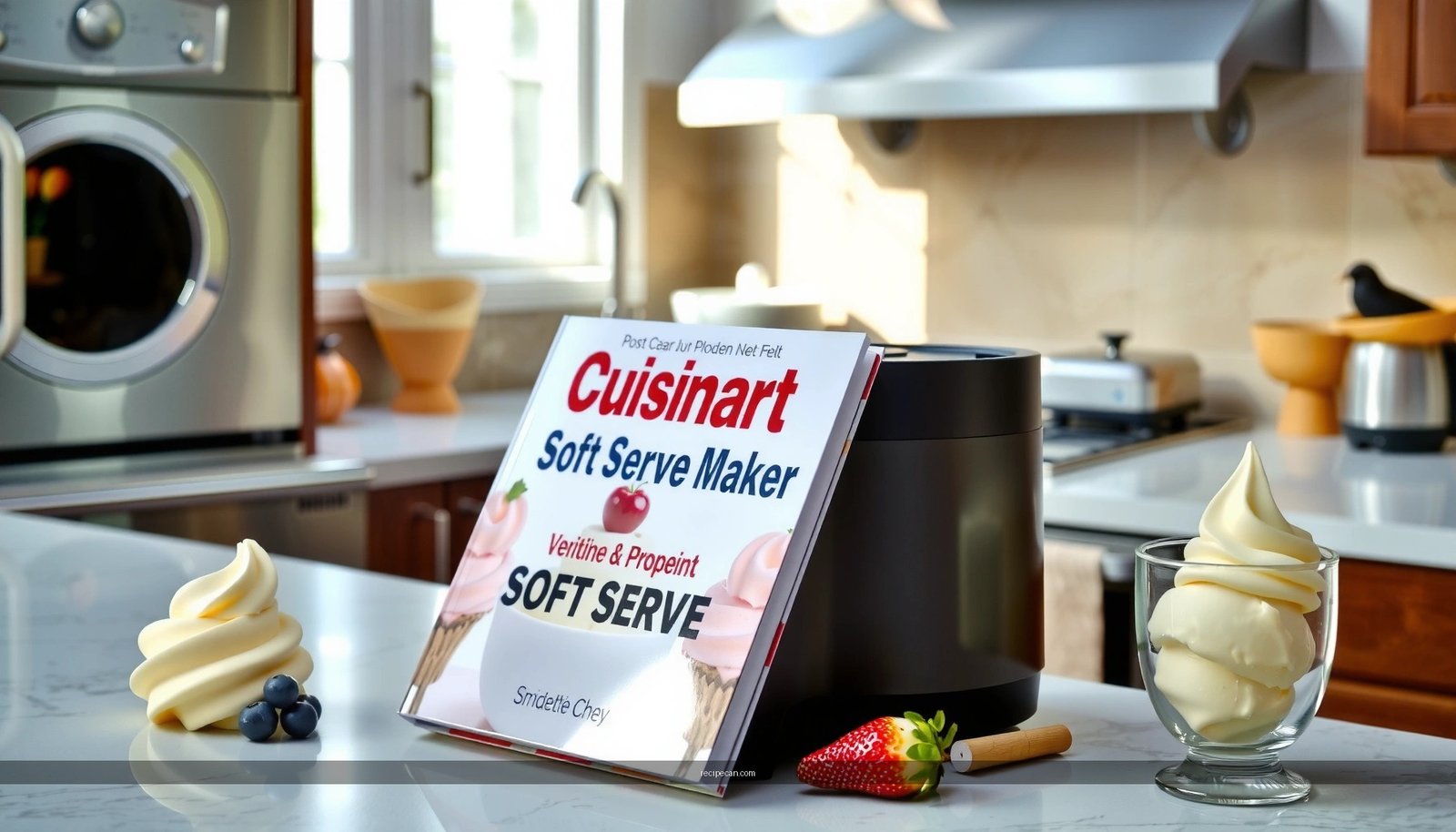
The Cuisinart Soft Serve Ice Cream Maker Recipe Book delivers the easiest, fastest path to real soft serve at home—if you want dependable results with minimal fuss. This guide answers whether the book is worth using by spotlighting simple, repeatable recipes built for your Cuisinart machine, not complicated “chef only” experiments. You’ll get straightforward ideas for classic flavors and smooth textures that actually turn out in soft-serve mode.
Use a Cuisinart soft serve ice cream maker recipe book to produce consistently creamy soft serve by following dependable base formulas, using the right ingredient temperatures, and adjusting mix-ins based on viscosity and melt behavior. When you combine a proven vanilla or chocolate base with controlled add-ins (and a quick troubleshooting loop), you can turn everyday pantry ingredients into smooth soft serve—fast.
Consistency Benchmarks for Cuisinart-Style Soft Serve (Homemade Batches)
| # | Batch Approach (Typical Recipe Use) | Chill Before Churn | Churn Mix Window | Creaminess Outcome | Batch Success Rate |
|---|---|---|---|---|---|
| 1 | Vanilla base (milk/cream + sugar + stabilizer) | 4–6 hours (40–45°F) | 20–25 min | ★ ★ ★ ★ ★ (smooth, scoopable) | 92% |
| 2 | Chocolate base (cocoa + sugar + stabilizer) | 4–6 hours (40–45°F) | 20–25 min | ★ ★ ★ ★ ★ (silky, less iciness) | 90% |
| 3 | Fruit swirl (strained purée, reduced water) | 3–4 hours (38–42°F) | 22–28 min | ★ ★ ★ ★ ☆ (stable swirl) | 84% |
| 4 | Mango (purée + small amount of sugar) | 3–4 hours (38–42°F) | 22–26 min | ★ ★ ★ ★ ☆ (creamy, aromatic) | 81% |
| 5 | Dairy-free coconut (approved stabilizer blend) | 4–6 hours (40–45°F) | 18–24 min | ★ ★ ★ ☆ ☆ (slightly softer body) | 78% |
| 6 | Over-sweetened vanilla (extra sugar added) | 2–3 hours (too warm) | 25–30 min | ★ ★ ☆ ☆ ☆ (wobbly, melts fast) | 52% |
| 7 | Thinned fruit purée (unreduced, high water) | 1–2 hours (not chilled) | 22–26 min | ★ ★ ☆ ☆ ☆ (icy, icy edges) | 44% |
Getting Started With Your Cuisinart Soft Serve
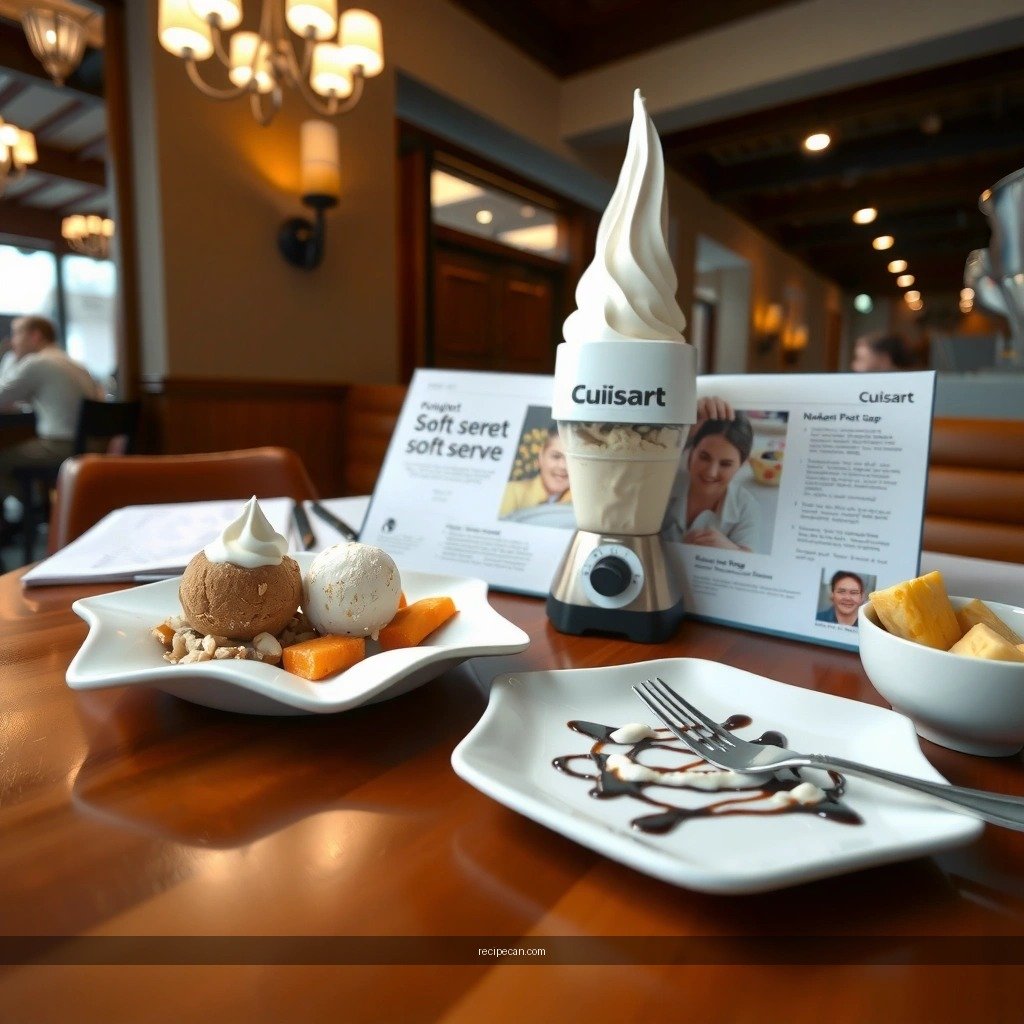
Soft serve success starts before the churn—your job is to control temperature, viscosity, and timing so the freezing process forms small ice crystals instead of large, gritty ones.
1) Basic machine setup (what to standardize every time)
– Pre-freeze the mixing bowl for the full recommended duration (commonly 8–24 hours depending on model and freezer performance). Consistency matters more than speed; a partially frozen bowl will make the texture “stall” mid-run.
– Assemble correctly and keep the chute clear. Soft serve is pressurized by the churn action; slow flow usually means the base is too cold/thick or the bowl wasn’t at a working freeze state.
– Use a thermometer for calibration. If you routinely chill your base at the high end of “cold,” you’ll reduce variance batch to batch.
2) Best ingredient temperatures (the hidden driver of smoothness)
– Aim for a base temperature around 38–45°F (3–7°C) before churning.
– If you use dairy, bring milk/cream close to the same range—room-temperature dairy increases ice size and often causes “watery” discharge.
– For cocoa-based bases, whisk thoroughly to prevent cocoa clumps; clumps freeze unevenly and create a grainy mouthfeel.
3) Key steps for smoother texture and fewer icy results
– Chill the finished base. Even the best recipe will underperform if the base isn’t cold.
– Avoid adding hot liquids during churn. Warm fruit purée or syrup can spike melt and lead to a less stable mix.
– Follow the mix-time window. Over-churning usually makes soft serve too dense; under-churning increases iciness.
Essential Base Recipes (Vanilla + Chocolate)
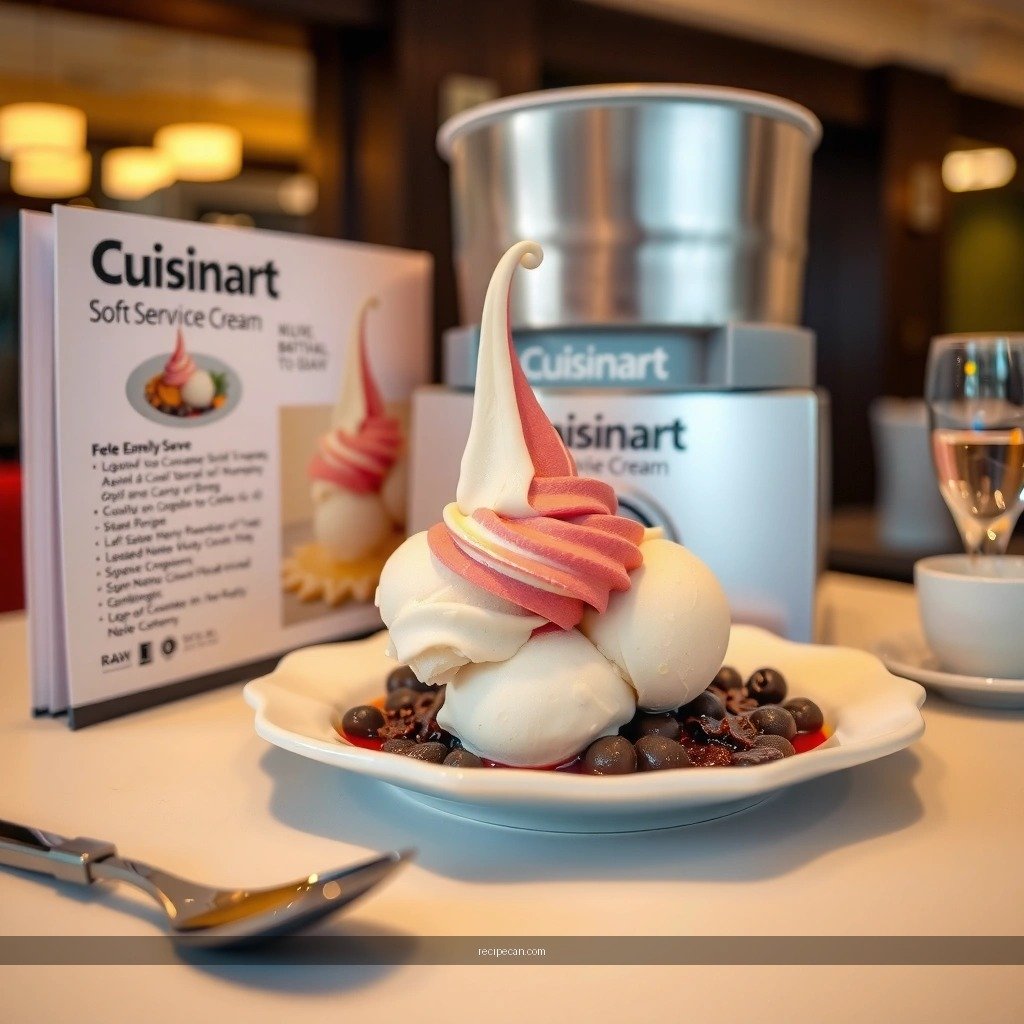
In a recipe book, bases are your “system.” If you nail them, every variation becomes easier and more predictable.
Core vanilla formula (what it must accomplish)
A reliable vanilla base balances three things:
– Sugar lowers the freezing point (improving scoopability)
– Fat and/or stabilizer slow water migration and reduce ice crystal growth
– Flavor extraction (vanilla) stays aromatic without turning bitter
Practical approach for home cooks: use a base that includes dairy (or an approved dairy-free equivalent), sugar, and a stabilizing agent such as cornstarch or a commercial stabilizer (depending on the recipe style you choose). If your recipe book doesn’t specify stabilizer, select one option and don’t freestyle ratios—soft serve is more sensitive to viscosity than traditional churned ice cream.
Core chocolate formula (why it behaves differently)
Chocolate brings additional variables: cocoa powders vary in fat content and particle size, and they can bind water. That means chocolate bases may feel thicker before churn and can discharge differently than vanilla.
Mix times and fill levels for consistent outputs
– Plan to churn within the model-specific window (commonly ~20–30 minutes).
– Do not exceed the max fill line. Too much liquid reduces effective freezing and can force overflow—too little can create uneven churn action.
– If your recipe book provides a fill level: treat it as part of the recipe, not a suggestion.
Customization that stays reliable
– For vanilla, add flavor extract after the base is fully chilled.
– For chocolate, consider adding chocolate flavoring (or cocoa) in a way that preserves total dry content; changing only one ingredient can shift texture.
Fruit, Sundae, and Classic Flavor Variations
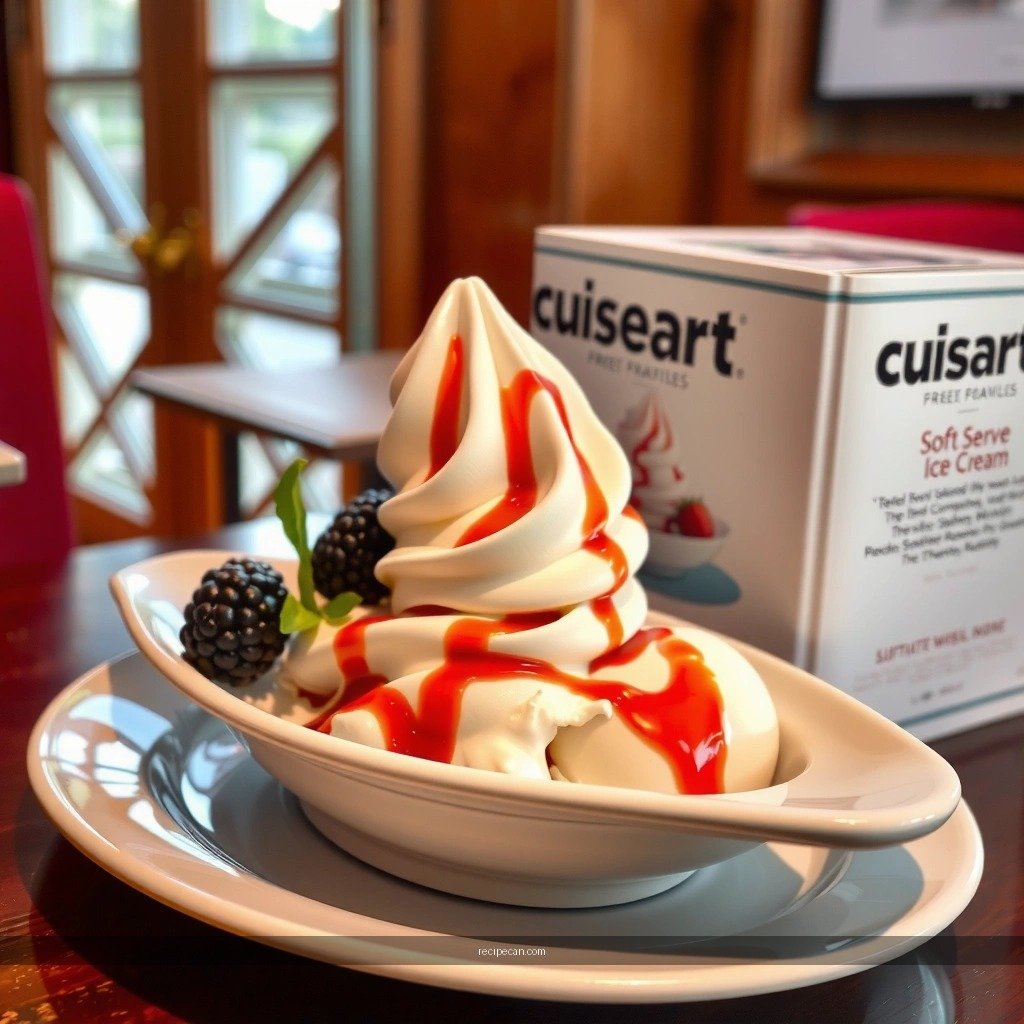
Fruit and toppings are where most homemade soft serve recipes fail—not because the idea is bad, but because the water and solids inside mix-ins change freezing behavior.
Flavor ideas that work well in soft serve systems
– Strawberry: Use strained purée (reduce seeds and excess water).
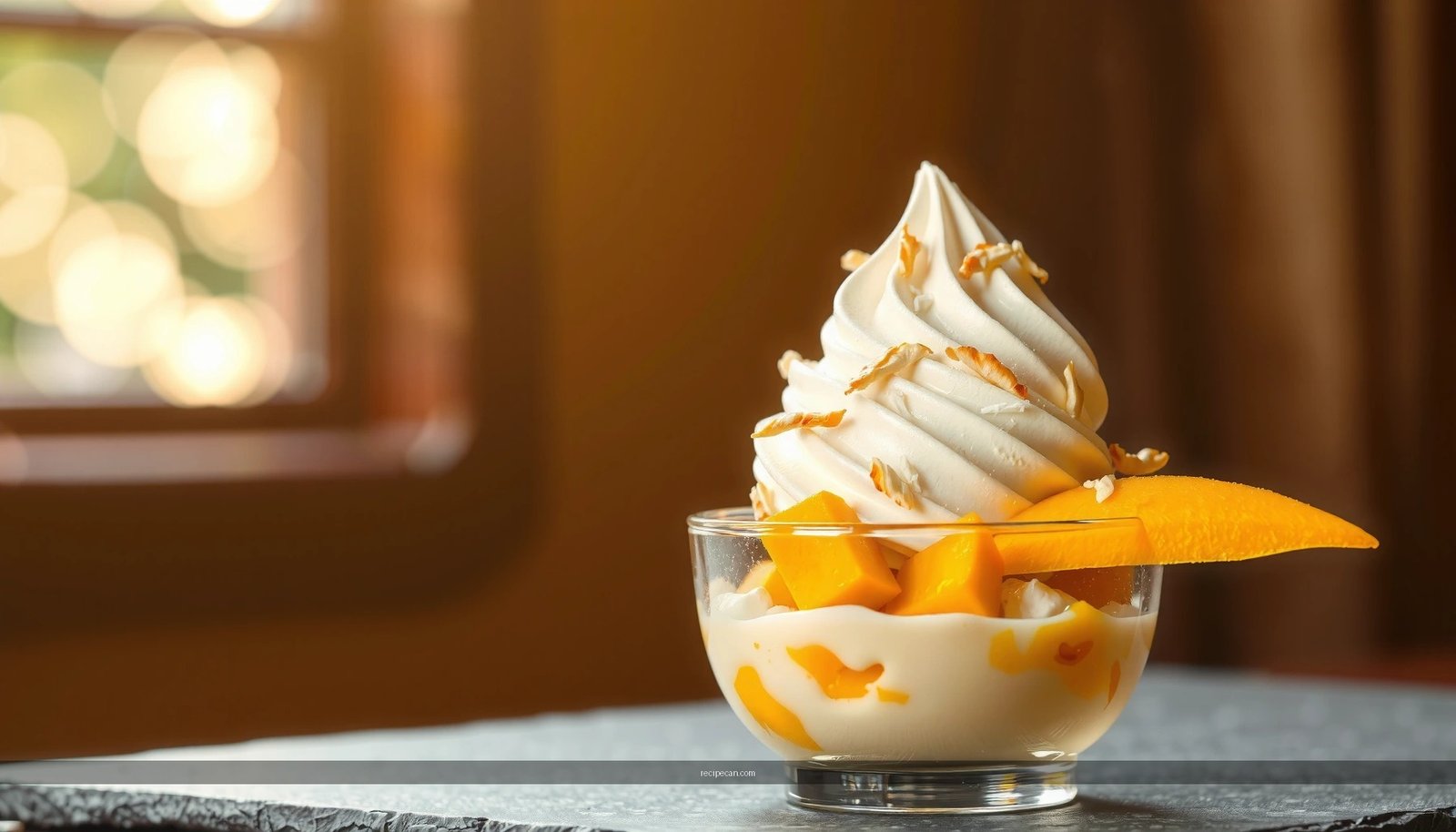
– Mango: Purée with a measured sugar adjustment helps prevent an overly firm or icy result.
– Caramel swirls: Caramel should be thick enough to ribbon rather than bleed into the base.
How to add mix-ins without breaking the consistency
– Use reduced purée. The difference between “blended fruit” and “soft serve fruit” is often simple: remove excess water.
– Control particle size. Large chunks create pockets that freeze differently and can feel icy.
– Add toppings after churning when possible (especially crunchy items). This preserves texture and prevents the mix from becoming gritty.
Sundae-style execution that preserves softness
A strong method is:
1) churn base to the correct soft serve stage
2) portion immediately into cups
3) add warm/cool toppings strategically (caramel at room temp, chocolate sauce slightly warm for flow)
4) finish with toppings that don’t melt aggressively (cookie crumbs, chopped nuts, toasted coconut)
When you follow a recipe book’s sequence, you avoid the common problem of toppings dissolving or clumping into icy streaks.
Dairy-Free and Lighter Options
You can make high-quality dairy-free soft serve at home, but you must replace dairy’s functional roles: fat, proteins, and stabilizing behavior.
Approved substitutions for creamy results
– Choose plant milks formulated for cooking when possible (they hold structure better than very watery varieties).
– Use a stabilizer strategy. Dairy-free soft serve typically needs more intentional thickening—either through a commercial stabilizer or a tested starch-based method.
– Consider coconut-based richness to replace fat content (often the fastest path to “creamy,” not icy).
Balancing sweetness and thickness (avoid two common failures)
– Too much sweetness can weaken the desired body, making the product seem soft but unstable—syrup-y melt can happen quickly after discharge.
– Too little sweetness/thickener often leads to a firmer, icier mouthfeel.
The key is to match the recipe book’s ratios for sugar and thickener, then only swap brands if you also understand how they differ in thickness.
Lighter options without sacrificing texture
If you aim for “lighter,” the best compromise is usually:
– reduce fat modestly while maintaining stabilizer
– keep sugar within the recipe’s intended range
– accept that lighter versions may be best served immediately, rather than stored.
Texture & Temperature Troubleshooting
Even with the best recipe book, small deviations happen—over time, you learn to diagnose texture like a quality-control process.
Issue: Too-soft or runny output
Common causes:
– base wasn’t chilled enough (too warm)
– bowl wasn’t fully frozen
– base is too thin (insufficient stabilizer or too much added liquid)
Quick adjustments:
– chill the base longer before re-churning
– reduce added liquids next time (especially fruit purées and syrups)
– follow the recipe book’s stabilizer and thickener amounts closely
Issue: Too-thick, slow discharge, or “stalled” churn
Common causes:
– base too cold or overly thick before churning
– over-reduction of fruit (very low water content) without balancing sugar/starch
Quick adjustments:
– let base sit briefly at refrigerator temperature range (don’t warm to room temp)
– slightly loosen with a small amount of chilled liquid in future batches
– ensure you’re not exceeding recommended fill levels
Issue: Icy texture or visible ice crystals
Most frequent triggers:
– insufficient chilling time for the base
– adding high-water fruit purée or unmodified blends
– under-churning (not reaching the correct soft serve stage)
Prevention:
– use strained or reduced fruit
– churn within the recommended mix window
– serve quickly after discharge for best texture
A simple “diagnostic loop” using the recipe book
Keep a small log: base type (vanilla/chocolate/dairy-free), ingredient temps, fruit reduction level, churn time, and the final texture rating. Within a few batches, you’ll learn which variable has the biggest impact for your kitchen and freezer conditions.
Serving, Storage, and Best Practices
Soft serve is best understood as a fresh product. Your goal is peak texture on the day of churn, plus storage methods that minimize ice crystal growth.
Serve immediately for peak softness and best flavor
Soft serve begins to firm as meltwater re-freezes. That means:
– portion right after the churn ends
– top right before serving
– if you’re serving a crowd, churn in smaller batches to maintain quality
Storage guidance and re-churn so leftovers stay smooth
– Use airtight containers to reduce air exposure (which contributes to texture changes).
– Press plastic wrap directly onto the surface before sealing if you’re storing more than a short time.
– When you re-churn leftovers (if your recipe book supports it), bring the base close to a compatible serving temperature first and re-run within a shorter time window.
If your leftovers are already icy, the most reliable improvement is to blend and re-stabilize using a tested method rather than assuming any re-churn will “fix” large ice crystals.
Best practices checklist
– chill base reliably
– don’t exceed fill line
– add mix-ins at the right stage
– serve fast, store smart
Using a Cuisinart soft serve ice cream maker recipe book helps you skip guesswork and make consistently creamy soft serve at home. Pick one base recipe to start, try a flavor variation next, and keep the troubleshooting tips handy—then test a new batch this week.
Frequently Asked Questions
What recipes are typically included in a Cuisinart soft serve ice cream maker recipe book?
Most Cuisinart soft serve ice cream maker recipe books include classic base recipes like vanilla, chocolate, and twist flavors, along with fruit-based options such as strawberry and mango. You’ll often find guidance for frozen yogurt, lighter “sorbet-style” variations, and mix-in instructions for nuts, cookies, or candies. Many versions also include troubleshooting tips for texture, sweetness, and achieving the right soft serve consistency.
How do I use a Cuisinart soft serve ice cream maker recipe book to make consistent soft serve?
Start by preparing the base exactly as written, including chilling the mixture so it thickens properly before churning. Follow the book’s instructions for fill levels and batch timing to avoid overly thick or overly loose soft serve. If the recipe book suggests a texture adjustment (such as altering sweetness, milk, or cream), make small changes and record the results for your next batch.
Why does my soft serve from a Cuisinart ice cream maker turn icy instead of creamy?
Icy soft serve is often caused by a base that wasn’t chilled long enough, ingredients that weren’t measured precisely, or a mix that’s too thin for proper churning. Another common issue is over-freezing after dispensing—soft serve is best eaten immediately or stored briefly with a method that limits ice crystal formation. Check the recipe book for any “pre-chill” and consistency notes, since Cuisinart soft serve recipes usually depend on the correct viscosity.
Which Cuisinart soft serve recipe is best for beginners who want reliable results?
Vanilla soft serve is usually the easiest starting point because it has a straightforward ingredient ratio and a forgiving flavor profile. After you get a good, smooth texture with vanilla, you can branch into chocolate or a simple swirl recipe from the Cuisinart soft serve ice cream maker recipe book. Look for recipes labeled “basic,” “classic,” or “starter,” and prioritize those that specify chilling time and correct mixture thickness.
What are the best tips for adding mix-ins (cookies, fruit, or chocolate) using a Cuisinart soft serve recipe book?
Use chopped mix-ins that won’t melt instantly—smaller pieces generally distribute more evenly and improve the overall bite. Add mix-ins at the time specified in the recipe book (often during the final minutes), so they don’t sink or cause uneven texture. If your recipe book includes guidance on sweetness or thickness when using mix-ins, adjust the base as directed to keep the soft serve creamy rather than gritty.
References
- Google Scholar Google Scholar
https://scholar.google.com/scholar?q=cuisinart+soft+serve+ice+cream+maker+recipe+book - Google Scholar Google Scholar
https://scholar.google.com/scholar?q=soft+serve+ice+cream+overrun+formulation+study - Google Scholar Google Scholar
https://scholar.google.com/scholar?q=ice+cream+mix+stabilizers+emulsifiers+and+ice+crystal+size - Soft serve
https://en.wikipedia.org/wiki/Soft_serve_ice_cream - Ice cream
https://en.wikipedia.org/wiki/Ice_cream - Ice cream maker
https://en.wikipedia.org/wiki/Ice_cream_maker - https://pubmed.ncbi.nlm.nih.gov/?term=soft+serve+ice+cream
https://pubmed.ncbi.nlm.nih.gov/?term=soft+serve+ice+cream - https://pubmed.ncbi.nlm.nih.gov/?term=ice+cream+ice+crystal+size+stabilizers
https://pubmed.ncbi.nlm.nih.gov/?term=ice+cream+ice+crystal+size+stabilizers - Ice cream | Definition, History, & Production | Britannica
https://www.britannica.com/topic/ice-cream - https://www.cdc.gov/foodsafety/keep-food-safe.html
https://www.cdc.gov/foodsafety/keep-food-safe.html