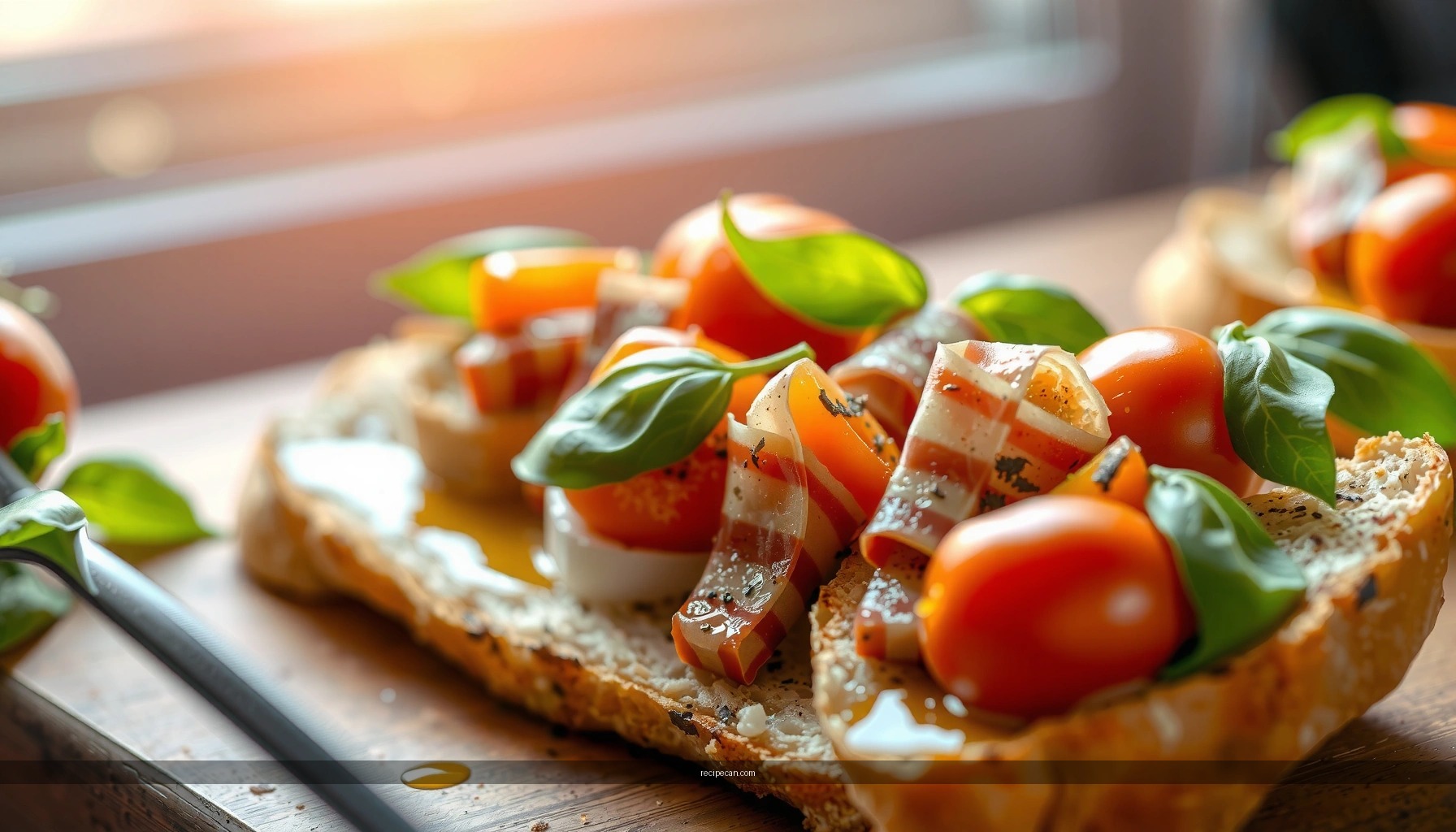
Want a bruschetta with prosciutto recipe that’s quick, flavorful, and consistently easy? This recipe delivers the clear winner: crisp toasted bread, salty prosciutto, and bright toppings that come together fast without complicated steps. You’ll get exact instructions for what to do and when, so every bite tastes like a restaurant appetizer in less time than it takes to set the table.
Bruschetta with prosciutto is an efficient way to deliver restaurant-style flavor at home: toast sturdy bread, build a bright tomato-garlic topping, and finish with thin prosciutto for a salty, savory lift. The key is balance—fresh acidity, aromatic garlic, and just enough olive oil—paired with correct timing so the toast stays crisp.
Choose the Right Ingredients
A high-quality bruschetta with prosciutto is less about complicated technique and more about selecting ingredients that perform well under heat and against each other in flavor.
– Use crusty Italian bread (or baguette) for sturdy, crisp toasts
Look for bread with a firm crumb and a well-developed crust. Slices that are too soft will soak up juices quickly and lose structure; slices with a crisp crust will withstand the tomato mixture without turning leathery. For best results, cut bread into thick-ish slices (about 3/4 to 1 inch) so each piece can toast on the outside while remaining tender inside.
– Pick ripe tomatoes and high-quality prosciutto for the best flavor
Tomatoes are the “volume” of the topping: they provide sweetness, acidity, and moisture. Choose ripe, fragrant tomatoes (heirloom, Roma, or vine-ripened) and avoid overly watery ones—if they’re watery, they’ll flood the toast.
Prosciutto, meanwhile, should be thin, delicate, and aromatic. Avoid overly thick slices; you want a melt-in-your-mouth texture that contrasts the crunch of the toasted bread. If you can, choose prosciutto with visible marbling and a clean, savory smell (not sour or overly funky).
Tomato + Bread + Prosciutto Quality Checks (What Improves Bruschetta)
| # | Ingredient Factor | Target Choice | Why It Matters | Impact |
|---|---|---|---|---|
| 1 | Tomato ripeness | Fragrant, slightly yielding | Better sweetness + tomato “body” | High |
| 2 | Tomato moisture level | Fewer watery seeds | Prevents soggy toast | High |
| 3 | Bread crust strength | Crust-forward, firm crumb | Stays crisp after topping | High |
| 4 | Prosciutto thickness | Paper-thin slices | Crisp-tender contrast on warm toast | Very High |
| 5 | Olive oil quality | Extra-virgin, peppery finish | More aroma and tomato “lift” | Medium–High |
| 6 | Garlic intensity | Fresh, lightly rubbed | Aromatics without bitterness | High |
| 7 | Timing of assembly | Toast + top within minutes | Prevents sogginess, maximizes texture contrast | Critical |
Prep the Tomato Topping
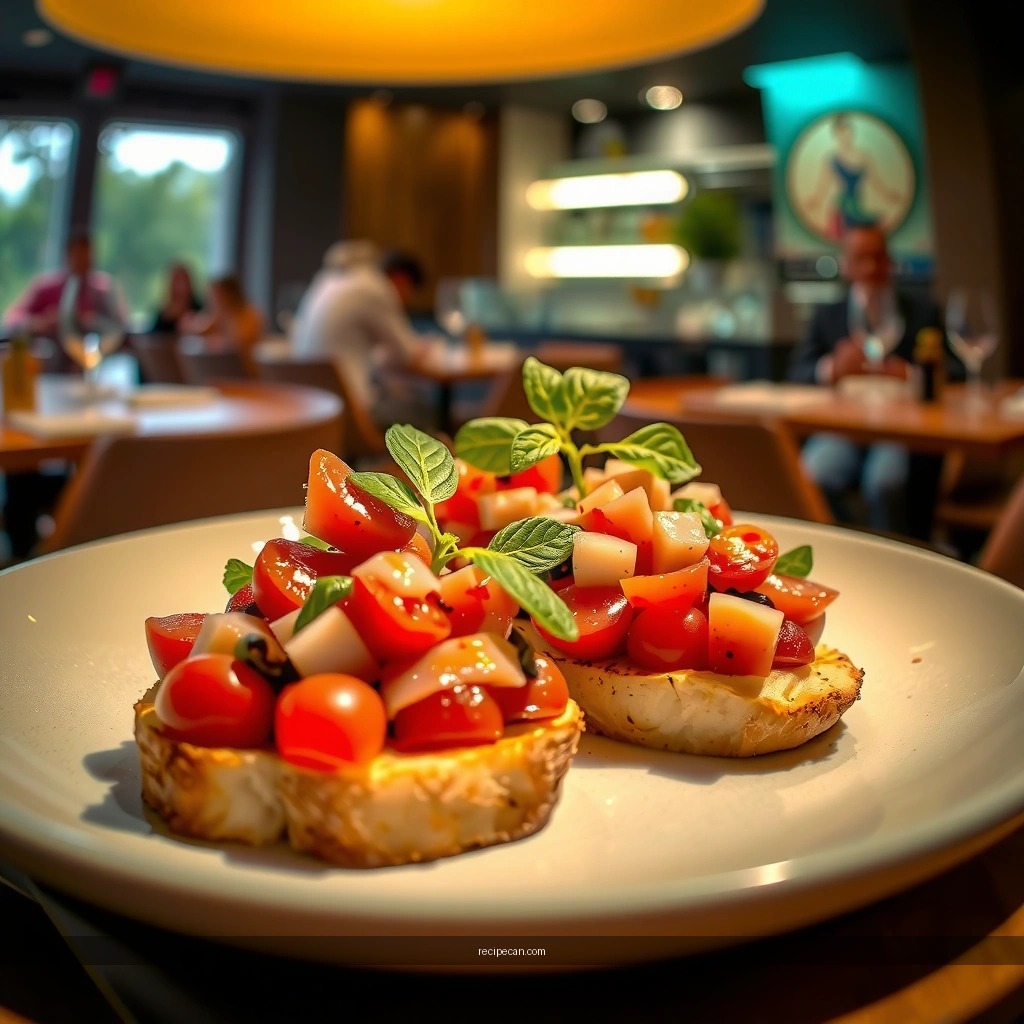
The tomato topping for bruschetta with prosciutto should taste like a bright salad dressing—seasoned, glossy, and aromatic—but not watery. Think “structured freshness,” not “soup.”
– Chop tomatoes and mix with garlic, olive oil, salt, and pepper
Use a sharp knife and keep pieces roughly consistent. Combine chopped tomatoes with finely grated or minced garlic so it disperses evenly. Add extra-virgin olive oil for emulsification, then season with salt and black pepper. Salt should be present early because it draws out tomato juices slightly; this is good for flavor, as long as you manage the moisture level (see next step).
– Add fresh basil and a splash of vinegar or lemon for brightness
Basil adds fragrant, green notes that balance the prosciutto’s richness. Add it at the end so it stays vivid rather than turning dark.
For brightness, use a small splash of red wine vinegar or fresh lemon juice. This is the difference between “tasty” and “chef-level.” Start with a teaspoon, taste, then adjust. In business terms: you’re calibrating acidity for consistency across batches—small corrections prevent an under-seasoned or flat topping.
Practical pro-tip: If your tomatoes release a lot of liquid, let the mixture sit for 5–10 minutes, then spoon off excess liquid before topping the bread. You’ll keep flavor while protecting texture.
Toast the Bread Properly
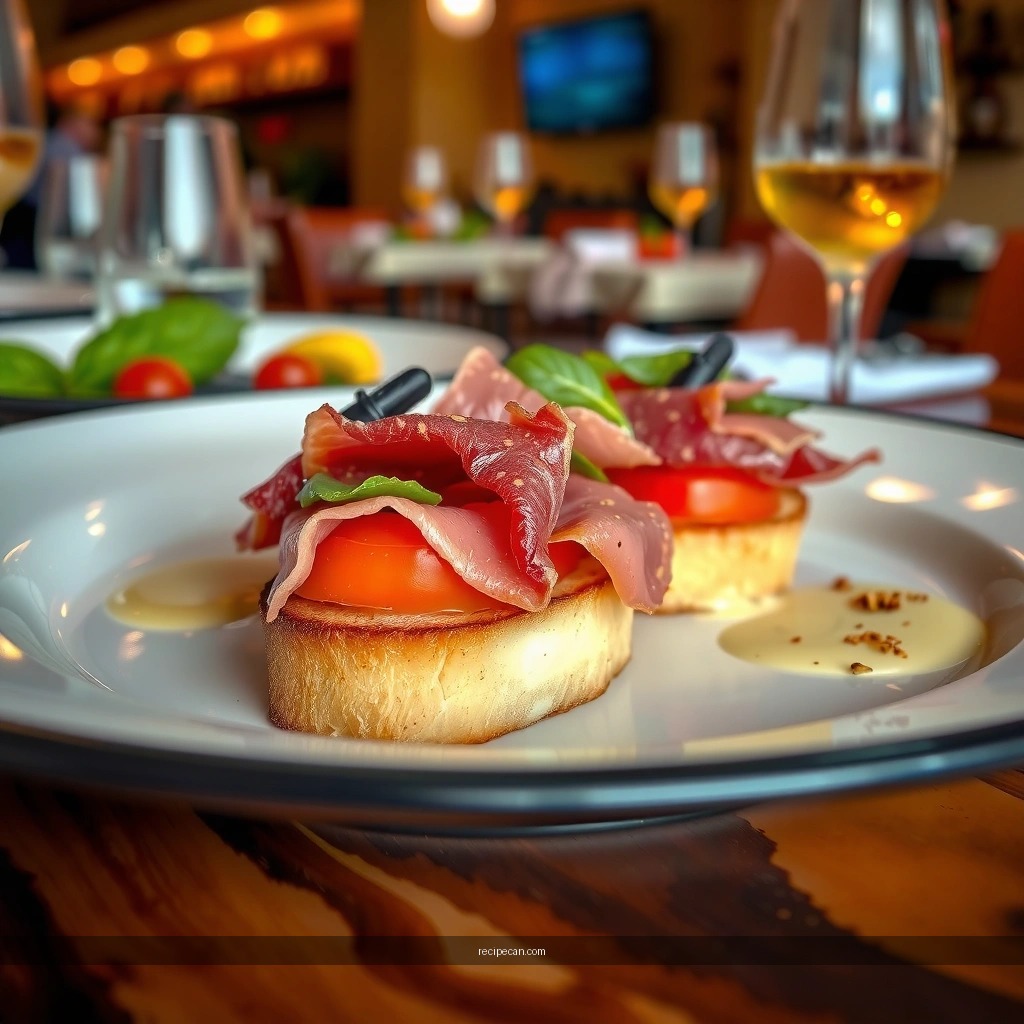
Toasts are the foundation. When bread is properly toasted, it behaves like a platform—able to hold moisture without collapsing into soggy texture.
– Brush slices with olive oil and toast until golden and crunchy
Brush both sides lightly with olive oil, then toast until golden. Oven broiling can work quickly, but watch closely—bread goes from perfect to burnt fast. A hot skillet also delivers consistent browning and a pleasant aroma, especially if you toast in batches.
– Rub warm toast lightly with garlic for extra aroma (optional but great)
This optional step adds a subtle garlic perfume without the harshness that can come from raw garlic chunks. Use a halved clove and lightly rub the surface while the bread is still warm. The garlic compounds cling to the surface, enhancing aroma just before the tomato mixture arrives.
Quality benchmark: You want the toast to be crisp enough that it makes a light crackle when touched, while still being sturdy enough to carry toppings without bending.
Assemble Bruschetta with Prosciutto

Assembly is where timing and technique determine whether your appetizer feels effortless or messy.
– Spoon tomato mixture onto toast just before serving to prevent sogginess
Tomato is naturally juicy. If you assemble early, the bread absorbs moisture. For an event, you can prep everything in separate bowls and then assemble as guests arrive—usually within a 10–20 minute window. This keeps the bruschetta with prosciutto tasting fresh and texturally balanced.
– Drape prosciutto on top (or slightly tuck it in) for maximum crisp-tender contrast
Prosciutto should go on last so it remains delicate and doesn’t wilt under excess tomato moisture. Drape thin slices so they sit on the warm bread; the heat slightly softens the edges without cooking it.
Tuck-in placement can be useful when bread slices are taller—one turn of the prosciutto near the center helps keep it from sliding off.
Consistency tip for serving at scale: Arrange toasts on a tray lined with a clean towel or parchment. Assemble in small waves, then top each wave and serve immediately.
Season, Garnish, and Serve
This is the finishing layer that makes the appetizer look intentional and taste complete.
– Finish with extra olive oil, black pepper, or basil leaves
A final drizzle of olive oil intensifies aroma and provides a glossy “restaurant” finish. Add a pinch of flaky salt if your tomatoes were not heavily salted, and freshly ground black pepper to sharpen flavor.
Whole or torn basil leaves added on top create visual contrast and release fragrance right when the platter hits the table.
– Serve immediately, ideally at room temperature for best texture
Bruschetta with prosciutto is best when bread is crisp and toppings are not ice-cold. If tomatoes or prepared topping have been refrigerated, allow them to come toward room temperature. Room-temperature servings also help prosciutto express its full savoriness rather than sounding overly salty.
Easy Variations (Optional)
If you want to tailor the appetizer for different dietary preferences or flavor profiles, these variations keep the core technique intact.
– Add mozzarella or burrata for a creamier topping
For a creamy version, add small pieces of mozzarella before serving or dot burrata on top of the tomato mixture. Keep portions modest—cream can soften the tomato’s brightness and reduce contrast. Burrata works especially well when tomatoes are vivid and well-seasoned.
– Swap tomatoes for roasted cherry tomatoes for deeper, sweeter flavor
Roasted cherry tomatoes concentrate sweetness and add complexity. Roast until blistered, then cool slightly and mix with garlic, olive oil, and basil. This version is excellent for cooler months or when tomatoes aren’t at peak ripeness—quality is season-dependent, but roasting helps compensate.
Analytical note: The core “bruschetta with prosciutto” proposition is contrast—crisp bread, bright topping, savory prosciutto. Variations should preserve that contrast by avoiding overly wet toppings or overly heavy creams.
When you follow these steps, your bruschetta with prosciutto will taste fresh, savory, and perfectly balanced. Make the topping ahead if needed, then toast and assemble right before serving—then try it for your next dinner party or quick appetizer night.
Bruschetta with prosciutto is a straightforward method that rewards attention to fundamentals: select ripe tomatoes and high-quality prosciutto, build a bright garlic-olive-oil tomato topping with controlled moisture, toast bread for maximum crispness, and assemble only when serving. Mastering these timing and balance points ensures every bite delivers the intended interplay of crunch, freshness, and savory depth—fast enough for an easy weeknight appetizer and polished enough for entertaining.
Frequently Asked Questions
What are the best ingredients for a bruschetta with prosciutto recipe?
Start with crusty Italian bread (like ciabatta or rustic baguette), ripe tomatoes, fresh basil, garlic, olive oil, and high-quality prosciutto. Add salt, black pepper, and a splash of balsamic vinegar for balance, then finish with optional shaved Parmesan. Choosing juicy tomatoes and good olive oil makes a big difference in the flavor of your bruschetta with prosciutto.
How do you make bruschetta with prosciutto without soggy bread?
Toast or grill the bread until it’s crisp, then rub it with garlic right after to avoid moisture soaking in too quickly. Season the tomato topping lightly and let it drain briefly before piling onto the toasted slices, or assemble just before serving. For extra insurance, drizzle olive oil on the bread first and keep toppings separate until the last moment.
Which tomatoes work best for bruschetta with prosciutto?
Use ripe, firm tomatoes such as Roma or San Marzano because they hold up well and have fewer watery seeds. Dice them small so they distribute evenly across each slice. If your tomatoes are very juicy, drain excess liquid or reduce the mixture slightly so the bruschetta with prosciutto stays crisp and flavorful.
Why should you add basil and balsamic to bruschetta with prosciutto?
Fresh basil adds a bright, peppery aroma that complements the salty, savory prosciutto. Balsamic vinegar brings a sweet-tangy depth that enhances the tomato flavor without overpowering the ingredients. Add basil at the end and use balsamic sparingly to keep the topping balanced in your bruschetta with prosciutto recipe.
How long should you toast the bread for bruschetta with prosciutto?
Toast the bread until golden and crisp, typically 1–3 minutes per side depending on thickness and your oven or grill heat. Aim for a firm texture that can hold toppings without becoming mushy. After toasting, assemble quickly with tomato mixture and prosciutto so the bruschetta with prosciutto is at its best.
References
- Google Scholar Google Scholar
https://scholar.google.com/scholar?q=bruschetta+with+prosciutto+recipe - Google Scholar Google Scholar
https://scholar.google.com/scholar?q=prosciutto+bruschetta+tomato+garlic+olive+oil - Google Scholar Google Scholar
https://scholar.google.com/scholar?q=bruschetta+crostini+technique - Bruschetta
https://en.wikipedia.org/wiki/Bruschetta - Prosciutto
https://en.wikipedia.org/wiki/Prosciutto - Crostini
https://en.wikipedia.org/wiki/Crostini - Italian cuisine
https://en.wikipedia.org/wiki/Italian_cuisine - Olive oil
https://en.wikipedia.org/wiki/Olive_oil - Garlic bread
https://en.wikipedia.org/wiki/Garlic_bread - https://www.britannica.com/topic/bruschetta
https://www.britannica.com/topic/bruschetta