Get a bruschetta balsamic recipe that delivers bold, tangy flavor in minutes—whether you’re hosting tonight or making a quick weeknight starter. This method wins for maximum taste with minimal effort: balsamic syrup, garlic-rubbed toast, and juicy tomato topping that come together fast. If you want the quickest way to make bruschetta balsamic taste restaurant-level, you’ll get the exact steps and ratios here.
This bruschetta balsamic recipe gives you a tangy-sweet, restaurant-style topping in minutes—by making a quick balsamic glaze, seasoning the tomatoes thoughtfully, and assembling right before serving to keep the bread crisp. You’ll get step-by-step guidance to simmer the glaze to the right syrupy consistency, build a balanced tomato mixture (with proper resting and moisture control), and finish with a generous drizzle for maximum flavor impact.
Ingredients for Bruschetta Balsamic
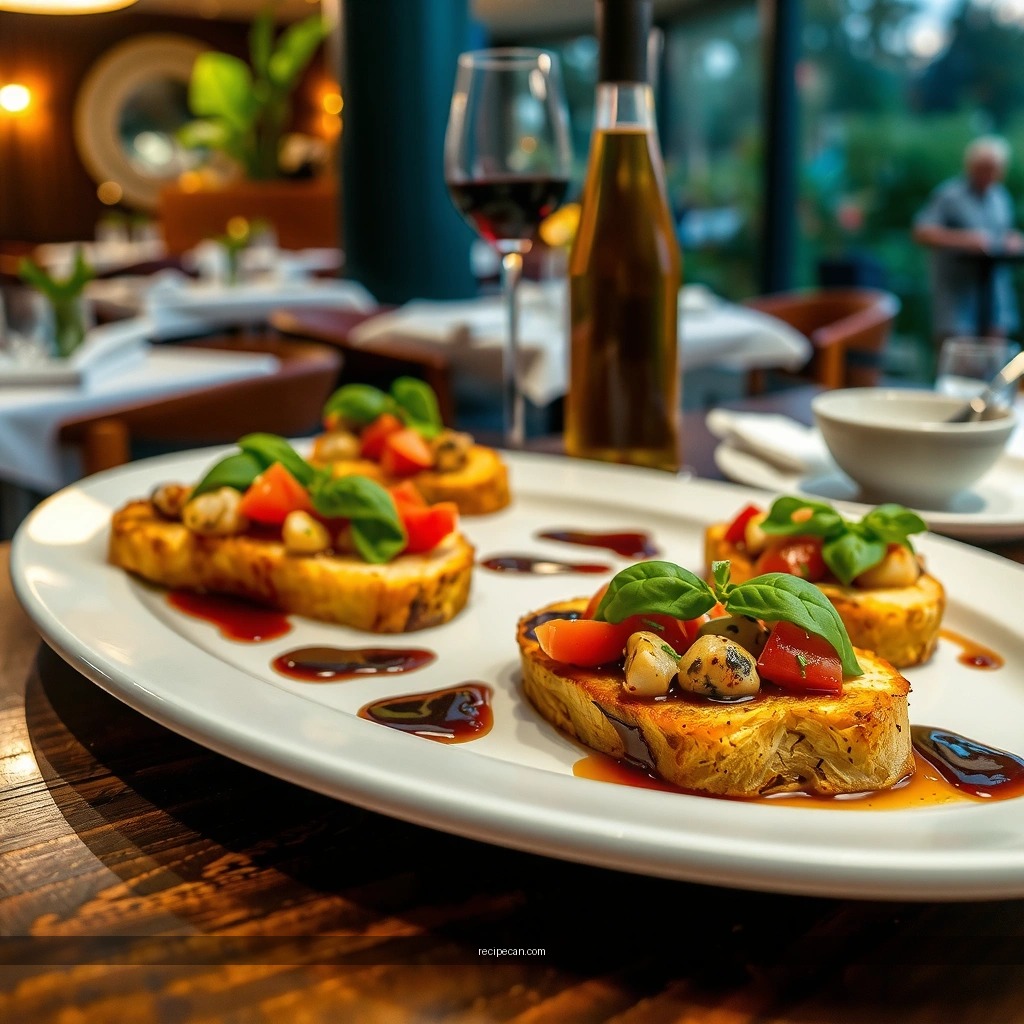
– Fresh tomatoes, basil, garlic, and quality olive oil
– Balsamic vinegar (for glaze) plus salt, pepper, and optional sugar
– Bread slices (ciabatta or baguette) for toasting
To make this recipe taste “restaurant-level,” focus on two ingredients first: tomatoes and balsamic vinegar. Choose ripe tomatoes that are aromatic (not just red), and use a balsamic vinegar you’d enjoy tasting on its own—because the glaze is concentrated and will magnify any harshness.
Tomato and basil selection tips
– Tomatoes: Cherry/grape tomatoes are sweeter and often less watery; Roma/plum tomatoes are firm and easy to dice cleanly. If using heirloom tomatoes, expect more juice—plan to rest and optionally drain.
– Basil: Fresh basil provides an immediate aromatic lift that dried basil can’t match in a raw topping.
Bread matters more than people think
For bruschetta, you want bread that can withstand topping without turning soggy. Ciabatta and baguette both work well:
– Ciabatta toasts with a crisp exterior and tender interior.
– Baguette holds shape and forms a reliable crunch.
Make the Balsamic Glaze
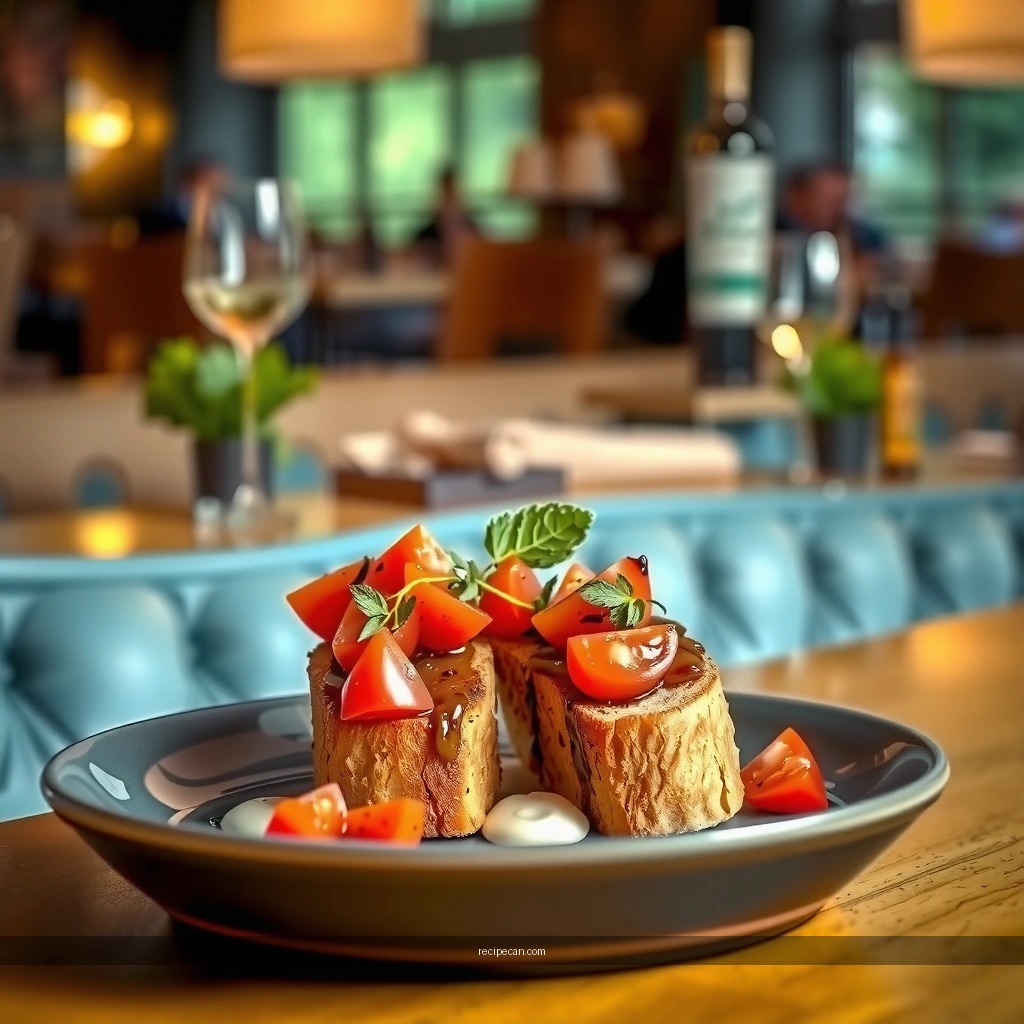
– Simmer balsamic vinegar until thickened and syrupy
– Taste and adjust with a pinch of sugar (optional) for balance
– Let it cool slightly so it clings better to the bruschetta
The balsamic glaze is the flavor backbone of this dish. In professional kitchens, “glaze consistency” is where most homemade versions either shine or fall short—too thin and it runs off; too thick and it becomes sticky or caramelized.
How to simmer for the right thickness
1. Start with enough volume: Use a small saucepan and add balsamic vinegar (for example, 1/2 cup).
2. Simmer gently: Keep it at a steady simmer. High heat can reduce too fast and introduce bitterness.
3. Reduce to syrupy: Look for a texture that coats the back of a spoon and forms slow-moving ribbons.
A practical benchmark: reduce until the glaze is about 1/4 to 1/3 of the original volume. This typically yields that tangy-sweet, glossy finish.
Balance with optional sugar
Balsamic varies by brand and acidity. If your vinegar tastes sharply acidic, add a pinch of sugar—not a lot. Stir, taste, and stop once balanced. This gives you the “tangy, sweet” profile people expect from bruschetta balsamic served at restaurants.
Cooling step (a small change with big results)
Let the glaze cool 2–5 minutes before using. Warm glaze spreads more aggressively; slightly cooled glaze clings better, creating distinct flavor bursts in each bite.
Balsamic Reduction Targets for Bruschetta Glaze
| # | Glaze Goal | Typical Reduction | Coating Test | Recommended Use | Tasting Readout |
|---|---|---|---|---|---|
| 1 | Thin drizzle | ~50% | Runs off spoon quickly | Salads, lighter topping | Acidity-forward |
| 2 | Light coating | ~40% | Slow drip, slight sheen | Roasted veg | Needs more balance |
| 3 | Ideal bruschetta glaze* | ~25–30% | Coats spoon; ribbons hold | Tomato-on-toast | ★ ★ ★ ★ ★ Harmony |
| 4 | Thick glaze | ~20% | Streaks, clings strongly | Beef, mushrooms | Sweet edge |
| 5 | Over-reduced syrup | ~10–15% | Very slow movement | Small accent only | Can taste burnt |
| 6 | Quick recovery | Add 1–2 tsp water | Re-smooths the ribbon | Bring back pourable | ★ ★ ★ ★ Retained |
| 7 | Timing for 1/2 cup batch | ~12–18 min | Check at minute 10 | Same-day service | ★ ★ ★ ★ ★ Fast-ready |
Prepare the Tomato Topping
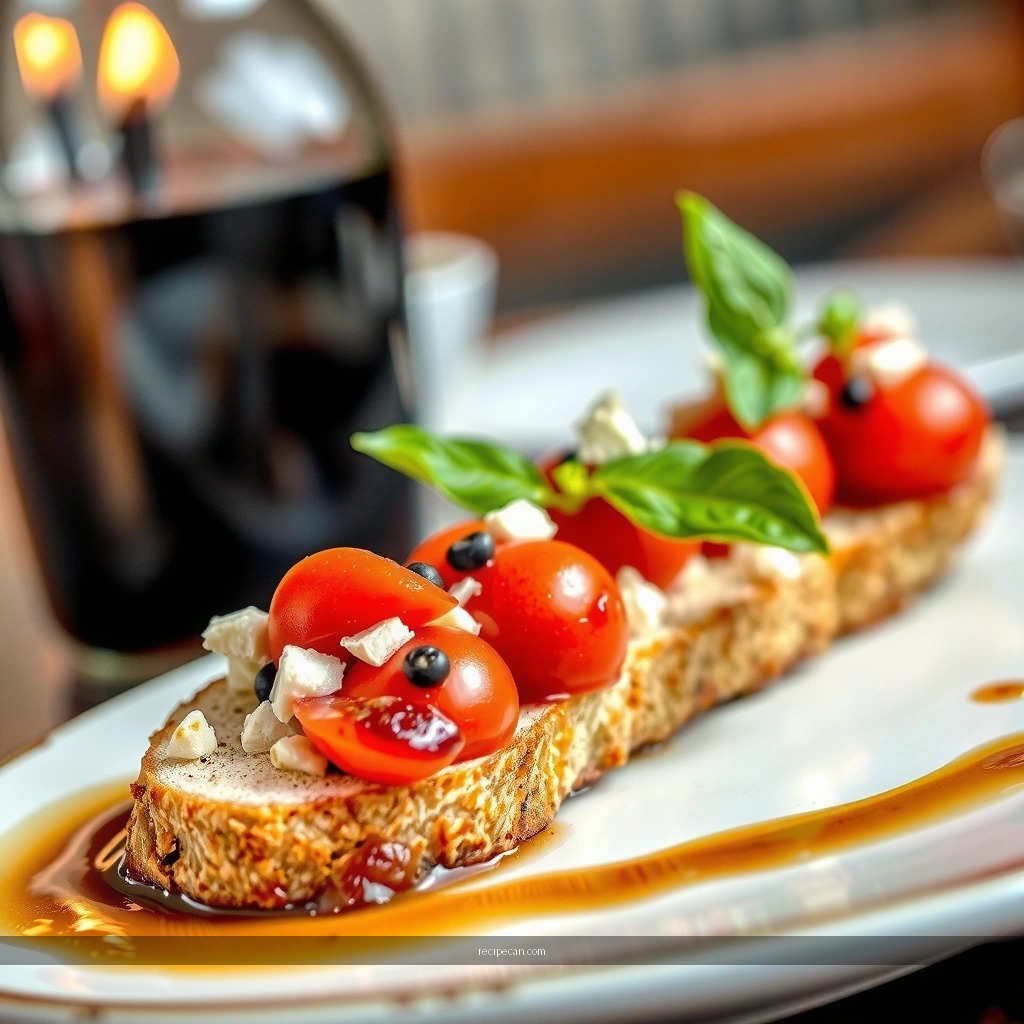
– Dice tomatoes and mix with minced garlic, basil, olive oil, salt, and pepper
– Rest for 10–15 minutes to develop flavor
– Drain excess liquid if tomatoes are very juicy
Tomato topping is where bruschetta becomes either “flat” or vibrant. The method is simple, but the technique matters.
Dice and distribute aromatics evenly
– Dice tomatoes into small, bite-size pieces so every forkful includes tomato, basil, and olive oil.
– Mince garlic finely so it disperses; large chunks can taste sharp and under-seasoned.
Salt correctly (don’t skip it)
Salt does two jobs:
1. It seasons the tomatoes so they taste complete even before glaze.
2. It draws out some juice during resting, which you can then control.
Start with a modest amount (for example, 1/2 tsp kosher salt per pound of tomatoes), then taste after the 10–15 minute rest. Adjust pepper and add more salt if needed.
Resting and draining: a quality lever
Rest the mixture 10–15 minutes. This lets:
– garlic and basil infuse the oil,
– salt dissolve and distribute,
– flavors meld.
If your tomatoes are very juicy, drain excess liquid before assembling. This prevents bread from going soft and keeps your balsamic drizzle from being diluted.
A pro adjustment for business-style consistency
If you’re feeding multiple people or preparing ahead, keep toppings organized:
– Mix tomato topping first.
– Separate any liquid.
– Spoon topping last-minute on toasted bread.
This is how restaurants protect texture and flavor repeatability.
Toast the Bread for the Best Crunch
– Toast bread until golden and firm (not soggy)
– Rub toasted bread lightly with garlic (optional) for extra aroma
– Keep toppings separate until right before serving
A crunchy base is non-negotiable for bruschetta. Even the best tomato topping will disappoint if the bread absorbs too much moisture.
Toasting targets for texture
Toast until:
– the bread is golden on the surface,
– the crumb feels firm, not bready-soft.
If using an oven, avoid steaming conditions. If using a skillet, press lightly for contact and toast evenly.
Optional garlic rub (why it works)
A light garlic rub over warm toast adds aroma without the bite of raw garlic in the topping. Use a cut clove and wipe lightly—think “scent,” not “seasoning.”
Timing: assemble to protect crispness
Keep toppings separate—especially tomato juices and glaze. Assemble only when you’re ready to serve so the bread stays crisp and the balsamic glaze looks glossy instead of absorbed.
Assemble Bruschetta with Balsamic
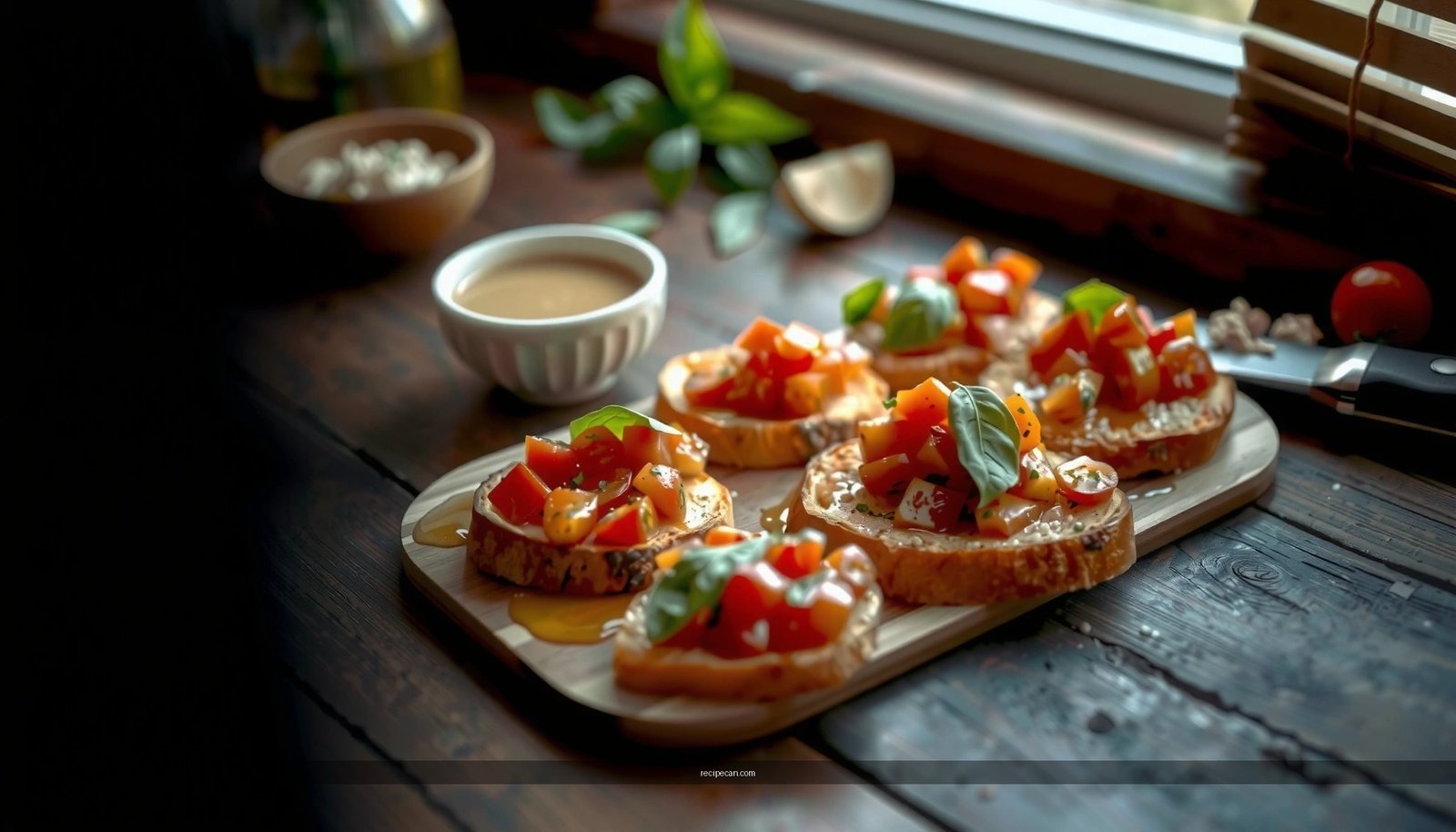
– Spoon tomato mixture onto toast and drizzle balsamic glaze
– Finish with extra basil and a drizzle of olive oil
– Serve immediately for the freshest bite
This section is simple but worth executing deliberately—small finishing details create the “wow” factor.
Step-by-step assembly order
1. Spoon tomato mixture onto each toast, ensuring visible tomato pieces rather than only liquid.
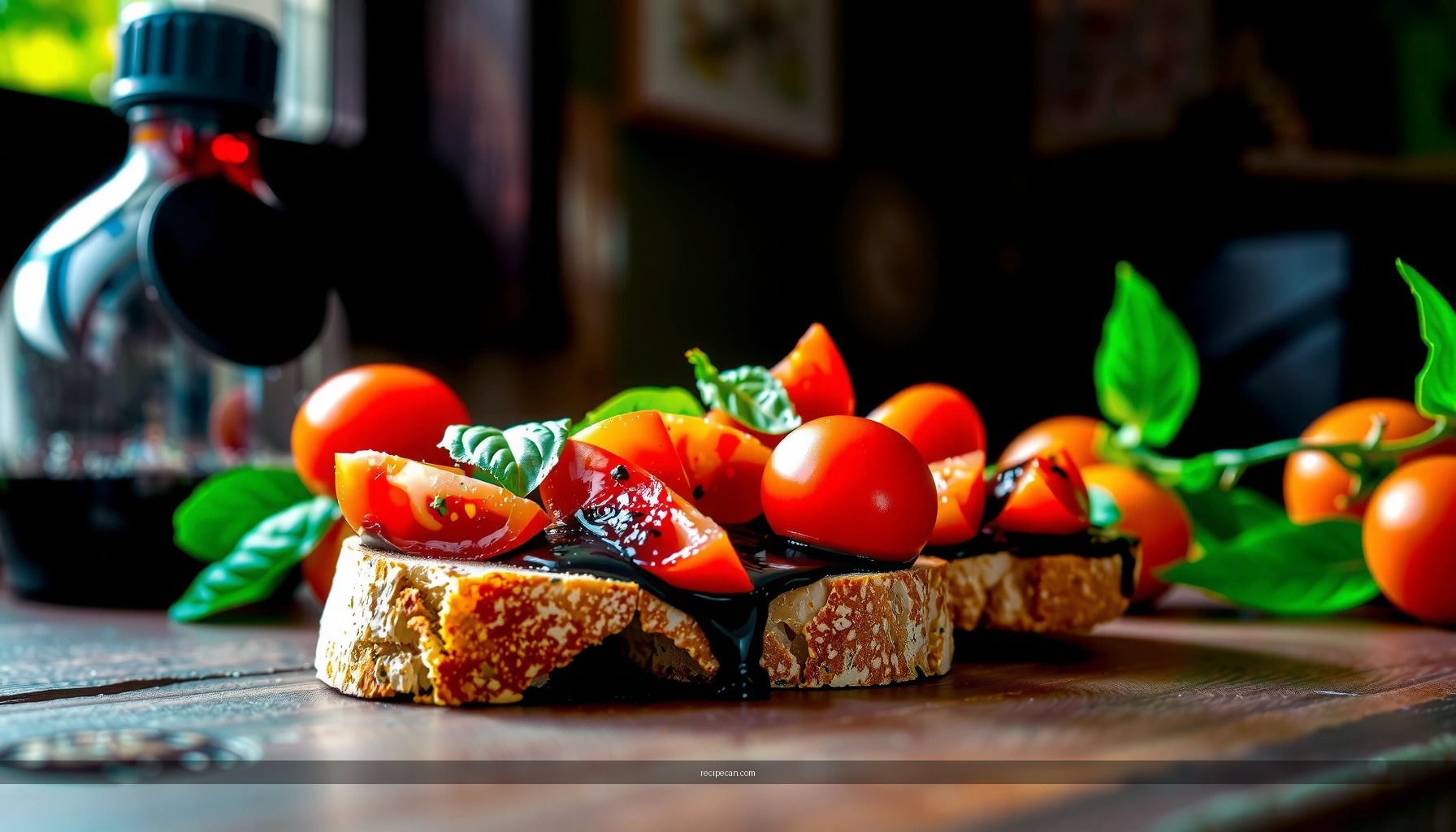
2. Drizzle balsamic glaze in a thin, controlled line or zig-zag so it distributes across bites.
3. Finish with basil (a few small leaves) for freshness.
4. Add a small drizzle of olive oil if needed for sheen and aroma.
How much glaze is enough?
Start with less than you think. Balsamic glaze is concentrated; it should amplify sweetness and tang, not overpower the tomatoes. If your glaze is at the “ideal bruschetta” thickness, you’ll get that restaurant look with modest amounts.
Serve immediately
Bruschetta is a “tempo” dish: it’s best right after assembly. If you’re hosting, toast bread and prepare everything else so you can build quickly and consistently.
Serving Ideas and Storage Tips
– Pair with burrata, mozzarella, or grilled vegetables
– Serve as an appetizer or alongside pasta and salads
– Best eaten the same day; store glaze separately for later use
Pairing suggestions that elevate the experience
Bruschetta balsamic is versatile. Consider these pairings:
– Burrata: Creaminess balances tomato acidity and makes the glaze feel sweeter.
– Fresh mozzarella: A clean dairy note that lets basil and garlic stand out.
– Grilled vegetables: Zucchini, bell peppers, or mushrooms create a smoky backdrop that works beautifully with balsamic.
Best formats for hosting and menus
– Appetizer: Serve as a starter with sparkling water or a light white wine.
– Side dish: Pair with pasta or a simple arugula salad to add contrast.
– Board-style spread: Include olives, marinated artichokes, and sliced cured meats for a full spread.
Storage (what to keep and what to avoid)
– Tomato topping: Best within a few hours of mixing. After that, texture changes as tomatoes continue releasing juice.
– Balsamic glaze: Store separately. Let it cool fully, then refrigerate in a sealed jar. Reheat gently (a few seconds to loosen) before drizzling.
– Bread: Do not store assembled bruschetta if you want crispness. Toast again if needed, then rebuild.
Make-ahead approach that still tastes fresh
For practical planning:
1. Make glaze ahead and refrigerate.
2. Dice tomatoes and mix with aromatics.
3. Toast bread shortly before serving.
4. Assemble at the last moment.
That workflow preserves the core promise of bruschetta balsamic—quick prep, thick glaze, and crisp bread.
Bruschetta balsamic is all about smart timing and tight technique: simmer balsamic vinegar until syrupy, season and rest the tomatoes for real flavor development, toast bread to a firm golden crunch, and assemble only right before serving. Finish with a glossy balsamic drizzle and fresh basil, then serve immediately for the freshest texture and most balanced tangy-sweet bite.
Frequently Asked Questions
What is the best way to make bruschetta with balsamic glaze?
Start by toasting your bread until crisp, then rub the warm slices with a cut clove of garlic for classic bruschetta flavor. Spoon a fresh tomato mixture (diced tomatoes, olive oil, salt, pepper, and basil) over the bread and finish with a balsamic glaze for sweet-tangy contrast. For best results, drizzle the balsamic right before serving so the bread stays crunchy.
How do you make a balsamic glaze for bruschetta without burning it?
Simmer balsamic vinegar over low heat until it reduces and thickens, stirring occasionally to prevent hot spots. Keep a close eye on it—reduction can go from perfect to burnt quickly, usually within 10–20 minutes depending on the vinegar. Let the balsamic glaze cool; it will thicken more as it cools, giving you a glossy finish for bruschetta.
Why does balsamic vinegar taste so good on bruschetta?
Balsamic vinegar’s natural sweetness and acidity balance the savory, garlicky base and the juicy tomatoes. The glaze also adds a syrupy texture that clings to the bread, enhancing each bite. When paired with olive oil, basil, and tomatoes, balsamic elevates the overall bruschetta recipe without needing complicated ingredients.
Which tomatoes work best for a balsamic bruschetta topping?
Use ripe but firm tomatoes like Roma or vine-ripened tomatoes because they dice well and hold their flavor. Drain any excess liquid from the tomatoes to avoid soggy bruschetta, especially if you’re assembling ahead of time. Fresh basil, extra-virgin olive oil, and a pinch of salt help bring out tomato sweetness, which pairs beautifully with balsamic glaze.
How can you prevent your bruschetta from getting soggy when using balsamic?
Toast the bread thoroughly and keep the topping separate until just before serving, especially if you’re using fresh tomatoes. If you’re adding balsamic, drizzle a balsamic glaze lightly at the end rather than soaking the bread. For extra crunch, serve immediately after assembling and avoid preloading a large amount of tomato mixture onto each slice.
References
- Google Scholar Google Scholar
https://scholar.google.com/scholar?q=bruschetta+balsamic+recipe - Google Scholar Google Scholar
https://scholar.google.com/scholar?q=bruschetta+balsamic+vinegar+tomato+recipe - Google Scholar Google Scholar
https://scholar.google.com/scholar?q=balsamic+vinegar+reduction+culinary+use - Bruschetta
https://en.wikipedia.org/wiki/Bruschetta - Balsamic vinegar
https://en.wikipedia.org/wiki/Balsamic_vinegar - Tomato
https://en.wikipedia.org/wiki/Tomato - Garlic bread
https://en.wikipedia.org/wiki/Garlic_bread - Olive oil
https://en.wikipedia.org/wiki/Olive_oil - Olive oil
https://en.wikipedia.org/wiki/Olive_oil#Health_effects - https://en.wikipedia.org/wiki/Confit_tomato
https://en.wikipedia.org/wiki/Confit_tomato