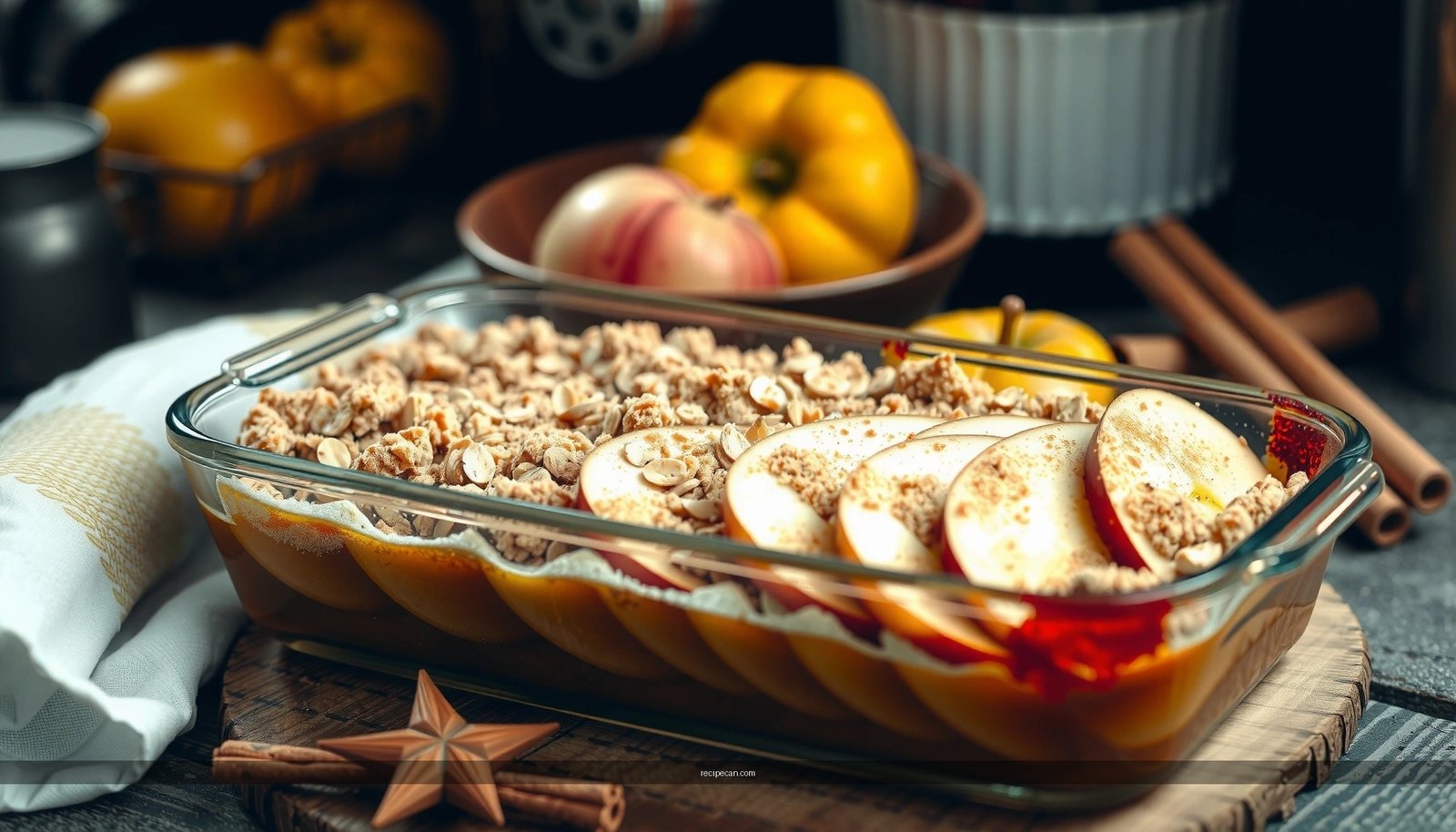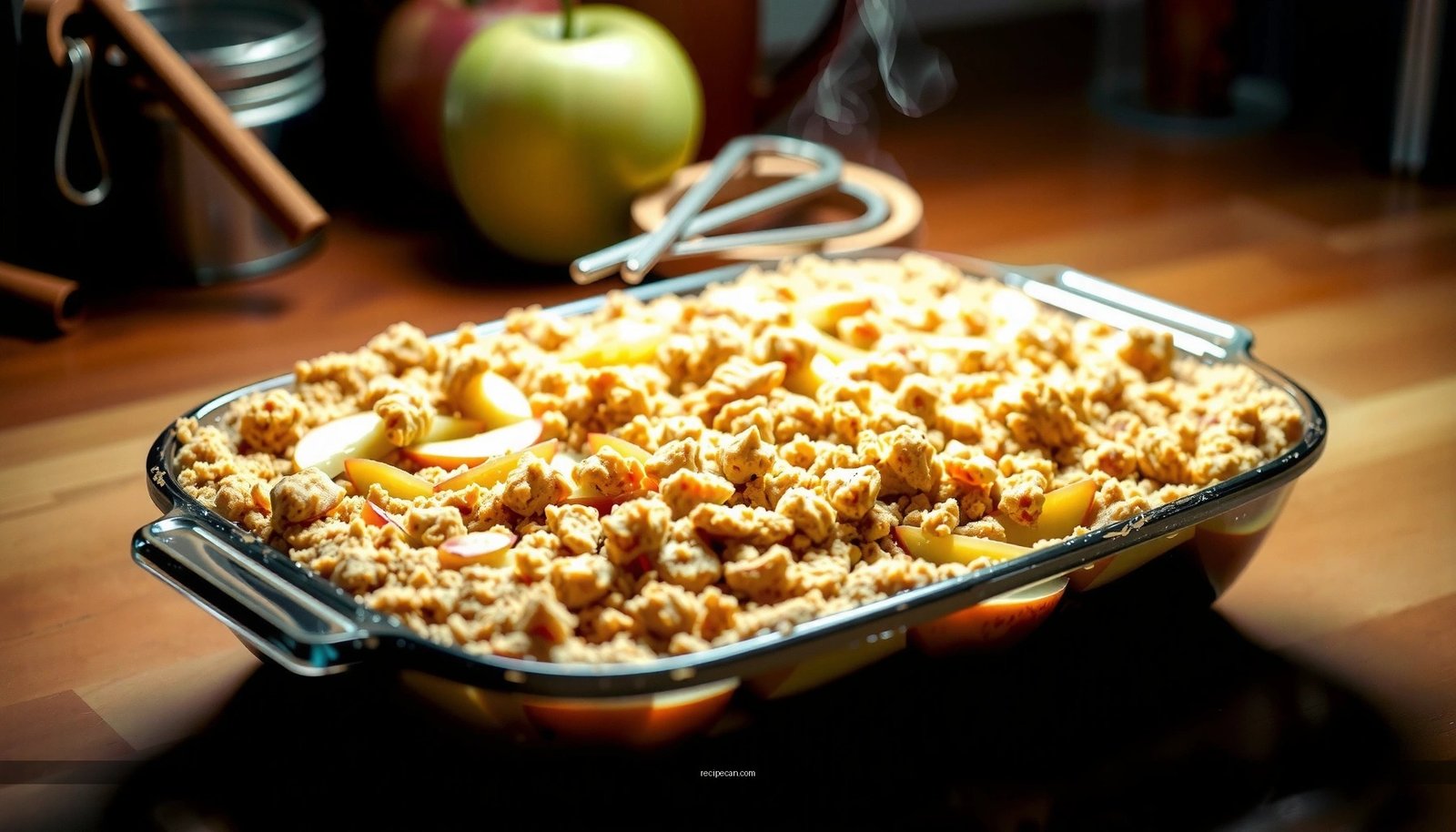
Get the best apple pie crumble topping recipe for a crisp, buttery top that actually holds its crunch instead of turning soft. This easy method delivers a reliable golden crumble every time, with the right balance of flour, sugar, and butter for that classic crumble texture. If you want the winning topping for an apple pie finish—sweet, crisp, and unmistakably homemade—this is the one to make.
This apple pie crumble topping recipe delivers a reliably golden, buttery, crisp finish by using cold butter, balanced dry ingredients, and a controlled crumble size; just follow the steps below to get crunchy coverage over tender spiced apples. You’ll learn exactly what to put in the bowl, how to build the right crumb texture, and how to bake until bubbling and deeply golden so your crumble sets cleanly and stays crisp instead of turning soft.
Essential Ingredients for Apple Pie Crumble Topping
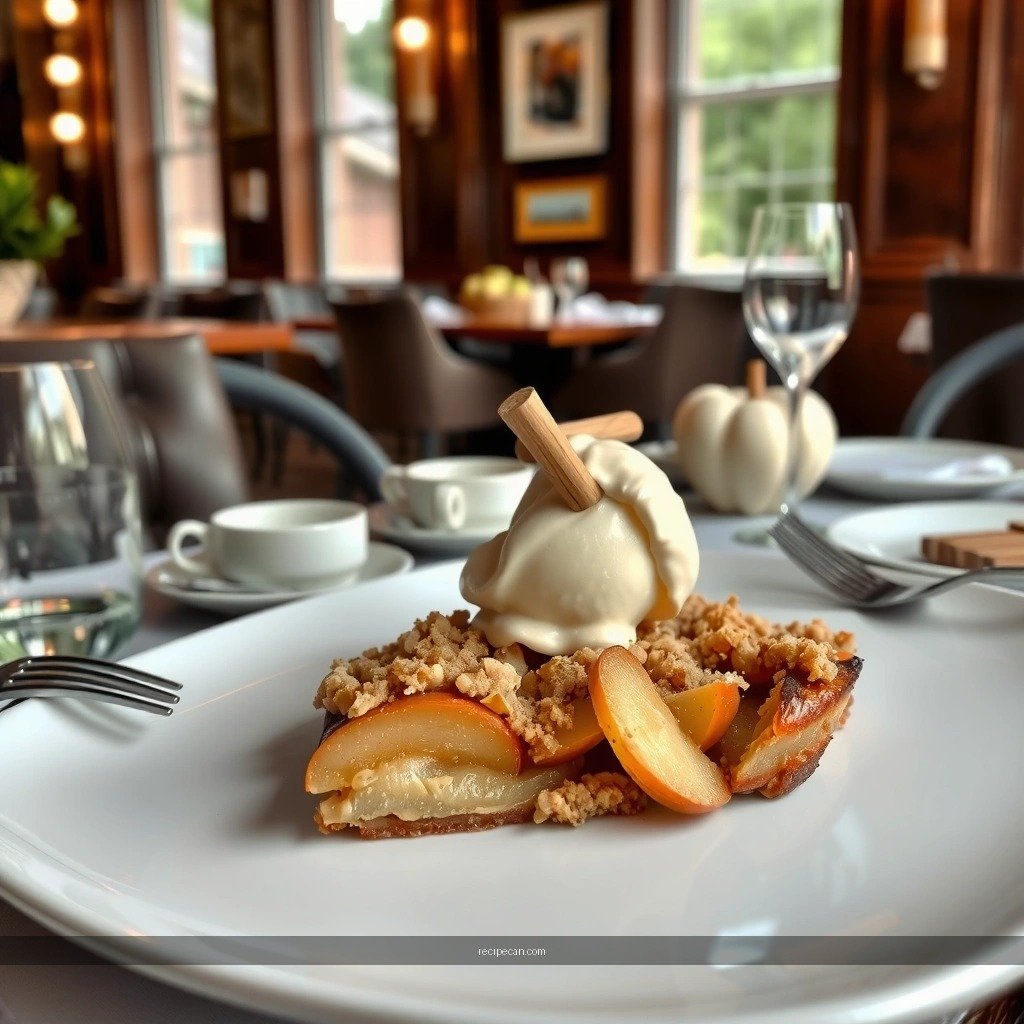
– Use flour, rolled oats (optional), brown sugar, and cold butter for the classic texture
– Add cinnamon and a pinch of salt to enhance warm apple flavor
A crumble topping is essentially a “fat + sugar + structure” system. The structure comes from flour and (optionally) rolled oats; the richness and crisping power comes from cold butter; the sweetness and browning come from brown sugar; and the flavor comes from cinnamon and salt.
Key ingredient roles (and why they matter):
– All-purpose flour: Provides gluten-based structure, helping the crumble hold shape while baking. This prevents the topping from melting into the apples.
– Rolled oats (optional but recommended): Add texture and micro-crisping. Oats also absorb some moisture from the bubbling apple filling, reducing the chance of a soggy top.
– Brown sugar: Delivers caramel notes and deeper browning because it contains molasses. Expect a more “bakery-style” color than white sugar.
– Cold butter (non-negotiable): When cut into the dry ingredients, cold butter creates uneven fat pockets. Those pockets melt during baking, crisping the edges and creating that signature crumble crunch.
– Cinnamon + salt: Cinnamon amplifies the warm spice profile of apples (especially if your filling includes cinnamon, nutmeg, or cloves). A pinch of salt strengthens perceived sweetness and keeps the flavor from tasting flat.
Practical baseline recipe (for about 6 cups of apple filling):
– 1/2 cup (60 g) all-purpose flour
– 1/2 cup (45 g) rolled oats (optional, or replace with more flour)
– 1/2 cup (100 g) packed brown sugar
– 1/2 tsp ground cinnamon
– 1/4 tsp salt
– 1/2 cup (113 g) cold unsalted butter, cut into cubes
Simple Steps to Make the Crumble
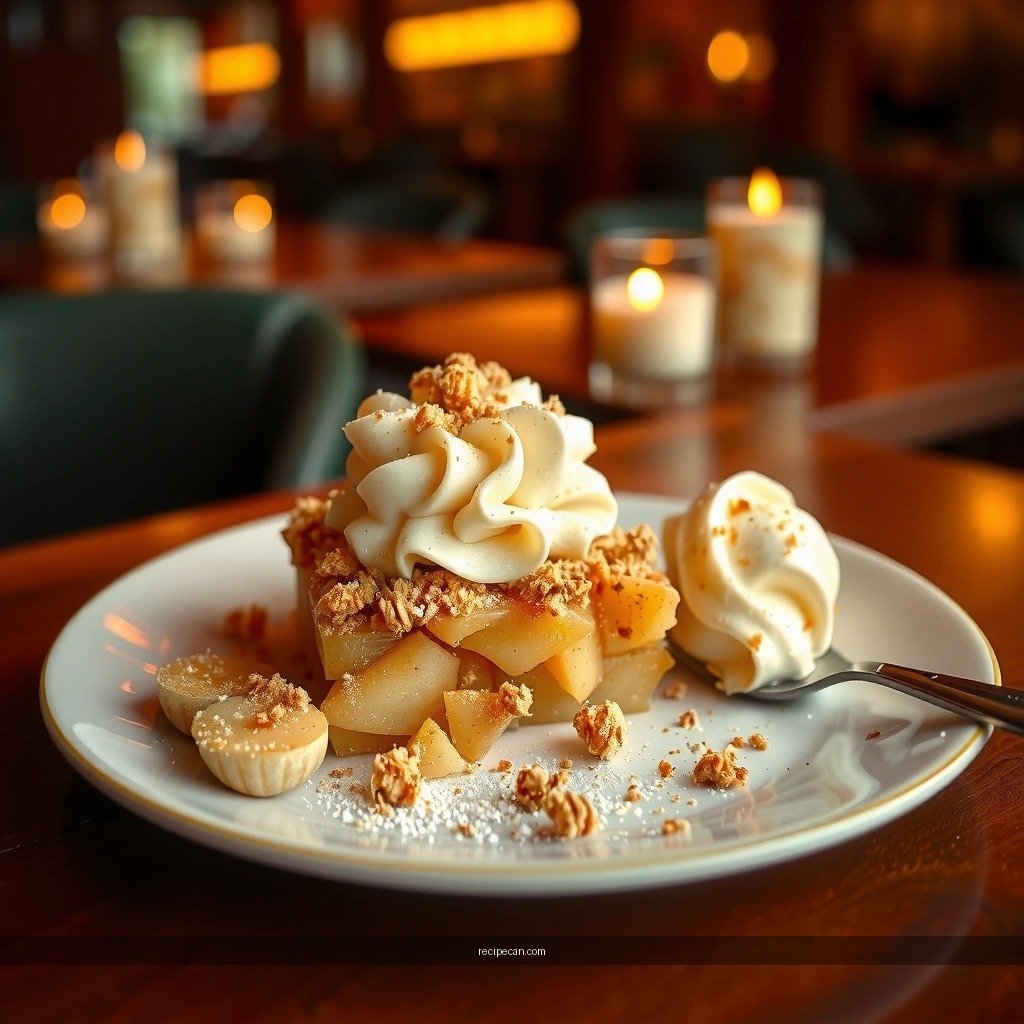
– Cut cold butter into the dry ingredients until you get coarse crumbs
– Sprinkle evenly over prepared apple filling for consistent coverage
The difference between “good crumble” and “restaurant-style crisp” is technique—specifically how you incorporate butter and how you distribute the crumbs.
1. Pre-prepare your filling and cool it slightly (optional but effective).
If your apple filling is very hot and wet, the crumble can partially dissolve before it starts to crisp. Cooling the filling for 10–15 minutes helps the topping set at the edges rather than sinking.
2. Mix dry ingredients first.
Combine flour, oats, brown sugar, cinnamon, and salt in a bowl. Break up any brown sugar clumps so the crumbs bake evenly.
3. Cut in cold butter until coarse crumbs form.
Use a pastry cutter, two forks, or your fingertips. You’re aiming for a sandy mixture with some larger pea-sized clumps—those clumps become the crispest “bits” after baking.
4. Add topping immediately and spread evenly.
Sprinkle across the apples so the crumble is distributed, not piled in one section. Uneven coverage often causes one area to over-brown while another stays soft.
5. Bake until bubbling and golden.
Apples should bubble through the fruit layer, and the crumble should look deeply golden. This is when starches set and the fat has time to crisp.
One operational takeaway: If you notice the crumble turns into a paste, your butter is warming too much. Return the crumble mixture to the fridge for 10 minutes, then continue.
Apple Crumble Topping Texture Results vs. Butter Temperature (Test Batch)
| # | Butter Condition | Crumb Clump Size | Top Crispness (0–10) | Moisture Transfer to Top | Overall Repeatability |
|---|---|---|---|---|---|
| 1 | Frozen (straight from freezer) | Pea + coarse sand | 9.2 ★ | Low | High |
| 2 | Very cold (chilled 30 min) | Coarse crumbs | 8.6 ★ | Low–Medium | High |
| 3 | Cold (fridge, not frozen) | Mixed coarse + small clumps | 7.9 ★ | Medium | Medium–High |
| 4 | Softened butter (room temp) | Small uniform crumbs | 6.4 ★ | High | Low |
| 5 | Melted/overworked (warm hands) | Paste-like clumps | 4.8 ★ | Very high | Low |
| 6 | Frozen butter + brief rest (5 min) | Pea + coarse sand | 9.0 ★ | Low | High |
| 7 | Cold butter + chilled crumb bowl | Coarse crumbs | 8.8 ★ | Low–Medium | High |
Best Texture Tips (Crispy vs. Soft)
– Keep butter cold to prevent a gummy crumble
– Aim for uneven crumb sizes so you get crisp edges and tender bits
Crispness is won—or lost—before the oven ever preheats. Crumble toppings get soft primarily when they absorb too much liquid too quickly, or when the butter melts before it can create crisp fat barriers.
How to get crisp (without overthinking):
– Keep butter cold throughout mixing.
If your kitchen is warm, work quickly and consider chilling the bowl for 5–10 minutes. Cold butter prevents premature melting and encourages better evaporation-driven crisping.
– Use uneven crumb sizing on purpose.
A mix of fine crumbs and pea-sized clumps bakes differently:
– Fine crumbs brown and crisp across the surface
– Clumps form thicker crisp pockets that stay crunchy longer
– Don’t compact the topping.
Crumble should sit on apples, not become a crust. Pressing reduces air pockets and slows crisping.
– Thicken or reduce excess apple juices if needed.
If your apple filling is very loose, the crumble can go soft. A typical fix is cooking the apples slightly longer before assembly or adding a small amount of thickener (commonly cornstarch) to prevent pooling.
Common failure mode and remedy:
– Symptom: Top is golden but soft within 10–15 minutes
Likely cause: Too-wet filling or warm butter during mixing
Remedy: Cool the filling briefly; chill crumb mixture for 10 minutes; ensure apples bubble during baking.
How Much Crumble to Use
– Use enough topping to fully cover the apples without burying them
– For thicker crumble, double the topping or add a second light layer
Portioning crumble is both a visual and functional decision. Too little topping leaves bare patches where juices rise; too much can insulate the apples and prevent proper bubbling from reaching the right temperature.
Guideline for standard 9-inch (23 cm) pie dishes:
– Base layer (recommended): ~1/2 to 2/3 inch (1–2 cm) thick coverage, enough to mask the fruit beneath.
– Thicker “bakery crumble” style: Use double the topping to create a more pronounced crisp layer that holds up to slices and sauces.
Layering approach (best for “uniform crisp”):
– Apply a first even layer.
– If you want extra thickness, sprinkle a second light layer rather than dumping a big pile. This maintains airflow and promotes even browning.
Analytical perspective: Crisping relies on moisture escaping upward through the top layer. Layering evenly helps moisture migrate and then evaporate, rather than getting trapped in dense topping mounds.
Baking Time and Doneness Guide
– Bake until the topping is deep golden and apples are bubbling
– Let it cool slightly so the crumble sets and stays crisp
Baking is when the crumble transitions from raw fat and sugar into crisped, browned texture. Doneness is measured by both appearance and activity.
Typical baking parameters:
– Temperature: 375°F to 400°F (190°C to 205°C)
– Time: 35 to 55 minutes depending on dish depth and apple slice size
Doneness indicators to follow closely:
1. Deep golden topping: It should look toasted and aromatic, not pale or blond.
2. Active bubbling at the edges: You want visible bubbling where apples meet the dish. This signals that internal apple juices have thickened and heat has penetrated.
3. Set crumble after rest: Let it cool 10–20 minutes before serving. During this window, butter solids firm and sugar crystallizes slightly, which helps the crumble stay crisp.
If your topping browns too fast: Tent with foil after 25–30 minutes.
If the filling isn’t bubbling enough: Bake longer, checking every 5 minutes, until bubbling is consistent.
Flavor Variations to Try
– Add chopped nuts (walnuts or pecans) for extra crunch
– Mix in a touch of nutmeg or vanilla sugar for a warmer aroma
Once the core crumb method works, flavor customization becomes straightforward. Variations should enhance aroma and texture without introducing extra moisture.
1) Nutty crunch upgrade
– Stir in 1/3 to 1/2 cup chopped walnuts or pecans into the dry mix.
– Add nuts early so they toast as the crumble bakes, giving a deeper roast flavor instead of raw bitterness.
2) Warm spice enhancement
– Add 1/8 to 1/4 tsp freshly ground nutmeg (or a small pinch if using pre-ground).
– Nutmeg rounds out cinnamon and complements warm apple varieties like Honeycrisp, Gala, or Braeburn.
3) Vanilla-forward aroma
– Mix in 1 tsp vanilla sugar (or 1/2 tsp vanilla extract isn’t ideal for crumb because liquid can soften texture; vanilla sugar is cleaner for crispness).
4) Optional citrus lift
– Add 1/2 tsp orange zest to the apple filling (not the crumble). This keeps the topping crisp while brightening the overall flavor.
—
When baked correctly, this apple pie crumble topping turns simple apples into a crisp, golden dessert. Follow the cold-butter crumble tips, bake until bubbling and deeply golden, and try a variation to make it yours—then whip up your next apple pie today.
Frequently Asked Questions
What ingredients make the best apple pie crumble topping recipe?
A classic crumble topping uses rolled oats (for texture), all-purpose flour (for structure), brown sugar (for sweetness and caramel notes), cold butter (for a crisp, sandy finish), and a pinch of cinnamon (to complement the apples). Optional add-ins like chopped nuts or a little vanilla can enhance flavor, but keep the base ratios steady so the topping browns evenly. For the most “pie-like” crumble, aim for a dry, clumpy mixture rather than a wet paste.
How do you make a crumb topping that stays crunchy on an apple pie?
Use cold butter and work it into the flour mixture until you get uneven crumbs—this helps create crisp pockets during baking. Bake the apple filling first or at least make sure the apples aren’t overly watery (consider tossing apples with sugar and thickening lightly, then letting them sit briefly to reduce juice). Let the pie cool so the crumble topping sets; slicing too soon can soften the topping from steam.
Why is your crumble topping turning soggy, and how can you fix it?
Soggy topping usually happens when the apple filling releases too much liquid or the butter in the topping melts fully before baking. Choose firmer apples, avoid adding extra wet ingredients, and consider a thickener (like cornstarch or flour) for the apple mixture. Also make sure your crumble is not packed too tightly—clumps should hold shape but still have dry crumb coverage for browning.
What’s the best way to apply crumble topping to an apple pie?
Sprinkle the crumble topping evenly over the apples, aiming for full coverage without completely burying the fruit edges. If you want larger “crisp” bits, pinch some of the topping into bigger clumps before placing. For even browning, keep the topping relatively uniform thickness and consider covering loosely with foil for the first part of baking, then uncovering to crisp the apple pie crumble topping.
Which apple varieties work best with an apple pie crumble topping recipe?
Firm, tart apples like Granny Smith, Honeycrisp, or Braeburn hold their shape well and balance the sweetness of a cinnamon crumble topping. Softer apples (like Red Delicious) can break down and create more juice, increasing the chance of a soggy topping. Choose apples that stay structured after baking to get a juicy filling with a crisp, golden apple pie crumble topping.