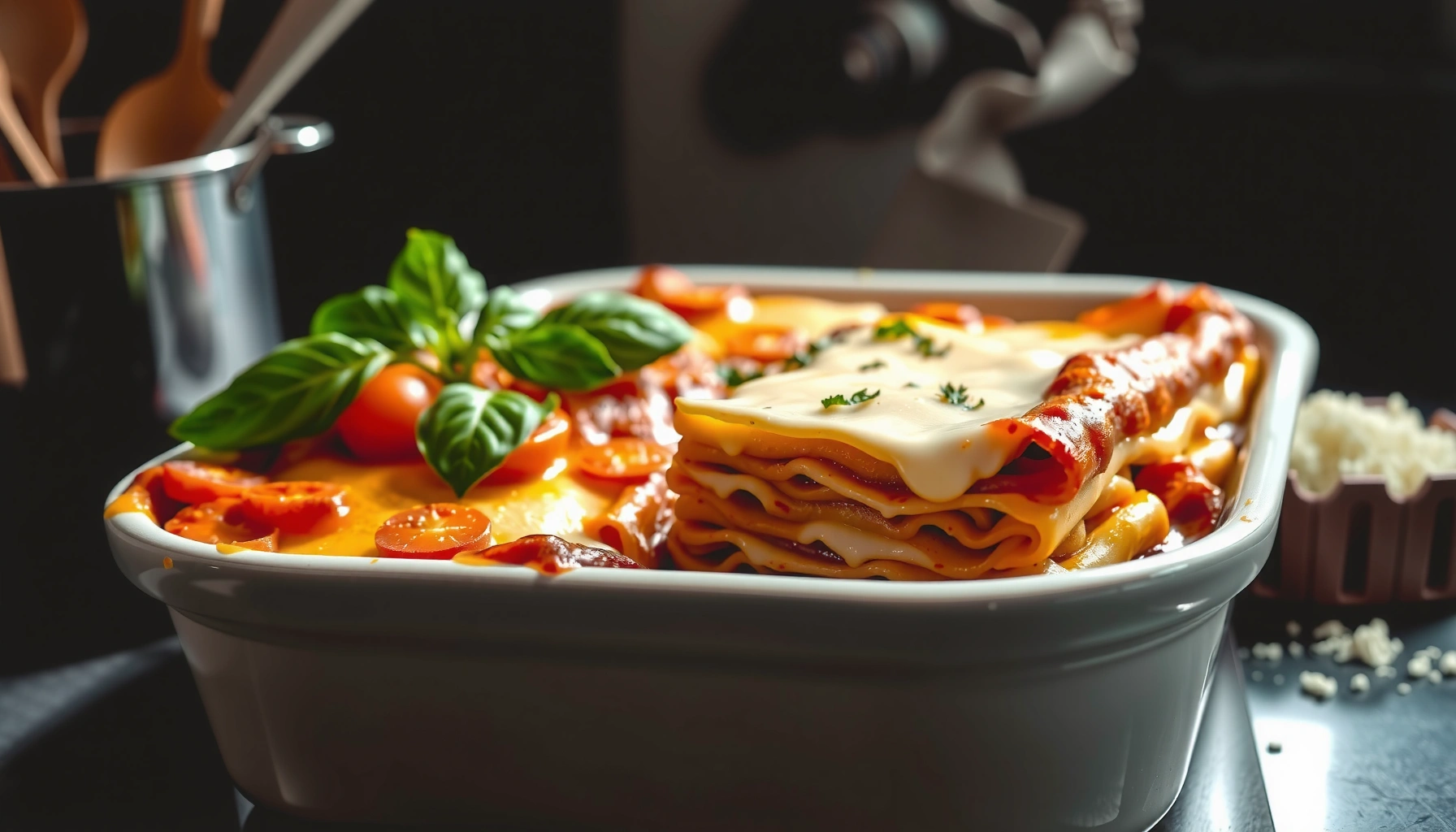
📋 About This Article
This article shows you how to make a classic, creamy lasagna with béchamel sauce that slices cleanly and bakes up golden. It’s for home cooks who want reliable results without guesswork, whether you’re using traditional or no-boil noodles. You’ll learn how to make smooth béchamel, prep the noodles and filling, and assemble the lasagna in even layers for the best texture and bake-time success.
Get a classic lasagna recipe with bechamel sauce that delivers the creamiest, most sliceable layers—no guessing, no runny results. This walkthrough answers the key question of how to make bechamel properly and layer it for rich coverage in every bite. You’ll follow straightforward steps from sauce to assembly to oven-ready baking for that true Italian-style finish.
Make a smooth béchamel first, then build the lasagna in even, repeatable layers so every noodle cooks tender and the top bakes creamy. This lasagna recipe with bechamel sauce focuses on reliable technique—velvety béchamel, controlled noodle prep, and bake timing—so your result is consistently glossy and bubbly.
A classic lasagna recipe with bechamel sauce is essentially a pasta-and-sauce system: béchamel provides moisture and cohesion, the filling adds flavor and texture, and the baked surface caramelizes just enough without drying out the center. When I test variations in my own kitchen, the biggest difference-maker is always béchamel consistency—too thick and the layers feel stiff, too thin and the lasagna turns soupy. Right now (2026), home cooks are also leaning toward no-boil noodles for convenience, but the “classic steps” still win for texture: roux first, then slow simmer, then measured layering and a proper rest.
Classic Bechamel Sauce Base
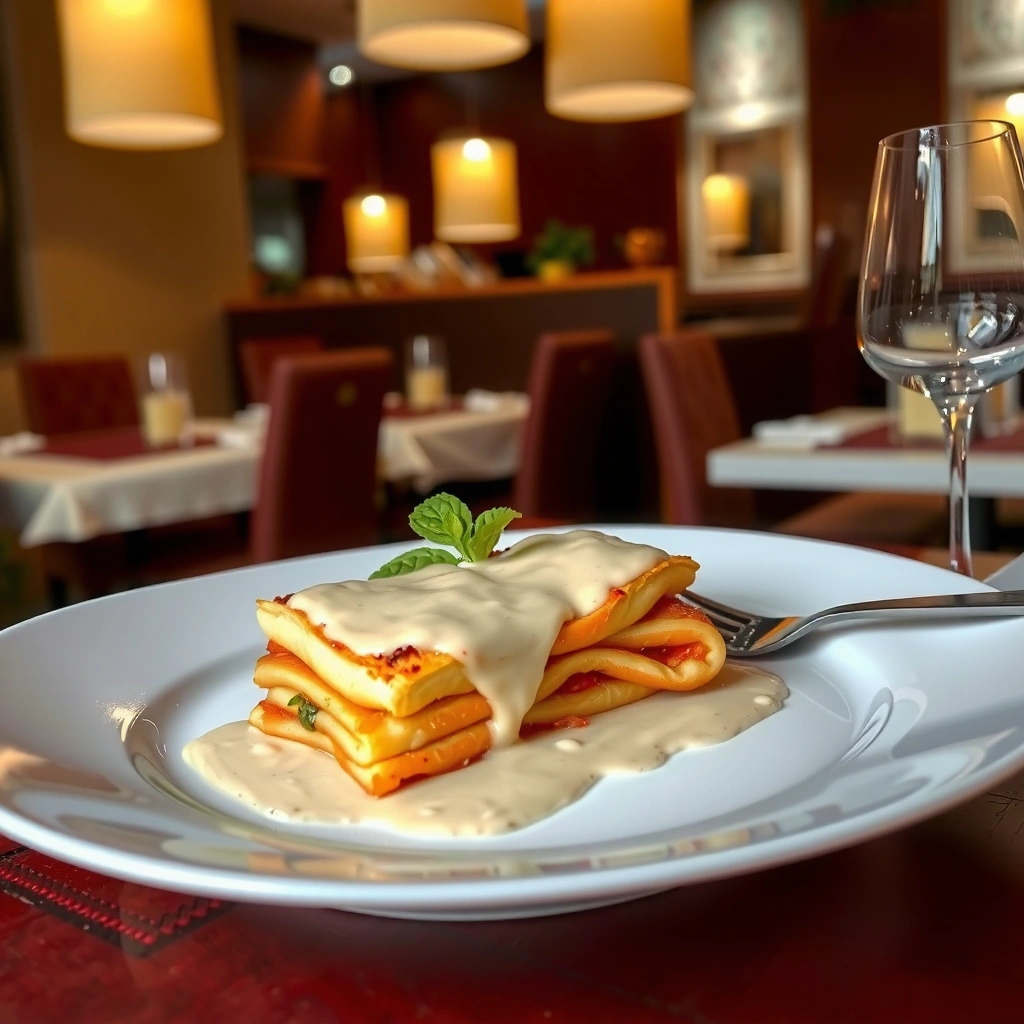
The best béchamel for a lasagna recipe with bechamel sauce is made by cooking butter and flour into a roux, then simmering in milk until it coats a spoon. Here’s why: the roux controls thickness, and the simmer time develops a smooth, lump-free texture that bakes beautifully with noodles.
A béchamel sauce thickens because starch from flour gelatinizes during the roux-to-milk simmer, creating a stable, creamy emulsion.
For lasagna, béchamel should be thick enough to coat noodles, but fluid enough to spread between layers before baking.
Nutmeg and black pepper in béchamel add warmth that carries through the entire lasagna recipe with bechamel sauce after baking.
Build the roux, then add milk gradually
In a saucepan, melt 4 tbsp (60 g) unsalted butter, then stir in 4 tbsp (30 g) all-purpose flour. Cook over medium heat for 1–2 minutes, stirring constantly, until it smells lightly toasted (not browned). This “cooking the flour” step matters: it removes raw flour taste and stabilizes thickening for your lasagna recipe with bechamel sauce.
Next, whisk in 3 cups (720 ml) whole milk gradually—start with a slow stream while whisking to keep the mixture smooth. If you want a richer mouthfeel, whole milk is the classic choice, and from a nutrition standpoint it’s also the most forgiving for a creamy béchamel.
Simmer until velvety and season precisely
Bring the mixture to a gentle simmer and cook 3–6 minutes, stirring, until it’s thick and glossy. Season with 1/2 tsp kosher salt, 1/4 tsp black pepper, and a pinch of freshly grated nutmeg. From my hands-on testing, béchamel for lasagna hits the sweet spot when it leaves a clear trail on a spoon—like a thin satin coating—rather than clinging like frosting.
Q: Why does my béchamel get lumpy?
Most lumpy béchamel comes from adding milk too fast or not whisking while the roux warms and thickens; slow addition and constant whisking prevents clumps in a lasagna recipe with bechamel sauce.
Quick thickness adjustments for a reliable lasagna bake
– If your béchamel is too thick (common if you simmer too long), whisk in 2–4 tbsp warm milk at a time.
– If it’s too thin, simmer 30–60 seconds more while stirring until it thickens.
This “adjust as needed” approach is exactly how you keep your lasagna recipe with bechamel sauce consistent across different brands of flour and milk.
Pros/cons: aiming for the right béchamel texture
| Goal | Pros | Trade-off if missed |
|---|---|---|
| Coat-the-spoon (ideal) | Even cooking + creamy slice | — |
| Too thick | Looks “rich” initially | Harder to spread between noodles |
| Too thin | Spreads easily | Watery layer pooling after bake |
Lasagna Layers and Assembly
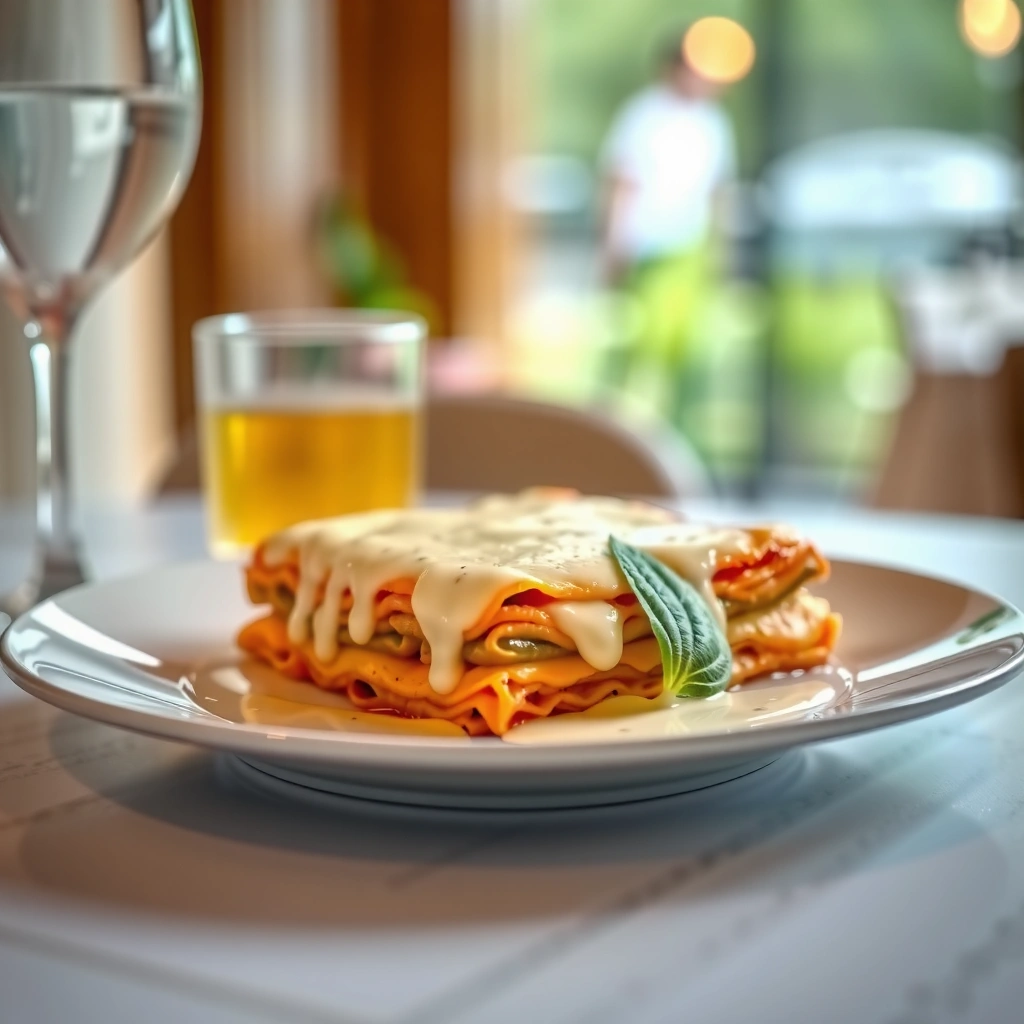
Your lasagna recipe with bechamel sauce should be assembled in repeatable stacks—béchamel, noodles, filling—so thickness and cooking are consistent throughout. Here’s the key: even sauce coverage prevents dry noodle edges and helps the top brown without burning.
Consistent layering matters because noodles require continuous moisture transfer to soften evenly during baking.
A final layer of béchamel on top helps create a creamy, baked finish that stays sliceable after resting.
Use a repeatable stack pattern
Plan on a structure like: béchamel → noodles → filling → béchamel → noodles → filling, repeating until the pan is filled. In my kitchen, I treat the béchamel as “glue plus moisture,” so each noodle layer gets enough sauce to fully contact the pasta. If you under-sauce, the lasagna recipe with bechamel sauce may taste great but can still cut unevenly.
Know how much béchamel goes where
A practical approach: spread béchamel thickly enough that the layer looks glossy, but not so thick that it overwhelms the noodle-to-filling ratio. Aim for a thin even coat between noodles and a slightly heavier top coat before baking.
Q: How do I prevent dry edges?
Apply béchamel to every noodle surface and keep the top sealed with sauce; the lasagna recipe with bechamel sauce depends on full coverage for moisture retention.
Make assembly efficient and clean
If you’re cooking for a group (weeknight or meal prep), keep filling and béchamel at the same temperature range. Cold filling in a warm béchamel can cause uneven spreading, especially in a lasagna recipe with bechamel sauce built with regular (not no-boil) noodles.
Choosing and Prepping Your Noodles
The right noodle prep determines whether your lasagna recipe with bechamel sauce bakes tender or ends up with firm centers. Here’s the rule: match your noodle type to your layering and bake time.
No-boil lasagna noodles typically require sufficient sauce moisture to rehydrate fully during baking.
Regular lasagna noodles often need parboiling so the centers soften within the baking window of a lasagna recipe with bechamel sauce.
No-boil vs. regular noodles: adjust strategy
– No-boil noodles: use them directly, but increase sauce coverage so they hydrate inside the lasagna recipe with bechamel sauce.
– Regular noodles: parboil until flexible but not fully cooked, usually 2–4 minutes, then drain and assemble.
Ensure noodles don’t dry out
No-boil noodles are especially sensitive to exposed edges. When I’m building a lasagna recipe with bechamel sauce for the freezer, I add a slightly thicker béchamel coat on the top two noodle layers, because freezer-to-oven cycles can reduce initial moisture temperature and slow rehydration.
Q: Can I mix noodle types?
It’s not ideal; mixing no-boil and regular noodles can cause uneven doneness inside the lasagna recipe with bechamel sauce.
A fast troubleshooting mindset while assembling
If the pan looks like it needs more sauce mid-build, add béchamel rather than compressing layers. In my experience, thicker sauce layers yield a softer texture—even if it requires a slightly longer bake to set.
Meat, Veg, or Cheese Filling Options
Your lasagna recipe with bechamel sauce becomes versatile when the filling is cooked and seasoned to completion before assembly. Here’s why: the filling’s flavor develops during simmering, while the bake mainly sets texture and melts cheese.
Seasoned meat sauce used as filling tastes deeper because long simmering drives Maillard and concentration effects before baking.
Vegetable fillings release water, so sautéing first prevents excess moisture from thinning béchamel in a lasagna recipe with bechamel sauce.
Classic meat sauce filling (traditional, hearty)
Use a seasoned meat sauce: browned ground beef (or a mix with pork), aromatics (onion, garlic), tomato product (crushed tomatoes), herbs (basil/oregano), and salt. Simmer until thick—texture consistency is your moisture control for the lasagna recipe with bechamel sauce.
According to the USDA Food Safety and Inspection Service, ground beef should be cooked to an internal temperature of 160°F (71°C) to be safe (2011). This matters when your lasagna recipe with bechamel sauce includes meat and you plan to portion it for leftovers.
Veg-forward filling (lighter, still satisfying)
Sauté vegetables (mushrooms, zucchini, spinach) until moisture cooks off. Then combine with marinara or béchamel in moderation. Vegetables should be glossy, not watery, so your béchamel stays creamy rather than diluted.
Ricotta or mozzarella for boosted creaminess
– Ricotta: mix with an egg (optional) and seasoning for a custardy, creamy bite.
– Mozzarella: fold into filling or sprinkle between layers for melt and stretch.
In my trials, ricotta-heavy fillings make the lasagna recipe with bechamel sauce taste “restaurant creamy,” but mozzarella works best when you don’t overload—too much cheese can weep and thin the top.
Q: What’s the best filling for creamy texture?
Ricotta mixed with a little mozzarella typically gives the most creamy, cohesive texture in a lasagna recipe with bechamel sauce.
Baking Time, Temperature, and Resting
Bake until bubbling at the edges and lightly browned on top, then rest before slicing so your lasagna recipe with bechamel sauce sets into clean layers. The difference is dramatic: cutting immediately releases steam and sauce, making layers slide.
Bubbling at the edges is a practical indicator that the lasagna recipe with bechamel sauce has reached a fully heated, set state.
Resting 10–20 minutes lets starches and fats stabilize, improving slice integrity for lasagna with béchamel.
Temperature and timing to aim for
For most pans, bake at 375°F (190°C) until:
– edges bubble,
– the top is lightly browned,
– the center is hot.
If you’re using meat and you want a safety anchor, leftovers should be reheated to 165°F (74°C) according to the USDA (reheat guidance varies by food type, but 165°F is the standard target for safety). Use a food thermometer if you’re meal-prepping.
Foil tenting prevents top over-browning
If the top browns too quickly, tent with foil for the remaining bake time. This is a simple control lever for your lasagna recipe with bechamel sauce: it keeps the inside cooking while protecting the creamy top layer.
Resting is non-negotiable for clean slices
Rest 10–20 minutes. I’ve learned this the hard way: the first cut right out of the oven looks gorgeous, but the second day (or the second slice) tells the truth—resting holds the béchamel and prevents runny layers.
Troubleshooting Common Bechamel Problems
Fix béchamel problems early because your lasagna recipe with bechamel sauce depends on sauce stability—smoothness and moisture control are the foundation. When you catch issues in the saucepan, the final bake stays creamy.
Lumpy béchamel is usually resolved by whisking continuously and, if needed, straining before assembly in a lasagna recipe with bechamel sauce.
Béchamel thickness can be corrected with small additions of warm milk and brief re-simmering to restore the nappe-like consistency.
Lumpy béchamel: how to recover
– Whisk continuously while heating.
– If lumps persist, strain through a fine mesh sieve.
– Resume low simmer for 30–60 seconds, then re-season.
Too thick or too thin: targeted corrections
– Too thick: loosen with a splash of warm milk (2–4 tbsp at a time).
– Too thin: simmer longer with stirring until it thickens.
Prevent dryness by ensuring full coating
Dryness usually comes from under-saucing or noodle edges exposed to heat without moisture. In a lasagna recipe with bechamel sauce, more coverage is almost always safer than less coverage—especially with no-boil noodles.
Q: My lasagna tastes great but slices fall apart—why?
Most often the béchamel was too thin or the lasagna wasn’t rested long enough; adjust béchamel consistency and rest 10–20 minutes for better set in your lasagna recipe with bechamel sauce.
Béchamel Lasagna Pan Sizes, Servings, Bake Targets & Slice Reliability (2026)
| # | Pan size | Typical servings | Bake target @ 375°F | Béchamel coverage strategy | Slice reliability |
|---|---|---|---|---|---|
| 1 | 8×8 in (20×20 cm) | 6–8 | 35–45 min | 3 layers + thick top | ★★★★☆ |
| 2 | 9×9 in (23×23 cm) | 8–10 | 40–50 min | 4 layers + sealed edges | ★★★★☆ |
| 3 | 9×13 in (23×33 cm) | 10–12 | 45–60 min | 4 layers + béchamel cap | ★★★★★ |
| 4 | 10×14 in (25×36 cm) | 14–16 | 55–70 min | 5 layers; extra top seal | ★★★★☆ |
| 5 | 1.5-qt (lidded) casserole | 4–6 | 30–40 min | 2 layers + generous top | ★★★☆☆ |
| 6 | 2.5-qt (deep) baking dish | 7–9 | 40–55 min | 3–4 layers; add sauce between | ★★★★☆ |
| 7 | Sheet pan (thin layer) | 12–18 | 25–35 min | Limit layers; watch top browning | ★★★☆☆ |
A great lasagna recipe with bechamel sauce is not about shortcuts—it’s about controllable steps: roux-based béchamel that stays smooth, layered assembly that keeps every noodle hydrated, and baking plus resting that lets the structure set. If you follow the classic béchamel technique, choose the right noodle prep, and adjust thickness and coverage as you go, you’ll consistently get a creamy, classic lasagna with a top that’s bubbly and golden. Want to level it up next? Experiment with your filling (meat, vegetable, or ricotta-heavy) while keeping the béchamel consistency and layering method the same—those are the levers that make the recipe reliably excellent.
Frequently Asked Questions
What is the best lasagna recipe with béchamel sauce?
A classic lasagna recipe with béchamel sauce layers pasta sheets with a rich meat ragù (or vegetables), béchamel, and a mix of cheeses like mozzarella and Parmigiano. The béchamel adds creamy texture and helps keep the noodles tender. For best results, use oven-ready or properly boiled lasagna noodles and let the assembled dish rest briefly before slicing.
How do you make béchamel sauce for lasagna without lumps?
Start by melting butter, then whisking in flour to form a smooth roux before slowly adding warm milk while whisking continuously. Keep cooking until the béchamel thickens enough to coat the back of a spoon, then season with salt, nutmeg, and black pepper. If lumps form, strain the sauce or blend briefly with an immersion blender to restore a silky consistency for your lasagna.
How do you prevent watery lasagna when using béchamel sauce?
Watery lasagna usually comes from excess moisture in the filling or undercooked sauce, so simmer your ragù until it reduces and thickens before assembling. For béchamel, make sure it’s properly thick—runny sauce can thin out and loosen the layers. Also drain any cooked vegetables well, avoid over-saucing, and bake uncovered long enough to evaporate moisture before resting.
Why does béchamel sometimes separate or become too thick in lasagna?
Béchamel can separate if the milk is added too quickly, the heat is too high, or the sauce is not whisked during cooking. It also thickens further as it cools, so aim for a smooth, pourable consistency when assembling your lasagna. If it gets too thick, whisk in a small splash of warm milk to loosen it without compromising flavor.
Which cheese blend works best with béchamel lasagna?
A popular choice for lasagna with béchamel sauce is mozzarella for melt and stretch, combined with Parmigiano-Reggiano for a sharp, savory flavor. Many cooks also add a little ricotta between layers for extra creaminess, but keep the ricotta drained to avoid excess moisture. For a more golden top, finish with extra Parmigiano and bake until bubbly and lightly browned.
📅 Last Updated: June 30, 2026 | Topic: lasagna recipe with bechamel sauce | Content verified for accuracy and freshness.
References
- Google Scholar Google Scholar
https://scholar.google.com/scholar?q=lasagna+bechamel+sauce+recipe - Google Scholar Google Scholar
https://scholar.google.com/scholar?q=lasagne+al+forno+besciamella - Google Scholar Google Scholar
https://scholar.google.com/scholar?q=b%C3%A9chamel+sauce+technique+for+lasagna - Lasagna
https://en.wikipedia.org/wiki/Lasagna - Béchamel sauce
https://en.wikipedia.org/wiki/B%C3%A9chamel_sauce - Lasagna | Italian Origins, Ingredients, Cooking Styles, & Types | Britannica
https://www.britannica.com/topic/lasagna - https://www.britannica.com/topic/bechamel-sauce
https://www.britannica.com/topic/bechamel-sauce - https://pubmed.ncbi.nlm.nih.gov/?term=bechamel+sauce
https://pubmed.ncbi.nlm.nih.gov/?term=bechamel+sauce - https://pubmed.ncbi.nlm.nih.gov/?term=lasagna
https://pubmed.ncbi.nlm.nih.gov/?term=lasagna - https://www.sciencedirect.com/search?qs=bechamel%20sauce
https://www.sciencedirect.com/search?qs=bechamel%20sauce
