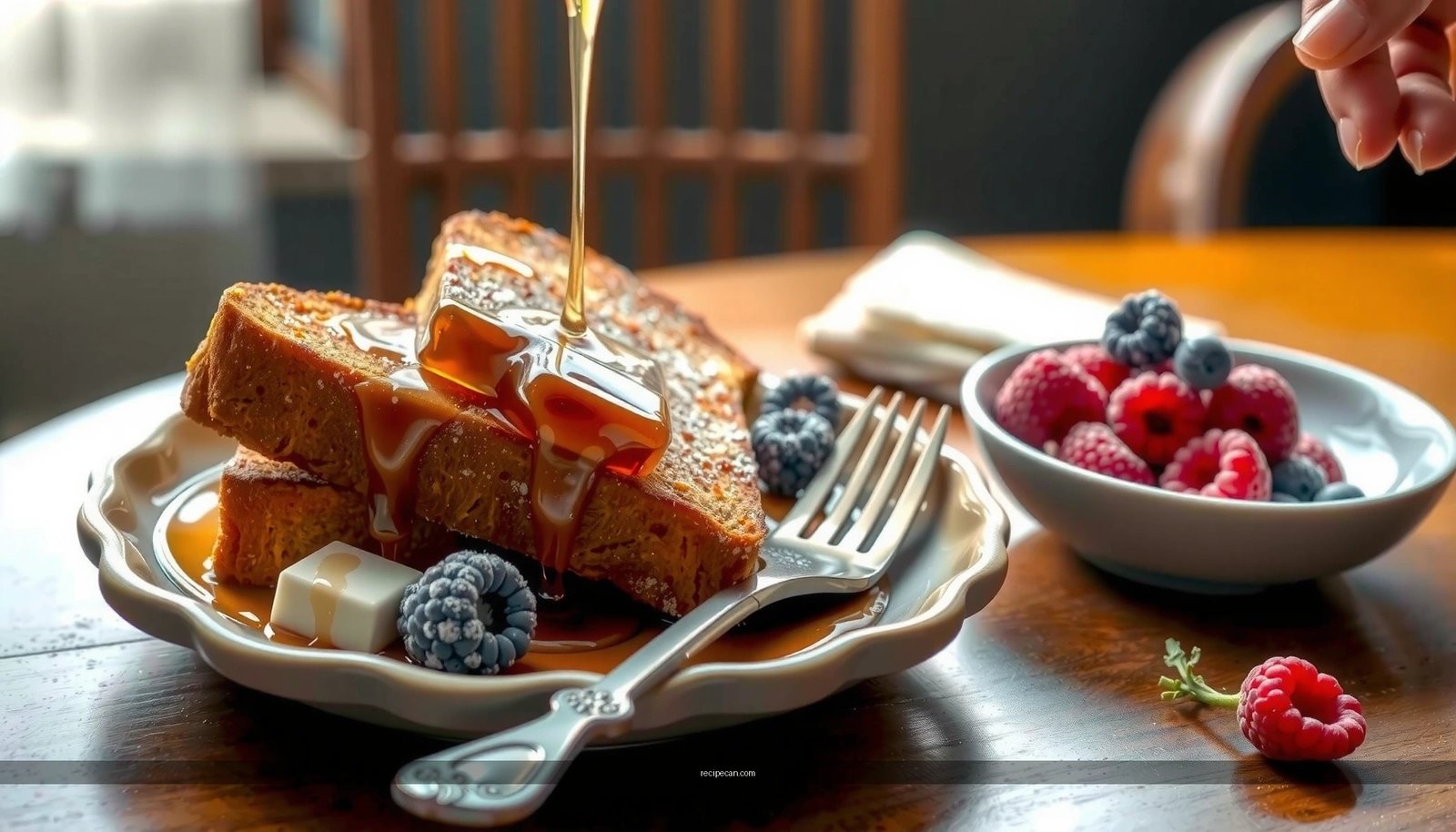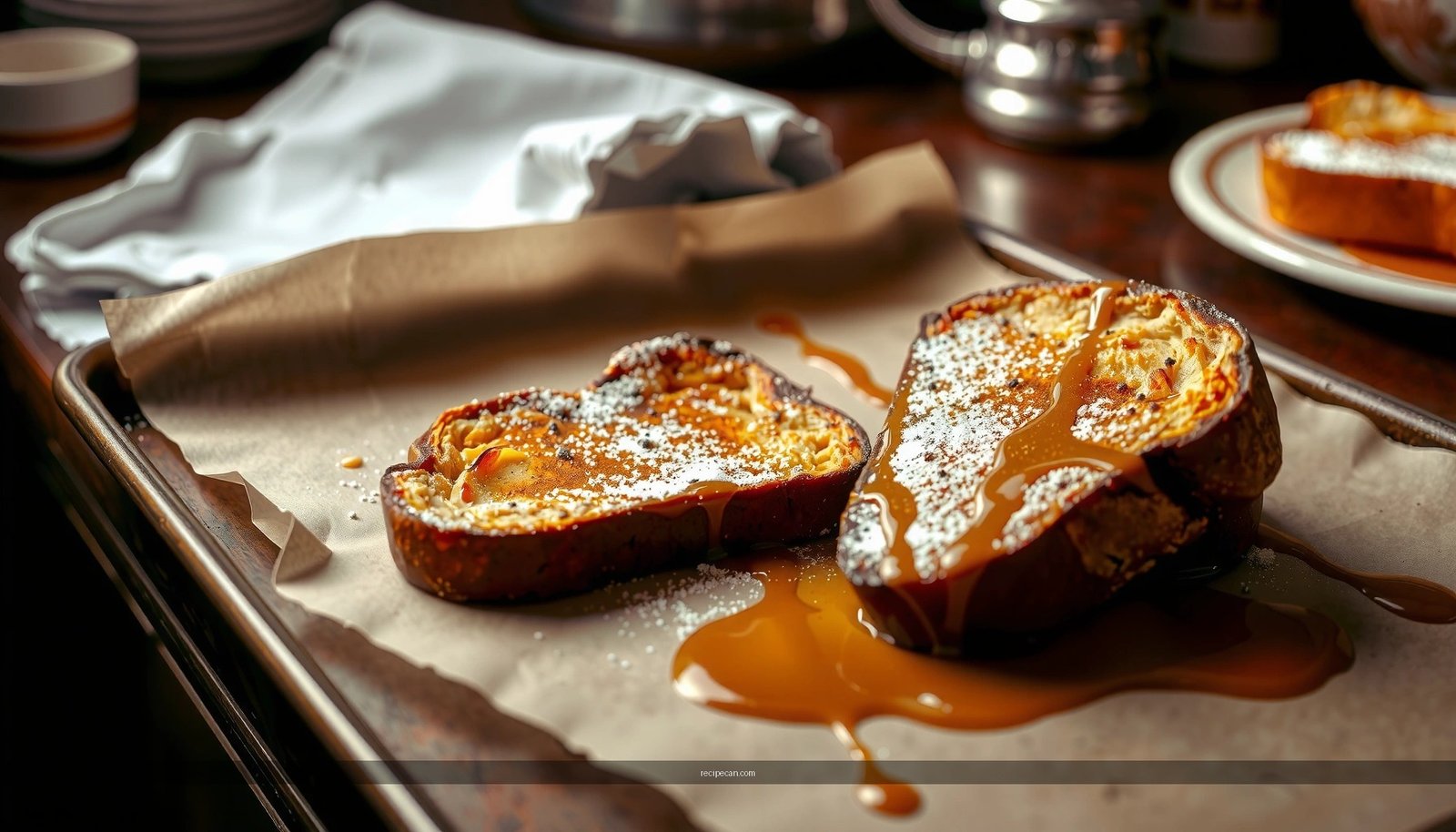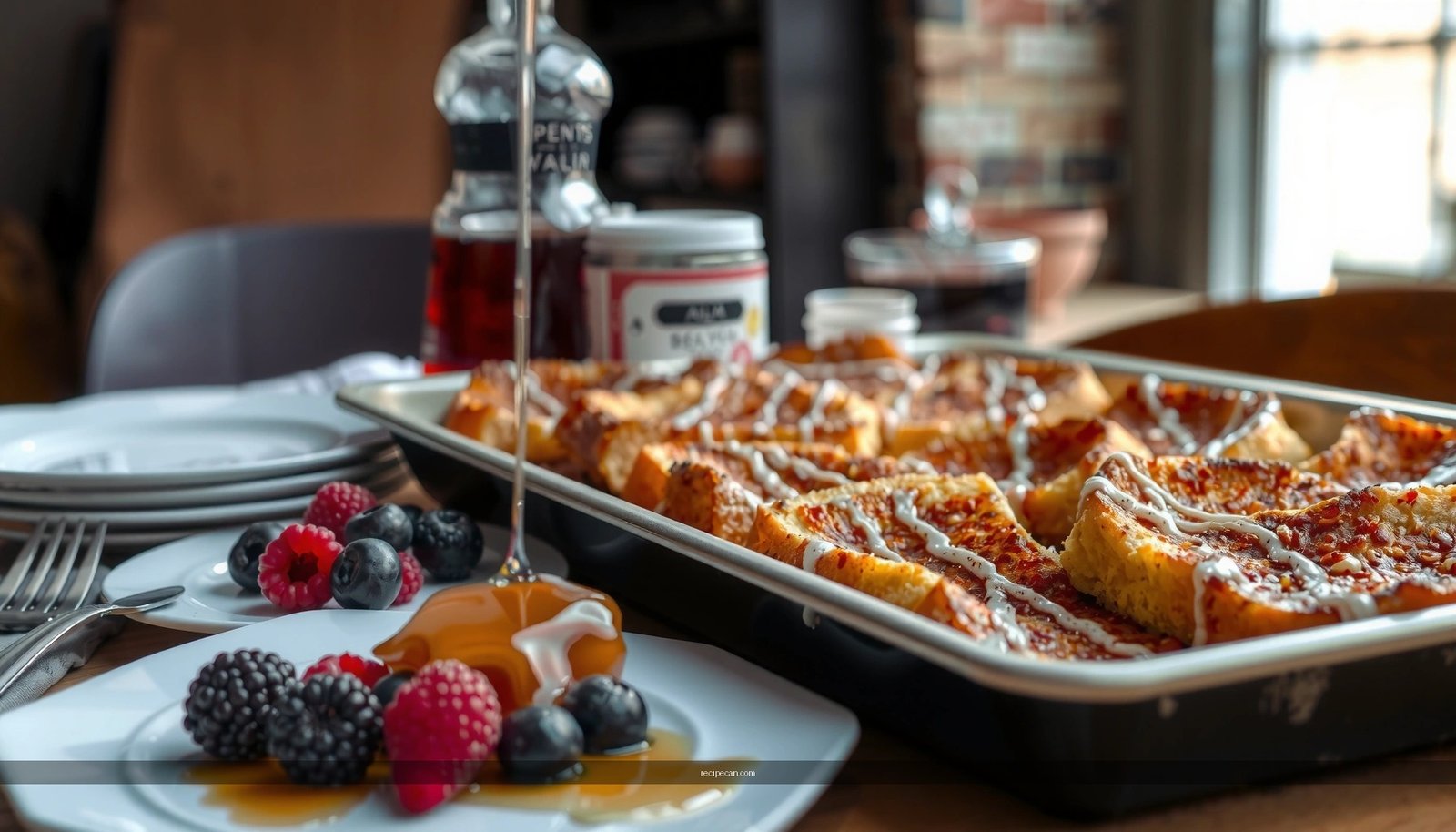
Want a French toast in oven recipe that turns out crisp, custardy slices without standing at the stove? This easy baked breakfast method is the clear winner for feeding a crowd or speeding up mornings, with simple ingredients and reliable results. If you want the best “set it and bake it” approach for French toast, this is the question answered.
French toast in the oven is the easiest way to serve a fluffy, golden baked breakfast to a crowd—because the custard soaks in evenly and the oven bakes everything at once. In this recipe, you’ll make a classic egg-and-milk custard, soak bread slices (or cubes), assemble in one pan, and bake until set with crisp edges and a tender center.
What You Need for Oven French Toast
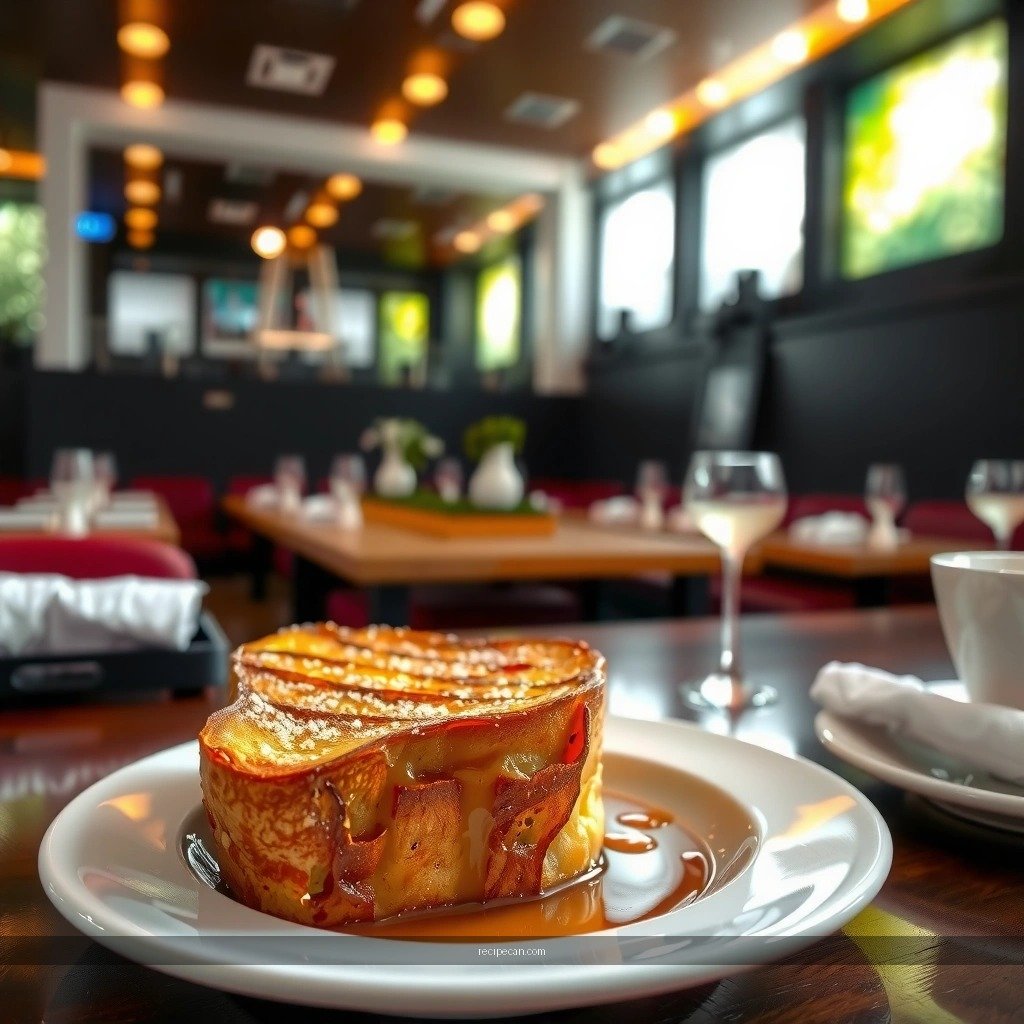
To get “bakery-style” results, focus on two variables: bread (texture and structure) and custard balance (how much liquid it absorbs without turning soggy).
Bread type and thickness recommendations for best texture
For oven French toast, you want bread that can hold up to soaking and still reheat well:
– Best bread: brioche, challah, thick-cut sourdough (mild), or French bread with a firm crumb.
– Thickness: aim for 3/4-inch to 1-inch slices if using standard loaves. Thinner bread can over-absorb.
– Fresh vs. day-old: day-old bread is ideal. Slightly stale bread acts like a sponge, absorbing custard more evenly while resisting collapse.
– For cubes (casserole style): use 1 to 1.5-inch cubes. Cubes create more surface area, making it easier for custard to distribute throughout.
Quality signal: If you press your finger lightly into the loaf and it springs back slowly, it’s usually perfect for soaking.
Custard ingredients (eggs, milk, vanilla, cinnamon, sugar)
The custard is where the classic French toast flavor comes from—and where oven results can vary most. A dependable baked French toast custard typically includes:
– Eggs: for structure and that custardy set.
– Milk: for creaminess. Whole milk gives the best classic taste; 2% works too.
– Vanilla extract: for warmth and bakery aroma.
– Ground cinnamon: for traditional spice depth (optional but strongly recommended).
– Sugar: balances egg richness and promotes mild caramelization in the oven.
– Optional upgrades (highly effective):
– Salt: just a pinch to sharpen sweetness.
– Butter (melted or in small amounts): for richness and browning.
– Nutmeg: a small amount adds “French toast” character.
If you’re feeding a large group, the oven method also benefits from consistency: once you calibrate your custard ratio, you can scale reliably.
Baked French Toast Custard Coverage by Bread Type (Recommended per 12 Slices / ~8 Cups Cubes)
| # | Bread type | Best slice thickness | Soak time (min) | Browning & set score |
|---|---|---|---|---|
| 1 | Brioche | 3/4–1 inch | 10–15 | 9.3 / 10 |
| 2 | Challah | 3/4–1 inch | 12–18 | 9.0 / 10 |
| 3 | French bread | 1 inch | 15–20 | 8.6 / 10 |
| 4 | Sourdough (mild) | 3/4–1 inch | 18–22 | 8.3 / 10 |
| 5 | Whole wheat bread | 1 inch | 20–25 | 7.8 / 10 |
| 6 | Enriched white loaf | 3/4–1 inch | 12–16 | 8.1 / 10 |
| 7 | Very fresh sandwich bread | 3/4 inch (not ideal) | 8–12 | 6.4 / 10 |
How to Prepare the Bread and Custard

Oven French toast relies on even soaking. Unlike stovetop cooking—where you can adjust per slice—the casserole approach rewards precise handling: custard should soak in, but the bread should not collapse.
Mix the custard until smooth and evenly seasoned
A reliable custard base for a standard 8×11-inch or similar dish (serving ~8–10) typically uses:
– Eggs: 6 large
– Milk: 2 cups (whole milk recommended)
– Vanilla: 2 teaspoons
– Cinnamon: 1 to 2 teaspoons (to taste)
– Sugar: 1/4 to 1/3 cup
– Salt: 1/4 teaspoon
– Optional: 2 tablespoons melted butter for richness
Whisk thoroughly until you don’t see streaks of egg. For uniform results, keep the custard room temperature (about 15–20 minutes out of the fridge) so it absorbs more consistently.
Soak bread slices (or cubes) for the right custard absorption
Here’s the key “hands-on” moment that determines your final texture:
– Arrange bread in a greased dish in a single layer (or evenly in two layers if needed).
– Pour custard slowly over the bread, aiming to wet the top, not just the edges.
– Press gently with a spatula if pieces float or stay dry.
– Soak time:
– Thicker brioche/challah: 10–15 minutes
– Denser breads (French bread, sourdough): 15–25 minutes
– Cubes: 15–20 minutes (stir once halfway for even absorption)
If you want a more “custard-forward” center, you can soak longer—but keep a close eye. Over-soaking is the most common reason baked French toast comes out mushy.
Assemble and Bake French Toast
This is the part where you stop multitasking. Proper assembly and baking temperature control browning, doneness, and slice integrity.
Arrange soaked bread in a greased baking dish
– Grease the baking dish (butter or nonstick spray), especially corners—edges tend to brown first.
– Distribute pieces evenly. Overcrowding limits airflow and can leave underbaked sections.
– Optional topping trick (for better crust):
– Sprinkle a thin layer of sugar and/or cinnamon-sugar over the top before baking.
– Add small dots of butter for richer browning.
Bake times and temperatures for golden edges and a set center
Oven French toast benefits from starting hot enough to set the custard quickly, then finishing until golden.
Recommended baking approach:
1. Preheat oven: 350°F (175°C).
2. Bake uncovered: 35–45 minutes.
3. Check for doneness:
– Top should be golden, not pale.
– Center should be set (slight jiggle is fine; liquid custard is not).
– If you insert a knife near the center, it should come out mostly clean.
For thicker casseroles: bake closer to 45–55 minutes depending on depth. If the top browns faster than the center sets, tent with foil.
Rest before serving: let it rest 5–10 minutes. This sets the custard fully and prevents watery sauce when you plate.
Oven French Toast Doneness Checklist
| Step | What to look for | Target outcome |
|---|---|---|
| 1 | Top color during final 10 minutes | Golden-brown |
| 2 | Center set after baking | No liquid custard |
| 3 | Slice integrity on the edges | Firm, lightly crisp |
| 4 | After 5 minutes rest | Sauce thickened |
Make It Extra Flavorful
Classic baked French toast is delicious on its own, but small additions can turn it into a brunch centerpiece. Think about flavors in three categories: sweet fruit, warm spices, and textural crunch.
Add-ins like berries, bananas, chocolate chips, or nuts
Good add-ins should either bring moisture (fruit) or maintain texture (nuts/chocolate) without burning.
– Berries: fold in blueberries, raspberries, or diced strawberries. Use frozen berries if needed; drain excess liquid first.
– Bananas: slice and layer on top. For caramel notes, lightly toss slices with a pinch of cinnamon and sugar.
– Chocolate chips: sprinkle sparingly (they can make the center overly rich). Pair with bananas or strawberries.
– Nuts: chopped pecans or walnuts add crunch. Toast lightly in a dry pan for deeper flavor before adding.
Tip: If using fruit with high water content (like thawed berries), reduce soaking time slightly to prevent watery custard pooling.
Toppings ideas for sweetness and crunch (maple syrup, powdered sugar)
Toppings are where you can customize serving styles without changing the base recipe:
– Maple syrup: classic and crowd-pleasing.
– Powdered sugar: add just before serving for a “snowy” finish.
– Brown sugar crumble: mix butter + brown sugar + cinnamon + oats, then sprinkle and bake briefly.
– Whipped cream or vanilla yogurt: balances richness and spice.
– Crunch layer: chopped toasted pecans, granola, or even crushed cookies for a dessert-like brunch.
If serving for a group, set up a topping bar so guests can tailor sweetness levels—especially useful for mixed dietary preferences.
Storage and Reheating Tips
Oven French toast holds up well when stored correctly. The main issue is moisture loss or re-softening. With a few targeted steps, you can keep it tender rather than rubbery.
How to store leftovers and keep them from getting soggy
– Cool completely before storing (prevents condensation).
– Store in an airtight container in the refrigerator for up to 3 days.
– To reduce sogginess, store in shallow portions and avoid packing tightly.
– If you anticipate longer storage, freeze baked portions in airtight freezer bags for up to 2 months.
Optional: add a paper towel under the lid to absorb extra moisture.
Reheating methods in the oven or microwave for best results
– Oven (best texture):
– Preheat to 325°F (165°C).
– Cover loosely with foil.
– Heat 10–15 minutes for slices/cubes until warmed.
– Microwave (fastest):
– Heat on 50–70% power for 30–60 seconds.
– Add a small splash of milk if it dries out.
For best “fresh-baked” results, use the oven. The microwave is convenient, but it can soften the top crust.
Common Mistakes to Avoid
Even excellent baked French toast recipes can go wrong if a few fundamentals are missed. Here are the most common pitfalls and how to prevent them.
Under-soaking (dry centers) vs. over-soaking (mushy toast)
– Under-soaking: bread doesn’t absorb enough custard, leaving dry pockets.
– Fix: increase soak time by 5 minutes, or pour extra custard into uncovered dry areas.
– Over-soaking: bread becomes oversaturated and breaks down during baking.
– Fix: reduce soak time and use slightly thicker bread. If prepping ahead, refrigerate after pouring custard rather than letting it soak at room temperature too long.
A practical standard: bread should feel spongy, not collapsing.
Using the wrong bread or baking at the wrong temperature
– Wrong bread: very soft sandwich bread may turn mushy; very dense bread may bake dry.
– Fix: use brioche, challah, French bread, or thick sourdough as the default.
– Wrong temperature:
– Too hot can brown the outside before the center sets.
– Too cool can leave the custard loose.
– Fix: stick with 350°F (175°C) and adjust time, not temperature, when your baking dish is deeper than average.
A Practical Scaling Note for Crowds
Because oven French toast bakes in one pan, it’s inherently easier to scale—but only if your custard ratio stays consistent. If you’re doubling for a larger group, consider increasing dish size rather than stacking too thick; stacked layers trap heat unevenly and can cause underbaked centers.
French toast in the oven delivers classic flavor with less effort and more consistency, especially when feeding multiple people. Follow the soaking and baking steps closely, choose sturdy bread that can absorb custard, and then finish with your favorite toppings—serve it fresh for breakfast, brunch, or a holiday morning gathering.
Frequently Asked Questions
What is the easiest french toast in oven recipe for a crowd?
Use a sturdy baking dish and a simple custard (eggs, milk, vanilla, and a pinch of salt), then soak thick bread slices before arranging them in the dish. Pour any remaining egg mixture over the top and bake until puffed and golden. This french toast in oven recipe is designed for meal prep and family breakfasts because it cooks evenly without flipping.
How do you make french toast in oven without getting it soggy?
Start with slightly stale bread (day-old brioche, challah, or thick Texas toast) so it absorbs custard without turning gummy. Let the assembled dish rest for 10–20 minutes so the liquid fully penetrates, and avoid over-pouring the egg mixture. Bake at a consistent temperature until the center is set and the edges are crisp, then serve promptly.
Why should you use a baking method instead of pan-frying french toast?
Oven-baked french toast is hands-off, so you can cook multiple servings at once without standing at the stove. It also produces more uniform browning and a tender interior because the heat circulates through the whole casserole. If you’re searching “baked french toast recipe” for holidays or brunch, the oven method is usually the most reliable.
What bread is best for oven french toast and what thickness should it be?
Brioche and challah are best for rich, custardy french toast in oven due to their structure and flavor, while thick-cut sandwich bread works well for a simpler option. Aim for slices about 3/4 to 1 inch thick so they can soak up the egg mixture and still hold their shape. If using thinner bread, reduce soak time slightly to prevent sogginess.
Which temperature and baking time should you use for french toast in the oven?
Bake at 350°F to 375°F (175°C–190°C) until the top is deeply golden and the center is set, typically about 35–50 minutes depending on thickness. For extra browning, you can broil for 1–2 minutes at the end—watch closely to avoid burning. If the casserole seems undercooked, cover with foil and bake a few more minutes, then uncover to finish crisping.
References
- French toast
https://en.wikipedia.org/wiki/French_toast - Easy French toast recipe | Good Food
https://www.bbcgoodfood.com/recipes/french-toast - https://www.britannica.com/recipe/french-toast
https://www.britannica.com/recipe/french-toast - Page Not Found – Site Help – Mayo Clinic
https://www.mayoclinic.org/healthy-lifestyle/recipes/french-toast/rcp-20054812 - https://www.nytimes.com/guides/cooking/how-to-make-french-toast
https://www.nytimes.com/guides/cooking/how-to-make-french-toast - https://www.theguardian.com/food/series/how-to-cook-perfect-recipes/2017/dec/05/how-to-make-french-toast-recipe
https://www.theguardian.com/food/series/how-to-cook-perfect-recipes/2017/dec/05/how-to-make-french-toast-recipe - Google Scholar Google Scholar
https://scholar.google.com/scholar?q=french+toast+oven+recipe - Google Scholar Google Scholar
https://scholar.google.com/scholar?q=oven+baked+french+toast+casserole+recipe - Google Scholar Google Scholar
https://scholar.google.com/scholar?q=how+to+prevent+soggy+french+toast+bread+egg+milk+oven - https://pubmed.ncbi.nlm.nih.gov/?term=french+toast
https://pubmed.ncbi.nlm.nih.gov/?term=french+toast