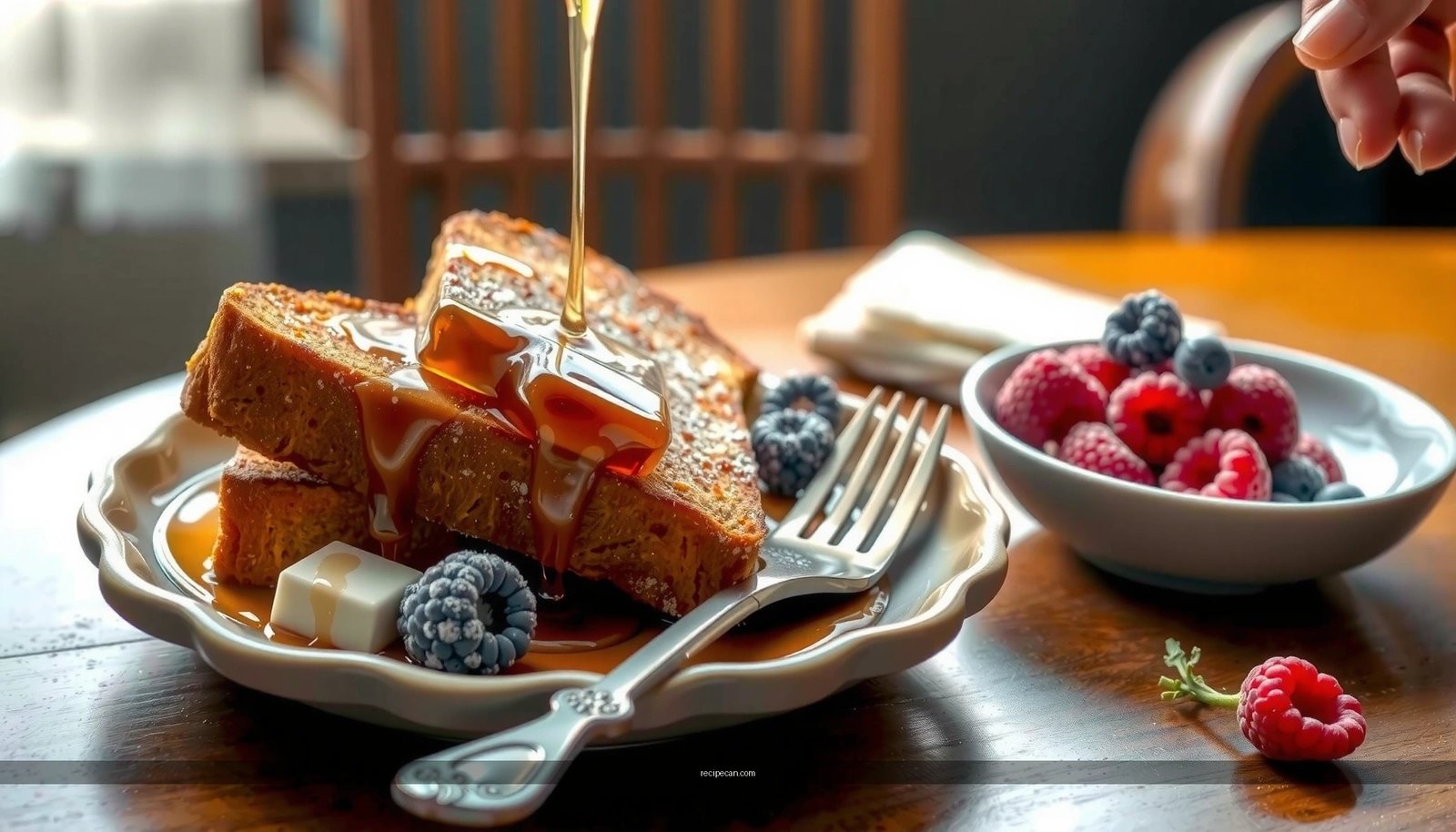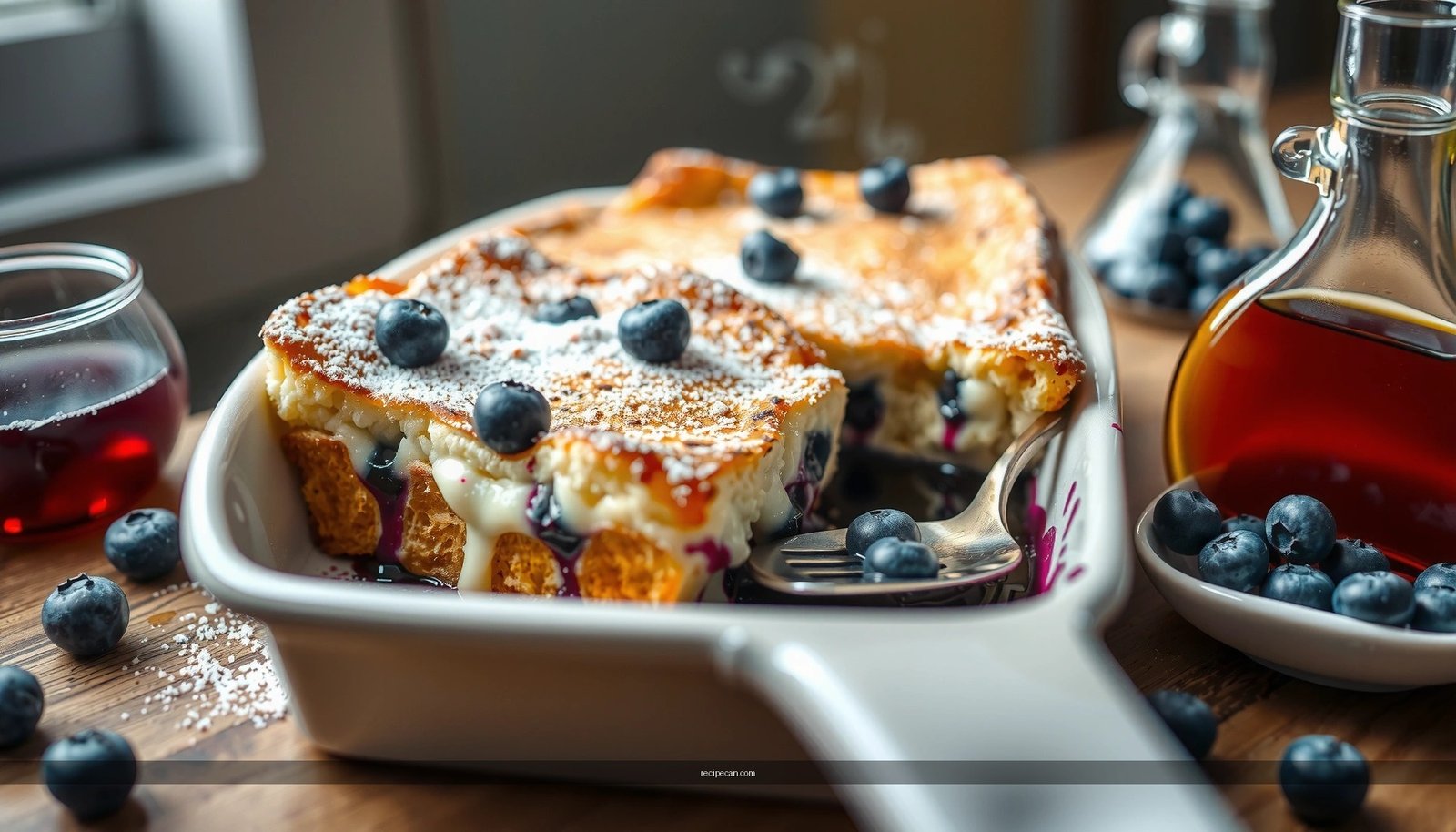
This blueberry French toast casserole recipe delivers a crisp, golden top and a custardy center every time. You’ll learn exactly how to layer bread, soak it properly, and bake it until the blueberries burst into a jammy sauce. If you need the best make-ahead breakfast for crowds, this is the one.
This blueberry French toast casserole is an easy, make-ahead breakfast that bakes up golden, puffed, and custardy with juicy berries in every bite. By layering bread and blueberries with a vanilla-cinnamon egg custard, you can reliably serve a crowd with minimal morning effort—while still delivering that classic French toast texture.
Ingredients for Blueberry French Toast Casserole
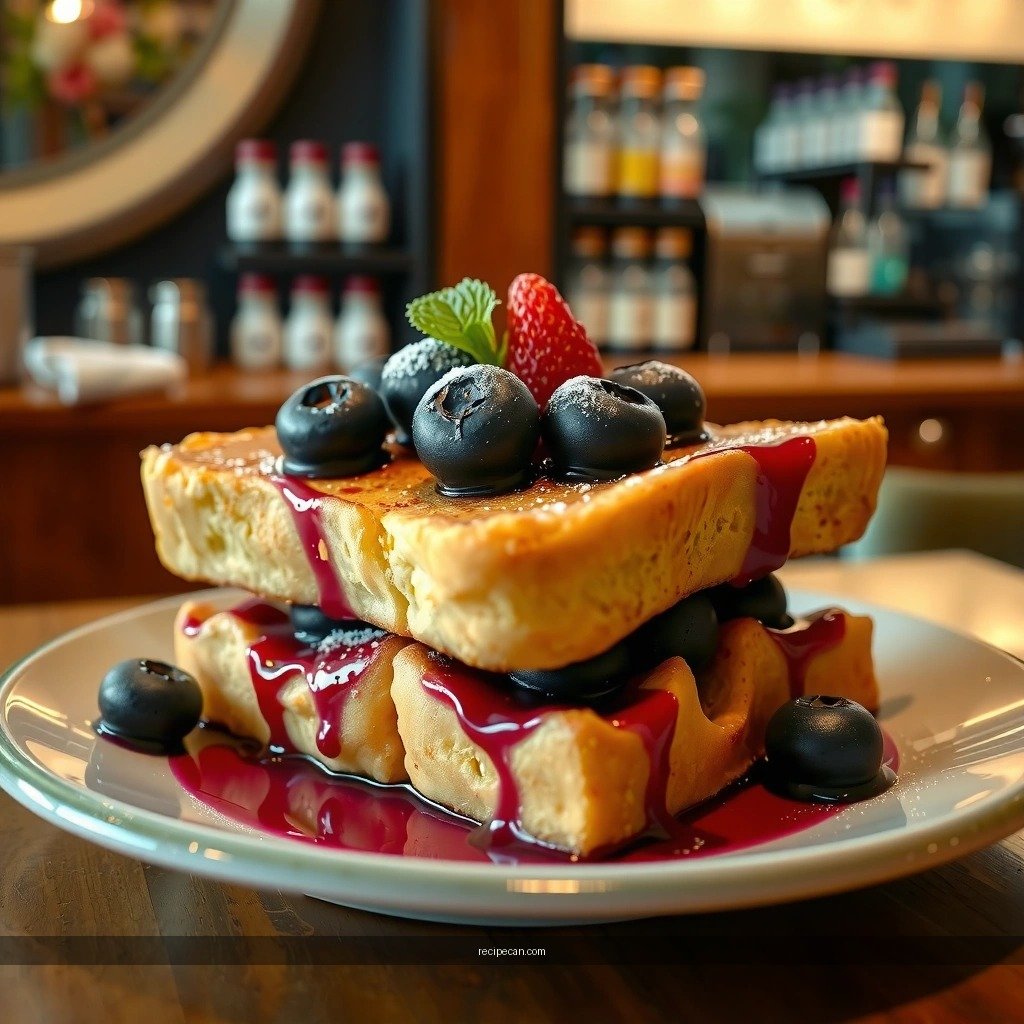
– Gather bread, blueberries, eggs, milk, and a vanilla-cinnamon mixture
– Use butter (for richness) and optional sugar or maple syrup (for sweetness)
To make this recipe work consistently, think in two categories: the structure (bread + eggs + milk) and the flavor (vanilla, cinnamon, blueberries, and butter).
Core components
– Bread: Brioche, challah, or thick-cut French bread are ideal because they hold custard without turning gummy. Day-old bread is especially forgiving.
– Blueberries: Fresh or frozen both work. Frozen berries can be used straight from the freezer; just be mindful that they’ll release more juice.
– Eggs + milk: Provide the custard set that gives you “custardy but not soggy.”
– Vanilla + cinnamon: Adds warmth and helps the blueberry flavor read as bright rather than flat.
– Butter: Melted butter increases richness and browning, especially along the edges of the casserole.
Optional sweetness
– A small amount of sugar or a drizzle of maple syrup can be used depending on whether you prefer a lightly sweet French toast profile or a more dessert-like bake. If your berries are especially tart, you’ll typically want a slightly higher sweetness level in the custard.
Prep the Bread and Blueberries
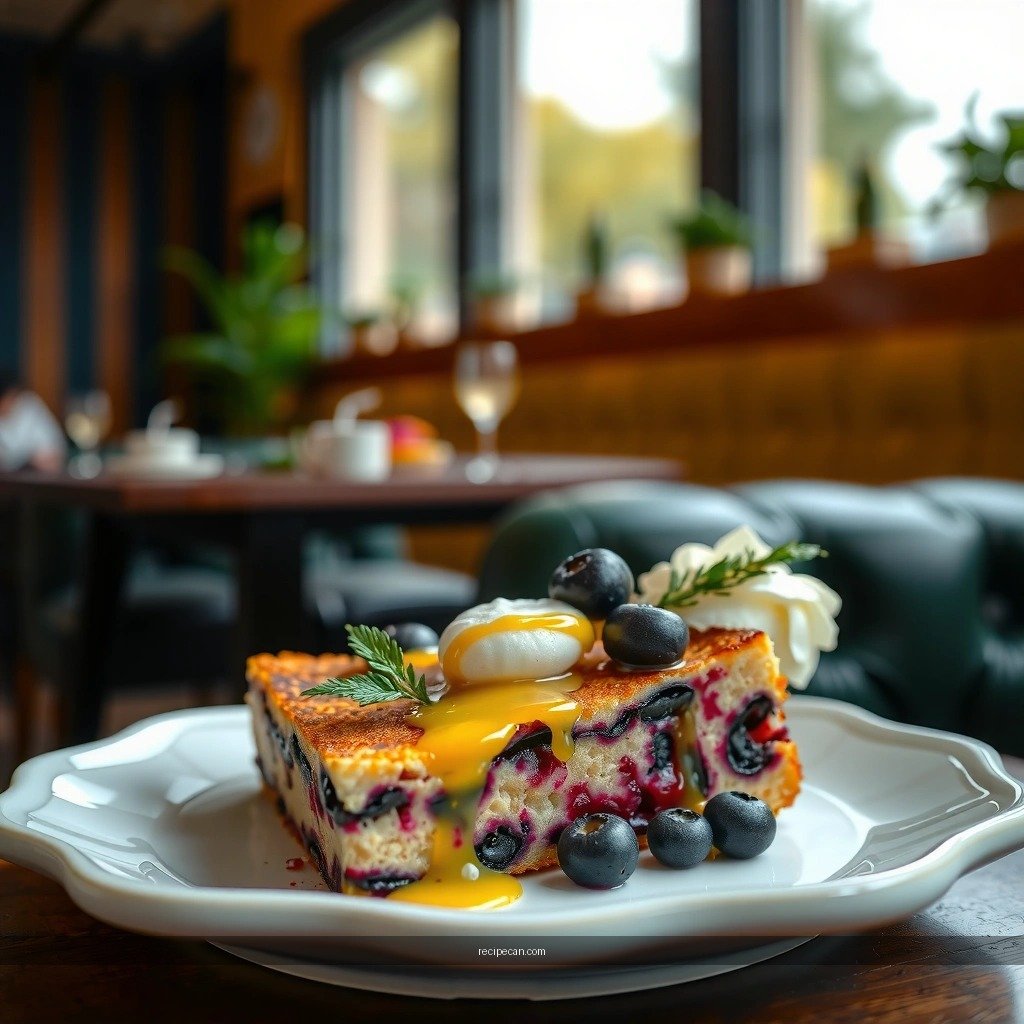
– Cube or tear bread into even pieces for consistent soaking
– Toss blueberries with a little flour or sugar to prevent sinking
French toast casseroles succeed or fail on even soaking and berry distribution. Uneven cubes lead to dry spots and overly wet pockets, while uncoated berries can sink and caramelize only at the bottom.
Bread preparation
– Cube or tear to similar sizes: Aim for pieces that are roughly bite-sized (about 1–1.5 inches). If you mix tiny pieces with large ones, smaller bits will saturate faster.
– Dry out slightly (if needed): If your bread is fresh and soft, let cubed bread sit uncovered 30–60 minutes. This improves custard absorption and reduces mushiness.
Blueberry preparation
– Toss with flour (best for “no-sink”): A light coating of all-purpose flour helps stabilize berries within the custard.
– Alternative: sugar coat: A small sprinkle of sugar can encourage glossy berry texture.
– Use less coating if berries are very small: Blueberry skins vary in thickness; heavy coating can sometimes create a chalky streak.
When done right, berries stay suspended while the custard sets around them—so each slice looks and tastes balanced.
Make the Custard Mixture
– Whisk eggs, milk, vanilla, and cinnamon until smooth
– Add salt and adjust sweetness to match your preference
The custard is the engine of this blueberry French toast casserole. Whisking thoroughly ensures the egg base emulsifies with milk, while salt and controlled sweetness keep the flavor complex rather than one-note.
Custard building blocks
– Eggs: Provide structure and help the casserole “puff and set.”
– Milk: Determines creaminess. Whole milk is the most classic; 2% works if you’re aiming for a lighter feel.
– Vanilla + cinnamon: Vanilla carries aroma; cinnamon adds warmth that pairs naturally with blueberries.
– Salt: Even with sweet bread and berries, salt is what makes everything taste more vivid.
How to adjust sweetness like a pro
– If you’re using very sweet bread (like brioche) and sweet berries, reduce added sugar in the custard.
– If using tart blueberries or plain bread, add a touch more sweetness—or serve with maple syrup at the end to keep the bake itself balanced.
Analytical takeaway: A custard that’s too sweet can mute blueberry brightness. One that’s too thin won’t set; one that’s too rich can feel heavy. The goal is a custard that coats the bread evenly and then gels as it bakes.
Assemble and Bake
– Layer bread and blueberries in a baking dish, then pour custard evenly
– Refrigerate if desired, then bake until puffed and set
Assembly is straightforward, but a few specific techniques help you get consistent results—especially when feeding a group.
Step-by-step layering
1. Grease the dish (butter or cooking spray). This helps the edges release cleanly.
2. Layer bread: Add a layer of cubed bread so it spreads to the corners.
3. Add blueberries: Scatter a portion of blueberries over the bread.
4. Repeat layering: Continue until most bread is used, finishing with bread on top (so berries don’t all cluster at the bottom).
Pouring custard
– Pour the custard slowly and evenly across the surface so all bread pieces get contact.
– Lightly press down with a spatula to help bread absorb custard, but don’t compress it tight.
Refrigerate or bake immediately
– Best make-ahead approach: Refrigerate 4 hours up to overnight. This gives the bread time to hydrate thoroughly, improving slice integrity.
– Same-day baking: Let it sit at room temperature 15–30 minutes before baking to take off the chill.
Baking cues (what “done” looks like)
– Bake until the casserole is golden, puffed, and set in the center.
– A knife inserted near the middle should come out mostly clean (a few moist crumbs are fine; wet custard is not).
Cooling matters
– Rest 5–15 minutes before serving. The custard tightens as it cools, and slices stay clean instead of collapsing.
Custard-to-Bread Ratios for Consistent Set (Blueberry French Toast Casserole)
| # | Casserole Size | Bread (cups, cubed) | Eggs | Milk (cups) | Custard Thickness |
|---|---|---|---|---|---|
| 1 | 8×8-inch (6–8 servings) | 5–6 cups | 4 | 1.5 | Medium-set ★★★★☆ |
| 2 | 9×9-inch (8–10 servings) | 7–8 cups | 5 | 2.0 | Slightly custardy ★★★★☆ |
| 3 | 10×13-inch (12–14 servings) | 10–11 cups | 7 | 2.75 | Uniform set ★★★★★ |
| 4 | Thicker cut bread style | Use 10% less | +1 egg | Reduce 0.25 | Better slice integrity ★★★★☆ |
| 5 | Softer bread style | Use 10% more | Same eggs | +0.25 | Softer set ★★★☆☆ |
| 6 | Higher-batch berry load | Add +0.5 cup | Same eggs | Same milk | Juicier bites ★★★★☆ |
| 7 | Too-thin custard risk | Add less bread | +1 egg | -0.25 | Stops runny center ★★☆☆☆ |
Best Tips for Texture and Flavor
– Let the casserole rest briefly before serving for cleaner slices
– Add a streusel topping or extra berries for extra texture
Texture is not accidental; it’s the result of careful hydration, controlled baking, and a brief rest.
For cleaner, sliceable layers
– Rest 5–15 minutes after baking.
– Serve warm, not piping hot. Custard continues to set as steam dissipates.
For deeper flavor and better contrast
– Vanilla-cinnamon control: Cinnamon boosts aroma quickly—start modestly and increase only if you want a more “bakery-style” spice profile.
– Butter-rich edges: Let the casserole bake until you see golden browning at the edges. Those browned bits add a toasted note that complements blueberries.
Texture enhancements
– Streusel topping: Use a quick crumble (butter, flour, brown sugar, and a pinch of cinnamon). It adds crunch without overpowering the custard.
– Extra berries: Add a small handful on top during the last 10 minutes of baking for a more vibrant, less-browned berry surface.
Common failure modes (and fixes)
– Soggy center: Usually too much custard relative to bread or insufficient baking time. Bake until set in the middle.
– Dry top, wet bottom: The bread likely wasn’t evenly sized or pressed into custard; next time, use more consistent cubes and ensure even pour coverage.
– Berries sinking: Use the flour (or sugar) toss and avoid over-stirring the assembled dish.
Make-Ahead and Storage Instructions
– Prepare the casserole the night before for the easiest morning bake
– Store leftovers covered and reheat in the oven or microwave
This is where blueberry French toast casserole becomes a business-ready breakfast solution: predictable timing, efficient workflow, and minimal last-minute prep.
Make-ahead strategy
– Assemble, pour custard, cover, and refrigerate overnight.
– Bake the next morning directly from the fridge. If your dish is very cold, add 5 minutes to the bake time and check center set.
Reheating for best quality
– Oven (best texture): Reheat covered at a moderate temperature until warmed through. This preserves the custardy interior and avoids rubbery reheated egg.
– Microwave (fastest): Heat in short intervals, then let stand. Microwaves can soften the streusel (if using), but still taste great.
Storage
– Refrigerate leftovers covered.
– For best eating quality, consume within a few days. Freezing is possible, but custard texture may change slightly after thawing.
Operational tip: If serving guests, portion and reheat individual squares so you’re not repeatedly warming and cooling the whole dish—this helps maintain the “golden and custardy” experience from first bite to last.
This recipe for blueberry French toast casserole is a reliable, crowd-pleasing breakfast with minimal prep and maximum flavor. Try it as written, then customize with toppings or different berries—make a batch this week and enjoy a stress-free morning.
Frequently Asked Questions
What ingredients do I need for a blueberry French toast casserole?
You’ll typically need bread (cubed day-old brioche or challah works great), eggs, milk (or half-and-half), vanilla, sugar (optional), cinnamon, and a pinch of salt. For the blueberry component, use fresh or frozen blueberries, and consider tossing them with a little cornstarch and sugar to prevent a watery casserole. Finish with melted butter or a crumb topping if you want a classic “baked French toast” texture.
How do I make blueberry French toast casserole that isn’t soggy?
Use sturdy bread and cube it evenly so it absorbs custard without turning gummy. If using frozen blueberries, don’t skip tossing them with a small amount of cornstarch—this helps thicken juices during baking. Also, let the casserole sit 10–20 minutes (or refrigerate overnight) so the custard is absorbed before baking, which creates a set, not watery, bake.
Why does my blueberry French toast casserole turn out watery, and how can I fix it?
Watery results usually come from too much liquid, not enough absorption time, or berries releasing excess juice (especially if not thickened). Measure your milk carefully, use day-old bread, and allow the casserole to rest so the egg mixture soaks in. For a quick fix next time, add cornstarch to the blueberries and use slightly less milk if your bread is very fresh or soft.
What’s the best way to bake blueberry French toast casserole for a golden top?
Bake at 350°F (175°C) until the center is set and the edges look puffed and lightly browned, usually about 35–50 minutes depending on your dish size. For extra browning, you can sprinkle a simple topping (butter, brown sugar, and cinnamon or a streusel) and bake a few extra minutes. If the top browns too fast, tent loosely with foil while the center finishes cooking.
Which bread is best for blueberry French toast casserole—brioche, challah, or something else?
Brioche and challah are top choices because their rich, eggy texture absorbs custard well and bakes into tender, flavorful French toast casserole. If you want a slightly lighter option, use thick-cut sourdough or Texas toast, but ensure it’s sturdy enough to hold up. Regardless of the bread you choose, cubing it evenly and using slightly stale bread helps your blueberry French toast casserole set cleanly.
References
- Google Scholar Google Scholar
https://scholar.google.com/scholar?q=blueberry+french+toast+casserole+recipe - Google Scholar Google Scholar
https://scholar.google.com/scholar?q=baked+french+toast+casserole - Google Scholar Google Scholar
https://scholar.google.com/scholar?q=bread+custard+baking+egg+milk+ratio+casserole - French toast
https://en.wikipedia.org/wiki/French_toast - Bread pudding
https://en.wikipedia.org/wiki/Bread_pudding - Custard
https://en.wikipedia.org/wiki/Custard - Casserole
https://en.wikipedia.org/wiki/Casserole - https://www.britannica.com/topic/French-toast
https://www.britannica.com/topic/French-toast - Eggs | Food Safety and Inspection Service
https://www.fsis.usda.gov/food-safety/safe-food-handling-and-preparation/eggs - https://www.fda.gov/food/residential-food-safety/food-safety-101-eggs
https://www.fda.gov/food/residential-food-safety/food-safety-101-eggs