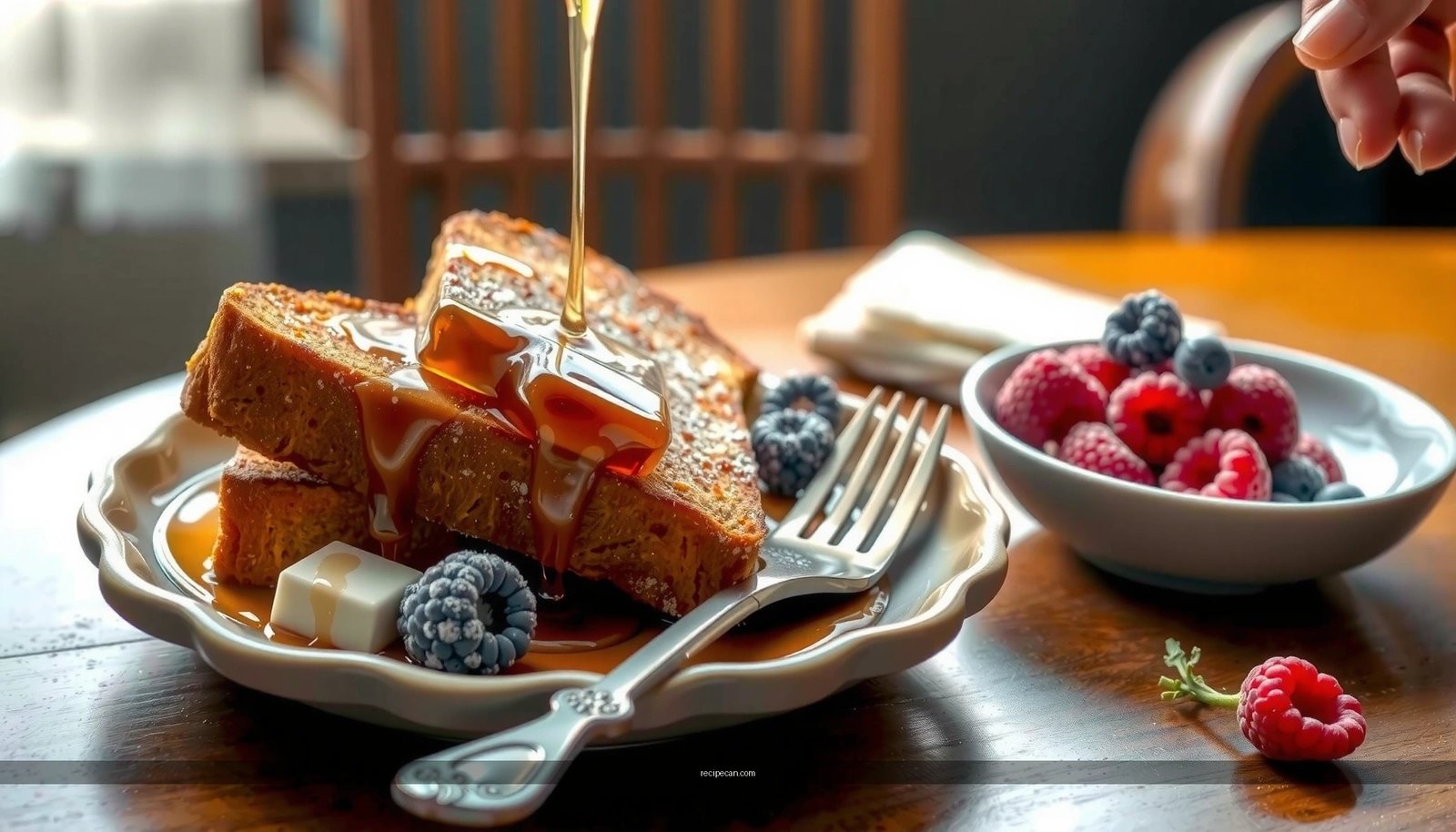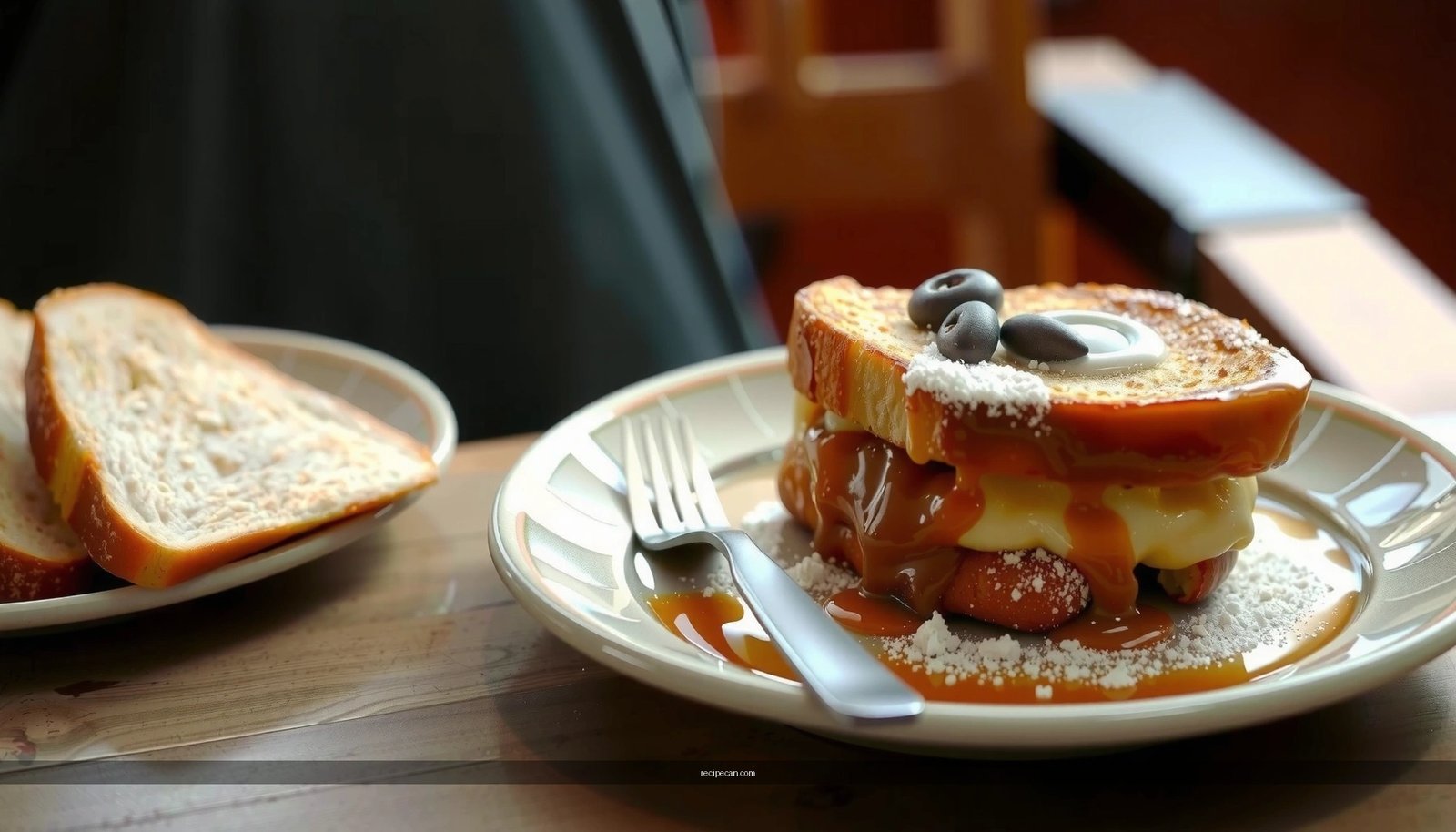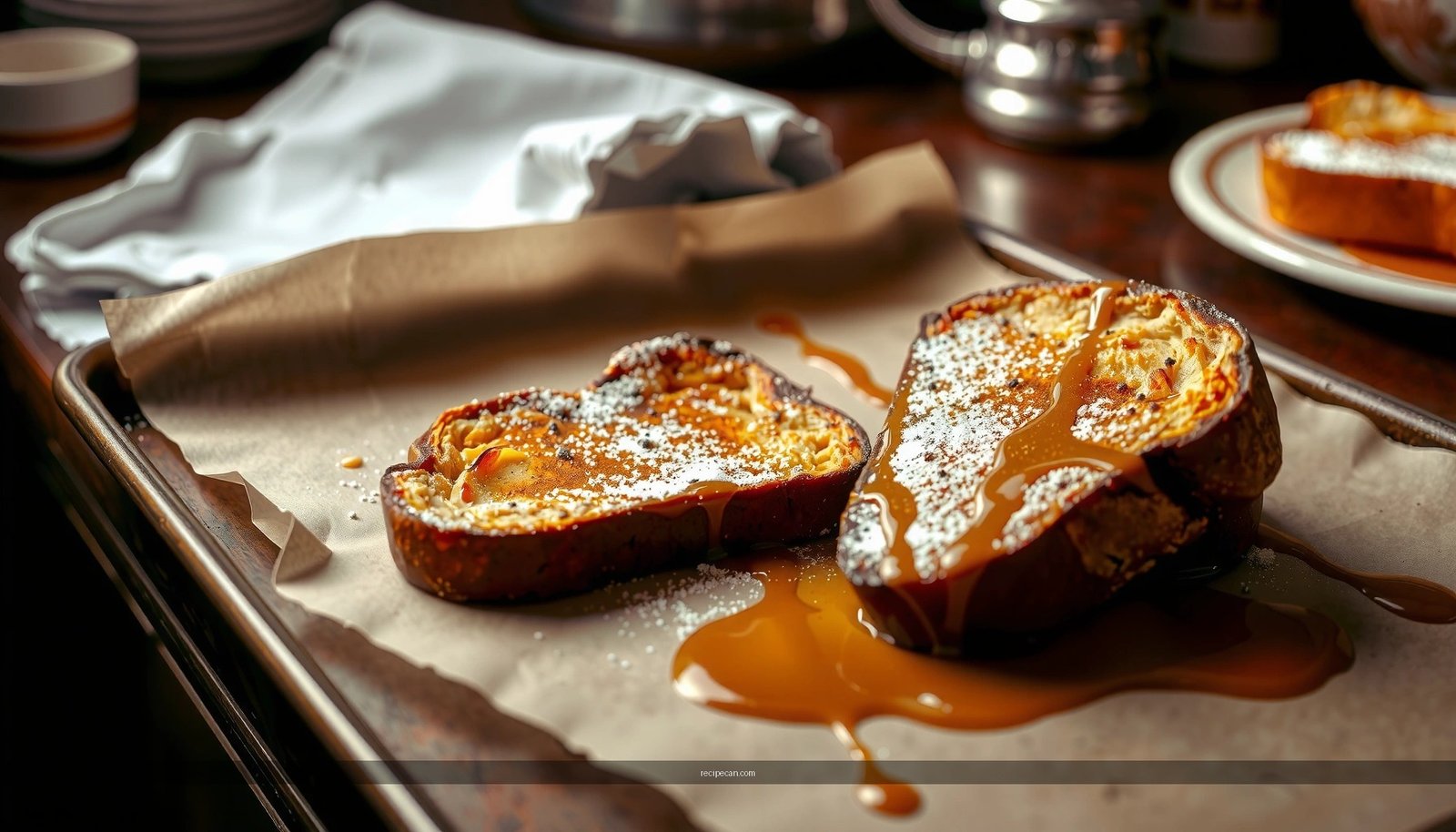
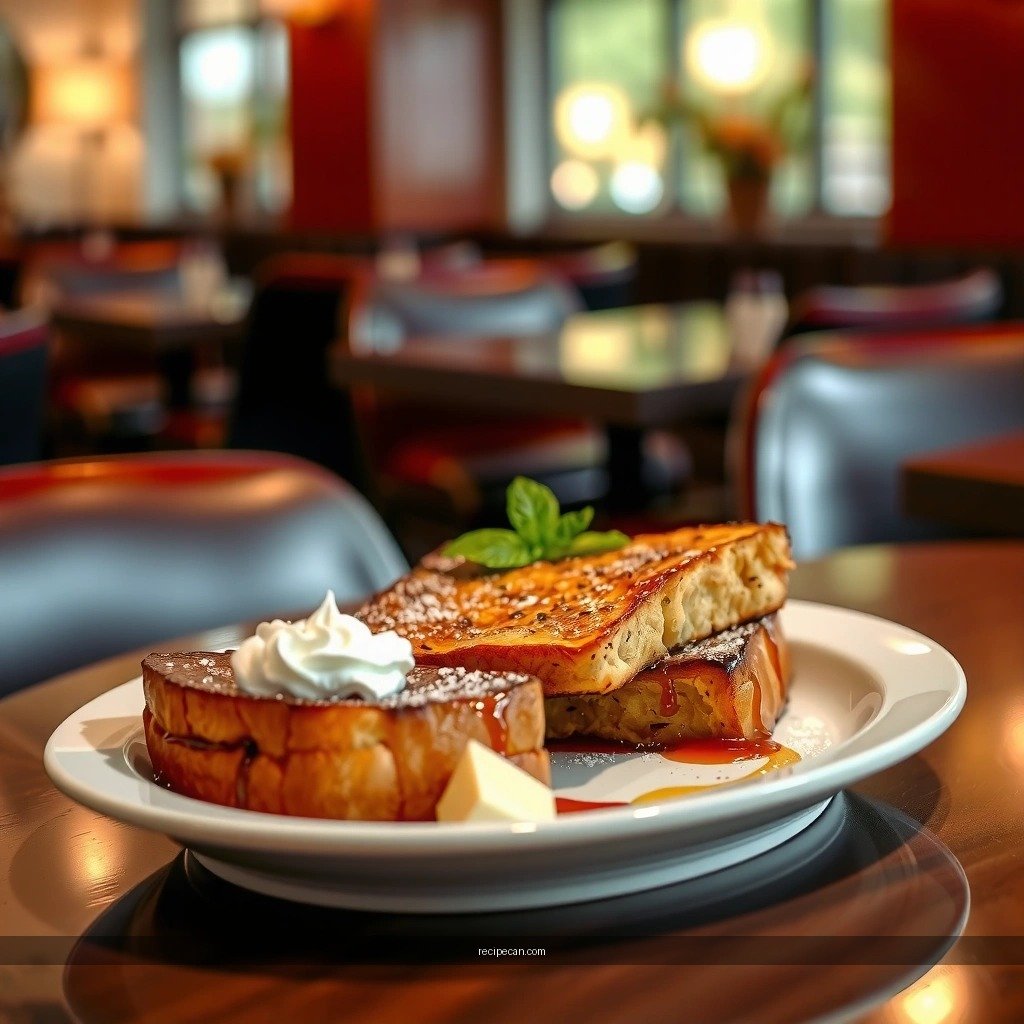
Get an easy recipe for baked French toast that turns simple bread into a crisp-edged, custardy oven breakfast without the constant flipping of stovetop versions. This foolproof method answers whether you can make French toast ahead and still get golden results, with timing and bake steps that work every time. Expect a warm, cinnamon-sweet slice that serves a crowd—straight from the oven.
Bake French toast in the oven by soaking bread in a simple custard, then baking until it’s puffed and golden—no constant flipping required. This baked French toast recipe delivers classic diner-style flavor with a more reliable texture, making it ideal for busy mornings and easy meal planning.
Ingredients for Baked French Toast
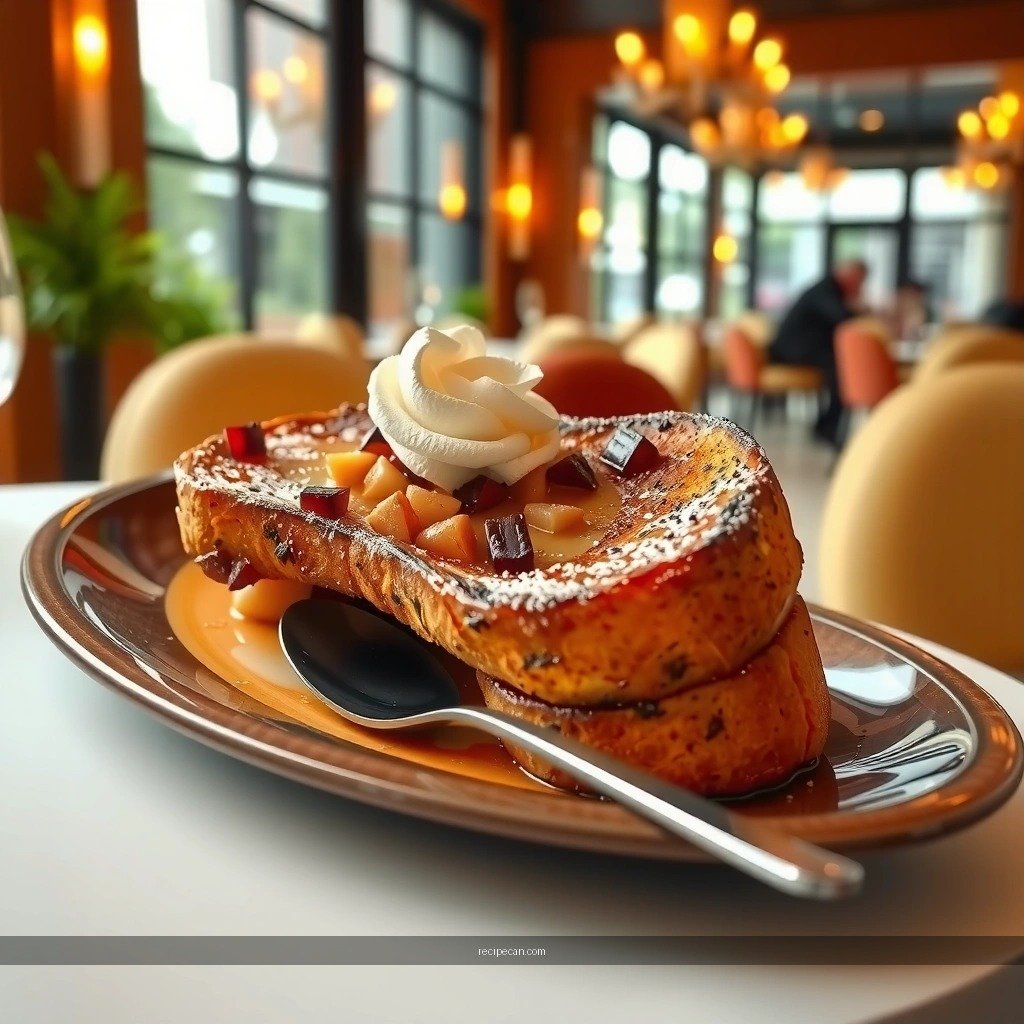
– Choose sturdy bread like brioche, challah, or thick-cut French bread
The single biggest determinant of success in baked French toast is bread structure. Brioche and challah are rich and eggy, which promotes a tender interior; thick-cut French bread has a more open crumb that absorbs custard while still holding shape. Avoid very thin, airy slices—your goal is absorbency without collapsing.
– Use eggs, milk (or half-and-half), sugar, vanilla, and cinnamon
– Eggs provide set structure (custard thickening) and give the classic French toast custard flavor.
– Milk or half-and-half controls richness. Half-and-half yields a fuller, custard-like mouthfeel and better browning.
– Sugar supports browning and balances the custard’s egg notes.
– Vanilla and cinnamon add warmth and aroma; cinnamon also slightly deepens the perceived sweetness.
– Add optional mix-ins like berries or chocolate for extra flavor
Mix-ins work best when you limit moisture surprises. Berries are excellent, but choose mostly firm berries (like blueberries) and avoid very watery add-ins that can bleed color and water into the custard. Chocolate chips and chopped nuts are generally more predictable.
Baked French Toast: Custard Strength by Bread Type
| # | Bread Choice | Eggs | Liquid | Sugar | Expected Texture |
|---|---|---|---|---|---|
| 1 | Brioche | 3 eggs | 1 cup half-and-half | 2 Tbsp | Creamy, custardy center |
| 2 | Challah | 3 eggs | 1¼ cups milk | 2–2½ Tbsp | Balanced custard + lift |
| 3 | Thick-cut French bread | 4 eggs | 1½ cups milk | 2½–3 Tbsp | Firm edges, airy interior |
| 4 | Sourdough (brunch-style) | 4 eggs | 1½ cups half-and-half | 2 Tbsp | More tang; use less sugar |
| 5 | Panettone | 3 eggs | 1¼ cups milk | 1½–2 Tbsp | Very sweet; reduce added sugar |
| 6 | Whole wheat (sturdy) | 4 eggs | 1½ cups milk | 2½ Tbsp | Heartier texture; slightly denser |
| 7 | Gluten-free loaf | 4 eggs | 1⅓ cups half-and-half | 2½ Tbsp | Best soaked longer (up to 30 min) |
How to Make the Custard Mixture
– Whisk eggs with milk, sugar, vanilla, and cinnamon until smooth
Use a whisk to fully dissolve sugar and prevent streaks of vanilla/cinnamon. For a more professional, repeatable outcome, measure ingredients by volume and keep ratios consistent across bakes—French toast is fundamentally a “custard set” process.
– Let the mixture rest briefly for better flavor blending
A 5–10 minute rest allows cinnamon and vanilla to disperse evenly, improving aroma distribution. In a commercial kitchen mindset, this is the equivalent of “mise en place settling,” which reduces variation from batch to batch.
– Adjust sweetness by tasting or adding a little more cinnamon or sugar
Sweetness interacts with bread choice. Enriched breads like brioche already carry mild sweetness, while sourdough and whole wheat can read less sweet. If you’re serving with syrup (which adds additional sweetness), slightly under-sweeten the custard. Your goal is balanced flavor, not dessert-only.
Practical custard ratio (easy and scalable): a common starting point is 1 egg per ½ cup milk/half-and-half plus 1–2 tablespoons sugar per cup of liquid, then adjust based on bread and toppings.
Assemble and Soak
– Cut bread into cubes or thick slices and arrange in a baking dish
Thickness controls absorption and texture. Cubes produce a more “baked casserole” feel and easier spooning; thick slices deliver cleaner edges and a more classic plate presentation. Arrange bread in a single, even layer where possible so custard reaches all surfaces.
– Pour custard over the bread and press gently to soak evenly
Pour slowly and let it pool briefly before pressing. Gentle pressing ensures full contact without breaking the bread. If you’re using dense bread, slightly more soaking time helps the custard penetrate.
– Refrigerate 20 minutes (or overnight) for richer, custardy texture
– 20 minutes: best for same-morning baking and lighter custard.
– Overnight: creates a deeper custard profile and often yields a more even bake.
Cover the dish when refrigerating to prevent bread from drying out and to reduce odors in your fridge.
Quality checkpoint: After soaking, the bread should look visibly hydrated but not flooded. If the dish has excess liquid, bake slightly longer or drain lightly before baking—watery French toast typically comes from over-liquid-to-bread ratio.
Bake Time and Temperature
– Bake at 350°F (175°C) until the top is golden and puffed
350°F is a reliable temperature for setting custard without burning sugar. Bake until the custard is firm in the center and the edges have started to brown. If your dish is deep or bread is very dense, you’ll need more time for full set.
– Check doneness by looking for set centers and lightly crisp edges
The center should not jiggle like liquid custard. A subtle jiggle at the very center can be acceptable, but you want overall stability. The edges should show light caramelization—this is where flavor concentrates.
– For extra browning, broil for 1–2 minutes at the end (optional)
Broiling at the end can mimic the “pan-fried” browning people associate with traditional French toast. Watch closely—custard sugar browns fast once the surface is exposed.
Time guidance: For a standard 9×13-inch dish, start checking around 30–40 minutes. Thicker slices or larger cubes may need closer to 40–50 minutes.
Serving Ideas and Toppings
– Serve with maple syrup, powdered sugar, or fresh berries
Maple syrup is the classic pairing because its caramel notes match the custard’s vanilla-butter profile. Fresh berries add acidity, which sharpens sweetness and prevents the dish from tasting flat.
– Add whipped cream or a drizzle of honey for a richer finish
Whipped cream increases perceived richness; honey adds floral sweetness and gloss. If you’re using both syrup and honey, keep one portion lighter to avoid over-sweetening.
– Pair with coffee, fruit salad, or bacon/sausage for a complete meal
For a balanced breakfast plate, pair warm French toast with salty proteins (bacon, sausage) and something fresh (fruit salad or citrus). This supports contrast: sweet + savory + bright.
Pro move for even serving: let the baked French toast rest 5–10 minutes after baking. Resting helps custard finish setting and makes portioning cleaner.
Storage and Reheating Tips
– Store leftovers covered in the refrigerator up to 3–4 days
Cool the dish to room temperature before refrigerating (to avoid condensation). Cover tightly to prevent the top from drying out, which can lead to less desirable reheated texture.
– Reheat in the oven or air fryer to retain crisp edges
Oven reheating (about 325°F/160°C) warms through while preserving some surface browning. Air fryer reheating is fast and tends to restore crispness better than a microwave. If you microwave, reheat in short bursts and accept that the edges may soften.
– Freeze portions after cooling, then thaw and reheat when ready
Freeze in single-serve portions for convenience. Thaw in the refrigerator overnight, then reheat in an oven or air fryer to regain structure. This approach turns baked French toast into a make-ahead breakfast asset.
Reheating target: warm to steaming hot in the center. Avoid over-reheating—custard can dry out and lose that fluffy, custardy sensation.
Bake this baked French toast using a well-soaked bread base and custard ratios you can repeat every time. Follow the bake temperature, check for golden edges, and finish with your favorite toppings. Make it ahead, bake in the morning, and serve warm—try it this weekend and adjust sweetness or add-ins to match your taste.
Baked French toast is one of the rare breakfast recipes that scales cleanly, tastes “made from scratch,” and still fits a busy schedule—because the oven does the work. By choosing the right bread, using a consistent custard mixture, soaking properly, and baking until the center sets and the top turns golden, you’ll get a dependable result that’s fluffy, custardy, and easy to serve.
Frequently Asked Questions
What’s the best bread for baked French toast?
Brioche and challah are top choices because they’re rich and absorb custard without falling apart. For a lighter or more budget-friendly option, use thick-cut sourdough or French bread, but make sure it’s day-old for better texture. Avoid very soft sandwich bread, since it can turn mushy in the oven.
How do you make baked French toast so it’s not soggy?
Use day-old bread and cut it into thick slices or cubes so it can soak up egg mixture without becoming watery. Let the assembled dish rest 10–30 minutes (or refrigerate overnight) so the custard absorbs evenly, then bake until the top is golden and the center is set. For extra insurance, whisk in a little cornstarch or bake on a preheated tray to help it set faster.
How long should you bake French toast in the oven at what temperature?
Bake at 350°F (175°C) for about 35–45 minutes, depending on the thickness of the bread and how deep your baking dish is. It’s done when the edges are puffed, the top is browned, and a knife inserted in the center comes out clean or with only a few moist crumbs. If the top browns too quickly, loosely tent with foil for the last 10–15 minutes.
Which custard recipe works best for baked French toast?
A classic baked French toast custard is made with eggs, milk or half-and-half, vanilla, and sugar, often including cinnamon for warmth. For a richer result, use half-and-half or add a splash of cream, and consider melting butter into the mixture for more flavor. If you like a denser “custard” bite, increase the eggs slightly and reduce milk a bit so the baked French toast holds together.
Why does baked French toast taste better when it rests overnight?
Overnight resting lets the bread fully absorb the egg mixture, which creates a tender, evenly flavored baked French toast throughout. This step also improves texture so you get a creamy interior with a lightly crisp, caramelized top. If you’re short on time, a shorter rest (about 10–30 minutes) still helps, but overnight is ideal for consistent results.
References
- French toast
https://en.wikipedia.org/wiki/French_toast - https://www.britannica.com/topic/French-toast
https://www.britannica.com/topic/French-toast - https://www.mayoclinic.org/healthy-lifestyle/recipes/french-toast/rcs-20077138
https://www.mayoclinic.org/healthy-lifestyle/recipes/french-toast/rcs-20077138 - Food safety
https://www.who.int/news-room/fact-sheets/detail/food-safety - Food Safety | Food Safety | CDC
https://www.cdc.gov/food-safety/index.html - Google Scholar Google Scholar
https://scholar.google.com/scholar?q=baked+french+toast+recipe - Google Scholar Google Scholar
https://scholar.google.com/scholar?q=french+toast+baking+custard+technique - Google Scholar Google Scholar
https://scholar.google.com/scholar?q=oven-baked+french+toast+custard+egg+milk+ratio - https://scholar.google.com/scholar?q=french+toast+egg+protein+denaturation+baking Google Scholar
https://scholar.google.com/scholar?q=french+toast+egg+protein+denaturation+baking - https://pubmed.ncbi.nlm.nih.gov/?term=french+toast
https://pubmed.ncbi.nlm.nih.gov/?term=french+toast