Looking for an overnight French toast recipe casserole that delivers a golden, custardy breakfast without last-minute stress? This easy make-ahead casserole is built for the conditions that matter—so you can assemble it the night before, refrigerate, and bake it in the morning for effortless results. The recipe answers your key question: how to get classic French toast flavor with minimal work and maximum consistency.
Make overnight French toast casserole by soaking bread in a simple custard mixture and baking it the next morning—so you get bakery-style texture with minimal weekday effort. Prep the casserole the night before, refrigerate it 8–12 hours, and wake up to crisp edges, a tender custard center, and a breakfast that’s easy to portion for the whole table.
Custard Absorption by Bread Type (Practical Test Guidance)
| # | Bread (Best for Casseroles) | Absorption (Overnight) | Recommended Bake Finish | Overall Texture Score |
|---|---|---|---|---|
| 1 | Brioche | High (8–10 mm) | Bake 35–40 min at 190°C/375°F | ★★★★☆ |
| 2 | Challah | High (7–9 mm) | Bake 35–42 min at 190°C/375°F | ★★★★☆ |
| 3 | Thick-cut Sourdough | Medium-High (6–8 mm) | Bake 40–45 min at 185°C/365°F | ★★★☆ |
| 4 | French Bread (Day-Old) | Medium (5–7 mm) | Bake 38–45 min at 185°C/365°F | ★★★☆ |
| 5 | Milk Bread (Sweet Rolls) | Medium (5–6 mm) | Bake 30–35 min; watch for browning | ★★☆☆☆ |
| 6 | Whole Wheat Sandwich Bread | Low-Medium (4–5 mm) | Bake 40 min; rest 5–8 min before slicing | ★★☆☆☆ |
| 7 | Pre-sliced Texas Toast | Medium-High (6–7 mm) | Bake 32–38 min; keep an eye on top color | ★★★☆ |
Make an overnight French toast casserole by soaking bread in a custard mixture, then baking it the next morning. This make-ahead method gives you crisp edges, tender centers, and less morning work—plus you can prep it the night before and just pop it in the oven.
Choose the Best Bread for Overnight French Toast

The bread is the structural backbone of any overnight French toast casserole. For a custard-soaked result that still holds its shape, select sturdy loaves with enough body to absorb liquid without collapsing into mush.
– Use sturdy bread like brioche, challah, or thick-cut sourdough for best texture
Brioche and challah excel because they’re enriched (fat + structure), which promotes tender centers and a caramelized top. Thick-cut sourdough adds a pleasant tang and chew, giving the casserole more “bite” after baking.
– Cut into cubes or thick slices so the custard fully soaks in
Cubes and thick slices create surface area and allow custard to penetrate evenly. Aim for roughly 2–3 cm pieces (or thick slices) so every bite contains both custard and toasted bread edges.
Professional tip: If your bread is fresh and soft, lightly toast or air-dry it for a few hours. Overnight French toast works best when the bread starts slightly dry—this delays oversaturation and improves crisp-edged contrast.
Mix the Custard (Milk, Eggs, and Flavor)

French toast casserole is essentially baked custard with bread as the supporting cast. The goal is a custard that’s flavorful, evenly emulsified, and proportional to the bread volume.
– Combine eggs, milk or cream, vanilla, and cinnamon for classic French toast flavor
Eggs provide set and richness; milk/cream adds moisture and a creamy mouthfeel. Vanilla rounds out the flavor profile, while cinnamon adds warmth that reads “breakfast” immediately.
– Add a pinch of salt and optional sugar/maple for sweetness balance
Salt prevents custard from tasting flat and enhances sweetness. If you prefer restaurant-style flavor, use a small amount of sugar (or a drizzle of maple in the custard) rather than making the casserole overly sweet—toppings will carry the final sweetness.
Custard ratio matters. A commonly reliable baseline is 1 part eggs to about 3 parts milk/cream by volume, then adjust based on bread type. Richer breads (brioche/challah) generally need a slightly lighter hand; heartier breads (sourdough) benefit from a touch more liquid for full coverage.
Also consider the “soak time physics.” Overnight (8–12 hours) gives custard time to migrate into bread’s interior. That’s why the custard should be well mixed—any streaks of egg or spice can cause uneven browning and texture.
Assemble the Casserole and Prep for Overnight
Once you’ve chosen the bread and built a custard, assembly is straightforward—but consistency determines quality.
– Layer bread evenly in a greased baking dish for consistent coverage
Spread bread so there are minimal dry pockets. Use a properly greased 20×30 cm (8×12 inch) dish or similar volume for standard casseroles. Even layering helps custard distribute without creating soggy zones.
– Pour custard over top, cover, and refrigerate 8–12 hours
Pour slowly so liquid falls between pieces rather than pooling only on top. Cover tightly (foil or plastic wrap) to prevent drying odors in the fridge and to maintain custard moisture. Refrigeration is essential for food safety, especially when preparing more than a few hours ahead.
Actionable workflow for busy mornings:
1. Night before: assemble, pour custard, cover, refrigerate.
2. Morning of: bake directly from the fridge (reduce oven surprises).
3. Right after baking: rest briefly to firm up the custard so the slices hold.
If you’re baking for a group, this method can be treated like a “production line.” You can prep components earlier (fruit wash, topping setup, syrup warming) while the casserole bakes, so service is smooth and predictable.
Add-Ins and Toppings for Extra Flavor
Add-ins can elevate overnight French toast casserole from “classic” to “memorable,” but they must be planned so they don’t inhibit soaking or burn during baking.
– Mix in berries, chocolate chips, or diced apples before refrigerating
Fruits like blueberries and raspberries can create pockets of sweetness and brightness. Dice apples into small cubes (about 1 cm) for even cooking. If adding chocolate chips, fold them into bread gently—too many can form gooey pockets that harden unevenly once cooled.
– Choose toppings like butter, syrup, powdered sugar, or whipped cream for serving
Toppings should enhance texture, not replace it. Butter melts into the edges; syrup soaks into the custard; powdered sugar provides contrast; whipped cream adds a dessert-like finish.
High-control strategy: If you want berries that stay mostly intact (less burst fruit), add them partially—mix some into the custard-soaked bread and reserve a portion to sprinkle on top during the final 10 minutes of baking. That approach gives a fresher appearance and reduces dyeing across the casserole.
If serving for business events, potlucks, or family gatherings, offer a “topping station” (syrup options, fruit bowl, butter) so each guest can customize without adding complexity to your bake timeline.
Bake and Serve (Perfect Timing and Doneness)
Baking is where the overnight magic becomes visible. The custard should puff, the top should brown, and the center should set without turning dry.
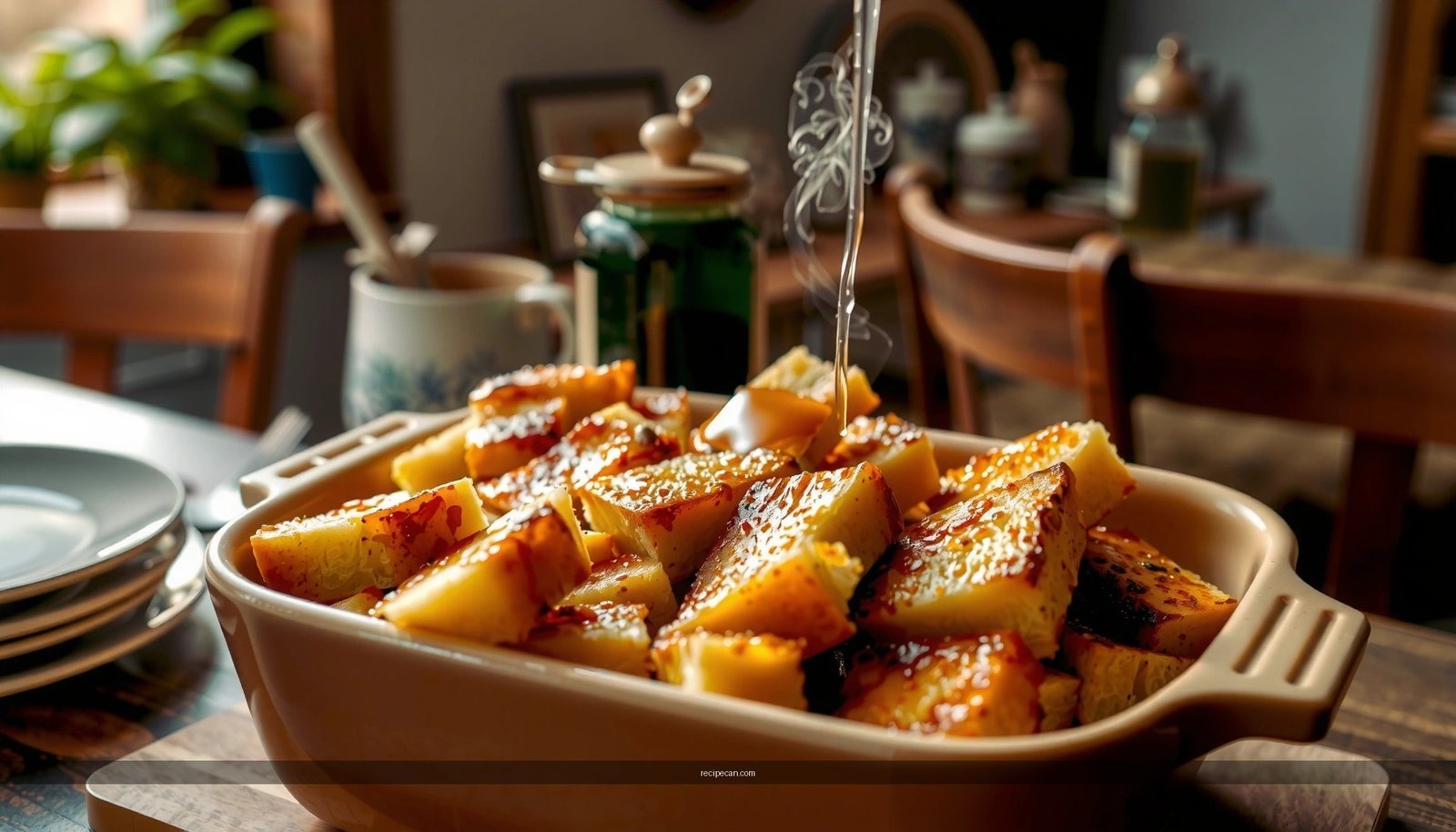
– Bake until puffed and golden, then let it rest briefly before cutting
Bake at 190°C/375°F for about 35–45 minutes, depending on bread type and dish depth. You’re aiming for a golden top and edges that look lightly crisp, while the center is set but still creamy. Resting 5–10 minutes helps the casserole finish setting so slices come out clean.
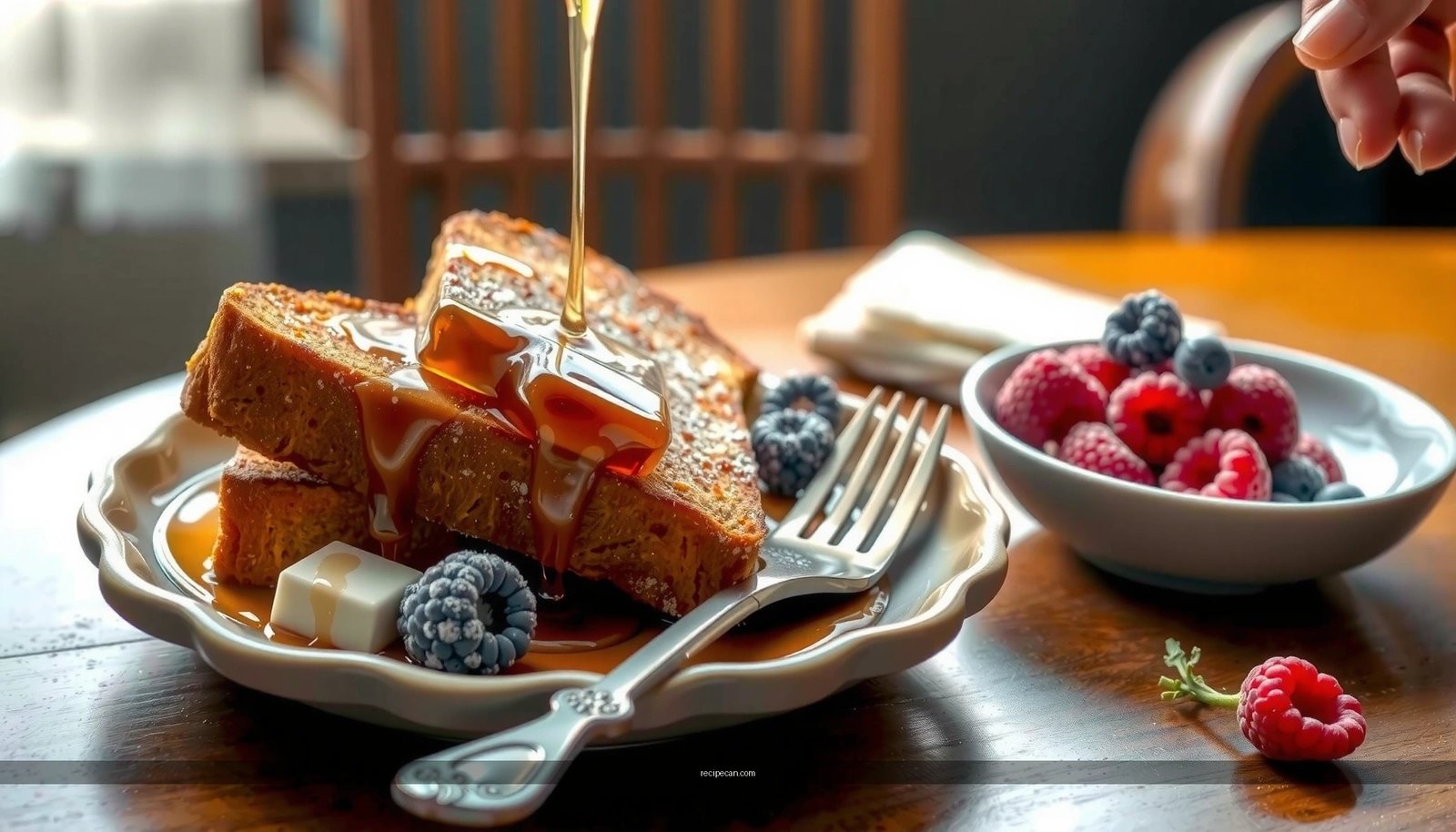
– Serve with warm syrup and fresh fruit for the easiest finish
Warm syrup improves absorption and aroma. Fresh fruit balances richness and provides a bright palate reset after each bite.
How to check doneness like a pro:
– Visual: puffed edges, golden surface, and no wet custard pooling.
– Texture: center should jiggle slightly like soft custard, not slosh like raw eggs.
– Internal temperature (optional but precise): aim for about 63–70°C (145–158°F) depending on your preferred set.
When you cut immediately, the casserole can collapse slightly because the custard hasn’t fully stabilized. A short rest is the difference between “beautiful slices” and “tasty but messy.”
Storage and Reheating Tips
Overnight French toast casserole is ideal for leftovers because it reheats well and often tastes even better the next day as the custard continues to set.
– Refrigerate leftovers covered for up to 2–3 days
Cool the casserole to room temperature before refrigerating. Cover to prevent moisture loss and fridge odor absorption. Within 2–3 days, the flavor stays bright and the texture remains satisfying.
– Reheat individual portions in the oven or microwave until warmed through
Microwave reheats quickly but can soften crisp edges. Oven reheating (around 175°C/350°F for 10–15 minutes) restores more of that “just baked” contrast. For best results, reheat until hot throughout and then serve promptly.
Reheating tactics for better texture:
– To preserve crispness: reheat uncovered in the oven.
– To avoid dryness: tent with foil if reheating for longer than 10 minutes.
– For portion control: reheat single slices in a toaster oven or air fryer on low for short intervals.
This recipe also scales well. If you’re feeding a crowd, bake two casseroles rather than stacking one too deeply—better airflow leads to more uniform browning and more consistent custard set.
This overnight French toast recipe casserole is the easiest way to get a delicious, cozy breakfast with minimal morning effort. Choose sturdy bread (brioche, challah, or thick sourdough), whisk a balanced custard with eggs and cinnamon, assemble and refrigerate for 8–12 hours, then bake until puffed and golden. Add-ins and toppings let you tailor flavor for any occasion, and leftovers keep for 2–3 days—so you can enjoy a stress-free, make-ahead breakfast with restaurant-level results.
Frequently Asked Questions
What ingredients do I need for an overnight French toast recipe casserole?
You’ll typically need thick bread (like brioche or challah), eggs, milk (or half-and-half), vanilla, and cinnamon for a classic overnight French toast casserole base. Many people also add sugar or brown sugar, plus butter for richness. If you want extra flavor, include a pinch of salt and optional add-ins like blueberries, chocolate chips, or sliced bananas.
How do I assemble and refrigerate an overnight French toast recipe casserole?
Cut the bread into cubes or thick slices, then layer it in a baking dish and pour the egg-milk mixture over the top. Press down gently so the bread absorbs the custard, cover with foil, and refrigerate overnight (at least 8 hours). In the morning, let the casserole sit at room temperature for about 15–30 minutes while you preheat the oven, then bake until puffed and golden.
Why does my overnight French toast casserole turn out soggy or dry?
Sogginess usually comes from using bread that’s too soft, not enough time for absorption, or an overly wet custard ratio (too much milk for the bread). Dry results often mean under-soaking, using bread that’s too stale-less absorbent, or baking too long. Measure your egg and milk amounts carefully, soak overnight for best texture, and bake just until the center is set and the top is browned.
What’s the best bread for an overnight French toast recipe casserole?
The best bread for overnight French toast casserole is thick-cut, sturdy bread like brioche, challah, sourdough, or French bread that can hold custard without becoming mushy. Slightly stale bread works even better because it absorbs the egg mixture more evenly. Avoid very airy or thin white bread, since it can break down and lead to a softer, less structured casserole.
Which baking dish size and bake time should I use for an overnight French toast casserole?
Use a baking dish that fits the bread in an even layer—commonly a 9×13-inch dish for standard overnight French toast casseroles. Bake at about 350°F (175°C) until the casserole is puffed, the edges are set, and the center reaches a custard-like firmness (often around 35–50 minutes depending on thickness). If the top browns too quickly, cover loosely with foil for the remainder of the bake time.
References
- Google Scholar Google Scholar
https://scholar.google.com/scholar?q=overnight+french+toast+casserole - Google Scholar Google Scholar
https://scholar.google.com/scholar?q=french+toast+bread+custard+baking+method - Google Scholar Google Scholar
https://scholar.google.com/scholar?q=egg+casserole+food+safety+refrigeration+time - https://en.wikipedia.org/wiki/French_toast
https://en.wikipedia.org/wiki/French_toast - Bread pudding
https://en.wikipedia.org/wiki/Bread_pudding - Custard
https://en.wikipedia.org/wiki/Custard - https://www.fsis.usda.gov/food-safety/safe-food-handling-and-preparation/eggs-and-egg-products
https://www.fsis.usda.gov/food-safety/safe-food-handling-and-preparation/eggs-and-egg-products - Preventing Food Poisoning | Food Safety | CDC
https://www.cdc.gov/foodsafety/keep-food-safe.html - https://www.britannica.com/topic/french-toast
https://www.britannica.com/topic/french-toast - Food safety
https://en.wikipedia.org/wiki/Food_safety