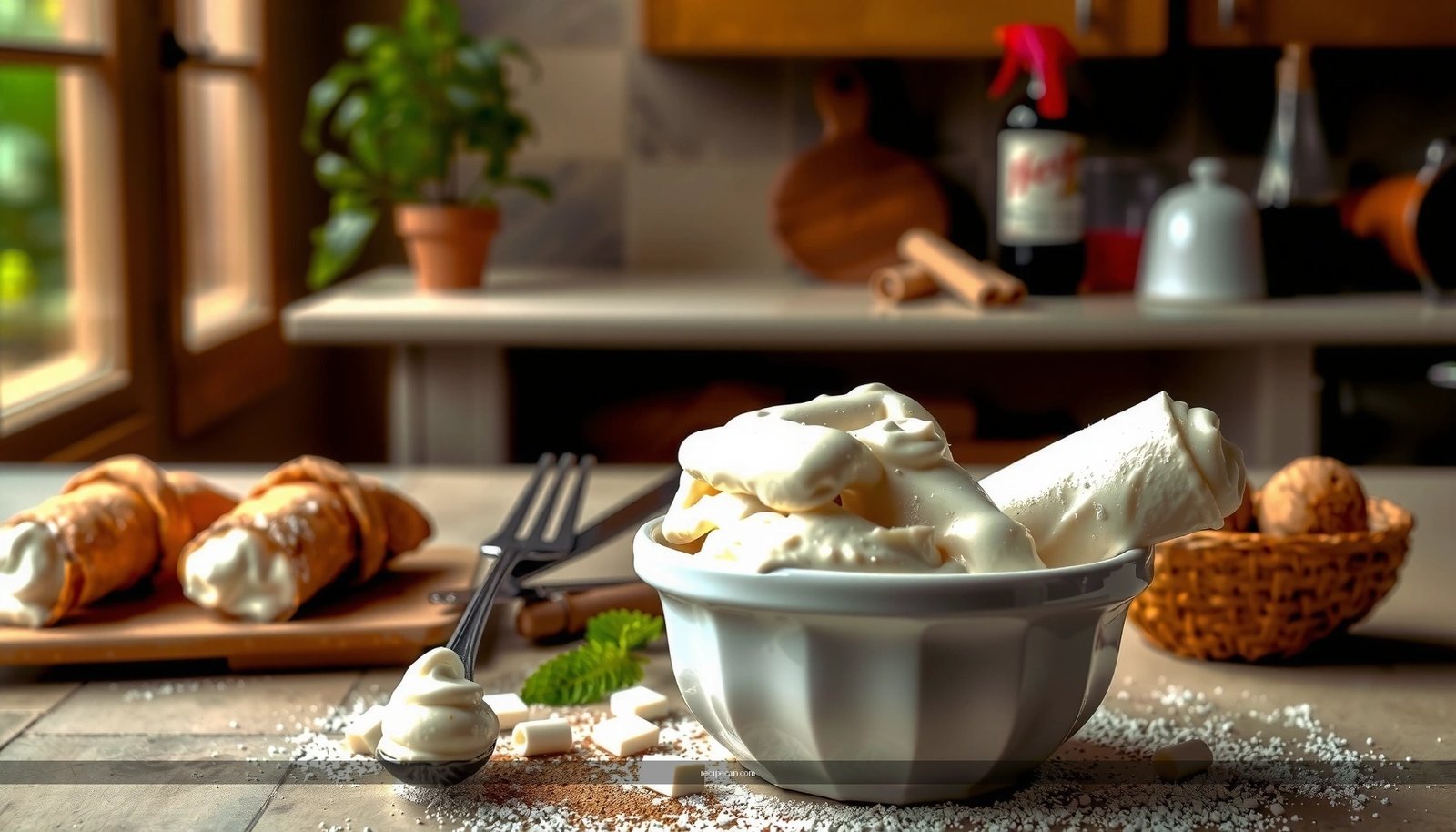
Want the best ricotta filling for cannoli recipe that turns out creamy, classic, and never grainy? This guide gives you the single, dependable method—how to drain, sweeten, and fold ricotta with the right flavorings for a filling that pipes cleanly and tastes like a traditional Sicilian cannoli. Follow these directions and you’ll get the texture and sweetness most home cooks are after, every time.
This ricotta filling for cannoli recipe delivers a rich, smooth cannoli center by draining ricotta properly and combining it with the right balance of powdered sugar, vanilla, and optional mix-ins—so your filling stays creamy instead of watery. Use the directions below to get a classic texture and dependable results every time, whether you’re preparing for a family dessert spread or a small catering order.
Follow the steps below for a reliable, classic result.
Choose the Right Ricotta

The foundation of any excellent ricotta filling for cannoli is the ricotta itself. Whole-milk ricotta tends to be richer and more cohesive than part-skim options, which often yield a looser texture and a slightly “thin” mouthfeel. For a traditional cannoli profile, whole-milk ricotta is the safest starting point for achieving that signature creamy consistency.
If you can, select ricotta that appears fresh and creamy rather than watery. Even “fresh” ricotta can vary by brand, season, and storage temperature. That’s why draining is non-negotiable: excess whey (the watery component) will dilute the filling, making it taste less sweet and more prone to separation once you pipe it into shells.
A practical approach:
– Drain ricotta (or buy pre-drained) to protect structure. Even a brief drain can remove enough moisture to noticeably thicken the final filling.
– Taste before mixing. Ricotta brands vary in saltiness and tang. If your ricotta tastes mildly sweet already, you may use slightly less powdered sugar; if it tastes sharp, you may need a touch more.
Cannoli Filling Moisture Readiness Guide (Quick Reference)
Ricotta Drain Time vs. Filling Consistency (Typical Results)
| # | Ricotta Type | Initial Texture | Recommended Drain | Resulting Filling Texture |
|---|---|---|---|---|
| 1 | Whole-milk, fresh | Creamy with slight looseness | 2–3 hours | Thick, pipeable |
| 2 | Whole-milk, wetter batch | Noticeable whey pooling | 4–6 hours | Creamy, non-runny |
| 3 | Pre-drained whole-milk | Firm, spreadable | 30–60 minutes (optional) | Ready to pipe |
| 4 | Part-skim fresh | Soft and loose | 4–6 hours | May still feel lighter |
| 5 | Low-fat pre-drained | Dense but slightly dry | 0–30 minutes | Good structure, less richness |
| 6 | Ricotta “fresh-style” | Neutral flavor, variable moisture | 2–4 hours | Balanced, classic results |
| 7 | Homemade drained ricotta | Thick, well-set curds | 1–2 hours | Exceptional pipeability |
Essential Ingredients for Cannoli Filling

A classic cannoli filling is less about complexity and more about precision. The goal is a balanced, creamy center with sweetness that complements the mild tang of ricotta. The most important ingredients—powdered sugar and vanilla—directly influence texture and flavor perception.
Key components
– Powdered sugar: Unlike granulated sugar, powdered sugar dissolves quickly and creates a smooth mouthfeel. For a classic cannoli sweetness, powdered sugar is your best choice.
– Vanilla extract: Provides a warm, bakery-style aroma that rounds out ricotta’s natural tang.
– Cinnamon and/or orange zest (optional but traditional): Cinnamon adds gentle warmth; citrus zest adds brightness that prevents the filling from tasting one-dimensional.
Optional add-ins (where quality matters)
– Mini chocolate chips: Use mini chips because they distribute evenly and don’t create pockets that can affect piping consistency.
– Citrus zest (orange or lemon): Zest contributes fragrance without adding moisture. Avoid juice—juice will loosen the filling.
From a production standpoint (especially if you’re filling multiple shells), these mix-ins should be measured consistently so each batch tastes uniform.
How to Mix Until Smooth

Texture is where most homemade cannoli filling attempts succeed or fail. Overmixing can make the filling feel pasty or overly dense, while undermixing leaves lumps that are unpleasant in a piped shell.
A reliable method:
1. Beat ricotta briefly first (before adding sugar). This breaks down curds so the filling becomes smooth from the start.
2. Add powdered sugar gradually. Adding it all at once can cause uneven dissolving and a slightly gritty feel.
3. Add vanilla and any spices last, after the base is smooth.
4. Mix gently when adding chocolate chips or other inclusions. Overworking after add-ins can crush chips or make the mixture less cohesive.
Stop when the filling is thick, creamy, and cohesive. A well-made ricotta filling should hold soft peaks and pipe cleanly without slowly slumping. If it doesn’t look pipeable yet, don’t panic—often the fix is simply more chilling time after mixing.
Flavor Boosters and Variations
Classic cannoli filling often includes subtle enhancements rather than dramatic changes. Think “precision seasoning” rather than “new flavor direction.” With that mindset, variations can be controlled and repeatable.
Consider these adjustments:
– Pinch of salt: A small amount of salt improves sweetness perception and makes vanilla and citrus taste more vivid. If your ricotta tastes flat (common with very mild brands), salt is an easy remedy.
– Orange vs. lemon zest:
– Orange zest supports the traditional cannoli flavor profile—rounded, slightly floral, and dessert-like.
– Lemon zest is brighter and can cut through sweetness for a lighter finish.
– Cinnamon or finely grated nutmeg: Cinnamon gives a warm “baked good” note, while nutmeg adds complexity. Start with small amounts because both can overpower ricotta if used heavily.
For an “elevated classic” variation, you can add a teaspoon of finely grated citrus zest and a controlled pinch of cinnamon, keeping chocolate chips optional based on preference.
Chilling, Piping, and Storing
Chilling is not optional if you want stability. Ricotta filling thickens as it cools because fat firms up and the mixture becomes more cohesive. This matters for both appearance and eating experience—especially if you’re serving at an event.
Best practices:
– Refrigerate 1–2 hours after mixing. This improves texture, deepens flavor, and helps the filling hold its shape when piped.
– Pipe into cooled cannoli shells just before serving. Shells start absorbing moisture immediately, which can turn them soft faster than you expect.
– Store filled shells separately from the filling. If you store them together, even well-drained filling will slowly soften the shells.
Operationally, if you’re making cannoli for multiple guests, prep the filling ahead, keep it chilled, and fill shells in batches. That’s the difference between “nice texture” and consistently crisp cannoli shells.
Troubleshooting Common Issues
Even experienced bakers run into predictable problems with ricotta filling. The good news: most issues are fixable with targeted changes rather than starting over.
If filling is too runny
Likely cause: insufficient drainage or ricotta with higher whey content.
Fix:
– Drain longer (often an additional 1–2 hours).
– Mix with slightly more powdered sugar only if needed, tasting as you go.
If it’s grainy
Likely cause: ricotta curds not fully broken down or sugar not fully dissolved.
Fix:
– Beat ricotta longer before adding sweeteners.
– For stubborn texture, press through a fine sieve for a near-silken finish.
If flavor is flat
Likely cause: under-seasoning or missing aromatic components.
Fix:
– Add vanilla or a bit more zest.
– Add a pinch of salt—it often restores “classic cannoli” flavor faster than adding more sugar.
A consistent approach—drain, mix smoothly, chill, taste—will prevent most of these issues before they start.
This ricotta filling for cannoli recipe is all about well-drained ricotta, the right mix-ins, and a brief chill before filling. Use these steps to get a thick, creamy, classic cannoli center every time—then pipe it into shells and serve fresh. Try the flavor variations, and make your next batch your best one yet.
If you want, share which ricotta brand you’re using and whether your shells are fried or store-bought—then I can help you fine-tune drain time and sweetness for a more precise result.
Frequently Asked Questions
What ingredients make the best ricotta filling for a cannoli recipe?
For classic cannoli, the base is high-quality ricotta (preferably whole-milk), plus powdered sugar for sweetness and a touch of salt to balance flavors. Many recipes also include mini chocolate chips and/or candied orange or lemon zest, and a splash of vanilla for depth. If you want a more traditional cannoli filling, add a little cinnamon or grated citrus depending on your style.
How do you prevent ricotta filling from becoming watery in a cannoli recipe?
The most common issue is ricotta that hasn’t been properly drained, so strain it through cheesecloth or a fine-mesh sieve for at least 30 minutes (longer for very wet ricotta). You can also gently press the ricotta to remove excess moisture before mixing. For extra stability, fold in sugar gradually and mix until smooth but don’t overwork the filling.
Why should you drain and dry ricotta before mixing the cannoli filling?
Ricotta contains natural whey, and without draining, the cannoli filling can weep and soften the shells quickly. Draining improves texture so the filling stays thick and creamy, which is especially important for piping into cannoli shells. This step helps your ricotta filling hold its shape and tastes less “loose” in every bite.
Which sweeteners and add-ins work best with ricotta filling for cannoli?
Powdered sugar is usually the best choice because it dissolves easily and creates a smooth cannoli filling without a gritty texture. For add-ins, mini chocolate chips, chopped pistachios, and candied citrus are popular because they complement ricotta’s mild flavor. You can also use vanilla extract or a bit of orange zest for an aromatic, classic cannoli vibe.
How long should you chill ricotta filling for cannoli, and when should you fill the shells?
After mixing your ricotta filling for the cannoli recipe, chill it for at least 30 minutes to let the flavors meld and the texture thicken slightly. For best results, pipe or spoon the filling into cannoli shells right before serving so the shells stay crisp. If you must hold them, store assembled cannoli in the refrigerator briefly, but expect some softening over time.
References
- Cannoli
https://en.wikipedia.org/wiki/Cannoli - Ricotta
https://en.wikipedia.org/wiki/Ricotta - https://www.britannica.com/topic/cannoli
https://www.britannica.com/topic/cannoli - https://www.britannica.com/topic/ricotta
https://www.britannica.com/topic/ricotta - Cheesemaking
https://en.wikipedia.org/wiki/Cheesemaking - https://pubmed.ncbi.nlm.nih.gov/?term=ricotta+cheese+composition
https://pubmed.ncbi.nlm.nih.gov/?term=ricotta+cheese+composition - https://pubmed.ncbi.nlm.nih.gov/?term=cannoli
https://pubmed.ncbi.nlm.nih.gov/?term=cannoli - Google Scholar Google Scholar
https://scholar.google.com/scholar?q=cannoli+ricotta+filling+recipe - Google Scholar Google Scholar
https://scholar.google.com/scholar?q=ricotta+draining+salting+to+reduce+moisture+cannoli+filling - Google Scholar Google Scholar
https://scholar.google.com/scholar?q=traditional+Sicilian+cannoli+ricotta+filling+methods