Get a bruschetta recipe with red onion that delivers the sweet-tang balance you want—no watery topping, no bland bites. You’ll learn exactly how to caramelize or quick-pickle the red onion, then pair it with garlic, tomatoes, and olive oil for a crisp, flavorful finish. This is the single best method to answer: how do you make red onion bruschetta taste vibrant and restaurant-ready at home?
This bruschetta recipe with red onion delivers a bright, tangy topping in under 30 minutes by balancing two flavors—sweet tomato-herb mixture and either caramelized or lightly pickled red onion. You’ll toast sturdy bread until crisp, prepare the red onion with the right level of softening, then assemble right before serving so the bread stays flavorful and does not go soggy.
Choose the Right Bread

The bread choice determines whether your bruschetta recipe reads as “fresh and crisp” or “bready and wet.” For the best texture, use sturdy, crusty bread that can handle a topping without collapsing—ciabatta, baguette, or country-style Italian loaf are ideal.
Key selection rules
– Thickness matters: Cut slices about 1 to 1.5 cm (roughly 1/2 to 3/4 inch) thick. Thinner slices toast quickly but absorb tomato juices faster.
– Crumb structure: Look for bread with a visible, airy crumb and a firm crust. That crust acts like a barrier when topped.
– Toast strategy: Aim for a surface that’s golden and lightly blistered. If the toast is pale, it absorbs more liquid; if it’s too dark, it can taste bitter and dry.
Pro tip for a restaurant-style finish
Before topping, rub the warm toast with a halved garlic clove and drizzle a little extra-virgin olive oil. This creates a flavored “base layer” that helps the bread resist sogginess—particularly important when using a juicy tomato mixture.
Prepare the Red Onion
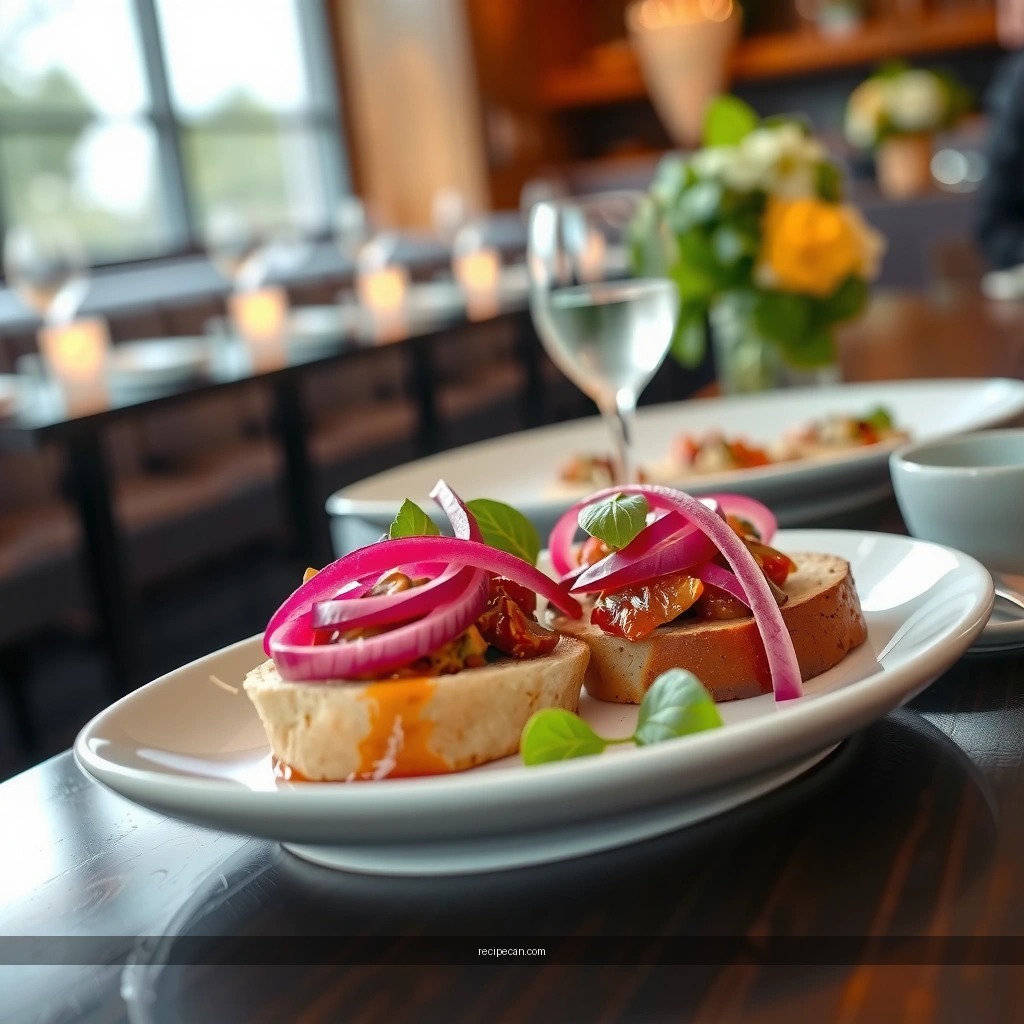
Red onion brings the signature tang to bruschetta, but it can also overpower the tomato if left too sharp. The goal is controlled softening—so each bite delivers a clean crunch and a bright note, not raw onion intensity.
Thin-slice for consistent bite
– Slice as thin as you can (often 2–3 mm / 1/8 inch). Thin slices soften quickly and distribute evenly across the toast.
– Keep slices similar in thickness so the onion softens uniformly (especially if you’re caramelizing).
Two effective approaches: caramelize or quick pickle
You can tailor the onion to the flavor profile you want:
Option A: Light caramelization (balanced sweetness)
– Warm a small amount of olive oil or butter in a skillet over medium-low.
– Add thin-sliced onion with a pinch of salt.
– Cook 8–12 minutes, stirring occasionally, until it turns translucent and gently golden.
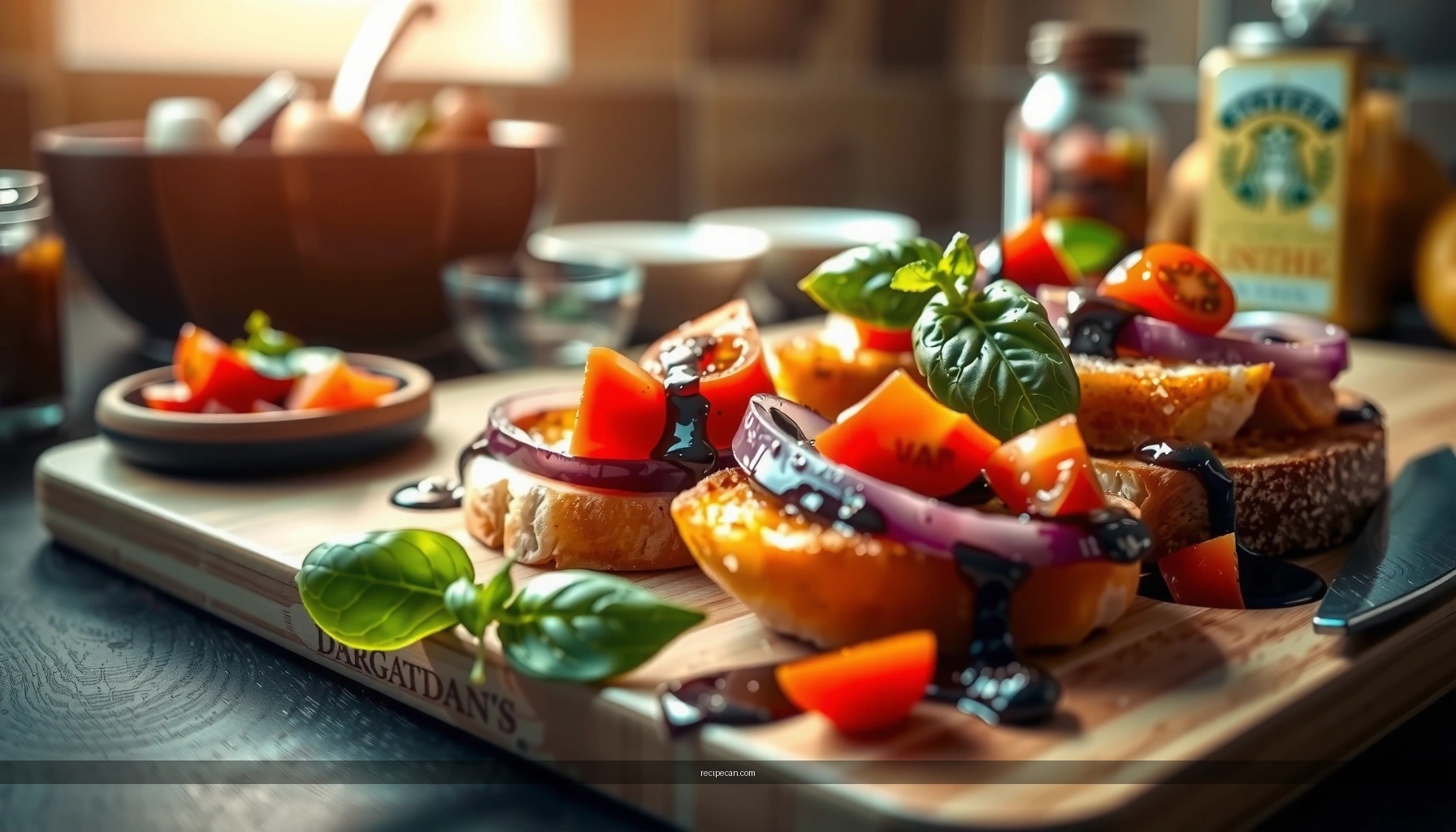
– Finish with a splash of balsamic vinegar or a teaspoon of sugar (optional) to round out acidity.
Why it works: caramelization reduces harshness and adds sweetness that pairs well with tomato’s natural sugars.
Option B: Quick pickle (sharp, tangy bite)
– Toss onion with cold water + a little vinegar (white wine vinegar, apple cider vinegar, or red wine vinegar).
– Soak 10–20 minutes. Drain well before combining with tomato mixture.
– Season with a pinch of salt and, if desired, a tiny amount of sugar to balance acidity.
Why it works: quick pickling preserves a brighter, more assertive tang than caramelizing—ideal for readers who want a “fresh” rather than “rounded” profile.
Ideal Onion Preparation Times for Bruschetta (Red Onion)
| # | Method | Onion Thickness | Target Texture | Time Range | Flavor Rating |
|---|---|---|---|---|---|
| 1 | Light Caramelize | 2–3 mm | Sweet-tender, still bright | 8–12 min | ★★★☆ |
| 2 | Caramelize (Deeper) | 2–3 mm | Gold, mild onion edge | 13–18 min | ★★★☆ |
| 3 | Quick Pickle | 2–3 mm | Tangy, crisp-tender | 10–20 min | ★★★★☆ |
| 4 | Quick Pickle (Longer) | 1–2 mm | Sharper tang, softer crunch | 20–30 min | ★★★★☆ |
| 5 | No-Heat (Cold Water Brief) | 2–3 mm | Lightly mellow, still punchy | 5–10 min | ★★★☆☆ |
| 6 | Salt + Drain (Mellow) | 2–3 mm | Less bite, more crisp | 15–25 min | ★★★☆☆ |
| 7 | Warm Onion (Fast Softening) | 1–2 mm | Gentle tang, minimal sharpness | 6–9 min | ★★★☆☆ |
Make the Bruschetta Tomato Topping
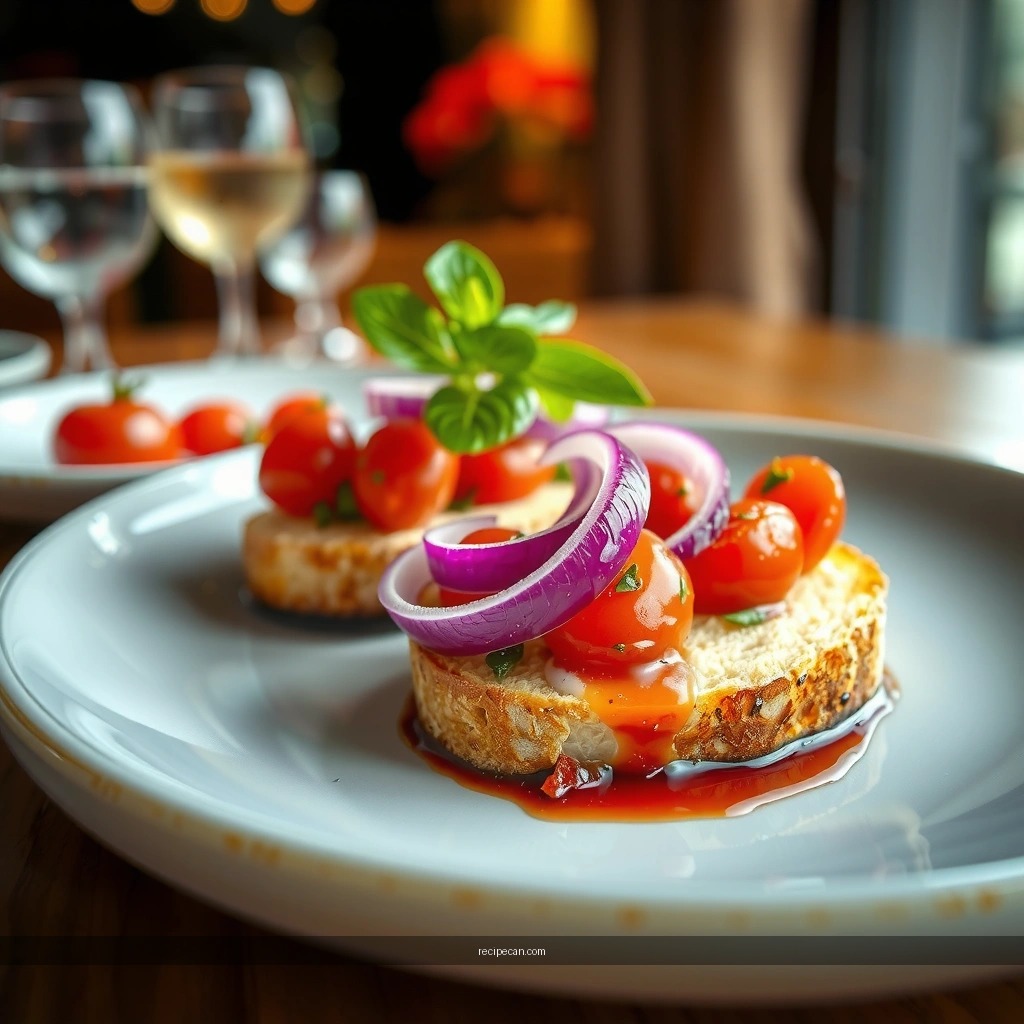
A great bruschetta tomato topping depends on moisture management and seasoning precision. Fresh tomatoes are flavorful, but their liquid can seep into toast quickly, which is why draining diced tomatoes is a practical, measurable step.
What to do
1. Dice ripe tomatoes (Roma or other paste tomatoes work especially well because they’re meatier).
2. Drain excess liquid: place diced tomatoes in a fine strainer for 5–10 minutes, or pat lightly with a paper towel.
3. Toss in:
– Olive oil (adds gloss and carries herb aroma)
– Salt and black pepper (to pull flavor forward)
– Fresh herbs such as basil, parsley, or a mix
Seasoning logic (why it tastes better)
– Salt before assembly: Salt helps tomatoes release flavor and enhances sweetness, but draining prevents excess liquid from reaching the bread.
– Oil after herbs: Toss tomatoes with olive oil first, then add herbs so leaves retain their texture and aroma.
Optional flavor upgrades
– A small pinch of oregano (not too much—tomatoes already carry their own sweetness)
– A squeeze of lemon if tomatoes are slightly under-ripe
– A spoon of capers for a briny accent that complements onion tang
Season and Assemble
Timing is where bruschetta succeeds or fails. For crisp bread and bright onion-tomato balance, combine components right before serving.
Assembly workflow
1. Prepare toast: warm bread until crisp and golden.
2. Keep tomato mixture and red onion separate until the last moment (or combine onion into tomatoes only when you’re ready to top).
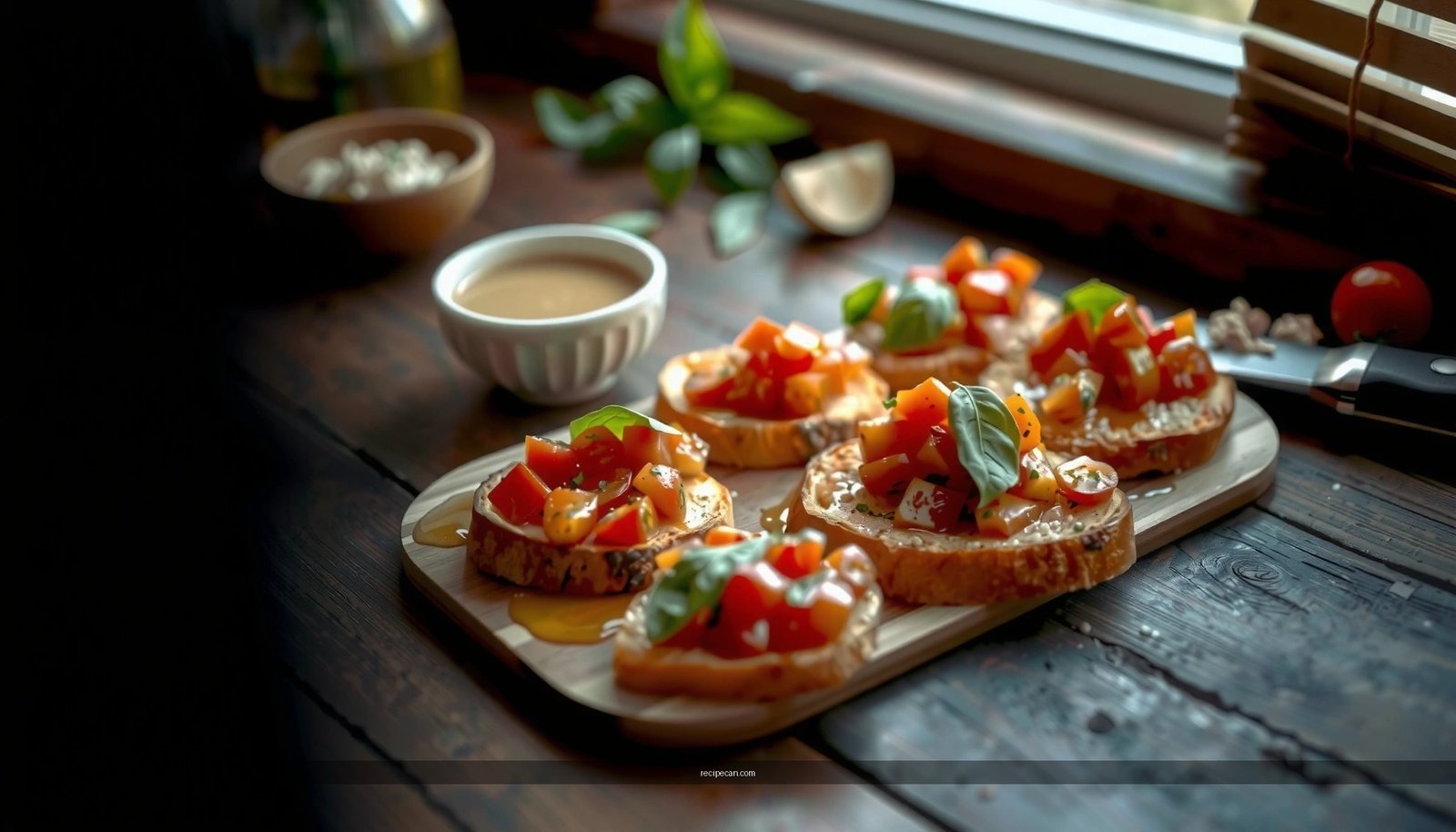
3. Spoon the mixture generously onto warm bread.
Why combine at the end?
– Onion flavors—especially pickled onion—can intensify as they sit with tomatoes.
– Tomato juices accumulate. If you assemble too early, bread becomes soft quickly, and the tangy “fresh bite” turns into a muted, soggy texture.
Portioning guidance
– Use 1 to 2 tablespoons of topping per slice, depending on bread thickness.
– Press lightly so toppings adhere, but avoid mashing tomatoes onto the bread surface.
Finish with Flavor and Texture
Finishing touches convert “tasty” into “memorable.” This is where you control aroma, acidity, and crunch.
High-impact finishing steps
– Drizzle extra-virgin olive oil right before serving. It boosts fragrance and creates a cohesive flavor bridge between onion and tomato.
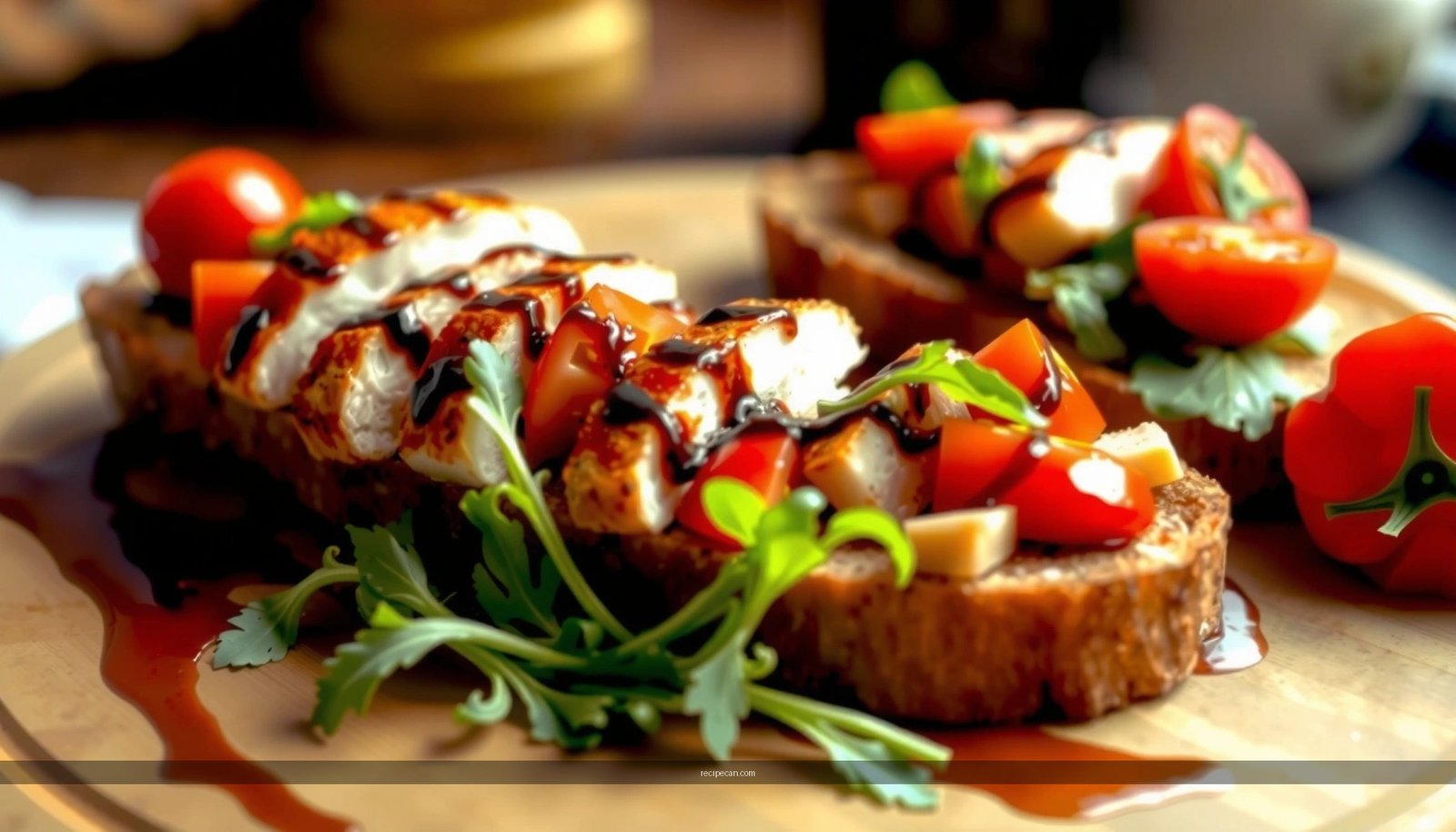
– Optional balsamic glaze: adds a gentle sweetness and a dark color contrast that visually signals “completed” bruschetta.
– Fresh basil on top or a pinch of chili flakes for brightness and heat.
Textural balance
If your onion is caramelized, consider keeping the topping slightly looser (less drained). If your onion is pickled and very tangy, drain tomatoes a bit more to prevent the topping from tasting overly sharp.
Serving Tips
Serve bruschetta immediately for best texture—this isn’t a dish designed for long sitting. If you’re hosting, you can prep components ahead, then assemble in waves.
Operational tips for a smooth serving flow
– Pre-slice bread and prep toppings, but store onion separately from tomatoes until shortly before plating.
– Toast bread in batches. Keep toasted slices on a warm tray (not sealed in plastic, which traps steam).
– If you’re scaling to a group, consider setting up a “topping station” so guests get crisp, freshly assembled bites.
Pairing ideas
– Add mozzarella or burrata for creamy contrast to the onion’s tang.
– Serve with a simple salad dressed lightly with lemon and olive oil to refresh the palate.
Bruschetta with red onion is all about balancing a bright topping with perfectly toasted bread. Prep your red onion with the level of caramelization or tang you prefer, mix it into a fresh tomato-herb topping with controlled moisture, and assemble right before serving for maximum flavor and crunch—try the recipe now and adjust the onion seasoning to your taste.
Frequently Asked Questions
What’s the best way to prepare red onion for bruschetta so it’s not too sharp?
Slice the red onion thinly and soak it in ice water for 10–20 minutes to mellow the bite, then pat dry well. For extra balance, toss the onion with a teaspoon of olive oil and a splash of vinegar or lemon juice before assembling your bruschetta. This keeps the red onion flavor bright without overpowering the tomatoes and basil.
How do you make red onion bruschetta without making the bread soggy?
Toast or grill the bread until crisp and dry, and let it cool for a minute so it doesn’t steam. Spoon the tomato mixture onto the toasted bread right before serving, and avoid soaking it with extra liquid from the tomato juices. You can also drain diced tomatoes briefly, then season and assemble for a crisp-on-top bruschetta recipe red onion topping.
Why does red onion taste better in bruschetta when it’s marinated?
Marinating red onion in olive oil, salt, and a little acid (like balsamic vinegar or lemon juice) softens harshness and helps it blend with the tomatoes. The acid also brightens the flavors, making your bruschetta recipe red onion topping taste fresher and more cohesive. Even a quick 10-minute toss can noticeably improve flavor and texture.
Which tomatoes and seasonings pair best with red onion for bruschetta?
Use ripe, flavorful tomatoes—cherry, Roma, or vine-ripened—then dice them and season with salt, black pepper, and minced garlic if you like. Fresh basil and a drizzle of high-quality olive oil are classic, and adding a small amount of balsamic vinegar can deepen the sweetness of the tomatoes. If you want heat, include red pepper flakes, but go easy so the red onion doesn’t get lost.
How long should you cook or toast the bread for a classic red onion bruschetta recipe?
Toast the bread until golden and crisp, typically about 2–4 minutes per side depending on thickness and heat. Rub the warm toast lightly with garlic (optional) for flavor, then top immediately so the texture stays crunchy. Serving right away is key for bruschetta with red onion, because the crisp bread is part of what makes it so satisfying.
References
- Bruschetta
https://en.wikipedia.org/wiki/Bruschetta - Red onion
https://en.wikipedia.org/wiki/Red_onion - https://www.britannica.com/topic/bruschetta
https://www.britannica.com/topic/bruschetta - https://pubmed.ncbi.nlm.nih.gov/?term=red+onion+polyphenols
https://pubmed.ncbi.nlm.nih.gov/?term=red+onion+polyphenols - https://pubmed.ncbi.nlm.nih.gov/?term=Allium+cepa+thiosulfinates
https://pubmed.ncbi.nlm.nih.gov/?term=Allium+cepa+thiosulfinates - https://www.sciencedirect.com/search?qs=red%20onion%20quercetin
https://www.sciencedirect.com/search?qs=red%20onion%20quercetin - https://www.sciencedirect.com/search?qs=Allium%20cepa%20thiosulfinates
https://www.sciencedirect.com/search?qs=Allium%20cepa%20thiosulfinates - Google Scholar Google Scholar
https://scholar.google.com/scholar?q=bruschetta+recipe+red+onion - Google Scholar Google Scholar
https://scholar.google.com/scholar?q=red+onion+polyphenols+flavor+thiosulfinates - Google Scholar Google Scholar
https://scholar.google.com/scholar?q=raw+onion+sensory+compounds+study