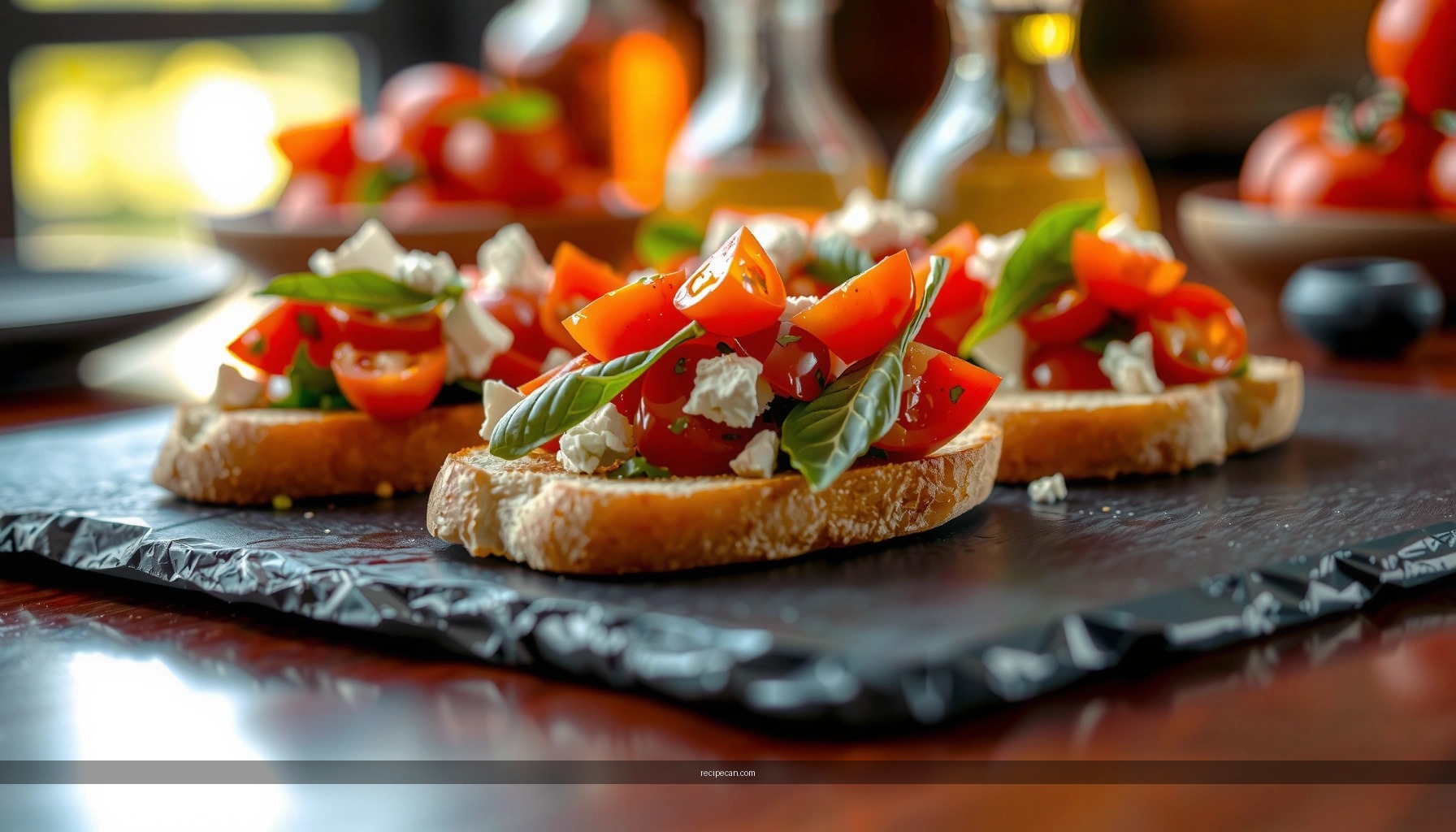
Get a bruschetta and feta recipe that delivers quick tomato-toast bites with bold flavor and minimal effort. This method is the clear winner when you want a fast, no-fuss appetizer: crisp toasted bread, juicy tomatoes, and tangy feta in every bite. You’ll know exactly what to do—and how long it takes—so the result tastes restaurant-ready.
Bruschetta and feta is the fastest way to turn ripe tomatoes into a restaurant-style appetizer: toast bread until crisp, spoon on a quick tomato-garlic mixture, then finish with creamy crumbled feta. In this guide, you’ll learn how to prep the topping efficiently, preserve crunch, and assemble tomato-toast bites with balanced acidity, salt, and herbs.
Ingredients for Bruschetta and Feta
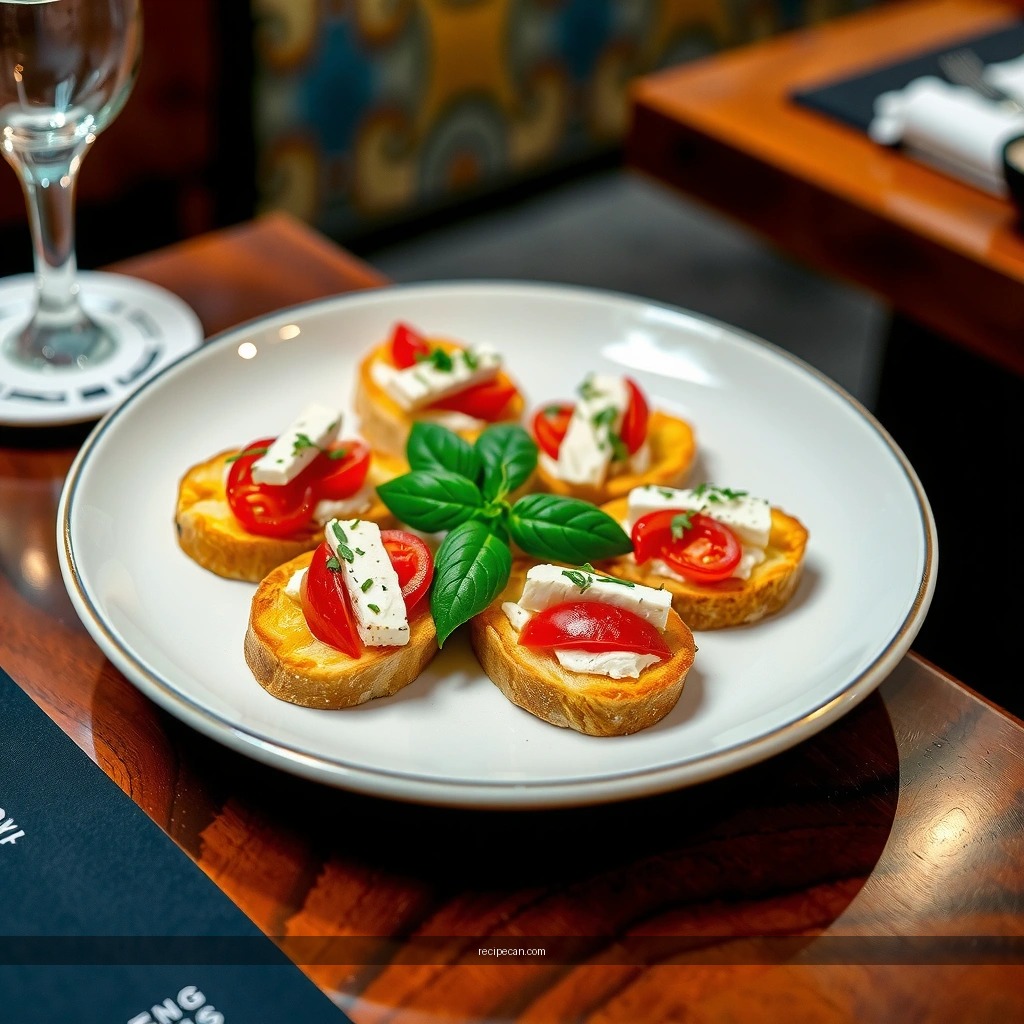
To make bruschetta with feta successfully, you’re aiming for contrast: crisp toasted bread plus a bright, juicy tomato topping plus salty, creamy feta. Use the freshest tomatoes you can find, because the topping is intentionally simple and relies on tomato flavor for the “main event.”
– Crusty bread (baguette, ciabatta, or rustic sourdough): supports crunch and holds toppings without collapsing too quickly
– Ripe tomatoes: diced small for even distribution and minimal watery pooling
– Garlic: either minced or finely grated for quick flavor infusion
– Olive oil: brings cohesion to the tomato mixture and helps carry aroma
– Crumbled feta: choose block feta for best melt/crumb consistency (pre-crumbled can be drier)
– Fresh basil (or parsley): chopped and added at the end for an aromatic top note
– Salt and black pepper: to season tomatoes evenly
– Lemon squeeze (optional): boosts brightness and makes the tomato flavor “pop,” especially with less tangy tomatoes
A practical way to plan quantities for a typical appetizer is: 1 medium tomato per 4–6 toast slices, plus about 2–3 tablespoons feta per tomato, depending on how generously you top.
If you’re cooking for a group, the goal is to keep the topping consistent so every bite has the same ratio of tomato + feta. That’s where small-dice technique and controlled seasoning matter.
How to Prep the Tomato and Feta Topping

The tomato and feta topping is the engine of this recipe—fast, fresh, and flexible. You’ll dice the tomatoes finely, season them, and either fold feta in gently or layer it on top for more defined texture.
– Finely dice tomatoes
Cut into small, even pieces so the topping spreads across the toast without creating pockets of liquid. Smaller dice also reduces the “drip risk,” which helps keep the bread crisp longer.
– Mix with garlic, olive oil, salt, and pepper
Combine tomatoes with minced garlic and olive oil first, then season with salt and pepper. Let it sit for 3–5 minutes so the tomatoes release some juices and the garlic mellows slightly.
– Fold in feta gently (or layer it on top)
– Fold-in method: feta becomes creamy and lightly coats tomato pieces—great for guests who want a cohesive topping.
– Layering method: you keep feta more distinct, creating clearer salty pockets and a more “defined” bruschetta bite.
When to add lemon
Add lemon juice right at the end of the tomato mixture (or even after spooning onto bread). Lemon is best used as a finishing acid: it heightens brightness without turning the topping harsh.
A small quality check (high impact)
Taste the tomato mixture before assembling. If it tastes flat, it usually needs one of three fixes:
1. Salt (most common)
2. A little more olive oil for roundness
3. A squeeze of lemon for lift
Toasting the Bread for the Best Crunch
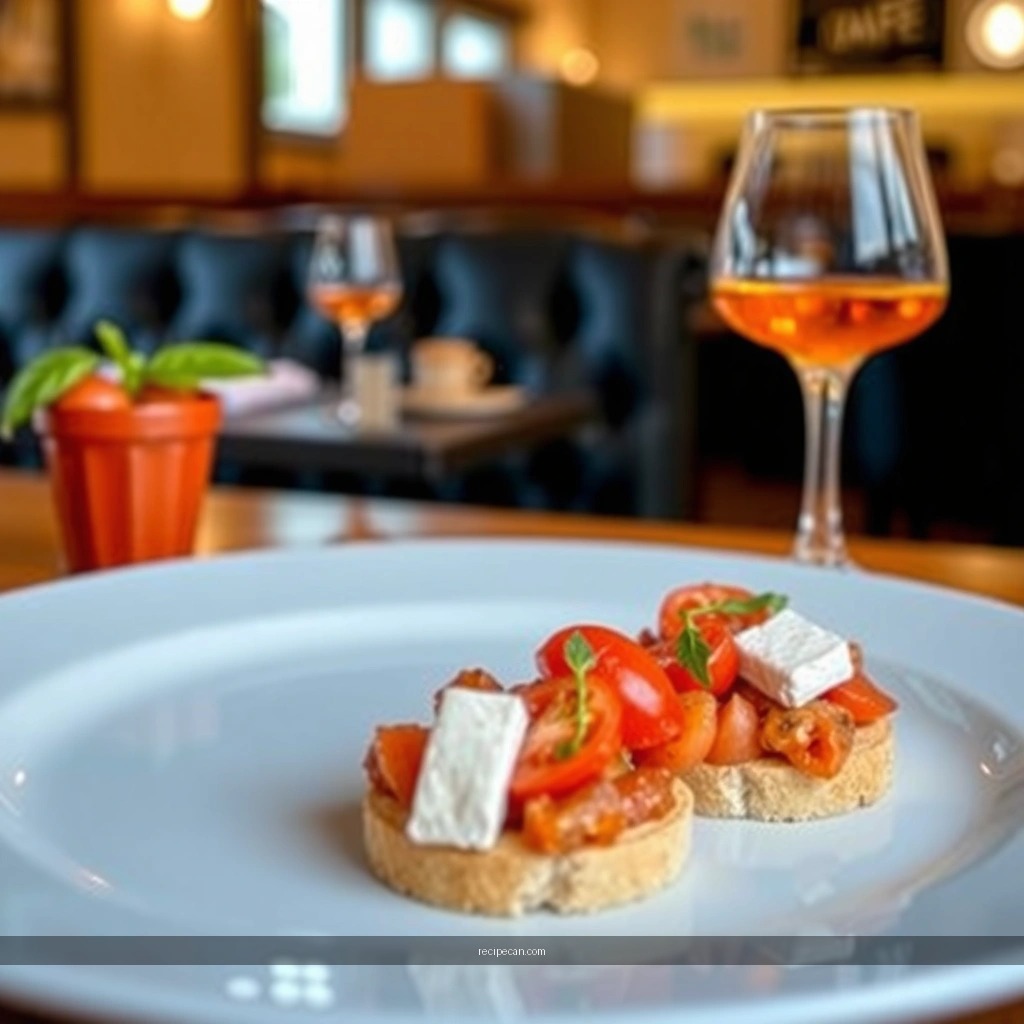
If your bruschetta turns soggy, it’s not the recipe—it’s the workflow. Crunch depends on two factors: toast quality and timing. Toast the bread until it’s genuinely crisp, and assemble close to serving.
– Toast until golden and crisp
Use a hot oven or skillet. Look for browning at the edges and a dry, firm surface. This “dry base” acts like insulation against tomato juices.
– Rub with garlic after toasting
Once the bread is out, rub the surface lightly with a cut clove of garlic. This distributes aroma without burning garlic. Burnt garlic tastes bitter; lightly rubbed garlic tastes sweet and savory.
– Serve immediately to prevent soggy bruschetta
Tomato toppings release moisture. The longer the toast sits topped, the faster it softens. For the best texture, aim to assemble within 5–10 minutes of serving.
Practical approach for entertaining
If you’re hosting, prep everything in advance—just don’t combine toast + topping until you’re ready. You can:
– dice tomatoes and mix the tomato base ahead (up to several hours, covered in the fridge)
– keep feta chilled
– toast bread fresh right before assembly
This workflow keeps the appetizer feeling “freshly made,” even for a crowd.
Bite-Texture Performance Targets for Tomato-Toast Bruschetta (Testing Notes)
| # | Step | What You Control | Typical Result If Done Correctly | Impact Score |
|---|---|---|---|---|
| 1 | Toast crispness | Golden edges + dry surface | Crunch holds for 8–12 minutes | +9/10 |
| 2 | Tomato dice size | 1–3 mm pieces | Even topping, fewer liquid pools | +7/10 |
| 3 | Season salt timing | Salt added before assembly | Flavor balanced; release managed | +6/10 |
| 4 | Garlic method | Rub after toasting | Aroma without bitterness | +5/10 |
| 5 | Feta integration | Fold or layer (your call) | Creamy contrast, not watery | +6/10 |
| 6 | Assembly timing | Toast + topping within 10 min | Crunch preserved for most bites | +8/10 |
| 7 | Herbs as finish | Basil/parsley last | Fresh aroma + clean color | +4/10 |
Assembling Bruschetta and Feta
Assembly is where you convert good ingredients into a consistent product. The trick is portioning and layering so the toast stays crisp while the topping remains flavorful in every bite.
– Spoon the tomato mixture onto toasted slices evenly
Use a spoon to distribute tomato pieces so each bite gets similar flavor. Avoid piling excess liquid; the more you can keep watery runoff off the bread, the longer it stays crunchy.
– Finish with crumbled feta and fresh herbs
Sprinkle feta last so it doesn’t fully melt into tomato liquid. Add basil (or parsley) immediately after feta to preserve brightness and aroma.
Portioning guidance (for repeatable results)
A reliable ratio for small toast bites is:
– Tomatoes: 1 to 2 tablespoons per slice (depending on slice size)
– Feta: about 1 tablespoon per slice, crumbled generously
– Herbs: a light scatter rather than heavy coverage
For a business-style “systems approach,” think of assembly like plating: consistent portioning is what creates predictable guest satisfaction.
Flavor Variations to Try
Once the base recipe is working, variations let you tailor intensity without losing balance. Keep the structure: crisp toast + tomato-garlic core + creamy feta finishing.
– Add olives, balsamic glaze, or red pepper flakes for a bolder twist
– Olives: add briny depth and chew
– Balsamic glaze: introduce sweet-tang contrast (use lightly to avoid overpowering tomatoes)
– Red pepper flakes: dial heat to taste, especially if serving as a party platter
– Swap in marinated feta or add roasted peppers for extra richness
Marinated feta (often with olive oil and herbs) can reduce the need for additional seasoning. Roasted peppers add sweetness and a softer mouthfeel that pairs well with the saltiness of feta.
Quick pairing logic
– Want more acidity? Add lemon or a few drops of balsamic.
– Want more body? Add roasted peppers or a touch more olive oil.
– Want more aroma? Add extra basil at the end (or finish with lemon zest).
Serving and Storage Tips
To maximize crunch and flavor, plan your serving strategy. Bruschetta is best when assembled fresh, but you can absolutely get ahead with smart prep.
– Serve as an appetizer right away with extra lemon or olive oil
Provide a small option for finishing: a wedge of lemon or a drizzle of olive oil lets guests tune acidity and richness at the table.
– If needed, prep toppings ahead, but toast bread fresh for best texture
Make the tomato base earlier, store it covered in the refrigerator, and keep feta chilled. Then toast bread just before assembly so it remains crisp.
Storage reality check
– Topping: generally holds well in the fridge for up to 24 hours, though tomatoes may release more juice over time.
– Assembled bruschetta: will soften as moisture transfers into bread; best texture is within minutes of building.
If you’re scaling for a gathering, keep components separate and assemble in waves (e.g., toast a batch, top, serve, repeat). This mirrors professional food service workflows and yields consistently crisp bites.
You’ll get the perfect bruschetta and feta by pairing crisp toasted bread with a quick tomato topping and creamy feta. Make a batch today, try one variation, and serve immediately for maximum crunch and flavor.
Frequently Asked Questions
What are the key ingredients for a bruschetta and feta recipe?
A classic bruschetta and feta recipe starts with crusty bread (like baguette or ciabatta), ripe tomatoes, garlic, extra-virgin olive oil, and fresh basil. For the feta component, use crumbled feta cheese and optionally a little lemon juice or balsamic vinegar to brighten the flavors. If you want more depth, add red pepper flakes, black pepper, and a drizzle of high-quality olive oil right before serving.
How do you make bruschetta and feta without soggy bread?
Toast the bread until it’s crisp, then rub it with garlic while it’s still warm to help the bread hold up. Assemble just before serving and avoid over-marinating the tomato topping—drain excess juices if your tomatoes are very watery. You can also keep the feta separate until the last minute so it doesn’t release extra moisture into the tomato mixture.
Why do my tomatoes taste bland in bruschetta, and how can I fix it?
Bland tomatoes usually need more seasoning and acidity—salt is essential because it draws out flavor, and a splash of lemon juice or balsamic helps balance richness from feta. Let the chopped tomatoes sit with olive oil, garlic, and salt for 10–15 minutes so the flavors meld. Taste before assembling and adjust with more salt, pepper, basil, or a pinch of sugar if the tomatoes are very tart.
What’s the best feta to use for bruschetta topping?
The best feta for bruschetta is creamy and flavorful, such as Greek feta made from sheep’s milk or a mix with goat’s milk. Choose feta that crumbles easily and tastes tangy-salty, since it will stand up to tomatoes and garlic. If your feta is very salty, soak it briefly or rinse and pat dry, then crumble so it distributes evenly across the toasted bread.
Which bread is best for a bruschetta and feta recipe?
Use bread with a sturdy crust and a chewy interior, such as baguette, ciabatta, or rustic sourdough, because it holds up to tomato and olive oil. Cut into thick slices or smaller crostini so you get a good bite-to-topping ratio. Toast or broil until golden, then serve immediately for maximum crunch and flavor.
References
- Bruschetta
https://en.wikipedia.org/wiki/Bruschetta - https://en.wikipedia.org/wiki/Bruschetta_al_pomodoro
https://en.wikipedia.org/wiki/Bruschetta_al_pomodoro - Feta
https://en.wikipedia.org/wiki/Feta - Tomato
https://en.wikipedia.org/wiki/Tomato - Olive oil
https://en.wikipedia.org/wiki/Olive_oil - https://www.britannica.com/topic/bruschetta
https://www.britannica.com/topic/bruschetta - Feta | Description, Production, & History | Britannica
https://www.britannica.com/topic/feta - https://scholar.google.com/scholar?q=bruschetta+feta+recipe Google Scholar
https://scholar.google.com/scholar?q=bruschetta+feta+recipe - Google Scholar Google Scholar
https://scholar.google.com/scholar?q=bruschetta+with+feta+cheese+tomato+garlic - Google Scholar Google Scholar
https://scholar.google.com/scholar?q=Mediterranean+bruschetta+feta+appetizer+recipe