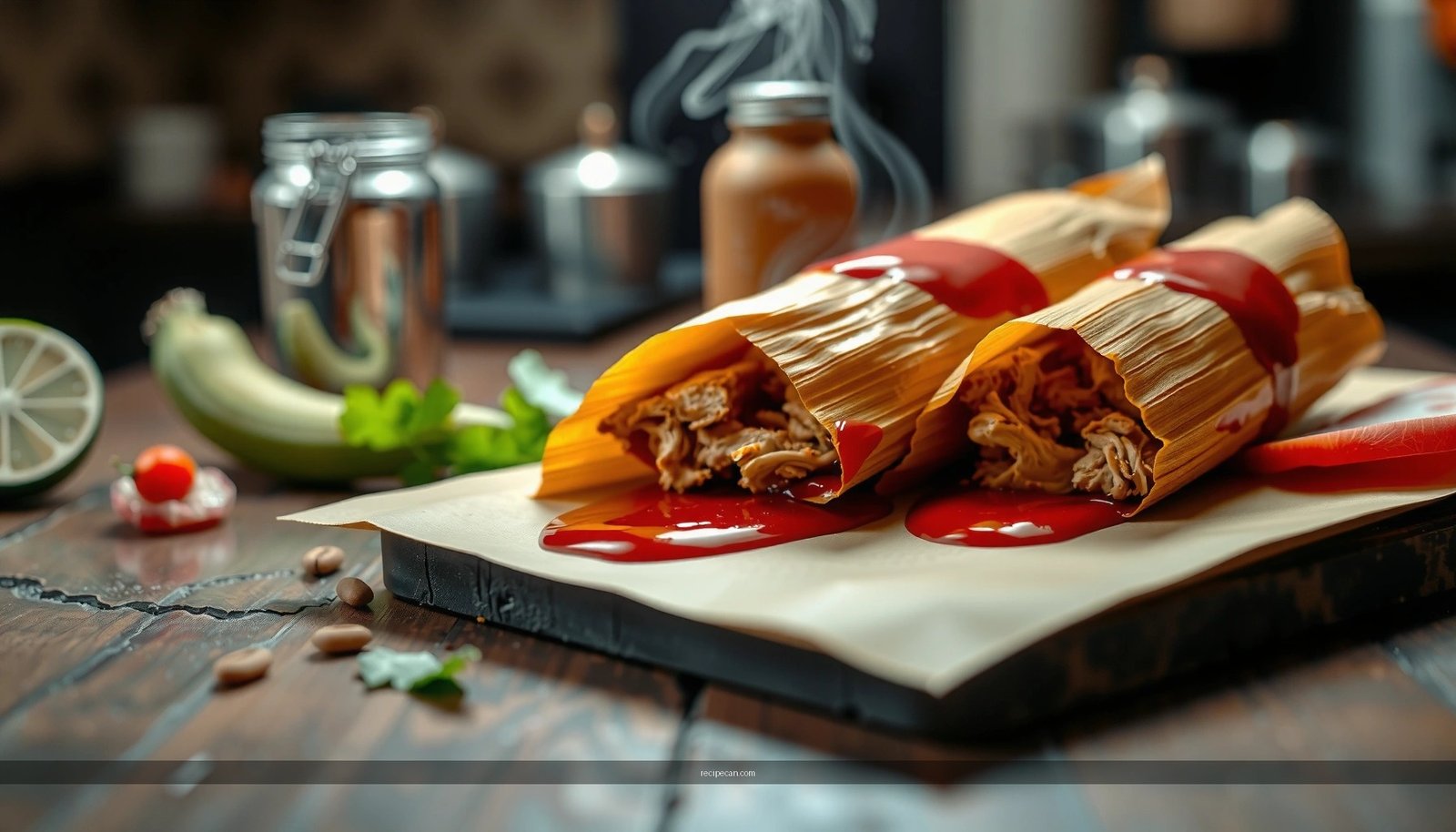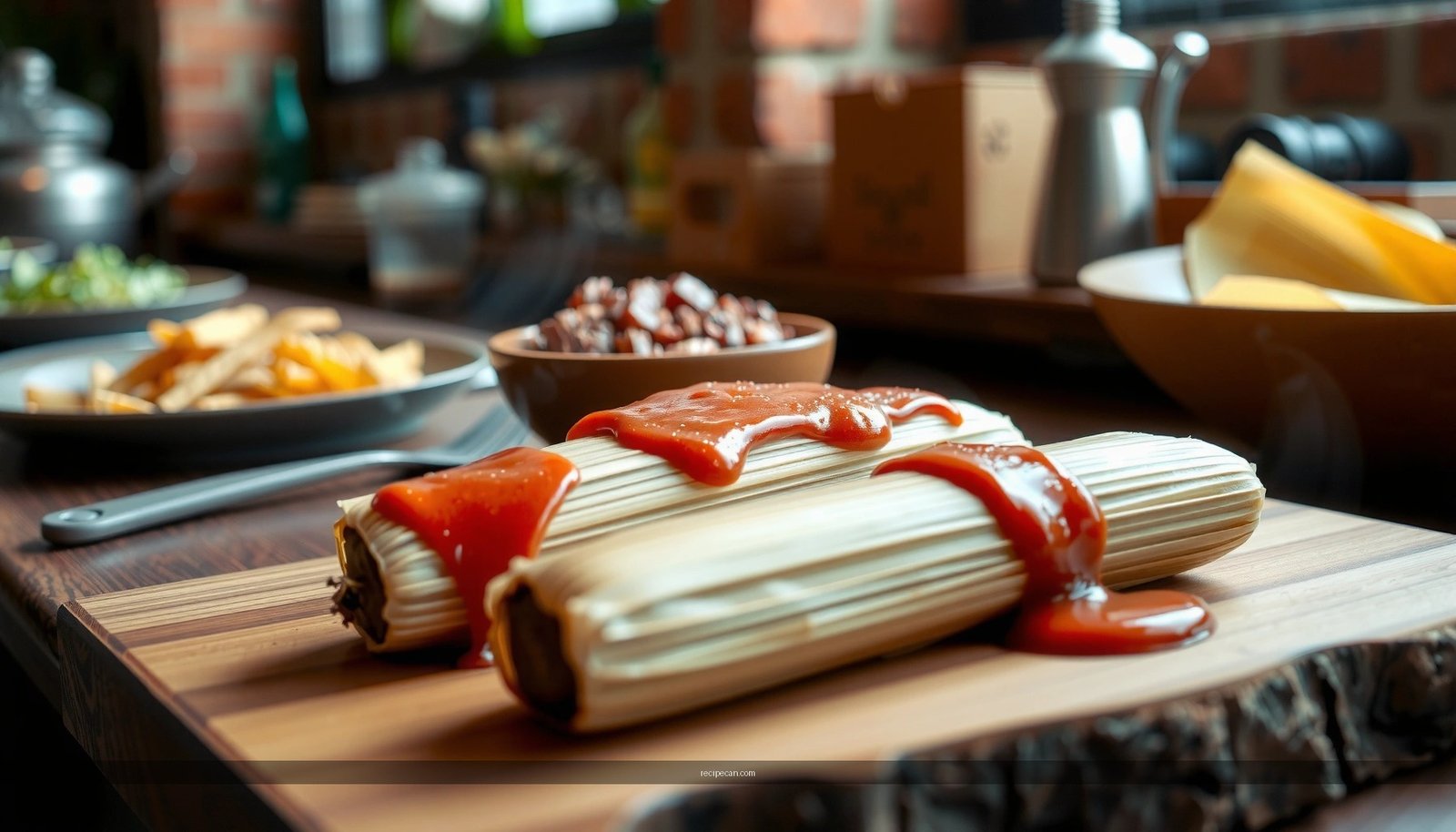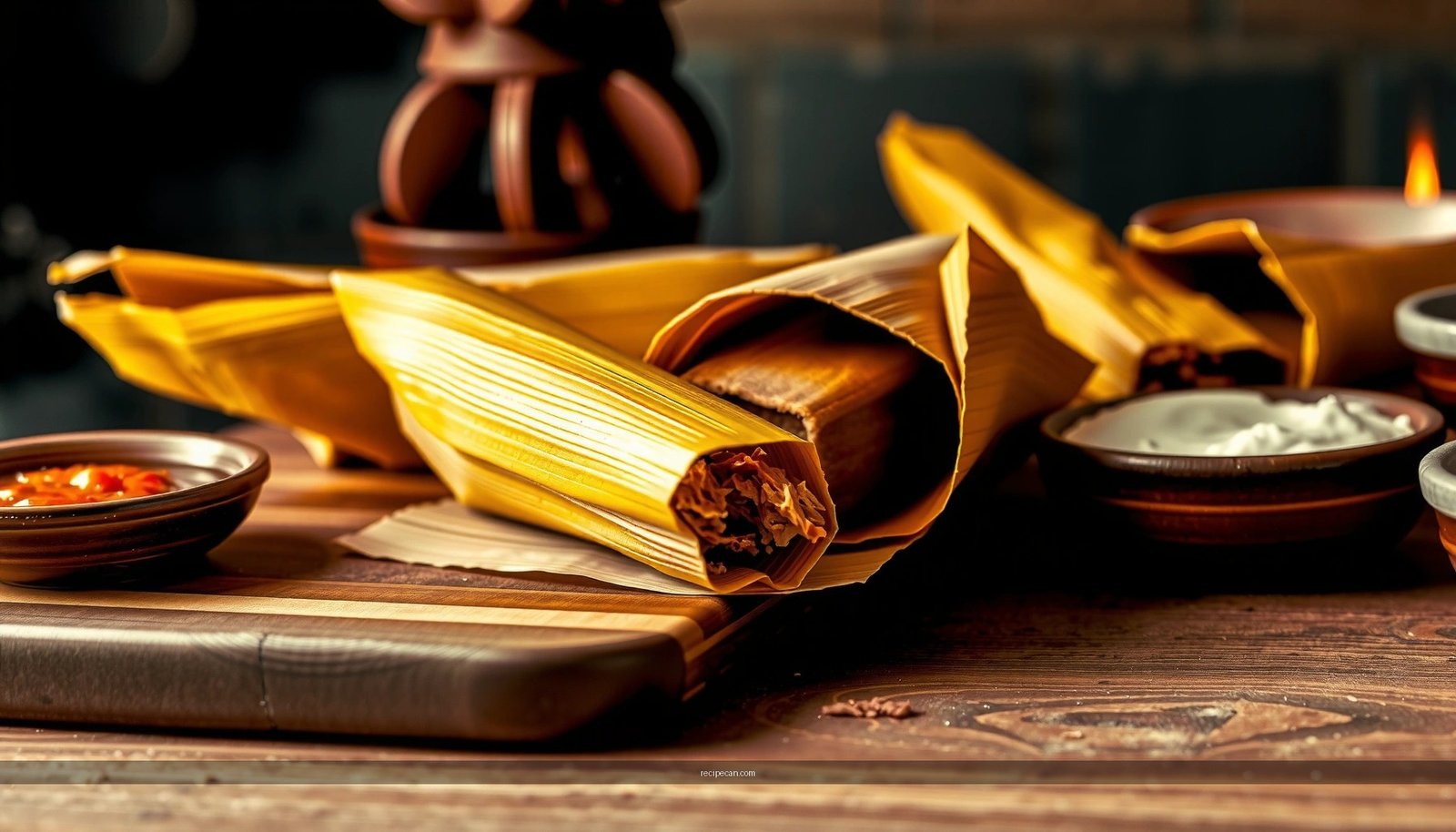
This chicken tamales recipe delivers classic, tender chicken tamales with rich masa and a smoky-steamed finish—no guesswork, no shortcuts. If you want the best method for filling, shaping, and steaming chicken tamales so they hold together and taste truly homemade, this is the one to follow. You’ll get a step-by-step approach that answers exactly how to make chicken tamales the traditional way.
You can make classic chicken tamales by spreading seasoned corn masa onto softened corn husks, adding a flavorful shredded chicken filling, and steaming until the masa firms and releases cleanly from the husk. This chicken tamales recipe walks you through every step—prep, assembly, and steaming—so you consistently get tender, never-dry tamales with a balanced flavor profile.
Ingredients for Chicken Tamales
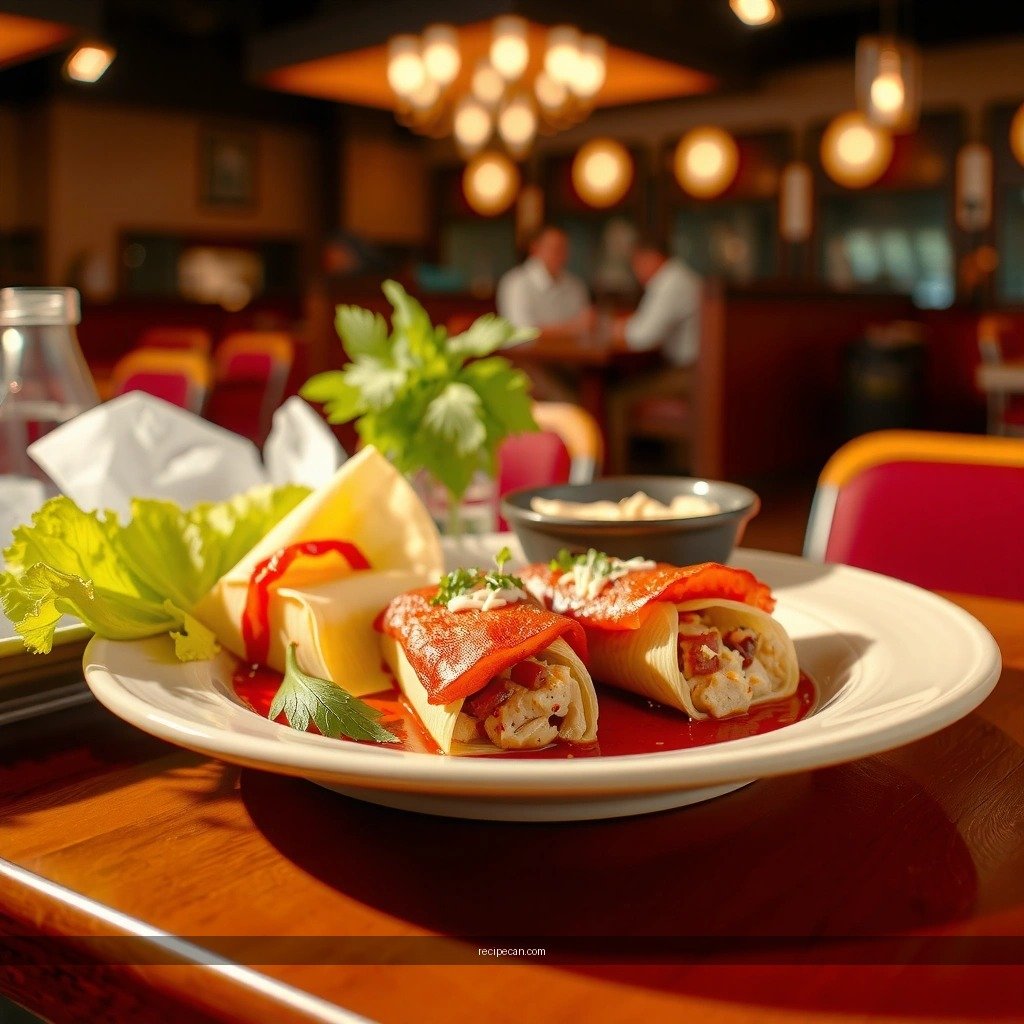
A reliable tamale is built on three components: masa (dough), filling (savory chicken), and wrappers (husks). Getting each part right—especially the masa hydration and filling moisture—determines whether your tamales taste restaurant-quality or fall flat.
Masa ingredients
– 2 cups masa harina (corn flour)
– 3 to 3½ cups chicken broth (warm; adjust for spreadability)
– 1½ tsp baking powder (helps lighten and set the masa)
– 1 tsp fine salt (or to taste)
Filling ingredients
– 2 to 2½ lb boneless, skinless chicken thighs or breasts (for shredding)
– 1 small yellow onion, finely chopped
– 3–4 cloves garlic, minced
– 1 to 2 tsp ground cumin
– 1 to 2 tsp chili powder (mild to medium)
– 1 tsp dried oregano (or 1 tbsp fresh)
– ½ to 1 cup salsa roja or warm enchilada sauce (for moisture and flavor)
– 1 to 2 tbsp fresh cilantro, chopped (optional but recommended)
– Salt and black pepper, to taste
– Optional: 1–2 tbsp neutral oil for sautéing onion/garlic
Wrapper basics
– 30–45 dried corn husks, depending on size of tamales and how full you pack them
– Optional: banana leaves (useful for aroma or as an extra layer, especially if you want a more delicate finish)
To streamline prep, keep your broth warm and your fillings ready before you start assembling. Masa is easiest to spread when it’s soft and elastic—too thick becomes difficult to fold and too thin can lead to separation during steaming.
Chicken Tamales: Texture Targets for Consistent Results
| # | Stage | Target Texture | Time Window | Outcome Impact |
|---|---|---|---|---|
| 1 | Husk soaking | Pliability without tearing | 45–90 min | ★★★★★ |
| 2 | Masa hydration | Spreadable, holds shape | 5–10 min rest | ★★★★★ |
| 3 | Chicken cooking | Shred with minimal effort | 25–45 min | ★★★★☆ |
| 4 | Filling moisture | Saucy, not runny | 10–15 min simmer | ★★★★☆ |
| 5 | Tamale steaming | Masa sets; pulls cleanly | 75–120 min | ★★★★★ |
| 6 | Rest after steaming | Firmens for clean unwrapping | 10–20 min | ★★★★☆ |
| 7 | Reheating method | Moist and steaming-hot | 15–25 min steam | ★★★☆☆ |
Prep the Corn Husks and Make the Masa
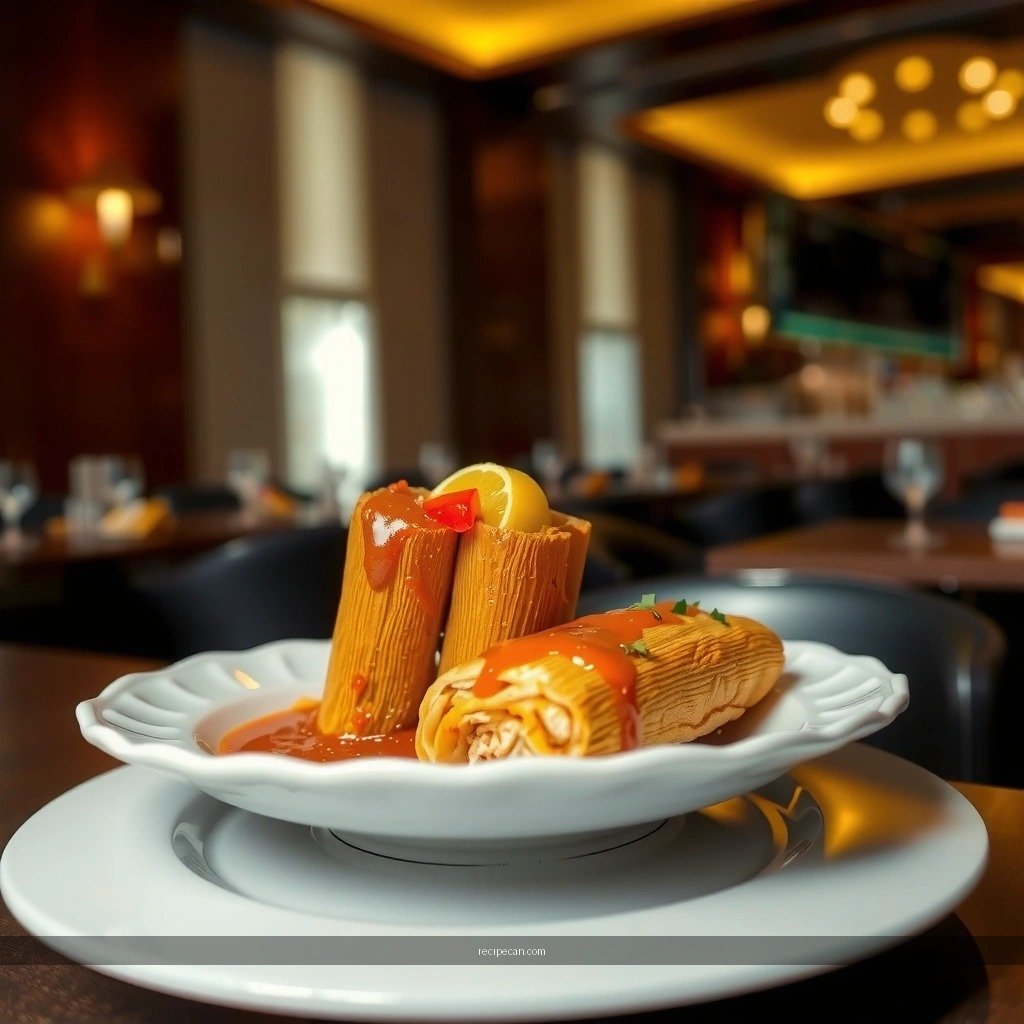
The two highest-impact “process” steps for classic chicken tamales are soaking the husks and getting the masa hydration right. If you nail these, the rest is repeatable.
– Soak corn husks until pliable and easy to fold
Dried husks can vary in thickness. Soak in warm water (or room-temperature water if you’re patient) until they bend without cracking. A quick test: bend one corner—if it creases or tears, it needs more soaking time.
– Mix masa with warm broth to achieve spreadable, soft consistency
Combine masa harina, baking powder, and salt, then gradually mix in warm chicken broth. Stop when the masa is soft, spreadable, and holds shape. If it’s dry or crumbly, add broth 1–2 tablespoons at a time. If it’s loose and won’t cling to a spoon, add a few tablespoons of masa harina.
– Season masa lightly so it tastes balanced with the filling
Classic tamales typically have masa that tastes seasoned but not salty enough to overpower the chicken. Your filling provides most of the “wow” flavor. Let the masa rest 5–10 minutes; hydration continues and improves texture.
Practical benchmark: When you spread masa on the husk, it should form an even layer about ¼–½ inch thick and not drip.
Cook and Season the Chicken Filling
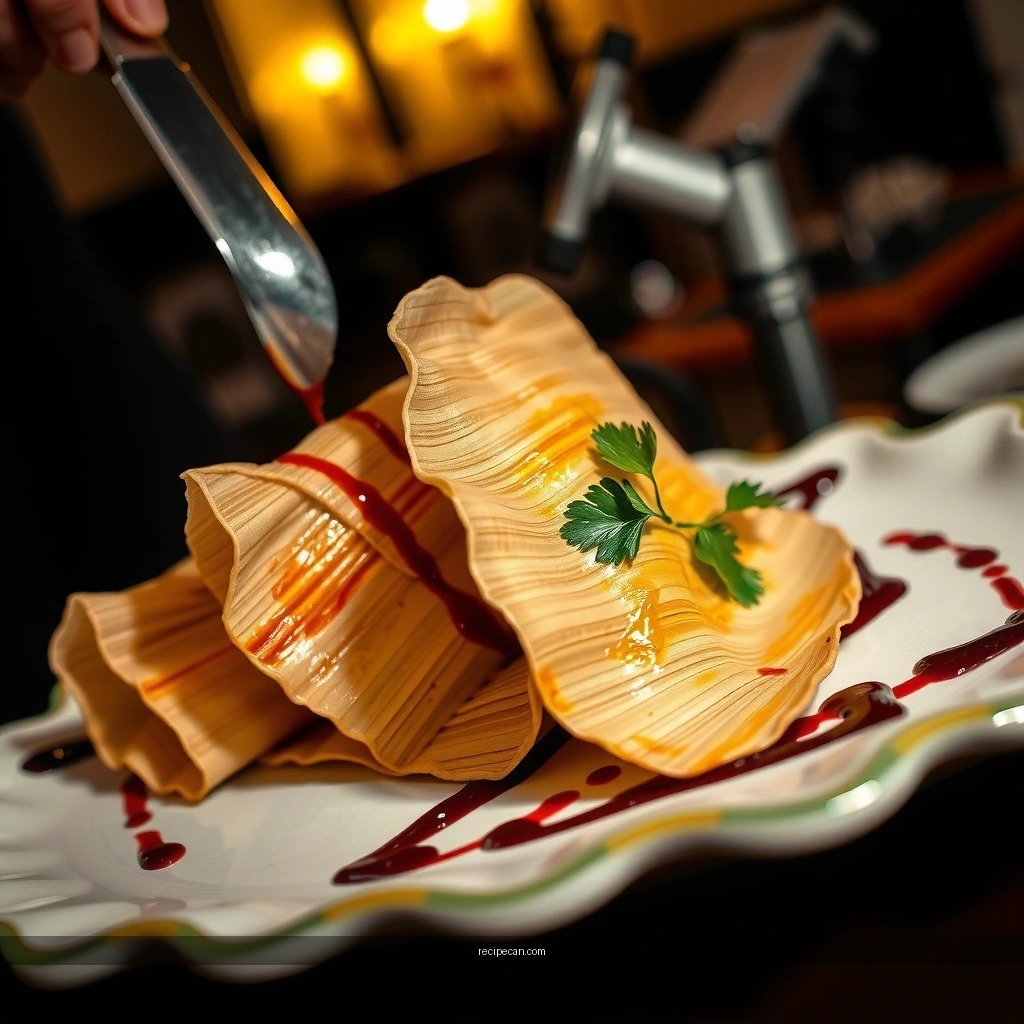
For a tender, classic chicken tamales filling, you want shredded chicken plus a sauce that clings—flavorful, but not watery. Watery filling is one of the most common causes of gaps between masa layers and messy seams.
– Simmer or roast chicken until tender, then shred
For classic results, simmer chicken in lightly salted water or broth until it reaches tenderness, then shred by hand or with a fork. Thighs usually stay juicier, while breasts are leaner—both work well for traditional flavors.
– Sauté onion and garlic, then mix in spices and sauce
Cook onion in a bit of oil until translucent, then add garlic briefly (about 30–60 seconds) to prevent bitterness. Stir in cumin, chili powder, and oregano. Add salsa roja or enchilada sauce and simmer 10–15 minutes to marry flavors.
– Adjust seasoning to keep the filling flavorful but not watery
Taste the sauce. It should be savory with a mild tang/heat, not watery. If it’s loose, simmer longer. If it’s dull, add salt gradually. Stir in shredded chicken and (optionally) cilantro, then let the filling cool slightly before assembly.
Assembly readiness check: The filling should mound on a spoon and not pour. This ensures the masa stays sealed during steaming and the tamale holds together neatly.
Assemble the Tamales
Assembly is where consistency matters. A controlled filling amount and a clean fold prevent leaks and help the masa steam evenly.
– Spread masa evenly on each softened corn husk
Lay the husk open and spread masa in an even rectangle or strip, leaving a small border on the edges so it doesn’t spill when folded.
– Add chicken filling in a thin, centered strip
Place a thin line of chicken filling down the center. Using less filling than you think you need often produces better structure: masa cooks more uniformly and seals more reliably.
– Fold and secure tamales so masa stays sealed during steaming
Fold the husk so masa encloses the filling. Depending on husk size, you can wrap into a cylinder or fold into a neat parcel. If your husks are wide, consider using banana leaves as a base layer (optional) to improve aroma and ease of handling.
Workflow tip: Set up a simple station—soaked husks, masa bowl, filling bowl, and a tray for assembled tamales. This reduces downtime and keeps masa from drying out while you work.
Steam the Chicken Tamales
Steaming is the final stage that turns raw masa into the signature tender, set texture of classic tamales. Steam temperature and pot setup matter more than most people expect.
– Steam in a pot with enough water to create steady heat
Use a steamer insert or rack so tamales sit above the water. Maintain steady steam—if the water runs low, heat drops and masa may undercook.
– Stand tamales upright and cover tightly for even cooking
If your tamales are folded as parcels, you can stand them upright. Cover tightly to trap steam and avoid uneven cooking. Check water level as needed during long cooks.
– Steam until masa sets and easily pulls from the husk edges
Steam time typically ranges from 75 to 120 minutes depending on tamale size and how wet your filling is. Start checking around 75 minutes. The tamale is ready when masa feels firm, the filling is hot throughout, and the masa loosens from husk edges without tearing.
Quality signal: A properly steamed tamale should peel with minimal resistance and have a smooth, tender interior.
Tips for Best Results and Storage
Even if your recipe is correct, small execution details determine whether tamales come out tender or dry. Use these storage and troubleshooting tips to protect texture.
– Prevent dryness by not over-steaming and using hot broth in masa
Masa firms as it steams and can dry if left too long. Keep broth warm during mixing for better hydration, and avoid extended steaming beyond the point where the masa is set.
– Let tamales rest briefly, then unwrap for cleaner serving
Rest 10–20 minutes after steaming. This brief pause firms the masa slightly, improving peelability and reducing smearing.
– Store and reheat by steaming again or warming in microwave-safe portions
Store tamales tightly wrapped. For best texture, reheat by steaming until hot throughout (often 15–25 minutes for refrigerated tamales).
If using a microwave, warm in short intervals and cover to trap moisture; while convenient, it can be slightly less ideal than steaming.
Storage guidance (quick reference):
– Refrigerate: 3–4 days in an airtight container.
– Freeze: Wrap individually, then store in a freezer bag or container up to ~2–3 months.
– Reheat from frozen: Steam longer (often 25–40 minutes) until fully hot.
After you follow the steps—soak husks, mix masa, season chicken, assemble, and steam—you’ll have tender, flavorful chicken tamales you can serve immediately or save for later. Try this recipe once for a perfect batch, then adjust spice levels and salsa quantity to match your taste—grab your corn husks and start steaming!
In conclusion, classic chicken tamales come down to disciplined preparation: pliable husks, properly hydrated masa, a flavorful (not watery) shredded chicken filling, and steady steaming until the masa sets and releases cleanly. Once you understand those mechanics, you can scale the batch confidently, reheat or freeze without sacrificing quality, and fine-tune spice and sauce for a tamale experience that feels consistently “right” every time.
Frequently Asked Questions
What is the best way to make chicken tamales at home?
Start by cooking shredded chicken with onions, garlic, and warm spices, then simmer it in a little broth or salsa so it stays moist. Use a smooth masa harina dough made with warm water and shortening, then spread a thin layer on corn husks with chicken filling and fold tightly. Steam your chicken tamales until the masa pulls away easily from the husk and the center is fully set, keeping a steady simmer under the steamer.
How do I keep chicken tamales from falling apart?
Make sure your masa consistency is correct—aim for a soft, spreadable dough that holds its shape without being runny. Soak corn husks until pliable, but not mushy, so they fold cleanly and grip the tamale. Tie or fold firmly and steam seam-side down; also avoid opening the steamer too often, since steam loss can cause tamales to dry out or separate.
Which masa harina is best for chicken tamales recipe results?
Look for masa harina specifically labeled for tamales, since it’s designed for the traditional texture. Many cooks prefer brands that give a smooth, creamy masa after mixing with fat, because that helps tamales steam evenly and stay tender. If your dough feels dry or cracks, adjust with small splashes of warm water; if it’s sticky, add a bit more masa harina until it spreads well.
Why do my chicken tamales come out dry or bland?
Dry tamales are usually caused by under-steaming, insufficient broth/steam, or masa that was too stiff—use a consistent steaming time and keep water simmering steadily. For better flavor, season the chicken filling well and simmer it until the juices absorb, then taste and adjust salt before assembling. You can also add a little salsa or chile seasoning to the masa for deeper flavor, while still following your chicken tamales recipe proportions.
How long should chicken tamales be steamed, and how do I know they’re done?
Most chicken tamales take about 60–90 minutes to steam, depending on tamale size and your steamer setup. They’re done when the masa feels firm, the filling is hot throughout, and the masa easily releases from the corn husk. If you’re unsure, unwrap one test tamale, check the center for doneness, then steam the rest a bit longer in 10–15 minute intervals.
References
- Tamale
https://en.wikipedia.org/wiki/Tamale - https://www.britannica.com/topic/tamale
https://www.britannica.com/topic/tamale - Search recipes – BBC Food
https://www.bbc.co.uk/food/search?q=tamales%20chicken - https://www.nytimes.com/search?query=tamales%20chicken%20recipe
https://www.nytimes.com/search?query=tamales%20chicken%20recipe - Google Scholar Google Scholar
https://scholar.google.com/scholar?q=chicken+tamales+recipe - Google Scholar Google Scholar
https://scholar.google.com/scholar?q=tamales+pollo+recipe - Google Scholar Google Scholar
https://scholar.google.com/scholar?q=how+to+make+tamales+masa+chicken - https://pubmed.ncbi.nlm.nih.gov/?term=tamales+chicken
https://pubmed.ncbi.nlm.nih.gov/?term=tamales+chicken - Google Scholar Google Scholar
https://scholar.google.com/scholar?q=traditional+tamales+recipe+technique+masa+filling - chicken tamales recipe – Search results
https://en.wikipedia.org/wiki/Special:Search?search=chicken+tamales+recipe