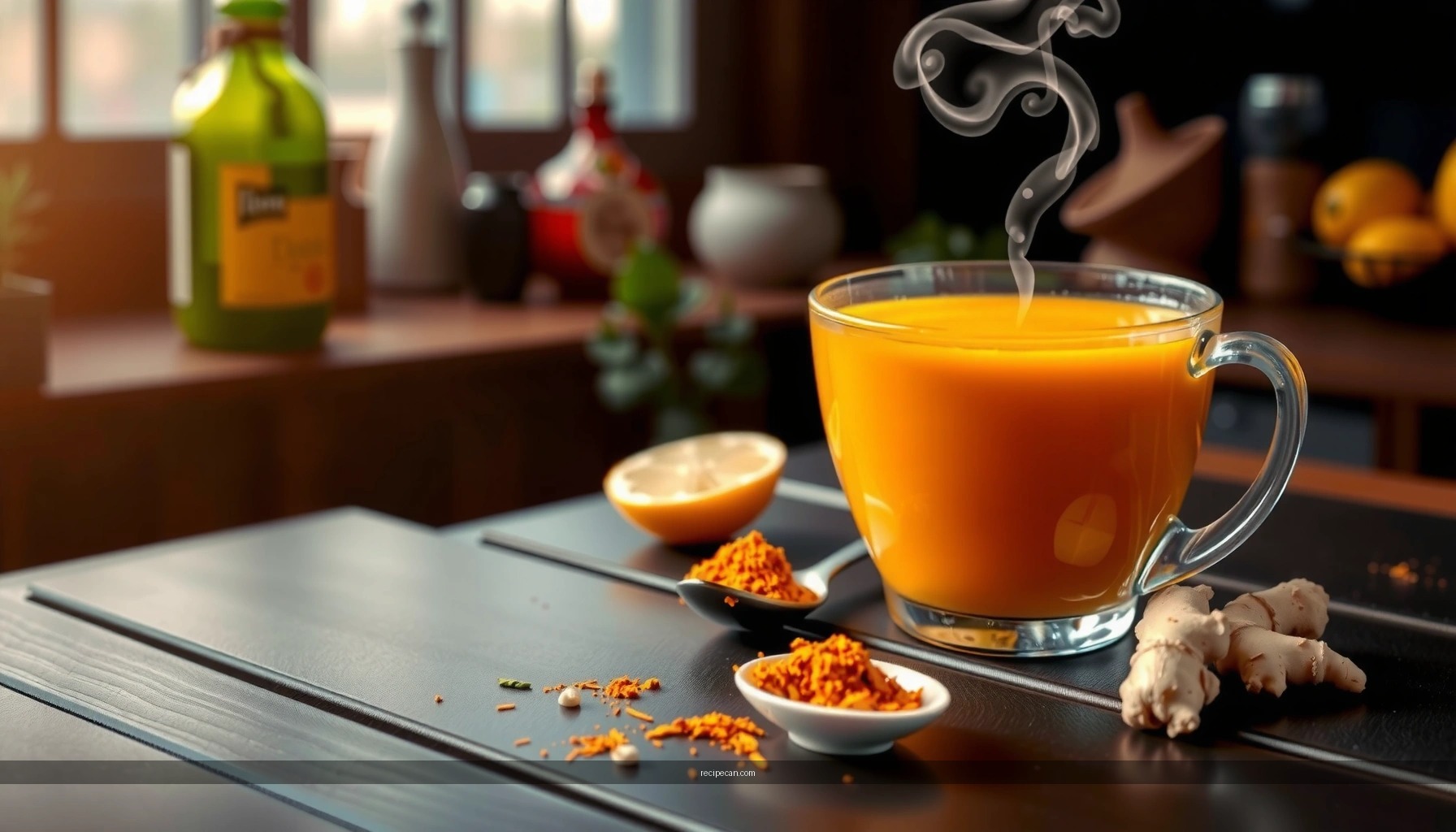
Want a curcuma tea recipe that actually tastes good and works—turmeric tea at home, step by step? This guide gives you the exact method for brewing smooth, warming curcuma tea, including the right turmeric amount and how to balance flavor. Follow it and you’ll get a consistent cup every time, whether you’re making it for daily wellness or a soothing night drink.
Make curcuma (turmeric) tea at home by simmering fresh or dried turmeric in water, then adjusting sweetness and flavor add-ins to your taste; you’ll be able to control both strength and bitterness with simmer time and turmeric quantity. In this recipe, you’ll get the simplest method, the best spice and citrus pairings, and practical guidance for brewing a cup that matches your preferred intensity—whether you want a mild golden comfort drink or a bolder, more aromatic turmeric tea.
Ingredients for Curcuma Tea Recipe

– Fresh turmeric (or ground curcuma) and water are the core ingredients
– Optional add-ins: ginger, lemon, honey, black pepper, cinnamon
To keep your turmeric tea consistent, think of the ingredients in three layers: base, flavor, and activation/finish. The base is always water plus turmeric. Flavor add-ins (like ginger, cinnamon, or lemon) determine the tea’s profile—warm, bright, or lightly sweet. Finally, certain ingredients can make turmeric’s flavor feel more pronounced, especially black pepper, which many people use to “round out” the taste.
A practical guideline for most home brews:
– Fresh turmeric: use thin slices or grated pieces for faster extraction.
– Ground curcuma: tends to color and flavor the water more quickly, so you’ll typically simmer for the lower end of the time range.
Typical Turmeric Tea Strength Settings (1 Cup / 240 ml)
| # | Tea Profile | Fresh Turmeric | Simmer Time | Astringency Risk | Overall Satisfaction |
|---|---|---|---|---|---|
| 1 | Mild & Comforting | 3–5 g | 8–10 min | Low | High ★★★★☆ |
| 2 | Balanced Daily Cup | 5–8 g | 10–12 min | Moderate | Very High ★★★★★ |
| 3 | Bolder & Earthy | 8–12 g | 12–15 min | Moderate–High | High ★★★★☆ |
| 4 | Ground Turmeric—Mellow | 1/4–1/2 tsp | 8–10 min | Low | High ★★★★☆ |
| 5 | Ground Turmeric—Strong | 1/2–3/4 tsp | 10–12 min | Moderate | Very High ★★★★★ |
| 6 | Extra Pepper Finish | 5–8 g + 1–2 pinches | 10–12 min | Moderate | High ★★★★☆ |
| 7 | Over-Strong (Avoid) | 12–15 g | 15–20 min | High | Low ★★☆☆☆ |
Step-by-Step Curcuma Tea Recipe

– Simmer turmeric (fresh slices or ground) in water for 8–15 minutes
– Strain (if using fresh) and stir in optional lemon, honey, or spices
This is the core process, and it’s deliberately simple. The “quality” of your turmeric tea comes from gentle simmering and consistent ingredient sizing—thin slices and fine powder extract more evenly than large chunks.
1. Prepare your turmeric
– If using fresh turmeric, peel (optional), then slice into thin coins or grate. Smaller pieces = faster, more even extraction.
– If using ground curcuma, measure your preferred amount (start lower if you’re sensitive to bitterness).
2. Simmer the base
– Add 1 cup (240 ml) water to a small saucepan.
– Add turmeric (fresh slices or ground).
– Bring to a gentle simmer, then reduce to a low simmer and cook for 8–15 minutes.
– Stir occasionally to keep the powder from settling.
3. Strain (only if using fresh)
– Pour through a fine mesh strainer into your mug.
– Press gently to extract liquid from the solids, then discard.
4. Flavor and sweeten
– Stir in lemon after simmering (for brightness).
– Stir in honey once the tea is warm (not scalding) to preserve a cleaner taste.
– Add any spices (like cinnamon) you want in the final profile.
Pro tip for repeatability: Decide your target strength first (mild, balanced, bold) and then follow the same turmeric quantity and simmer time each day. Turmeric tea is forgiving, but consistency makes it feel “custom” rather than “random.”
How to Make It Stronger or Milder

– Use more turmeric for a bolder taste and deeper color
– Shorten or lengthen simmer time to control intensity and bitterness
Controlling turmeric tea intensity is mainly about two levers:
1. Amount of turmeric
2. Time spent simmering
If your tea tastes too mild:
– Increase turmeric gradually (e.g., add one step up in quantity rather than doubling).
– Simmer closer to 12–15 minutes for deeper color and a fuller earthy flavor.
If it tastes too strong or bitter:
– Reduce turmeric quantity slightly and keep simmer time toward 8–10 minutes.
– Remember that ground turmeric can taste sharper if over-simmered—reduce time first before reducing turmeric.
A quick calibration method (best for new brewers)
Taste after 8 minutes, then keep simmering in 2-minute increments until you reach your preferred intensity. This approach prevents over-extraction and helps you build a personal “dial-in” recipe without guesswork.
One more nuance: if you love turmeric but dislike bitterness, consider balancing with:
– honey (sweetness)
– lemon (brightness that counteracts earthiness)
– cinnamon (warm sweetness that smooths the finish)
Flavor & Boosting Options
– Add black pepper (optional) for a more “activated” turmeric flavor profile
– Mix in ginger for warmth or cinnamon for a sweeter, spiced finish
Flavoring turmeric tea isn’t just about taste—it’s also about perception. Turmeric’s signature earthiness can read as “medicinal” to some palates; the right pairing turns it into something more like a comforting spiced beverage.
Best add-ins (and how they change the experience)
– Black pepper: Adds a gentle heat and makes the turmeric flavor feel more “complete.” Start with a pinch—you can always add more next cup.
– Ginger: Brings warmth and a slightly citrusy bite. It’s especially effective if you’re drinking curcuma tea in the morning or during colder months.
– Lemon: Adds freshness and cuts through heaviness. Use juice for brightness or zest for aroma.
– Cinnamon: Introduces sweetness and a smooth, dessert-like finish. Great if you prefer turmeric tea that feels cozy rather than sharp.
– Honey: Rounds out bitterness and improves drinkability for daily use.
Simple pairing ideas
– Golden ginger tea: turmeric + ginger + lemon + honey
– Spiced turmeric chai-style: turmeric + cinnamon + a small pinch of black pepper + honey
– Bright lemon turmeric: turmeric + lemon (light sweetness only)
How Often to Drink Curcuma Tea
– Start with 1 cup daily and see how your body responds
– Keep it as a regular routine rather than overdoing large amounts
A practical approach is to begin with one cup daily and pay attention to how your body reacts. Taste preference matters, but so do comfort factors like digestion and sensitivity to spices.
For most people, the “best” frequency is the one they can maintain consistently. Think of curcuma tea as a routine drink—not an all-at-once supplement strategy. If you want to increase intake:
– Move gradually (for example, add another cup later in the day once you know you tolerate it well).
– Avoid stacking many new strong-spice changes at once (e.g., doubling turmeric and adding large amounts of black pepper and ginger simultaneously).
If you have specific health conditions, are pregnant, or take medications, it’s smart to check with a healthcare professional—turmeric and ginger can interact with some medical situations, particularly when taken in concentrated amounts.
Storage & Reheating Tips
– Store leftover tea in the fridge for up to 2–3 days
– Reheat gently on the stove or in the microwave without boiling hard
Turmeric tea keeps well if you store it properly. Because turmeric pigments can intensify with time, flavor may become slightly more pronounced after refrigeration—so taste before adding extra lemon or honey.
Storage
– Pour into a clean container and refrigerate promptly.
– Keep for up to 2–3 days for best flavor and freshness.
Reheating
– Warm on the stove over low heat or microwave in short intervals.
– Avoid hard boiling; boiling can slightly sharpen the flavor and reduce the pleasant aroma.
Optional improvement for leftovers
– Add fresh lemon or a small extra spoon of honey after reheating for a “reset” of brightness and sweetness.
Curcuma tea is quick to make and easy to customize—simmer turmeric, strain if needed, then add your preferred flavors like lemon, honey, or ginger. Brew a cup today, adjust the strength to your taste, and make it a simple daily habit for a warm, comforting routine.
As a final takeaway, the most reliable curcuma tea method is to simmer turmeric in water for 8–15 minutes, strain when using fresh turmeric, and then finish with your chosen sweeteners and flavor add-ins. By adjusting turmeric quantity and simmer time, you can consistently brew either a mild, comfortable cup or a bolder, deeper golden tea—making this recipe an easy, repeatable daily ritual.
Frequently Asked Questions
How do I make curcuma tea at home for daily drinking?
To make curcuma tea, simmer 1–2 teaspoons of fresh grated turmeric (or 1/2–1 teaspoon dried turmeric) in 2 cups of water for 8–10 minutes. Strain, then stir in 1 teaspoon honey or maple syrup and a squeeze of lemon if desired. For better absorption of curcumin, add a pinch of black pepper and let the tea simmer briefly with the turmeric.
What is the best curcuma tea recipe for reducing inflammation and soothing joints?
A popular anti-inflammatory curcuma tea recipe uses turmeric plus ginger: simmer 1 teaspoon turmeric, 1–2 slices of fresh ginger, and 2 cups of water for 10 minutes. Add black pepper (a pinch) to improve absorption, then finish with lemon or ginger to taste. Drink 1 cup daily and consider doing it consistently for a few weeks to evaluate how you feel.
Why should I add black pepper to curcuma tea?
Black pepper contains piperine, which can increase how much curcumin your body absorbs from turmeric. Without it, many people find the benefits of turmeric tea are less noticeable. Simply include a pinch of black pepper during simmering to make your curcuma tea recipe more effective.
Which curcuma tea ingredients work best together—turmeric, ginger, honey, or lemon?
Turmeric is the core ingredient, while ginger adds warmth and may support digestion and comfort. Honey can improve taste and provide soothing effects, and lemon adds brightness and may make the tea easier to drink regularly. A simple combination is turmeric + ginger simmered in water, strained, then finished with honey and a squeeze of lemon in your curcuma tea cup.
What’s the best time to drink curcuma tea, and how much should I take?
Many people prefer drinking curcuma tea in the morning or early evening because it’s easy to incorporate into a routine. Start with 1 cup per day to see how your body responds, then adjust if needed—some choose 1–2 cups depending on tolerance. If you take medications or have a gallbladder or stomach condition, check with a clinician first, since curcuma (turmeric) can interact with certain drugs.
References
- Google Scholar Google Scholar
https://scholar.google.com/scholar?q=curcuma+tea+recipe - Google Scholar Google Scholar
https://scholar.google.com/scholar?q=turmeric+tea+curcumin+bioavailability - https://scholar.google.com/scholar?q=turmeric+tea+health+effects+clinical+trial Google Scholar
https://scholar.google.com/scholar?q=turmeric+tea+health+effects+clinical+trial - https://www.nccih.nih.gov/health/turmeric-and-curcumin
https://www.nccih.nih.gov/health/turmeric-and-curcumin - https://medlineplus.gov/druginfo/natural/995.html
https://medlineplus.gov/druginfo/natural/995.html - https://www.mayoclinic.org/drugs-supplements/turmeric/art-20366075
https://www.mayoclinic.org/drugs-supplements/turmeric/art-20366075 - Turmeric
https://en.wikipedia.org/wiki/Turmeric - Turmeric | Description, History, & Uses | Britannica
https://www.britannica.com/plant/turmeric - https://pubmed.ncbi.nlm.nih.gov/?term=turmeric+tea+curcumin
https://pubmed.ncbi.nlm.nih.gov/?term=turmeric+tea+curcumin - https://pubmed.ncbi.nlm.nih.gov/?term=curcumin+bioavailability+turmeric+tea
https://pubmed.ncbi.nlm.nih.gov/?term=curcumin+bioavailability+turmeric+tea