Get an authentic chai tea recipe that delivers classic Indian-style chai the first time—rich, spiced, and perfectly balanced between milk, water, and tea. This guide answers how to brew chai using the right spices, proper simmer time, and a method that produces a fragrant, bold cup instead of weak “tea with milk.” If you want the real classic version, follow these steps for the clearest result.
Make classic Indian-style chai at home by simmering black tea with the right spices in a water-and-milk base, then sweetening and balancing to taste; the key is the order (spices first, tea second) and a gentle simmer long enough to fully extract aroma. In this recipe, you’ll follow a precise spice balance and a step-by-step method that produces rich, fragrant chai—brew it once, taste it, and then dial it in until it matches your perfect cup.
Choose Your Tea and Spices

The most “authentic” chai experience starts with the foundation: strong black tea plus whole, aromatic spices. Indian-style chai is not merely spiced milk—it’s spiced tea where the spices are extracted into the liquid and then carried into the final brew.
Black tea choice (for body and classic flavor):
– Assam (or Assam blends): delivers a malty, bold backbone that stands up to milk and sugar.
– Strong English Breakfast: also works well if you want a slightly more rounded, brisk tea character.
If your tea is weak, no amount of spice will compensate—your chai will taste thin instead of caramel-like and full-bodied.
Spice choice (for aroma complexity):
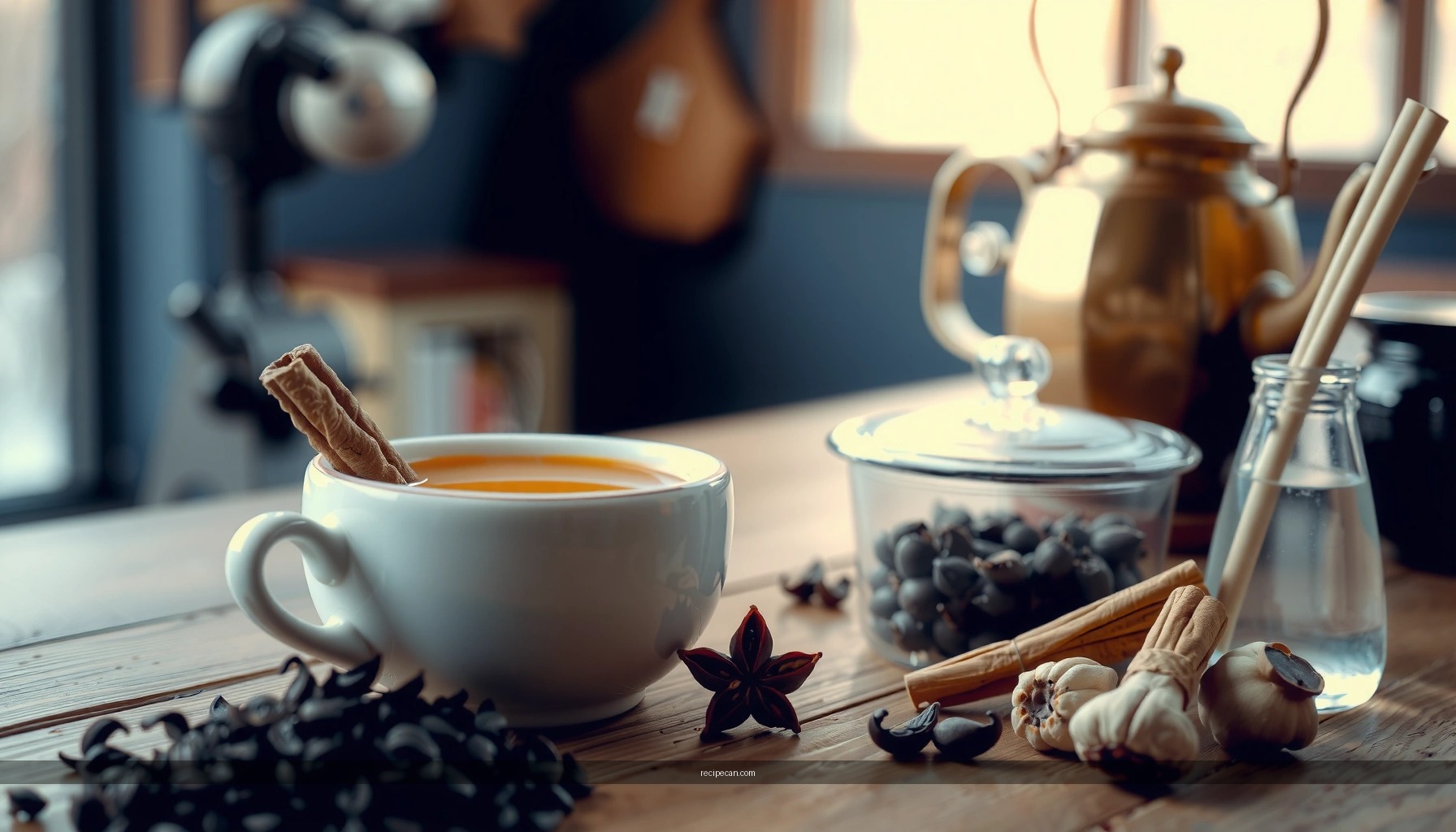
– Use whole spices whenever possible. Whole cardamom pods, cinnamon sticks, and ginger (slices or grated) release aroma more slowly and more predictably than ground spices.
– Whole spices also make it easier to strain cleanly for the smooth “classic cup” texture.
To make dialing-in easier, here’s a practical guide to common whole-spice options used in authentic chai profiles.
Whole-Spice Impact in Classic Chai (Per 1 Liter Batch)
| # | Spice | Typical Amount | Extraction Strength | Aroma/Flavor Note | Chai Impact |
|---|---|---|---|---|---|
| 1 | Cardamom pods | 8–10 pods | High | Floral, sweet-citrus | ★★★★★ |
| 2 | Cinnamon stick | 2–3 inch piece | Medium | Warm, woody-sweet | ★★★★☆ |
| 3 | Ginger | 10–15 g slices | High | Zesty, spicy-woody | ★★★★★ |
| 4 | Black peppercorns (optional) | 6–8 peppercorns | Medium | Pepper warmth | ★★★★☆ |
| 5 | Cloves (optional) | 2–3 whole cloves | Strong | Deep, resinous heat | ★★★☆☆ |
| 6 | Allspice (rare in chai) | 1/2 tsp whole | Medium | Nutmeg-like warmth | ★★★☆☆ |
| 7 | Star anise (experimental) | 1 small star | Strong | Licorice undertone | ★★★☆☆ |
Get the Right Chai Tea Base

A classic Indian-style chai base is built by extracting spice flavor in water first, then introducing milk to round out the edges and create the characteristic “creamy spice” finish.
A reliable starting ratio (for a balanced, classic cup)
For an authentic texture, aim for roughly:
– Water: 2/3 of the total liquid
– Milk: 1/3 of the total liquid
For example, for 2 cups (about 500 ml):
– 320 ml water
– 180 ml milk
Why simmer spices in water first?
Spices contain aromatic oils and compounds that dissolve into hot water efficiently early on. If you add milk immediately, you can lose clarity in spice extraction and end up with less defined aroma.
What to do (before the tea)
1. In a saucepan, combine water and your whole spices (cardamom, cinnamon, ginger; optionally peppercorns).
2. Bring to a simmer and let it go briefly before adding tea.
Strength control
Tea strength affects perceived spice strength. A stronger tea can handle more ginger; a lighter tea can make the same spice quantities taste “sharp.”
Simimmer and Brew for Maximum Flavor

The brewing step is where many “chai at home” attempts diverge from classic chai. The goal is a gentle simmer—not a hard boil—and enough time for both tea and spices to fully infuse.
Step-by-step method (classic and repeatable)
1. Spice simmer (water first):
Simmer your water + spices for 6–8 minutes. You’re extracting aroma, not fully brewing the tea yet.
2. Add black tea:
Stir in black tea. Use 2 teaspoons (about 6–7 g) per 500 ml as a practical baseline.
3. Simmer again (tea extraction):
Let it simmer gently for 3–5 minutes.
4. Add milk and balance the simmer:
Add milk and return to a gentle simmer for 2–3 minutes (avoid aggressive boiling, which can dull aroma and create a less smooth mouthfeel).
5. Strain:
Strain into cups and serve immediately.
Professional tasting approach (quality check)
After straining, evaluate in this order:
– Aroma first: should smell warm and layered (cardamom/citrus + ginger zing + cinnamon warmth).
– Body second: mouthfeel should be creamy and not watery.
– Finish third: sweetness and spice heat should feel balanced, not “one note dominating.”
If it’s not there yet, adjust in small increments (you’ll get better results than changing everything at once).
Sweeten and Balance the Taste
Sweetness in chai is not only about sugar—it’s about balancing bitterness from black tea and heat from ginger/pepper. In Indian households, sugar and jaggery are both common, and the “best” option depends on your preferred flavor profile.
Sugar vs jaggery
– Sugar: cleaner sweetness; easiest for consistent results.
– Jaggery: deeper, caramel-like sweetness with a slightly earthy note that pairs especially well with cinnamon and cardamom.
When to sweeten
Sweeten after brewing and before serving so you can control sweetness precisely without over-reducing the mixture.
Actionable sweetening targets (per 500 ml)
Start with:
– Sugar: 1 to 2 tablespoons, then adjust
– Jaggery: 1 to 2 tablespoons, then adjust (often you’ll use slightly less because it has strong flavor)
Fine-tune spice intensity
If you want to adjust without re-brewing:
– Too spicy/strong? Add a splash of warm milk.
– Too mild? Add a pinch of crushed cardamom or a few thin ginger slices (steep 2 minutes) and strain again.
– Lacking warmth? A little more cinnamon (small increment) typically improves the “classic” feeling.
Tips for Consistency Every Time
Consistency is what separates “a good cup” from “your go-to chai recipe.” The fastest way to keep results stable is to standardize your inputs and your timing.
Keep portions steady
Use a simple measurement habit:
– Keep your tea amount constant (e.g., 2 tsp per 500 ml).
– Keep spice quantities constant (especially cardamom and ginger—the highest-impact variables).
Control simmer intensity
Hard boiling can:
– Reduce delicate aroma
– Increase bitterness
– Create a slightly flatter taste
Aim for gentle simmering only.
Batch adjustments without chaos
If you brew larger batches, scale carefully rather than guessing:
– Increase tea proportionally to keep body consistent.
– Keep spice-to-liquid ratio stable.
Then adjust sweetness last.
A practical adjustment ladder:
– Want more creamy? Increase milk slightly (e.g., 1/3 → 3/8 milk).
– Want more spiced? Add 10–20% more ginger or cardamom next batch.
– Want more fragrant but less strong? Steep tea slightly less (shorter tea simmer) while keeping spice simmer the same.
Serving Suggestions and Variations
Once your classic chai is working, you can tailor it to your routine—hot, frothy, or spiced to a specific mood—without losing authenticity.
Serving style
– Hot and fragrant: pour immediately after straining for the strongest aroma.
– Café-style texture: froth the milk separately and pour into the hot chai, or whisk vigorously after straining.
High-impact variations (still “chai”)
– More ginger for zing: increase ginger by a small increment; keep cardamom steady so it doesn’t become overpowering.
– Extra cardamom for sweetness/floral finish: boost cardamom slightly; it lifts aroma without adding heavy heat.
– Less cinnamon, more cardamom: if you prefer a lighter, more perfumed chai.
– Add a pinch of black pepper: great for a robust, warming profile—use sparingly.
Pairing ideas (optional, but useful)
Chai complements:
– Breakfast pastries and butter cookies
– Warm snacks like samosas (spice harmony)
– Chocolate desserts (coffee-tea-like depth)
Enjoy your homemade authentic chai tea by following the spice ratios, simmering properly, and tasting as you go. Brew a first batch using the steps above, then adjust sweetness and spice levels until it matches your perfect cup—try it today and make it your go-to chai recipe.
In summary, classic Indian-style chai comes from a disciplined brewing method: simmer whole spices in water to extract aroma, steep strong black tea, add milk for a creamy finish, then sweeten and balance to your preference. If you keep your tea and spice portions consistent—and control simmer intensity—you’ll be able to reproduce rich, fragrant chai at home reliably, cup after cup.
Frequently Asked Questions
What is the authentic chai tea recipe with the right flavor balance?
An authentic chai tea recipe typically uses black tea, water, milk, fresh ginger, and whole spices like cardamom and cinnamon, simmered together to extract rich flavor. The balance comes from simmering the spices briefly in water first, then adding black tea and finally milk with a bit of sweetener if desired. For a classic taste, keep the ginger-forward but not overpowering, and let cardamom provide the warm, aromatic finish.
How do I make authentic chai tea at home without it tasting bitter?
To avoid bitterness in authentic chai tea, simmer the spices in water for about 5–10 minutes, then steep the black tea briefly (often 2–5 minutes) instead of boiling it hard for too long. Use whole spices or freshly crushed spices, and keep the temperature at a gentle simmer rather than a rolling boil. Strain the chai and add milk after the tea has infused, which helps mellow any sharpness.
Why does authentic chai tea include black tea and how much should I use?
Authentic chai tea relies on black tea for body and the characteristic “chai” backbone, which balances the spices and sweetness. A common approach is to use roughly 1 tablespoon of loose black tea (or 2–3 tea bags) per 2 cups of water, then add milk and simmer gently for a few minutes. Using too little black tea can taste flat, while too much can make the brew overly strong or tannic.
Which spices make the most authentic chai tea flavor, and are there substitutes?
The most authentic chai tea flavor usually comes from cardamom, cinnamon, ginger, and cloves (often 1–2 spices for a cleaner taste, or a fuller blend for tradition). For substitutes, use ground cardamom if you don’t have pods, but add it later to preserve aroma, and replace cinnamon sticks with ground cinnamon in smaller amounts. If you like a more classic depth, a tiny pinch of clove can go a long way, but avoid overdoing it.
What is the best way to sweeten authentic chai tea, and when should I add it?
Many authentic chai tea recipes sweeten with sugar or jaggery, added after the spices and tea have infused so the flavor integrates smoothly. Start with a small amount and adjust to taste, because milk can mute sweetness and make it seem less potent once poured. If you prefer a more traditional profile, jaggery adds a deeper caramel note, while white sugar keeps the sweetness straightforward.
References
- Chai
https://en.wikipedia.org/wiki/Chai - Masala chai
https://en.wikipedia.org/wiki/Masala_chai - https://www.britannica.com/topic/chai
https://www.britannica.com/topic/chai - Google Scholar Google Scholar
https://scholar.google.com/scholar?q=authentic+chai+tea+recipe - Google Scholar Google Scholar
https://scholar.google.com/scholar?q=masala+chai+preparation+method - Google Scholar Google Scholar
https://scholar.google.com/scholar?q=chai+tea+spices+composition+study - https://pubmed.ncbi.nlm.nih.gov/?term=masala+chai
https://pubmed.ncbi.nlm.nih.gov/?term=masala+chai - https://pubmed.ncbi.nlm.nih.gov/?term=chai+tea+milk+spices
https://pubmed.ncbi.nlm.nih.gov/?term=chai+tea+milk+spices - https://www.bbc.co.uk/search?q=chai%20tea%20recipe
https://www.bbc.co.uk/search?q=chai%20tea%20recipe - https://www.theguardian.com/search?q=chai%20tea%20recipe
https://www.theguardian.com/search?q=chai%20tea%20recipe