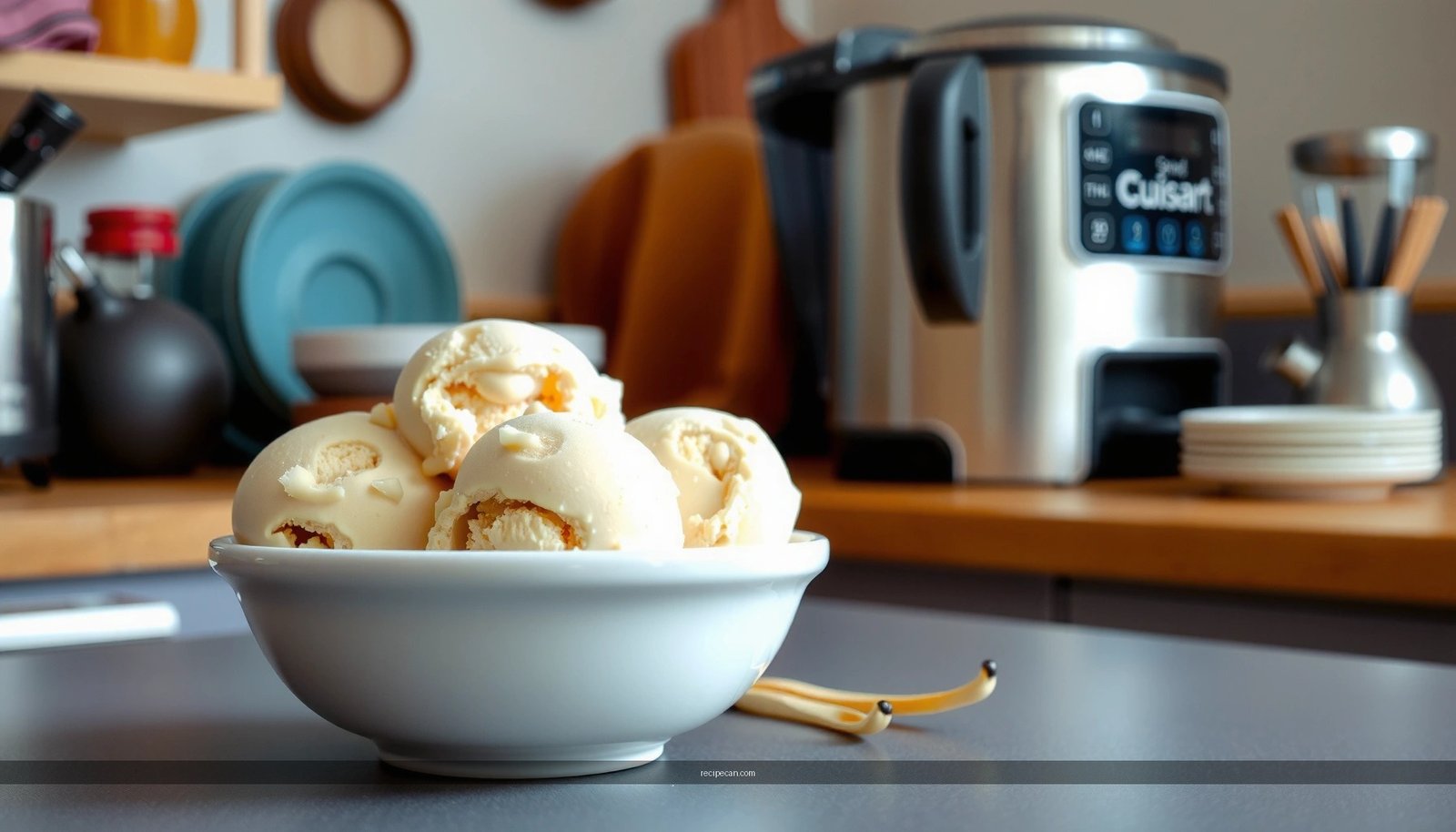
Get a truly classic vanilla bean ice cream recipe that actually works with your Cuisinart—no guessing, no icy finish. This recipe shows you exactly how to infuse the cream with real vanilla bean and churn it in a Cuisinart ice cream maker for a smooth, scoopable result. If you want the quickest path to restaurant-level vanilla with the gear you already own, this is the version to follow.
Make creamy vanilla bean ice cream with a Cuisinart machine by infusing the base with real vanilla, chilling it thoroughly, then churning until it reaches soft-serve consistency. This recipe is designed to be repeatable—real vanilla bean flavor, a silk-smooth custard base, and the right temperature management so your Cuisinart churn produces a rich, smooth texture every time.
Vanilla Bean Ingredients for Cuisinart Ice Cream
Real vanilla bean ice cream is about balance: maximum vanilla aroma from the seeds and pod, plus enough dairy fat to carry flavor and create a stable custard structure. For Cuisinart-style churners (which work best with cold, pourable bases), the ingredient quantities below target a smooth, scoopable end result without being overly sweet.
Core flavor inputs
– Vanilla bean pods (or high-quality vanilla paste): Use pods when you want visible specks and a classic, aromatic profile. Vanilla paste is a practical alternative that still performs well in custards.
– Vanilla extract: Add near the end of cooking to preserve volatile aromatics that can fade if boiled too long.
– Optional: vanilla salt or pinch of fine sea salt: Enhances perceived sweetness and makes the vanilla read “rounder,” not sharper.
Dairy + sweetness inputs
– Heavy cream + whole milk: Heavy cream provides fat for creaminess; milk helps create a custard base that churns smoothly.
– Granulated sugar: Supports texture by controlling freezing point and balancing egg yolk thickening.
– Egg yolks: Create a custard that improves mouthfeel and reduces icy texture.
Recommended ingredient set (makes ~1.5 quarts / ~12–14 servings)
– 2 cups (480 ml) heavy cream
– 1 cup (240 ml) whole milk
– 5 large egg yolks
– 2/3 cup (135 g) granulated sugar
– 1–2 vanilla bean pods (or 2–3 tsp vanilla paste)
– 1/2 tsp vanilla extract
– Pinch of fine salt
> Tip for consistency: Use room-temperature egg yolks (or at least not fridge-cold). This reduces the risk of temperature shock during tempering and helps the base thicken smoothly.
Vanilla Bean Flavor Intensity: Seed vs. Paste (Typical Yield)
| # | Vanilla Source | Typical Seeds/Paste Amount | Aroma Strength Rating | Flavor Outcome |
|---|---|---|---|---|
| 1 | Vanilla bean pod (1 pod) | ~40–60 mg seeds | ★★★★☆ | Classic speckled aroma |
| 2 | Vanilla bean pods (2 pods) | ~80–120 mg seeds | ★★★★★ | High-intensity bean flavor |
| 3 | Vanilla paste (2 tsp) | ~8–10 g paste | ★★★★☆ | Dense, even vanilla distribution |
| 4 | Vanilla extract (1 tsp) | ~5 ml extract | ★★★☆☆ | Clean sweetness, less “bean” depth |
| 5 | Vanilla bean pod (1 pod) + 1/2 tsp extract | Seeds + ~2.5 ml extract | ★★★★☆ | More top-note aroma |
| 6 | Vanilla paste (3 tsp) | ~12–15 g paste | ★★★★★ | Very strong, consistent vanilla |
| 7 | Vanilla bean (minimal) + higher milk fat | ~1 pod, but richer base | ★★★★☆ | Balances intensity with creaminess |
Make the Custard Base (No Fuss, Great Flavor)

A Cuisinart vanilla bean ice cream that tastes “baker-style” depends on custard discipline. The goal is not to scramble eggs; it’s to gently thicken a base just enough to coat a spoon. When yolks thicken slowly with warmed dairy, you get a smoother structure that churns with less iciness.
Step-by-step method
1. Infuse the dairy
Warm the heavy cream and milk with the vanilla bean pod (split and scraped) or vanilla paste. Let it heat until steaming; you don’t need a hard boil.
2. Whisk yolks with sugar
In a separate bowl, whisk egg yolks and sugar until the mixture looks slightly lighter and smoother.
3. Temper (critical)
Slowly drizzle a ladle of hot dairy into the yolks while whisking. This equalizes temperature so the yolks thicken evenly.
4. Cook to custard consistency
Return the mixture to the saucepan and cook on medium-low, stirring constantly. Stop when the base thickens enough to coat the back of a spoon.
– If you use a thermometer: aim for roughly 170–175°F (77–80°C).
5. Strain for silk-smooth texture
Strain through a fine-mesh sieve to remove any bits of cooked egg or vanilla pod fragments.
Why straining matters for Cuisinart texture
Churning breaks ice crystals into smaller ones, but it can’t erase graininess caused by egg bits or pod fibers. Straining ensures your base is smooth before it goes into the freezer bowl, helping the final ice cream feel premium.
Add extract at the end
Stir in vanilla extract once the custard is off the heat (and ideally after it cools slightly). This preserves top notes for a more aromatic finish.
Chill the Mixture for Best Cuisinart Results

For churn-based machines, “cold enough” is the difference between creamy and icy. Vanilla bean ice cream needs time in the fridge because:
– The base must be cold so the freezing process starts immediately during churning.
– Proper chilling improves the uniformity of fat and sugars in the mixture, which supports smoother crystal formation.
Chilling guidance
– Refrigerate until fully cold, typically 4–8 hours (overnight is ideal).
– Cover the surface to reduce skin formation. (You can press plastic wrap directly onto the custard.)
– If you want maximum predictability, cool to at least refrigerator temperature and ideally around 35–40°F (2–4°C) before churning.
A professional workflow tip
If you’re timing this for dinner or a weekend gathering:
– Make custard mid-afternoon
– Chill overnight
– Churn the following day right after pulling the bowl (or while it’s still cold in the freezer)
This reduces the chance that a too-warm base will extend churning time and produce larger ice crystals.
Churn in Your Cuisinart Ice Cream Maker
Cuisinart ice cream makers vary by model (some require pre-freezing the bowl; others use built-in refrigeration). Regardless, the process is the same: churn a very cold base until it reaches a thick, soft-serve-like texture.
Before you start
– Pre-freeze the bowl if your model uses a freezing insert. Follow your unit’s minimum hours—many require at least 12 hours.
– Ensure your custard has chilled thoroughly (this is non-negotiable for texture).
Churning
1. Pour the cold custard into the bowl.
2. Turn on the machine and churn without interruption.
3. Churn until soft-serve consistency—usually 20–40 minutes depending on ambient temperature, bowl condition, and custard temperature.
How to know it’s ready
Look for a texture that:
– Holds lines when you lift the paddle
– Looks like thick, creamy soft serve rather than liquid cream
– Doesn’t look fully “set” yet—remember, it will firm in the freezer after churning
> If it seems slower than expected, don’t rush it by extending heat exposure. The fix is usually better pre-freezing and longer base chilling next batch.
Finish: Freeze to Scoopable Texture
Churning gives you a soft-serve texture; freezing gives you scoopability and stable structure. For the best vanilla bean ice cream experience:
– Freeze long enough for the fat and water structure to firm
– Avoid over-freezing without a short rest before serving
Finishing steps
1. Transfer ice cream to an airtight container (a shallow container can freeze more evenly).
2. Freeze 2–4 hours for a firmer scoop.
3. For serving: let it sit at room temperature 3–8 minutes depending on your freezer temperature.
Quality control
– If you freeze too briefly, the texture may be overly soft or paste-like.
– If you freeze too long or your freezer is very cold, it may become rock-hard—quick softening before scooping restores the creamy mouthfeel.
Professional storage note
Store at the back of the freezer, where temperatures are most stable, and keep the container tightly sealed to reduce ice crystals from freezer air exposure.
Troubleshooting Common Issues
Even with a great recipe, vanilla bean ice cream can show variation. Here are the most common outcomes with targeted fixes—especially relevant to churners like Cuisinart.
If it’s too icy
Likely causes
– Base wasn’t cold enough before churning
– Bowl wasn’t fully pre-frozen (if required by your model)
– Custard may have been undercooked (not thick enough to emulsify properly)
What to do
– Chill the base longer next time (aim for fully cold, 4+ hours, ideally overnight).
– Confirm your pre-freeze window for the bowl (often 12+ hours).
– Cook custard to the correct thickness and strain.
If it’s too soft
Likely causes
– Churned for too short a time (not thickened to soft-serve stage)
– Not frozen long enough after churning
– Container wasn’t sealed well, allowing moisture changes
What to do
– Churn until the mixture clearly thickens (often closer to 30–40 minutes).
– Freeze 2–4 hours before judging scoopability.
– Use airtight packaging and avoid frequent freezer door openings.
If it tastes flat or “muted”
Likely causes
– Vanilla extract or bean wasn’t infused long enough
– Salt is missing or under-measured
– Overheating reduced vanilla aromatics
What to do
– Infuse in warm dairy, then stop short of a hard boil.
– Add extract off heat.
– Include a pinch of fine salt to sharpen vanilla perception.
If you see graininess
Likely causes
– Custard curdled slightly (egg bits)
– Not strained
What to do
– Keep heat low during custard cooking and stir constantly.
– Always strain through a fine sieve before chilling.
Creamy vanilla bean ice cream with Cuisinart is all about real vanilla, a smooth custard base, and properly chilling before churning. Follow the steps above, then churn and freeze to your preferred scoop texture—so grab your ingredients and make your next batch today.
If you’d like, tell me which Cuisinart model you have (and whether it uses a pre-frozen bowl), and I can fine-tune the churn time and temperature targets to match your machine more precisely.
Frequently Asked Questions
What vanilla bean ice cream recipe works well with a Cuisinart ice cream maker?
A reliable vanilla bean ice cream recipe for Cuisinart machines uses a custard base: warm milk and cream with scraped vanilla beans, whisk in egg yolks and sugar, then cook until lightly thickened. Chill the mixture completely before churning to help your Cuisinart produce a smooth texture. For best results, follow your model’s bowl pre-freeze instructions and process according to the manufacturer’s timing guidelines.
How do I use vanilla bean seeds instead of vanilla extract in a Cuisinart vanilla ice cream recipe?
Split the vanilla bean lengthwise and scrape out the seeds, then stir them into the warmed dairy mixture so the flavor disperses evenly. If you’re also using the bean pod, simmer it briefly with the milk/cream for deeper vanilla aroma, then discard the pod before chilling. This method gives a classic “real vanilla bean” taste that’s especially noticeable in Cuisinart vanilla bean ice cream made with a custard base.
Why does my Cuisinart vanilla bean ice cream turn out icy, and how can I fix it?
Icy texture often comes from insufficient chilling, an undercooked custard, or not enough fat/sugar balance for the churning process. Make sure your vanilla bean custard is fully chilled (typically several hours or overnight) before you churn in the Cuisinart ice cream maker bowl. If it’s still icy, try using a proven vanilla bean ice cream recipe with correct egg yolk ratios and avoid diluting the base too much with extra milk.
Which Cuisinart ice cream maker model settings or timing should I use for vanilla bean ice cream?
Most Cuisinart electric ice cream makers run on a set chilling and churning cycle, but timing can vary by room temperature and how long you pre-freeze the bowl. For vanilla bean ice cream, churn until the texture looks like soft-serve, then transfer to a container and freeze to firm up. Always use the “churn time” guidance in your manual as a baseline, since over-churning can sometimes reduce creaminess.
What’s the best way to thicken a vanilla bean custard for a smooth Cuisinart ice cream texture?
Cook the custard on medium-low heat while stirring constantly, stopping when it coats the back of a spoon or reaches a gentle thickness (often around 170–180°F / 77–82°C if you use a thermometer). Avoid boiling, which can cause graininess and affect the final texture of your Cuisinart vanilla bean ice cream. Strain the custard after cooking for extra smoothness, then chill thoroughly before churning.
References
- Google Scholar Google Scholar
https://scholar.google.com/scholar?q=vanilla+bean+ice+cream+recipe - Google Scholar Google Scholar
https://scholar.google.com/scholar?q=vanilla+ice+cream+custard+base+emulsion+freezing+point - Google Scholar Google Scholar
https://scholar.google.com/scholar?q=ice+cream+mix+ingredients+overrun+and+texture+science - Ice cream
https://en.wikipedia.org/wiki/Ice_cream - Vanilla
https://en.wikipedia.org/wiki/Vanilla - Ice cream | Definition, History, & Production | Britannica
https://www.britannica.com/topic/ice-cream - 21 CFR § 135.110 – Ice cream and frozen custard. | Electronic Code of Federal Regulations (e-CFR)…
https://law.cornell.edu/cfr/text/21/135.110 - https://nchfp.uga.edu/how/freeze/ice_cream.php
https://nchfp.uga.edu/how/freeze/ice_cream.php - https://extension.umn.edu/food-and-nutrition/how-make-ice-cream
https://extension.umn.edu/food-and-nutrition/how-make-ice-cream - https://extension.psu.edu/make-ice-cream-at-home
https://extension.psu.edu/make-ice-cream-at-home