Want the best 4qt ice cream maker recipe for an easy homemade batch that actually turns out creamy, not icy? This guide gives you a straightforward churn-to-freeze method that fits a 4-quart machine and delivers reliable texture every time. If you’re testing whether a “no-fuss” recipe works at 4qt scale, you’ll get the answer and the steps to match it.
Make creamy homemade ice cream in your 4qt ice cream maker by using a balanced custard-style base (cream, milk, sugar, and yolks), fully cooling it before churning, and stopping at a soft-serve texture for the smoothest results. Below is a practical, timing-focused guide—plus simple mix-in variations—so you can consistently produce scoopable, low-ice-crystal ice cream without guesswork.
Ingredients for a Classic 4qt Ice Cream Maker Recipe
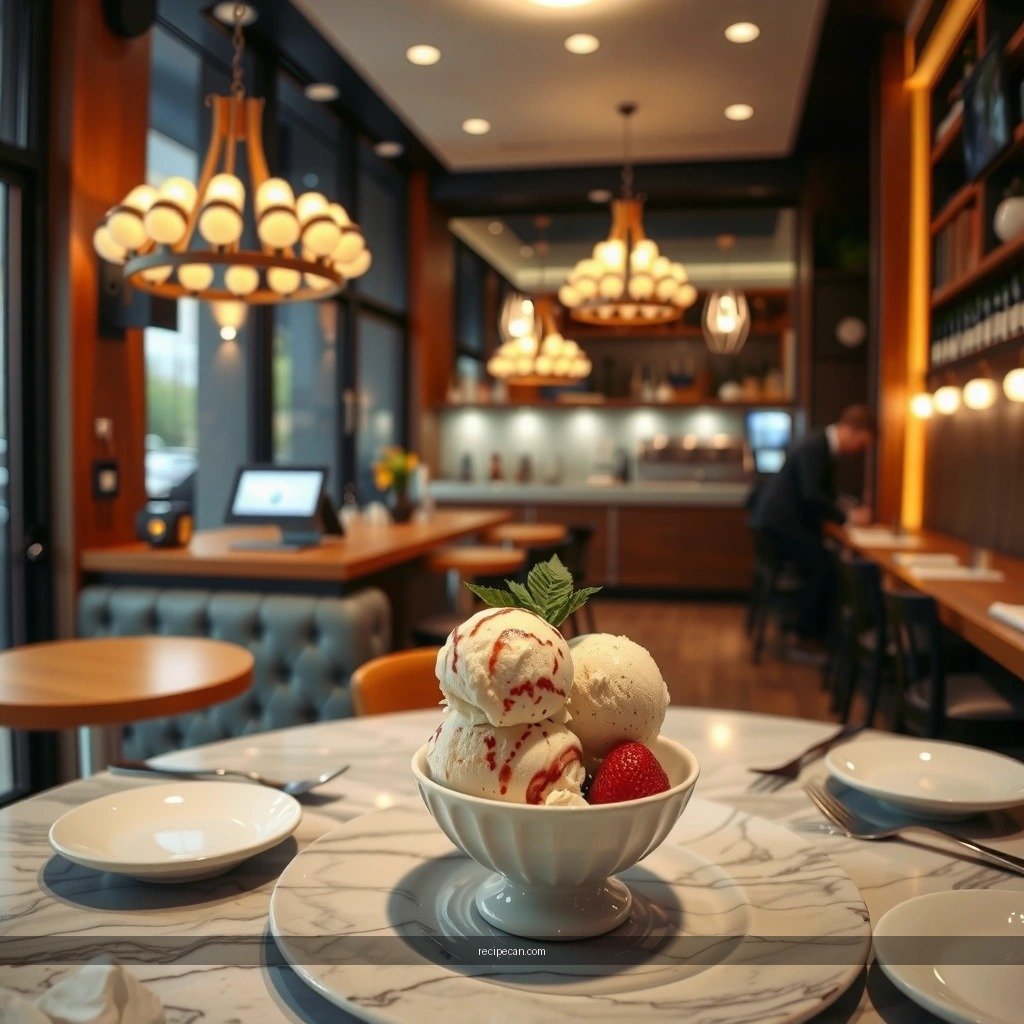
A great 4qt ice cream maker recipe starts with a base that balances richness, sweetness, and freezing performance. Custard-style bases (with egg yolks) typically yield a silkier mouthfeel and better stability than egg-free versions.
Core ingredients (classic custard-style):
– Heavy cream: provides body, fat for creaminess, and slower melting.
– Whole milk: lightens the texture while supporting a smooth churn.
– Granulated sugar: dissolves into the dairy and helps control hardness during freezing.
– Egg yolks (optional but recommended): add emulsification and thickness for that “premium” texture.
– Vanilla extract (or vanilla bean paste): delivers a clean, rich flavor.
– Pinch of salt: sharpens sweetness and makes vanilla taste more “complete.”
Suggested proportions for a full 4qt batch (yields ~1.5–2.5 quarts depending on your machine’s churn volume):
– 2 cups (480 ml) heavy cream
– 1 cup (240 ml) whole milk
– 1/2 to 3/4 cup (100–150 g) granulated sugar (start at 1/2 cup for less sweet; go up for a sweeter profile)
– 4 large egg yolks
– 1–2 tsp vanilla extract
– 1/4 tsp fine salt
Mix-ins (optional):
Plan mix-ins like chocolate, fruit, or cookie pieces for the best texture. Because mix-ins can slow the freeze if too much is added too early, keep the total mix-in amount to roughly 1/2 to 1 cup per batch (depending on size and water content).
Fruit: strawberries, raspberries, mango (fresh or cooked and cooled)
Chocolate: cocoa powder, chopped dark chocolate, or swirls
Cookies: crushed wafers, chocolate sandwich cookies, brownies (small pieces)
> Tip: For fruit-based ice cream, cook blended fruit briefly and cool it—uncooked purées can bring more water into the mix than you expect.
Batch Stability Snapshot (Custard vs. “Quick” Bases)
What Impacts Texture the Most in a 4qt Ice Cream Maker Batch
| # | Base Type | Typical Texture | Freeze Hardness (°F)* | Over-Ice-Crystal Risk |
|---|---|---|---|---|
| 1 | Custard (egg yolks) | Silky, dense | ~10–16 | Low |
| 2 | No-egg “milk + cream” | Creamy, lighter | ~14–20 | Medium |
| 3 | Condensed milk base | Sweet, scoopable | ~8–14 | Low–Medium |
| 4 | Greek yogurt base | Tangy, softer | ~18–25 | Medium–High |
| 5 | Alcohol-stabilized base | Very soft | ~0–8 | Low |
| 6 | High-fruit/no cooking | Icy with time | ~15–22 | High |
| 7 | Custard + cooked fruit | Smooth, stable | ~10–16 | Low |
Freeze hardness is an approximate range for typical home freezers at ~0°F (−18°C) measured as “how scoopable it feels” rather than a true lab temperature.
Prep Your 4qt Ice Cream Maker for Best Results
Even the best 4qt ice cream maker recipe can underperform if your equipment isn’t ready. Smooth texture depends on consistent freezing during churn, which means pre-chilling and workflow readiness.
– Pre-chill the bowl/insert exactly as the manufacturer requires. Many 4qt machines require 8–24 hours in a freezer (often colder is better, but avoid partial freezing).
– Keep the base cold before churning. Custard should be chilled until it’s close to refrigerator temperature—typically 3–6 hours, or at least until fully cool.
– Set up a “chill-to-churn” assembly line:
– whisk/ladle for pouring
– measuring cup or funnel to reduce mess
– strainer (optional but recommended for custards)
– containers ready for immediate transfer after churning
– Maintain temperature consistency. If the base warms up while you wait, the churn will be slower and ice crystals can form more easily later.
Practical workflow checklist (5 minutes saves the batch)
– Bowl is fully frozen solid
– Base is strained and chilled
– Mix-ins are prepped (scooped/chopped to similar sizes)
– Your container(s) are clean and ready with lids
Step-by-Step: How to Make the Base
This portion is where most texture quality is earned. You’re aiming for dissolved sugar, proper custard thickening, and a base that’s fully cooled before it hits the freezer canister.
1) Warm the dairy and dissolve sugar
1. In a saucepan, combine milk, cream, sugar, and salt.
2. Heat over medium until sugar dissolves and the mixture is steaming—do not boil hard.
2) Thicken with egg yolks (custard method)
3. Whisk egg yolks in a bowl until smooth.
4. Temper the yolks: slowly drizzle about 1 cup of warm dairy into the yolks while whisking.
5. Pour the tempered yolk mixture back into the saucepan.
6. Cook gently, stirring constantly, until it coats the back of a spoon:
– a useful cue is 170–175°F (77–80°C), or a visible “nappe” consistency
7. Remove from heat immediately to prevent scrambled eggs.
3) Add vanilla and chill fast
8. Stir in vanilla extract.
9. Strain for extra smoothness (especially if you see any tiny yolk bits).
10. Chill the base until cold—then churn.
Why straining matters (more than you think): even tiny curdled particles can act as nucleation points for ice crystals, affecting smoothness. Straining is a low-effort step that reliably improves results.
Churning: Timing and Doneness Cues
Churning is not just “run it until it’s frozen.” Your goal for a 4qt batch is to reach soft-serve consistency, which is typically thicker than you expect.
– Start churning with a cold base (refrigerator-cold, not lukewarm).
– Monitor texture rather than relying only on time. Machines vary due to compressor strength, ambient temperature, and how cold the bowl truly was.
– Typical churn time: often 18–25 minutes for many 4qt units, but always verify by texture.
Doneness cues you can trust
– Looks like soft-serve: holds ridges but is not fully hard
– Spoon can draw through it with clean lines
– Surface sheen becomes more “creamy” than liquid
Avoid over-churning
Over-churning can cause:
– graininess (too much freezing during churn)
– difficulty folding mix-ins (pieces get crushed or uneven)
Mix-ins timing: if you’re adding chocolate chips, cookie pieces, or chunks, add them near the end—usually in the last 2–5 minutes—so they distribute evenly without sinking too deeply or freezing into overly hard pockets.
Freezing and Serving for the Right Texture
Churning creates a scoopable texture in the canister, but freezing determines how pleasant it stays over time.
– Transfer promptly to a freezer-safe container.
– Freeze until scoopable: commonly 2–4 hours, depending on freezer temperature and container size.
– Reduce ice crystals:
– Press parchment directly against the surface (or use cling film)
– Seal with a lid to minimize air exposure
Serving strategy (the “restaurant trick”)
– Serve slightly softened for the creamiest bite.
– If you remove the container and wait 5–10 minutes, flavors become brighter and texture improves dramatically—especially for custard-style ice cream.
Easy Variations for Your 4qt Ice Cream Maker Recipe
Once your base method is consistent, variations become simple. The key analytical point: changes that add sugar and fat tend to soften texture, while changes that add water (some fruits) can increase iciness unless cooked or balanced.
Make chocolate
– Use either:
– cocoa powder added to the warm base (sift first to prevent lumps), then simmer briefly
– or melted dark chocolate mixed into the hot base until smooth
– Keep sweetness balanced—chocolate often needs a touch more sugar than vanilla, depending on cocoa strength.
Make strawberry
– Blend strawberries, then cook briefly and strain to remove seeds.
– Cool fully before churning.
– Sweeten to taste, but remember: fruit sweetness varies widely by season.
Make no-cook options
If you want to skip custard thickening:
– Use an egg-free base with cream, milk, and sugar, chilled thoroughly.
– Add a stabilizing approach if your results tend to get icy (for example, use a slightly higher sugar ratio or ensure fruit is cooked and strained).
– While no-cook can be convenient, custard typically delivers the smoothest texture in a 4qt ice cream maker recipe.
Homemade ice cream in a 4qt ice cream maker is all about starting with a well-balanced base, fully cooling it, and churning to the right soft-serve consistency. Follow the steps above, then try one variation (chocolate, fruit, or cookie mix-ins) for your next batch—then share your favorite flavor and tune the mix-ins to your taste.Frequently Asked Questions
What’s a simple 4-qt ice cream maker recipe for homemade vanilla ice cream?
Use a basic custard-style base: heat 2 cups heavy cream, 1 cup whole milk, and 1/2 cup sugar until steaming, then whisk in 5 egg yolks and cook until the mixture coats a spoon (about 170–175°F). Stir in 2 teaspoons vanilla and cool completely before churning in your 4-qt ice cream maker. Churn according to your model until it reaches soft-serve consistency, then freeze 2–4 hours to firm up.
How do I adapt a 1-gallon ice cream recipe to fit a 4-qt ice cream maker?
A good rule is to scale your ingredients so the finished churned base fits your machine’s max fill line (many 4-qt ice cream makers hold about 2–3 quarts of mix). Start by halving or reducing the original recipe and then measure before churning if possible—avoid overfilling because the mixture expands as it freezes. Always chill the base thoroughly and churn just until it thickens, then transfer to a container for freezing.
Why does my 4-qt ice cream maker recipe turn out icy instead of creamy?
Icy ice cream usually comes from warm mix, insufficient churning time, or not chilling the mixture long enough before processing. Make sure your ice cream base is fully cold (typically 4 hours in the fridge) and use enough fat—heavy cream helps prevent iciness. Also add a stabilizer-friendly ingredient like egg yolks (custard base) or a small amount of cornstarch (in recipes that use it), then freeze promptly after churning.
Which ingredients make the best results in a 4-qt ice cream maker recipe?
For rich, creamy texture, prioritize heavy cream and whole milk, plus egg yolks for a custard base that naturally thickens and stabilizes. Sugar helps lower the freezing point, so using the right amount improves scoopability rather than forming hard ice crystals. For flavor variations, use high-quality vanilla, cocoa, or fruit puree, and strain fruit for a smoother texture.
What’s the best timing and freezing method after churning in a 4-qt ice cream maker?
After churning, let the ice cream “set” in the freezer at least 2–4 hours so it firms up without turning rock hard. Transfer to an airtight container and press parchment or plastic wrap directly onto the surface to reduce freezer burn and ice buildup. For best scoop texture, allow the ice cream to sit 5–10 minutes at room temperature before serving, especially if your freezer runs very cold.
References
- https://scholar.google.com/scholar?q=4+quart+ice+cream+maker+recipe Google Scholar
https://scholar.google.com/scholar?q=4+quart+ice+cream+maker+recipe - Google Scholar Google Scholar
https://scholar.google.com/scholar?q=homemade+ice+cream+base+ratio+cream+milk+egg+churn - Google Scholar Google Scholar
https://scholar.google.com/scholar?q=ice+cream+stabilizers+emulsifiers+overrun+freezing+process+review - Ice cream
https://en.wikipedia.org/wiki/Ice_cream - Ice cream maker
https://en.wikipedia.org/wiki/Ice_cream_maker - Frozen dessert
https://en.wikipedia.org/wiki/Frozen_dessert - Ice cream | Definition, History, & Production | Britannica
https://www.britannica.com/topic/ice-cream - Projects – National Center for Home Food Preservation
https://nchfp.uga.edu/how/freeze/ice_cream.html - Classic vanilla ice cream recipe | Good Food
https://www.bbcgoodfood.com/recipes/classic-vanilla-ice-cream - https://pubmed.ncbi.nlm.nih.gov/?term=ice+cream+composition+emulsion+stabilizers+review
https://pubmed.ncbi.nlm.nih.gov/?term=ice+cream+composition+emulsion+stabilizers+review