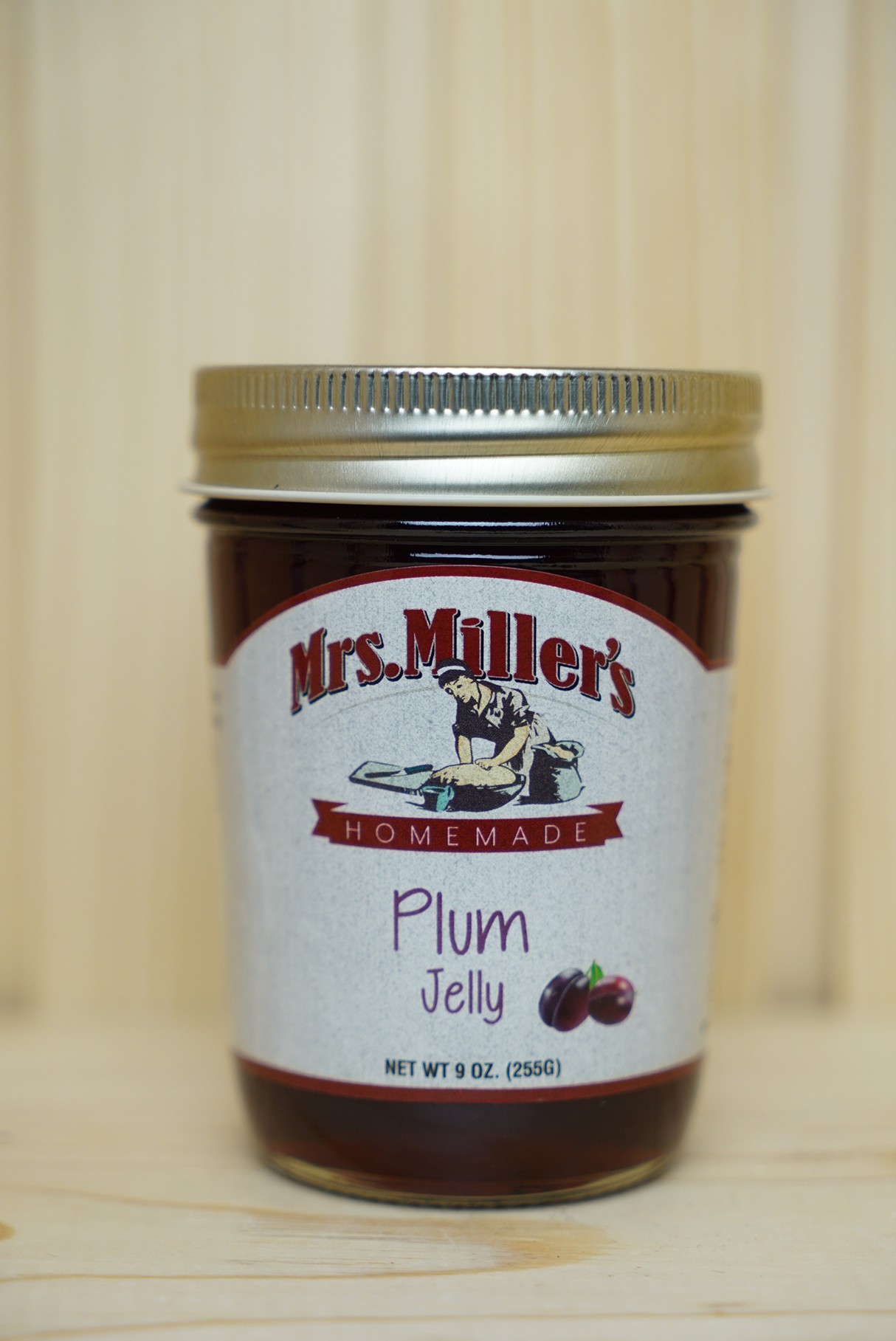
Mastering the art of making plum jelly is essential for anyone looking to preserve the vibrant flavors of summer. This expert guide offers precise recipes and step-by-step protocols, ensuring your jelly is both delicious and safe to consume. With proper techniques, you can avoid common pitfalls and achieve a perfect consistency every time. Follow these guidelines to transform fresh plums into a delightful treat that enhances any meal.
What This Guide Covers (And What It Doesn’t)
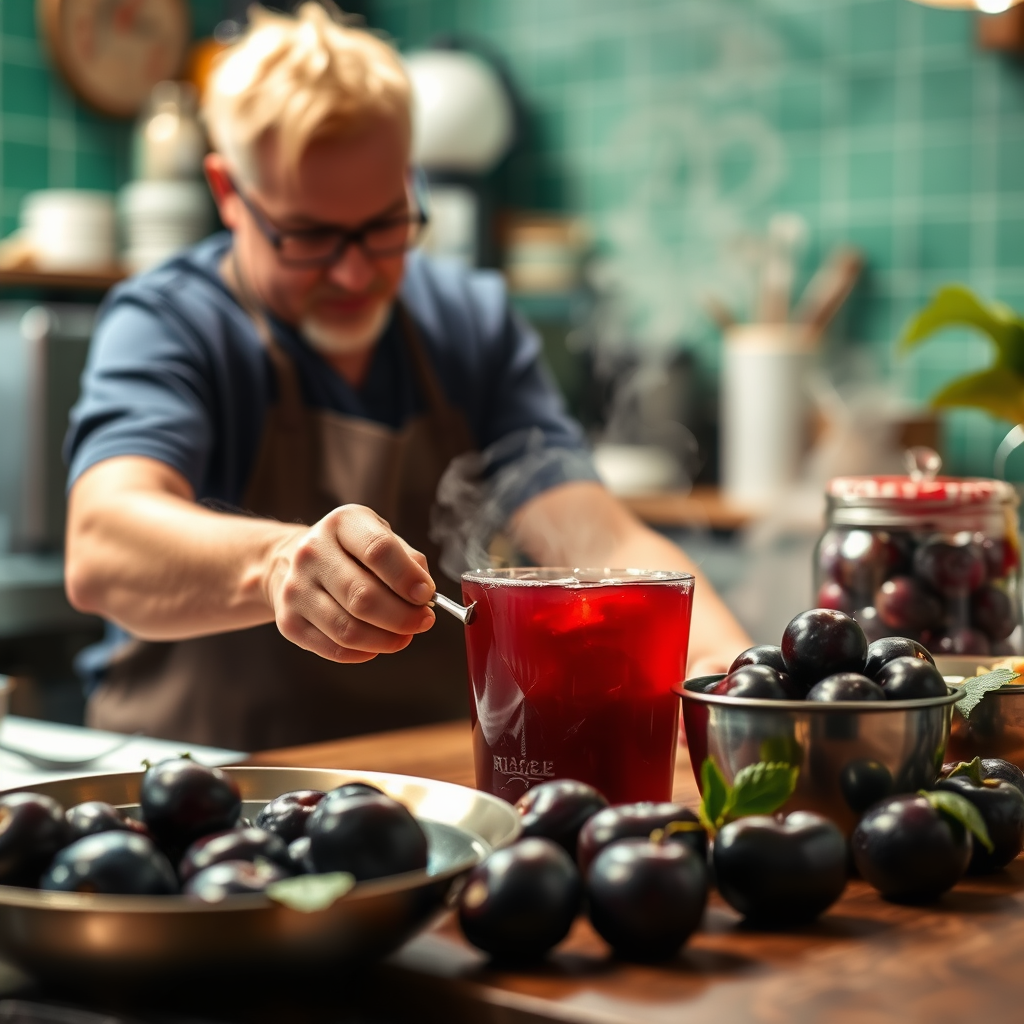
This guide offers a detailed procedure for safely making plum jelly, including precise ingredient measurements, cooking times, and essential canning techniques to ensure food safety. It highlights the necessary kitchen equipment, sterilization methods, and the critical role of pH levels in achieving the right consistency and flavor for plum jelly. However, it does not explore alternative fruit jelly recipes or variations beyond plum jelly, nor does it cover advanced canning techniques outside the basic water bath methods.
Who Should Read This
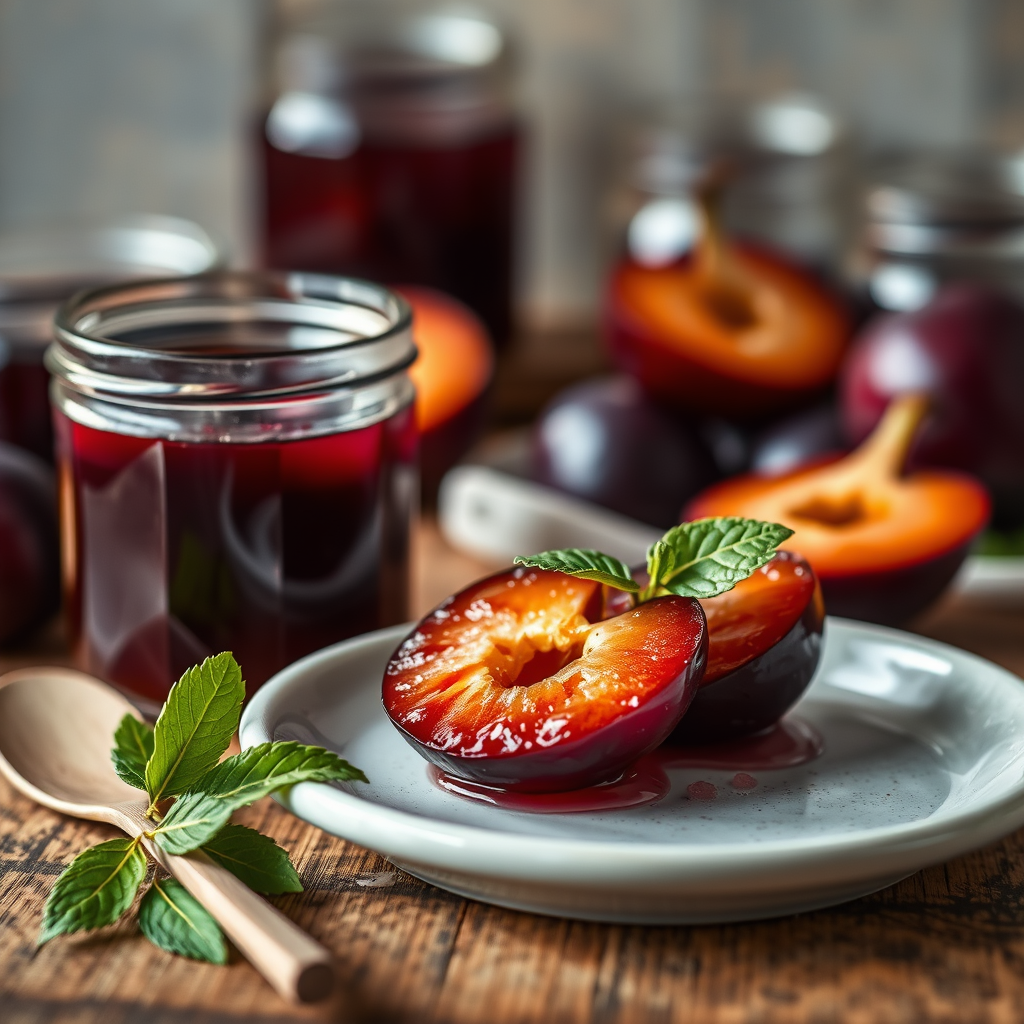
This article is crafted for home cooks who possess basic kitchen skills and are familiar with fundamental canning principles, such as sterilization and food safety. It caters to both novice cooks eager to create their first batch of plum jelly and seasoned preservers looking to enhance their techniques while ensuring safety. Readers who are new to canning or jelly-making should seek out introductory resources before attempting this recipe to fully grasp the processes involved.
The Step-by-Step Protocol
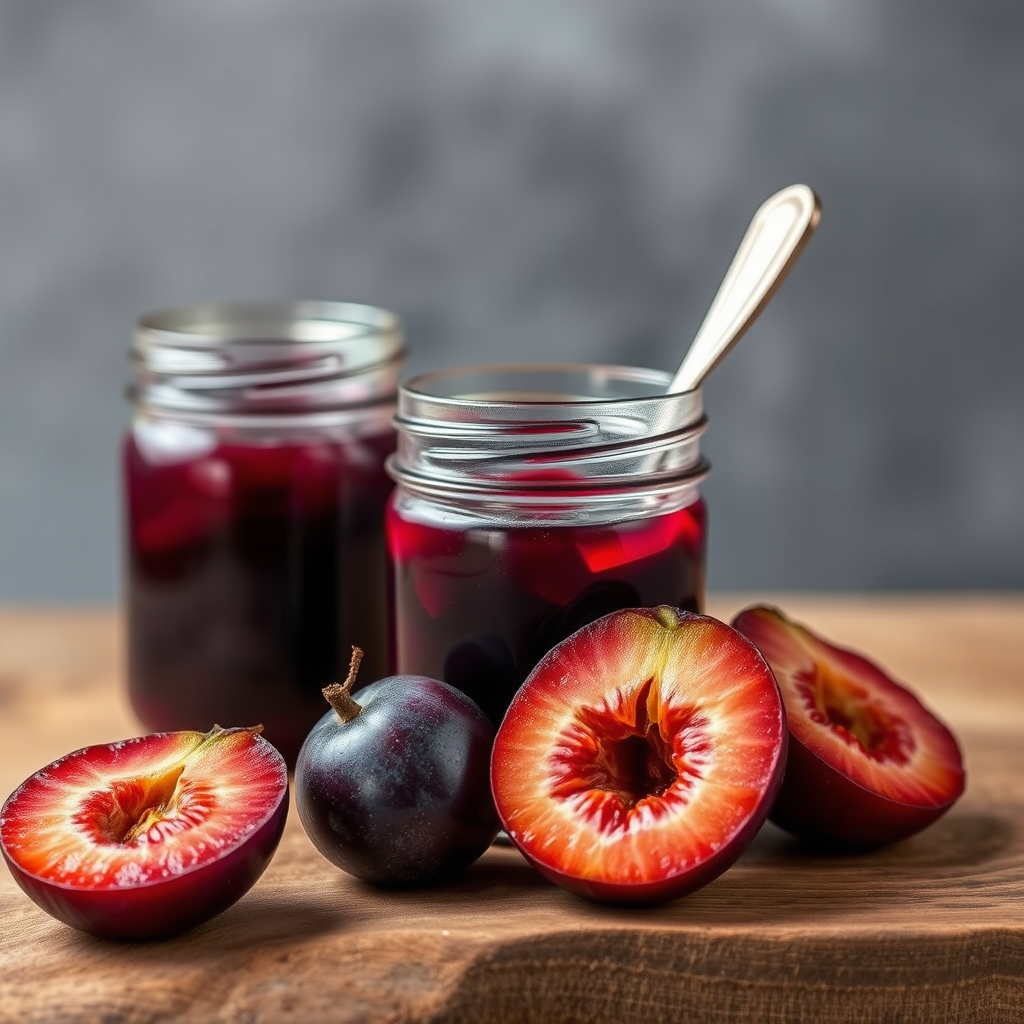
1. Gather Ingredients: Start with 2 pounds of ripe plums. Wash them thoroughly under running water to remove any dirt or residues. Remove the pits and chop the plums into quarters.
2. Simmer the Plums: In a large pot, combine the chopped plums with 1 cup of water. Simmer over medium heat for about 20 minutes, stirring occasionally, until the fruit becomes soft and releases its juices.
3. Extract Juice: Strain the mixture through a fine mesh sieve or cheesecloth to extract the juice. Aim for approximately 4 cups of plum juice, pressing the fruit to ensure you get all the liquid out.
4. Prepare the Jelly Mixture: In a clean, large pot, combine the extracted plum juice with 1/4 cup of fresh lemon juice and 1 package (1.75 oz) of powdered pectin. Stir well to combine before bringing the mixture to a full boil.
5. Add Sugar: Once boiling, add 5 cups of granulated sugar to the mixture. Stir continuously for 1-2 minutes until the sugar is completely dissolved. Continue boiling for one additional minute to ensure it reaches the right temperature for setting.
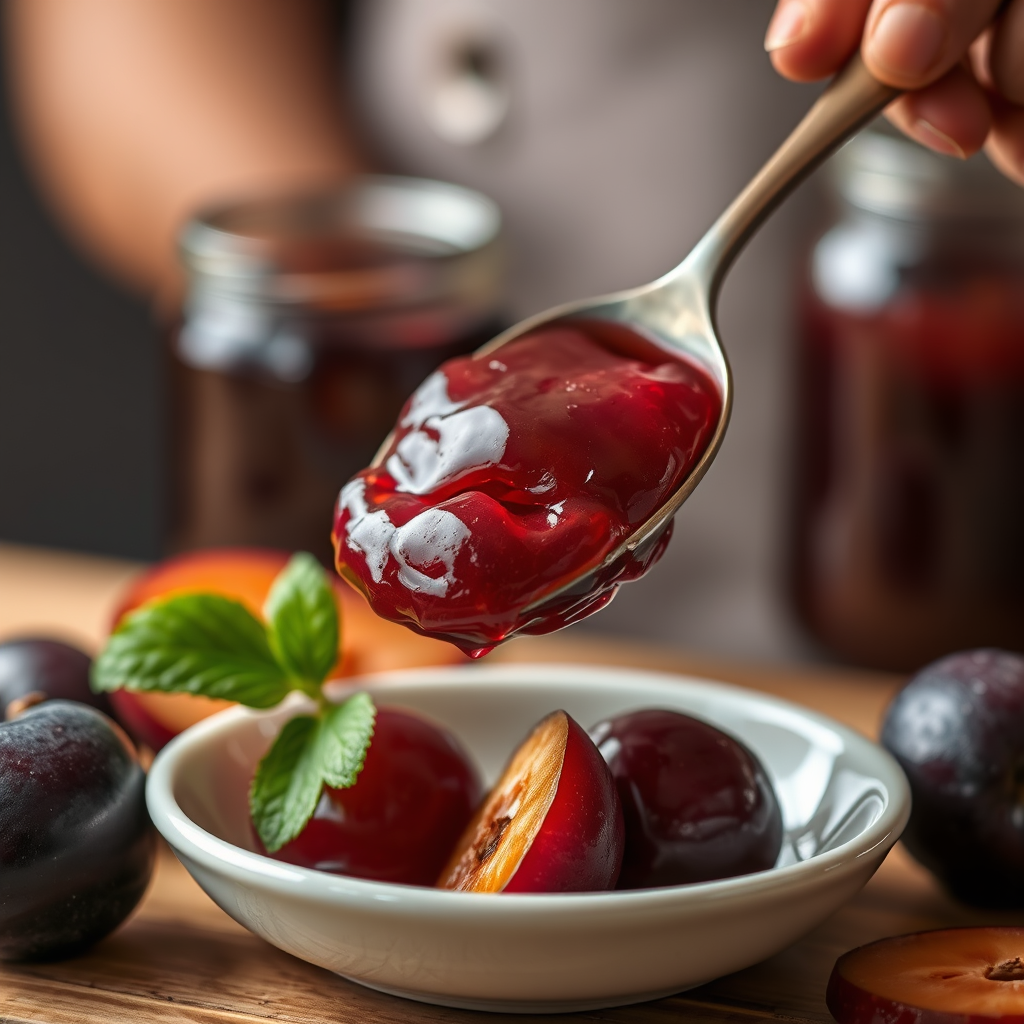
6. Check for Doneness: To ensure the jelly is ready, perform the spoon test: dip a clean spoon into the jelly and allow it to cool slightly. If it sheets off the spoon and forms a thin layer, it is ready for canning.
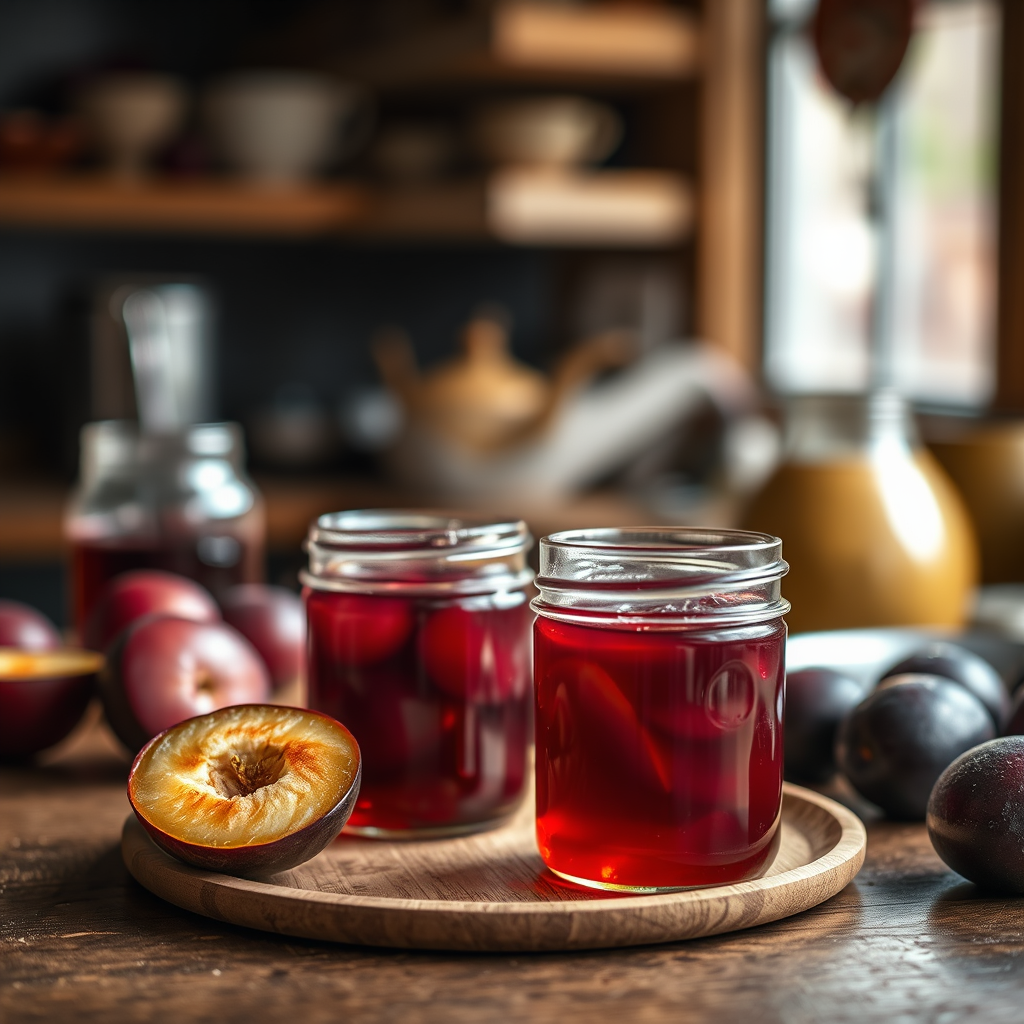
7. Canning the Jelly: Carefully pour the hot jelly into pre-sterilized jars, leaving approximately 1/4 inch of headspace at the top. Seal with sterilized lids and bands. Process the jars in a boiling water bath for 5-10 minutes to ensure proper sealing and safety.
Plum Jelly Yield and Process Time
| # | Parameter | Value | Notes |
|---|---|---|---|
| 1 | Plum Weight | 2 lbs | Ripe plums, washed and pitted |
| 2 | Water for Cooking | 1 cup | Needed to soften plums |
| 3 | Plum Juice Yield | 4 cups | From 2 lbs of plums |
| 4 | Lemon Juice | 1/4 cup | Adds acidity for safety |
| 5 | Pectin | 1.75 oz | Essential for jelly setting |
| 6 | Sugar | 5 cups | Necessary for sweetness and preservation |
| 7 | Processing Time | 5-10 minutes | In boiling water bath for sealing |
| 8 | Yield | Approximately 5-6 half-pints | Standard yield for this recipe |
Warning Signs: When Not to Follow This
– Avoid making plum jelly if the plums show signs of spoilage, such as mold, bruising, or an off smell, as this could compromise the safety of the jelly.
– Do not proceed if the recipe’s measurements or canning instructions are not followed precisely; improper ratios can lead to spoilage or unsafe jelly.
– If your kitchen environment is not clean or lacks proper sterilization methods for jars and tools, it is unsafe to attempt this recipe.
The Most Common Mistakes (And Their Consequences)
– Incorrect Sugar Measurement: Failing to measure the sugar correctly can result in jelly that does not set properly. Ensure to use the exact amount specified to achieve the desired consistency.
– Omitting Lemon Juice or Pectin: Skipping the lemon juice or pectin can lead to a jelly that is not acidic enough, posing a risk of botulism. Always include these critical ingredients for safety.
– Insufficient Processing Time: Not processing the jars in a boiling water bath for the recommended time may result in spoilage. Ensure to follow timing guidelines to maintain food safety.
Special Cases That Need a Different Approach
– If using under-ripe plums, increase the amount of pectin added to compensate for the lower natural pectin content, ensuring the jelly sets properly.
– For a lower sugar option, utilize a sugar substitute designed for canning; however, follow specific guidelines on the packaging to ensure safety and proper texture.
– If you prefer a chunkier jelly, consider using a portion of whole plums during the cooking process, but note that this will alter the final texture and may affect the set.
When You Need a Professional
– If you are unfamiliar with the canning process or have not previously made jelly, consult with a food preservation expert before attempting this recipe.
– Seek professional advice if you discover any signs of spoilage in the fruit or during the canning process, as improper handling can lead to health risks.
– If you want to explore advanced canning techniques or pressure canning for broader preservation methods, connecting with a certified extension agent or local canning class is recommended.
Sources and Further Reading
– Refer to the USDA Complete Guide to Home Canning for official guidelines on safe canning practices and updated preservation methods.
– The National Center for Home Food Preservation provides research-based resources on jelly and jam recipes, including safety tips and troubleshooting advice.
– Consult the book “Canning and Preserving for Beginners” for foundational knowledge and techniques related to safe canning practices.
By adhering closely to this guide and following the outlined safety protocols, you can enjoy homemade plum jelly with confidence, knowing both its flavor and safety are assured.
Frequently Asked Questions
What ingredients do I need for a basic plum jelly recipe?
To make a basic plum jelly, you will need ripe plums, granulated sugar, water, and pectin. The plums provide the natural flavor and color, while the sugar helps in preserving the jelly and enhancing its sweetness. Pectin is essential for achieving the right gel consistency, so be sure to choose a high-quality fruit pectin.
How do I ensure my plum jelly sets properly?
To ensure your plum jelly sets properly, it’s crucial to follow the correct ratios of fruit, sugar, and pectin. Make sure to cook the mixture to the right temperature, usually around 220°F (104°C), and check the consistency by using the plate test. If it doesn’t set after cooling, you can re-cook it with additional pectin.
Why is my plum jelly too runny after canning?
If your plum jelly is too runny after canning, it may be due to insufficient cooking time or not enough pectin. Another reason could be using overly ripe plums, which have less natural pectin. To fix this, you can reprocess the jelly by adding more pectin and cooking it again until it reaches the desired consistency.
What is the best way to store homemade plum jelly?
The best way to store homemade plum jelly is to keep it in sterilized glass jars with airtight lids. After canning, allow the jars to cool completely at room temperature before storing them in a cool, dark place, like a pantry or cellar. Properly sealed, plum jelly can last for up to a year, but refrigerate after opening.
Which plums are best for making jelly?
The best plums for making jelly are those that are sweet and have a high natural pectin content, such as Italian plums or Damson plums. These varieties yield a rich flavor and a beautiful color in the jelly. Avoid using overripe or bruised plums, as they can affect the texture and taste of your final product.
References
- Jelly
https://en.wikipedia.org/wiki/Jelly - https://www.uvm.edu/extension/food/recipes/plum-jelly
https://www.uvm.edu/extension/food/recipes/plum-jelly - https://www.extension.purdue.edu/extmedia/hn/hn-214-w.pdf
https://www.extension.purdue.edu/extmedia/hn/hn-214-w.pdf - https://www.foodsafety.gov/food-safety-charts/jelly-jam-safety
https://www.foodsafety.gov/food-safety-charts/jelly-jam-safety - https://pubmed.ncbi.nlm.nih.gov/23437499/
https://pubmed.ncbi.nlm.nih.gov/23437499/ - Parathyroid Hormone: A Uremic Toxin – PMC
https://www.ncbi.nlm.nih.gov/pmc/articles/PMC7150960/ - Google Scholar Google Scholar
https://scholar.google.com/scholar?q=plum+jelly+recipe - Google Scholar Google Scholar
https://scholar.google.com/scholar?q=plum+jelly - ODA : Welcome Page : State of Oregon
https://www.oregon.gov/oda/shared/Documents/Publications/FoodSafety/PlumJelly.pdf - https://www.mayoclinic.org/healthy-lifestyle/nutrition-and-healthy-eating/expert-answers/jelly-vs-jam/faq-20058080
https://www.mayoclinic.org/healthy-lifestyle/nutrition-and-healthy-eating/expert-answers/jelly-vs-jam/faq-20058080