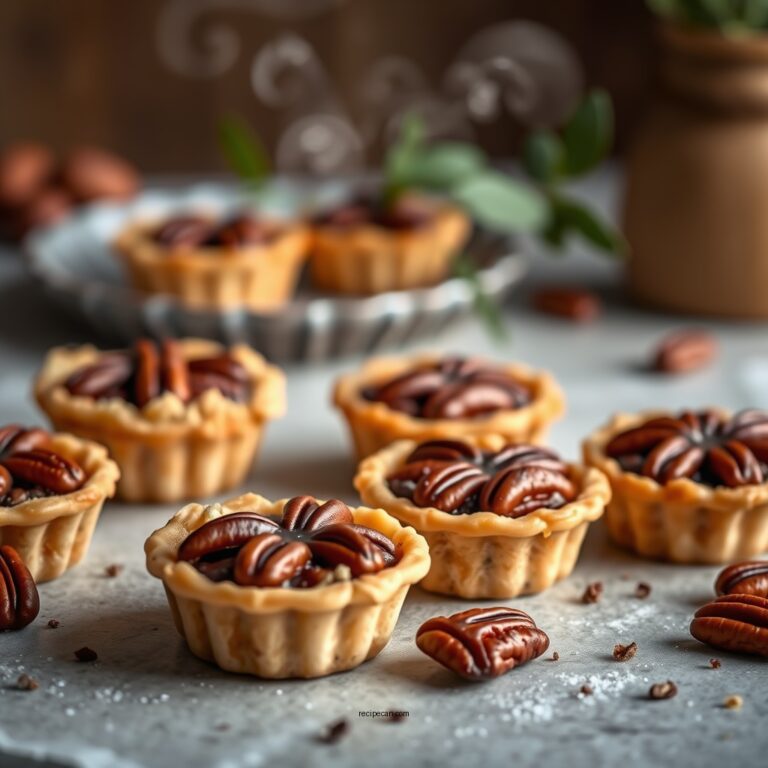
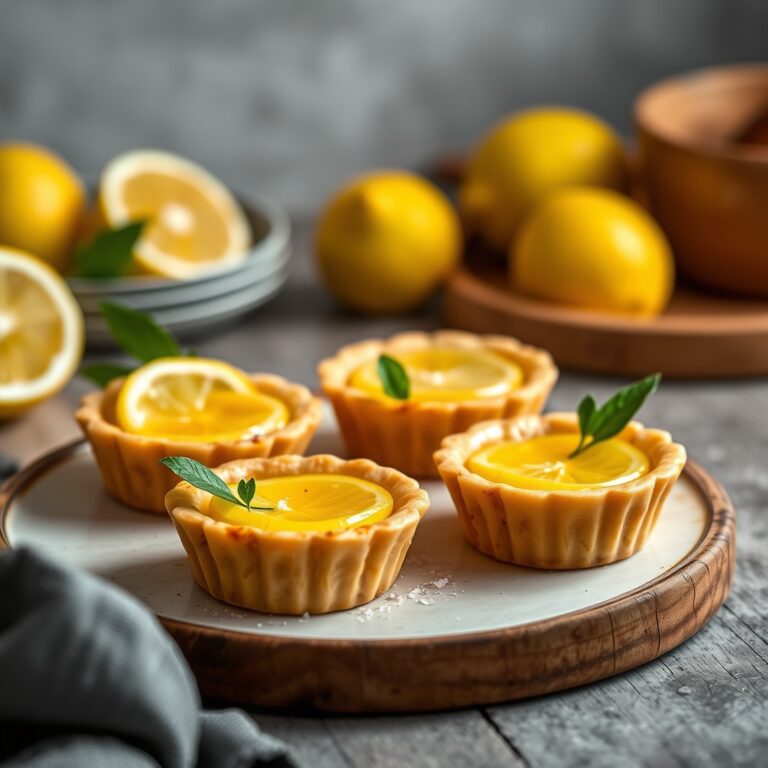
To make delicious Portuguese tarts, also known as Pastéis de Nata, you’ll need a few key ingredients and a straightforward method to follow. This guide will take you through the essential steps to create these creamy, flaky pastries that are sure to impress your family and friends. With the right ingredients and techniques, you can enjoy this classic dessert from the comfort of your own kitchen.
Ingredients You’ll Need

To create authentic Pastéis de Nata, you’ll require a selection of primary ingredients:
– Puff Pastry: The foundation of your tart, store-bought puff pastry simplifies the process but can also be made from scratch if you desire.
– Eggs: Essential for the custard filling, large eggs are preferred for their richness.
– Granulated Sugar: This sweetens the custard and caramelizes to create a beautiful top.
– Whole Milk: Provides a creamy texture; you can substitute with half-and-half for a richer custard.
– All-Purpose Flour: A small amount is needed to stabilize the custard.
Optional Ingredients: While the basic recipe is delightful on its own, you might consider adding the following to enhance the flavor:
– Vanilla Extract: Adds depth to the custard.
– Lemon Zest: A hint of citrus can brighten the flavors.
– Cinnamon: A sprinkle on top before serving can elevate the dessert’s profile.
Preparing the Pastry

1. Thaw the Puff Pastry: If using frozen pastry, transfer it to the refrigerator the night before to thaw.
2. Roll Out the Pastry: On a lightly floured surface, roll out the pastry to ensure it’s thin enough to create flaky layers. Aim for about 1/8 inch thickness.
3. Cut the Pastry: Use a round cutter (approximately 4 inches in diameter) to cut out circles from the rolled pastry. You should aim to get around 12-15 circles, depending on the size of your tart tins.
4. Mold the Pastry: Lightly grease your tart tins with butter or non-stick spray. Gently press each pastry circle into the tin, ensuring it covers the bottom and sides, creating a slight overhang. Trim off any excess pastry.
Tip: If you want a puffier crust, refrigerate the molded pastry shells for 30 minutes before baking to help them maintain their shape.
Making the Custard Filling
1. Combine Ingredients: In a saucepan, whisk together 1 cup of whole milk, 1/2 cup of granulated sugar, and 1 tablespoon of all-purpose flour until smooth.
2. Heat Mixture: Place the saucepan over medium heat and gradually bring it to a simmer, stirring constantly. This step helps dissolve the sugar and flour, preventing lumps.
3. Mix Eggs: In a separate bowl, whisk together 2 large eggs and 1 egg yolk until well combined.
4. Temper the Eggs: Once the milk mixture is steaming (but not boiling), slowly drizzle it into the eggs while whisking continuously. This prevents the eggs from scrambling.
5. Cook the Custard: Return the mixture to the saucepan and cook on low heat, stirring constantly until it thickens enough to coat the back of a spoon. This should take around 5-7 minutes.
Assembling the Tarts
1. Fill the Pastry Shells: Carefully pour the custard into each pastry shell, filling them about three-quarters full. Be cautious not to overfill, as the custard will puff up slightly during baking.
2. Smooth the Top: Use the back of a spoon or a small spatula to ensure the custard surface is even, which helps in achieving that signature look.
Baking the Tarts
1. Preheat the Oven: Preheat your oven to 475°F (245°C). A high temperature is crucial for achieving that characteristic caramelized top.
2. Bake: Place the tarts in the preheated oven and bake for 15-20 minutes. You should see the custard puffing up and the pastry turning golden brown.
3. Check for Doneness: The tarts are done when the top is slightly charred and the pastry is golden. If needed, you can turn on the broiler for the last minute to achieve a darker top.
Serving and Storing
– Garnishing: Serve the tarts warm, dusted with powdered sugar or a light sprinkle of cinnamon for added flavor.
– Storing Leftovers: If you have any tarts left, let them cool completely, then store them in an airtight container in the refrigerator for up to 3 days. Reheat in the oven for a few minutes to regain their crispiness.
Troubleshooting Common Issues
Even with the best intentions, things can go awry. Here are some common problems and their solutions:
– Soggy Crust: Ensure your pastry is fully cooked before adding the custard. Pre-baking the shells for a few minutes can help.
– Burnt Tops: If you notice the tops are browning too quickly, cover the tarts loosely with aluminum foil to prevent over-browning while the custard finishes cooking.
– Runny Custard: This can occur if the custard isn’t cooked long enough. Make sure to cook until it’s thick enough to coat the back of a spoon.
Creating your own authentic Portuguese tarts at home is straightforward with the right steps. These delightful pastries offer a rich flavor and flaky texture that is hard to resist. Enjoy the process of making Pastéis de Nata, and don’t hesitate to share them with others or experiment with your own variations!
Top Ingredients for Authentic Portuguese Tarts
| # | Ingredient | Amount | Calories | Cost ($) |
|---|---|---|---|---|
| 1 | Puff Pastry | 1 sheet | 300 | $3.00 |
| 2 | Eggs | 2 large | 140 | $0.50 |
| 3 | Granulated Sugar | 1/2 cup | 387 | $0.25 |
| 4 | Whole Milk | 1 cup | 149 | $0.75 |
| 5 | All-Purpose Flour | 1 tbsp | 28 | $0.05 |
| 6 | Vanilla Extract | 1 tsp | 12 | $0.10 |
| 7 | Lemon Zest | 1 tsp | 2 | $0.05 |
Ingredients’ Cost Breakdown for Pastéis de Nata
Through this detailed guide, you can see that making Portuguese tarts is not just about following a recipe; it is about understanding and mastering each step to achieve the perfect result. Whether you are a novice baker or a seasoned pro, the joy of creating something so delectable is unmatched. Enjoy your baking journey!
Frequently Asked Questions
What are the essential ingredients for a traditional Portuguese tart recipe?
A traditional Portuguese tart, known as “Pastéis de Nata,” requires essential ingredients like puff pastry, egg yolks, sugar, milk, and cream. The key to achieving that creamy custard filling is using fresh eggs and a blend of milk and cream to create a rich texture.
How do I achieve the perfect flaky crust for my Portuguese tarts?
To achieve a perfect flaky crust for your Portuguese tarts, start with high-quality puff pastry and ensure it is well-chilled before rolling. Layer the pastry by folding it multiple times and refrigerating between folds, which helps create those signature flaky layers when baked.
Why do my Portuguese tarts crack on top during baking?
Cracking on the tops of Portuguese tarts can occur due to rapid temperature changes in the oven or overmixing the custard filling. To prevent this, bake your tarts at a steady temperature and avoid whisking the custard too vigorously, which can incorporate excess air.
What is the best way to store leftover Portuguese tarts?
The best way to store leftover Portuguese tarts is to keep them in an airtight container in the refrigerator for up to 3 days. To maintain their crispness, you can reheat them in a preheated oven for a few minutes before serving.
Which type of milk is best for making Portuguese tarts?
For making Portuguese tarts, a combination of whole milk and heavy cream is ideal, as it creates a rich and creamy custard filling. Using whole milk ensures that the custard is not too thin, while the heavy cream adds a smooth texture and enhances the flavor.
References
- https://en.wikipedia.org/wiki/Pasteis_de_nata
https://en.wikipedia.org/wiki/Pasteis_de_nata - https://www.bbc.co.uk/food/recipes/pasteis_de_nata_99549
https://www.bbc.co.uk/food/recipes/pasteis_de_nata_99549 - NYT Cooking – Recipes and Cooking Guides From The New York Times
https://www.nytimes.com/recipes/1019008/pasteis-de-nata-portuguese-custard-tarts - https://www.foodandwine.com/recipes/pasteis-de-nata-portuguese-custard-tarts
https://www.foodandwine.com/recipes/pasteis-de-nata-portuguese-custard-tarts - Google Scholar Google Scholar
https://scholar.google.com/scholar?q=portuguese+tart+recipe - Google Scholar Google Scholar
https://scholar.google.com/scholar?q=pasteis+de+nata+recipe - Google Scholar Google Scholar
https://scholar.google.com/scholar?q=custard+tart+history - https://www.britannica.com/topic/pasteis-de-nata
https://www.britannica.com/topic/pasteis-de-nata - portuguese tart recipe – Search results
https://en.wikipedia.org/wiki/Special:Search?search=portuguese+tart+recipe - https://www.ncbi.nlm.nih.gov/search/research-articles/?term=portuguese+tart+recipe
https://www.ncbi.nlm.nih.gov/search/research-articles/?term=portuguese+tart+recipe