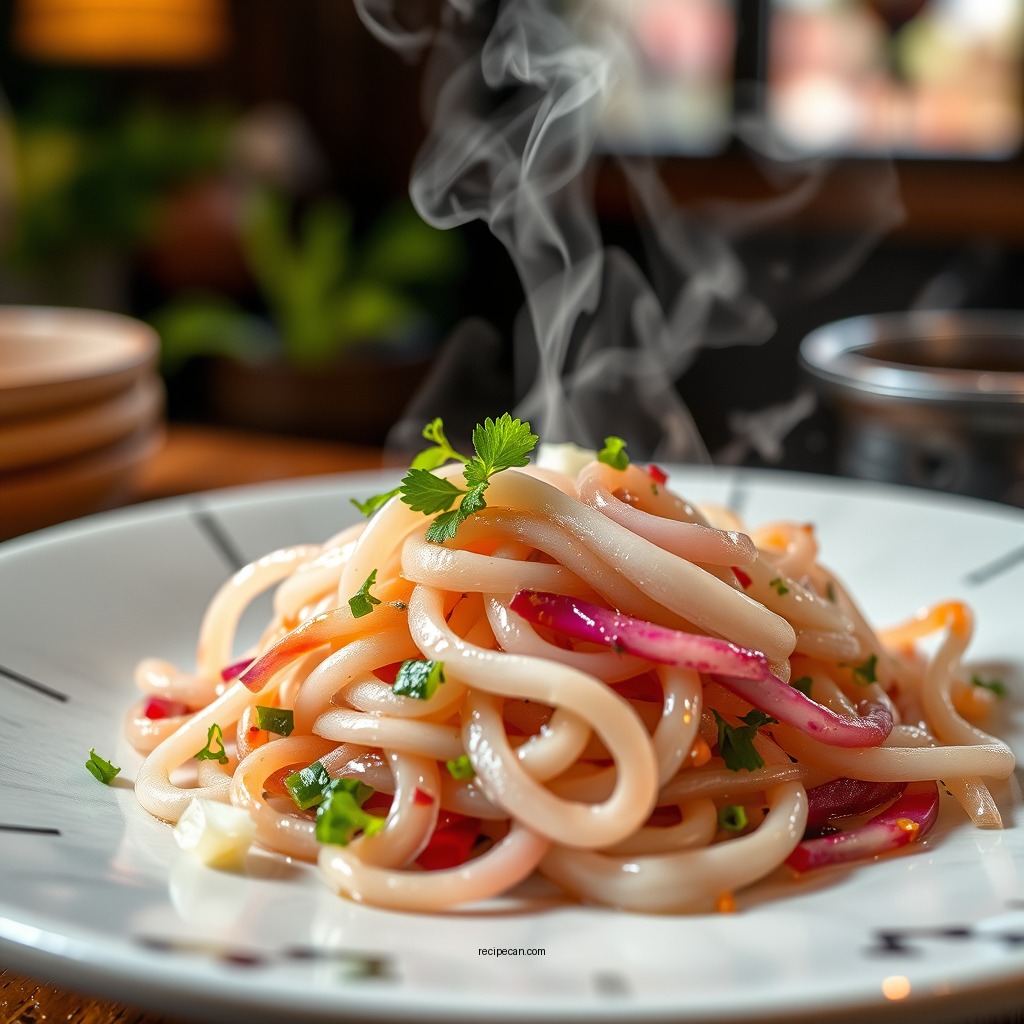
If you’re looking for a light, refreshing dish that captures the essence of Japanese cuisine, the authentic Japanese squid salad is an excellent choice. This recipe showcases tender squid paired with a colorful medley of vegetables, all drizzled with a zesty dressing that enhances the natural flavors. In this post, we will guide you through the ingredients, preparation steps, and tips to ensure you achieve the best results for this delightful dish.
Ingredients for Japanese Squid Salad
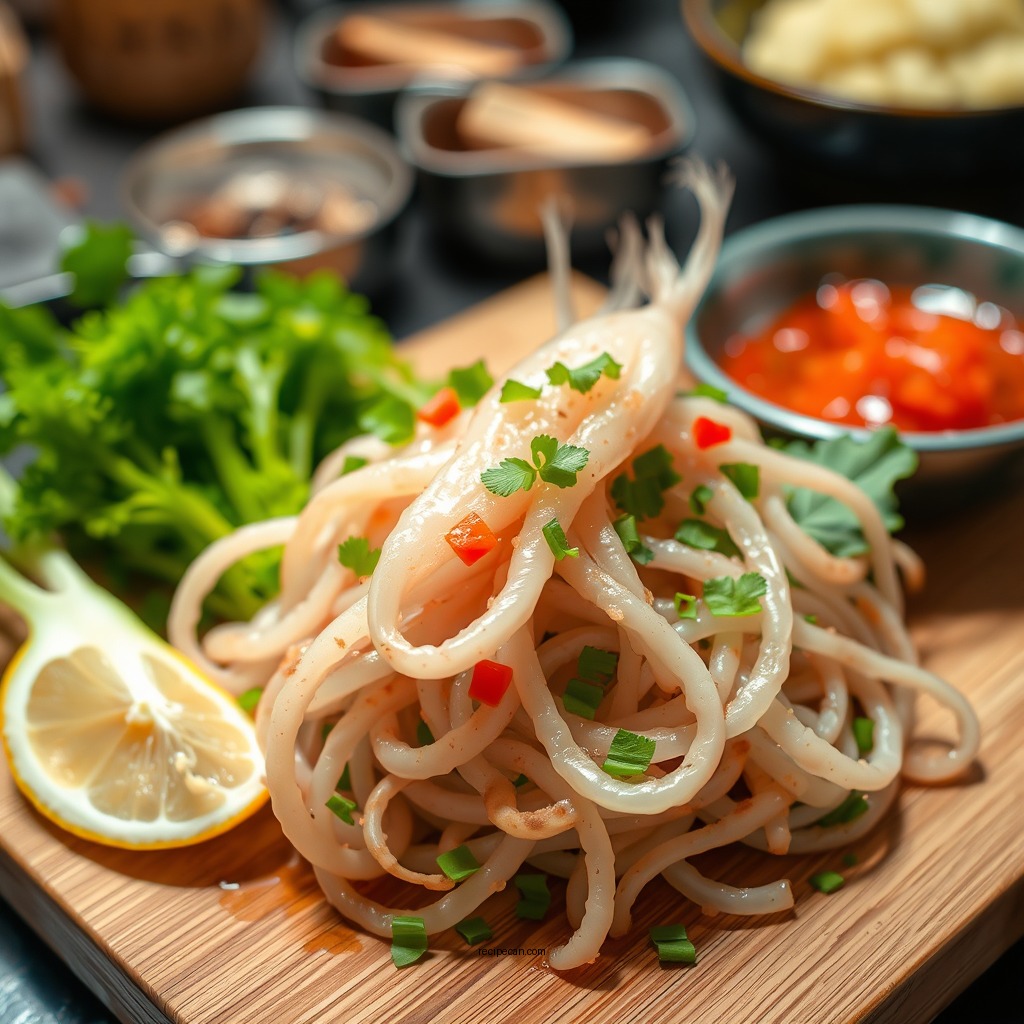
To create an authentic Japanese squid salad, it is essential to select the right ingredients. The following components will help you achieve a dish that is not only flavorful but also aesthetically pleasing.
– Fresh squid: Opt for high-quality, fresh squid. Look for squid that has a firm texture and a mild ocean scent. If fresh squid is not available, frozen squid is a suitable alternative, provided it has been properly thawed.
– Vegetables: Common additions include:
– Cucumber: Adds a refreshing crunch. Choose English cucumbers for a sweeter taste.
– Radish: Adds a peppery bite. Daikon radish is particularly popular in Japanese salads.
– Seaweed: Wakame or nori can add an umami flavor and a unique texture to the salad.
– Carrots: Shredded or julienned for added color and sweetness.
– Spring onions: For a mild onion flavor that complements the dish.
Preparing the Squid
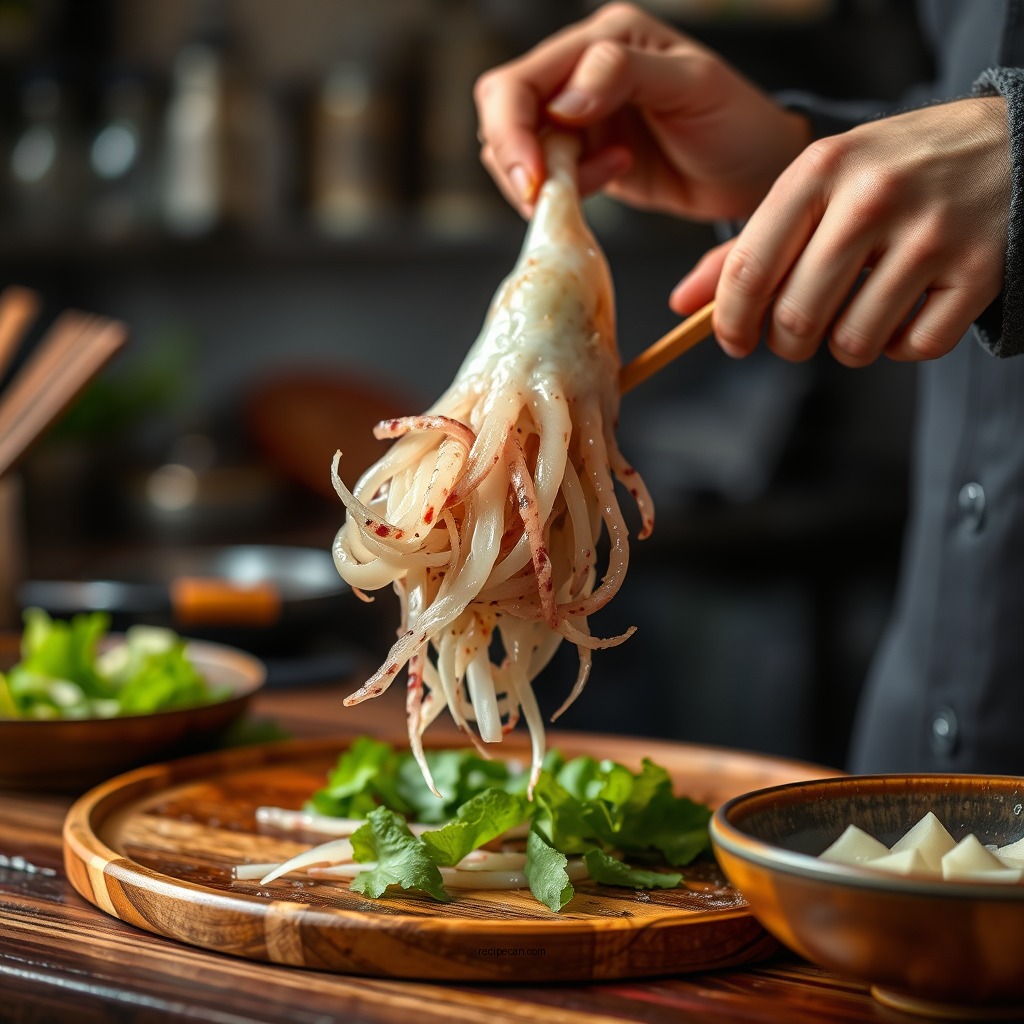
Properly preparing squid is crucial to achieving a tender and flavorful result. Here are the essential steps:
– Cleaning:
1. Rinse the squid under cold running water.
2. Remove the head by pulling it away from the body.
3. Discard the innards and the beak located at the center of the head.
4. Peel off the skin if desired, and rinse the body and tentacles again.
5. Slice the body into rings or leave it whole for grilling.
– Cooking methods:
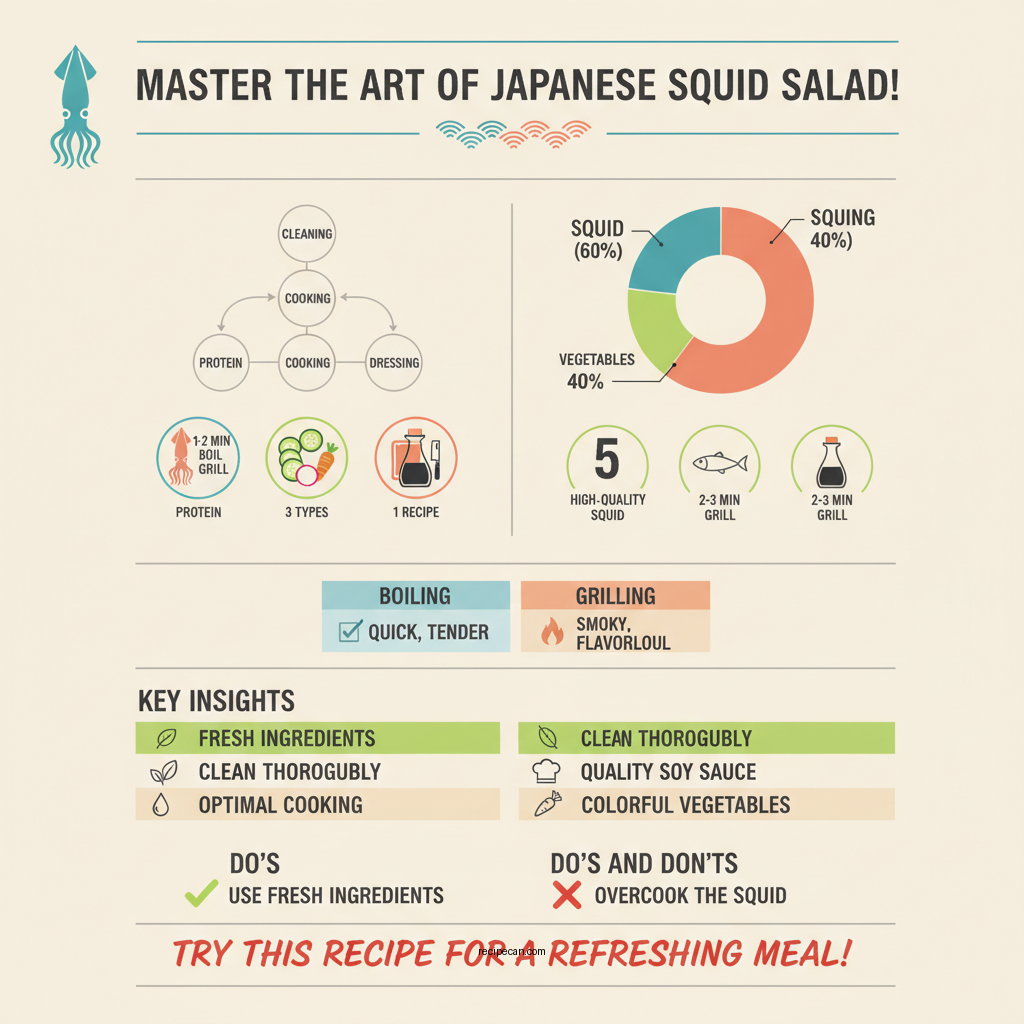
– Boiling: Bring a pot of salted water to a boil. Add the cleaned squid and cook for 1-2 minutes until they turn opaque. Overcooking can lead to a rubbery texture, so it’s essential to monitor closely.
– Grilling: Preheat the grill and lightly oil the grates. Grill squid for 2-3 minutes on each side until it has nice grill marks and is cooked through. This method enhances the flavor with a smoky char.
Making the Dressing
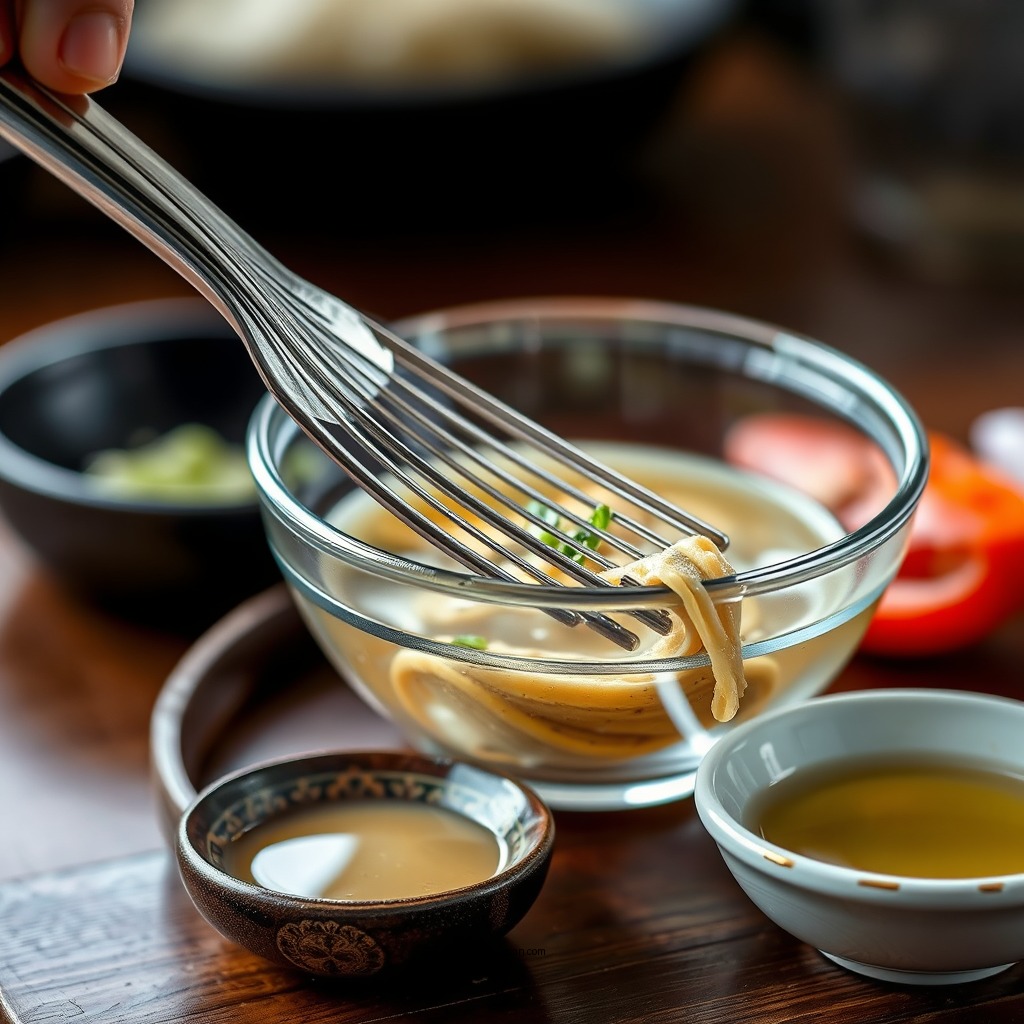
The dressing is a pivotal element that brings the salad together. Here’s how to make a traditional Japanese dressing:
– Soy sauce: Use a high-quality, low-sodium soy sauce for a balanced flavor.
– Sesame oil: Adds a nutty aroma. Toasted sesame oil provides an even richer taste.
– Rice vinegar: This gives a tangy kick. Ensure you use unseasoned rice vinegar for the best results.
– Mirin: A sweet rice wine that balances out the salty and tangy notes.
– Fresh ginger: Adds depth and a hint of spiciness.
– Balancing flavors: Aim for a harmonious blend of salty, sweet, and tangy. Start with equal parts soy sauce and rice vinegar, then gradually add sesame oil and mirin to taste. For additional depth, incorporate minced garlic or grated ginger.
Assembling the Salad
Now that all components are prepared, it’s time to put everything together:
– Mixing ingredients:
1. In a large bowl, combine the cooked squid, sliced cucumber, radish, seaweed, and any other desired vegetables.
2. Drizzle the dressing over the salad and toss gently to coat all ingredients evenly. Avoid over-mixing to maintain the integrity of the squid and vegetables.
– Presentation tips:
– Serve on a plate or in a bowl, garnished with sesame seeds or chopped herbs such as cilantro or chives.
– For a vibrant touch, add edible flowers or microgreens for a visually appealing dish.
Nutritional Breakdown of Japanese Squid Salad Ingredients
| # | Ingredient | Calories (per serving) | Protein (g) | Carbs (g) | Fat (g) |
|---|---|---|---|---|---|
| 1 | Squid | 92 | 16 | 0 | 1.4 |
| 2 | Cucumber | 16 | 0.7 | 3.8 | 0.2 |
| 3 | Radish | 18 | 0.5 | 4.1 | 0.1 |
| 4 | Seaweed | 50 | 3.3 | 9.0 | 0.2 |
| 5 | Sesame Oil | 120 | 0 | 0 | 14 |
| 6 | Rice Vinegar | 0 | 0 | 0 | 0 |
| 7 | Mirin | 40 | 0.1 | 10.0 | 0.0 |
Customization Options
One of the best aspects of a salad is its versatility. Here are some ideas for customization:
– Variations:
– Additional seafood: Consider adding shrimp, octopus, or crab for a seafood medley.
– Chicken or tofu: For a protein boost, grilled chicken or marinated tofu can be excellent additions.
– Dietary adjustments:
– Gluten-free: Use tamari instead of soy sauce to make the dressing gluten-free.
– Vegan options: Replace seafood with marinated vegetables or tofu, ensuring that the dressing is free from animal products.
Serving Suggestions
When serving your Japanese squid salad, consider these complementary options:
– Pairing:
– Serve with steamed rice or as part of a larger Japanese meal including miso soup and grilled fish.
– A chilled sake or green tea pairs beautifully with this dish, enhancing the overall dining experience.
– Occasion:
– This salad makes an excellent starter for a dinner party or a refreshing side dish for a summer barbecue. It’s also suitable for casual family meals or picnics.
In summary, the authentic Japanese squid salad is a delightful addition to any meal, offering a blend of flavors and textures that will impress your family and friends. This recipe is not only simple to prepare but also allows for personal touches to cater to different tastes and dietary preferences. Don’t hesitate to try this recipe and enjoy the vibrant zest of Japanese cuisine!
Frequently Asked Questions
What are the main ingredients in a traditional Japanese squid salad?
A traditional Japanese squid salad typically includes fresh squid, mixed greens, cucumbers, and sometimes seaweed. The salad is often dressed with a light sesame or soy-based dressing, which enhances the natural flavors of the squid and vegetables. Additional ingredients like radishes or avocado can also be added for extra texture and taste.
How do I prepare squid for a Japanese squid salad?
To prepare squid for a Japanese squid salad, start by cleaning the squid thoroughly, removing the innards and skin. Next, slice the squid into thin rings or strips and blanch them in boiling water for about 30 seconds until they turn opaque. This quick cooking method keeps the squid tender and perfect for your salad.
Why is squid salad popular in Japanese cuisine?
Squid salad is popular in Japanese cuisine due to its unique flavor and texture, as well as its health benefits. Squid is low in calories and high in protein, making it a nutritious choice for salads. Additionally, the dish is visually appealing and showcases the freshness of seafood, which is a hallmark of Japanese culinary traditions.
What is the best dressing for a Japanese squid salad?
The best dressing for a Japanese squid salad is typically a light sesame dressing or a soy sauce-based vinaigrette. A blend of soy sauce, rice vinegar, sesame oil, and a touch of sugar can create a balanced flavor that complements the squid and vegetables. You can also experiment with adding a hint of wasabi for an extra kick.
Which vegetables pair well with squid in a Japanese salad?
Vegetables that pair well with squid in a Japanese salad include crisp cucumbers, shredded carrots, and mixed greens like lettuce or spinach. Seaweed, such as wakame, adds a unique umami flavor and texture. You can also include radishes or daikon for a refreshing crunch that complements the tender squid.
References
- Japanese cuisine
https://en.wikipedia.org/wiki/Japanese_cuisine - https://www.ncbi.nlm.nih.gov/pmc/articles/PMC6479062/
https://www.ncbi.nlm.nih.gov/pmc/articles/PMC6479062/ - https://www.sciencedirect.com/topics/food-science/squid
https://www.sciencedirect.com/topics/food-science/squid - https://www.ncbi.nlm.nih.gov/pmc/articles/PMC5753459/
https://www.ncbi.nlm.nih.gov/pmc/articles/PMC5753459/ - https://www.nytimes.com/2021/07/28/dining/squid-recipe.html
https://www.nytimes.com/2021/07/28/dining/squid-recipe.html - Google Scholar Google Scholar
https://scholar.google.com/scholar?q=squid+salad+japanese+recipe - Google Scholar Google Scholar
https://scholar.google.com/scholar?q=japanese+cuisine+squid+salad - Google Scholar Google Scholar
https://scholar.google.com/scholar?q=squid+salad+recipe+nutritional+value - squid salad japanese recipe – Search results
https://en.wikipedia.org/wiki/Special:Search?search=squid+salad+japanese+recipe - https://www.ncbi.nlm.nih.gov/search/research-articles/?term=squid+salad+japanese+recipe
https://www.ncbi.nlm.nih.gov/search/research-articles/?term=squid+salad+japanese+recipe