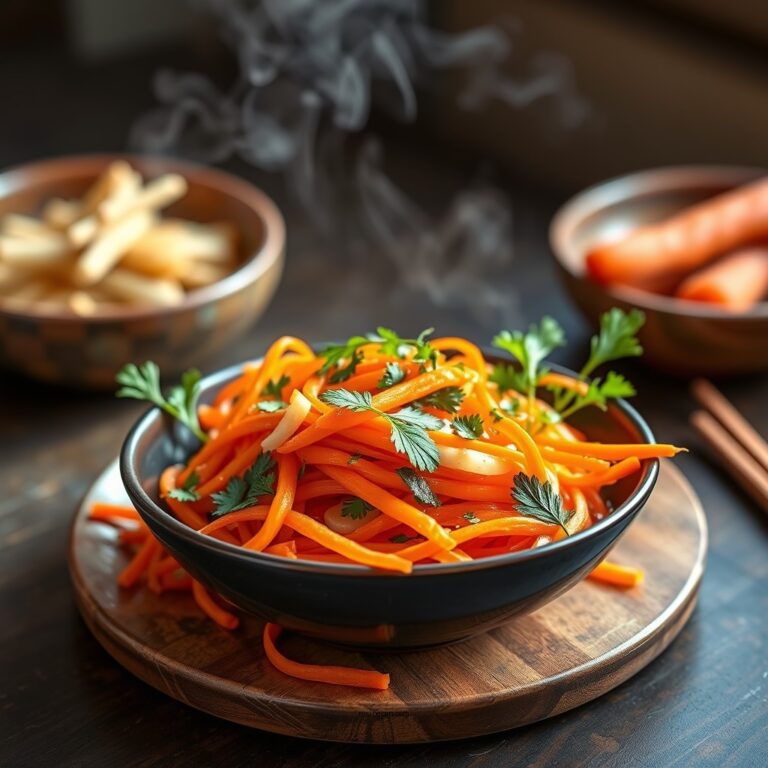
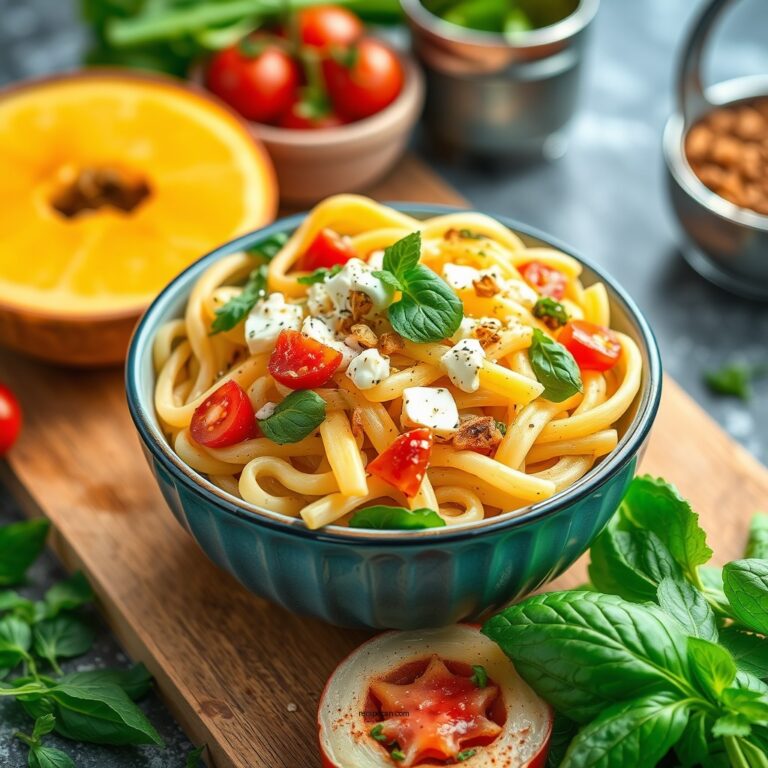
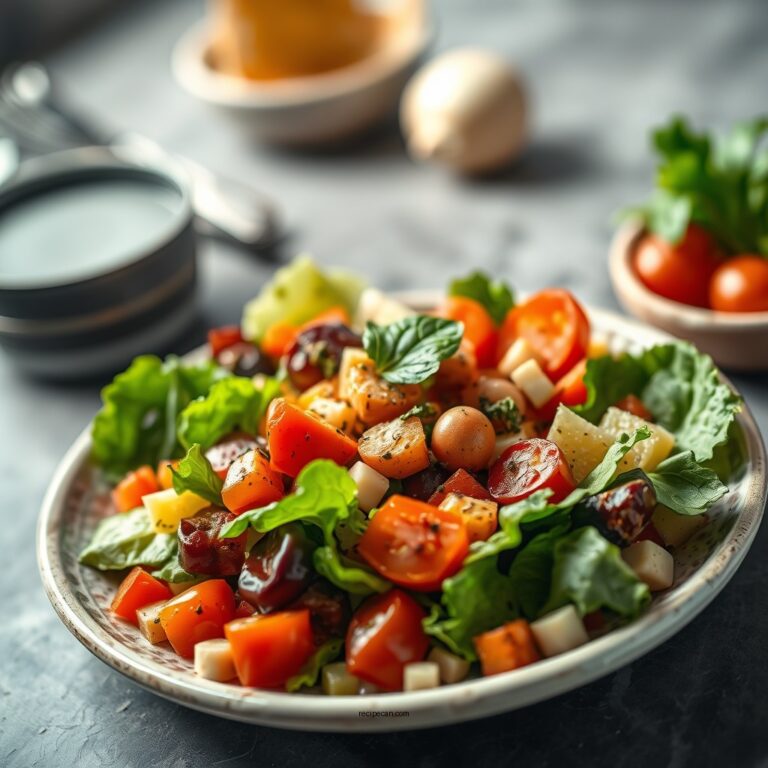
A ribbon salad brings bright crunch and color to your plate with thin shreds of red and green cabbage, carrot ribbons, snap peas, and halved cherry tomatoes. Rinse and pat the vegetables dry, slice onions and peppers into uniform slivers, and shred herbs for a vivid aroma. Toss gently with a light dressing—bright acidity, a touch of sweetness, and a whisper of oil—so textures stay crisp. If you keep exploring, you’ll uncover more twists and tips.
Ingredients and Quantity

For this Ribbon Salad, gather the following ingredients and quantities: one cup shredded red cabbage, one cup shredded green cabbage, half a cup thinly sliced carrots, half a cup snap peas, and one cup cherry tomatoes halved. You’ll feel the crisp texture as you rinse and prepare, sensing fresh vegetables waking the senses. The color returns with each rinse, a promise of a colorful presentation that invites you to taste freedom. Table below carries a hidden message through balance and contrast.
| Row 1 | Row 2 | Row 3 |
|---|---|---|
| Fresh starts | Crisp textures | Bright harmony |
| Color balance | Gentle bite | Open possibilities |
| Freedom grows | Everyday ritual | Joyful nourishment |
Preparations

Begin by rinsing each vegetable gently under cool water, letting the rinse wake their crispness and wake your senses with the subtle hush of droplets. In Preparations, you’ll pat dry delicate ribbons to preserve their snap, then arrange them with intention. Slice onions and peppers into uniform slivers to guarantee even mingling of flavors, and shred herbs finely for bright aromatics. Focus on balance: a light salt kiss, a splash of citrus, and a measured drizzle of dressing so the vegetables stay the stars. Consider salad variations by swapping greens or adding core ingredients you love, keeping textures lively. For ingredient substitutes, use ripe tomatoes in place of cucumbers or a sharp cheese crumble to deepen tang. Clarity, precision, freedom in every bite.
Kitchen tools or Kitchenware Required

A few essential tools will streamline the ribbon salad from prep to plate: a sharp chef’s knife, a sturdy cutting board, and a wide mixing bowl to cradle the ribbons as you dress them. You’ll feel the weight and balance in your hand, hear the quiet snick of a clean slice, savor the breath of citrus on the air. The right kitchen gadgets keep pace with your rhythm, turning prep into a tactile, sensory ritual. Essential utensils are your trusted partners, precise and reliable.
| Tool | Benefit |
|---|---|
| Chef’s knife | Precision cuts |
| Cutting board | Stable surface |
How to Cook

- Start by focusing on balance: incorporate bright acidity from lemon or citrus, mellow sweetness from vegetable ribbons, and a glistening touch of oil to unify the flavors.
- Use cooking techniques that preserve texture, allowing thin vegetable ribbons to remain crisp while flavors blend.
- Apply mild heat, if any, to gently awaken aromatics without wilting; for example, quickly sear herbs or lightly toast nuts for contrast.
- Dress the salad sparingly, adding just enough oil for shine without overwhelming the ingredients.
- Taste throughout the process, adjusting salt and citrus levels as needed.
- Embrace this method to create fresh, clear, and versatile salad variations.
- Enjoy each bite as a balance of precision and spontaneity, where simplicity encourages exploration.
How to Serve

Serve ribbon salad with a bright, plate-tempting finish: a glossy drizzle of citrusy oil, a final scattering of fresh herbs or toasted nuts, and a few delicate ribbons arranged to catch the eye. As you plate, think about balance: the oil gleams, the greens stay crisp, the ribbons hold their curl. Presentation ideas lean on contrast—white plate against emerald leaves, a sprinkle of pale seeds for texture, a pop of ruby citrus zest. Serving suggestions invite discovery: offer small bowls of lemon-herb vinaigrette on the side, let guests drizzle if they desire, and provide a fork-torked forkful for single, satisfying bites. Keep portions modest, and let color, aroma, and structure guide every bite you share.
Tips
Stir in a little lemon juice as you go, then taste and adjust—bright acidity wakes the ribbons without masking their color or texture. In tips, you’ll refine texture and balance with intention. Keep practice light: slice vegetables uniformly for clean bite and even dressing adhesion. Think about temperature—cool ribbons feel crisper against warm dressing. For salad variations, mix herbs, citrus zests, or a touch of fruit to shift mood without overpowering color. Dressings should enhance, not dominate; start with a whisper of oil, then fold in vinegar or yogurt for tang. Dressing suggestions favor brightness and restraint: a pinch of salt, a dash of pepper, and a final drizzle to awaken every strand. Your plate becomes a canvas for crisp, expressive freshness.
Food Value and Benefit
Ribbons of vegetables in this prepared dish offer a crisp, vibrant texture and a nutrient-rich experience that supports overall wellness. Each forkful provides a balanced combination of vitamins, minerals, and fiber, promoting sustained energy and digestive health. The dish’s colorful presentation and harmonious flavors enhance the eating experience, making it both satisfying and nourishing.
Ribbons of vegetables deliver crisp color, balanced nutrients, and sustained, satisfying energy.
Benefits of eating this recipe:
- Supports steady focus and cognitive function
- Promotes healthy digestion and gut balance
- Provides essential vitamins and minerals for overall health
- Enhances energy levels without causing fatigue
- Contains antioxidants that help protect the body from oxidative stress
Key vitamins and minerals in this recipe:
- Vitamin A (from leafy greens)
- Vitamin C (from various vegetables)
- Folate (important for cell function and tissue growth)
- Potassium (supports heart health and muscle function)
- Dietary fiber (aids in digestion and maintaining a healthy gut)
Frequently Asked Questions
Can I Substitute Ribbons With Other Pasta Shapes?
Yes, you can substitute ribbons with other pasta shapes. You’ll notice texture differences, so consider cooking times and sauce absorption when choosing pasta alternatives, keeping the texture differences balanced for a satisfying, freedom-filled bite.
How Long Does the Salad Stay Fresh in the Fridge?
Salad stays fresh about 3–4 days in the fridge. For best texture, store ingredients separately and combine when serving. Follow salad storage and freshness tips: keep it cool, airtight, and cover loosely to preserve brightness and crunch.
Can This Be Made Dairy-Free or Vegan?
Yes, you can make it dairy-free or vegan. You’ll swap dairy with dairy alternatives and choose vegan options for dressings, textures, and crunch, crafting a bright, freedom-loving bite that stays creamy, vibrant, and satisfying without compromising flavor.
Are There Any Quick Shortcuts for Slicing Ribbons?
Yes—you can speed it up with a flexible approach. Use a vegetable peeler for quick ribbons, or try spiralizer options for uniform curves, ensuring crisp, delicate slices without fuss, letting you move freely and confidently.
What’s the Best Dressing Ratio for Balance?
A balanced dressing ratio is roughly 3 parts oil to 1 part acid, you’ll taste the dressing flavors as you go. Explore vinaigrette types, then fine-tune until your ribbons sing with bright, creamy, and freeing acidity.
References
- https://en.wikipedia.org/wiki/Salad
- https://www.foodsafety.gov/food-safety-charts/cold-food-storage-charts
- https://www.fda.gov/food/food-labeling-nutrition
- https://www.nutrition.gov/topics/whats-food
- https://www.cdc.gov/healthyweight/healthy_eating/index.html
- https://www.choosemyplate.gov/
- https://www.eatright.org/
- https://www.ars.usda.gov/
- https://www.nutrition.org.uk/healthyliving/healthyeating.html