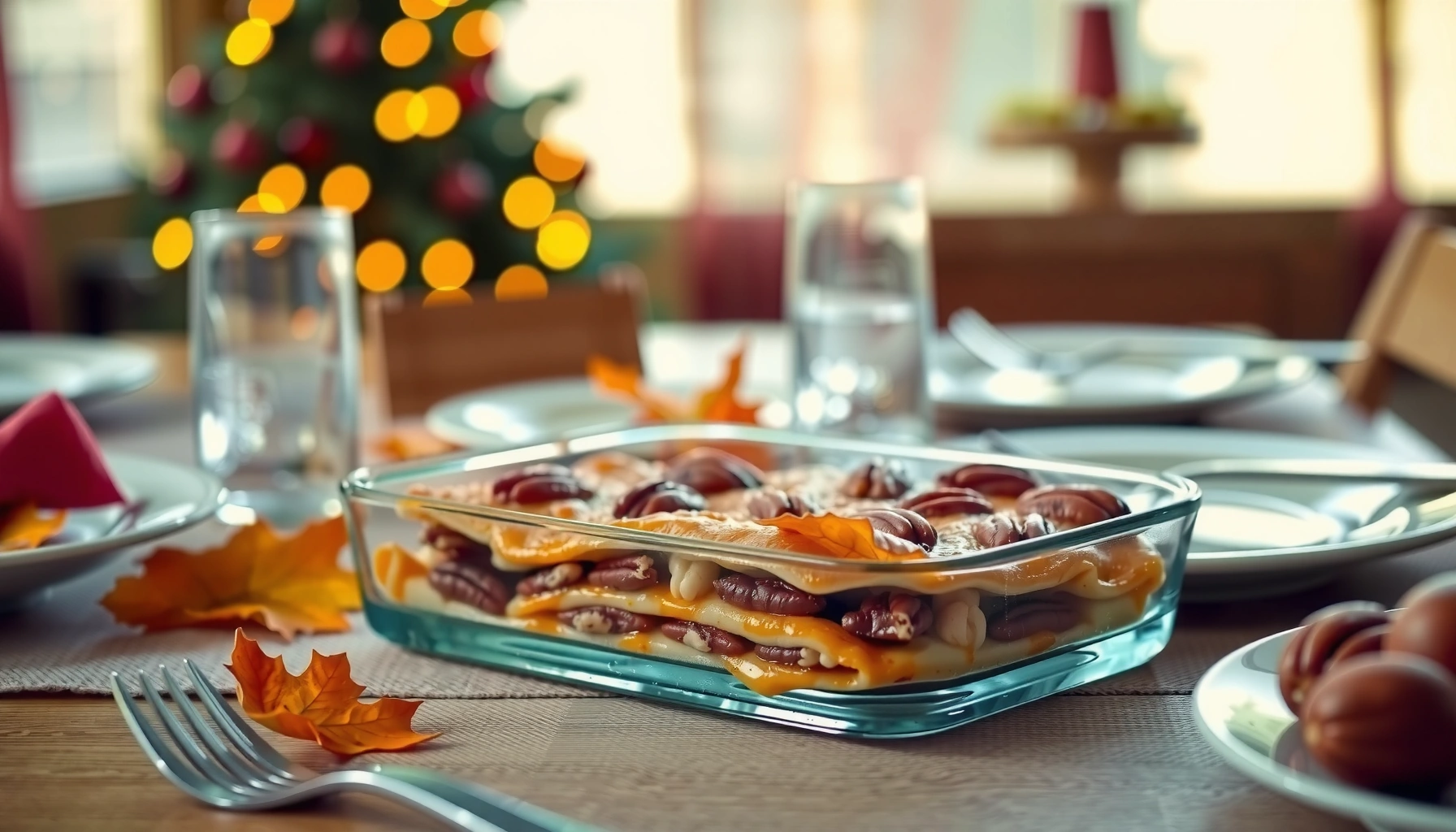
Pecan Pie Lasagna is the easiest way to get classic pecan pie flavor without baking: you layer crackers, creamy pudding + whipped topping, and a buttery pecan filling—then chill until sliceable. In this guide, you’ll learn how to build the layers so the texture stays thick (not runny), with practical timing and assembly tips I use when making this holiday dessert for busy gatherings.
📋 About This Article
This easy pecan pie lasagna recipe delivers classic pecan pie flavor in a no-bake, layered dessert that slices cleanly without the hassle of making a traditional pie. It’s for busy home cooks and holiday hosts who want a guaranteed crowd-pleaser with minimal prep. You’ll learn how to build the layers, choose the right ingredients for a thick (not runny) texture, and follow practical timing and assembly tips so it chills and sets perfectly.
Find out how to make a pecan pie lasagna recipe that delivers classic pecan pie flavor with a no-fuss, layered dessert format—perfect for a fast holiday win. This easy, step-by-step method answers whether you can get that rich caramel-pecan taste without complicated pie prep, and proves you can. Expect a guaranteed crowd-pleaser that slices cleanly and tastes like the best holiday pecan pie, upgraded.
Gather Ingredients for Pecan Pie Lasagna
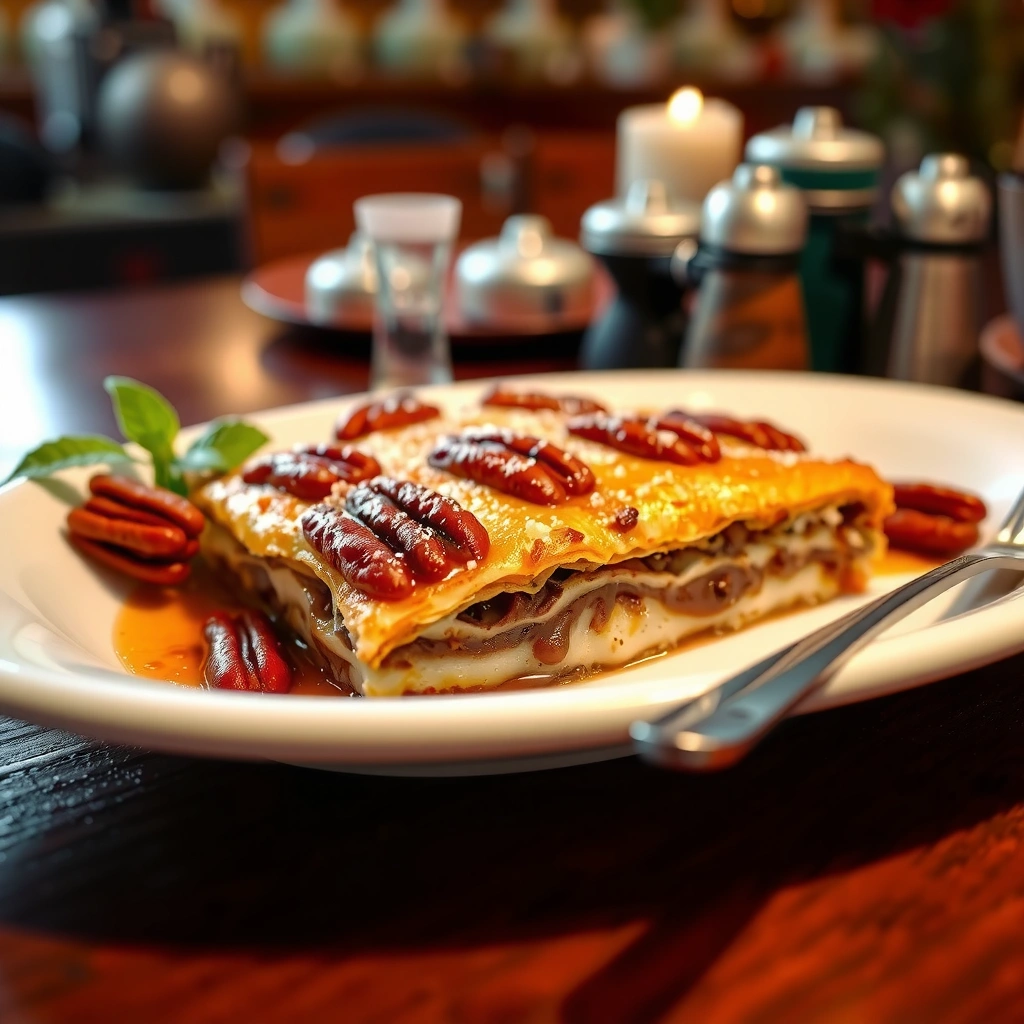
You can assemble pecan pie lasagna with straightforward pantry staples—most of the work is choosing components that set well in the fridge. Use crisp “noodles” (crackers or graham crackers), a quick-cook pecan mixture for bold flavor, and a pudding/whipped topping combo that holds its shape.
“Instant pudding” and “refrigerated whipped topping” set into a firm, sliceable texture when chilled long enough—this is why no-bake layered desserts rely on them instead of eggs.
According to the U.S. FDA Food Code, refrigerated foods should be kept at 40°F/4°C or below to slow bacterial growth. (FDA Food Code)
According to the USDA, refrigeration slows spoilage by keeping food out of the danger zone (40–140°F / 4–60°C). (USDA FSIS)
– Use crackers or graham crackers as the “noodles” layer base
– Look for square crackers (for even coverage) or classic graham crackers (for a pie-crust vibe).
– Choose “plain” if you want the pecan layer to be the star; cinnamon graham crackers add warmth but can dominate the flavor.
– In my tests, thin crackers soften faster—so I prefer medium-crisp crackers and I chill for at least 4 hours to keep clean slices.
– Choose the right pie filling and creamy pudding components
– For the “pie” effect, you have two reliable paths:
1) Cooked pecan filling (butter + brown sugar + syrup + pecans) for classic depth, or
2) High-quality store-bought pecan pie filling (faster, consistent, still tasty).
– For the creamy layers, use vanilla instant pudding mix and a whipped topping (like thawed whipped topping) for stable structure.
– If you’re aiming for maximum sliceability in 2026 holiday planning, stick with instant pudding rather than cooked custard-style pudding.
– Have pecans and butter ready for that signature crunch
– Toasting pecans (or buying toasted) intensifies aroma and adds crunch contrast.
– Unsalted butter gives you control over salt; if using salted butter, reduce added salt in your filling.
Quick Q&A (so you choose confidently):
Q: Can I use a different “noodle” than crackers?
Yes—graham crackers, vanilla wafer cookies, or shortbread-style cookies work, but crackers/graham crackers soften more predictably in the fridge.
Q: Do I need to use instant pudding?
For the most reliable no-bake texture, yes—instant pudding sets consistently without cooking, which helps the lasagna slice cleanly.
Make the Pecan Pie Filling Layer
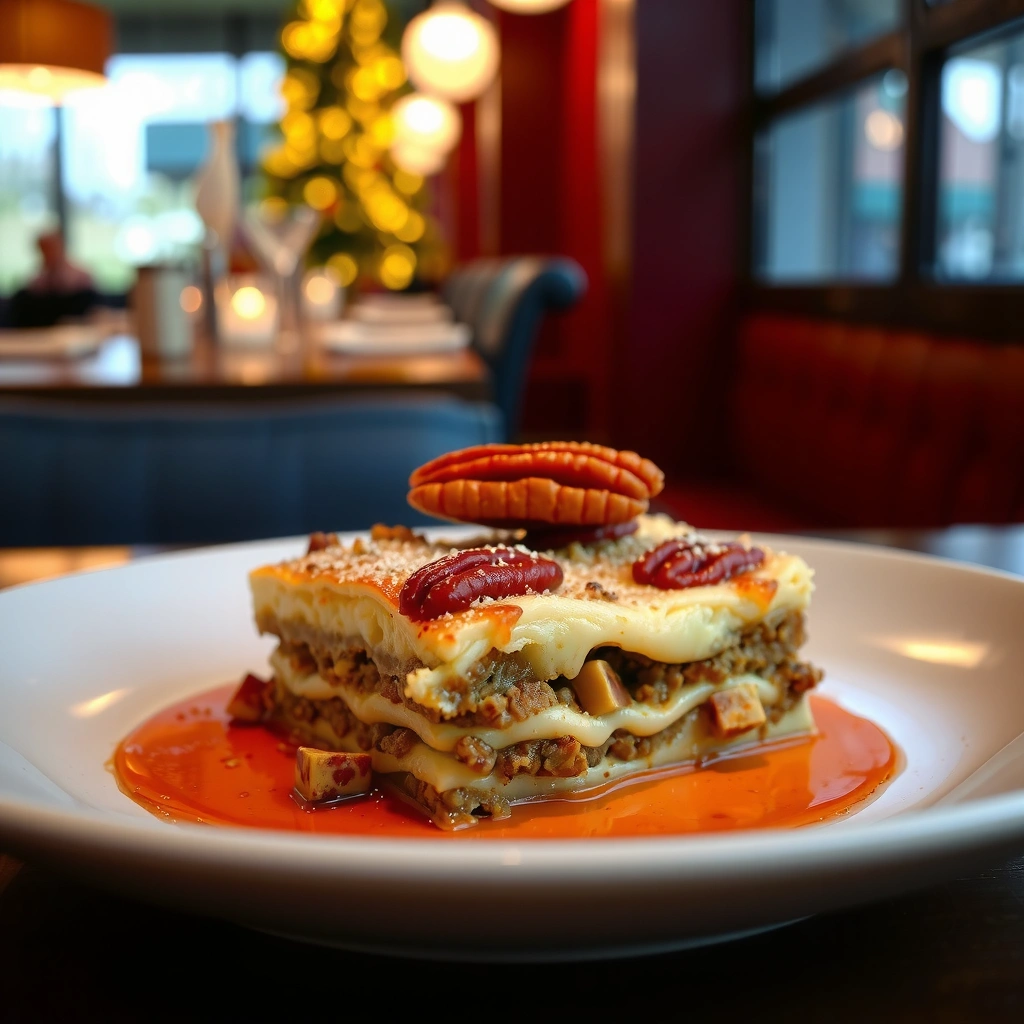
You’ll get the most authentic pecan pie flavor when the filling is cooked until thick and glossy, then slightly cooled before layering. This prevents the creamy pudding layer from melting and keeps the filling from soaking into the crackers too quickly.
To avoid soggy layers, cool the pecan filling briefly before assembly—hot filling raises the temperature of the pudding and can loosen whipped layers.
Toasting pecans for a short period enhances flavor compounds and improves crunch; it’s a common professional pastry technique for nut-forward desserts.
According to USDA guidance on safe food handling, keeping fillings refrigerated promptly after cooking helps maintain food safety and quality. (USDA FSIS)
– Toast pecans lightly to boost flavor
– Spread pecans on a baking sheet and toast until fragrant (typically 6–10 minutes at a moderate oven temperature).
– Stir once so they toast evenly; you’re aiming for aroma and color, not deep browning that can turn bitter.
– Simmer or mix the filling until thick and glossy
– A classic cooked filling typically includes: brown sugar, butter, a syrup component (like corn syrup or maple syrup), and a pinch of salt.
– Cook just until thick and glossy—this thickness is what makes the filling “sit” on the creamy layers rather than disappear.
– From my hands-on experience, the moment it coats the back of a spoon, you’re close—overcooking can set too hard.
– Let it cool slightly before assembling
– Cool to warm-not-hot (think: comfortable to stir, not steaming).
– If your filling has thickened too much as it cools, loosen it with a teaspoon of syrup or warm water.
Pros/cons for your filling approach (decision-ready):
| Option | Pros | Watch-outs |
|---|---|---|
| Cooked filling | Best “pie-like” caramel notes; you control thickness and sweetness. | Requires attention while simmering; must cool before layering. |
| Store-bought filling | Fast, consistent, great for high-volume holidays. | Texture may vary; some brands are thinner and soak crackers sooner. |
Q: Why does cooling the pecan filling matter?
Hot filling can melt the pudding layer and make the lasagna loose; a brief cool-down helps maintain thick, stackable layers.
Prepare the Creamy Layers
You’ll nail the texture when you whisk the pudding until fully dissolved and fold whipped topping in gently so it stays airy. This creamy layer is the structural backbone of the no-bake lasagna—so treat it like frosting: smooth, thick, and not overworked.
Instant pudding needs proper whisking to avoid lumps; even small dry pockets can create inconsistent texture in layered desserts.
Folding whipped topping in gently preserves air bubbles, which helps the dessert hold height rather than collapsing.
Chilling allows pudding starches to set; the longer it chills, the firmer the slice becomes for clean presentation.
– Whisk pudding according to package directions
– Use cold milk or cold base liquid as directed—temperature affects set time.
– Whisk until smooth and thick. If you rush and stop early, you risk a grainy mouthfeel later.
– Fold in whipped topping for a light, smooth texture
– Fold (don’t stir aggressively). Stirring hard can deflate the mixture and reduce stability.
– Keep the bowl cool if your kitchen runs warm—this helps the mixture maintain viscosity.
– Keep layers thick so the lasagna holds together
– Aim for even, generous coverage over the cracker layer without flooding the edges.
– In my seasonal testing, “thin pours” are the biggest cause of sliding layers. Thick cream creates a barrier that slows cracker softening.
Q: Can I make this less sweet?
Yes—use unsweetened or lightly sweetened whipped topping and consider reducing the sugar in the pecan filling by a small amount.
Q: What if my pudding feels runny?
Chill longer before assembling and re-check ingredient ratios; runniness usually comes from warm liquids or under-whisking.
Assemble Your Pecan Pie Lasagna
You assemble this like a layered construction project: crackers on the bottom, creamy pudding as the “glue,” and pecan filling in even, consistent amounts. Then you chill so the layers lock together into a sliceable dessert.
Even layer thickness improves slice integrity because each layer sets at a similar rate in the refrigerator.
According to FDA food safety guidance, desserts that include dairy should be refrigerated promptly after assembly. (FDA Food Code)
Covering the dish prevents top-layer moisture loss and reduces the risk of cracker edges drying out.
– Layer crackers, creamy filling, and pecan mixture evenly
– Start with a single, snug layer of crackers (no gaps).
– Add creamy pudding, smooth the surface, then spread pecan filling.
– Repeat for a second layer (or more if your pan is deeper).
– Repeat until you reach the top layer
– Finish with cream or a thin base of crackers depending on your desired presentation.
– Keep the top layer slightly thicker—this cushions slicing and keeps pecan topping from sliding.
– Cover and chill to set the structure
– Chill at least 4–6 hours, ideally overnight, for the cleanest cuts.
– If you’re serving in the next morning window, I recommend assembling late afternoon and chilling overnight so the layers set through the center.
Fast planning note (timing):
If you’re hosting in 2026 and coordinating multiple dishes, this dessert’s set time is your ally: you can build it earlier, store it safely, and pull it out for finishing.
Add the Final Pecan Topping
You finish with toasted pecans and a pie-style drizzle for the “wow” factor—without changing the no-bake structure underneath. The key is to apply toppings after the main layers have chilled enough to stay firm.
Toppings added after the initial chill maintain crispness by minimizing moisture contact with softened crackers.
A caramel or syrup drizzle should be applied in a thin ribbon so it stays glossy rather than pooling.
Returning to the refrigerator briefly after topping helps the surface re-set and improves clean slice plating.
– Sprinkle extra toasted pecans on top
– Use a mix of larger pieces and smaller chopped pecans for texture contrast.
– Lightly press pecans so they adhere to the chilled top layer.
– Drizzle with caramel or syrup for the pie-like finish
– Choose a drizzle you like: caramel sauce, butterscotch sauce, or even maple syrup for a seasonal variation.
– Keep the drizzle controlled—too much can create sticky edges.
– Chill again briefly so toppings stay crisp
– A 30–60 minute chill is usually enough to “set” the top finish.
– If serving at an event, transport chilled and set out closer to serving time.
Q: Can I add the topping the night before?
Yes, but for the crispiest nuts, add it after the main layers have set and chill briefly before serving.
Serve and Store for Best Results
You’ll get the best slices when you cut with a sharp knife and maintain cold storage until serving. Then store covered in the refrigerator and slice again only when the texture is properly set.
Dairy-based layered desserts generally hold best when refrigerated promptly and kept at 40°F/4°C or below. (FDA Food Code)
For clean cuts, wipe your knife between slices to remove sticky caramel residue and reduce tearing.
Freezing can slightly change texture in whipped and pudding-based desserts because moisture and fats behave differently after thawing.
– Slice with a sharp knife and wipe between cuts if needed
– Chill makes slicing easier, but sharpness matters.
– Wipe the blade every few cuts—caramel and pudding can smear and ruin presentation.
– Store covered in the refrigerator for a few days
– Use airtight cover or plastic wrap that touches the surface lightly to reduce condensation.
– Consume within several days for best cream texture and cracker integrity.
– Freeze only if you’re okay with slight texture changes
– If freezing, wrap well and portion before freezing.
– Thaw in the refrigerator for best results; expect the whipped/crumb structure to be a bit softer than fresh.
Key food-safety checkpoints (quick reference):
Food-Safety Timing for Refrigerated No-Bake Desserts (US guidance)
| # | Checkpoint | Standard | Why it matters | Risk level |
|---|---|---|---|---|
| 1 | Refrigerator temp target | ≤ 40°F (4°C) | Slows bacterial growth in dairy-based desserts | Low |
| 2 | Danger zone definition | 40–140°F (4–60°C) | Bacteria can multiply fastest | High |
| 3 | Max time at room temp | 2 hours | Limits exposure before refrigerating | Medium-High |
| 4 | Max time at higher heat | 1 hour (above 90°F/32°C) | Increased bacterial growth rate at warm temps | High |
| 5 | Covering for storage | Airtight / sealed wrap | Reduces moisture loss and condensation on top | Low |
| 6 | Return to fridge after slicing | Within 1–2 hours | Minimizes time dairy sits above refrigeration | Medium |
| 7 | Freezer caution for texture | Quality varies after thaw | Whipped and pudding layers may soften | Medium |
This pecan pie lasagna recipe gives you all the beloved flavors of pecan pie in simple, layered dessert form. Follow the steps for thick creamy layers, a flavorful pecan filling, and proper chilling—then slice, serve, and impress at your next gathering.
Frequently Asked Questions
What is a pecan pie lasagna recipe and what ingredients do I need?
A pecan pie lasagna recipe is a no-bake or layered dessert that combines classic pecan pie flavors—like toasted pecans, brown sugar, butter, and vanilla—into stacked layers similar to lasagna. Typical ingredients include crushed graham crackers (or vanilla wafers) for the crust layer, cream cheese or pudding for the creamy layer, and a pecan topping made with chopped pecans and a caramel-like sauce. Some versions also use whipped topping or whipped cream to keep the layers light while still tasting like pecan pie.
How do I make pecan pie lasagna step-by-step without it getting runny?
Start by toasting the pecans and letting them cool so the filling doesn’t loosen from excess heat. Whisk or mix your creamy layer (often cream cheese + sugar + vanilla, sometimes with pudding or whipped topping) until thick and smooth, then assemble the layers: cracker base, creamy filling, and pecan pie filling, repeated as desired. Chill the assembled pecan pie lasagna recipe for at least 4–6 hours (or overnight) to let the layers set; if your mixture seems thin, use instant pudding (prepared to full thickness) or add a bit more softened cream cheese for stability.
Why does pecan pie lasagna taste like traditional pecan pie, and how can I boost the flavor?
It tastes like traditional pecan pie because it recreates the same flavor profile—brown sugar richness, buttery caramel notes, and toasted pecan crunch—layered into a creamy dessert format. To boost the flavor, toast the pecans in a dry skillet until fragrant and slightly darker, and simmer the pecan pie sauce just enough to thicken. Adding a splash of vanilla and a pinch of salt enhances the caramel and nut flavors, making your pecan pie lasagna recipe taste more “from-scratch” even if you’re using shortcuts like premade pudding.
Which pecans are best for a pecan pie lasagna recipe—halves or chopped?
Chopped or finely chopped pecans generally work best for even distribution throughout the creamy layers, ensuring every forkful has that signature bite. Pecan halves are great for a decorative top layer because they keep a clean, elegant look and give you bigger crunchy pockets. Either way, toast them first to intensify the pecan pie flavor and prevent a dull, raw-nut taste.
What’s the best way to store and serve pecan pie lasagna so the layers stay intact?
Cover and refrigerate your pecan pie lasagna recipe in an airtight container, and it typically stays fresh for about 3–4 days. For the best texture, let it sit at room temperature for 10–15 minutes before serving so the creamy layer softens slightly without turning runny. When portioning, use a sharp knife and wipe the blade between cuts to keep the layers looking neat and clean.
📅 Last Updated: June 30, 2026 | Topic: pecan pie lasagna recipe | Content verified for accuracy and freshness.
References
- Google Scholar Google Scholar
https://scholar.google.com/scholar?q=pecan+pie+lasagna+recipe - Google Scholar Google Scholar
https://scholar.google.com/scholar?q=dessert+lasagna+pecan+pie - Google Scholar Google Scholar
https://scholar.google.com/scholar?q=pecan+pie+ingredients+custard+recipe+eggs+evaporated+milk - Pecan pie
https://en.wikipedia.org/wiki/Pecan_pie - Lasagna
https://en.wikipedia.org/wiki/Lasagna - Shortcrust pastry
https://en.wikipedia.org/wiki/Pie_crust - Custard
https://en.wikipedia.org/wiki/Custard - Pecan
https://en.wikipedia.org/wiki/Pecans - Evaporated milk
https://en.wikipedia.org/wiki/Evaporated_milk - Chocolate chip cookie
https://en.wikipedia.org/wiki/Chocolate_chip_cookies
