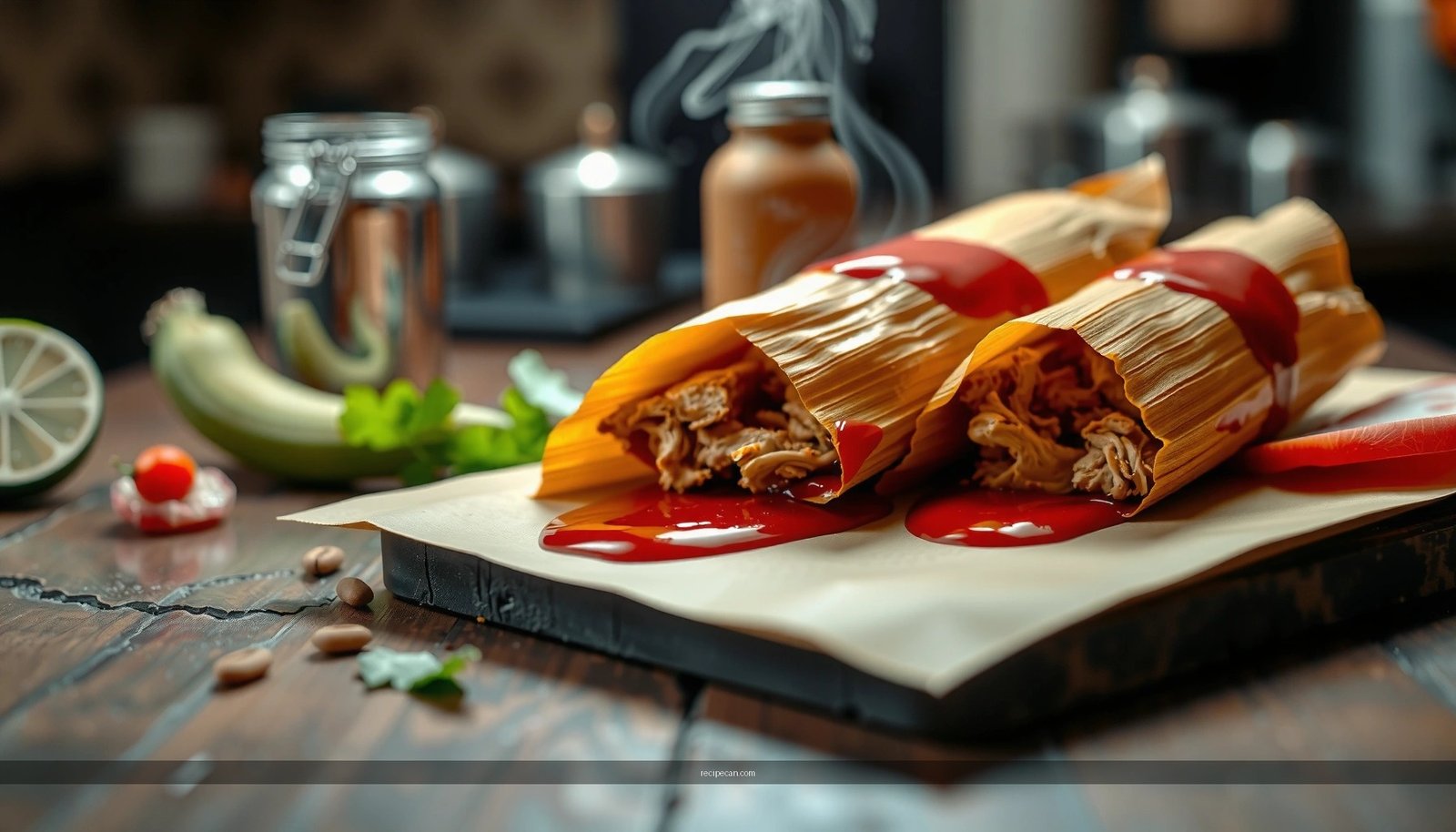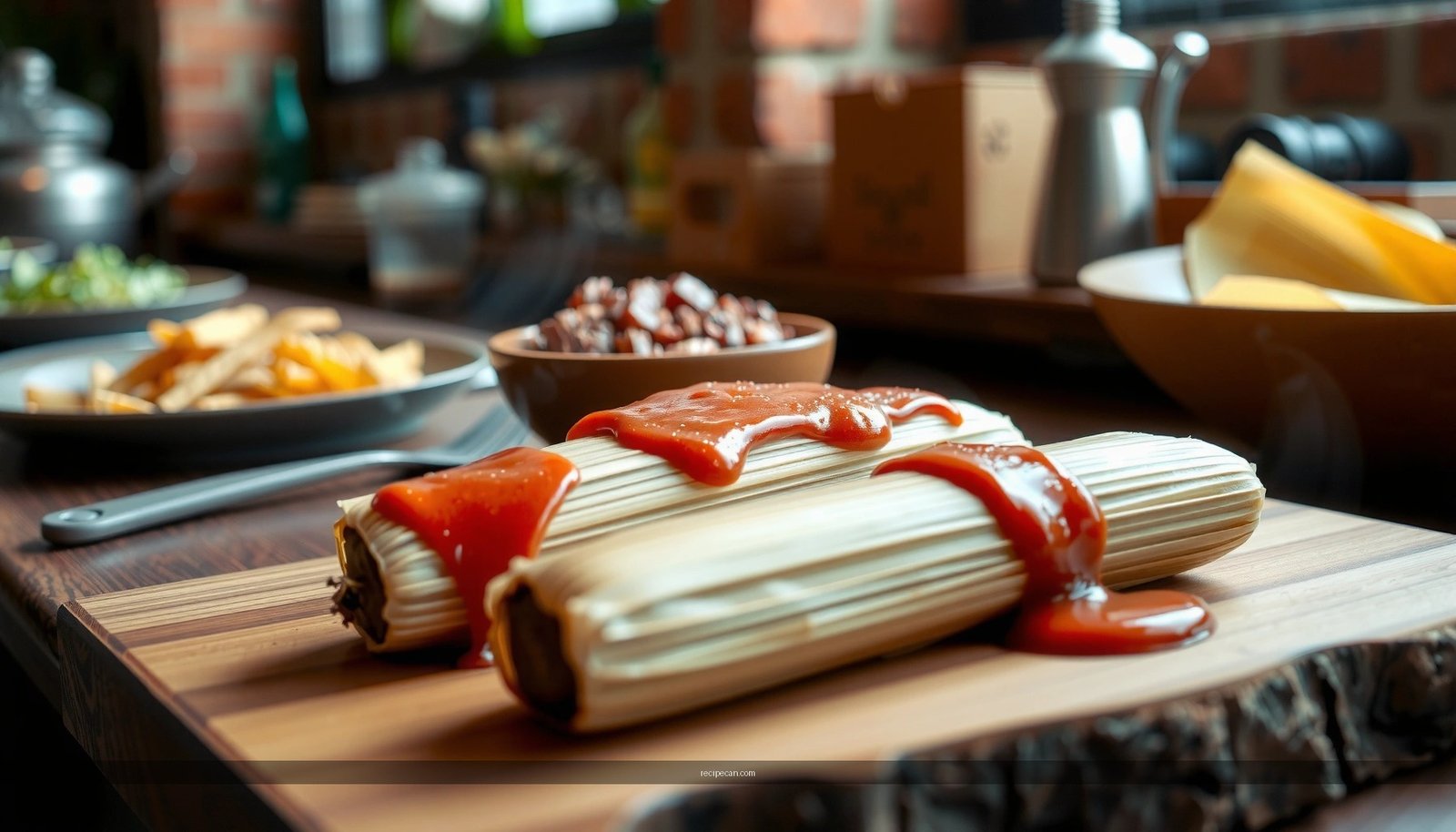
Looking for a Mexico tamales recipe that reliably turns out classic tamales at home? This guide gives you the clear, step-by-step method—masa prep, filling choice, and how to steam them—so you get tamales with tender masa and flavorful, well-seasoned centers. If you follow the timing and wrapping details exactly, your first batch will come out the same way street stalls aim for.
You can make classic Mexican tamales at home by steaming tender masa (corn dough) in soaked corn husks with a flavorful filling inside. This step-by-step recipe walks you through preparing the husks, mixing masa harina into a silky spreadable masa, assembling neatly, and steaming until the masa pulls cleanly—so your tamales come out tender, not gummy.
In Mexico, tamales aren’t just “food”—they’re a method: slow cooking, careful portioning, and a dough that’s built for steaming. The quality of your masa and the consistency of your steam are what ultimately determine texture. If you focus on those two elements, you’ll get results that feel distinctly traditional, even if you’re cooking for the first time.
Steaming Time Guide for Traditional Tamales (Domestic Equipment)
| # | Tamale Size | Typical Weight (each) | Best Steam Window | Texture Rating | Moisture Retention |
|---|---|---|---|---|---|
| 1 | Small (party/mini) | 40–55 g | 60–75 min | ★★★☆ | High |
| 2 | Medium (standard) | 70–90 g | 75–95 min | ★★★★ | Very High |
| 3 | Large (thick/extra masa) | 100–125 g | 95–115 min | ★★★★☆ | High |
| 4 | Frozen before steaming | Varies | 115–140 min | ★★★☆ | Medium-High |
| 5 | Rojo/verde with thicker sauce | 85–110 g | 90–110 min | ★★★★ | Very High |
| 6 | Ladle-thin masa (common beginner issue) | 70–90 g | 70–85 min | ★★★ | Lower |
| 7 | Conventional pot, crowded stack | Varies | 85–120 min | ★★★☆ | Lower |
Choose Your Tamale Filling
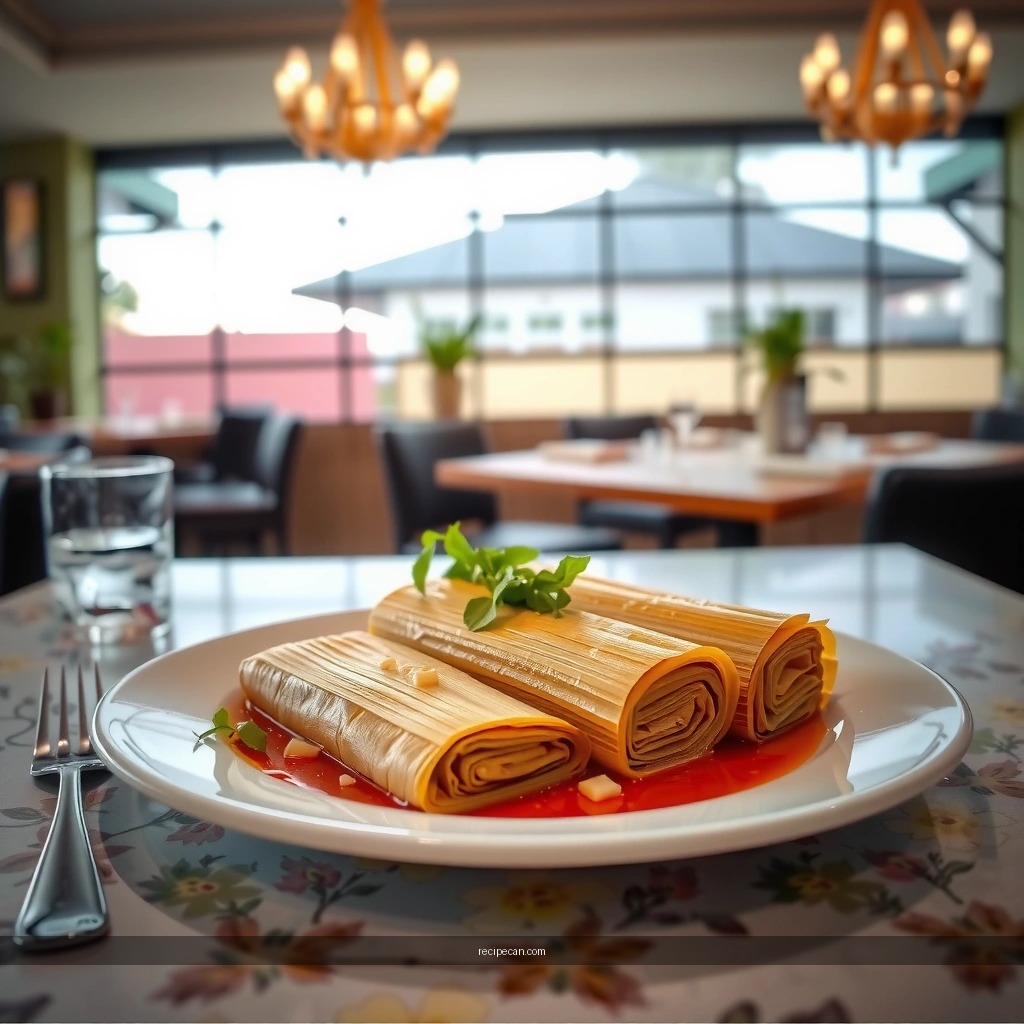
– Pick a classic option such as pork in red salsa (rojo) or chicken in green salsa (verde)
– Aim for a filling that’s flavorful and not too watery
The filling is where tamales earn their “signature” taste, but it also drives texture. Because tamales are steamed, excess liquid doesn’t evaporate quickly—it seeps into the masa and can make it dense or gummy. For best results, choose fillings that are cooked down until saucy, thick, and cohesive.
Classic rojo and verde, made tamale-friendly
– Pork in red salsa (rojo): Pork shoulder is ideal because it stays tender after steaming. Simmer your red salsa until it clings to the meat, then shred and season. If your salsa looks like it would pour off a spoon, reduce it a bit longer.
– Chicken in green salsa (verde): Use bone-in or skin-on chicken for richer flavor, then shred. Green salsa should be simmered until its raw tomatillo/onion notes mellow and the mixture becomes thick enough to spoon.
Analytical tip: treat filling viscosity as a “masa insurance policy.”
If you’re working with a salsa that’s naturally thinner, solve it before assembling:
1. Simmer the salsa separately for 10–15 minutes.
2. Cook the meat in the reduced salsa.
3. Finish with a small amount of fat (like lard or a neutral oil) to help the filling stay lubricated but not watery.
Flavor balancing that still reads “traditional”
– For both pork and chicken: rely on toasted chile, garlic, and aromatics in the salsa rather than adding heavy thickeners that could dull the taste.
– Season meat to taste, then taste again—after the meat cools, seasoning can feel slightly muted.
Practical filling targets (so your masa cooks properly)
– You want a spoonable filling that leaves a visible trail and doesn’t pool.
– Plan for 2–3 tablespoons filling per standard tamale, depending on size and how thick you spread the masa.
Prepare Corn Husks and Steam Setup
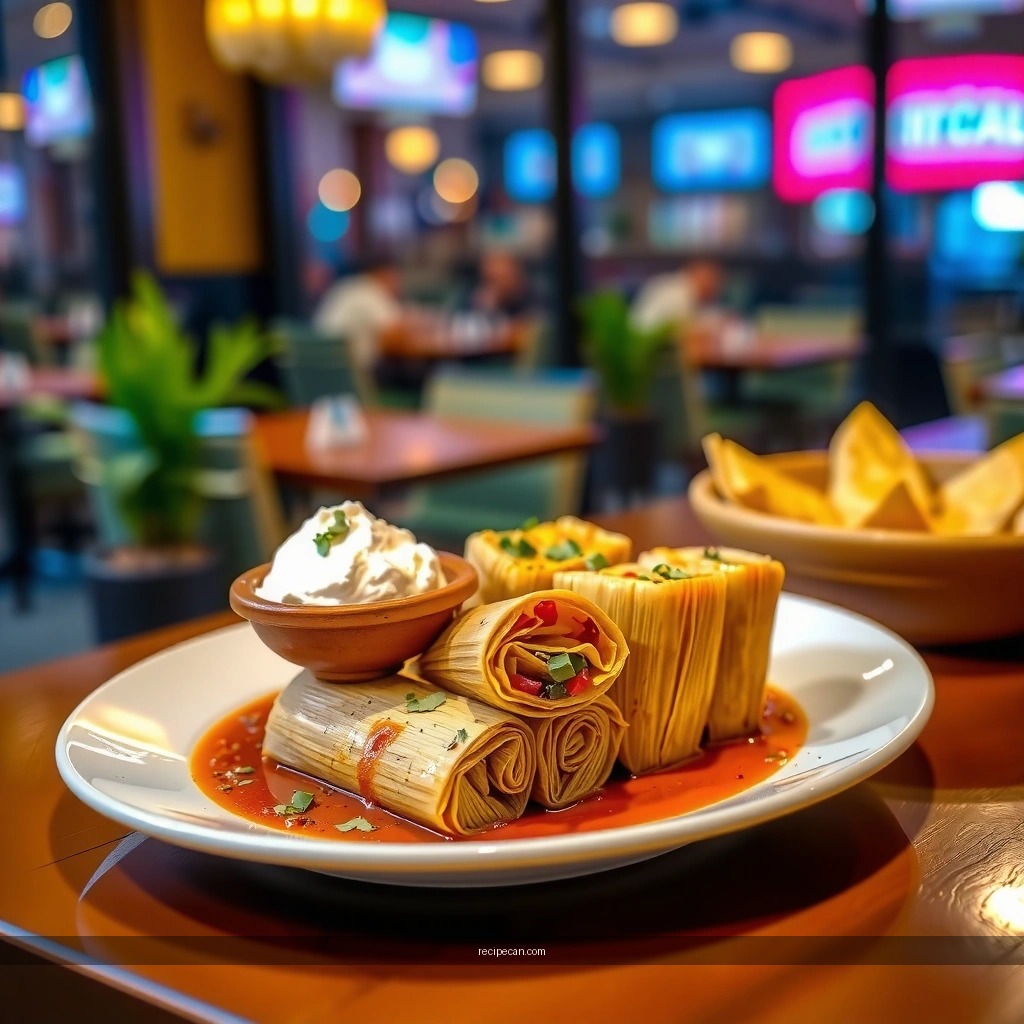
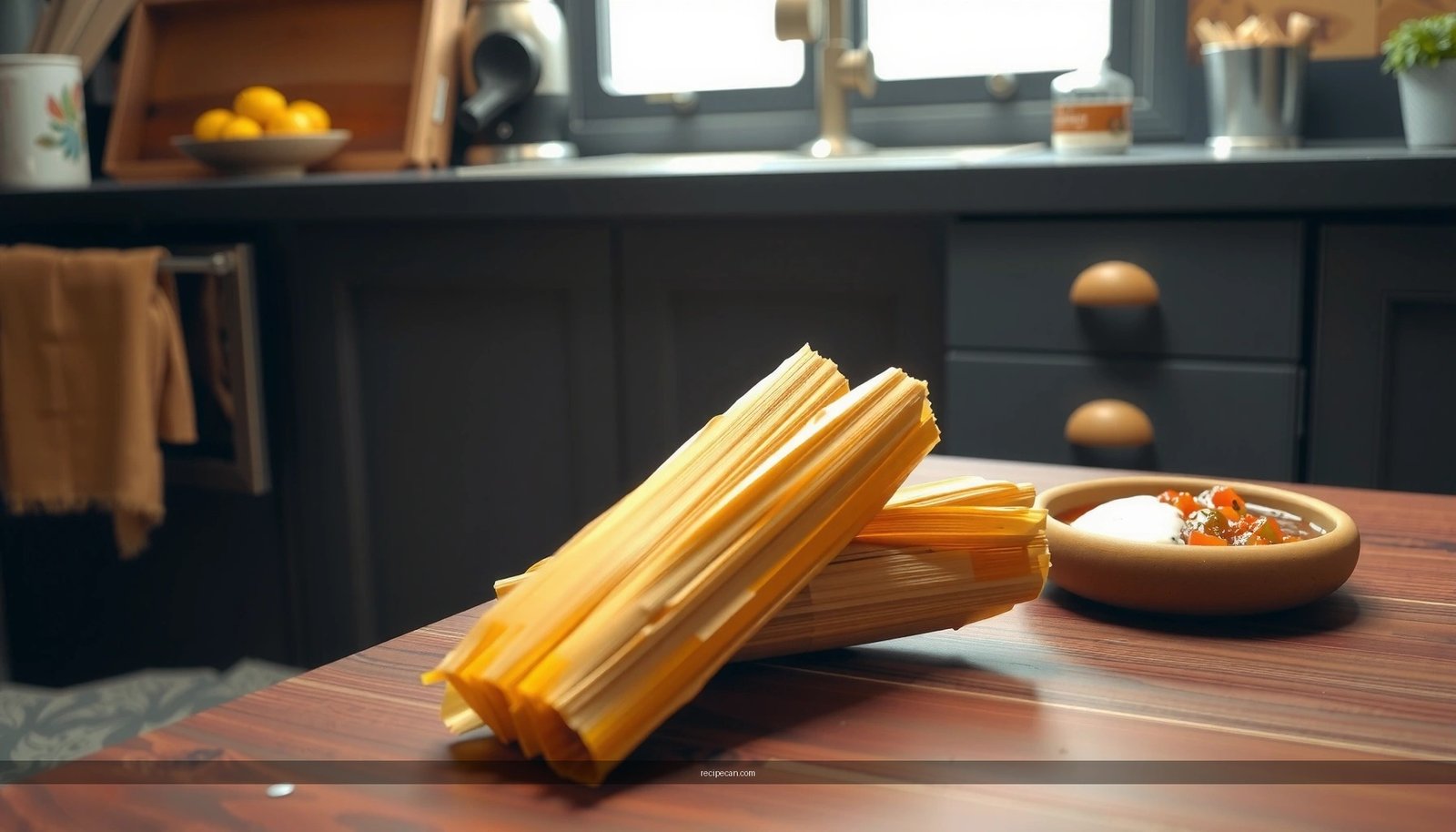
– Soak corn husks until pliable so they fold without tearing
– Set up a steamer with water just below the steaming rack
Corn husks are your protective wrapper and your cooking interface. If they’re under-soaked, they tear during folding; if they’re over-soaked and left too long, they can turn fragile and harder to manage. The goal is pliable, flexible husks that roll without cracking.
Soak correctly
1. Remove any hard strings and sort husks by size (large husks are best for thicker tamales).
2. Soak in warm water for 30–60 minutes, or until flexible.
3. When ready, drain and keep them wrapped in a damp towel so they don’t dry out while you assemble.
Steam setup matters more than people think
A reliable tamale steam depends on steady heat and consistent moisture. Too much direct boiling water can cause uneven cooking and wet spots; too little steam leads to undercooked masa.
– Use a steamer insert or rack so the husks never touch the water.
– Maintain water level so it stays just below the rack throughout cooking.
– Keep the pot at a steady simmer—aim for active steam, not violent rolling boil.
Stocking your “steam workflow”
– Keep a kettle or pitcher of hot water ready. Add small amounts during the cook to avoid temperature dips.
– If your tamales crowd the pot, steam penetration slows. Arrange tamales upright and leave space for steam to circulate.
Quality checkpoint before assembly
If husks feel stiff or crack when bent, soak longer. If they feel overly soft and slimy, drain well and dry them slightly with paper towels before folding.
Make the Masa for Mexican Tamales
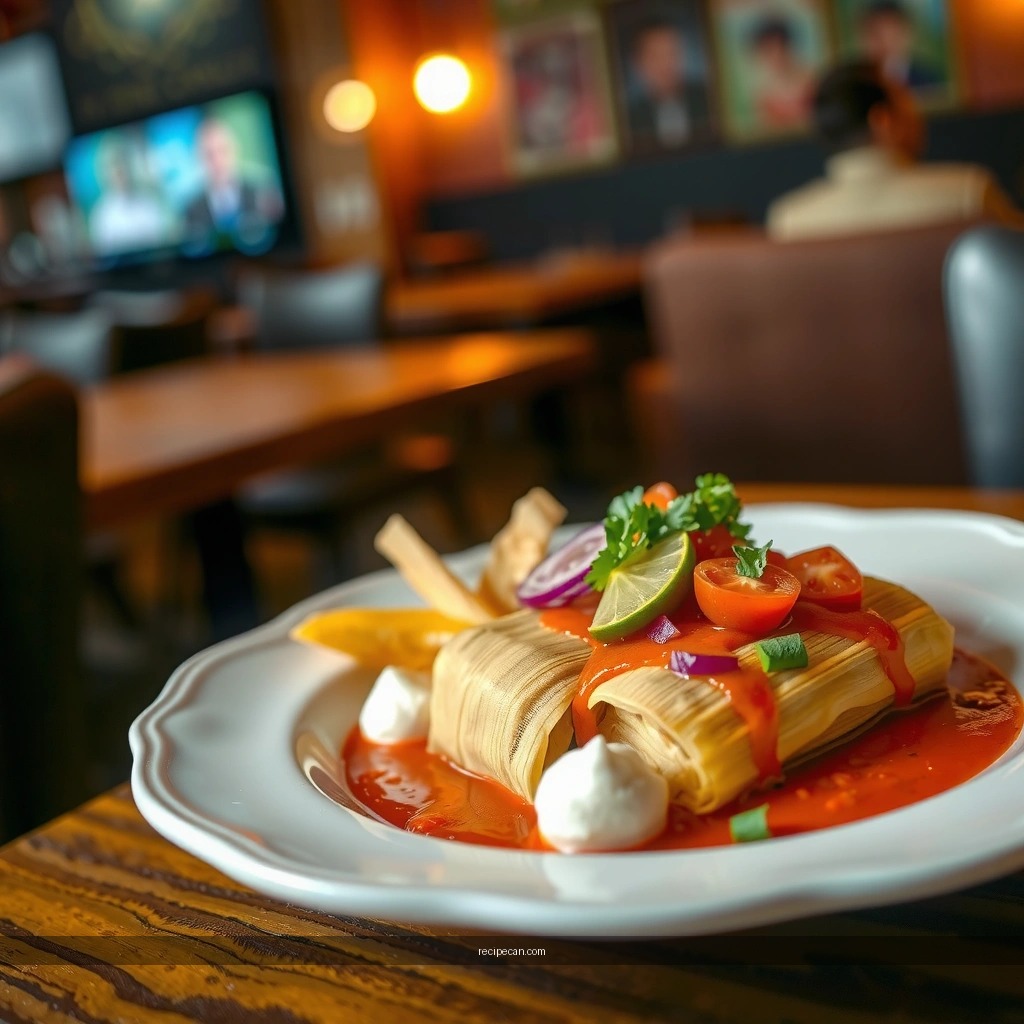
– Mix masa harina with broth, salt, and fat until smooth
– Beat to achieve a light, spreadable consistency
Masa is the heart of classic tamales. Even if your fillings are perfect, the wrong dough texture can ruin the result—most commonly by producing dense, chewy tamales or masa that doesn’t set properly.
What to use
– Masa harina: Choose masa harina designed for tamales (it performs differently than all-purpose corn flour).
– Fat: Lard is traditional for flavor and texture, but solid vegetable shortening or a high-quality neutral fat can also work.
Mix for smoothness and structure
A typical approach:
1. Combine masa harina with salt.
2. Add warm broth gradually until the dough forms.
3. Incorporate fat (melted but not hot) and mix until homogeneous.
The “beat” step is non-negotiable
Beating masa does two things:
– Incorporates small air pockets that improve tenderness.
– Improves spreadability so the masa cooks evenly inside the husk.
– Mix with a hand mixer or stand mixer until the masa looks lighter and spreads easily with a spoon or spatula.
– If it’s too thick, add more warm broth a tablespoon at a time.
– If it’s too loose, add a small amount of masa harina and mix again.
Real-world dough test
When done, the masa should be spreadable—like thick frosting. It shouldn’t be runny, and it shouldn’t hold peaks that tear.
If you’re using a traditional “float test,” do it carefully:
– A small portion should rise slightly and not immediately sink completely when the masa is sufficiently aerated.
– Don’t rely on float alone—steam time and thickness also affect set.
Common masa mistakes (and fixes)
– Gritty texture: indicates under-mixing—mix longer or ensure broth is warm so masa hydrates evenly.
– Dense tamales: often caused by insufficient beating or too-cold broth/fat.
– Masa separating from husk too early (or too late): suggests inconsistent thickness or steaming variance.
Assemble and Fold Tamales
– Spread masa evenly on each husk
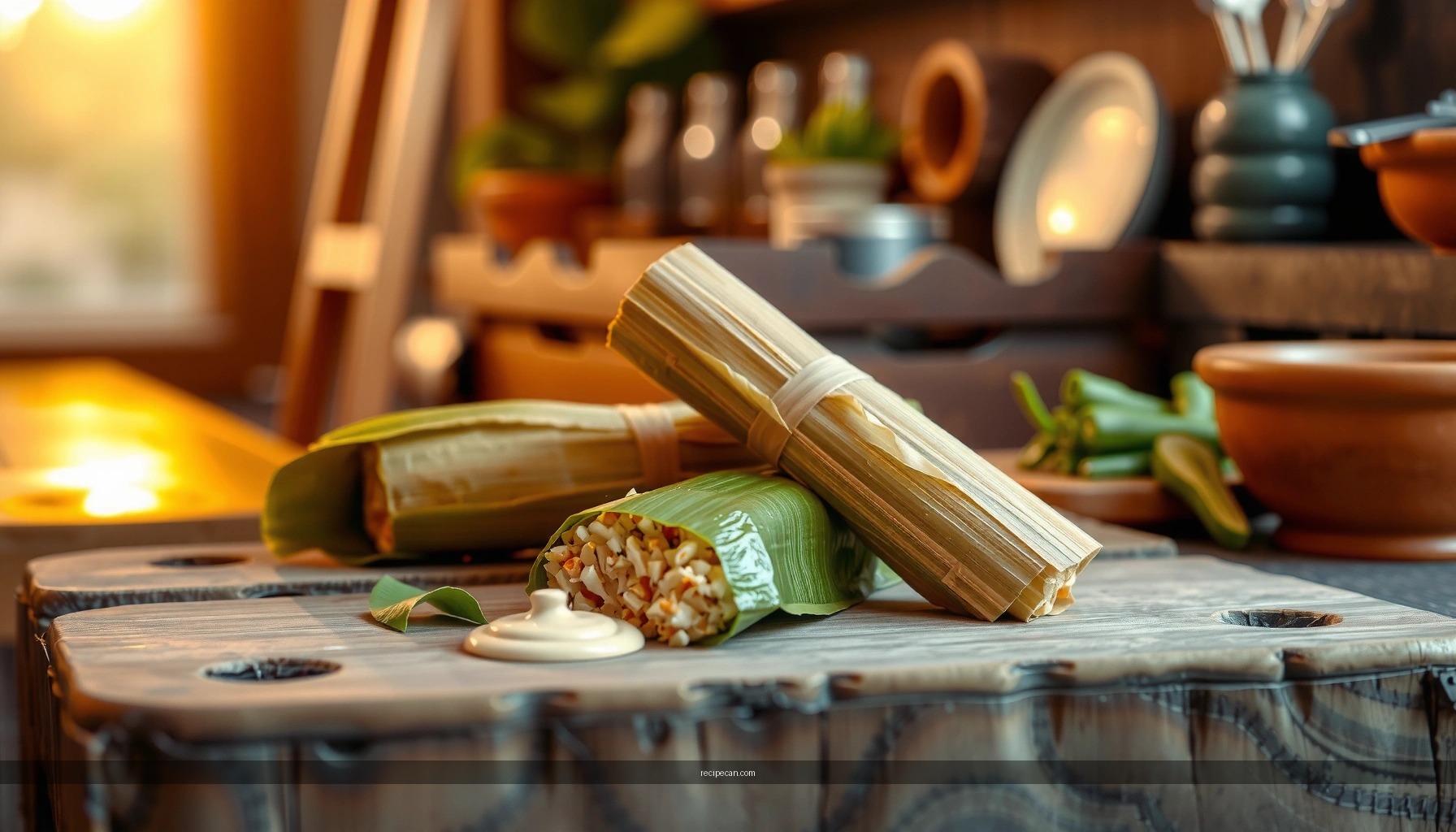
– Add filling, fold, and tie or secure based on your preferred style
Assembly is where professionalism shows. Even thickness and secure wrapping are what produce tamales that slice cleanly and steam uniformly.
Step-by-step assembly (reliable technique)
1. Lay a husk on a flat surface with the smoother side facing up.
2. Spread masa in a thin, even layer—typically 1/4 to 1/2 inch thick depending on husk size.
3. Add filling in a line or center strip. Keep filling away from the edges to prevent leaks.
4. Fold the husk:
– Fold in half, then roll and seal, or
– Fold into a rectangle shape based on your preferred regional method.
Tie or secure
Traditional approaches vary. Some cooks tie with strips of husk; others fold tightly enough to hold. Either way:
– Don’t overfill.
– Secure so seams close, but avoid tying so tightly that masa compresses unevenly.
Analytical tip: reduce leaks to protect masa
Leaks are the main cause of soggy bottoms or raw edges. If your filling is thick but still leaking, try:
– Spreading masa slightly thicker near the seam.
– Closing the fold with the husk’s natural “grain” alignment (husk fibers influence how it bends).
Use consistent masa and filling portions to avoid undercooked and overcooked tamales in the same pot.
– Too much filling can block steam penetration.
– Too little filling can leave hollow pockets and uneven set.
Steam Until Perfectly Cooked
– Steam steadily, keeping water level consistent
– Check doneness by testing whether masa pulls cleanly from the husk
Steaming is slower than baking, which is why tamales succeed: gentle heat cooks masa gradually while the wrapper traps moisture. Your job is to maintain steady steam and test doneness reliably.
Maintain stable steaming conditions
– Keep the pot covered.
– Keep the water level consistent—adding too much cold water can slow the steam and extend cook time.
– If condensation drips on tamales, that’s fine; just don’t let them sit in water.
How to check doneness
Doneness is not just time—it’s structural set.
– After the recommended time window, test one tamale by gently peeling back the husk.
– Fully cooked masa typically pulls cleanly from the husk and feels firm but tender.
What “almost done” looks like
– Masa that still sticks aggressively often needs more time.
– If masa looks wet or paste-like, continue steaming in 10–15 minute increments.
Timing by pot and batch reality
Even with the same recipe, cook time varies with:
– batch size and crowding,
– husk thickness,
– masa thickness,
– and your stove’s simmer stability.
Use the earlier data table as a starting point, then calibrate using the “pull test” on one or two tamales. This is the fastest path to consistent results.
After steaming: resting matters
Let tamales rest 15–20 minutes before serving. This brief rest helps masa firm up, making them easier to unwrap and serve without crumbling.
Serve, Store, and Reheat
– Serve tamales with salsa, crema, and cheese
– Refrigerate or freeze, then reheat by steaming for best results
Serving and storage influence the final experience. Tamales are best when warmed evenly—steaming recreates the original steamed texture.
Classic serving ideas
– Spoon red or green salsa over the top (or serve on the side).
– Add Mexican crema for tang and creaminess.
– Finish with crumbled queso fresco or Cotija-style cheese.
– Optional: garnish with sliced radish, chopped onion, or cilantro for a fresh bite.
Storage best practices
– Cool tamales completely before sealing to prevent condensation buildup.
– Refrigerate for up to 3–4 days, or freeze for up to 2–3 months.
Reheating for the best texture
Microwaving can make masa uneven or slightly rubbery. For best results:
1. Wrap tamales in foil (optional) and place them in a steamer.
2. Steam until hot throughout:
– Refrigerated: ~15–25 minutes
– Frozen: ~30–45 minutes (or longer if very large)
Quality tip: portion and reheat efficiently
Reheat only what you’ll eat. Repeated warming can dry masa slightly, especially at the edges.
Conclusion paragraph (final, no heading)
You now have a clear roadmap for a Mexico tamales recipe: prepare the husks, make tender masa, assemble with a rich filling, and steam until fully cooked. Pick your filling (rojo or verde), follow the steaming steps, and taste-test your first batch—then save leftovers for an easy, satisfying next meal.
Frequently Asked Questions
What are the key ingredients in a classic Mexico tamales recipe?
A traditional Mexico tamales recipe usually starts with masa harina, warm water or broth, and fat (lard or vegetable shortening) plus salt. For the filling, most recipes use a seasoned pork or chicken mixture with spices like chili, garlic, cumin, and sometimes Mexican chocolate or tomato depending on the tamal type. Many also include dried chilies for a flavorful red or green sauce and banana leaves or corn husks for steaming.
How do I make masa that won’t fall apart in my Mexico tamales recipe?
In a Mexico tamales recipe, masa consistency is crucial—beat masa harina with lard/shortening until light and fluffy, then add broth gradually until it spreads but holds shape. A common test is the “float test”: scoop a small bit of masa and drop it into water; if it floats, it’s usually ready. If your masa is too dry, add broth a little at a time; if too wet, mix in more masa harina to thicken.
How do I steam tamales so they cook evenly and stay moist?
For a Mexico tamales recipe, steam tamales vertically in a steamer with water below the rack so steam circulates without soaking the husks. Arrange tamales snugly, cover, and steam until the masa pulls away slightly from the husk and a toothpick inserted near the center comes out clean. Keep an eye on the water level—refill with hot water as needed to maintain steady steaming and prevent tamales from drying out.
Which fillings work best for a Mexico tamales recipe—pork, chicken, or vegetarian?
For many people searching a Mexico tamales recipe, pork tamales (like red chile pork) are a classic choice because chili sauce clings well to the masa. Chicken tamales can be just as flavorful, especially when simmered with roasted tomatoes, chilies, and aromatics. For vegetarian tamales, try options like black beans, roasted poblano rajas, or a chile-spiced squash filling—just make sure the filling is seasoned and not overly watery so the tamales set properly.
Why do my tamales taste bland or lack that authentic Mexican flavor?
Bland tamales usually come from under-seasoned masa or filling, or from sauce that isn’t cooked long enough to develop depth. In a Mexico tamales recipe, season masa with salt and use flavorful broth, then build flavor in the filling by toasting spices and simmering chilies until aromatic. Also taste-test your chili sauce and adjust with salt, a touch of sugar, or Mexican spices to balance heat and acidity before assembling.
References
- Tamale
https://en.wikipedia.org/wiki/Tamale - https://www.britannica.com/topic/tamale
https://www.britannica.com/topic/tamale - Google Scholar Google Scholar
https://scholar.google.com/scholar?q=mexican+tamales+recipe+technique+masa+nixtamalization - Google Scholar Google Scholar
https://scholar.google.com/scholar?q=tamales+masa+process+traditional+mexico+recipe - Google Scholar Google Scholar
https://scholar.google.com/scholar?q=how+to+make+tamales+mexico+stew+filling+wrapping+banana+leaf+corn+husk - https://www.bbc.co.uk/food/recipes/tamales_46017
https://www.bbc.co.uk/food/recipes/tamales_46017 - Search Thousands of Recipes – NYT Cooking
https://cooking.nytimes.com/search?q=tamales - Google Scholar Google Scholar
https://scholar.google.com/scholar?q=mexico+tamales+recipe - mexico tamales recipe – Search results
https://en.wikipedia.org/wiki/Special:Search?search=mexico+tamales+recipe - https://www.ncbi.nlm.nih.gov/search/research-articles/?term=mexico+tamales+recipe
https://www.ncbi.nlm.nih.gov/search/research-articles/?term=mexico+tamales+recipe